
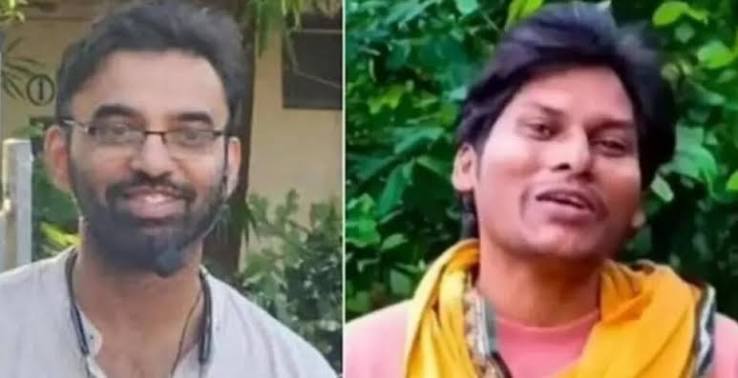
Doctor and community health worker Randall Sequeira and Dalit activist Laxman Naik were arrested on October 16th amid anti-bauxite mining protests in Odisha.
New Delhi – Dr. Randall Sequeira and Dalit activist Laxman Naik, who provide health care to tribal communities in Odisha’s Kalahandi district, were arrested on the night of October 16th. Both are currently in judicial custody at the Rayagada sub-jail. Police have charged them with connection to a violent clash in April 2026. Police say Sequeira was inciting tribals against the government and Naik was misleading people, while human rights organizations and civil society groups have questioned the process and motive behind the arrests.
On October 16th, around 10:45–11:00 pm, police arrived in two jeeps at Dr. Sequeira’s home in Bhawanipatna, Kalahandi, where Naik was also staying. According to the Orissa Post, police, acting on a tip-off, arrested the two men from their rented house on the night of October 16th. Several officers were in civilian clothes. Their mobile phones were snatched and they were taken to the Bhawanipatna Town Police Station. Their whereabouts were unknown to their families and lawyers from 6 a.m. until around 6:30 p.m. on October 17th. That evening, they were produced before the Sub-Divisional Judicial Magistrate of Rayagada and remanded to judicial custody for 15 days.
According to the police, the arrests were made in connection with Case No. 85/2026 of the Kashipur Police Station. The case relates to a violent clash that occurred on the night of April 6–7, 2026, in Kantamal (Kutamal) village in Rayagada district. Police entered the village in connection with a road project for Vedanta’s proposed Sijimali bauxite mine. Villagers alleged lathicharge and tear gas, while police claim protesters attacked them. According to the police, lathicharge and tear gas were used to disperse the crowd, injuring several people and police officers. The incident was related to a protest against the construction of an access road to the Sijimali bauxite reserve. Police say Dr. Sequeira and Laxman Nayak were not named in the original FIR, but their role emerged during the investigation.
Dr. Sequeira and Laxman Nayak face charges of attempt to murder, rioting with a deadly weapon, robbery, and criminal intimidation with a threat to kill. A police officer also stated that a case has been registered under the attempt to murder, rioting, and the Arms Act.
Human rights and tribal rights organizations have called the arrests wrong and illegal, demanding their release. The People’s Union for Civil Liberties (PUCL), the Concerned Citizens Committee Odisha, the Medico Friends Circle, and other organizations have condemned the arrests. They allege that the arrests were made without a warrant or reason and are part of a conspiracy to suppress the protests against Sijimali bauxite mining. They say that dozens of cases have been filed in the area in the past three years, and hundreds of tribal and Dalit people have been jailed.
According to a statement from the Medico Friends Circle, both were held overnight without a warrant, arrest memo, or reason, and were denied access to lawyers or family. According to the organization, neither was named in the original FIR, and Sequera already has anticipatory bail in another case.
PUCL condemned the arrests. It says this is the latest in a series of arrests of Dalit and tribal leaders protesting against Vedanta’s mine in Sijimali. Activists claim that more than 100 Dalit and tribal people have been arrested and 43 cases filed since the protests began in 2023.
Southwest Range DIG Akhileshwar Singh told PTI that the arrested people were not innocent. According to him, Dr. Sequera was inciting tribals against the government instead of providing medical services, and Naik was misleading people. He said that many doctors work in Kalahandi and Rayagada, but only Dr. Sequeira was arrested. Regarding the allegations of torture, he said that neither of them filed any such complaint with the magistrate in court. Another official said that the two were not named in the FIR, but their involvement came to light during subsequent investigations.
According to RTFC, an organization based in Rayagada-Kalahandi, the Odisha High Court had previously quashed the district order prohibiting Sequeira from entering Rayagada. Sequeira’s mother, Nancy Sequeira, said that her son was fighting for the rights and dignity of tribals and she hopes for justice.
The Sijimali hill region has been in dispute over bauxite mining since 2023. Local communities have been claiming to protect their rights to water, forest, and land.
Background of the Sijimali Dispute
In 2023, Odisha auctioned the Sijimali bauxite block, spread across Rayagada and Kalahandi, to Vedanta Limited. According to a report, the lease covers approximately 1,549 hectares and is expected to produce approximately 9 million tons of bauxite annually for 50 years. Villagers allege that the Gram Sabha’s consent was obtained through forged signatures. According to the Business and Human Rights Resource Centre, the resolutions from the alleged Gram Sabha meetings of December 8, 2023, were forged.
A Worrying Trend of Criminalizing Democratic Protest
Dr. Sequeira (39) was born in Karnataka and grew up in Mumbai. He completed his MBBS from St. John’s Medical College, Bengaluru. He moved to Kalahandi in 2017. He organized health camps in remote tribal villages, treated pregnant women and malnourished children, and helped local students prepare for medical entrance exams. He was involved with the Medico Friend Circle and the Jan Swasthya Abhiyan.
Laxman Nayak is a Dalit activist associated with the Maa Mati Mali Suraksha Manch and the Samajwadi Jan Parishad. He is also a martial arts trainer.
The Campaign Against State Repression (CASR) strongly condemned the arrests of Dr. Randall Sequeira and Laxman Nayak. The organization stated that these arrests should be seen in the context of the continued imprisonment of Lada Sikaka, president of the Niyamgiri Suraksha Samiti, and Lingaraj Azad, advisor to the Niyamgiri Suraksha Samiti and Maa Mati Mali Suraksha Manch. The detention of several activists associated with movements protecting tribal land and natural resources reflects a worrying trend of criminalizing democratic protest in Odisha.
A Nationwide Pattern of Repression
This repression is not limited to Odisha. Across India, communities protesting corporate land grabs, mining, large dams, forced displacement, and the destruction of forests and biodiversity face police violence, false cases, and long prison sentences.
From the struggle against the proposed Siang mega-dam in Arunachal Pradesh to the proposed hotel project in Kaziranga, Assam, and from Odisha to Madhya Pradesh and other mineral-rich tribal areas, people defending their ancestral lands and livelihoods are now perceived as threats to state and corporate interests.
Activists face prosecution under the Unlawful Activities (Prevention) Act (UAPA), the National Security Act (NSA), and other stringent security laws. Even where anti-terrorism laws are not enforced, activists face numerous criminal cases and frequent harassment by the police to intimidate and weaken mass movements.
CASR says the message is clear: those who oppose corporate plunder and protect people’s land, forests, water, and livelihoods are being punished for exercising their democratic rights. Governments are prioritizing corporate interests over the rights of indigenous and tribal communities, while the state machinery is increasingly being used to suppress dissent.
Geetha Sunil Pillai
Courtesy: Hindi News