
Primer on trans-jurisprudence in India
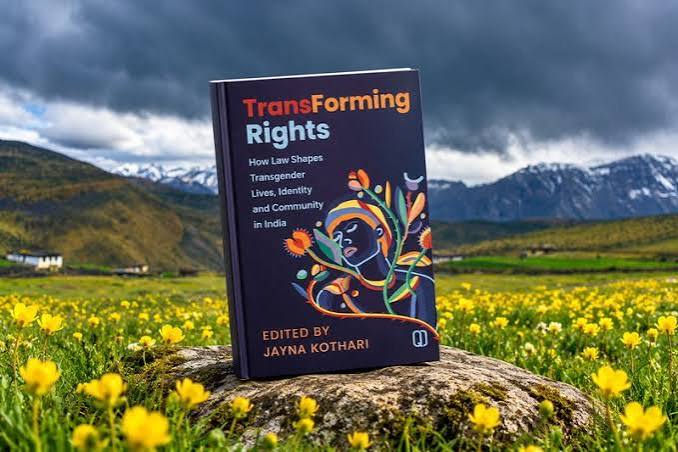
The books aims to assess where we stand on issues of self-identification by trans folx, demand for reservations, livelihood, familial spaces and identity The laws around queer-trans jurisprudence are rooted in a colonial legacy beginning with the ominous Section 377, partly repealed by a judgment of the Supreme Court in 2018. The book ‘Transforming Rights : How the law shapes Transgender Lives, Identity and Community’, edited by Jayna Kothari, brings together activists, lawyers and professionals working in trans jurisprudence in India. Together they assess where we stand on issues of self-identification by trans folx, demand for reservations, livelihood, familial spaces, and identity under the larger project of nation-state while simultaneously also imagining possibilities of an inclusive future. Surveys and current reports on socio-economic indicators present a bleak picture. As SVD Chandrashekhar and Avinaba Dutta write, 92 per cent of trans-population in India is denied the opportunity to engage in any economic activity, in fact skilled and qualified trans persons have also reported systemic workplace discrimination on account of their transness pointing to increased marginalisation. This is directly co-related to both covert and overt violence built into the Indian education system against queer, trans, intersex and other gender conforming minorities. Violence is not limited to the public sphere for trans folx. Aqsha Sheikh and Raghavi Shukla talk about exclusion of queer-trans folx from both adoption and surrogacy frameworks in India. The state uses its legislative powers to restrict trans folx from living a fulfilling life by continuing to deny them the freedom to form families of their choosing. In such a scenario, love becomes subversive, an instrumentality mired in deliberate violence and denial. Even within the popular queer landscape, love’s portrayal has largely been limited to cis male desire. Indian State continues to deny queer couples the bouquet of rights available to cis heterosexual couples as a way of ordinary right. Sheikh and Shukla write that the denial of love, marriage and partnership to transgender persons violates their right to equality, privacy, choice and life with dignity. While some progress has been made in this regard through recent court judgments, the Supreme Court has refused to declare marriage equality a fundamental right refusing to extend the guarantees of Articles 14, 15, 19, and 21 to queer couples in any meaningful manner. Santa Khurai explores the meaning of citizenship as a transperson belonging to the state of Manipur. She talks about systemic exclusion not just based on her gender but also inhabiting a space often excluded from the ‘Indian mainland’ in popular imagination, an existence woven with intergenerational trauma and of being removed from national consciousness. Even as the Trans Act, 2019, provided for an umbrella of rights, it didn’t concern itself with the needs of people who face multiple conflicts such as militarisation and ethnic strife. Larger questions around identity remain both contentious and unanswered for many. Vajayanti Vasanta Mogli and Grace Banu further problematise the discourse on identity through caste. NALSA judgment of 2014 regards all transgender persons as members of socially and economically backward community (SEBC). They argue that this erases historic equations of power marked by caste divisions in India. Grace talks about the discrimination Dalit transfolx face within the larger trans category. While more overt forms are easy to recognise, silent discrimination is extremely common within the community. The reservation promised under the Trans Act, 2019, hasn’t materialised in any meaningful way. The National Education Policy 2020 also doesn’t mention anything about reservation for trans folx in educational institutes. Sayantan Datta rightly points out that policyscapes become ‘sites of confrontation’ for marginalised groups as they often exacerbate their marginalisation. The book also looks at various arguments presented in favour of horizontal reservations for transgender persons. Jayna Kothari writes about the larger promise of emancipation built into the struggle for trans-rights. She particularly looks at articles 14, 15, and 16, which are a part of our fundamental rights, effect of trans rights cases and the meaningful ways in which it has transformed the rights of women and gay persons. Beginning with judgments in NALSA, Joseph Shine, and then Jane Kaushik, she argues that while Article 15(1) of the Indian Constitution guarantees non-discrimination only on five grounds (race, sex, caste, religion and place of birth), in NALSA, the Supreme Court expanded the ground of ‘sex’ to include gender identity. In Navtej, the route of analogous grounds was adopted. It is through these ways, Jayna writes that there exists an emancipatory potential for all women through the expansion of rights for transpersons. This book is a wonderful primer for anyone who is interested to learn about jurisprudence in India, in general, and trans-jurisprudence in particular. Transforming Rights: How the Law Shapes Transgender Lives, Identity and Community in India, edited by Jayna Kothari. QD. Pages 324. Rs 599 Book Title: Transforming Rights: How the Law Shapes Transgender Lives, Identity and Community in India Author: Edited by Jayna Kothari [This book was published before the enactment of Transgender Persons (Protection of Rights) Amendment Act, 2026, which has since then been challenged in the Supreme Court] Article_Author Anant Courtesy : The Tribune Note: This news is originally published on https:/thetribune.com/bha and is used purely for non-profit/non-commercial purposes, especially human rights
Former PYC president Barinder Dhillon booked over alleged assault on Dalit Congress leader
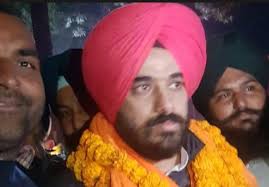
CHANDIGARH: Chandigarh Police have booked former Punjab Youth Congress president Barinder Singh Dhillon following a complaint that he assaulted Dalit Congress leader Ranjeet Singh Tarkhan Majra at Punjab Congress Bhawan in Sector 15 on October 27. The case was registered at Sector 11 police station. According to reporting citing the FIR, it was lodged on November 4 under Sections 115(2) and 126(2) of the Bharatiya Nyaya Sanhita. Tarkhan Majra, a former Punjab Congress Committee secretary, alleged that Dhillon and an unidentified person subjected him to caste-based abuse during his visit to the party headquarters with his son. He alleged that Dhillon slapped and beat him when he objected, and also threatened to kill him. However, the FIR reportedly records that allegations warranting provisions of the Scheduled Castes and Scheduled Tribes (Prevention of Atrocities) Act were not established during the preliminary inquiry. Deputy Superintendent of Police Sukhwinder Pal has been assigned the investigation. Dhillon has denied manhandling Tarkhan Majra, describing the incident as a verbal argument. The Punjab Congress disciplinary action committee, headed by former minister Avtar Henry, had issued him a show-cause notice seeking an explanation within three days and warning of disciplinary proceedings if his response was unsatisfactory. The controversy has also triggered political protests. AAP workers demonstrated near Congress Bhawan on November 4, demanding action over the alleged assault and humiliation of the Dalit functionary. Police used water cannons to stop the protesters and detained several participants. Courtesy : PNE Note: This news is originally published on https:/punjabnewsexpress.com/bha and is used purely for non-profit/non-commercial purposes, especially human rights
Dindigul man gets life-term for driving Dalit minor to suicide
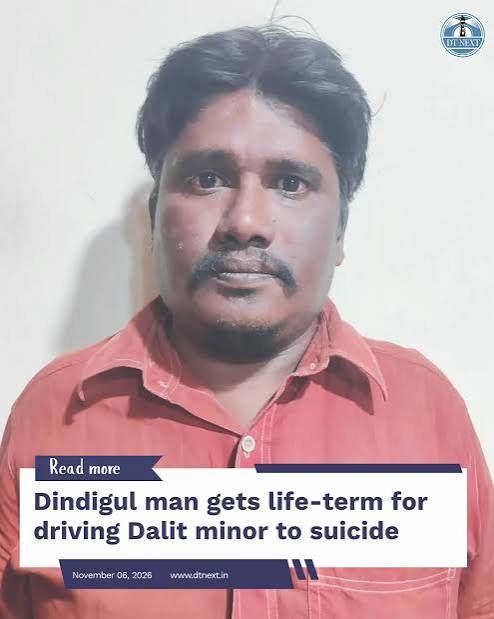
Yuvarani, who was 17 at the time, had moved to Vedasandur from Villupuram district in 2020 along with her mother Chitra, a widow, and her 15-year-old sister MADURAI: A Special Court in Dindigul on Wednesday sentenced a 39-year-old caste Hindu man to life imprisonment for driving a Scheduled Caste girl to suicide by hurling caste insults at her in 2020. Yuvarani, who was 17 at the time, had moved to Vedasandur from Villupuram district in 2020 along with her mother Chitra, a widow, and her 15-year-old sister. The three found work in a garment mill and rented a small room in a row house at Nagapatti village in Vedasandur taluk, Dindigul. The convict B Rajkumar and his wife Arul Selvi lived next door to the family. According to the prosecution, a small open drain carrying wastewater from the houses ran through the narrow lane of the row-house complex. Whenever utensils or clothes were washed in any of the households, some water would stagnate in the lane. Rajkumar was enraged to find that he had been “polluted” when he stepped on wastewater discharged from the victim’s house as they belonged to a scheduled caste. “He used to abuse them with casteist remarks, saying he was polluted because he walked on the puddle of waste and soapy water in front of their house,” the police said. His wife Arul Selvi would also make caste slurs at the family, they noted. Rajkumar would mostly begin the abuses in the evening hours when he came home drunk. Chitra finally filed a complaint with the Vedasandur police. After elders from Nagapatti village accompanied him to the station and assured the police that it would not happen again, both families agreed to a compromise. The police registered a Community Service Register (CSR) receipt and warned Rajkumar and his wife. However, within a week, on May 26, 2020, Rajkumar again picked a quarrel with Chitra’s family and abused them for hours with casteist slurs. Yuvarani, who had a fever that day and did not go to the mill with her mother and sister, ended her life late that night, unable to bear the psychological trauma of the repeated caste abuses by Rajkumar and his wife, the prosecution told the court. The Vedasandur police registered a case under Section 306 (abetment of suicide) of the IPC and under the Scheduled Castes and the Scheduled Tribes (Prevention of Atrocities) Act, and investigated the case. Dindigul Superintendent of Police S Jeyakumar, who reviewed the progress of the case, directed the investigating officer to speed up the investigation and produce the documents and witnesses in court. After the prosecution proved its case, the Special Court sentenced Rajkumar to life imprisonment and an additional two years of imprisonment, and imposed a fine of Rs 12,000, under Section 306 (abetment of suicide) of the IPC and various sections of the Scheduled Castes and the Scheduled Tribes (Prevention of Atrocities) Act. Arul Selvi had died during the trial due to ill health. Gokul Vannan Courtesy : DT Next Note: This news is originally published on https:/dtnext.com/bha and is used purely for non-profit/non-commercial purposes, especially human rights
BSP’s grand convention in Lucknow on Babasaheb’s death anniversary, Mayawati to be chief guest
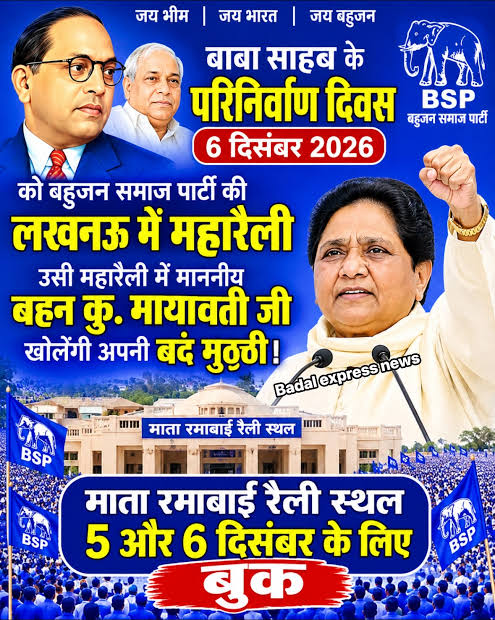
BSP chief Mayawati will attend the Mahaparinirvan Diwas event at the Dr. Bhimrao Ambedkar Social Change Site in Lucknow on December 6, 2026, as the chief guest. This has raised the pulse of opposition parties. Lucknow. Behenji is once again set to stir the political scene in Uttar Pradesh. Bahujan Samaj Party chief Mayawati will attend the tribute ceremony in Lucknow on December 6, marking Babasaheb Ambedkar’s death anniversary, as the chief guest. She has accepted the party’s invitation. She made this announcement at the BSP Uttar Pradesh unit’s review meeting held in Lucknow on Thursday. This announcement has suddenly heated up the political atmosphere in Uttar Pradesh. The party has resolved to organize the event on a grand scale and make it historic. In a meeting held on November 5th, BSP supremo Mayawati reviewed preparations for the upcoming Uttar Pradesh Assembly elections with state and divisional officials, including district presidents from all 75 districts. The meeting discussed strengthening the organization down to the booth level, selecting better candidates, and strengthening the party’s support base among the poor and vulnerable. The BSP chief called for advancing the party’s pledge of “Our vote, our rule” and working towards forming a BSP government in Uttar Pradesh for the fifth time. Mayawati also addressed various political issues, including the fairness of the electoral process and the demand for voting using EVMs and ballot papers. She appealed to party officials to fully engage in election preparations. It is worth noting that Behenji, who demonstrated her strength last year on the death anniversary of Kanshi Ram, is set to demonstrate her strength again just before the UP elections. Meanwhile, the Samajwadi Party is organizing a Dalit Mahasammelan on November 15th in Agra, known as the capital of Dalits. It remains to be seen with whom the Dalit community expresses its solidarity. These two events will make it clear who the Dalits of Uttar Pradesh stand with. Raj Kumar Raj Kumar has been active in media since 2020. He serves as Deputy Editor of Dalit Dastak. He monitors political and social activities in the country and Uttar Pradesh. Courtesy: Hindi News
Will PM Modi and Rahul Gandhi debate in Parliament? Shashi Tharoor makes a major statement on the “challenge of debate.”
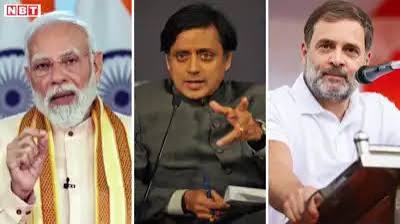
This winter session of Parliament is expected to witness a heated debate. Rahul Gandhi has openly challenged Prime Minister Narendra Modi to a debate. While there has been no response from PM Modi so far, statements from BJP leaders including Amit Shah indicate that the debate will now take place in Parliament. New Delhi: The winter session of Parliament will begin on November 25, 2026, exactly 19 days from today. Two weeks before the start of the session, the outline for this session’s proceedings is already being formulated. This winter session is expected to witness a heated debate, with Prime Minister Narendra Modi on one side and the Leader of the Opposition in the Lok Sabha, Rahul Gandhi, on the other. This speculation is due to Congress leader Rahul Gandhi’s open challenge to Prime Minister Narendra Modi for a debate. While there has been no response from PM Modi to Rahul’s challenge, other senior BJP leaders, including Amit Shah, are advising Rahul to debate in Parliament. Ready to call a special session Decoding Home Minister Amit Shah’s recent speech indicates a possible debate between PM Modi and Leader of the Opposition Rahul Gandhi in Parliament. Amit Shah hit back at Rahul Gandhi in Karnal, Haryana. The Home Minister said that if Rahul Gandhi truly wants to discuss the matter, he should write a letter to PM Modi. The government is ready to call a special session on issues other than SIR. Therefore, even if a special session is not called, discussions are likely to take place in the winter session. What Shashi Tharoor said in response Rahul Gandhi’s challenge to PM Modi for a debate has now drawn a response from veteran Congress leader and MP from Thiruvananthapuram, Kerala, Shashi Tharoor. Tharoor stated that Rahul Gandhi’s proposal for a debate still stands. Once the Parliament session resumes, a discussion can be held. Let the Parliament session reconvene. The Parliament session hasn’t ended yet. Let it reconvene. If the Parliament session resumes, I believe Rahul Gandhi’s proposal for a debate still stands. Shashi Tharoor, Congress MP What did Rahul Gandhi say? Directly targeting PM Modi, Rahul Gandhi challenged him to a debate. Rahul said, “24 hours have passed, but you still haven’t responded to my challenge. You say the opposition is anti-national.” Don’t be afraid, hurry up. Choose a place on any stage and debate with me. Who is the anti-national? Who has connections to foreign forces, and what kind of connections? Do it as quickly as possible. Don’t be afraid. We’ll meet. There will be the media. There will be the youth of the country. There will be tables. You’ll sit on one side, and I’ll sit on the other. You can make whoever you want the judge. Let’s get Mohan Bhagwat seated and then we’ll debate.” Rahul Gandhi, Leader of the Opposition in the Lok Sabha Curated by: Akshay Srivastava About the Author Akshay Srivastava is the Principal Digital Content Producer at Navbharat Times (Digital). He joined Navbharat Times (NBT Digital), the digital wing of the Times Group, in March 2025. Courtesy: Hindi News
Youth Cong suspends 300 for no-show at Rahul’s Delhi rally
NEW DELHI: Indian Youth Congress has suspended over 300 office-bearers from the organisation for not showing up for the ‘Chalo Delhi’ rally of INDIA bloc Sunday – a significant step to drive home the message that the outfit is serious about mass mobilisation in future. IYC sources said organisational office-bearers from assembly to the central level were directed to attend the rally with Rahul Gandhi as the face. They were also asked to mark their attendance on “With IYC” app. The assembly point for the march ahead of the rally was Minto Road crossing. After the rally, the organisation analysed the attendance and decided to suspend 300 office-bearers across 12 states who did not come and also did not log any reasons for their absention. However, the suspended members were told that they would be reinstated if they perform well in future. The leading state in suspensions is MP with over 60 office-bearers, followed by Rajasthan with 32. Gujarat, Jharkhand, UP central and east, Uttarakhand, and Telangana were the other states. IYC chief Uday Bhanu Chib said around 20,000 workers turned up for the Nov 1 rally, but some office-bearers were missing. “It was important to send a message that discipline is important, especially when ordinary members came in big numbers.” IYC has around 45,000 office-bearers from central to the assembly level. Sources said members from only neighbouring states were asked to attend the rally. “It is important to convey to the organisation that in the serious times we are in and in wake of the winds of change blowing in the country, it is not acceptable if there is even one absention. All youths will have to pitch in,” Chib said. Courtesy : TOI Note: This news is originally published on https:/timesofindia.com/bha and is used purely for non-profit/non-commercial purposes, especially human rights
Jagga Reddy Hits Back at Amit Shah, Rahul Gandhi Can Become PM If He Chooses
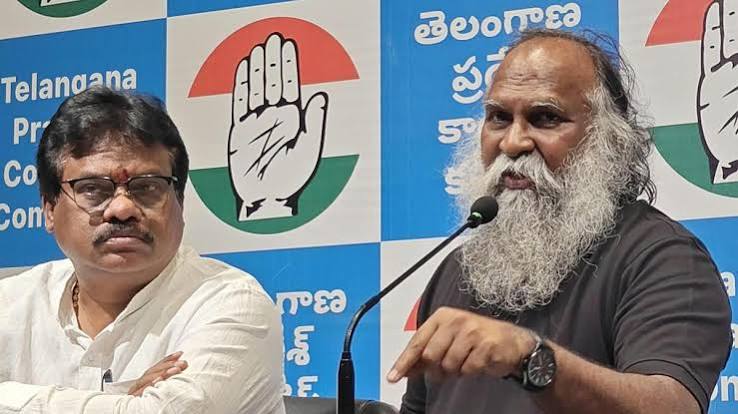
Hyderabad: Senior Congress leader Jaggareddy strongly countered Union Home Minister Amit Shah’s remarks that Rahul Gandhi would never become Prime Minister, asserting that the BJP leader had no right to decide who could or could not occupy the country’s highest elected office. He said Congress would win 14 seats of 17 Lok Sabha seats in Telangana. Addressing the media, Jaggareddy said the Prime Minister’s post was closely associated with the Gandhi family’s political legacy and recalled that Rahul Gandhi had opportunities to become Prime Minister but had chosen not to pursue the position. He pointed out that after the 2004 Lok Sabha elections, Congress president Sonia Gandhi led the UPA to power and party MPs had expressed support for her and Rahul Gandhi to head the government. However, the Congress leadership decided to appoint Dr. Manmohan Singh as Prime Minister. Jaggareddy claimed that even after assuming office, Manmohan Singh had encouraged Rahul Gandhi to take up the top post, but Rahul declined and instead extended his support to Singh’s leadership. He also highlighted welfare measures introduced during the UPA era, including the Mahatma Gandhi National Rural Employment Guarantee Scheme, saying the programme had provided relief and livelihood support to millions of people across the country. Taking strong exception to Amit Shah’s comments, Jaggareddy said the people of India alone had the authority to decide who should become Prime Minister. “If Rahul Gandhi wants to become Prime Minister, the people of this country can make him Prime Minister. No one has the right to dictate the choice of voters,” he said. The Congress leader also accused the BJP of using the name of Lord Rama for political gains while failing to govern according to the ideals associated with the deity. Referring to Mahatma Gandhi’s devotion to “Raghupati Raghava Raja Ram,” he argued that reverence for Lord Rama existed long before the BJP came into existence. Jaggareddy further maintained that Telangana remained a stronghold of the Congress and expressed confidence that the party would perform strongly in the next parliamentary elections. He said Congress leaders would work with determination to help Rahul Gandhi emerge as a national leader and claimed the party was capable of winning 14 of Telangana’s 17 Lok Sabha seats. He asserted that the upcoming elections would provide an appropriate response to what he described as Amit Shah’s “arrogant” remarks against Rahul Gandhi. Courtesy : TOI Note: This news is originally published on https:/timesofindia.com/bha and is used purely for non-profit/non-commercial purposes, especially human rights
India forms its first transgender disaster rescue team
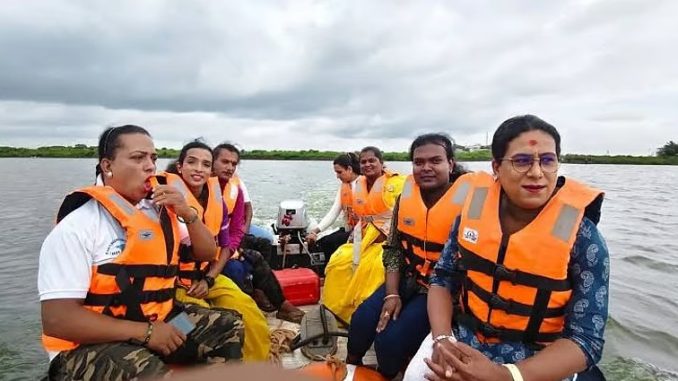
A group of transgender people in India is breaking new ground by training to become disaster responders. The team was formed in Kolhapur, a district in the western Indian state of Maharashtra. It is believed to be India’s first transgender disaster rescue team. The initiative was created by the Kolhapur District Disaster Management Authority with support from Maitri, a transgender-led organisation. So far, 15 transgender people have joined the programme. The volunteers have received training in several areas. These include water rescue, first aid, CPR and lifesaving techniques. They have also learned how to operate rescue boats and help people during floods and other emergencies. The first group completed a three-day training programme in May. They later took part in a 10-day water rescue course at Rajaram Lake in Kolhapur. The idea started during the COVID-19 pandemic. Local officials worked with members of the transgender community while providing food and other support. This helped build a relationship between the community and disaster management officials. The programme later developed into an effort to train transgender people as emergency responders. For the volunteers, the programme is also a chance to challenge stereotypes about transgender people. Mayuri Alvekar, who heads Maitri, said transgender people are often treated unfairly and are sometimes reduced to stereotypes about begging or sex work. She said the rescue programme can help show that transgender people can also play important roles in their communities. Some members of the team already have professional backgrounds. One volunteer, Suhasini Devmane, worked as an Ayurvedic therapist and is also known as Maharashtra’s first transgender tourist guide. Another volunteer, Shivani Gajabar, is studying for a Master of Social Work degree. The team has already helped at some road accidents, according to local disaster officials. It was also placed on standby during the 2026 monsoon season. Officials now want to expand the programme. Future training could include wildlife rescue and other emergency skills. They are also considering giving the volunteers Home Guard status, which could provide them with an honorarium. The idea is also attracting interest from other parts of Maharashtra. Transgender groups from several districts have reportedly contacted the Kolhapur team about starting similar programmes. The initiative gives transgender people a new role in disaster response. It also shows how communities that have often faced exclusion can become active members of emergency services and public life. Courtesy : Transgenderfeed Note: This news is originally published on https:/transgenderfeed.com/bha and is used purely for non-profit/non-commercial purposes, especially human rights
Dalit Christian groups protest in Badangpet over attack on women
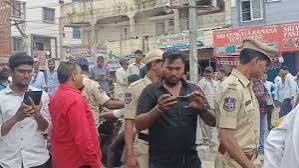
Protesters said attacks on women and attempts to incite religious hatred were contrary to democratic principles and constitutional values. Hyderabad: Dalit Christian organisations, people’s groups and political organisations staged a large-scale protest at Badangpet crossroads, expressing strong condemnation of the attack on two women reported on Monday, November 2, and demanding stringent action against the person responsible. The protesters said attacks on women and attempts to incite religious hatred were contrary to democratic principles and constitutional values. They asserted that people belonging to all religions had an equal constitutional right to live with dignity and freedom in the country. Demanding immediate legal action against the person involved in the attack, the protesters called for justice for the victims and urged the government and police to take stringent measures to prevent the recurrence of such incidents. They further asserted that violence against women and religious hatred had no place in a democratic society and called for the protection of constitutional rights and communal harmony. The police made security arrangements during the protest to prevent any untoward incidents. Courtesy : TSD Note: This news is originally published on https:/thesiasatdaily.com/bha and is used purely for non-profit/non-commercial purposes, especially human rights
Meerpet tense as rival groups assemble over alleged assault linked to conversion row
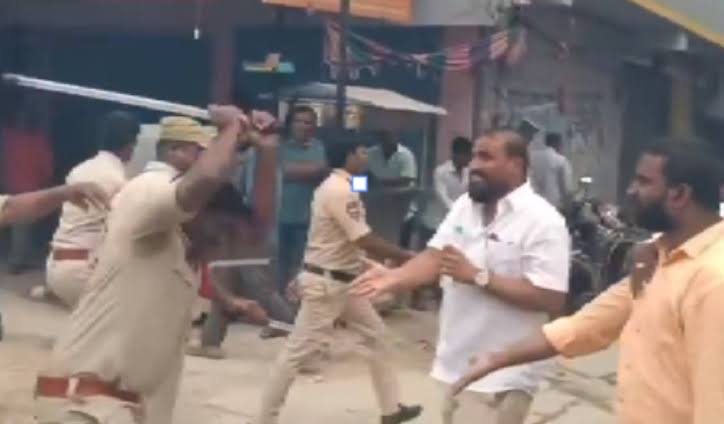
Tension prevailed in Hyderabad’s Meerpet area on Wednesday after police resorted to a mild lathicharge to disperse protesters demanding action against those accused of assaulting two women in Almasguda. Members of Dalit Christian organisations staged a road blockade over the incident. Hyderabad: Tension prevailed in Meerpet on Wednesday when police resorted to a mild lathicharge to disperse protesters who gathered at Meerpet junction over the assault on two women at Almasguda about a month ago. The women were allegedly cornered and assaulted by a group of men who accused them of attempting religious conversion. A video of the incident went viral on social media, triggering protests by members of local Dalit Christian organisations. The protesters belonging to Dalit Christian organisations, gathered at Meerpet junction, blocked the road and demanded the arrest of those involved in the assault. Meanwhile, members of Hindu organisations also assembled at the spot and raised slogans, leading to tension between the two groups. Sensing the possibility of the situation escalating, police resorted to a mild lathicharge to disperse the protesters and restore order. Additional police personnel were deployed in the area to prevent further disturbances. Courtesy : Telangana Today Note: This news is originally published on https:/telanganatoday.com/bha and is used purely for non-profit/non-commercial purposes, especially human rights