
Dalit Youth Alleges Three Barbers Refused Haircut Over Caste in Uttar Pradesh’s Etah
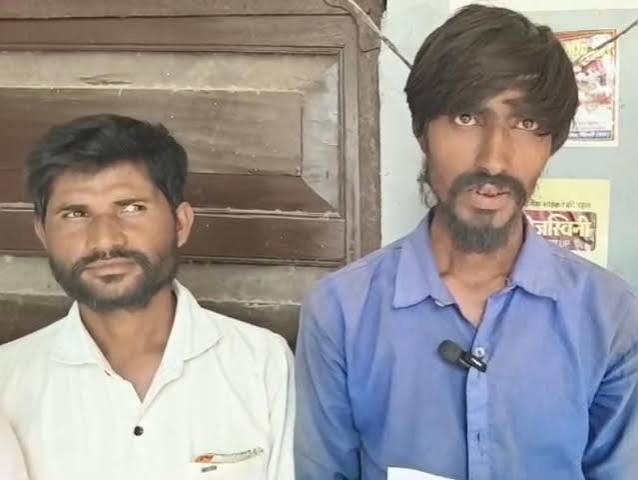
A young man from the Valmiki community in Uttar Pradesh’s Etah district has accused three local barbers of refusing to cut his hair because of his caste and using casteist slurs against him. He has filed a complaint at the Jaithra police station, seeking action against the shopkeepers. The incident allegedly took place on November 1 in Parauli village, under the Jaithra police station area. According to Ajit, son of Sewaram, he went to barber Bablu’s shop at around 10 am to get a haircut. He alleged that Bablu asked him to visit a barber from his own village instead and turned him away. Ajit then approached the shop of Sukhveer, son of Khushiram, who is also from Parauli Suhagpur. Ajit alleged that Sukhveer told him he did not cut the hair of people belonging to the Valmiki community. He subsequently went to Shankar’s shop, where he alleged that he was abused and threatened with being driven away. Ajit said Shankar used casteist remarks and verbally abused him. Speaking about the incident, Ajit questioned why caste should determine access to an everyday service such as getting a haircut. He said people from different communities apply for government jobs and participate in public life, yet members of his community continue to face discrimination when seeking basic services. Ajit has asked the police to investigate the allegations and take legal action against the three shopkeepers. Jaithra station house officer Sunil Kumar Verma confirmed that the police had received a complaint and were investigating the matter. He said the shopkeepers would be called to the police station for questioning and that action would be taken if the allegations were established. Courtesy : TOP Note: This news is originally published on https:/theobserverpost.com/bha and is used purely for non-profit/non-commercial purposes, especially human rights
Sahil Wakode Case: Athawale Says Social Media Campaign Against Family Insensitive; Let Investigating Agencies Do Their Work
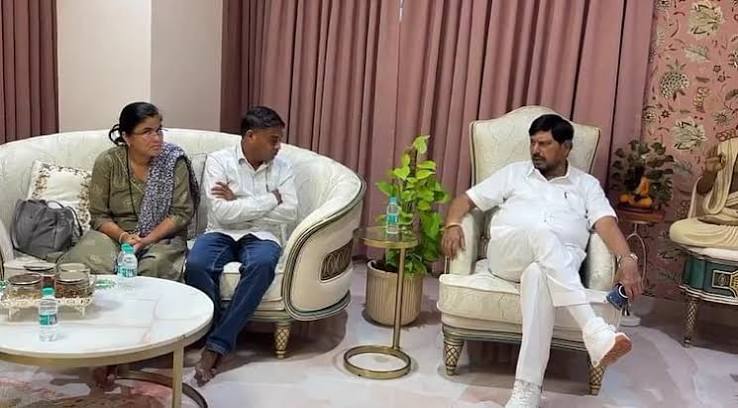
The family alleges that the police investigation is not being conducted seriously. They have filed a petition in the Bombay High Court seeking a CBI or SIT investigation, supervision by a retired judge, preservation of CCTV footage, and witness protection. Mumbai: Union Minister of State for Social Justice and Empowerment and RPI President Ramdas Athawale has taken a strong stand in support of the family in the case of Sahil Ravindra Wakode, a second-year B.Tech student at IIT Bombay, who committed suicide in his hostel room on September 18th. He termed the social media campaign against the bereaved family as false and insensitive and appealed for an impartial investigation. In his statement, Athawale said that Sahil’s parents, Ravindra and Sonali Wakode, met him at his residence, ‘Samvidhan Niwas’, a few days ago. They have lost their young son. Despite such immense grief, they have not passed any judgment on anyone. They are fighting the case fully through the legal process. They have filed a police complaint and petitioned the Bombay High Court for an independent CBI/SIT investigation. Their only demand is that the truth be revealed. Athawale further stated, “Unfortunately, some people are misrepresenting this case and passing judgment on social media before the investigation is complete. The parents who lost their son know their child best. That is why they are fighting for the truth. It is wrong and insensitive to launch a social media campaign against a grieving family. A trial should not be based on selective videos on social media; the truth should emerge through an impartial investigation.” He described the SC/ST Act as a shield for the protection of Dalit and tribal communities and said that where a complaint is proven false, the law should do its work, but questioning the entire law on the basis of one incident is injustice to the victims. Athawale urged everyone to allow the investigating agencies and the court to do their work. He expressed full faith in the judiciary and said that he and the RPI stand firmly with Sahil’s parents. The fight will continue until justice is achieved. Sahil Wakode, a resident of Yavatmal, was a second-year student in the Energy Science and Engineering department at IIT Bombay. He was allegedly caught with a mobile phone during the mid-semester exam on September 18th. According to the institute’s initial statement, he had uploaded the question paper to the chat platform GPT and requested answers. A few hours after the exam, he was found hanging in his hostel room in the evening. No suicide note was found. The family alleges that Sahil suffered caste-based humiliation and mental torture. His father, Ravindra Wakode, alleged that Professor Suryanarayan Dulla (who was also the invigilator of the exam) had been making casteist remarks for the past three months and that he was harassed at the direction of Director Shirish Kedare. The family claims that Sahil was removed from the examination hall, reprimanded, and prevented from continuing with the examination by not providing a new answer sheet as required by the rules. Sahil also tendered a written apology and requested a second chance. On September 19th, based on Ravindra Wakode’s complaint, an FIR was registered at the Powai police station under sections of abetment to suicide (now the relevant section of the Indian Penal Code) and the SC/ST (Prevention of Atrocities) Act. Professor Dulla and other officials were named. The investigation was handed over to the Mumbai Police Crime Branch, which is being led by an ACP-rank officer. The Crime Branch has so far recorded statements from over 40 people, including family members, students, hostel staff, and faculty. Sahil’s mobile phone and laptop were sent for forensic examination. CCTV footage, which records his movements from the examination hall to the hostel, is being examined. Professor Dulla was removed from his position as Administrative Dean and placed on leave. The institute also formed a 10-member internal committee. The family alleges that the police investigation is not being conducted seriously. They have filed a petition in the Bombay High Court demanding a CBI or SIT investigation, oversight by a retired judge, preservation of CCTV footage, and witness protection. An application has also been filed with the Special Atrocities Court. Student protests continue on the IIT Bombay campus. The family also held a hunger strike at Azad Maidan. Several organizations demanded justice. Athawale criticized the selective videos and accusations circulating on social media, stating that the trial should be conducted through an impartial investigation, not on social media. Geetha Sunil Pillai Courtesy: Hindi News
“Don’t become capable… become capable” post sparks uproar: Dalit youth files police complaint against IIT Patna Registrar
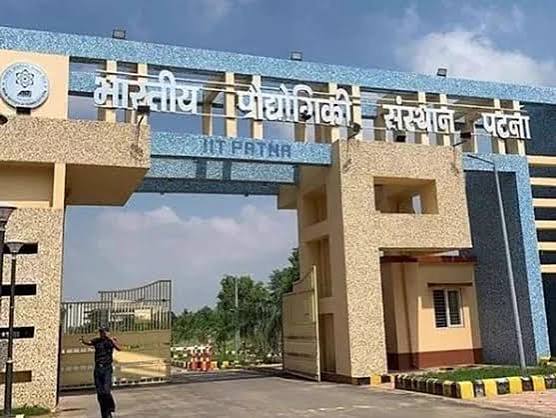
BANAE writes to the Ministry of Education demanding the suspension of Avalendra Kumar Thakur Patna – The controversy surrounding an alleged post shared on social media in the name of IIT Patna Registrar and Dean (Administration) Avalendra Kumar Thakur has now reached the police station and the central government. A Dalit youth from Patna has filed a complaint at the SC/ST police station in Patna, demanding the registration of an FIR against Thakur. Citing this complaint, the Dr. Babasaheb Ambedkar National Association of Engineers (BANAE) has written to the Secretary and Joint Secretary of the Ministry of Education, demanding Thakur’s suspension. Thakur is refusing to accept the post as his own. Complainant Aditya Kumar Paswan, in his application to the Station House Officer (SHO), identified himself as a member of the Scheduled Caste community. He has accused Thakur of hurting the sentiments of the Dalit community, insulting the Constitution, and spreading animosity in society. According to the complaint, Thakur posted on LinkedIn and other social media platforms calling for a review of the reservation and exemption policy and termed it a political tool to create and maintain a “vote bank”. According to the complainant, Thakur wrote another post on his social media account: Don’t be capable, be a Dalit, success will follow you – Indian Constitution. The complainant claims this line was written in the name of the “Indian Constitution,” but there is no such thing in the Constitution. According to him, it implies that Dalits achieve success not through merit but solely through caste, which is an insult to the talent and struggle of the Dalit community and a denigration of the Constitution. He alleges that after the post became public and drew protests, the accused deleted it, but he retains a screenshot of it and has attached it with the complaint. Paswan wrote that he himself belongs to the Dalit community and was deeply shocked by the post. He believes that such a public statement by a high-ranking government official could increase hatred and resentment towards Dalits and reserved communities and threaten social harmony. He added that the matter is even more serious given the accused’s position, as students and employees from reserved communities expect justice under him. The complainant demands that the SC/ST (Prevention of Atrocities) Act be repealed. An FIR should be registered under relevant sections (i.e., sections 196, 299, and 353) of the Prevention of Atrocities (Prevention of Atrocities) Act, 1989 and the Indian Penal Code, 2023. All digital evidence related to both posts, especially the deleted Facebook post, should be preserved. Information should be sought from the concerned social media company, and the matter should be investigated impartially and timely and legal action should be taken. In a letter to the Secretary of the Ministry of Education and the Joint Secretary in charge of IIT, BANAE National President Nagsen Sonare cited the complaint filed at the SC/ST police station in Patna. The letter alleges that Thakur, through his LinkedIn posts and other social media, mocked and insulted the entire SC/ST community and the Indian Constitution. The organization states that this violates IIT Patna’s conduct rules and the SC/ST Prevention of Atrocities Act, 1989. The letter demands: Thakur be suspended, IIT Patna should take the initiative to file an FIR against him, The Ministry should direct the Director of IIT Patna to take immediate action. Give instructions. What is the controversy? IIT Patna has received several complaints from faculty members and rights activists. These include comments allegedly made on LinkedIn and Facebook in Thakur’s name. The LinkedIn post called on the government to review the reservation provision for 10 years in the Constitution. A faculty member from the institute’s Electrical Engineering Department wrote to the Director, demanding the preservation of evidence, a formal investigation, and disciplinary action. Another faculty member, speaking on condition of anonymity, said that such comments from a person holding a position like the Registrar could erode the trust of students and faculty. Activist Anil Wagde also sought information from the Chairman and Director about the action taken and demanded an FIR. Director Amit Patra stated that the matter is being investigated. He said, “Necessary action will be taken if the allegations are proven.” Thakur has denied these posts, calling them “fake, fabricated, tampered with, and false.” He also stated that his opponents may have fabricated more such material, of which he is aware. He is not, and he will take action against those who posted these comments in his name. Geetha Sunil Pillai Courtesy: Hindi News
Kerala Minister K.A. Thulasi Demands Strict Action in the Case of Casteist Remarks Against a Dalit Student
Kerala Minister K.A. Thulasi has written to the Director General of Police (DGP) demanding strict action against an art festival judge who allegedly made casteist and derogatory remarks against a 17-year-old Dalit student. To encourage the student, the minister has also offered her an opportunity to perform at a government event to be held on December 6th. Kerala Minister K.A. Thulasi has demanded strict action against a school art festival judge who allegedly made casteist and derogatory remarks against a 17-year-old Dalit student. The minister has also offered her an opportunity to perform at a government event to boost her confidence. The Minister for Scheduled Castes, Scheduled Tribes, and Backward Classes Welfare has written to the Director General of Police (DGP) demanding strict action in connection with this recent incident. According to an official statement, he has also written to the Ministers of General Education and Home Affairs, urging them to take necessary action. A 12th-grade student from Veeranakavu in Kattakkada taluk was allegedly subjected to caste-based derogatory remarks by a judge during a recent school arts festival. The judge is also accused of making derogatory comments about the student’s skin color and physique. According to the statement, the student’s parents met with the Minister and complained, following which he immediately intervened. The Minister directed officials to provide justice to the student and initiate legal action against those responsible for the incident. To restore the student’s confidence, Minister Tulsi has arranged for her to perform a dance performance at the inauguration ceremony of a housing scheme for Scheduled Caste and Scheduled Tribe communities on December 6. The statement said that Tulsi personally called the student to inform her of the opportunity and assured her of all possible support from the government in pursuing her artistic interests. Disclaimer: Prabhasakshi has not edited this story. This story has been published from a PTI-language feed. Courtesy : Hindi News
Mission Uttar Pradesh: BJP is targeting Dalit votes with BSP’s cultural strategy
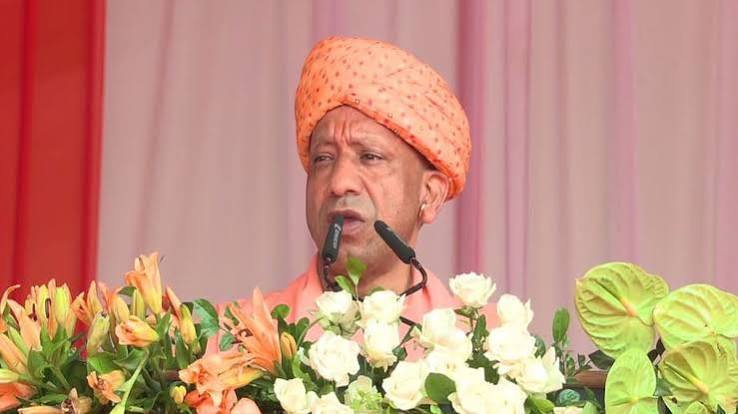
Chief Minister Yogi Adityanath has announced grand celebrations for Valmiki’s birth anniversary. The Valmikis, a major section of Dalits, claim descent from Maharshi Valmiki. Concentrated in towns and cities, they have produced an educated class and their goodwill towards BJP appears to be growing The Bahujan Samaj Party (BSP), founded by Kanshi Ram, once commanded a vast Dalit base across India, above all in Uttar Pradesh (UP). That base carried it to power in Lucknow. Mayawati, its leader, has been chief minister four times, and in 2007 she won the Assembly election outright, emerging as the single dominant force in UP politics. Over the last few elections, however, BSP’s vote share has declined steadily and the party has suffered heavy defeats. It now faces the most critical moment in its history, with no representation in either Lok Sabha or the UP Assembly. Kanshi Ram’s strategic vision had stitched together a broad Bahujan social coalition: Dalits, non-Yadav Other Backward Classes , the lower strata of Muslims and, later, Brahmins. Gradually, each of these groups grew disillusioned, and many deserted the party. Dalits, who make up roughly 21.6 per cent of UP’s population, were its core vote for decades. Among them, the Jatavs, Pasis, Koris, Sonkars, Valmikis and others became the strongest pillars of support. Kanshi Ram and Mayawati mobilised these communities through three strategies: first, a sense of dignity, by giving prominence to their identity, history, icons and heroes; second, an aspiration to a rightful share in development and politics; and third, a dream of a better future. Together, they delivered a huge Dalit vote to BSP. After 2012, though, the party’s electoral base visibly fragmented. BSP lost the Assembly election that year and today has no seat in Lok Sabha or the state Assembly, with the party’s sole MLA, Umashankar Singh, dying on August 5, 2026. Field studies suggest that, among Dalits, the party has retained its base among the Jatavs, although a section of them, too, has deserted it for various reasons. Dalit voters, then, stand at a political crossroads. Where once they had a single party, they now seek multiple choices. The most notable shift is towards the Bharatiya Janata Party (BJP), and for two reasons. First, the welfare schemes led by Prime Minister Narendra Modi, the Garib Kalyan Yojanas, have drawn Dalit and other marginalised communities to BJP. Second, the cultural politics through which BSP once mobilised Dalits has been largely appropriated by BJP strategists and reinvented. Its central plank was the forging of identity and the enhancement of dignity by celebrating Dalit cultures, histories and heroes and by honouring their saints, gurus and icons. Mayawati repeatedly said that one of the Bahujan regime’s chief achievements was the respect it accorded to these figures. BJP appears to be reinventing the same strategy with the coming Assembly election in view. Mayawati renamed Bhadohi as Sant Ravidas Nagar during an earlier tenure in 1997, honouring the revered saint worshipped widely among Dalits, especially Jatavs. Akhilesh Yadav restored the old name in 2014 after the Samajwadi Party (SP) took power in 2012. In July, Chief Minister Yogi Adityanath declared that the district would again be Sant Ravidas Nagar Bhadohi, winning goodwill among Dalits, most of whom in rural UP follow the Ravidas tradition. Adityanath has also announced grand celebrations for Valmiki’s birth anniversary. Sweepers and the Valmiki community, a major section of Dalits, claim descent from Maharshi Valmiki. Concentrated in towns and cities, they have produced an educated political class, and goodwill towards BJP appears to be growing among them. BJP, thus, is courting Dalits and marginalised groups through symbolic and substantive means. Cultural strategies BSP pioneered decades ago are now being deployed by BJP, alongside the economic benefits of its welfare schemes. Taken together, the two approaches may well draw Dalit voters towards BJP in the 2027 UP Assembly election. Badri Narayan (Badri Narayan is vice chancellor, Tata Institute of Social Sciences, Mumbai and the author of Republic of Hindutva) Courtesy : Open Magazine Note: This news is originally published on https:/openmagazine.com/bha and is used purely for non-profit/non-commercial purposes, especially human rights
Akhilesh Yadav questions Amit Shah over crimes against women, Dalits in U.P.
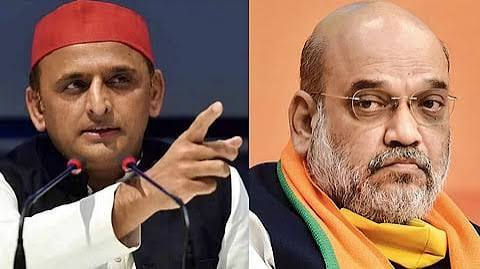
Home Minister should look into why women face so much injustice in Uttar Pradesh, why the state witnesses so many murders and why people from the Dalit community are among the worst affected, Akhilesh Yadav said Samajwadi Party president Akhilesh Yadav on Saturday (October 31, 2026) questioned Union Home Minister Amit Shah over crimes against women and Dalits in Uttar Pradesh, while party MP Awadhesh Prasad said the BJP had lost ground in the state, citing its recent electoral setbacks. “Home Minister should look into why women face so much injustice in Uttar Pradesh, why the state witnesses so many murders and why people from the Dalit community are among the worst affected,” Mr. Yadav said. Uniform Civil Code in U.P. if BJP voted to power again: Amit Shah Reacting to Mr. Shah’s assertion that the BJP government in Uttar Pradesh was firmly established and could not be dislodged, Mr. Prasad said the party’s political footing had already weakened. Mr. Shah had on Friday (October 30) compared the BJP government’s position in the state to “Angad’s foot”, saying nobody could move it, and expressed confidence that the party would return to power. “The foot has already been uprooted,” Mr. Prasad told PTI Videos. He said the BJP had failed to retain several seats in the recent Uttar Pradesh Legislative Council elections despite making every effort. He cited the party’s defeats in Varanasi, from where Prime Minister Narendra Modi has been elected, as well as in Lucknow and Agra. He also referred to its defeat in Prayagraj, a prominent educational centre. He also cited the 2024 Lok Sabha elections, saying the BJP had failed to achieve its target of winning all 80 seats in Uttar Pradesh. No government jobs in Uttar Pradesh for protesters ‘involved in regime change through violence’ “Under Akhilesh Yadav’s leadership, the Samajwadi Party won 37 seats, while the Congress won six. The opposition INDIA bloc secured 43 of the state’s 80 seats,” he said. Mr. Shah had announced on Friday (October 30) that the BJP would implement the Uniform Civil Code (UCC) in Uttar Pradesh if voted to power again. He had also targeted the SP leadership over the Ram temple issue, referring to the police firing on kar sevaks in Ayodhya on October 30, 1990, and saying the SP had ordered firing on Ram devotees while the BJP had built the Ram temple. Courtesy : The Hindu Note: This news is originally published on https:/thehindu.com/bha and is used purely for non-profit/non-commercial purposes, especially human rights
JNU Cuts Reserved PhD Seats for Dalit, Adivasi, Disabled Students; CPI(M) MP Writes to Education Minister
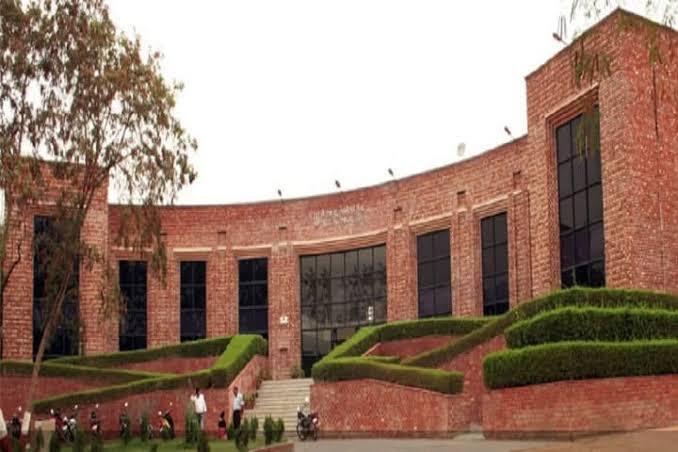
NEW DELHI — CPI(M) Lok Sabha MP K Radhakrishnan has written to Union Education Minister Pralhad Joshi, seeking urgent intervention over the reduction in reserved seats for Scheduled Caste (SC), Scheduled Tribe (ST) and Persons with Benchmark Disabilities (PwBD) candidates in Jawaharlal Nehru University’s (JNU) PhD admissions for the 2026–27 academic year. In a letter dated October 29, 2026, Radhakrishnan, who represents Alathur in Kerala and leads the CPI(M) in the Lok Sabha, raised serious concerns over the university’s PhD admission prospectus, pointing out that the seat allocations fall short of the prescribed reservation requirements. “It has come to light that the university administration has drastically slashed the mandated reservation quota for Scheduled Castes (SC), Scheduled Tribes (ST), and Persons with Benchmark Disabilities (PwBD),” the MP wrote in his letter. According to the figures cited by Radhakrishnan, JNU has allocated only 38 seats to Scheduled Tribe candidates against the 53 required under the 7.5 per cent reservation quota, calculated against a total of 711 seats. Similarly, SC candidates have been allotted 103 seats against the 107 required under the 15 per cent reservation quota. The shortfall is even more pronounced in the Persons with Benchmark Disabilities category. Against the 36 seats required under the 5 per cent reservation provision, the university has allocated just 17. Taken together, the three categories face a shortfall of 38 seats — 15 for ST candidates, four for SC candidates and 19 for PwBD candidates. Expressing strong concern over the disparity, Radhakrishnan described the reduction as a serious setback to the principles of equal opportunity and representation in higher education. “This denial of constitutional representation in one of India’s premier higher education institutions is a clear violation of social justice and equity,” he wrote. He further stated that such practices systematically deprive students from marginalised backgrounds of opportunities to pursue higher education and advanced research. MP demands withdrawal of JNU prospectus Seeking immediate corrective action, Radhakrishnan urged the Union Education Minister to intervene and direct the university administration to revise its admission policy and restore the required reserved seats. In his letter, he specifically requested the minister to direct JNU to “withdraw this flawed prospectus, rectify the seat matrix, and fully restore the constitutional quota reserved for SC, ST, and PwBD candidates without delay.” The MP is a member of the Parliamentary Standing Committee on Home Affairs and the Consultative Committee for the Ministry of Social Justice and Empowerment. Courtesy : Clarion India Note: This news is originally published on https:/clarionindia.com/bha and is used purely for non-profit/non-commercial purposes, especially human rights
Opinion | Dalit Vote In Uttar Pradesh: From BSP Monopoly To A Three-Way Fight
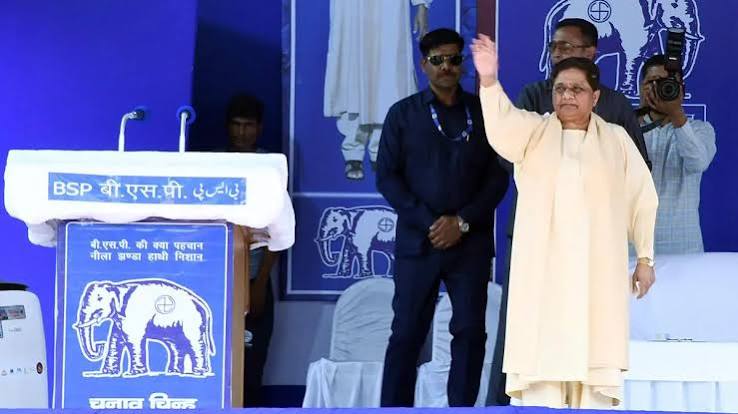
As the 2027 election approaches, Dalits, who make up about one in five voters, could decide who governs India’s most populous state. Uttar Pradesh’s politics has long run on caste arithmetic, and no bloc has been more consequential or more contested in recent years than the Dalits. Scheduled Castes (SCs) account for about 21% of the state’s population. For decades, they were seen as the private preserve of Mayawati’s Bahujan Samaj Party (BSP). That is no longer true. Ahead of the 2027 assembly election, the BJP, the Samajwadi Party (SP)-Congress alliance, and newer outfits like Azad Samaj Party are all courting Dalit voters, and their outcome could shape the next government. A vote that reaches far The Dalit population is not evenly spread. Kaushambi, Sitapur, Hardoi, Rae Bareli, and Unnao districts each have SC populations above 30%. At the other end, Shamli, Baghpat, Moradabad, Bareilly, and Balrampur districts sit between 11% and 13%. Eight assembly seats have an SC population above 40%, while 144 seats have less than 10%. It matters most in the 122 seats where SCs make up 20-30% of the population. Across 148 of the state’s 403 seats, the Dalit share exceeds the state average, and these are the seats where the community can most influence the result. Latest and Breaking News on NDTV Two communities, not one The Dalit electorate is not monolithic. Jatavs, about 12% of voters, are the BSP’s traditional core. Non-Jatav SCs, about 9%, are a more fragmented group, and the BSP was never as dominant among them. Its support there ran between 44% and 54% through 2017. Jatavs stayed loyal for two decades. BSP support in the community ranged from 60% to 87%, and it held firm even in 2022, when the party won a single seat. The break came only in 2024, when the BSP’s Jatav share fell to 44%. Non-Jatavs moved first The non-Jatavs left first. The BJP’s share among them jumped from 7% to 33% in 2017, a gain of 26 points, and reached 40% in 2022. This “non-Jatav SC consolidation” was central to the party’s 2017 sweep. The BJP exploited the differences between the two Dalit groups and built a coalition of upper castes, non-Yadav OBCs, and non-Jatav SCs that accounted for roughly 60% of the population. Meanwhile, the BSP’s non-Jatav support fell to 27% in 2022 and 15% in 2024. The BJP’s Jatav numbers stayed in single digits until 2017, then rose to 20% in 2022 and 24% in 2024. 2024: the reversal The 2024 general election broke the pattern. Non-Jatav SC support for the SP and its ally, the Congress, together constituents of the “INDIA bloc”, rose from 23% in 2022 to 56%. The BJP’s share among non-Jatavs dropped from 40% to 29%. The presence of the Congress in the alliance helped, as did the campaign warning that the Constitution and reservations were in danger. Latest and Breaking News on NDTV Jatavs moved too. Their support for the SP+ nearly tripled from 9% to 25%, matching the BJP among the community for the first time. The BSP’s lost votes did not go to one place. Non-Jatavs went mostly to the SP+, while Jatavs split between the SP+ and the BJP. The loss of the non-Jatav bloc cost the BJP a crucial 9% support gained by the SP+. Projected onto assembly segments, the SP+ led in about 225 seats and the BJP+ in 174, against a simple majority mark of 202 largely on account of this movement. The seat-level story The shifts show up clearly in the 148 seats with above-average Dalit populations: 2012: The SP dominated with 91 seats, the BSP had 34 and the BJP just 8. 2017: The BJP won 118 of the 148, and the SP fell to 14. 2022: The BJP held 93, the SP recovered to 43 and the BSP won none. 2024 (assembly segments): The SP+ led in about 94 segments, a gain of 51, while the BJP led in 44, a loss of 49. The BSP has gone from 34 seats in these constituencies to zero. Even where its base is most concentrated, it is no longer the force it was, and it may not even play spoiler. A weakened Mayawati, a growing challenger The BSP’s decline has hurt the party’s standing beyond arithmetic. Mayawati is seen as less active and less forceful than in her prime, and the “B-team of the BJP” label has stuck to her, feeding the perception that the BSP splits opposition votes to the ruling party’s benefit. New players are trying to fill the space. Chandrashekhar Azad “Ravan” of the Azad Samaj Party (ASP) is gaining some traction among Dalit youth, having won the Nagina Lok Sabha seat, though his party’s reach is still limited. Aakash Anand, Mayawati’s nephew, who was reappointed as national coordinator on October 5, just 25 days after being expelled on September 10, is trying to revive the BSP vote base. The parties’ strategies Each major party is tailoring its pitch. The SP is planning to field SC candidates even in general, unreserved seats. The tactic worked in 2024, when the party won Faizabad (Ayodhya) with a Dalit candidate. It is also reportedly adopting blue, the colour associated with Dalit identity and Ambedkarite politics, for the dress of its student wing, the Samajwadi Chhatra Sabha. The BJP faces a more delicate task. It hopes to win back non-Jatavs through welfare schemes and to attract Jatavs through political representation. Having built its rise on non-Jatav support, it cannot afford to lose that base for good. The BSP is attempting to revive its SC votebank through Aakash, who is decently popular amongst youth and is Mayawati’s counter to Ravan. He addressed his first post-reinstatement public rally in Bulandshahr on October 28, pledging his loyalty to Mayawati and urging workers to prepare for the elections. Who benefits from the BSP’s fall? The BSP’s decline has so far helped the SP more than the BJP, in both 2022 and 2024. That matters for
JNU PhD Admissions: CPI(M) MP Flags Shortfall in Seats for Dalit, Adivasi and Disabled Students
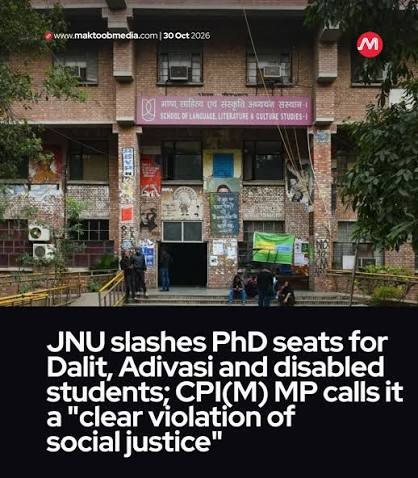
CPI(M) Lok Sabha MP K Radhakrishnan has written to Union Education Minister Pralhad Joshi seeking urgent intervention over an alleged shortfall in reserved seats for Scheduled Caste (SC), Scheduled Tribe (ST) and Persons with Benchmark Disabilities (PwBD) candidates in Jawaharlal Nehru University’s (JNU) PhD admissions for the 2026-27 academic year. In a letter dated October 29, Radhakrishnan, who represents Alathur in Kerala, alleged that the university had drastically reduced the number of seats allocated to these categories in its PhD admission prospectus. According to the letter, JNU has allocated 38 seats to ST candidates against the 53 required under the 7.5% reservation quota out of 711 seats. SC candidates have been allocated 103 seats against the 107 required under the 15% quota. The shortfall is also evident in the PwBD category. Against the 5% reservation requirement of 36 seats, the university has allocated only 17, according to the MP. Radhakrishnan said the prospectus therefore fell short by a total of 38 seats across the three categories: 15 for ST candidates, four for SC candidates and 19 for PwBD candidates. “This denial of constitutional representation in one of India’s premier higher education institutions is a clear violation of social justice and equity,” he wrote, adding that such practices deprived marginalised students of higher academic opportunities. Indiatravel guide He urged the education minister to direct the JNU administration to withdraw the prospectus, correct the seat allocation and restore the reserved seats without delay. Students Protest Alleged Reservation Shortfall The MP’s intervention comes amid an ongoing protest at JNU over the PhD admission process. The Birsa Ambedkar Phule Students’ Association (BAPSA) has been holding an indefinite sit-in at the university’s T-Point since October 24, alleging irregularities in the allocation of reserved seats. The organisation claims that 15 ST seats and four SC seats have been left unfilled and has demanded that they be re-notified. BAPSA has also questioned the exclusion of candidates from the June 2025 UGC-NET cycle, which it says was initially included in the list of eligible cycles but later left out without prior notice. The organisation has further alleged that the administration agreed to form a committee to examine the reservation issue but proceeded to notify the PhD viva voce process without resolving the matter. JNUSU councillor Komal Devi said the university had issued an admission notice halting admissions under the NET category, while JRF-category admissions were scheduled to begin on October 30. She said the protest would continue until the 15 ST and four SC seats were re-notified, and warned that students would oppose the viva voce process if their demands were not addressed. BAPSA has also called for the implementation of reservation in the interview process, the publication of category-wise seat allocations across departments and centres, and the implementation of recommendations made by various university committees. The organisation has released figures alleging that JNU failed to meet reservation requirements across SC, ST, OBC and PwBD categories over the past decade. These figures have not been independently verified. Radhakrishnan is a member of the Parliamentary Standing Committee on Home Affairs and the Consultative Committee for the Ministry of Social Justice and Empowerment. Courtesy : TOP Note: This news is originally published on https:/theobserverpost.com/bha and is used purely for non-profit/non-commercial purposes, especially human rights
Telangana Dalit youth dies by suicide after alleging harassment by police, government hospital doctor
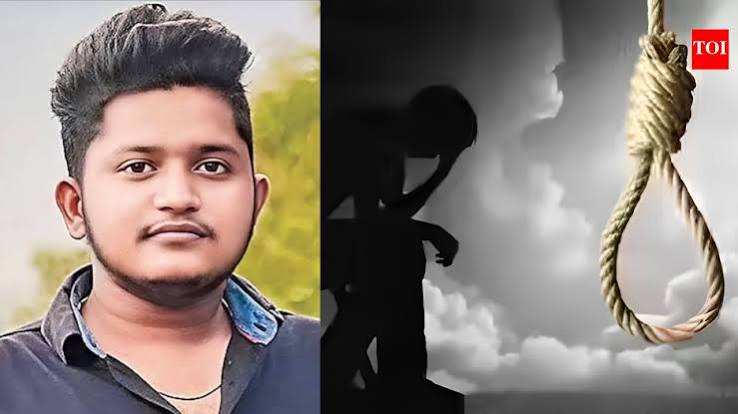
Police claimed there was no truth to the allegation that the deceased was beaten up at the police station, saying video proof was available in this connection Hyderabad: A Dalit youth allegedly died by suicide in Adilabad, Telangana, accusing police and hospital staff of insulting him after he went seeking medical treatment for a scorpion bite, with the police refuting his claim that they beat him up. According to police, Kamble Rahul (27), who was bitten by a scorpion on the evening of August 28, went to the state-run RIMS hospital in Adilabad for treatment, where he started filming a video alleging negligence. This led to an argument with a doctor who called the police. Police took him to a station and handed him over to his father. Later, he died by suicide at his residence by hanging himself, police said on Friday. In a purported suicide note, he alleged that the doctor rebuked him and police beat him up, they said. A case was registered regarding the incident and began an investigation, Police said. Police also claimed there was no truth to the allegation that the deceased was beaten up at the police station, saying video proof was available in this connection. Protesting the incident, Dalit organisations staged a dharna at the hospital on Thursday demanding justice for the deceased’s family. The opposition BJP and BRS demanded justice for the family, including payment of ex gratia. Observing that Rahul was the family’s breadwinner, BJP MLA Payal Shankar demanded a time-bound inquiry into the incident and a job for a family member. He found fault with hospital staff complaining to the police against Rahul and the police for allegedly harassing him. Courtesy : The Pioneer Note: This news is originally published on https:/thepioneer.com/bha and is used purely for non-profit/non-commercial purposes, especially human rights