
Parliament passes Transgender Persons Amendment Bill, 2026 with Rajya Sabha approving it today
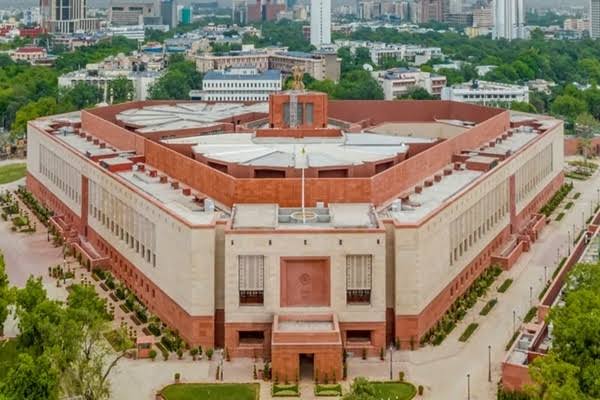
Parliament has passed the Transgender Persons (Protection of Rights) Amendment Bill, 2026, with the Rajya Sabha approving it today. The bill was passed by the Lok Sabha yesterday by a voice vote amid an Opposition-led walkout. The bill seeks to redefine the category of transgender, removes the provision of self-perceived gender identity and excludes several socio-cultural identities as well as transmasculine individuals from its ambit. It also further defines transgender persons within a biological framework, based on intersex variations and differences in sexual development. Replying to the discussion on the Bill in the Rajya Sabha, Social Justice and Empowerment Minister Dr Virendra Kumar said the government is compassionate towards the well-being of the transgender community. He said the Bill has provisions to empower the transgenders and give them dignity. The Minister said that the NDA government has taken several initiatives to bring transgender people to the mainstream and stop discrimination against them. Starting the discussion in the Upper House, Congress MP Renuka Chowdhury said this bill dilutes the privacy of an individual provided under the Constitution. Opposing the Bill, Ms Chowdhury said self-identification cannot be taken away through bureaucratic certification. Criticizing the government, she said that the proposed bill undermines the fundamental rights and dignity of transgender persons. Calling such a move wrong and illegal, she argued that forcing transgender persons to provide their identity through official certificates is against the spirit of equality and dignity guaranteed by the constitution. She also questioned the government’s approach for not properly consulting with the transgender community before bringing the Bill. She also referred to the Supreme Court’s landmark NALSA judgement of 2014, which recognized the right of transgender persons to self-identify their gender. Ms Chowdhury said the proposed Bill violates the principles laid down in that judgement and fails to respect an already established legal framework. DMK MP Tiruchi Shiva also opposed the Bill, saying that even if the Bill is passed in Parliament with a majority, it will be struck down by the Supreme Court. He further added that the Bill violates Articles 14, 15, 19 and 21 of the Constitution and it deprives the community of the right to freedom, dignity and self-determination. Supporting the Bill, BJP MP Medha Vishram Kulkarni said, ” This Bill ensures justice, dignity, protection from criminalisation and legal safeguards for transgender persons. She also thanked Prime Minister Narendra Modi for bringing this bill with certain amendments in order to ensure that the benefits reach the deserving people in a proper manner. She said there is a need for a law that brings justice to real transgender individuals and punishes fake ones. Mrs Kulkarni said the benefits should be extended to those who are transgender by birth. She said that the amendment to extend punishment will bring down the rate of crime and forced identities. TMC’s Saket Gokhale said that 31% of Transgender people in India have attempted suicide because of the discrimination that they are facing. He alleged that now the government is going to start discriminating against them as though social discrimination were not enough. He called it unacceptable. Mr Gokhale expressed concern that gender is going to be decided by the Chief Medical Officer and a District Magistrate, and the bill does not prescribe any qualifications for the Chief Medical Officer. Sanjay Singh of AAP said the Bill is a big let-down for the transgender community. He accused the government of not doing anything for the community. RJD’s Manoj Kr Jha said that prejudices against transgender people should stop, and they should be able to live with dignity. He added that self-determination of gender should not be taken away. CPI(M)’s John Brittas said it is a black-letter day and the Bill is taking India a century back. He pleaded with the government to either withdraw the Bill or refer it to a Select Committee. Jaya Bachchan of the Samajwadi Party also questioned the government over the legislation. She sought to know what the urgency was in bringing the Bill, without examining it with the depth and care that it deserved. Courtesy : NOA Note: This news is originally published on https:/newsonair.com/bha and is used purely for non-profit/non-commercial purposes, especially human rights
“Those who laid the foundation stone of the Ram Temple were Dalits…” Arun Bharti’s major attack
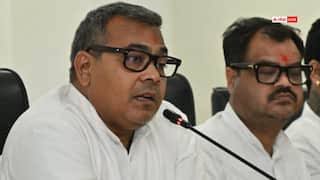
Arun Bharti in Ayodhya: Arun Bharti launched a scathing attack on the opposition over the recent controversy surrounding the Ram Temple, the opposition’s protests in Parliament, and their comments on Sanatan Dharma. He labeled the opposition as anti-Dalit. Lok Janshakti Party (Ram Vilas) MP from Jamui, Arun Bharti, arrived in Ayodhya on Sunday (August 2). He first performed puja at Hanumangarhi and then visited Ram Lalla at the Shri Ram Janmabhoomi complex. Speaking to the media after the darshan, Arun Bharti launched a scathing attack on the opposition over the recent controversy surrounding the Ram Temple, the opposition’s protests in Parliament, and their comments on Sanatan Dharma. During this visit, he called the opposition anti-Dalit for not visiting the Ram Temple. He said, “They didn’t go because a Dalit, Kameshwar Chaupal, laid the foundation stone for the temple. They were Dalits, so they didn’t go for darshan.” He further questioned, “Will you further defame the name of Mata Shabari? The descendants of Mata Shabari will protect their faith and honor and will take whatever steps are necessary.” What did Arun Bharti say after visiting the Ram Temple? After visiting Ram Lalla, Arun Bharti said that he, his family, and his party have always received the blessings of Lord Ram and the saints of Ayodhya. He said that it is his privilege and duty to come to Ayodhya to seek the saints’ blessings, express his gratitude, and bow at their feet. Regarding the recent controversy surrounding the Ram Temple, the MP said that the investigation report does not allege any priest, saint, or Mahant. According to him, the allegations are only against the contractor’s employees. He alleged that the same people who previously opposed the temple’s construction and consecration are trying to defame Lord Ram and the Ram Temple. Accused the opposition of having an anti-Dalit mentality Arun Bharti also accused the opposition of having an anti-Dalit mentality. He said that Kameshwar Chaupal, who laid the foundation stone of the Ram Temple, is being insulted. Referring to Mata Shabari, he said that the opposition is constantly questioning the Sanatan faith and its associated symbols. Responding to the opposition’s protest in Parliament, Arun Bharti said that insulting Sanatan, God, and saints will not be tolerated at any cost. He said that this is not just a question of the faith of saints and sages, but of the entire Sanatan society, and that the Dalit community will always stand up to protect its faith and honor. Written By: Shivendra Dwivedi, Ayodhya | Edited By: Fayaz Ul Mustafa About the author Shivendra Dwivedi is associated with ABP News from Ayodhya. With four years of experience, he keeps a close eye on religious, social, and administrative news. Courtesy: Hindi News
Eyeing Dalit votes, BJP begins Kalash Yatras across Punjab
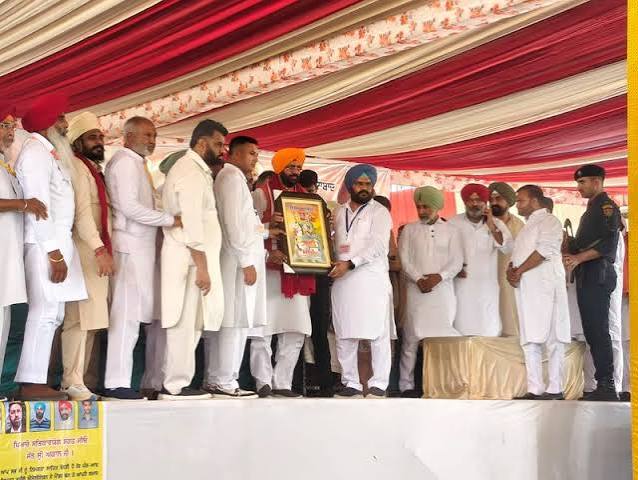
The BJP on Sunday launched statewide Kalash Yatras to distribute soil brought from Varanasi among temples dedicated to Guru Ravidas. The soil has been brought by senior Punjab BJP leaders from Seer Goverdhan near Varanasi, universally acknowledged as the birthplace of Guru Ravidas.South Asians & Diaspora The yatras that will continue till August 6 are being seen as the party’s move to expand its footprint among the Dalits, who constitute around one-third of the state’s population. The Kalash Yatras are being held as part of the BJP’s Samrasta Sankalp Abhiyan to commemorate the 650th birth anniversary of Guru Ravidas. The Samrasta Sankalp Abhiyan was launched on July 29, coinciding with the festival of Guru Purnima. According to party insiders, presidents of all districts were called for a meeting at Guru Ravidas Bhawan in Sector 7, Chandigarh, on Saturday. Each of them was handed over a ceremonial pitcher containing the sacred soil. The meeting was held under the leadership of state BJP president Kewal Singh Dhillon. Anil Vasudeva, a former Mayor of Pathankot, said the soil would be mixed with Tulsi plants that hold deep cultural and spiritual value. “It will then be distributed among Ravidas temples in Punjab,” he said. A party leader said, “We have been asked to do anything and everything to make sure the party forms the government in Punjab (in the Assembly poll scheduled for early next year).” Saini slams AAP over drugs Faridkot: Haryana CM Nayab Singh Saini launched a sharp political attack on the ruling AAP, questioning its sincerity in tackling Punjab’s drug menace. “How can those who allegedly consumed drugs inside the Assembly ever make Punjab drug-free?” he said. Saini inducted several local figures into the BJP. At a Denotified Tribes community conference in Sadiq, he promised that job reservation for the community, withdrawn by the Punjab Government, would be restored if the BJP came to power in 2027. Courtesy : The Tribune Note: This news is originally published on https:/thetribune.com/bha and is used purely for non-profit/non-commercial purposes, especially human rights
YSRCP Alur MLA Virupakshi, son arrested following ‘attack’ on Dalit family
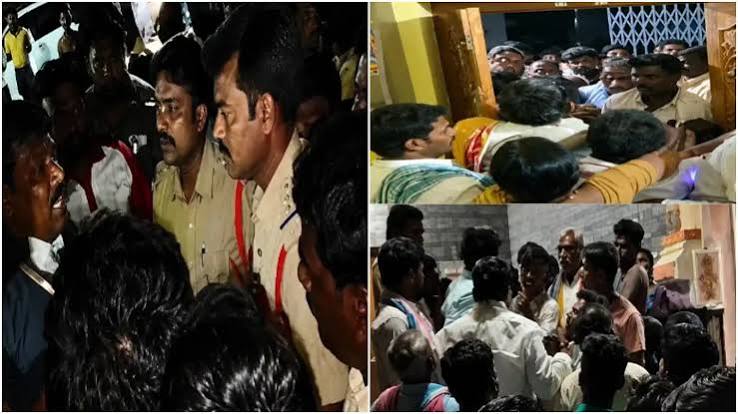
Tension prevailed at Sangala and Nemakallu villages of Chippagiri mandal following the clash and also at the Chippagiri police station with the YSRCP leaders staging a protest demanding the release of the arrested MLA YSR Congress Party (YSRCP) legislator from Alur B. Virupakshi and his followers were arrested in the early hours of Sunday for their alleged involvement in the attack on a Dalit family following a clash between the followers of the YSRCP and TDP activists. Tension prevailed at Sangala and Nemakallu villages of Chippagiri mandal following the clash and also at the Chippagiri police station with the YSRCP leaders staging a protest demanding the release of the arrested MLA. According to information reaching here, an argument allegedly broke out between a TDP activist from Nemakallu and a YSRCP activist from Sangala on some issue over phone. The issue allegedly escalated with Mr. Virupakshi visiting Nemakallu in support of his follower. This led to attacks and counter attacks, with the TDP alleging that the MLA and his followers entered the house of a party SC activist, Nagaraju, and attacked him and his wife. It was alleged that the clothes of Mr. Nagarajau’s wife were torn by the mob. Tension prevailed for some time as the two groups attacked each other. The vehicles of Mr. Virupakshi and TDP leader Purusotham were damaged. Mr. Virupakshi’s brother suffered an injury on his hand. The police reached the village and brought the situation under control. Well past midnight, the police reached the residence of Mr. Virupaksha and picked him and his son Chandrasekhar from their residence at Chippagiri. Fourteen YSRCP activists were also arrested. TDP Alur Assembly incharge Vaikuntam Jyothi held the YSRCP responsible for the clashes and alleged that the followers of the MLA attacked Mr. Purushotham, TDP mandal convener, and damaged his car. YSRCP leaders condemned the midnight arrest of Mr. Virupakshi, describing it as blatant misuse of police machinery. They claimed that the MLA rushed to Chippagiri only after receiving a distress call from YSRCP activist Giri, whose life, they said, was under threat. Instead of protecting the victim, the TDP workers attacked the MLA and his brother with stones and sticks, they alleged. The police registered attempt-to-murder and SC/ST cases against the victims, they added. YSRCP leaders also condemned the manner of the arrest, stating that the police broke open the doors of the MLA’s residence at around 3 a.m., seized CCTV hard disks, and forcibly took away the MLA and his son without allowing them to even change their clothes. Hareesh P Courtesy : The Hindu Note: This news is originally published on https:/thehindu.com/bha and is used purely for non-profit/non-commercial purposes, especially human rights
DMK slams Congress for ‘trading trust for berths’
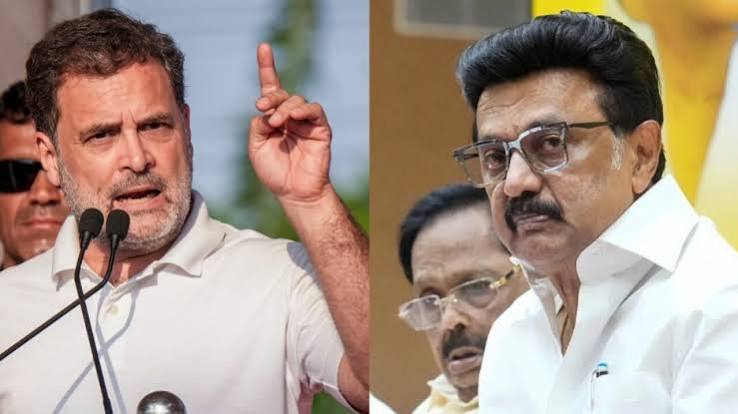
NEW DELHI: DMK Sunday mounted a furious pushback against Rahul Gandhi’s describing any support to govt’s widely speculated move to revive the bill to increase Lok Sabha’s strength, coupled with delimitation of constituencies, as a betrayal of Tamil Nadu amid buzz in political circles that the regional party may come around to backing the measure. A day after Rahul, during his visit to Tamil Nadu, said any party supporting the constitution amendment bill in Parliament will be a 21st century Ettappan, a historical figure reviled for treachery, senior DMK MP Dayanidhi Maran came out with a blistering retort. “These are the people who traded our trust in them for mere ministerial berths,” he said, lashing out at “poisonous snakes” which sell trust to “buy” power, a reference to Congress’s decision to snap ties with DMK and TVK. Maran’s strongly worded rejoinder captured the lingering sense of betrayal within the Dravidian party over Congress’s swift embrace of its rival after the national party went to the poll as DMK’s ally and was fully backed by the latter on all key issues, including Rahul’s leadership, in national politics through its years in office. BJP is hopeful that DMK’s bubbling anger with Congress will help its bid to win over the party’s support for its key legislative measures, especially delimitation, in Parliament, even though govt has so far not taken any official step to revive the bill that was defeated by a united Opposition in the last session. DMK has anyway indicated its openness over the issue, saying it will take a call after studying the bill and insisting that the proposed law should not harm south India’s interests. Rahul’s comments are also a nod to the acknowledgement in Opposition camp of the possibility of DMK revising its stand on a bill which, opposition parties have alleged, will allow BJP-led governing alliance to reconfigure constituencies to its advantage for the 2029 Lok Sabha poll. Targeting Rahul, Maran added, “Those who come to Tamil Nadu and stay silent about Cauvery rights are traitors. Those who only talk about irregularities in the exam, rather than insisting on completely abolishing NEET are traitors. Those who condemn BJP’s horse-trading but ignore TVK’s disgusting horse-trading are merely continuing that betrayal.” Courtesy : TOI Note: This news is originally published on https:/timesofindia.com/bha and is used purely for non-profit/non-commercial purposes, especially human rights
Warring downplays pro-Channi slogans, accuses AAP of politicising Congress events
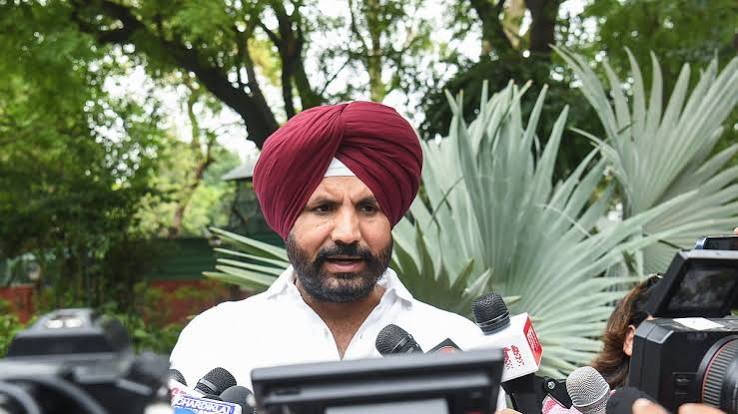
Seeking to end the controversy, Warring himself raised the slogan, “Charanjit Singh Channi Zindabad.” Punjab Congress chief Amrinder Singh Raja Warring on Sunday brushed aside the pro-Charanjit Singh Channi slogans raised at Congress programmes over the past two days, accusing the Aam Aadmi Party (AAP) of blowing the issue out of proportion and television channels of focusing only on the sloganeering. The remarks came after supporters of Jalandhar MP and former chief minister Charanjit Singh Channi interrupted the Congress’ “Har Booth, Congress Mazboot” programme in Barnala with pro-Channi slogans in the presence of AICC general secretary in-charge of Punjab, Bhupesh Baghel. Similar slogans were raised at party events in Patiala and Sangrur on Saturday. Interacting with reporters in Barnala, Warring said, “The current (AAP) government is presenting the slogans raised in favour of Charanjit Singh Channi as if they were chanted in favour of Pakistan.” He also criticised television channels for highlighting only the sloganeering while ignoring other developments at the party’s outreach events. “No television channel is showing that a leader from Shutrana joined the Congress on Saturday, or that 40-50 AAP MLAs are likely to switch sides,” he alleged. “I gave a speech, and everybody listened to it. The party workers clapped. But no TV channel is showing it,” Warring said, questioning the attention given to the slogans. “What happens if a slogan is raised? Channi had been our chief minister. I myself had raised the slogan ‘Ghar Ghar Challi Gal, Channi Karda Masle Hal’ (Go from house to house and say, Channi does resolve problems). I had raised slogans in favour of Partap Singh Bajwa also,” he said. Seeking to end the controversy, Warring himself raised the slogan, “Charanjit Singh Channi Zindabad.” The episode has once again drawn attention to the Congress’ internal factionalism in Punjab, despite the party leadership’s repeated claims of working towards organisational unity ahead of the 2027 Assembly elections. The leadership tussle resurfaced after the Congress high command on July 1 retained Warring as the Punjab Congress chief while appointing Channi as the chairperson of the party’s campaign committee. Courtesy : TNIE Note: This news is originally published on https:/thenewindianexpress.com/bha and is used purely for non-profit/non-commercial purposes, especially human rights
Slipper thrown at Pappu Yadav over Ram temple skit; MP alleges bid on life
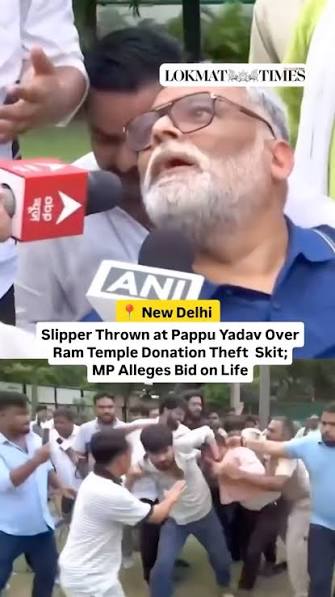
Yadav was addressing the media amid the controversy over the protest staged on Friday, which has led to an FIR being registered in Varanasi against him for allegedly hurting religious sentiments. Independent MP Pappu Yadav was targeted with a slipper during a press conference at his residence on Sunday after he defended his skit inside the Parliament House complex on the alleged theft of donations at the Ram temple. The incident triggered a scuffle between his supporters and the alleged attacker. Yadav was addressing the media amid the controversy over the protest staged on Friday, which has led to an FIR being registered in Varanasi against him, Leader of Opposition in the Lok Sabha Rahul Gandhi and Samajwadi Party MP from Faizabad (Ayodhya) Awadhesh Prasad for allegedly hurting religious sentiments. During the press conference, a man interrupted Yadav, questioned his actions and accused him of insulting Lord Ram before hurling a slipper at the MP. Yadav’s supporters immediately overpowered the man, leading to a brief scuffle. Yadav later alleged that it was an attempt on his life. According to police sources, the alleged attacker has been identified as 34-year-old Sumit, a native of Bulandshahr in Uttar Pradesh who works in an iron fabrication business in Ghaziabad. Police said he has no previous criminal record. Police also said another man, identified as Happy, was waiting in an SUV parked outside Yadav’s residence when the incident took place. Investigators are verifying their claims and probing the motive behind the attack. The controversy stems from a protest staged by Rajesh Ranjan alias Pappu Yadav inside the Parliament House complex on Friday. Dressed in saffron attire, Yadav, along with other Opposition MPs, performed a skit near the Makar Dwar to protest the alleged embezzlement of donations at the Ram temple in Ayodhya. As part of the demonstration, MPs, including Rahul Gandhi, placed money into donation boxes while Yadav slipped cash into his pockets to symbolise the alleged theft of donations at the temple. The BJP on Sunday accused Gandhi and Yadav of hurting Hindu sentiments and demanded that they publicly apologise. However, a defiant Yadav said they were protesting to protect Sanatan and will not be cowed down by any number of FIRs. His remarks came a day after an FIR was registered in Varanasi on a complaint by seers against him, Gandhi and Awadhesh Prasad. Separately, BJP MP Bansuri Swaraj and other party leaders lodged a police complaint in Delhi. The RSS affiliate Vishva Hindu Parishad (VHP) also criticised Gandhi and Yadav, alleging that the two leaders insulted Sanatan Dharma through the protest staged in the Parliament complex. Courtesy : TNIE Note: This news is originally published on https:/thenewindianexpress.com/bha and is used purely for non-profit/non-commercial purposes, especially human rights
Can BJP crack Punjab? Inside its strategy to challenge AAP and Congress in 2027
NEW DELHI: When it comes to BJP’s election playbook, there is always a method to the madness. Punjab, which votes early next year, appears to be following the same script. All these headlines, when looked at in isolation, appear to be one-off political developments separated in time. But one look at them together in the context of a wider long-term objective, they appear not just connected but also planned with a purpose. This is a perfect example of the BJP election playbook in action. The BJP, which over the years played second fiddle to the Akalis in Punjab, contested the 2022 elections alone after snapping ties with the Shiromani Akali Dal (SAD). However, it could win only 2 seats with a vote share of 6.6%. Even the 2024 Lok Sabha elections were a huge disappointment. The BJP polled 18.65% of votes but could not win any seat. However, the BJP appears determined not to let the past numbers dictate its future strategy. And that explains the aggression with which the party has gone for the kill in Punjab. Punjab, which over the years alternated between the Congress and the Akalis, broke the duopoly in 2022 when it overwhelmingly voted for Arvind Kejriwal’s AAP. And that perhaps gives BJP its biggest hope as it marshals its resources. Now, let’s analyze all these headlines as a part of one story to understand how the BJP is gearing up to add another state to its ever-expanding kitty. The Ravidassia outreach When Prime Minister Narendra Modi visited Punjab on February 1 this year, the BJP’s election playbook was already in action. The visit was part of a well thought-out and planned outreach that could increase the party’s base and presence in the state. The occasion was the 649th Birth Anniversary of Sant Guru Ravidas Ji. The Ravidassia community form an important electoral bloc of Punjab’s Scheduled Caste population, especially in the Doaba region. A slew of announcements were made, including renaming of Adampur Airport after Guru Ravidas and the launch of the Shri Guru Ravidas Ji Maharaj Express between Jalandhar and Varanasi. It was the start of a planned outreach. That outreach has continued with the Punjab BJP launching the statewide implementation of the ‘Samrasta Sankalp Abhiyan’ from July 29, the auspicious occasion of Guru Purnima, to commemorate the 650th birth anniversary year of Guru Ravidas Maharaj. Punjab BJP chief Kewal Singh Dhillon said the nationwide campaign will continue till February 20 (Magha Purnima) under the guidance of the BJP national leadership and aims to spread Guru Ravidas’s timeless message of equality, dignity, social harmony and social justice across Punjab. Targeted political acquisition The BJP, enriched by its experience from victories in states like West Bengal and Odisha, perhaps knows the importance of organisational strength in winning states. So in Punjab, after breaking its alliance with the Akalis, the BJP has been on an overdrive to build a strong local leadership. After the 2022 elections, several prominent Congress leaders had joined the BJP. And now in the run up to the 2027 electoral battle, seven AAP members of Rajya Sabha from the state are already a part of the party. And this acquisition includes Raghav Chaddha, once the most trusted associate of AAP chief Arvind Kejriwal. Chadha has a good understanding of the electoral thinking of AAP that rules Punjab now and can help the BJP capitalise on its weaknesses. As the elections approach, we could see Raghav Chaddha play a greater role in crafting and implementing BJP’s Punjab campaign. The ‘Dhillon’ signal When the BJP replaced one Congress export Sunil Jakhar with another Kewal Singh Dhillon as its state chief, the change was aimed to send across a message. Dhillon, who is a seasoned politician and a prominent industrialist, became the first Jat Sikh to head the BJP in the state. The purpose was clear: outreach among Sikh voters to help increase the acceptability of the party after its Akali alliance ended. The BJP would hope that Dhillon could help the party expand its rural footprint. Besides Dhillon’s political base is in Barnala, which falls in the Sangrur-Malwa region. This region is considered a stronghold of Punjab chief minister Bhagwant Mann and the Aam Aadmi Party. Ravneet Singh Bittu and Punjab focus Ravneet Singh Bittu, who joined the BJP in March 2024 ahead of the general elections after ending his long association with the Congress, seems to have an important role in the saffron party’s blueprint for Punjab. During the 2024 campaign, Bittu was projected as an important Sikh face for the BJP by none other than Amit Shah. For those who remember, the entire BJP had rallied in support of Bittu after Rahul Gandhi had referred to him as “traitor”. The BJP made Bittu a minister in the Modi government and a member of Rajya Sabha despite his Lok Sabha election loss from Ludhiana in 2024 to showcase his importance. But after his RS tenure ended in June this year, he quit as minister amid hints that he will play a key role in BJP’s Punjab plans. According to reports, in June, Bittu had expressed his desire to work for Punjab in the Vidhan Sabha after spending nearly 17 years in Parliament. Bittu had then said that the BJP made him the minister even though he had lost the 2024 parliamentary elections. “People of Punjab are fed up (with other parties). People are very much aware of development and progress taking place in other (BJP-ruled) states and they want prosperity in Punjab as well,” Bittu had then said. Ravneet Singh Bittu is the grandson of former Punjab chief minister Beant Singh, who was assassinated in 1995. During his political career in the Congress, he was elected MP thrice and also served as the grand-old-party’s leader in the Lok Sabha and as its whip in the Lower House. PM Modi’s ‘double-engine’ promise When Prime Minister Narendra Modi visited Punjab for the second time on July 17, his focus was on development, youth
A rollback of rights, or an imperfect step forward? India amends transgender rights act.
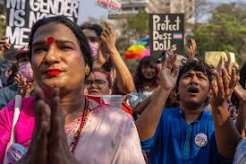
Activists and members of the transgender community shout slogans during a protest against a transgender rights amendment bill passed in the lower house of Parliament, in Mumbai, India, March 25, 2026. On a hot evening at Jawaharlal Nehru University in south Delhi, students sit painting protest banners beneath rainbow flags. Verses of the Urdu poets Faiz Ahmed Faiz and Habib Jalib – long associated with protest movements across South Asia – play from a speaker nearby. They have gathered to oppose a new law that has ignited a debate that echoes in many parts of the world: Who has the authority to determine a person’s gender identity? The individual, a doctor, or the state? Since 2014, India has granted transgender people legal recognition by grounding their self-identification in constitutional rights. That changed in March when the Parliament passed the Transgender Persons (Protection of Rights) Amendment Act, which requires medical evaluation and state certification of gender. Why We Wrote This India has changed the process for how individuals identify their gender, sparking protests and court challenges. The government says this amendment is about ensuring that benefits reach the right people, while LGBTQ+ rights activists call the law regressive. India’s new law comes in the context of wider debates about identity in India under the leadership of Prime Minister Narendra Modi. Supporters say the change is necessary to prevent misuse of welfare programs intended for transgender individuals. Critics say it reverses a decade of legal gains. The amendment is currently being challenged at the Supreme Court, where trans rights advocates are arguing that it violates Indians’ constitutional rights. “There is nothing wrong with a simple verification process,” says Arvind Sharma, a master’s student, outside the Jawaharlal Nehru University protest. “This law will help the actual transgender community and expose the fake ones.” Despite its strength, US military faces a reputational crisis over Iran Students gather beneath rainbow flags during a protest against India’s Transgender Persons (Protection of Rights) Amendment Act at Jawaharlal Nehru University in New Delhi, April 11, 2026. Supporters of the law say it creates a more accountable system for legal recognition, while critics argue it rolls back transgender rights. Aakash Hassan The debate is deeply personal for Bhumi, a transgender undergraduate from Lucknow in northern India who, like many in India, uses a single name. Raised as a girl and recognized as such in her official documents, she worries the new law could place her identity under state scrutiny. “I don’t want someone else deciding whether I am transgender enough,” she says. “That feels invasive and humiliating.” Get the Monitor Stories you care about delivered to your inbox. Your e-mail address Sign up By signing up, you agree to our Privacy Policy. “I hope the courts will intervene,” she adds. How this fits into the history of trans rights in India South Asia has a long, unique history of gender diversity. For centuries before modern LGBTQ+ rights movements emerged, the region recognized there were communities that existed outside biological designations of gender. Most famous are the hijras, who traditionally attended weddings, births, and religious ceremonies across the subcontinent, offering blessings and receiving gifts or alms in return. In southern India, two other groups, the Aravanis and jogtas, uphold local Hindu traditions. America’s debt is skyrocketing. Why isn’t Congress doing anything about it? Visibility has not translated into social acceptance. The term hijra has long carried social stigma, and transgender Indians face high levels of discrimination, family rejection, and economic exclusion. Yet the existence of these third-gender communities has helped shape the LGBTQ+ rights movement in India. While Western countries debated whether trans people existed, in India, that was a widely accepted fact. It made it harder to argue that LGBTQ+ rights are a foreign import. On the contrary, activists in India say that anti-LGBTQ+ discrimination is a colonial holdover. But this history brings unique challenges, too. For years, terms like “transgender” and “third gender” were largely treated as synonymous with belonging to one of these traditional communities, which left many Indians in a legal gray area. That changed in 2014, when India’s Supreme Court recognized transgender people and affirmed their right to determine their own legal gender markers – no government or medical sign-off required. Nazariya Kutty gets ready in a parlor to participate in the Koovagam transgender festival in Villupuram, in the southern Indian state of Tamil Nadu, April 28, 2026. Mahesh Kumar A./AP The unanimous ruling was seen by supporters of self-identification as a watershed moment, pushing India ahead of much of South Asia on transgender rights. Yet the ruling itself did little to outline how benefits and protections would be delivered to India’s trans population, which researchers estimate is between 2 million and 6 million people. (India’s 2011 census recorded 487,803 transgender people, but that is broadly considered a vast undercount due to a reluctance to self-report.) A 2019 law called the Transgender Persons (Protection of Rights) Act prohibited discrimination against trans Indians, retained a broad definition of transgender identity, and outlined a process for trans Indians to obtain official recognition through district authorities. Many LGBTQ+ activists criticized the 2019 act for creating bureaucratic barriers, but welcomed the reaffirmation of the right to self-identification. The new law signed in March “erases all of that,” says Arundhati Katju, a senior advocate challenging the amendment before the Supreme Court. The new law narrows the definition of transgender people to recognized sociocultural communities or those meeting specific biological criteria, and grants the state the authority to determine who qualifies. The debate today Medha Vishram Kulkarni, a member of Parliament from the ruling Bharatiya Janata Party (BJP) and a primary supporter of the new act, says the government has “no intention of undermining” Indians’ constitutional rights. “Self-identification is central to an individual’s dignity and lived experience,” she says, in a written interview with the Monitor. “However, where legal entitlements, welfare benefits, or official records are involved, the State also has a responsibility to ensure transparency, consistency, and accountability.” When
UP horror: 9-year-old dalit girl ‘gang-raped’ by 5 minors near school ground
SHAHJAHANPUR: Five minors have been booked for allegedly gang-raping a nine-year-old dalit girl in a village in Uttar Pradesh’s Shahjahanpur, police said on Saturday. Circle officer (Tilhar) Vidush Saxena told PTI that the incident occurred on Friday evening when the girl was playing with other children at a school ground. The accused minors, aged between 10 and 14 years, allegedly took her to a nearby field. Citing the FIR, Saxena said the girl’s family alleged that the accused minors gang-raped her in the field and fled after being spotted by the field owner. The girl later returned home and informed her mother about the incident, following which a complaint was filed and a case was registered late on Friday night, the officer said. Police have booked the accused under relevant sections of the Bharatiya Nyaya Sanhita (BNS), the Protection of Children from Sexual Offences (POCSO) Act and the Scheduled Castes and the Scheduled Tribes (Prevention of Atrocities) Act. The accused minors are being questioned in the presence of their guardians, while the survivor has been sent for a medical examination, police said. (The victim’s identity has not been revealed to protect her privacy as per Supreme court directives on cases related to sexual assault) Courtesy : TOI Note: This news is originally published on https:/timesofindia.com/bha and is used purely for non-profit/non-commercial purposes, especially human rights