
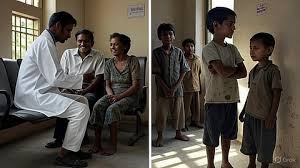
This study reveals that caste discrimination is a public health crisis. Despite Nepal’s ban on caste discrimination since 1962 and India’s affirmative action policies, implementation remains lacking.
New Delhi—Amid preparations for India’s upcoming caste census, a study is worth discussing that exposes the deep-seated discrimination prevalent in South Asia’s healthcare sector. The study, conducted by researchers Raksha Thapa, Edwin van Teijlingen, Pramod Raj Regmi, and Vanessa Heaslip, was published in the Asia Pacific Journal of Public Health on May 24, 2021. It delved deeply into healthcare discrimination faced by Dalit communities, historically known as “untouchables,” in India and Nepal.
This study, which analyzed nine research papers, demonstrated that socioeconomic inequalities and caste discrimination deprive Dalits of health services, affecting their health and quality of life.
This study further strengthens the relevance of a caste census in India, which could be a crucial step towards understanding and addressing these inequalities.
The Burden of Caste
Dalits are neglected in health services. The caste system, a 3,000-year-old social structure, continues to perpetuate inequalities in social, economic, and health sectors in South Asia. While efforts have been made to eliminate it through legislation in India and Nepal, this study reveals that Dalit communities continue to face discrimination in health services.
This study, which analyzed nine research papers conducted in India (seven studies) and Nepal (two studies) between 2000 and 2019, identified four main themes:
- Social stigma, 2. Poverty, 3. Cultural beliefs, 4. Access to health services.
These themes highlight how Dalits, especially women, face social and economic barriers that severely impact their health.
Key Findings of the Study
Socioeconomic Inequalities and Health
The study found that low socioeconomic status and low land ownership are directly linked to poor health outcomes for Dalits. Dalits have less access to education and good jobs, leading to lower household incomes. Due to low income and social discrimination, Dalits lack equal opportunities in the labor market, often limiting them to low-level jobs.
Dalit Women Face Double Discrimination
Dalit women face double discrimination not only due to their lower caste but also due to the lower status of women in Hindu society. These women face problems such as domestic violence, chronic illnesses, and lack of access to treatment beyond the local level. For example, Dalit women utilize antenatal care (ANC) services less than upper-caste women, which adversely impacts maternal and child health. Although access to ANC services is somewhat better among wealthier Dalit families, the combination of lower caste and poverty consistently leads to poorer health outcomes.
Cultural and Social Barriers
Cultural beliefs further exacerbate health inequalities. In many communities, Dalits are considered incapable of understanding health information, leading health workers to withhold crucial information. In some places, diseases are associated with ghosts and spirits, leading Dalits to rely on traditional remedies rather than modern medicine. This limits their access to and understanding of health services.
Discrimination in Healthcare
All nine studies confirmed that caste influences access to health services. In Uttar Pradesh, only 19% of Dalits suffering from chronic diseases receive treatment, as high costs, long travel times, and untrained health workers hinder them. In Nepal, weak health infrastructure and a lack of skilled staff disproportionately affect Dalits. Furthermore, Dalit health workers, such as auxiliary nurse midwives, face humiliation from colleagues and patients, which undermines their ability to provide care.
Poverty and Social Stigma
The Dilemma of Dalits
The study found that poverty is a major barrier to accessing healthcare for Dalits. Most Dalits live below the poverty line and rely on low-paying jobs, such as manual labor or basket weaving. They are unaware of free healthcare services or government programs, and when they seek treatment, they are often charged exorbitant fees by unlicensed practitioners. Borrowing money to cover medical expenses is common, trapping them in debt.
Social stigma also affects Dalit health. They are not allowed to enter upper-caste homes, sit with them, or share food and water. This discrimination is evident not only in social life but also in healthcare, where health workers avoid touching Dalit patients. Mental health problems among Dalits are often attributed to ghosts, leading them to resort to treatments like exorcism rather than modern medicine.
Dalit Women Are the Biggest Victims of Discrimination
The most vulnerable Dalit women are the biggest victims of this discrimination. Due to their low caste and gender, they are at greater risk of problems like malnutrition, anemia, and maternal mortality. The study found that approximately 70% of Dalit women are illiterate, making them unable to understand and access health systems. Economic dependence on men, limited mobility, and domestic violence further reduce their access to health services. For example, Dalit women often cannot go to the hospital alone, and their health-related decisions are made by men in the family.
Policy Gaps and the Need for Change: This study shows that caste discrimination is not just a social issue, but a public health crisis. Despite the ban on caste discrimination in Nepal since 1962 and affirmative action policies in India, lack of implementation and cultural attitudes perpetuate inequalities. The authors argue that building hospitals alone is not enough to improve health services; socio-cultural factors, such as stigma and gender inequality, must be addressed. Programs like Self-Help Groups (SGHs) and ANC have provided some help, but they are insufficient without broader social change.
Caste discrimination is often overlooked in global policy discussions, such as the Sustainable Development Goals (SDGs). SDG goals, such as poverty eradication, good health, quality education, gender equality, and reduced inequality, cannot be achieved unless caste discrimination is addressed. The authors call for programs to decentralize health systems, improve local access, and change social attitudes.
Geetha Sunil Pillai
Courtesy: Hindi News