
Justice Madan Lokur says the ritual is a cognisable offence as delayed police action and the FIR against Rahul Gandhi raise concerns over Uttarakhand policing
In Indian law is it a crime to conduct a shuddhikaran at a site where a Dalit leader has just held a rally? Is the filing of an FIR necessary? Can the organisers of the shuddhikaran really claim they were only responding to slogans they deemed inappropriate and not Mallikarjun Kharge? And what about the FIR against Rahul Gandhi accusing him of promoting enmity and outraging religious feelings? Is that justified? Or ludicrous? Finally, what does all of this tell us about the Uttarakhand government’s attitude to crimes against Dalits and the way it enforces the law, which it’s sworn to uphold?
These are some of the questions that underlie the shuddhikaran saga that haven’t been addressed adequately. It’s possible they haven’t been asked of the right people. I want today to focus on what I, at least, believe are the right answers.
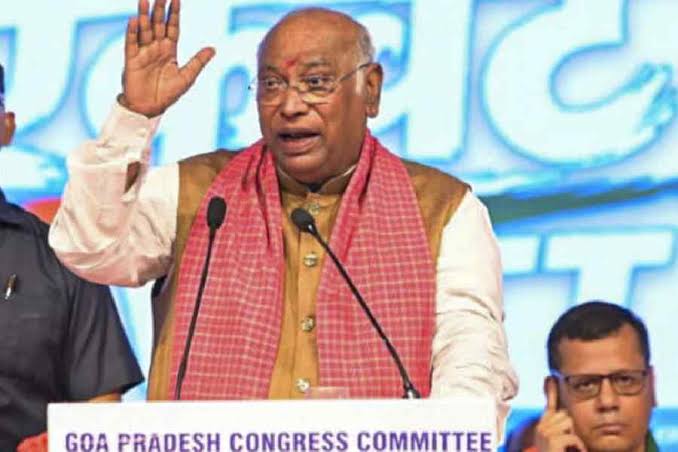
Justice Madan Lokur, one of our finest former Supreme Court judges, says a shuddhikaran at the Haldwani Ramlila Maidan, days after Kharge’s rally, was definitely a crime under Indian law. It’s a cognisable offence. Justice Lokur adds that under the applicable Act, if a public servant — and that includes police officers — fails to respond, he too will be deemed complicit in the crime.
So, then, what should we make of the refusal of the Uttarakhand government to register an FIR for almost a month? Of course, they were wrong not to. But consider the explanations given.
The organisers of the shuddhikaran, the Shri Ram Sena Dharmarth Seva Nyas Sangathan, claim it wasn’t targeted at Kharge but to counter-slogans raised by Congress members during the rally and a previous statement by Kharge comparing the BJP and RSS to a poisonous snake. Does that argument carry weight? Even if true, Kharge is still the target. He stands at the core of these explanations.
Mahendra Bhatt, the BJP Uttarakhand chief, defends the shuddhikaran on the grounds that the venue had been polluted by slogans that were not appropriate for a religious place. But the Ramlila Maidan is not a religious place. It’s a public venue. Surely, this defence has little value unless, of course, it was a hint to the police how to respond.
The chief minister of Uttarakhand claims the people of his state are not aware of Kharge’s caste. In other words, they don’t know he’s a Dalit and can’t be accused of untouchability. Can we really believe that? And is ignorance a defence?
Let’s now come to the bizarre twist this story has taken. Whilst delaying registering an FIR against those who conducted the shuddhikaran, an FIR was registered against Rahul, on the complaint of a certain Amit Kumar, a Scheduled Caste member, who’s claimed his sentiments were hurt by the Congress leader’s characterisation of the shuddhikaran as an act of untouchability.
The FIR accuses Rahul of promoting enmity on grounds of religion, deliberate and malicious acts intended to outrage religious feelings and giving false information to mislead a public servant.
Let me ask you bluntly: do you believe Rahul Gandhi is guilty of any of this? I certainly don’t. T.C. Manjunath, the senior superintendent of police in Nainital, has said: “Amit Kumar submitted all the required evidence to substantiate his allegations, following which an FIR has been registered.” What possible evidence could there be? As Justice Lokur puts it, this is a classic instance of turning the law on its head.
I can’t resist the feeling the Uttarakhand police have not acted of their own volition but were directed by the BJP government to file the FIR. On their own I doubt they would have done it. And that raises a significant question.
If a shuddhikaran can be held when someone as senior as Kharge makes a speech at a rally and no action is taken for nearly 30 days, what does this tell us about the Uttarakhand government’s attitude to crimes against Dalits? And what does it say of the way it enforces the law, which it’s sworn to do?
Think carefully before you answer. I’m not exaggerating when I say it’s the key issue in this sorry tale.
Karan Thapar
Courtesy : The Telegraph
Note: This news is originally published on https:/thetelegraph.com/bha and is used purely for non-profit/non-commercial purposes, especially human rights