
Such “abhorrent” bail conditions, issued by both HC and trial courts, reflect the “regressive mindset”, caste-based biases of Odisha judiciary, says SC; sends warning against such bail conditions to all HCs
When the Odisha judiciary set “odious” bail conditions, like cleaning police stations for two months, for members of Adivasi and Dalit communities, it suggested that judges had a “regressive mindset” and caste-based biases, the Supreme Court said on Monday (May 4, 2026).
“Assuming that such conditions were imposed inadvertently or without any premeditated bias, the nature of the condition is so abhorrent, degrading, and unknown to law that it carries the potential to cast a serious aspersion, suggesting that the Odisha Judiciary is afflicted by a caste-based bias,” a Bench of Chief Justice of India Surya Kant and Justice Joymalya Bagchi observed in a seven-page order.
Odisha mining project protest: Congress seeks independent probe; alleges PESA, FRA violations
Indigenous protesters
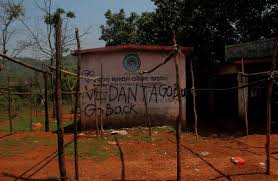
The subjects of these bail conditions are a group of indigenous people facing criminal charges after their three-year-old protest against the acquisition of their land for a Vedanta Group bauxite mining project in Rayagada and Kalahandi districts allegedly turned violent.
Around 40 protesters were arrested and cases registered against them. Some of them were subsequently allowed bail by various courts in the State. However, a range of bail conditions, some of which the top court found extremely humiliating, were thrust upon the accused in return for exercising their fundamental right to personal liberty.
New railway line proposed to connect ‘controversial’ bauxite hills in Odisha
‘Obnoxious, unpalatable’
Chief Justice Kant, who had taken suo motu cognisance of the orders imposing “obnoxious” and “unprecedented” bail conditions, said they had brought a bad name to the judicial institution itself. The Bench noted that, between May 2025 and January 2026, six such bail orders were issued by a local trial court, all imposing similar conditions.
The court said it was both unfortunate and disheartening to see that the State High Court and the trial courts were on the same plane, both passing “unpalatable” bail conditions.
‘Underlying caste bias’
“Such conditions reflect the underlying, albeit unarticulated, bias of the Odisha State judiciary premised on the perception that the accused individuals belonged to the marginalised Adivasi community,” the Supreme Court observed.
The court said the promise of a casteless society was one of the greatest gifts the people of India gave themselves through the Constitution.
The judiciary, in its role as the sentinel on the qui vive, had to stand guard on the Constitutional guarantees and protect the most vulnerable in the society, the Supreme Court observed. The court noted that every Constitutional doctrine or philosophy in a diverse country like India stood up for substantive equality, the individual dignity of all people, and an end to caste barriers.
Mining push meets tribal resistance
Directive sent to all HCs
“We declare such conditions and any other similarly worded condition imposed by the State judiciary as null and void. Let the petitioners approach the High Court to forthwith delete such conditions and not substitute it with any other analogous condition,” the court ordered, clarifying that the accused persons would continue on bail.
The court directed that all State judiciaries should refrain from imposing conditions that carry caste implications, which could lead to social discord. “Thus, let this order be made available to all judicial officers across the country, not to impose such conditions,” the Bench said.
It also directed the Supreme Court registry to circulate the order to all High Courts across the country. “Each High Court shall ensure that a copy of this order is sent to each judicial officer in its jurisdiction, accompanied by a communication that such conditions shall not be imposed while granting bail,” it said.
The court directed the Registrar General of the Orissa High Court to file a compliance report in four weeks.
Krishnadas Rajagopal
Courtesy : The Hindu
Note: This news is originally published on https:/thehindu.com/bha and is used purely for non-profit/non-commercial purposes, especially human rights