
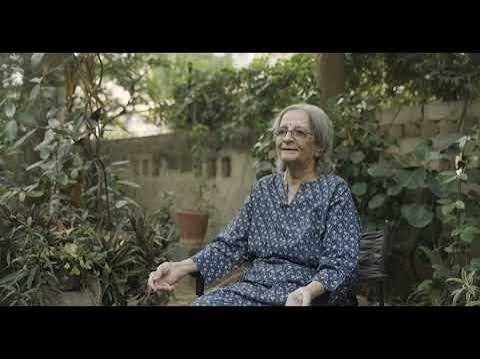
A documentary on Samvedan, a cultural initiative launched in Gujarat in 2003 to bring young people from working-class and marginalised communities into theatre, poetry, music and social debate, revisits an experiment that sought to use cultural expression as a means of challenging caste discrimination, communalism, gender inequality and economic exploitation.
The film, prepared early this year and released at the Ahmedabad Management Association on November 22, traces the initiative’s journey through archival footage and conversations with people who were associated with it. Samvedan operated from 2003 to 2012, bringing together young people whose experiences of social and economic marginalisation became the basis for performances, discussions and collective cultural work.
The documentary places the initiative in the political and social context of Gujarat in the decades preceding its launch. Recalling the circumstances that led to its formation, one of its organisers says the cultural and political developments of the preceding two decades had helped turn Gujarat into what he describes as a “laboratory of cultural fascism”.
The speaker, Hiren Gandhi, a veteran theatre activist, refers particularly to the anti-Dalit and anti-minority violence and the social atmosphere that developed during the 1980s, as well as the experience of the 2001 Kutch earthquake. The rehabilitation process after the earthquake, he recalls, exposed how caste and religious identities continued to determine access to assistance. Dalit and Adivasi communities, including Koli communities in the affected areas, were inadequately covered by rehabilitation schemes, while religious and caste-based organisations often extended assistance primarily to people belonging to their own communities.
The experience raised a fundamental question for those involved: if a major disaster that had shaken Gujarat could not bring people beyond caste and religious divisions to help one another simply as human beings, what did that say about society?
The communal violence of 2002, the speaker says, further demonstrated the success of the forces promoting such divisions. He argues that cultural resistance was necessary to challenge the spread of hatred and the growing influence of communal and majoritarian ideas.
He also describes culture in a broader sense than dance, food or entertainment. Culture, he says, encompasses ways of life and the social, political and economic systems through which people organise their existence, as well as their relationship with the environment.
The initiative therefore sought to develop a programme that would enable young people to examine society and its inequalities through cultural activity. Its organisers designed a structured, year-long training programme for 20 young men and women, generally between 18 and 25 years of age, from working-class neighbourhoods. The participants included school dropouts and young people with limited reading and writing skills.
Unconventional Training
The training relied less on conventional classroom teaching and more on films, documentaries, exposure visits, participation in people’s movements, discussions with specialists and visual arts. The organisers deliberately placed emphasis on oral and visual methods because many participants were not comfortable with extensive reading and writing.
The film recalls the use of works such as Bimal Roy’s Do Bigha Zamin, which deals with exploitation, as well as documentary material and episodes from Shyam Benegal’s Bharat Ek Khoj and Samvidhan. Short film screenings were followed by discussions, enabling participants to connect what they watched with their own lives and the conditions around them.
A significant part of the documentary consists of former participants recalling how the programme changed their understanding of themselves and society. One woman, who joined at the age of 17, says she had grown up in a conservative Muslim household where girls were expected to remain at home, undertake domestic work and get married. Before joining Samvedan, she had largely accepted these expectations as normal.
She recalls that working with young men, including those from other communities, initially made her uncomfortable. Theatre, however, gradually created an environment in which participants could talk, discuss issues, read scripts and rehearse together. “Theatre was the process through which the beginning of the biggest change in me took place,” she says, explaining that the plays dealt with issues drawn from the communities to which the participants themselves belonged.
The process also made her question practices that she had previously regarded as ordinary. She speaks of the violence and discrimination women experience within families and after marriage, and says that theatre helped her understand these realities from the perspective of the women affected.
She recalls one performance dealing with gender relations and the derogatory comments made by people in the neighbourhood about women who participated in public performances. The comments deeply upset her. The trainers, however, encouraged her to recognise that the reactions reflected the very social attitudes the group was attempting to challenge.
Another participant describes how the programme brought him into contact with questions he had never seriously considered. He recalls that terms such as economics, Dalit identity and gender were initially unfamiliar to him. The discussions helped him understand that gender was not merely a distinction between men and women but involved a larger set of social expectations and inequalities.
The programme also brought participants from different communities into sustained contact. One of the organisers describes this as sahajeevan — learning to live together. Participants travelled together, joined demonstrations and movements, and performed plays in different places. Such shared experiences, he says, challenged the tendency to regard people from other communities as inferior or threatening simply because they were different.
Focus On Women’s Issues
The documentary includes an account of a heated discussion during a workshop on women’s issues. A male participant initially objected that the discussion appeared to focus only on women’s concerns. In retrospect, he says, he realised that he had been looking at the issue exclusively from his own position. Understanding a question, he learnt, required looking at it from different sides and recognising what one might have overlooked.
The experience, he says, helped him understand how personal prejudices could be challenged through collective discussion. It also influenced his subsequent work as a theatre practitioner, allowing him to use performance to communicate ideas and encourage others to examine their own assumptions.
The documentary discusses the influence of Brazilian theatre practitioner Augusto Boal and his Theatre of the Oppressed, particularly the method of Forum Theatre. The approach was considered suitable because the Samvedan participants were not trained actors. They were encouraged to turn situations drawn from their own lives and communities into performances.
In Forum Theatre, a play presents a social problem without necessarily providing a final solution. The audience is then invited to suggest alternatives by entering the performance and taking the place of a character. The documentary recalls performances that examined communal mobilisation, religious polarisation and the consequences for families when young people are drawn into violence.
The audience was asked to consider what a mother would do if her son were being taken away in the name of religion, or how a young person might respond to pressure to join a violent mobilisation. The method made the audience participants in the search for possible solutions rather than passive spectators.
One of the speakers says that the process helped people recognise that justice did not necessarily have to be pursued through violence. “Justice can also be achieved through reconciliation,” he observes, while emphasising that the underlying social injustice must be confronted.
The group also used newspapers and current affairs as material for its work. Participants learnt to examine not only what newspapers reported but also the perspectives and assumptions informing their coverage. They collected reports on caste discrimination in Gujarat’s villages, the treatment of Dalits, the impact of globalisation and communal relations. These reports became the basis for discussions and, subsequently, plays.
One of the examples discussed concerns discrimination against Dalits over the wearing of moustaches in some villages. Such incidents, the speaker says, exposed the persistence of caste hierarchies despite claims that discrimination had disappeared. The group developed performances from these reports to bring the underlying realities before audiences.
Documenting Harassment And Eviction
The documentary also follows the development of participants’ individual skills. Manoj, who had an interest in photography, began using the camera to document social issues. He was introduced to organisations and training opportunities, including the St Xavier’s Communication Centre, where he developed skills in filmmaking. He later made a documentary on Shaheed Udham Singh and documented the experiences of people around Chandola Lake who faced harassment and eviction after being labelled Bangladeshis.
The film also recalls his photographic documentation of the proposed redevelopment of Chandola Lake. The project was being discussed in terms of beautification and development, with comparisons to Kankaria Lake and the Sabarmati Riverfront. Manoj and others sought to draw attention to the people living around Chandola and the possible consequences of redevelopment for them. The speaker recalls estimates of 12,000 to 13,000 hutments in the area, involving approximately 25,000 to 30,000 families.
The documentary presents these examples to show how cultural training could extend beyond theatre and performance into photography, documentary filmmaking, writing and public documentation. Participants developed ways of examining urban development from the standpoint of those likely to be displaced or excluded.
At the same time, the film does not present Samvedan’s journey as an uncomplicated success story. It reflects on the difficulties of sustaining the work and supporting participants after the programme ended. The account of Jayesh Solanki, who played an important role in the initiative, is particularly poignant. Coming from a Dalit working-class background and having worked in a factory, he developed a strong interest in theatre, reading and poetry. Despite limited formal education, he became an avid reader and writer.
The speaker recalls his intellectual and creative abilities, but also the difficulties he faced in finding social acceptance and sustained institutional support. The experience raises questions about the responsibilities of organisations that train young people from disadvantaged backgrounds but are unable to provide them with the resources and opportunities needed to continue their work.
Other former participants, including Rehana, Shaheen and Shirin, are described as continuing to work in different capacities. The documentary suggests, however, that the broader, interdisciplinary approach they experienced through Samvedan has not always found adequate space in the institutional and NGO environments in which they later worked.
The film also examines the limits of a cultural movement dependent on resources and collective participation. One of the speakers says that theatre cannot be sustained by an individual working alone; it requires a team and resources to support the people involved. In the absence of these, he has increasingly concentrated on writing songs and poetry, which can also serve as means of social communication.
Narsinh Mehta’s Idea Of ‘Parayi Peed’
A central argument running through the documentary is that cultural work should not be confined to entertainment. Hiren Gandhi insists that entertainment is never entirely neutral because it carries a set of values that gradually influence audiences. Cultural activity, therefore, can either reinforce prevailing social attitudes or challenge them.
He argues that culture must become a means of resistance to the values promoted by globalisation and a market-driven economy. When people begin to see themselves primarily as consumers, he says, their concerns as human beings risk becoming secondary. This, he explains, is why cultural resistance is necessary: the questions and needs of people must take precedence over their identities as consumers.
Reflecting on the continuing relevance of Samvedan’s work, Sarup Dhruv, a key trainer, says that one of its central concerns was the ability to feel and respond to the suffering of others, irrespective of caste, religion or community. Referring to the Gujarati poet-saint Narsinh Mehta’s idea of parayi peed—understanding the pain of others—and to an illustration from the writings of Zaverchand Meghani, she argues that a writer, artist or any human being cannot remain unaffected by injustice inflicted on another person.
“We may not be Dalits, Adivasis, Muslims, Christians or members of other minorities, but we can still become part of their suffering,” is the essence of her argument. If the suffering of others does not affect us, she asks, what meaning can there be in calling ourselves writers, artists, creators or even human beings?
Dhruv says that Samvedan did not restrict its cultural work to any one community or issue. Its theatre productions addressed communalism, caste discrimination, urbanisation, the condition of mill workers and the consequences of development and beautification projects. The underlying idea, she says, was to encourage people to move beyond the limitations of their immediate social identities and recognise the suffering of others.
Dhruv says that Samvedan did not restrict its cultural work to any one community or issue. Its productions included Phir Bhi Aisa Kyun Gire Hum?, which raised questions of caste and social discrimination; Mega City Mein Mach Gaya Shor, which addressed the consequences of urbanisation; and Suno Nadi Kya Kehti Hai, which dealt with urban development and beautification. The group also used theatre and songs to draw attention to the condition of mill workers and the changing social landscape of Ahmedabad. The underlying idea, she says, was to encourage people to move beyond the limitations of their immediate social identities and recognise the suffering of others.
She warns that struggles and cultural expression can become narrowly confined when people believe that only members of a particular community have the right to speak about its suffering. For her, the capacity to understand another person’s pain and to come forward to address it remains central to the idea of Samvedan itself.
Through the memories of its organisers and participants, the film revisits an experiment that sought to make theatre, poetry, songs, films and photography instruments of social inquiry and collective expression. Its underlying question is whether cultural practice can still nurture empathy across boundaries — and what happens to society when people cease to feel one another’s pain.
The documentary acknowledges Niyati Gandhi, Sanjoy Ganguly, Shailesh Solanki, Shirin Saiyed and Srinivas Kurapati. Archival material was made available by Anand Patwardhan, Darshan Organisation and Manoj Bhuvaldi. Shahrukhkhan Sherkhan Chavada served as director of photography and editor. Chandrika Makwana, Fardinkhan Chavada, Harsh Khatri and Wafa Salim Refai were the sync-sound recordists.
Courtesy : Counterview
Note: This news is originally published on https:/Counterview.com/bha and is used purely for non-profit/non-commercial purposes, especially human rights