
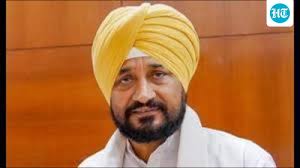
Chandigarh: With the 2027 Punjab Assembly elections now firmly on the horizon, the Congress is scrambling to resolve a leadership crisis that has simmered for months — and is increasingly pointing toward former chief minister Charanjit Singh Channi as its best bet to lead the state unit and anchor the party’s Dalit and OBC outreach.
Punjab’s demographic arithmetic makes the calculus compelling. Dalits constitute approximately 32 per cent of the state’s population — the highest SC share of any state in India — while OBCs account for an estimated 15–20 per cent. Together, the two groups represent nearly half the state’s electorate, spread across communities including Mazhabi Sikhs, Ravidassias, Balmikis, Sainis, Kamboj, Ramgarhia and Gujjars. Yet despite their numbers, neither group has historically exercised political influence proportionate to their share of the vote.
The Congress high command convened a meeting of top party leaders last week to finalise the shape of an organisational overhaul in Punjab. The party has also appointed senior leaders Ajay Maken, Meenakshi Natarajan and Bhajan Lal Jatav as observers for Punjab, a move seen within the organisation as part of the ongoing exercise to assess the state unit and recommend structural changes ahead of the 2027 elections. According to party sources, internal popularity surveys conducted as part of the Congress leadership’s review of the Punjab unit have shown Channi in a stronger position than incumbent PPCC chief Amrinder Singh Raja Warring — a finding that has sharpened the pressure on the high command to act.
When contacted, Channi refused to confirm or deny his candidature for the post. Sources in Delhi Congress, however, said he remained the party’s most viable option given his mass appeal, Dalit identity, and ability to cut across regions. His strongest appeal lies among sections of the Dalit electorate, particularly in Doaba, with some resonance in Malwa. As Punjab’s first Dalit chief minister, his identity adds a powerful political dimension that no other contender in the race can replicate.
A section of leaders has been flagging that ahead of the 2027 polls, the optics of two Jat leaders — Warring and CLP leader Partap Singh Bajwa — occupying both top positions would need to be reworked by adjusting Dalit, OBC and Hindu faces. Channi himself raised the point publicly, questioning why all key positions — PPCC chief, Leader of Opposition, and women’s wing president — were held by upper-caste leaders, despite Dalits alone constituting over 32 per cent of the population and OBCs adding a further 15–20 per cent.
Others in contention for the PPCC post include Partap Singh Bajwa, former minister Pargat Singh, Fatehgarh Sahib MP Dr Amar Singh, and former MP Vijay Inder Singla.
Warring’s position has weakened considerably. The pressure has intensified after the recent municipal elections, where the Congress failed to convert anti-incumbency sentiment into a statewide challenge. Out of 1,977 wards, AAP won 954, while Congress finished a distant second with 393. Independents secured 251 wards, followed by SAD with 192, BJP with 172 and BSP with seven. The results reinforced AAP’s organisational advantage at the grassroots level despite Congress leaders’ claims of growing public discontent with the Mann government.
Concerns have mounted over the party’s organisational performance, particularly after setbacks in Gidderbaha — considered his traditional stronghold — where AAP swept 17 of 19 wards in municipal council elections. At the May 29 meeting in New Delhi — attended by Rahul Gandhi, Congress president Mallikarjun Kharge, Punjab in-charge Bhupesh Baghel, and senior state leaders — most state party leaders pressed for Warring’s replacement, though Baghel publicly denied any immediate proposal to do so.
The party’s Punjab unit has long been dominated by Jat Sikhs, who account for roughly 25–30 per cent of the population but have held the chief ministerial post for all but a brief interlude since 1966. While Congress has made conscious efforts since 2021 to broaden its social coalition through Dalit, OBC and Hindu outreach, structural realities — land ownership, rural seats, and community mobilisation — continue to give Jat Sikhs the upper hand internally.
The dilemma for the high command is acute. Replacing Warring with Channi could consolidate the Dalit-OBC bloc — collectively the state’s single largest voting constituency — that Congress desperately needs to dent AAP’s 2022 mandate of 92 seats. But any move risks deepening Jat Sikh alienation within a party already down to 15 of 117 assembly seats. The Congress top brass has so far not signalled enthusiasm for projecting Channi as a chief ministerial face, with Bhupesh Baghel recently stating the party would not declare a CM candidate ahead of the 2027 polls.
That position, insiders say, is unlikely to hold.
Aayush Goel
Courtesy : The Financial World
Note: This news is originally published on https:/thefinancialexpress.com/bha and is used purely for non-profit/non-commercial purposes, especially human rights