
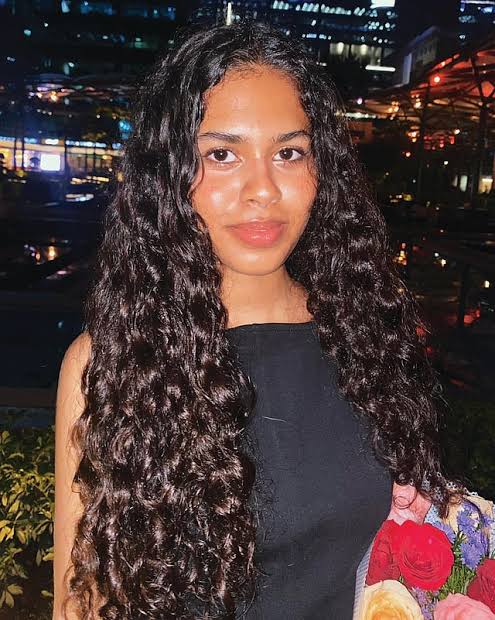
Shreeja Rao’s ‘My Joy’ is an invitation into a colourful world through the lens of a Dalit child who finds joy in the little moments of her life
Narrating her story in first person, a little girl belonging to the Dalit community talks about the joy she feels when she sees her mother dress in blue, when she relishes bhakri and amti, when her ajji tells her a story. There is also a sense of pride both in her own dreams of becoming the first lawyer in her family and in learning that someone like her is soaring in the Olympics and in academics. She also touches upon the grief of lost lives from the community due to systemic inequality.
And, despite the nasty remarks thrown at her, of being too loud and not good enough, the little girl goes on to live her life to the fullest.
“…Because anti-caste resistance
is in my defiance.
It is in my smile, in my laugh.
It is in my world-changing joy,” the author Shreeja Rao, who tells the child’s stories, writes.
In the picture book for young readers — My Joy, illustrated by Shrujana N Shridhar — Shreeja ensures that each leaf reflects the reality of Dalit lives. With mostly happy accounts emanating from the smallest things in life, the author reminds us to correct the myopic understanding of the community, because for years, we have only been exposed to a fragment of the community’s experiences — oppression, pain, struggles. Perhaps, what is forgotten is seeing every shade of their lives with equal attention.
This book, as the author asserts, is for every child who looks for themselves in books.Excerpts from a conversation with Shreeja Rao:
How does My Joy subvert how the experiences of the Dalit community are represented, and how does it become a strong symbol of resistance?
All literature, old or new, depicts Dalit communities in endless pain. While it is vital to show the consequences of inequality, I wrote My Joy to celebrate the full humanity of Dalit children. The book refutes the popular notion that Dalit people are mere vessels of suffering. It is about a Dalit child’s identity and assertion. This assertion, whether quiet or loud, is joyful.
In the book — the Preamble, the books, and the colour blue — are all symbolic. Do you want young readers to understand the individual symbols of the community and historical movements?
The flags, the Preamble, and the writers in the book are all from my childhood. Many Dalit children grow up seeing these symbols in their homes and at family occasions. Rather than teaching children something new, My Joy invites them to relate to their own lives. It also shows them the importance and value of our history.
How do you think books like these can help avoid the gaze of pity and sympathy, and make a strong statement that one can experience joy and pride irrespective of what their identity is?
As a journalist, I know all too well that rampant inequality and violence invite a gaze of pity for our community in the headlines. However, books like My Joy must exist to show children that their identity is not limited to suffering or stories of suffering. This book helps children take the autonomy and freedom to experience joy without anyone else’s permission.
You specifically mentioned some books and writers in the book. Could you tell how they influence the way you view the world?
As a child, my grandmothers and aunts told me bedtime stories about how Savitribai Phule brought accessible education to India. She faced stones, dung, and violent attacks to stand for equality. She introduced me to this radical act of assertion. Alongside figures in the book like Mukta Salve, the women from my life taught me to fight inequality while embracing my own life.
You have celebrated small wins and little joys — coming first in an elocution competition, raising a hand in the classroom, warm hugs — in this book. How important is it to tell children to find joy in the smallest wins and moments in life, and most importantly, that they deserve to experience joy?
The distinction between “small” or “big” moments of joy is something we perform as adults. However, raising my hand in the classroom or winning a competition was not a small moment for me. These are the big moments that shape a child’s life. Joy is not a privilege to deserve; it is a human emotion that you experience simply by being you. It is important to tell children that they are special in their own way, and human like everyone else.
Representation matters, and it is important to read and learn stories with which readers can relate. How do you see this lack of relatable literature for readers?
In my childhood, the flags, symbols, and writers in this book were never on any pages. They came from celebrating Ambedkar Jayanti at home and the stories my grandmothers and aunts told me. “Representation” feels like an ill-fitting word for the culture and history of a quarter of the population. When children experience something in their community, they deserve to read about it. Culture evolves when young readers can stitch parts of their lives with the books they read. That is how they become who they are.
Anusree PV
Courtesy : TNIE
Note: This news is originally published on https:/thenewindianexpress.com/bha and is used purely for non-profit/non-commercial purposes, especially human rights