
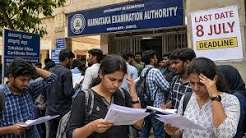
Recognizing the gravity of the situation, the KEA has written to the Secretary of the Revenue Department, requesting the prompt issuance of certificates for affected students.
Bengaluru – Thousands of Scheduled Caste (SC) students in Karnataka are facing a serious crisis amid the Common Entrance Test (CET) counseling. July 8th is the deadline for Option Entry, but more than 11,086 SC students have not yet obtained the required caste certificates in accordance with their internal reservation. If the certificates are not issued by the deadline, these students may be denied their choice of reserved seats.
This information has emerged in a detailed report by The Hindu, which states that the main reason for the problem is the delay in issuing new caste certificates at tehsil offices across the state.
What is the cause of the problem?
The Karnataka government recently implemented internal reservation within Scheduled Castes. Under this, the SC community is being divided into different categories: Category A, Category B, and Category C.
However, when CET applications were filed, the government had not implemented internal reservation. Therefore, students applied based on their old caste certificates.
After the government implemented internal reservation, the Karnataka Examination Authority (KEA) directed that students seeking internal reservation within the SC category must update their Revenue Document (RD) number of the caste certificate issued in the new format on the online portal. This is where the crisis began.
More than 11,000 students are stuck in this predicament. According to information, a total of 43,353 Scheduled Caste students applied. Of these, 32,267 students have entered their new RD number, while 11,086 students have not yet received their new caste certificates.
These students say they applied several weeks ago, but the certificates have not been issued by the tehsil offices. Due to this, the KEA (Karnataka Examination Authority) portal is not allowing them to enter options. Some students told The Hindu that new certificates were not required when they applied.
KEA subsequently demanded a new certificate under internal reservation. They applied about a month ago, but the tehsil office has not yet issued the certificate. As a result, they are unable to complete the counseling process.
Given the gravity of the situation, KEA has written to the Secretary of the Revenue Department, requesting the immediate issuance of certificates to the affected students.
According to KEA Executive Director H. Prasanna, students who have not yet updated their RD numbers have been notified via SMS and newspapers so they can complete the process as soon as possible.
He expressed hope that all eligible students will receive their certificates in time. Meanwhile, a Revenue Department official claimed that there are no unusual delays on the department’s part.
According to him, most applications are being processed within the stipulated 21-day deadline. However, some new applications and cases related to amendments to old certificates are still pending.
What is Karnataka’s internal reservation system?
Internal reservation in Karnataka is a “quota within quota” system within the 15% Scheduled Caste (SC) quota. Under this system, all 101 SC sub-castes are divided into three distinct groups based on their socio-economic status, so that the most backward castes can directly benefit from reservation.
Under this formula, in April 2026, the then Chief Minister Siddaramaiah government divided the SC quota as follows:
Group A (SC Left): 5.25% (includes the most disadvantaged castes)
Group B (SC Right): 5.25% (includes more aware and influential castes)
Group C (Other SCs): 4.5% (nomadic castes)
The government made this decision in light of continued protests by students and job seekers, with widespread unrest in Dharwad and other areas of Karnataka due to recruitment delays.
What experts say
Senior IRS officer Netra Pal has questioned the government’s process regarding this entire controversy.
He said that he had already warned that adding the internal reservation category directly to the caste certificate would prove to be unnecessarily complex and cumbersome.
Netrapal said, “I have always maintained that adding the internal reservation category to the caste certificate was a wrong decision. Instead of changing the original caste certificate, the government should have issued a separate sub-caste certificate.”
He further stated that scrutiny committees will now face numerous technical disputes, and innocent students will face questions that will be extremely difficult for them to answer.
According to him, the confusion surrounding caste certificates that arose after the implementation of internal reservation has not yet been resolved, and students may suffer the greatest loss.
Geetha Sunil Pillai
Courtesy: Hindi News