
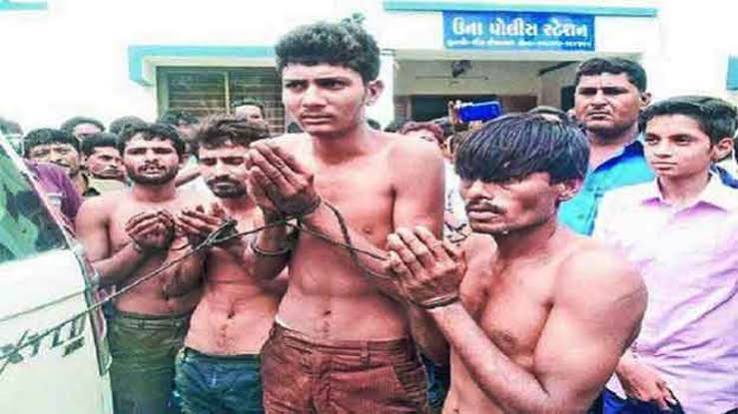
Odisha records a 10.8 per cent conviction rate for SC cases, while one Puri family says its trial is yet to begin eight years after the alleged attack
Ashok Sethi, 48, and his family have been assaulted, ostracised and forced out of their native village in Odisha because of their Dalit identity.
The family’s ordeal points to a deeper malaise that subjects members of the Scheduled Caste community to social and institutional discrimination, resulting in delayed justice and low conviction rates in caste-based violence.
The conviction rate in cases registered under the SC/ST (Prevention of Atrocities) Act hovers at 34 per cent, much below the overall conviction rate of 53 per cent in criminal cases.
Sethi, who hails from Nuagaon village under the Satapada gram panchayat in Puri district, said the majority of the 150 families residing there belonged to general and OBC categories. Sethi’s family used to wash villagers’ clothes and got around 10kg of paddy per year from each family as part of a barter system prevalent in the village.
In 2000, Sethi’s family demanded payment in cash instead of kind, which the villagers refused. A penalty was imposed on the family, and they were ostracised.
“I got married in 2000. The villagers did not allow us to put up a marquee in the village for the wedding because we did not agree to work under the barter system. They said it was below their dignity to walk under the canopy as we are Dalits. My sister’s marriage could not be held in the village in 2007,” Sethi, who now lives in Kathuaredi village under Brahmagiri block, around 26km away, told The Telegraph.
In 2017, some villagers cut down trees from a plot of land belonging to Sethi’s family. The situation worsened in July next year when the villagers attacked the family, took away their cows and belongings, injured female members and destroyed their house. The family had no option but to move out. They stayed at a cyclone shelter near Chhotapur village, about 20km from Nuagaon, before shifting to Kathuaredi.
On Sethi’s complaint, an FIR was registered at Brahmagiri police station under the SC/ST Act for caste-based violence. Sethi said the FIR did not mention Section 307 of the IPC (attempt to murder), although the family had specified it in their written complaint.
“The discrimination was not limited to the villagers. We faced institutional bias from the police. The seven accused were arrested and granted bail within 10 days. Most importantly, the trial has not started even though eight years have passed,” Sethi said.
“We have not visited our village since 2018. The villagers have taken over our land. We are living on rent at Kathuaredi,” he said.
Baghambar Patnaik, a human rights activist, has filed a case with the Odisha Human Rights Commission seeking a direction to the police to expedite adjudication of the case and rehabilitation of the victims. A public interest litigation was filed in Orissa High Court, which in 2020 directed the rehabilitation of the family in Nuagaon village.
Patnaik said the state government would have to recover the family’s land from the villagers and build a house for them before they could return.
“They are unable to go back because the government machinery is not taking any steps to recover the land and construct a house. It shows that the government is not sincere about delivering justice to the victims,” Patnaik said.
Rashmita Samantaray, the sarpanch of the Satapada panchayat, declined to comment on the issue. “I do not know much about this case,” she said.
Last month, Congress Rajya Sabha member Chandrakant Damodar Handore sought information about the number of cases pending investigation under the SC/ST Act and the conviction rate.
In a written reply on July 22, minister of state for social justice Ramdas Athawale furnished data, which showed that the national conviction rate stood at a mere 33.9 per cent for SCs in 2024. In Odisha, the conviction rate was 10.8 per cent.
“The responsibility of maintaining law and order, investigation, protection of life and property of the citizens, including crime against members of SC and ST communities, rest with the respective state governments,” Athawale had said.
CM on Ravidas, Phule
Haryana chief minister Nayab Singh Saini on Sunday said Guru Ravidas envisioned a society with no place for any form of discrimination, fear or injustice while Dr B.R. Ambedkar considered education the most powerful tool for social transformation.
Saini spoke about how Jyotiba Phule and Savitribai Phule challenged social orthodoxies, opened the doors of education for all, and made historic contributions, especially towards women’s education.
Ambedkar regarded education as the most powerful instrument of social transformation and fought for the rights of deprived sections and equal opportunities, he said.
Basant Kumar Mohanty
Courtesy : The Telegraph
Note: This news is originally published on https:/thetelegraph.com/bha and is used purely for non-profit/non-commercial purposes, especially human rights