
The professor also alleged malpractice in PhD admissions, research projects, and other examinations. He stated that the Vice Chancellor, Registrar, Controller of Examinations, Dean Academics, and some department heads are colluding to perpetrate large-scale academic scams.
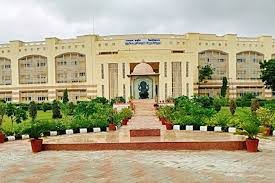
Ajmer – Amidst the ongoing criticism of the CBSE’s OSM system and the fear spread among students, serious allegations of similar irregularities have now been made at the Central University of Rajasthan, Ajmer. Dr. Rakesh Kumar, Associate Professor in the Physics Department at the Central University of Rajasthan, has accused the university administration of widespread academic scams. He stated that he had complained repeatedly over the past two years, but no one responded, and he was removed from the evaluation process.
Earlier in April, Professor Rakesh Kumar had also complained about the university administration’s repressive actions, where he was forcibly taken from his office by the police and detained for approximately four hours. He was detained without any FIR or complaint simply because he had expressed his refusal to attend the Deputy Chief Minister’s program organized on the occasion of Ambedkar Jayanti. Dr. Kumar has described this as a conspiracy to suppress his voice and alleged that the university administration, in connivance with the police, treated him in a communal and discriminatory manner.
In his recent post, Rakesh Kumar exposed the scams at the university, saying, “Organized scams, like the NEET scam, are taking place in the education system. I was silent for a long time, but now I felt it was no longer appropriate to remain silent. I wrote several emails to the Vice Chancellor, Registrar, Controller of Examinations, and Dean Academics over the past two years, but no one responded or corrected me. Therefore, I decided to bring such matters to the public domain.”
The professor questioned the “digital evaluation” system adopted by the university. He explained that a few years ago, the current Vice Chancellor introduced a new system for evaluating answer sheets, which they call digital evaluation. This is a system of a private company, on which the university is spending crores of rupees. In a detailed post, Kumar wrote, “A few years ago, the current Vice Chancellor changed the system for evaluating answer sheets. He calls this new system “digital evaluation,” although it’s not actually digital evaluation. It’s provided by a private company, and the university pays the company several crores of rupees for the system. In this system, students’ answer sheets are scanned, their first page is hidden, and the resulting images are uploaded to a server. Access to these scanned copies is limited to a desktop located in a room in the university’s administrative building. Simple software supports these scanned copies. University teachers evaluate these scanned copies and write the marks obtained on the scanned pages using the software. Finally, the software adds up those marks. Therefore, there’s no significant benefit, although we waste crores of public money. The biggest drawback of this system is that students are not allowed to view their scanned answer sheets after evaluation. This is a complete violation of transparency.” It’s annoying and frustrating, but it helps scams happen.”
Dr. Rakesh Kumar also gave some concrete examples. He explained, “Two years ago, I taught a master’s course and evaluated the answer sheets. The Vice-Chancellor didn’t like the final result of the course, so he withheld it for a few months. Afterward, the result was announced with a massive 160% change. I was shocked and wondered how I had made such a huge error in my evaluation. So, I wrote emails to the Controller of Examinations, the Registrar, and the Vice-Chancellor. I asked them to show me some samples of answer sheets that had been checked by another faculty member. They haven’t responded yet. This is where so-called digital evaluation helps perpetrate massive academic scams. Last year, the Vice-Chancellor did the same thing to me. I was a course instructor and had also prepared the exam question paper for that course. Sadly, without informing me, the university administration assigned the answer sheets for the course to another faculty member for evaluation. That faculty member took a few months. When I learned of this, I emailed the university administration and asked for an explanation.” I asked why they removed me from the evaluation process, and I also requested to see the results and some of the evaluated answer sheets. So far, they haven’t responded to any of my emails. This simply means the results were already decided, and the administration is trying to hide something suspicious.”
The professor also alleged malpractice in PhD admissions, research projects, and other examinations. He said the Vice Chancellor, Registrar, Controller of Examinations, Dean Academics, and some department heads were colluding to perpetrate a massive academic scam. Rakesh Kumar says, “Recently, an exam was held for which I served as the course instructor. It’s common practice for the course instructor to set the exam question paper. However, in this case, the question paper was set by a faculty member who had never taught the course! The problem isn’t limited to this. The course has four equally important units. However, 50% weightage was given to just one unit, with obvious repetition and overlap in many questions. The question paper was of very poor quality and tampered with. In this regard, I wrote to the university administration about my concerns, but as usual, I haven’t received a response yet.
In the last three Ph.D. admissions, I noticed that many students were selected who either didn’t answer a single question or had very unsatisfactory interviews. I feel that the university administration selects students first and then interviews them later. I’ve also raised these issues with the university administration.” I wrote to the university authorities. Unfortunately, there was no response. Similar scams are also taking place in students’ research projects, labs, and other regular examinations.
Just to show good statistics, the Vice-Chancellor is compromising everything! He is perpetrating massive academic scams with the help of the Registrar, Controller of Examinations, Dean of Academics, and some Heads of Departments (HODs).
The allegations at Central University Rajasthan have raised questions about the credibility of the education system. Speaking to The Mooknayak, Dr. Rakesh Kumar says, “The VC has excluded me from several important exams. They remove my name from evaluations because I use strict marking. I don’t compromise, and perhaps that’s the reason. What’s most worrying is that they never respond to my questions. Academic scams are very serious matters. They should take immediate and proactive action on this.” I believe the Vice-Chancellor is doing all this to create a false record of good marks and to mentally harass those who oppose him.” The professor has appealed for an independent investigation into such cases to ensure the future of students is protected.
The Mooknayak has emailed the Vice-Chancellor and Registrar of the Central University to seek their views on these allegations. The story will be updated upon receipt.
Geetha Sunil Pillai
Courtesy: Hindi News