
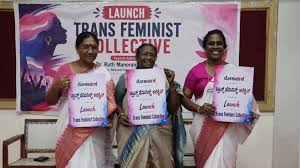
over 2026 transgender law
The launch event centered on criticism of the recently passed Transgender Persons (Protection of Rights) Amendment Act, 2026.
The Trans Feminist Collective (TFC) was launched on Sunday to mark the International Day Against Homophobia, Biphobia and Transphobia (IDAHOBIT), bringing together transgender activists, feminists, Dalit rights leaders, and a delegation from Nepal’s Feminist Dalit Organisation (FEDO) to build an intersectional movement for justice.
The launch event centered on criticism of the recently passed Transgender Persons (Protection of Rights) Amendment Act, 2026, which speakers said dilutes the right to self-identification upheld by the Supreme Court in its landmark 2014 NALSA judgment.
Delivering the keynote address, Ruth Manorama, president of the National Federation of Dalit Women (NFDW), said transgender, intersex and gender-non-conforming communities are integral to safeguarding democracy.
She stressed that the fight for trans rights cannot be separated from anti-caste and feminist movements.
“When a community must repeatedly prove who they are to doctors and bureaucrats, dignity is replaced with suspicion,” she said.
TFC co-founder Soumya invoked the egalitarian teachings of Basavanna and Akka Mahadevi, and argued that the 2026 Act deals a major setback to the community by recognising only Hijra identities within a restrictive religious framework, while ignoring the diversity of gender identities.
Another co-founder and activist, Akkai Padmashali, said the 2014 Supreme Court judgment had raised hopes within the community, but claimed that the new legislation had reversed many of those gains.
She said the collective was formed to secure constitutional rights and ensure transgender participation in democratic decision-making.
The founders also highlighted the struggles faced by working class, Dalit and Adivasi transgender persons, saying many continue to face violence and exclusion from housing, education and healthcare, forcing some into begging and sex work for survival.
“Visibility without redistributive justice is not justice. Representation without transformation is not liberation,” the collective said.
Courtesy : DH
Note: This news is originally published on https:/deccanherald.com/bha and is used purely for non-profit/non-commercial purposes, especially human rights