
PHOTO ESSAY: A symbolic marriage ritual and beauty pageant brings India’s trans community together
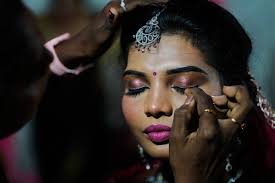
KOOVAGAM, India (AP) — Under stage lights, hundreds of transgender women adjusted their sarees, tucked flowers into their hair, and waited to be called onstage. One by one, they waved to cheering crowds and struck poses at one of India’s largest gatherings for the transgender community. Held each year in Koovagam village in southern India’s Tamil Nadu, the annual Koovagam festival brings faith and beauty together. By day, transgender women gather at a temple to honor a Hindu deity through rituals rooted in mythology and grief. By night, they celebrate glamour, identity, and joy as they take part in a vibrant beauty pageant. The festival centers on the Hindu legend of Aravan, a warrior from the Hindu epic Mahabharata who agreed to sacrifice himself before battle but wished to marry first. According to the story, the Hindu god Krishna transformed into a female form to wed Aravan. Many transgender women in India see the tale as a rare sacred recognition of gender fluidity, and each year reenact the marriage during the festival. The celebration, which drew hundreds of transgender women last month, has become both a sacred pilgrimage and a powerful expression of identity in a country where many transgender people still face discrimination, violence and exclusion. It also unfolded under a cloud of anxiety for the transgender community. Many attendees arrived amid growing concern over a controversial national bill that activists warn could erode hard-won rights for India’s transgender community by requiring medical-board approval for legal gender recognition. For many participants, the festival was deeply spiritual. Shanshi, who goes by just one name, has been attending the festival for five years and described Aravan as “God for all transgender people.” “When we gather here, it is for one reason — to worship Lord Aravan by getting married to him,” she said, after a Hindu priest tied a sacred thread around her neck, symbolically marrying her to the deity. Others spoke of violence and hardship beyond the festival grounds. Nazariya Kutty, 28, said she was forced out of her family home as a teenager and later survived domestic abuse and sexual assault in a marriage she hoped would bring stability. She rebuilt her life through delivery jobs before reopening her travel business. Now back at Koovagam with friends, she said the rituals give her strength. “I am waiting to be the bride of Lord Aravan,” Kutty said. “I have faith he will restore whatever I have lost.” Amid the festival’s spiritual fervor, the atmosphere remained celebratory. The village of Koovagam also transformed into a vibrant beauty pageant, where glamour and community took center stage. Backstage at this year’s beauty pageant, contestants in shimmering sarees shared mirrors and makeup brushes before stepping onto the stage as music echoed through the village. For 24-year-old Surya Kutty, winning the Miss Koovagam crown marked a personal turning point after years of returning to the festival with close friends. “This win has given me the confidence to participate in national and international events,” she said. Beyond the pageantry and rituals, many attendees described the gathering as a rare space of belonging for a community that continues to face barriers to jobs, housing and healthcare across India. Surya said the festival creates a rare sense of belonging. “Here we meet other transgender people and feel loved and cared by everyone,” she said. “These are special days meant exclusively for us.” By MAHESH KUMAR and SHEIKH SAALIQ Courtesy : AP News Note: This news is originally published on https:/apnews.com/bha and is used purely for non-profit/non-commercial purposes, especially human rights
NHRC issues Advisory 2.0 to Ministries and the Chief Secretaries of all the states and UTs to ensure the welfare of transgender persons

The National Human Rights Commission (NHRC), India has issued an Advisory 2.0 to ensure the welfare of transgender persons to the Secretaries of 11 Ministries, the Office of the Registrar General & Census Commissioner and the Chief Secretaries/ Administrators of all the states and union territories as part of its continuing efforts to protect and promote their human rights. The Advisory has been issued to the Ministries of Social Justice and Empowerment, Home Affairs, Law and Justice, Statistics and Programme Implementation, Education, Health and Family Welfare, Women and Child Development, Corporate Affairs, Labour and Employment, Housing and Urban Affairs and Rural Development. Issuing the Advisory, the Commission has noted the encouraging responses from all concerned authorities to its earlier Advisory of 15th September 2023 and the constructive engagement reflecting a shared commitment to this cause. It has also acknowledged the initiatives undertaken by the Government, including the enactment of the Transgender Persons (Protection of Rights) Act 2019, along with allied schemes and policy measures aimed at improving their socio-economic conditions. Based on the NHRC’s continued engagements, including field interactions, stakeholder consultations and reviews of implementation, the Commission has identified a range of persistent and emerging challenges affecting transgender persons. Therefore, the Commission found it necessary and opportune to issue another set of recommendations to further enhance their welfare. Accordingly, all concerned authorities have been requested to implement the recommendations contained in the Advisory and furnish an Action Taken Report (ATR) within a period of two months to appraise the Commission of the progress made in implementing the Advisory. The Advisory focuses on ten key areas for action to ensure the welfare of transgender persons. These include integrating gender diversity in national data systems, reviewing laws/ rules/ policies to ensure gender inclusivity, building an inclusive legal framework, right to property, right to education, healthcare, inclusivity at the workplace, safeguarding the rights of children with diverse sex characteristics and gender identities/ expressions, safeguarding the rights of elderly transgender persons and strengthening Garima Greh shelters. The key recommendations are as follows: i) Inclusion of distinct categories such as ‘Intersex’, ‘Transmen’ and ‘Transwomen’ in the upcoming Census of India and other national surveys to ensure accurate and inclusive gender-disaggregated data collection; ii) Review of laws, including the Registration of Births and Deaths Act, Juvenile Justice Act and succession laws, to ensure recognition of self-identified gender and protection of the rights of transgender and intersex persons; iii) Ensuring equal inheritance, succession, housing and property rights for transgender and intersex persons without discrimination; iv) Developing comprehensive SOPs for police and correctional institutions regarding arrest, detention, searches, interrogations, imprisonment, confidentiality and access to gender-affirming healthcare for transgender persons; v) Establishing dedicated legal aid cells, helplines and independent grievance-redressal mechanisms for transgender and gender-diverse persons facing discrimination, violence or custodial abuse; vi) Admission of transgender students in educational institutions based on self-identified gender without requiring medical proof, along with the creation of gender-neutral facilities and grievance-redressal mechanisms; vii) Mandatory gender-sensitisation training for teachers, counsellors, police, prison personnel, judicial officers and healthcare professionals to promote inclusion and reduce discrimination; viii) Developing standardised and ethical medical protocols for gender-affirming healthcare, regulation of Sex Reassignment Surgery costs and equal insurance coverage for transgender healthcare needs; ix) Prohibition of coercive or non-consensual medical procedures on intersex children, except in life-saving situations, while ensuring counselling and psychosocial support for parents; x) Promoting inclusive workplaces through gender-neutral facilities, inclusive Human Resource policies, workplace grievance mechanisms and mandatory diversity disclosures, alongside welfare measures for elderly transgender persons; and xi) Simplifying the documentation process and enabling self-identification-based enrolment for elderly transgender persons in welfare schemes and establishing transgender-inclusive old-age homes and community shelters, ensuring privacy, healthcare access, social interaction and emotional well-being. The link to the detailed advisory is: https://nhrc.nic.in/assets/uploads/other_advisories/1779115826_649e8e4ffb525458ca0a.pdf Courtesy : India Education Diary Note: This news is originally published on https:/indiaeducationdiary.com/bha and is used purely for non-profit/non-commercial purposes, especially human rights
PHOTO ESSAY: A symbolic marriage ritual and beauty pageant brings India’s trans community together
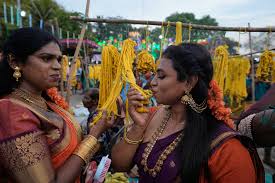
The Koovagam festival in Koovagam village, Tamil Nadu, India, is an annual gathering of transgender women to honor the Hindu deity Aravan, celebrate their identity and beauty, and find a sense of belonging. KOOVAGAM, India | Under stage lights, hundreds of transgender women adjusted their sarees, tucked flowers into their hair, and waited to be called onstage. One by one, they waved to cheering crowds and struck poses at one of India’s largest gatherings for the transgender community. Held each year in Koovagam village in southern India’s Tamil Nadu, the annual Koovagam festival brings faith and beauty together. By day, transgender women gather at a temple to honor a Hindu deity through rituals rooted in mythology and grief. By night, they celebrate glamour, identity, and joy as they take part in a vibrant beauty pageant. The festival centers on the Hindu legend of Aravan, a warrior from the Hindu epic Mahabharata who agreed to sacrifice himself before battle but wished to marry first. According to the story, the Hindu god Krishna transformed into a female form to wed Aravan. Many transgender women in India see the tale as a rare sacred recognition of gender fluidity, and each year reenact the marriage during the festival. The celebration, which drew hundreds of transgender women last month, has become both a sacred pilgrimage and a powerful expression of identity in a country where many transgender people still face discrimination, violence and exclusion. It also unfolded under a cloud of anxiety for the transgender community. Many attendees arrived amid growing concern over a controversial national bill that activists warn could erode hard-won rights for India’s transgender community by requiring medical-board approval for legal gender recognition. For many participants, the festival was deeply spiritual. Shanshi, who goes by just one name, has been attending the festival for five years and described Aravan as “God for all transgender people.” “When we gather here, it is for one reason — to worship Lord Aravan by getting married to him,” she said, after a Hindu priest tied a sacred thread around her neck, symbolically marrying her to the deity. Others spoke of violence and hardship beyond the festival grounds. Nazariya Kutty, 28, said she was forced out of her family home as a teenager and later survived domestic abuse and sexual assault in a marriage she hoped would bring stability. She rebuilt her life through delivery jobs before reopening her travel business. Now back at Koovagam with friends, she said the rituals give her strength. “I am waiting to be the bride of Lord Aravan,” Kutty said. “I have faith he will restore whatever I have lost.” Amid the festival’s spiritual fervor, the atmosphere remained celebratory. The village of Koovagam also transformed into a vibrant beauty pageant, where glamour and community took center stage. Backstage at this year’s beauty pageant, contestants in shimmering sarees shared mirrors and makeup brushes before stepping onto the stage as music echoed through the village. For 24-year-old Surya Kutty, winning the Miss Koovagam crown marked a personal turning point after years of returning to the festival with close friends. “This win has given me the confidence to participate in national and international events,” she said. Beyond the pageantry and rituals, many attendees described the gathering as a rare space of belonging for a community that continues to face barriers to jobs, housing and healthcare across India. Surya said the festival creates a rare sense of belonging. “Here we meet other transgender people and feel loved and cared by everyone,” she said. “These are special days meant exclusively for us.” Reported by SHEIKH SAALIQ Associated Press This is a documentary photo story curated by AP photo editors. Courtesy : Sentinel Note: This news is originally published on https:/sentinel.com/bha and is used purely for non-profit/non-commercial purposes, especially human rights
PHOTO ESSAY: A symbolic marriage ritual and beauty pageant brings India’s trans community together
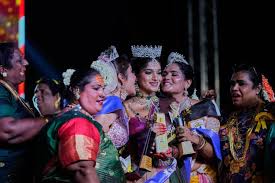
KOOVAGAM, India (AP) — Under stage lights, hundreds of transgender women adjusted their sarees, tucked flowers into their hair, and waited to be called onstage. One by one, they waved to cheering crowds and struck poses at one of India’s largest gatherings for the transgender community. Held each year in Koovagam village in southern India’s Tamil Nadu, the annual Koovagam festival brings faith and beauty together. By day, transgender women gather at a temple to honor a Hindu deity through rituals rooted in mythology and grief. By night, they celebrate glamour, identity, and joy as they take part in a vibrant beauty pageant. The festival centers on the Hindu legend of Aravan, a warrior from the Hindu epic Mahabharata who agreed to sacrifice himself before battle but wished to marry first. According to the story, the Hindu god Krishna transformed into a female form to wed Aravan. Many transgender women in India see the tale as a rare sacred recognition of gender fluidity, and each year reenact the marriage during the festival. The celebration, which drew hundreds of transgender women last month, has become both a sacred pilgrimage and a powerful expression of identity in a country where many transgender people still face discrimination, violence and exclusion. It also unfolded under a cloud of anxiety for the transgender community. Many attendees arrived amid growing concern over a controversial national bill that activists warn could erode hard-won rights for India’s transgender community by requiring medical-board approval for legal gender recognition. For many participants, the festival was deeply spiritual. Shanshi, who goes by just one name, has been attending the festival for five years and described Aravan as “God for all transgender people.” “When we gather here, it is for one reason — to worship Lord Aravan by getting married to him,” she said, after a Hindu priest tied a sacred thread around her neck, symbolically marrying her to the deity. Others spoke of violence and hardship beyond the festival grounds. Nazariya Kutty, 28, said she was forced out of her family home as a teenager and later survived domestic abuse and sexual assault in a marriage she hoped would bring stability. She rebuilt her life through delivery jobs before reopening her travel business. Now back at Koovagam with friends, she said the rituals give her strength. “I am waiting to be the bride of Lord Aravan,” Kutty said. “I have faith he will restore whatever I have lost.” Amid the festival’s spiritual fervor, the atmosphere remained celebratory. The village of Koovagam also transformed into a vibrant beauty pageant, where glamour and community took center stage. Backstage at this year’s beauty pageant, contestants in shimmering sarees shared mirrors and makeup brushes before stepping onto the stage as music echoed through the village. For 24-year-old Surya Kutty, winning the Miss Koovagam crown marked a personal turning point after years of returning to the festival with close friends. “This win has given me the confidence to participate in national and international events,” she said. Beyond the pageantry and rituals, many attendees described the gathering as a rare space of belonging for a community that continues to face barriers to jobs, housing and healthcare across India. Surya said the festival creates a rare sense of belonging. “Here we meet other transgender people and feel loved and cared by everyone,” she said. “These are special days meant exclusively for us.” By MAHESH KUMAR and SHEIKH SAALIQ — Associated Press Courtesy : WRAL News Note: This news is originally published on https:/wralnews.com/bha and is used purely for non-profit/non-commercial purposes, especially human rights
Trans Feminist Collective launched, raises concernsover 2026 transgender law
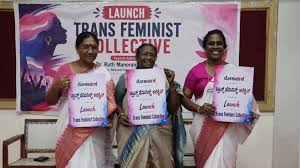
over 2026 transgender law The launch event centered on criticism of the recently passed Transgender Persons (Protection of Rights) Amendment Act, 2026. The Trans Feminist Collective (TFC) was launched on Sunday to mark the International Day Against Homophobia, Biphobia and Transphobia (IDAHOBIT), bringing together transgender activists, feminists, Dalit rights leaders, and a delegation from Nepal’s Feminist Dalit Organisation (FEDO) to build an intersectional movement for justice. The launch event centered on criticism of the recently passed Transgender Persons (Protection of Rights) Amendment Act, 2026, which speakers said dilutes the right to self-identification upheld by the Supreme Court in its landmark 2014 NALSA judgment. Delivering the keynote address, Ruth Manorama, president of the National Federation of Dalit Women (NFDW), said transgender, intersex and gender-non-conforming communities are integral to safeguarding democracy. She stressed that the fight for trans rights cannot be separated from anti-caste and feminist movements. “When a community must repeatedly prove who they are to doctors and bureaucrats, dignity is replaced with suspicion,” she said. TFC co-founder Soumya invoked the egalitarian teachings of Basavanna and Akka Mahadevi, and argued that the 2026 Act deals a major setback to the community by recognising only Hijra identities within a restrictive religious framework, while ignoring the diversity of gender identities. Another co-founder and activist, Akkai Padmashali, said the 2014 Supreme Court judgment had raised hopes within the community, but claimed that the new legislation had reversed many of those gains. She said the collective was formed to secure constitutional rights and ensure transgender participation in democratic decision-making. The founders also highlighted the struggles faced by working class, Dalit and Adivasi transgender persons, saying many continue to face violence and exclusion from housing, education and healthcare, forcing some into begging and sex work for survival. “Visibility without redistributive justice is not justice. Representation without transformation is not liberation,” the collective said. Courtesy : DH Note: This news is originally published on https:/deccanherald.com/bha and is used purely for non-profit/non-commercial purposes, especially human rights
Transgender University of Washington student stabbed over 40 times: Court documents

“Our family has been shattered,” Juniper Blessing’s family said. Teen found dead at UW off-campus apartment; police search for suspectPolice probe the death of a 19-year-old transgender woman at a Seattle apartment. ABC News’ Trevor Ault reports as the search for a suspect continues. The transgender University of Washington student who was killed in a student housing building suffered over 40 stab wounds to the head, neck, shoulder, arms and hands, according to the probable cause statement. Juniper Blessing, 19, was found covered in blood in the laundry room of the Nordheim Court building on Sunday night, according to court documents. The suspect, 31-year-old Christopher Leahy, surrendered to police on Wednesday and was booked for first-degree murder, documents said. “Our family has been shattered,” Blessing’s family said in a statement released by the Human Rights Alliance. “Juniper was simply the most amazing human being we have ever known — highly intelligent, extremely talented, and deeply sensitive to the needs of others. Juniper’s loss not only devastates us but diminishes the world.” “A gifted singer with a transcendent voice, Juniper was admitted to New Mexico School for the Arts, where they studied from 2020 until 2024,” the family said. “Weather was a love of Juniper’s since early childhood, and at the University of Washington they intended to study Atmospheric Science while continuing to study voice and pursuing minors in Music and Philosophy. They loved Seattle and Santa Fe, where they worked as an usher during summers at the Santa Fe Opera.” “Juniper was courageously living their life as who they were until it was cut tragically short,” the family said. According to court documents, another Nordeim Court resident told police that shortly before 10 p.m. Sunday, a man followed her when she used her card to access the building and laundry room. She said the man told her he was waiting for his laundry. Surveillance video shows them in the laundry room and the suspect “appears to be visually searching the room for cameras,” court documents said, before he left the room. A video from 10 p.m. shows Blessing in the laundry room, and the suspect “comes back into the laundry room and stares directly into the camera,” documents said. The suspect “appears to follow the path of the cord with his eyes and head from the camera around the wall above the doorway,” documents said. “He then turns to exit the laundry room, something clatters to the ground and he pauses. He continues out of the laundry room at 10:00:27 p.m.” “Blessing is seen cleaning the lint tray, appears to add more time to the dryer, then stands up and deposits the lint into the garbage at the end of the bank of dryers. … The video stops at 10:01:01 p.m.,” documents said. Seattle police released the images of the suspect in the laundry room, documents said. A man named Patrick Leahy contacted police saying the suspect in the image was “without a doubt” his brother, Christopher Leahy, according to the documents, and a friend also reached out to police identifying Christopher Leahy as the man in the photo. Christopher Leahy’s attorney called the Bellevue Police Department on Wednesday night to say he was turning himself in, documents said. Christopher Leahy came to the department with his parents and was taken into custody, the documents said. Christopher Leahy made his first court appearance on Thursday and is due back in court on Monday, according to ABC Seattle affiliate KOMO. He has not entered a plea. ByEmily Shapiro Courtesy : ABC News Note: This news is originally published on https:/abcnews.com/bha and is used purely for non-profit/non-commercial purposes, especially human rights
Kerala High Court Upholds Reproductive Autonomy of Transgender Man by Allowing Egg Cryopreservation
In a significant development concerning transgender rights and reproductive autonomy in India, the Kerala High Court recently permitted a transgender man to cryopreserve his eggs by allowing him to approach an Assisted Reproductive Technology (ART) bank of his choice. The order was passed in the case titled Hari Devageeth v. Union of India by Justice Sobha Annamma Eapen on May 15, 2026. The Court directed that the ART bank concerned should take steps to retrieve the petitioner’s oocytes and cryopreserve them for future reproductive use. The decision came in a writ petition filed by a transgender man who challenged the refusal of a private hospital to permit egg cryopreservation on the ground that transgender persons fall outside the statutory framework established under the Assisted Reproductive Technology (Regulation) Act, 2021. The case raised important constitutional and legal questions concerning the reproductive rights of transgender persons, the scope of healthcare protections under Article 21 of the Constitution, and the interpretation of statutory provisions regulating assisted reproductive technologies in India. While granting relief to the petitioner, the High Court also left open the constitutional challenge to Section 21(g) of the ART Act, which restricts ART services to women between the ages of 21 and 50 years and men between 21 and 55 years. The petitioner before the Court was a person assigned female at birth who identified as a man. According to the pleadings, the petitioner had undergone breast removal surgery as part of gender affirmation procedures but had not yet undergone complete sex reassignment surgery, including hysterectomy or removal of ovaries. Before proceeding further with gender-affirming procedures, the petitioner sought to preserve his reproductive potential by cryopreserving his eggs. However, KIMS Hospital allegedly refused permission for the procedure, citing restrictions under the ART Act and the absence of a legal framework expressly recognising transgender persons within assisted reproductive services. This refusal prompted the petitioner to approach the High Court seeking constitutional protection of reproductive choice and healthcare access. The litigation quickly evolved into a broader debate regarding the rights of transgender persons to parenthood, reproductive healthcare, and equal treatment under Indian law. It also highlighted gaps within existing legislation governing ART services, surrogacy, and adoption, all of which largely continue to operate on binary gender assumptions. The matter attracted significant attention because it brought into focus the intersection between gender identity, medical autonomy, constitutional dignity, and reproductive justice. Senior Advocate Anand Grover appeared on behalf of the petitioner and argued that denial of cryopreservation violated the petitioner’s fundamental rights. The Union Government opposed the plea, contending that existing statutory frameworks consciously excluded transgender persons from availing such services. Although the High Court’s detailed judgment is awaited, the operative order permitting cryopreservation has already emerged as an important judicial intervention in the evolving jurisprudence surrounding transgender rights in India. Arguments of the Parties: The petitioner argued that the refusal to permit egg cryopreservation amounted to a direct infringement of his constitutional right to reproductive autonomy and healthcare. It was submitted that although the petitioner identified as a man, he had been assigned female at birth and retained reproductive organs capable of producing oocytes. Therefore, prior to undergoing further gender-affirming surgical procedures, he wished to preserve his eggs for possible future reproduction. The petitioner clarified that he had not undergone complete sex reassignment surgery and had only undergone breast removal surgery. Since the uterus and ovaries remained intact, it was argued that the petitioner retained the biological capacity to reproduce. Counsel submitted that transgender men are capable of experiencing pregnancy and reproduction, and therefore, denying them access to fertility preservation services solely because of gender identity would be discriminatory and unconstitutional. A central argument advanced by the petitioner was that reproductive choice forms an essential component of personal liberty protected under Article 21 of the Constitution. The plea asserted that the right to make decisions regarding reproduction, parenthood, and fertility preservation is inseparably connected with bodily autonomy, dignity, and privacy. The petitioner contended that denial of cryopreservation effectively deprived him of the possibility of biological parenthood in the future. Once gender-affirming procedures such as hysterectomy or removal of ovaries are performed, the ability to retrieve oocytes would permanently cease. Therefore, refusal to permit cryopreservation would cause irreversible harm to the petitioner’s reproductive future. The petitioner also relied upon the protections available under the Transgender Persons (Protection of Rights) Act, 2019 and the accompanying Rules of 2020. It was argued that the statutory framework expressly prohibits discrimination against transgender persons in matters relating to healthcare access. Consequently, exclusion from ART services merely because the petitioner was a transgender man amounted to unlawful discrimination prohibited by statute and constitutional principles of equality. Another important submission made on behalf of the petitioner was that the ART Act did not contain any explicit prohibition against cryopreservation of eggs by transgender persons. According to the petitioner, while the legislation regulates eligibility for assisted reproductive procedures, it does not impose an absolute bar on fertility preservation. Therefore, the authorities could not rely upon legislative silence to deny healthcare access. Senior Advocate Anand Grover argued that reproductive rights must be interpreted in a gender-inclusive manner consistent with constitutional morality and the recognition of transgender identity affirmed by the Supreme Court of India in landmark transgender rights jurisprudence. It was submitted that constitutional protections cannot be denied merely because statutory frameworks have failed to evolve alongside contemporary understandings of gender identity and reproductive health. The Union Government opposed the plea and defended the existing legislative framework governing assisted reproductive technology and surrogacy in India. The Centre argued that the ART Act specifically permits assisted reproductive procedures only for a “commissioning couple” or a single woman. Under the statutory definition, a commissioning couple refers strictly to a legally married man and woman. According to the Government, transgender persons and single men were intentionally excluded from the categories of persons eligible to avail ART services. Since cryopreservation of oocytes forms part of ART services regulated under the statute, the petitioner could not claim
Transcending Barriers: Maya Thakur’s Advocacy for Transgender Reforms in India
Activist Maya Thakur urges Chief Minister Sukhvinder Singh Sukhu to implement systemic reforms in criminal and labor laws to support the transgender community in India. Highlighting discrimination in jobs and education, Thakur calls for overseas job opportunities and European partnership initiatives to provide a safer environment for transgender individuals. In a passionate plea for reform, transgender activist Maya Thakur has addressed a letter to Himachal Pradesh Chief Minister Sukhvinder Singh Sukhu. She seeks systemic changes in criminal and labor laws to end discrimination against the transgender community. Thakur highlighted enduring biases in education and employment, drawing attention to the difficulty transgender individuals face in finding jobs and housing, especially in North India . Praising recent initiatives for overseas job placements, Thakur suggested collaborations with European countries to secure inclusive employment opportunities, citing Germany and Norway as models for safety and inclusivity. Courtesy : Devdiscourse Note: This news is originally published on https:/devdiscourse.com/bha and is used purely for non-profit/non-commercial purposes, especially human rights
Transgender Advocate Speaks Out: Systemic Reforms Needed for Inclusion
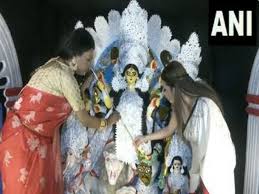
Activist Maya Thakur calls for systemic reforms in India’s criminal and labor laws to address discrimination against transgender people. She urges Chief Minister Sukhvinder Singh Sukhu to facilitate overseas job opportunities, highlighting ongoing challenges in employment and housing for transgender individuals, particularly in North India. Activist Maya Thakur has urged Chief Minister Sukhvinder Singh Sukhu to implement systemic reforms addressing challenges faced by India’s transgender community. In her letter, Thakur called for changes in criminal and labor laws to combat discrimination. Thakur, known as an ‘election icon’ for Solan, pointed out difficulties transgender people encounter in securing jobs and housing, particularly in North India. She highlighted the Himachal government’s efforts to facilitate overseas employment for youth and suggested similar opportunities for transgender individuals. Citing examples from European countries, Thakur proposed partnerships to recruit transgender persons for jobs abroad. She stressed the need for legal reforms, like stricter overtime provisions and anti-corruption measures, to improve living conditions for transgender individuals in the region. Courtesy : Devdiscourse Note: This news is originally published on https:/devdiscourse.com/bha and is used purely for non-profit/non-commercial purposes, especially human rights
Trans icon Maya Thakur writes to Himachal CM to facilitate overseas jobs for community

Shimla, Expressing concern over challenges faced by the transgender community in India, activist Maya Thakur has written a letter to Chief Minister Sukhvinder Singh Sukhu, seeking ‘systemic reforms’ in criminal and labour laws. Thakur, a transgender woman who was designated ‘election icon’ for the state poll body in Solan, told PTI on Friday that discrimination in education and jobs against the community remains a major issue in India, and urged the CM to facilitate overseas job opportunities for transgender people. Appreciating the recent initiative of the Himachal government facilitating overseas jobs for youths in Dubai and Saudi Arabia, Thakur — who herself has been seeking employment opportunities — pointed out that “even today, it is nearly impossible for a transgender person to find a decent job or even a room on rent, especially in North India, due to deep-rooted discrimination”. Last year, the Himachal Pradesh State Electronics Development Corporation was officially authorised by the Ministry of External Affairs to facilitate securing overseas jobs and organise recruitment drives for international positions like bike-borne delivery riders in the UAE. Citing examples of European countries like Germany and Norway, which have more inclusive laws and a safe environment for transgender persons, Thakur suggested initiating partnerships with European nations specifically for the recruitment of transgender persons from Himachal, adding that overseas employment in these nations will provide safety to the community. “There are transgender people who wish to study, become teachers, lawyers, join the police and excel in other spheres of life, but when we apply for jobs, the response that we usually get is — will tell you if there is any scheme for you.” “I was born a male but identify myself as a woman. My identity is a transgender woman, we are unisex, not eunuchs,” says Thakur, who hails from Kothi village in Kunihar area of Solan district. Thakur’s proposal, Himachal Pradesh Systemic Reforms Initiative (HPSRI), calls for amendments in criminal laws, saying that the fear of law has disappeared, and workers are being exploited Thakur, who previously worked for an NGO in Delhi and has been actively looking for jobs, has also pushed for a stringent ‘overtime law’ to compensate for extra work, instead of ad hoc payments ranging between Rs 100 and Rs 200. Other suggestions made by Thakur include Gulf-style law enforcement, which advocates the death penalty for rape as a deterrent, zero tolerance towards corruption, and speedy disposal of corruption cases. Thakur also suggested hiring European engineers for technical skill development, sending Himachali students to Europe and inviting European experts for “on-site training”. “Himachal ko ab purani neetiyon ki nahi, balki bade badlav ki zarurat hai (Himachal now needs change and not the old policies),” Thakur, who herself has been trying to seek jobs, said. PTI BPL KSI KSI This report is auto-generated from PTI news service. ThePrint holds no responsibility for its content. Courtesy : The Print Note: This news is originally published on https:/theprint.com/bha and is used purely for non-profit/non-commercial purposes, especially human rights