
Centre seeks transfer to SC petitions filed in HCs against Transgender Persons (Protection of Rights) Amendment Act, 2026
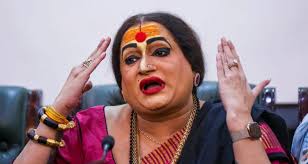
The SC had asked respondents to file replies after senior counsel AM Singhvi pointed out that the amendment took away transgender persons’ fundamental right to self-determination of gender “There are more than one High Court. There may be divergent views,” Solicitor General Tushar Mehta cautioned. File Photo The Centre on Wednesday sought transfer to the Supreme Court multiple petitions pending in various high courts challenging the Transgender Persons (Protection of Rights) Amendment Act, 2026 which introduced certain contentious changes in the legal framework governing the recognition, rights and protection of transgender persons. “We have filed transfer petitions to transfer the challenge to Transgender Amendment Act here in this court. Can the transfer petition be listed on Friday? If notice also goes, we can ask high courts to wait,” Solicitor General Tushar Mehta told a Bench of Chief Justice of India Surya Kant and Justice Joymalya Bagchi. “Sometimes, we can have an advantage of high courts’ views also,” the CJI said, noting that parallel proceedings before high courts could be beneficial to it. On May 4, the Supreme Court had issued notices to Centre, states and union territories on petitions challenging the validity of the Transgender Persons (Protection of Rights) Amendment Act, 2026. It had asked the respondents to file their replies after senior counsel AM Singhvi pointed out that the amendment took away transgender persons’ fundamental right to self-determination of gender. The petitioners contended that transgender persons receiving hormonal therapy would face problems due to the amendment. He, however, didn’t press for stay of the amendment as it had not been notified. Passed by Parliament in March this year during the Budget Session, the law amended the Transgender Persons (Protection of Rights) Act, 2019 and redefined who qualified as a “transgender person”. It also strengthened penal provisions to address serious offences such as forced identity and bodily harm. President Droupadi Murmu had given her assent to the ‘Transgender Persons (Protection of Rights) Amendment Act, 2026’ on March 30, 2026 Petitioners transgender persons Laxmi Narayan Tripathi, Zainab Patel and others – who have have challenged the validity of the amendment—alleged that it caused “irreparable constitutional injury” to the fundamental rights of transgender persons guaranteed under Articles 14 (right to equality), 15 (right to non-discrimination), 19 (right to freedom of speech and expression) and 21 (right to life and liberty) of the Constitution. Tripathi is the Acharya Mahamandaleshwar of the Kinnar Akhara, a Bharatanatyam dancer, author and social activist, Patel is the Director (Inclusion & Diversity) at KPMG India, and a Member of the National Council for Transgender Persons (Western Region). They wondered if the State, through legislation, could define who a person was by substituting biological or socio-medical classifications for a person’s lived and self-perceived identity. The PIL alleged that the amendment dismantled the principle of self-identification of gender recognised as a fundamental right by the Supreme Court in the landmark verdict in National Legal Services Authority (NALSA) versus Union of India (2014). Referring to the provision requiring the District Magistrate to issue a certificate of identity for a transgender person only after examining the recommendation of a medical board, the petitioners said it violated transgender persons’ right to privacy. “Parliament has, by the stroke of a legislative pen, repealed the statutory right that this Court held to be a fundamental right under Article 21. The impugned deletion does not even require elaborate constitutional analysis to expose its unconstitutionality: a provision that directly codifies a right declared fundamental by this Court cannot be omitted by ordinary legislation without violating Article 21 and the doctrine of non-retrogression of fundamental rights,” they submitted. The amendment has been criticised by LGBTQIA+ groups on the ground that they were not consulted before the introduction of the Bill. National Council of Transgender Persons (NCTP) members Kalki Subramanium and Rituparna Neog had resigned in protest. Former Delhi High Court judge Asha Menon who headed a committee set up by the Supreme Court to examine transgender rights has asked the Centre to withdraw the Bill. Article_Author Satya Prakash Courtesy : The Tribune Note: This news is originally published on https:/thetribune.com/bha and is used purely for non-profit/non-commercial purposes, especially human rights
Centre fears ‘divergence of views’ among High Courts on new transgender law; asks SC to transfer cases to itself
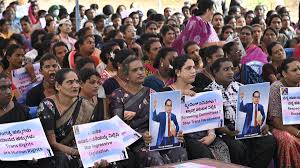
“We will see,” Chief Justice Kant said in response The Centre urged the Supreme Court on Wednesday (May 27, 2026) to transfer petitions challenging the constitutionality of the Transgender Persons (Protection of Rights) Amendment Act, 2026 from about four different High Courts to the apex court. Appearing before a Bench headed by Chief Justice of India Surya Kant, Solicitor General Tishar Mehta said the High Court are returning to work from summer recess in the first week of June. SC flags ‘risk’ of misuse in transgender self-identification debate The Supreme Court is already seized of several petitions challenging the 2026 Act, but it is is only partially working during June. Mr. Mehta, appearing for the Union government, said the High Courts may pre-empt the apex court by separately taking up the petitions before them and pass order. Mr. Mehta said the apex court should shift the cases pending in these High Courts to itself in order to avoid “divergent views” on the same Act. The top law officer urged the Chief Justice to list the Union government’s plea for transferring these petitions to itself on May 29. “We will see,” Chief Justice Kant said in response. The petitions in the apex court have criticised the controversial 2026 law of removing the right to self-identity. The 2026 Act requires a government-appointed medical board’s favourable recommendation for a District Magistrate to certify someone as a transgender person. NHRC asks Centre to review changes to trans law, ‘revisit’ community concerns on self-identification The petitioners, including activists like Laxminarayan Tripathi and others, said the Act disregarded transgender identity as an “authentic human identity, freely chosen”. They have argued that the requirement for a medical certification for gender recognition violated the rights of transgender persons and amounts to “medical gatekeeping” by the State. The government had countered that the intention of the Act was to ensure that deserving people from the community get benefits. He said forcible sex change was criminalised. The Transgender Persons Amendment Bill and the question of identity The petitioners highlighted that the Act had abruptly stopped ongoing sex-change therapies and treatment, leaving many in the community in dire straits. The petitions have argued that the 2026 amendments pull the carpet from under the 2014 NALSA judgment that declared that the right to self-identity was a fundamental right. It had held that identity was determined by the person, and not by biology, birth assignment or through State verification. Section 3 of the 2026 Act has omitted the right to self-perceived gender identity. The Hindu Bureau Courtesy : The Hindu Note: This news is originally published on https:/thehindu.com/bha and is used purely for non-profit/non-commercial purposes, especially human rights
Centre moves Supreme Court seeking transfer of all pleas against transgender law from high courts
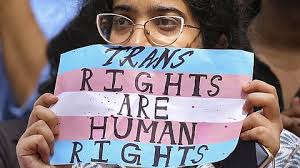
SG Mehta contended that several High Courts were already hearing challenges to the law, raising the likelihood of “divergent views” on the constitutional validity of a parliamentary enactment. The Centre on Wednesday approached the Supreme Court seeking transfer of all petitions against the Transgender Persons (Protection of Rights) (Amendment) Act, 2026, pending before various High Courts to the apex court, arguing that parallel proceedings could result in conflicting verdicts. Solicitor General Tushar Mehta mentioned the matter before a Bench led by Chief Justice of India Surya Kant and Justice Joymalya Bagchi, pressing for an urgent hearing of the transfer pleas on Friday. “We have filed transfer petitions to bring the challenges against the Transgender Amendment Act to this Court,” the Solicitor General submitted. “If the petitions are listed on Friday and notice is issued, we can request the high courts to defer their proceedings,” he added. Mehta contended that several High Courts were already hearing challenges to the law, raising the likelihood of “divergent views” on the constitutional validity of a parliamentary enactment. The Bench, however, appeared unconvinced about the immediacy of the request. The Chief Justice observed that opinions rendered by constitutional courts often aid the Supreme Court’s own adjudication. “Sometimes we can have the advantage of a high court view as well,” the CJI said. When the law officer reiterated the Centre’s apprehension, the Chief Justice responded briefly, saying he “will see”. The amendment law has triggered sharp criticism from rights advocates and sections of the LGBTQ+ community over provisions said to dilute the principle of gender self-identification recognised by the Supreme Court in its landmark NALSA ruling. Petitioners challenging the law have argued that any requirement of medical or bureaucratic intervention for gender recognition strikes at the heart of constitutional protections guaranteeing dignity, privacy and bodily autonomy. Earlier this month, the Supreme Court issued notice to the Union government on separate petitions instituted directly before it assailing the constitutional validity of the amended legislation. Courtesy : TNIE Note: This news is originally published on https:/thenewindianexpress.com/bha and is used purely for non-profit/non-commercial purposes, especially human rights
Transgender murder suspect arrested in encounter: Murder following altercation, apprehended within 24 hours

Greater Noida Police arrested the suspect in the transgender murder case within 24 hours of a shootout. The accused has been identified as Abhishek alias Mona alias Manav. Police recovered a pistol, a live cartridge, and a .315-bore cartridge from him. With the help of local intelligence, the Knowledge Park police station cordoned off the road leading from the Sector-148 Metro Line to Pushta. A gunfight ensued between the police and the accused, leading to the arrest of 26-year-old Abhishek. The accused, originally from Aligarh, was currently living in Tughlaqpur. Police investigation revealed that the accused and the deceased, Chandni alias Manoranjan Sharma, lived together in a rented house in Tughlaqpur. They often drank alcohol together. They often had arguments over coming home late at night and having affairs with other people. This conflict led to the accused killing Chandni and fleeing the scene. ADCP Greater Noida Santosh Kumar stated that the murder of a transgender person occurred in Tughlaqpur on the night of the 24th. Acting swiftly, the police arrested the accused after an encounter. Police have registered a case against the accused under the murder and Arms Act. His criminal history is also being investigated. Courtesy: Hindi News
Challenge to the Transgender Persons Amendment Act, 2026
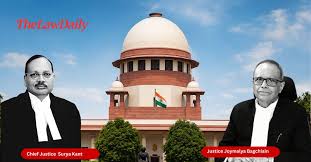
The Supreme Court will decide whether provisions mandating certificates and removal of the right to self-perceived gender identity violates right to autonomy, dignity and privacy Surya Kant CJI Joymalya Bagchi J Petitioner: Laxmi Narayan Tripathi, Zainab Javid Patel Lawyers: Senior Advocates Dr. A.M. Singhvi, Jayna Kothari, Rajeev Shakder, Rashmi Chopra, Arundhati Katju, C.R. Jaya Sukin, Advocates Gautam Das, Sanjana Saddy, Shradhha Deshmukh, Sarthak Gupta Respondent: Union of India, Ministry of Law and Justice Lawyers: Solicitor General Tushar Mehta, Advocates M.K. Maroria, Parsanna S. Case Details Case Number: W.P. (C) No. 548/2026; Diary No. 20054/2026 Next Hearing: Last Updated: May 23, 2026 Whether the amended definition of “transgender person” and the removal of statutory recognition of self-perceived gender identity violates Articles 14, 15, 19 and 21 and the right to self-identification recognised in NALSA v Union of India (2014)? Whether the introduction of medical board certification and bureaucratic verification mechanisms violate the rights to dignity, autonomy and personal liberty under Article 21? Whether a mandatory National Transgender Registry and reporting requirements relating to gender-affirming procedures violate the right to privacy and informational autonomy recognised in K.S. Puttaswamy v Union of India (2017)? Case Description On 13 March 2026, the Transgender Persons (Protection of Rights) Amendment Act, 2026 (“Amendment Act”) was tabled in the Lok Sabha. The Act deleted Section 4(2) of the Transgender Persons (Protection of Rights) Act, 2019 which stated that “a person recognised as transgender under sub-section (1) shall have a right to self-perceived gender identity.” It also set up an “authority” consisting of a Chief Medical Officer or a Deputy Chief Medical Officer appointed by the Union government or state government. It also mandates that transgender persons should be issued a “certificate of identity”. A transgender person will be entitled to change their first name in the birth certificate or other official documents after the certificate of identity is issued. Further, the medical institution has to furnish details to the District Magistrate and the authority about the person who underwent surgery. The Act was passed in the Lok Sabha on 24 March. It was affirmed in the Rajya Sabha the next day. It received the President’s assent on 30 March. During parliamentary debates, opposition members raised concerns regarding the absence of extensive stakeholder consultation, medical board scrutiny, mandatory reporting requirements, the removal of self-identification provisions and the narrowing of legally recognised identities. Several members sought greater deliberation and referral to a Select Committee. Amidst protests and an opposition walkout, the Bill was passed by voice vote. The Union Government defended the legislation as necessary to establish a “precise” and “verifiable” framework for identity recognition, prevent misuse of welfare benefits, and address exploitative practices. On 24 April 2026, petitioner Laxmi Narayan Tripathi challenged the constitutionality of the Amendment Act under Article 32 of the Constitution. The petitioner sought that the Amendment Act be declared unconstitutional for violating Articles 14, 15, 19 and 21. They argued that the Act departs from settled constitutional principles governing dignity, autonomy and gender identity. The petitioner also challenged the amendment definition of “transgender person” which deletes the statutory recognition of self-perceived identity, amendments introducing certification from a medical authority, and provisions concerning mandatory reporting and penal consequences. The matter was listed before the Supreme Court on 4 May 2026. Petitioners argued that the Amendment Act removes the framework of self-recognition and replaces it with medical and bureaucratic verification mechanisms, thereby departing from the principles held in National Legal Services Authority v Union of India (2014). In NALSA, the Court recognised transgender persons as rights-bearing constitutional subjects entitled to equality, dignity, autonomy and legal recognition. It rejected a narrow “biological test” and adopted a “psychological test”, holding that gender identity is fundamentally linked to an individual’s deeply felt sense of self rather than anatomy, chromosomes or surgical status alone. The Court located self-identification within Articles 14, 19 and 21 and held that constitutional rights cannot be made contingent upon medical procedures or state approval. The Parliament enacted the Transgender Persons (Protection of Rights) Act, 2019 after the NALSA verdict. During the May 2026 hearing, the Court considered concerns regarding the shift from self-identification to medical certification, as well as questions relating to possible misuse of identity-based benefits. The Court also noted objections concerning the maintainability of the challenge since the Amendment Act had not yet been notified. The Court clarified that it was not going to grant an interim relief at that stage. It issued notice and placed the matter before a Three-Judge bench. Courtesy : SCO Note: This news is originally published on https:/supremecourtobserver.com/bha and is used purely for non-profit/non-commercial purposes, especially human rights
NHRC seeks inclusion of distinct categories like ‘Intersex’, ‘Transmen’ & ‘Transwomen’ in upcoming Census
NEW DELHI: The National Human Rights Commission (NHRC) has asked the govt to consider including distinct categories such as ‘Intersex,’ ‘Transmen,’ and ‘Transwomen’ in Census 2027. In an advisory on ensuring welfare of transgender persons issued last week, the Commission has also asked the govt to reconsider changes made to the definition of transgender persons under recent amendments to the law, which have been challenged through multiple petitions in the Supreme Court. During enumeration of Census 2011, for the first time provided the option to people to identify as “other” besides male and female. At that time the Census exercise did not collect any data specifically on ‘transgender’. Thus, the category of ‘other’ would not only include ‘transgender’ but also any person who desired to record sex under the category of ‘other’. The population of ‘other’ as per Census 2011 was recorded at 4,87,803.Meanwhile, NHRC which had also issued an advisory on ensuring welfare of transgender persons in 2023, has said the second advisory aims to complement the earlier one in view of “evolving needs and aspirations of transgender persons”. The advisory is addressed to secretaries of 11 ministries, Office of the Registrar General & Census Commissioner and chief secretaries and administrators of all states and Union territories. It states that efforts should be made to ensure that intersex persons are explicitly recognised in all data collection processes and not automatically subsumed under the ‘transgender persons’ category. “This inclusion must be accompanied by comprehensive sensitisation and training of enumerators to ensure accurate and respectful data collection,” the advisory says. Asking the govt to consider including distinct categories such as ‘Intersex,’ ‘Transmen,’ and ‘Transwomen’ in the upcoming Census, NHRC has also recommended that a similar framework be adopted across other national data collection mechanisms — such as National Family Health Survey (NFHS), Periodic Labour Force Survey (PLFS) and Unified District Information System for Education Plus (UDISE+). On definition of transgender persons, the Commission said, “The Transgender Persons (Protection of Rights) Amendment Act 2026 revises the definition of transgender persons, shifting the earlier model based on self-perceived gender identification to a more medicalised framework. This development has led to concerns among certain sections of the community, particularly regarding its implications for recognition and rights. “In this context, it may be appropriate for the authorities to consider revisiting these concerns with a view to ensuring that the framework remains inclusive, rights-affirming, and sensitive to diverse lived experiences,” it added. NHRC also called for review of laws, including Registration of Births and Deaths Act, Juvenile Justice Act and succession laws, to ensure recognition of self-identified gender and protection of rights of transgender and intersex persons. It has also sought simplifying the documentation process and enabling self-identification-based enrolment for elderly transgender persons in welfare schemes, and establishing transgender-inclusive old-age homes and community shelters, ensuring privacy, healthcare access, social interaction and emotional well-being. Courtesy : TOI Note: This news is originally published on https:/timesofindia.com/bha and is used purely for non-profit/non-commercial purposes, especially human rights
Transgenders protest over proposed amendment bill
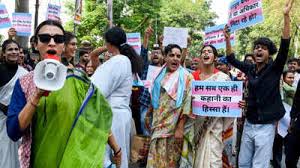
Mangaluru: A coalition of community-based organisations in Mangaluru has strongly condemned the proposed Transgender Persons (Protection of Rights) Amendment Bill, 2026, introduced by the Union govt in March. The coalition includes the Coalition of Sex Workers’, Sexual & Gender Minority Rights (CSGMR), Sarathya Karnataka State Level Federation of Unique Sexuality community-based organisations, and Navasahaja Samudaya Sanghatane, Mangaluru. Addressing mediapersons on Saturday, the groups alleged that the amendment could seriously harm the rights of transgender and gender-diverse communities, and weaken existing protections related to equality, dignity, and identity. They said it undermines the right to self-identification affirmed by the Supreme Court in the NALSA vs Union of India (2014) judgment, which recognised transgender persons and upheld every individual’s fundamental right to determine their gender identity. Nikila, president of Navasahaja Samudaya Sanghatane, said the proposed bill would require medical examination to prove a person is transgender. She questioned the need for such procedures, and urged the Centre to reconsider the amendment, examine it properly, and ensure it supports the community. According to the groups, the bill seeks to make gender recognition dependent on medical examinations and certification, contradicting the Supreme Court’s position that gender identity should not require medical or administrative approval. The organisations argued that mandatory medical certification would violate human rights and could infringe constitutional guarantees under articles 14, 19, and 21. Christyraj from Bengaluru said the 2019 law recognised a wider range of identities, such as trans men, trans women, kothi, arvani, jogta, and kinnar, but the proposed 2026 amendment identifies only six categories and limits recognition giving them only “trans” label. The organisations claimed this definition could exclude many gender-diverse identities. The groups also warned that the amendment could increase surveillance and control over transgender persons. It also stated that the term ‘transgender’ is wrongly defined in the bill. Activists compared the proposed framework to the colonial-era Criminal Tribes Act of 1871, alleging it introduces a similarly regulatory and discriminatory approach toward marginalised communities. The organisation urged the Union govt and Parliament to withdraw the amendment bill immediately. It also urged for protection of the right to self-determination of gender identity and meaningful consultations with transgender and gender-diverse communities at every stage of policymaking. The groups also called for laws and policies to go with constitutional values and international human rights standards, reiterating that every individual has the right to live with dignity, liberty, and equal opportunity. The groups also protested near the clock tower in the city on Saturday, and submitted a memorandum to the Dakshina Kannada DC. Courtesy : TOI Note: This news is originally published on https:/timesofindia.com/bha and is used purely for non-profit/non-commercial purposes, especially human rights
Indian legislation borrows UK’s gatekeeping to limit what being Trans+ looks like
This article is from our (award-winning) free weekly newsletter that helps you understand the LGBTQIA+ news and support queer creatives to change the media. Join 10,000+ curious queer readers every Saturday morning. When India passed the 2026 Transgender Persons (Protection of Rights) Amendment Bill, nationwide protests erupted against the changes that will devastate the fundamental rights of transgender people in the country. As India is home to almost 1.5 billion people, this bill changes the rights of 1 in 5 Trans+ people in the world. Protesters have demanded that the amendment be revoked, accusing the legislators of acting with “undue and unjustifiable haste” in passing the bill and calling for consultations with transgender and gender diverse communities. The bill is an amendment to Transgender Persons (Protection of Rights Act) 2019. One of the most crucial and devastating changes is to narrow the definition of who a transgender person is. The Act now requires a medical transition to take place in order for someone to receive legal gender recognition. Historically integrated Trans+ groups such as hijra and kinner, as well as intersex persons, will still be legally recognised, but anyone who self-identifies as a trans man, trans woman, or non-binary person is no longer included in the category of a legally recognised transgender person, unless they go through a medicalised process. As a trans person, it is obvious to me that the right to self-identify without approval from a doctor is a crucial aspect of what it means to be Trans+ and, for most of us, this self-identification occurs before medical intervention (if we choose to pursue that). Social transitioning is not enough for many, and those Trans+ people who need more are often stuck on long wait lists with no other way to further their transition. And yet, even as we wait for treatment on someone else’s timeline, that first moment of defiance and expression is our power. Self-identification is about our autonomy. This power of self-identification is a scarf in the wind, a moment of unauthorised, nonmedicalised determination away from the proscription of gender. When the scarf blows, anyone can see it: it offers that freedom to the world. In her writing, Indian academic ‘VQueer’ Aditya Sahai said “this is the difference between the amendment and its critique, state and the people — one sees trans as population that needs to be controlled, an identity, the other understands it as possibility. The fight is not for the rights of some people who identify as trans but for trans to be a possibility.” When transgender becomes a category in legislation, that power shifts away from the Trans+ community and to the lawmakers who write the definitive, singular definition for all of us. As often happens, this was done without our consultation, consent, or representation. Part of the reason I left India was to transition in the relative safety and peace of the UK. As I began the medical process here, I was advised by my friends to contort my story to increase my likelihood of fitting the antiquated profile the UK system requires in order for me to get a ‘diagnosis’ of gender dysphoria, which is what opens up support for gender affirming care. My friend sent me a template of their ‘trans story’ that I could use. Toy cars, gym clothes, wrestling with brothers. Another friend told me he was sick of lying about himself and committed to telling the truth to doctors. I didn’t quite know which option made sense to me. Throughout my journey through this medicalised process, I paused at many moments to consider what would get me healthcare and what felt true to who I am. I delicately rode the balance of truth and exaggeration. On reflection, the real and more substantive reason I returned to the UK to transition was to be within my established trans community. Not for our broken medical system, whose historical bias and decades of malpractice have been thoroughly reported on. The medicalised route being introduced in India like the UK’s is designed to control and limit what being Trans+ looks like. The fear of giving us rights, autonomy, and self-definition comes from the patriarchal system that knows that if Trans+ people can challenge the gender binary, anyone can. In other words, this bill reflects that their fear of us is stronger than their fear for us. Aliyy Azad Malik (A Writer & Artist) Courtesy : QueerAF Note: This news is originally published on https:/queeraf.com/bha and is used purely for non-profit/non-commercial purposes, especially human rights
Britain rolls out landmark transgender rules for single sex toilets, NHS wards and women-only spaces

From public toilets and hospital wards to gyms, schools and women-only refuges, Britain is preparing for one of the biggest changes to its equality guidance in years after the government formally unveiled new transgender access rules. The updated guidance outlines when transgender people can legally be excluded from certain single-sex spaces under UK law, a move that is already triggering intense national debate over privacy, safety, inclusion and equality rights. The new code follows a landmark ruling by the Supreme Court of the United Kingdom in 2025, which stated that under the Equality Act 2010, the legal definition of “sex” refers to biological sex rather than gender identity. The judgment effectively means a transgender woman is legally considered male under equality law, while a transgender man is legally considered female for the purposes of single-sex protections. The guidance was prepared by the Equality and Human Rights Commission (EHRC), Britain’s independent equality watchdog, and formally presented to Parliament by the UK Government Equalities Office under Women and Equalities Minister Bridget Phillipson. Parliament now has a 40-day scrutiny period before the code becomes fully enforceable across public bodies, workplaces and service providers throughout England, Scotland and Wales. The updated rules replace earlier guidance dating back to 2011 and are expected to influence policies across the National Health Service (NHS), schools, universities, gyms, sports organisations, employers and local councils nationwide. UK’s single-sex spaces rules The new code states that organisations can lawfully exclude transgender individuals from certain single-sex services if doing so is considered a “proportionate means” of protecting privacy, dignity, safety or fairness. The guidance applies to places and services including: Public toilets Changing rooms Domestic abuse refuges Hospital wards Sports competitions Schools and colleges Gyms and leisure centres Under the updated framework: Trans women may be excluded from women-only spaces. Trans men may be excluded from men-only spaces. Organisations are encouraged to consider gender-neutral or third-space alternatives where possible. The EHRC also stressed that transgender people still remain protected under the Equality Act through the protected characteristic of gender reassignment. However, the guidance says organisations must balance those protections with the rights of women and other service users. The code repeatedly emphasises “case-by-case” assessments rather than blanket bans. One significant point is that the guidance warns organisations against creating “double exclusion” situations where transgender people are unable to access either male or female facilities. Workplaces could see major changes Some of the most immediate impacts are expected in healthcare, workplaces and sports. The draft guidance states hospitals can legally place patients in wards based on biological sex rather than gender identity. NHS policies may now require revision following the publication of the updated code. In sports, the code says participation in sex-separated competitions should generally be based on biological sex. For workplaces, employers may need to reconsider toilet and changing-room arrangements. Legal experts have noted that many organisations are still trying to understand how to apply the ruling practically without creating discrimination risks. The guidance also acknowledges practical complications. For example, it says it would usually be unrealistic to routinely ask people for proof of biological sex before using ordinary public facilities like toilets. The code further notes that excluding trans men from certain healthcare services such as gynaecology or obstetrics could itself become disproportionate or discriminatory. Debate erupts over trans rights law The publication of the guidance has triggered intense debate across politics, legal circles, LGBTQ+ organisations and women’s rights groups. Supporters argue the new rules finally provide legal clarity after years of confusion around the Equality Act. Many campaigners for women-only spaces welcomed the code as a necessary step following the Supreme Court decision. Critics, however, warn the guidance could marginalise transgender people and create fear around accessing public facilities. Some LGBTQ+ activists and advocacy groups say the practical impact could lead to exclusion and humiliation for trans individuals. Legal challenges have already surrounded earlier versions of the EHRC’s interim guidance. While one High Court challenge failed earlier this year, debate over how the law should be interpreted remains far from settled. International human rights experts have also urged Britain to ensure that both women’s rights and transgender rights are protected equally under future policy implementation. Courtesy : TOI Note: This news is originally published on https:/timesofindia.com/bha and is used purely for non-profit/non-commercial purposes, especially human rights
She Trained With a Secret & Fought Closed Gates To Become India’s First Trans Woman Cricket Umpire

Rithika Sri from Salem, Tamil Nadu, once feared losing her cricket dream if she revealed her truth. Today, she is India’s first trans woman cricket umpire, officiating matches and aiming for the BCCI panel. Rithika Sri’s journey to the cricket field began with a late-night IPL broadcast and a dream she initially kept hidden. Photograph: (AI-assisted image) There is a particular kind of courage required to stand at the crease in a white coat, arm raised, the eyes of twenty-two players on you, knowing that every call you make will be scrutinised, and that getting there at all was in itself a battle that had nothing to do with cricket. That is the world Rithika Sri inhabits every time she walks onto a ground in Tamil Nadu’s Salem, Namakkal, or Coimbatore. At 31, she has become India’s first trans woman cricket umpire, officiating league fixtures and association matches across the State. But before the white coat, before the “ma’am” from players who now address her with ease, there was a gate — and a security guard who would not let her through. An unlikely beginning Rithika’s love affair with cricket umpiring was born not in Tamil Nadu but in Punjab. In 2019, she was working at a BPO company in Mohali under her birth name, Muthuraj, when she found herself riveted to the IPL on television. The athleticism of the players was one thing; what arrested her attention was the stillness of the umpires — their authority, their calm. She went online, researched the pathway, and discovered a clear ladder: district panel, state panel, BCCI panel. Then the pandemic came. Job opportunities dried up for outsiders in Punjab, and she returned to her hometown of Salem. But what looked like a setback became a turning point. A mentor who said ‘Yes’ Back in Salem, Rithika tracked down Jayaraman, the chairman of the Salem District Association’s umpire committee, through an online search and he offered her a chance. For months, she trained, made errors, felt discouraged, and considered giving up. She also carried a secret — her gender identity — terrified that revealing it would cost her the only professional dream she had allowed herself. It was Jayaraman’s wife who eventually broke the silence for her, after observing Rithika over time. The umpire committee chairman’s response, when he learned the truth, was decisive. If the government extended opportunities to the third gender, he said, why wouldn’t he? Cricket He encouraged her to build her qualifications first, transition when she felt ready, and return to the field. It was the kind of acceptance that changes a life. In 2024, Rithika underwent gender-affirming surgery in Coimbatore and, through Jayaraman’s reference, was introduced to Ramesh, the umpire committee chairman of the Coimbatore District Cricket Association, who welcomed her immediately. ‘Cricketers call me ma’am’ Her debut as a trans woman umpire was not without turbulence. At one ground in Coimbatore, security personnel stopped her at the entrance. She had official credentials and told them she was there to officiate, but they turned her away regardless. It was a moment that could have ended everything. Instead, it hardened her resolve. The Coimbatore Cricket Association intervened, ensured she had access, and made clear that she was to be treated with the same respect as any umpire on their panel. The players caught up quickly. “Cricketers call me ‘ma’am’,” Rithika said. “I am happy and grateful.” A door opened by policy Rithika’s historic achievement was also enabled by a consequential institutional reform. The Tamil Nadu Cricket Association introduced an “Other” gender category in its State Panel Umpire examination application — an administrative change that may seem minor on paper but carried enormous weight in practice. Without that third box to tick, the formal pathway would have remained closed. Rithika, who holds a diploma in mechanical engineering and was raised by a single mother alongside six siblings, now officiates matches organised by local clubs, corporates, and district associations. On the field, she is known for calm, firm decision-making — the very qualities that first drew her to the white coat. Eyes on the horizon Her ambitions are clear and unambiguous: state-level recognition, a place on the BCCI panel, and eventually, the IPL and international stages. The road is long, but Rithika Sri has already demonstrated that the longest distances can be covered one decision and one step at a time, whether it is a raised finger on the field, or the daily but important act of showing up as exactly who you are. By Avantika Krishna Edited By Khushi Arora Courtesy : The Better India Note: This news is originally published on https:/thebetterindia.com/bha and is used purely for non-profit/non-commercial purposes, especially human rights