
Trans icon Maya Thakur writes to Himachal CM to facilitate overseas jobs for community

Shimla, Expressing concern over challenges faced by the transgender community in India, activist Maya Thakur has written a letter to Chief Minister Sukhvinder Singh Sukhu, seeking ‘systemic reforms’ in criminal and labour laws. Thakur, a transgender woman who was designated ‘election icon’ for the state poll body in Solan, told PTI on Friday that discrimination in education and jobs against the community remains a major issue in India, and urged the CM to facilitate overseas job opportunities for transgender people. Appreciating the recent initiative of the Himachal government facilitating overseas jobs for youths in Dubai and Saudi Arabia, Thakur — who herself has been seeking employment opportunities — pointed out that “even today, it is nearly impossible for a transgender person to find a decent job or even a room on rent, especially in North India, due to deep-rooted discrimination”. Last year, the Himachal Pradesh State Electronics Development Corporation was officially authorised by the Ministry of External Affairs to facilitate securing overseas jobs and organise recruitment drives for international positions like bike-borne delivery riders in the UAE. Citing examples of European countries like Germany and Norway, which have more inclusive laws and a safe environment for transgender persons, Thakur suggested initiating partnerships with European nations specifically for the recruitment of transgender persons from Himachal, adding that overseas employment in these nations will provide safety to the community. “There are transgender people who wish to study, become teachers, lawyers, join the police and excel in other spheres of life, but when we apply for jobs, the response that we usually get is — will tell you if there is any scheme for you.” “I was born a male but identify myself as a woman. My identity is a transgender woman, we are unisex, not eunuchs,” says Thakur, who hails from Kothi village in Kunihar area of Solan district. Thakur’s proposal, Himachal Pradesh Systemic Reforms Initiative (HPSRI), calls for amendments in criminal laws, saying that the fear of law has disappeared, and workers are being exploited Thakur, who previously worked for an NGO in Delhi and has been actively looking for jobs, has also pushed for a stringent ‘overtime law’ to compensate for extra work, instead of ad hoc payments ranging between Rs 100 and Rs 200. Other suggestions made by Thakur include Gulf-style law enforcement, which advocates the death penalty for rape as a deterrent, zero tolerance towards corruption, and speedy disposal of corruption cases. Thakur also suggested hiring European engineers for technical skill development, sending Himachali students to Europe and inviting European experts for “on-site training”. “Himachal ko ab purani neetiyon ki nahi, balki bade badlav ki zarurat hai (Himachal now needs change and not the old policies),” Thakur, who herself has been trying to seek jobs, said. PTI BPL KSI KSI This report is auto-generated from PTI news service. ThePrint holds no responsibility for its content. Courtesy : The Print Note: This news is originally published on https:/theprint.com/bha and is used purely for non-profit/non-commercial purposes, especially human rights
Free accommodation and food, monthly pocket money included. Find out where and for whom these schemes are running.
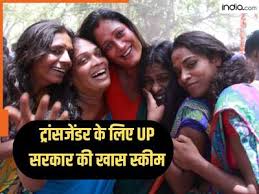
In 2021, a welfare policy was implemented for the Uttar Pradesh transgender community. The Uttar Pradesh Transgender Welfare Board was formed this year, responsible for monitoring the schemes. The BJP government of Uttar Pradesh Chief Minister Yogi Adityanath has taken another historic step towards social harmony and inclusive development in the state. Transgender people over the age of 60 will now have access to old-age homes. This will not only provide them shelter but also the opportunity to live a dignified and safe life. These transgender people will be able to live and eat for free in the old-age homes, and will even receive services such as pension, Ayushman Bharat cards, health checkups, and mental health counseling. In many cities, transgender people are no longer limited to traditional occupations but are also making their mark in education, politics, police, and social work. However, challenges such as discrimination, unemployment, and lack of social acceptance still exist. Despite this, members of the community continue to raise their voices for their rights and a dignified life. Welfare Policy Implemented in 2021 In 2021, the Uttar Pradesh Transgender Welfare Board was implemented. The Uttar Pradesh Transgender Welfare Board was established this year, responsible for monitoring schemes and other initiatives. The Yogi government has ensured that the transgender community in the state enjoys equal rights, dignity, and opportunities. Ongoing Registration Process Transgender people are being registered to connect them with government schemes. To ensure the safety and resolution of problems for the transgender community, the state government has established Transgender Protection Cells in every district. These cells are being operated under the supervision of the District Magistrate. What other facilities will transgender people receive? In these old age homes, transgender people will receive good food, regular health checkups, medication, medical health care, mental health support, and counseling services. Additionally, community activities, libraries, yoga, and meditation sessions will be conducted in these old age homes to maintain positivity in life. 1,067 transgender individuals have received ID cards so far. So far, 1,067 transgender individuals have been issued identity cards, making it easier for them to access government schemes. Additionally, 248 transgender students are receiving scholarships. What does the government say? Principal Secretary, Social Welfare, L. Venkateswar Lu stated that more schemes will be introduced for the transgender community in the future to promote their social, economic, and mental empowerment. Anjali Karmakar About the Author Anjali Karmakar has been active in the field of journalism for 12 years. She graduated in Economics from Banaras Hindu University and earned a Master’s degree in Mass Communication from the same university. Courtesy: Hindi News
Tamil Nadu-born trans politician is now in Scottish Parliament. They went there on student visa
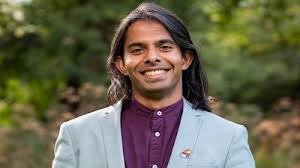
Q Manivannan hails from a lower-caste family in Tamil Nadu. They studied at OP Jindal Global University and completed their master’s degree in international peace studies in Dublin. New Delhi: Q Manivannan, a Tamil Nadu-born trans person, has been elected to the Scottish Parliament from the Scottish Green Party in the recent elections held on 7 May. Manivannan’s election marks a historic moment for representation in Scotland’s political landscape, particularly for the LGBTQ+ and immigrant communities, reported The Sunday Guardian. Mannivannan was also active in local Edinburgh politics before being elected to Holyrood as a Member of the Scottish Parliament (MSP). Their election is drawing attention since they have a student visa and were reportedly trying to raise £2,089 for a temporary graduate visa. Once they save up from their MSP salary of £77,711 per annum, they plan to apply for a global talent visa, which the UK offers to promising individuals. From India to Scotland Mannivannan studied at OP Jindal Global University, completed their master’s degree in international peace studies at Trinity College Dublin, and moved to Scotland in 2021 for doctoral research at the University of St Andrews. “I am a transgender Tamil immigrant, my pronouns are they/them. I am to some in this country everything that the hateful despise, and I am standing here as your MSP now with care,” Mannivan told the crowds at Edinburgh, reported The Telegraph. They added that they come from a lower-caste family in Tamil Nadu and had seen similar movements of resistance in Scotland. They said that they felt a strong connection with the region’s history of social and ecological justice. “I want to continue standing unwaveringly for solidarity for oppressed communities – whether its immigrants or asylum-seekers in Edinburgh… or suffering Palestinians,” Manivannan added. Visa woes Manivannan’s election was only possible after the Scottish National Parliament relaxed the rules around who could be a Holyrood candidate. Earlier, foreigners could become MSPs only if they were allowed to remain indefinitely in the UK. However, with the recent change in legislation, candidates can qualify for MSPs even with short-term visas, such as those of a student. “Q is on a valid visa with the right to work and live in Scotland, and is a Commonwealth citizen. The UK’s visa system is needlessly expensive and hostile, and we are determined to replace it with one that welcomes people with care rather than throwing up hurdles and barriers,” a Scottish Greens spokesperson told The Telegraph. Janaki Pande (Edited by Prasanna Bachchhav) Courtesy : The Print Note: This news is originally published on https:/theprint.com/bha and is used purely for non-profit/non-commercial purposes, especially human rights
‘It’s like a trans-Barbie world!’: the Indian festival where transgender women can celebrate without fear
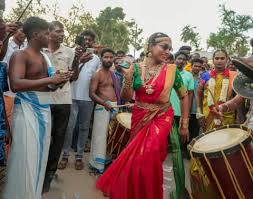
The annual gathering at Koovagam is rooted in an ancient poem. Five trans attendees talk about what the event means to them in light of a controversial change to the country’s gender recognition law The summer air is thick with dust, sweat and the scent of jasmine. In Koovagam, in southern Tamil Nadu, more than 100,000 people have gathered for one of India’s most distinctive festivals. Transgender women from across India, arrive in bright silk saris and gold temple jewellery, their hair oiled and braided with flowers. For nearly 18 days, the little town swells into a city of devotion, culminating in rituals that blur the boundaries between myth and reality. Closeup of a woman’s hands clasped in front of her pageant winner’s sash. She is wearing green glass bangles and jewellery, yellow nail polish and has henna on her hands The Koovagam festival pageant winner displays her rings The annual festival centres on the Koothandavar Temple and the story of Aravan, a figure from the Mahabharata, one of India’s most revered epic poems. According to the story, Aravan agrees to be sacrificed before a decisive battle, but asks for one final wish: to be married before he dies. When no woman is willing to wed a man fated to die the next day, the god Krishna assumes the female form of Mohini to fulfil his desire. By morning, Aravan is sacrificed, and Mohini, now widowed, mourns him – her grief forming the core of the festival that unfolds each year in Koovagam. This retelling has come to hold deep significance for trans women, who come to Koovagam to “marry Aravan” on the penultimate day of the festival. The next morning, the mourning is re-enacted: bangles are broken; vermilion powder wiped from hair partings; and white saris donned as they grieve his death. Festival goers walk past fruit stalls towards a display of neon light decorations at dusk For nearly 18 days, Koovagam swells into a temporary city of devotion as more than 100,000 people gather Two women, seen from behind, with intricate jasmine garlands wound into their hair and wearing silk saris Devotees wear a sacred thread or thali (mangalasutra) dyed in turmeric that symbolises the marriage between transgender women and Aravan. Jasmine garlands are worn in participants’ hair to signify their status as ‘brides’ This year, the festival took place against the background of a shifting legal landscape in India. An amendment to the Transgender Persons (Protection of Rights) Act 2019, passed in March, has scrapped the right to self-identify gender and introduced medical scrutiny into the legal recognition process. It also narrows the scope of who qualifies as “transgender”, privileging more fixed, state-recognisable categories while pushing trans men, and many non-binary identities, into a grey zone. Critics have called the new law regressive and an affront to human rights and dignity. For the trans women who gathered in Koovagam, the festival offered a temporary escape from the scrutiny. The Guardian spoke to some of the attendees about their lives and asked what the festival meant to them. Prazzi adjusts her sari as she stands outside the Aravan temple. This is her second time at the festival, and the joyfulness, she says, has not dulled. “You know what this is?” she says. “This is the only time of the year when we are not a minority. It’s like a trans-Barbie world.” A fashion designer and university tutor in Chennai, Tamil Nadu, Prazzi spends most of her year navigating spaces where she is, as she puts it, “a minuscule minority – someone whose presence or absence doesn’t even matter”. “People assume fashion is inclusive. It’s not,” she says. “Queer people maybe, but trans women? We are still not welcomed.” In Koovagam, that sense of isolation disappears. “For once, we are the majority. We are everywhere – in the streets, in the shops, in each other’s lives. I can just exist with my trans sisters without explaining myself.” She had more than 50 rejections before securing her teaching position. “Your CV gets you in; your identity gets you rejected,” she says. “They call you for an interview because your work and portfolio is good. But the moment you walk in, everything changes. You can see it in their faces – they’ve already decided.” What often goes unseen is how discrimination is built into paperwork. “They’ll say, ‘Your name doesn’t match across your ID proofs,’ or ‘you don’t have an address on your name. These become easy ways to exclude you,” she says. “It is not always said out loud, but you know why.” Prazzi is concerned about how the new Transgender Act deepens this. “When the state itself questions your identity unless you fit into its narrow definitions of ‘trans’, the whole issue of documentation becomes even more fraught,” she says. “It gives the state the power to decide – almost arbitrarily – whether to issue these documents to us or not. Without documents, you don’t exist,” she says. “And if you don’t exist, you can’t rent a house, you can’t move freely, work is even a distant possibility” “For many trans women,” she says, these “rejections decide our entire life. Most are pushed into begging or sex work. I was lucky – I have a job that gives me some stability. But that is not the reality for most of us.” Akshaya in sari and gold jewellery standing in front of police officers at Koovagam festival Akshaya, 29: ‘Our bodies are treated as illegal’View image in fullscreen Akshaya is at the edge of a brightly lit stretch of mud road, scanning the crowd, as the Miss Koovagam pageant takes place on the stage. Around her, her six “daughters” and two “sisters” chat and laugh. “This is my family,” she says. “Not by blood – but this is who I live for.” She has come to Koovagam to seek the blessings of Aravan, but her real wait, she says, is for the night. When the state looks away we
Tamil Nadu-born trans politician is now in Scottish Parliament. They went there on student visa
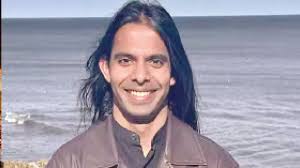
Q Manivannan hails from a lower-caste family in Tamil Nadu. They studied at OP Jindal Global University and completed their master’s degree in international peace studies in Dublin. New Delhi: Q Manivannan, a Tamil Nadu-born trans person, has been elected to the Scottish Parliament from the Scottish Green Party in the recent elections held on 7 May. Manivannan’s election marks a historic moment for representation in Scotland’s political landscape, particularly for the LGBTQ+ and immigrant communities, reported The Sunday Guardian. Mannivannan was also active in local Edinburgh politics before being elected to Holyrood as a Member of the Scottish Parliament (MSP). Their election is drawing attention since they have a student visa and were reportedly trying to raise £2,089 for a temporary graduate visa. Once they save up from their MSP salary of £77,711 per annum, they plan to apply for a global talent visa, which the UK offers to promising individuals. From India to Scotland Mannivannan studied at OP Jindal Global University, completed their master’s degree in international peace studies at Trinity College Dublin, and moved to Scotland in 2021 for doctoral research at the University of St Andrews. “I am a transgender Tamil immigrant, my pronouns are they/them. I am to some in this country everything that the hateful despise, and I am standing here as your MSP now with care,” Mannivan told the crowds at Edinburgh, reported The Telegraph. They added that they come from a lower-caste family in Tamil Nadu and had seen similar movements of resistance in Scotland. They said that they felt a strong connection with the region’s history of social and ecological justice. “I want to continue standing unwaveringly for solidarity for oppressed communities – whether its immigrants or asylum-seekers in Edinburgh… or suffering Palestinians,” Manivannan added. Manivannan’s election was only possible after the Scottish National Parliament relaxed the rules around who could be a Holyrood candidate. Earlier, foreigners could become MSPs only if they were allowed to remain indefinitely in the UK. However, with the recent change in legislation, candidates can qualify for MSPs even with short-term visas, such as those of a student. “Q is on a valid visa with the right to work and live in Scotland, and is a Commonwealth citizen. The UK’s visa system is needlessly expensive and hostile, and we are determined to replace it with one that welcomes people with care rather than throwing up hurdles and barriers,” a Scottish Greens spokesperson told The Telegraph. Janaki Pande (Edited by Prasanna Bachchhav) Courtesy : The Print Note: This news is originally published on https:/theprint.com/bha and is used purely for non-profit/non-commercial purposes, especially human rights
Transgender Indian on a student visa gets elected to Scottish Parliament
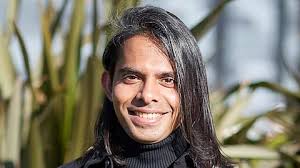
Tamil Nadu PhD student’s election victory fuels UK immigration debate An Indian doctoral student from Tamil Nadu, who moved to Scotland on a student visa just four years ago, has turned a local election victory into a wider debate on immigration, identity and representation in UK politics. Q Manivannan, who identifies as non-binary and claims to represent “diversity in power”, is among the newest members of the Scottish Parliament, also referred to as Holyrood. The PhD student was elected to the devolved Scottish Parliament on the Edinburgh and Lothians East regional list for the pro-independence Scottish Greens. The results for the elections held last week were announced on May 9. “My name is Dr Q Manivannan, I am a transgender Tamil immigrant, my pronouns are they/them,” said Manivannan, standing among his supporters. “I am to some in this country everything that the hateful despise and I am standing here as your MSP (Member of the Scottish Parliament) now with care. They say politics is the art of the possible, a politics of care I would say expands what is possible for everyone left behind, pushed out or never invited in,” the Indian student said. Born in Tamil Nadu, Manivannan moved to Scotland in 2021 on a student visa to pursue a course in international relations at the University of Andrews. Ahead of the election victory, the Indian national was in the process of online crowdfunding for a Graduate Visa, which grants doctoral students the right to live and work in the UK for three years beyond their student visa. “Every barrier placed before me with the Greens was the reason also that we pushed further. This is what diversity looks like in power,” said Manivannan, who uses the pronouns they/them. Their election has drawn criticism from anti-immigration voices over rules that allow some foreign nationals living in Scotland to contest elections. “Dr Manivannan may be a nice young person. But I don’t want to live in a country where people on student visas can become elected representatives to national parliaments,” said Robert Jenrick, former Tory minister and now shadow chancellor in the anti-immigration Reform UK. The Indian student’s MSP candidature was possible as a Commonwealth national under a rule change that allows foreigners on even short-term visas and without indefinite leave to remain (ILR) or those with permanent residency to be eligible for elections in Scotland. “Politicians should commit to removing the automatic right of Commonwealth citizens to vote in UK elections, and the ability of non-British citizens to stand in British elections,” stated Migration Watch, an independent pressure group campaigning for immigration curbs. Co-leader of the Scottish Greens, Gillian Mackay, told reporters that the party would be supporting Manivannan through the process of a new visa application. “There will have to be a renewal of Q’s visa. That is a process they will have to complete over the session of Parliament,” Greens said. Manivannan’s campaign pamphlet describes him as a politics PhD student, arts worker, co-convenor of Scottish Green Party’s Palestine Solidarity Group, former United Nations health and disability worker and immigrant. “If my mere existence causes this much trouble, I’m excited to see how much my words will,” Manivannan said in a social media post after the election results on Saturday. The Scottish Greens said the Scottish Parliament had “rightly and explicitly” chosen to permit people like the “queer Tamil immigrant” to contest the May 7 elections to “bring a politics of care and compassion to Holyrood”. “Q is on a valid visa with the right to work and live in Scotland, and is a Commonwealth citizen. The UK’s visa system is needlessly expensive and hostile, and we are determined to replace it with one that welcomes people with care rather than throwing up hurdles and barriers,” a party spokesperson said. The leftist Scottish Greens made significant gains in last week’s election, in Scotland and in local councils across England. Courtesy : The Tribune Note: This news is originally published on https:/thetribune.com/bha and is used purely for non-profit/non-commercial purposes, especially human rights
3 transgender persons held for assault in Chennai
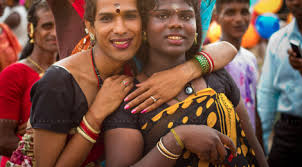
Chennai, Three transgender persons were arrested for allegedly assaulting members of a rival group with stones and beer bottles following a long-standing dispute over territory and alms collection, police said on Monday. The incident, which occurred on May 10, was triggered by a conflict between two groups operating in the Pulianthope and Moolakothalam areas. According to the Basin Bridge police, Salma (42), a transgender person residing in Pulianthope, leads a group involved in alms collection. Trouble began a month ago when a member of her group, identified as Parthiban (alias Surekha), defected to join a rival faction based in Moolakothalam. Tensions escalated on the early morning of May 9, when members of the rival group allegedly trespassed into the residence of Dilsha, a member of Salma’s group, in the K P Park area. The intruders reportedly vandalised household items, including a television, washing machine, and bureau. The following morning, on May 10, while Salma and another associate, Kavya, were en route to the police station to lodge a formal complaint, they were intercepted near the K P Park bus stop. A group of approximately 10 persons, including Surekha, allegedly attacked them with stones and beer bottles while issuing death threats. Kavya, who sustained bleeding injuries in the attack, was admitted to a government hospital for treatment. Based on a complaint filed by Salma at the P-4 Basin Bridge Police Station, a case was registered. A special police team led by the Station Inspector conducted an investigation and apprehended three suspects — Deepan (alias Diya), Vijayakumar (alias Sumithra) and Rajiv (alias Swathi), 20, of Korukkupet — on May 10. Police officials stated that a manhunt is underway to nab the remaining suspects who are currently absconding. PTI JR JR SA This report is auto-generated from PTI news service. ThePrint holds no responsibility for its content. Courtesy : The Print Note: This news is originally published on https:/theprint.com/bha and is used purely for non-profit/non-commercial purposes, especially human rights
Who Is Q Manivannan? Indian-Origin Trans Candidate Elected To Scottish Parliament
Manivannan’s election has drawn attention in the UK because the Scottish Greens candidate reportedly does not possess indefinite leave to remain in the country. An Indian-origin transgender candidate from Tamil Nadu has entered Scotland’s political history after being elected to the Scottish Parliament, the devolved legislature that governs key areas such as health, education and justice in Scotland, as a representative of the Scottish Greens. Q Manivannan, who identifies as non-binary and uses they/them pronouns, won a regional list seat from Edinburgh and Lothians East and will now serve as a Member of the Scottish Parliament (MSP). Their victory has generated political attention in the UK not only because of their identity and immigrant background, but also because they reportedly do not hold permanent residency status in the country. The election has also triggered intense reactions online, including abuse targeting Manivannan and another transgender Scottish Greens candidate, even as supporters hailed the result as a milestone for representation and diversity in Scottish politics. Who Is Q Manivannan? Originally from Tamil Nadu, Manivannan moved to Scotland in 2021 to pursue studies in international relations at the University of St Andrews. They describe themselves as an anthropologist and poet, and have frequently spoken about issues linked to migration, identity, queer rights and social justice movements. In public remarks, Manivannan has referred to themselves as a “queer Tamil immigrant”. Speaking after the election result, Manivannan told supporters: “My name is Dr Q Manivannan, I am a transgender Tamil immigrant… I am to some in this country everything that the hateful despise, and I am standing here as your MSP now with care.” They added: “A politics of care expands what is possible for everyone left behind, pushed out or never invited in.” Why Has Their Election Become Politically Significant? Manivannan’s election has drawn attention because they reportedly do not possess indefinite leave to remain in the United Kingdom — a status broadly comparable to permanent residency. According to The Telegraph, Manivannan was able to contest the election because of changes introduced through the Scottish Elections (Franchise and Representation) Act, passed by the Scottish Parliament in 2020. Earlier, candidates generally required indefinite leave to remain in the UK to stand in Scottish elections. The revised law expanded eligibility rules to allow individuals holding different forms of valid immigration leave — including temporary visas such as study visas — to contest polls. The development has reignited political debate in the UK around immigration laws, voting rights and eligibility for public office. According to the BBC, Manivannan is currently in the UK on a student visa and may need to renew it during the parliamentary term. Scottish Greens co-leader Gillian Mackay told BBC Scotland’s The Sunday Show that the party would support Manivannan through the process. According to The Telegraph, Manivannan had previously sought financial assistance to apply for a graduate visa that would allow them to continue living and working in the UK for a limited period after completing studies. BBC Scotland reported that the Scottish Greens were confident the salary attached to the role of an MSP — just under £80,000 annually — would make obtaining a new visa more straightforward. Responding to the controversy, a spokesperson for the Scottish Greens said Manivannan “is on a valid visa with the right to work and live in Scotland” and criticised the UK immigration system as “needlessly expensive and hostile”. Abuse And Online Backlash After Election Soon after the results were declared, Manivannan and fellow transgender Scottish Greens politician Iris Duane became targets of online abuse. According to The National Scotland, public comments directed at them included words such as “disgusting”, “perverted” and “lying scumbags”. One comment reportedly stated: “Lipstick on a pig is lunacy.” Sharing The Telegraph’s report on the election, former Green Party deputy leader Shahrar Ali reacted on X, writing: “This is called taking the pi**.” Author Andy Ngo also criticised the development, claiming that Scotland was allowing non-citizens to become elected representatives despite Manivannan being on a temporary visa. UK Conservative MP Robert Jenrick, meanwhile, focused his criticism on Manivannan’s immigration status rather than gender identity. “Dr Manivannan may be a nice young person,” he wrote on X. “But I don’t want to live in a country where people on student visas can become elected representatives to national parliaments.” The Scottish Greens described the abuse as “disgraceful”. Manivannan later responded through an Instagram post, writing: “If my mere existence causes this much trouble, I’m excited to see how much my words will.” They added that ordinary people in Scotland had shown support after the election. “I took a walk with a pal today in the end-of-Spring sun in Leith, and to all of you who stopped and thanked me for running, congratulated me, and hugged me — thank you,” the post said. Manivannan also referred to messages received from families and members of the LGBTQ+ community. They further wrote: “Scotland is my home because you, my family, fight for me. And for that, amidst the violent hate, I am so very happy. “And doesn’t that piss people off?” Why The Election Stands Out Manivannan’s victory is being seen as a rare instance of a non-permanent resident being elected to public office in the UK. It also comes at a time when questions around immigration, transgender rights and multicultural politics remain deeply polarising across Britain. Karishma Jain Courtesy : News18 Note: This news is originally published on https:/news18.com/bha and is used purely for non-profit/non-commercial purposes, especially human rights
From Gharana Gurus to Pandemic Flatmates, Trans Motherhood in India Has Always Made a Place for Itself

From hijra gharanas to pandemic flatshares, trans women across India have long built matriarchal families the law refuses to name. With the 2026 amendment threatening chosen family autonomy, three trans women speak about what motherhood really means. Meena* was twelve when she fled a small town with nothing and no one. She found factory work in the city and, slowly, found herself, first through cross-dressing, then through conversation, then through the gradual understanding that some friendships, deepened over years, become something for which no adequate word exists. “Achanak se ek maa ban gayi thi,” she says: I had suddenly become a mother. She had not planned it. The role arrived quietly, like an understanding reached between two people who had each been looking, without knowing it, for the same thing. For RudraniChettri, trans rights activist, actor and model, who also starred in Vikas Khanna’s directed The Last Colour, whose themes almost run parallel to this story on chosen families, and one of the most visible figures of India’s trans movement, motherhood arrived in much the same way. “I never really saw myself as a trans mother,” Chettri told Local Samosa. “I was simply there for people who needed love, care, and support. Over time, these relationships naturally evolved on their own.” Her closest bond is with a non-binary person who is son, sister, brother, mother, and father to her all at once, a bond that goes “beyond labels and traditional definitions of relationships.” For trans women across India, this is what family looks like: not given, but built, through accumulated time and the willingness to stay. The hijra gharana system is among the oldest surviving kinship structures in South Asia. Rooted in a guru-chela lineage, in which a guru takes on chelas, who may in turn take poti-chelas, it has for centuries provided trans women with shelter, sustenance, social standing, and belonging, functioning as a matriarchal institution documented by scholars including Gayatri Reddy and Serena Nanda. But structure is not always warmth, and not every guru becomes a mother. Meena, who spent time within a gharana, recalls the hierarchy as legible but cold. “Guru aayi hai toh boss aayi hai,” she says, when the guru arrived, it felt like a boss, not a mother. What she had been given was a household; what she had been searching for was intimacy. Over time she found it elsewhere, in a friendship that slowly became something more. “Hum ek doosre ki life mein rehte the,” she says: we lived inside each other’s lives. Meena is careful not to dismiss what the gharana gave her: a roof, company, someone who would come in illness. But the chosen family she has since built is held together by something the old system rarely offered, what she calls “mamtapan”, the quality of genuine, tender care. Rudrani Chettri puts the figure plainly: more than ninety, perhaps ninety-five, per cent of India’s trans community is sustained not by biological family but by chosen family. Family rejection remains one of the most consistent and damaging experiences of trans life in India, beginning in childhood and persisting through every significant life transition. The chosen family is not a romantic alternative to the biological one. It is the infrastructure of survival. For 34-year-old Delhi-based trans woman and community organiser Sana*, chosen family emerged not through a traditional gharana but through shared precarity. During the pandemic, she began informally housing younger trans and queer people who had been pushed out of hostels, denied rental accommodation, or cut off financially by their families while in college. What began as temporary shelter slowly became permanence. “At first it was just, ‘Stay here till things get better,’” she says. “Then suddenly we were cooking together, fighting over groceries, helping each other through breakups and hormone appointments. One day someone introduced me as their mother and I realised the relationship had already become real before we named it.” “None of us planned this structure,” Sana says. “But when the world keeps telling you that you do not belong anywhere, even small acts of staying become family.” Chettri is precise: “For many of us, building a chosen family was never the first choice, it became necessary because the first priority was choosing ourselves, choosing our truth, and surviving as who we are.” For transmasculine people, she notes, the situation has historically been far bleaker, without comparable support structures, they remain significantly more isolated. Indian law has not caught up with the families trans people have already built. The Transgender Persons (Protection of Rights) Act, 2019 made no provision for trans persons seeking to adopt and did not address chosen family bonds in any meaningful way. CARA, India’s central adoption authority, has issued no guidance for trans-led families, leaving prospective trans parents in a legal grey zone navigated through bureaucratic discretion and, more often than not, refusal. The NALSA vs. Union of India judgment of 2014 affirmed transgender personhood but left family law untouched. For trans mothers and their chosen children, the legal relationship remains, in most cases, invisible. Sana has encountered that invisibility in ordinary bureaucratic situations, rental agreements, hospital paperwork, emergency contacts. “There is no column for the people who actually take care of you,” she says. “When one of the kids was hospitalised, I was the person speaking to doctors, arranging money, staying awake all night. But legally I was nobody.” The contradiction, she says, is exhausting: “The state keeps asking us to prove relationships that we are already living every day.” The Transgender Persons (Protection of Rights) Amendment Bill, 2025, signed into law in early 2026, sharpened these contradictions considerably. The legislation drew sustained criticism for expanding the role of biological families and state-run rehabilitation centres in matters of trans welfare, provisions that activists read as mechanisms for family-sanctioned confinement dressed in the language of protection. It retained requirements around institutional certification of gender identity, eroding the self-identification principle established by NALSA, while continuing to offer no recognition to chosen family bonds. Chettri names
Karnataka High Court directs continuation of hormone replacement therapy on two transgenders

The petitioners challenged the validity of the Transgender Persons (Protection of Rights) Amendment Act, 2026, and claimed that despite being midway through treatment, the attending doctors are unwilling to continue the prescribed course of therapy. Bengaluru: The High Court of Karnataka has directed the doctors of a private hospital in Bengaluru to continue with hormone replacement therapy (HRT) upon two transgenders as per the existing medical protocol. The petitioners challenged the validity of the Transgender Persons (Protection of Rights) Amendment Act, 2026, and claimed that despite being midway through treatment, the attending doctors are unwilling to continue the prescribed course of therapy. “The concerned doctors and medical authorities shall facilitate continuation of such treatment without interruption. The continuation of treatment shall, however, be subject to the outcome of the present writ petition and any orders that may be passed by the Supreme Court, including in any transfer proceedings initiated by the Union of India,” Justice Sachin Shankar Magadum stated in the interim order passed on Thursday. The petitioners submitted that they are transgender persons identifying as women and are aggrieved by the consequences flowing from the amended definition of “transgender person” under Section 2(k) of the 2026 Amendment Act. The petitioners claimed that they have been undergoing hormone replacement therapy (HRT) in a hospital since November 11, 2023, and have also been issued Transgender Identity Cards. They contend that denial of treatment midway, infringes their fundamental rights guaranteed under Articles 14, 15, 16, 19, and 21 of the Constitution of India. They also relied on an interim order passed by the Kerala High Court in an analogous matter, where similarly placed persons were permitted to continue the therapy and appropriate directions were issued to facilitate uninterrupted treatment. The Additional Solicitor General, appearing for the Union government, submitted that no material is placed on record to demonstrate that the authorities have initiated or proposed coercive action restraining such treatment. It was further submitted that the issue relating to the validity of the amendment is presently sub judice and before the Supreme Court. The Union government is contemplating filing an application seeking transfer of all similar petitions pending before various high courts, the court was informed. Justice Magadum noted that the medical records produced by the petitioners, prima facie, indicate that both have been undergoing the therapy since November 11, 2023. “At this stage, it cannot be disputed that abrupt discontinuation of such ongoing medical treatment may have adverse and detrimental consequences on their physical and mental well-being. It is also not in dispute that the issues raised in the present petition, including the challenge to the amended statutory provision, are engaging the attention of the Supreme Court and are likely to be authoritatively settled. In the facts and circumstances of the case, this court is of the considered view that, pending adjudication of the larger issues, limited interim protection is required to be extended to the petitioners to ensure that ongoing medical treatment is not disrupted,” the court said. Ambarish B Courtesy : DH Note: This news is originally published on https:/deccanherald.com/bha and is used purely for non-profit/non-commercial purposes, especially human rights