
BJP’s Social Engineering In Punjab: Jat Sikh Face, Hindu Connect, Dalit Outreach
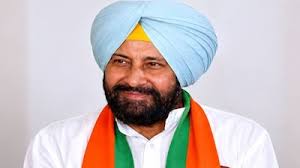
The BJP’s move is being seen as part of a larger political gamble aimed at breaking the perception of the party as primarily a “Hindu party” in Punjab. Chandigarh, Ahead of the Punjab Assembly elections, the Bharatiya Janata Party (BJP) has begun reshaping its political strategy in the state with a clear focus on caste and regional balancing. In a major organisational shift after nearly 26 years, the party has appointed Sardar Kewal Singh Dhillon as the President of the Punjab BJP, signalling a renewed attempt to expand its appeal beyond its traditional Hindu voter base. The BJP’s move is being seen as part of a larger political gamble aimed at breaking the perception of the party as primarily a “Hindu party” in Punjab and strengthening its reach among Sikh voters, especially the influential Jat Sikh community. Why the BJP Chose a Jat Sikh Face Punjab’s demographic and electoral realities have always made caste and community representation politically significant. Sikhs constitute nearly 57 per cent of the state’s population, while Hindus account for around 38 per cent. For decades, the BJP’s political support in Punjab remained largely concentrated among urban Hindu voters. By appointing Kewal Singh Dhillon – a former Congress leader and close associate of former Chief Minister Captain Amarinder Singh – the BJP appears to be sending a strong message that it wants to emerge as a broader social coalition in Punjab politics. The move also comes after the party’s earlier attempt to attract Sikh voters through Captain Amarinder Singh failed to produce substantial electoral gains during the last Assembly elections. BJP’s Focus On Malwa, Doaba And Majha Political observers believe the BJP is now strategically targeting Punjab’s three major regions – Malwa, Doaba and Majha. Kewal Singh Dhillon belongs to the politically crucial Malwa belt, which alone accounts for 69 of Punjab’s 117 Assembly seats. The Majha region has 25 seats, while Doaba contributes 23. By elevating Dhillon, the BJP appears to be strengthening its organisational presence in Malwa, while Haryana Chief Minister Nayab Singh Saini has reportedly been tasked with increasing outreach among OBC voters, particularly in the Doaba region. He has been holding programmes in Punjab with OBC and other castes to attract voters. Around 70 political personal programmes have been attended by Haryana Chief Minister Nayab Singh Saini from 2025 onwards. The party’s broader strategy indicates an attempt to consolidate support across caste and regional lines before the 2027 Assembly elections. BJP’s Caste Combination Strategy Ahead of the elections, the BJP appears to be balancing caste and regional representation through a mix of prominent leaders and targeted community outreach. Prominent Hindu leaders such as Sunil Jakhar and Ashwani Sharma are seen focusing on the Hindu vote bank in urban constituencies, including Ludhiana, Jalandhar, Amritsar, Gurdaspur and Pathankot. In the Malwa region, Jat Sikh leaders, including Kewal Singh Dhillon, former Chief Minister Captain Amarinder Singh and Union Minister Ravneet Singh Bittu, are expected to play a key role in strengthening the party’s outreach among Jat voters. For Dalit outreach, the BJP has relied on leaders such as former Union Minister Vijay Sampla, former union minister of state Som Parkash and former chief parliamentary secretary Avinash Chander. These leaders were also involved in facilitating a meeting between Dera Sachkhand Ballan chief Sant Niranjan Dass and Prime Minister Narendra Modi in Delhi ahead of the 649th Guru Ravidas Jayanti. Prime Minister Narendra Modi’s visit to Dera Sachkhand Ballan in Jalandhar was also viewed as politically significant due to the dera’s deep emotional and religious influence among the Ravidassia community in Punjab. BJP’s Political Message Ahead of 2027 The appointment of Kewal Singh Dhillon is also being viewed as an effort to politically accommodate Captain Amarinder Singh and put to rest speculation regarding his possible return to the Congress. Interestingly, despite losing both the Sangrur Lok Sabha election and the Barnala Assembly election, Dhillon has been elevated to the party’s top organisational post in Punjab – underlining the BJP’s focus on social equations and regional representation over immediate electoral performance. BJP leader Anil Sarin, however, dismissed suggestions that the appointment was based on religion or caste politics. Calling it a routine organisational process, he said the BJP works collectively with leaders and workers from all communities for the prosperity of Punjab. Yet politically, the message from the BJP is becoming increasingly clear: ahead of the 2027 Punjab Assembly elections, the party is attempting to build a new social coalition by combining Hindu urban support, Jat Sikh leadership and Dalit outreach under one political framework. How Former Barnala MLA Kewal Singh Dhillon was Appointed Former Barnala MLA Sardar Kewal Singh Dhillon, a prominent Jat Sikh leader and close confidant of former Punjab Chief Minister Capt Amarinder Singh, is being viewed as the BJP’s attempt to strengthen its connection with Sikh voters in the state and expand beyond its traditional urban Hindu support base. Current Punjab BJP president Sunil Jakhar’s three-year term is set to conclude in July. However, the party sources indicate that Jakhar will continue to play an active role in shaping the BJP’s campaign strategy for the upcoming Assembly elections. Within the BJP, there had been growing support for appointing a Sikh face to lead the Punjab unit. Insiders said BJP national general secretary Tarun Chugh strongly backed Dhillon’s candidature. RSS Punjab in-charge Mantri Srinivaslu and Haryana Chief Minister Nayab Singh Saini were also reportedly supportive of the move. Political discussions around Punjab’s changing equations had intensified recently after Capt Amarinder Singh’s meeting with Dera Beas chief Baba Gurinder Singh Dhillon. Besides Kewal Singh Dhillon, several other leaders were also said to be in contention for the post, including Jagmohan Raju, Manjit Singh Rai, Union Minister Ravneet Singh Bittu and former Finance Minister Manpreet Badal. Born in Tallewal village in Barnala district, Kewal Singh Dhillon served as MLA from Barnala from 2007 to 2017. He later lost the seat to AAP leader Gurmeet Singh Meet Hayer. Dhillon joined the BJP in June 2022 along with several
Congress attacks Mahoba Dalit student incident: BJP government accused ofdeflecting justice
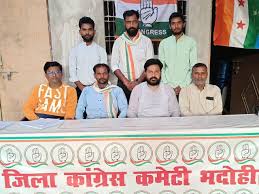
Bhadohi Congress Committee President Wasim Ansari addressed a press conference at his camp office in Suriyawan. Expressing concern over the incident involving the Dalit student from Mahoba, he said that this case has brought shame to the entire state. Ansari alleged that the BJP government and its leaders are trying to divert attention by resorting to AI-generated videos and propaganda instead of providing justice to the victim. He stated that when Uttar Pradesh Congress Committee President Ajay Rai was going to share the victim’s grief, an attempt was made to stop him. Wasim Ansari reiterated that the Congress party will always raise the voice of the oppressed and the exploited. Wasim Ansari hit back at the BJP, saying that BJP members are today talking about corruption and demanding an investigation into Ajay Rai’s assets. He challenged that every Congress worker, including state president Ajay Rai, is ready for investigation, but the assets of Bharatiya Janata Party MPs, MLAs, and ministers should also be investigated. He also mentioned the poor condition of the Ganga River despite thousands of crores of rupees spent on the Namami Gange project. Ansari also questioned the poor condition of the Jalkal and Nal Yojana schemes, where tanks are collapsing and water is not reaching other areas. Wasim Ansari accused the Agra Municipal Corporation of waiving ₹430 crore owed to Torrent, a private power company. He said that the BJP government has previously waived lakhs and crores of rupees for big capitalists, which he described as a “donate and do business” policy. Regarding the cases filed against Ajay Rai, Ansari clarified that these cases are related to political and public service. He said that the government took action against him because he helped people during the COVID-19 pandemic and participated in public movements. Many prominent leaders, including District Vice President Trilokinath Bind, Suriyawan Block President Suresh Chauhan, Youth Congress State General Secretary Nazim Ali, Youth Congress District President Shakti Mishra, OBC Wing District President Rakesh Pal, and Vishal Gautam, were present at the press conference. Nitesh Kumar Upadhyay | Suriyawan, Bhadohi (Sant Ravidas Nagar) Courtesy: Hindi News
Politics heats up over Dalit student case in Etah: Former District President says opposition to visiting the victim’s family is against democratic values
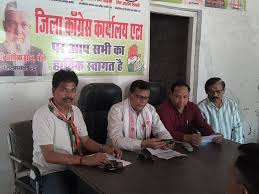
Politics has heated up over the controversial case involving a Dalit student in Etah. Late in the evening, the District Congress Committee, Etah, held a press conference, leveling serious allegations against the BJP government and expressing support for State Congress President Ajay Rai. Former District President Chob Singh Dhangar accused the BJP of adopting a repressive policy. He claimed that a Dalit student in Mahoba was kidnapped, held hostage for several days, and subjected to inhumane treatment. Congress leaders alleged that the government has failed to understand the victim’s pain. Meanwhile, Uttar Pradesh Congress Committee State President Ajay Rai’s visit to the victim’s home to inquire about her family was described as a humanitarian gesture. Congress workers also alleged that when Ajay Rai arrived at the victim’s home, BJP workers attempted to oppose him. Congress leaders accused the BJP of insensitivity, stating that opposition to visiting the victim’s family is against democratic values. The press note also demanded an investigation into the assets of ministers and MLAs of the BJP government. Congress leaders said that if the government is serious about combating corruption, it should initiate an impartial investigation of its own representatives. They also termed the demand for an investigation into Ajay Rai’s assets as political vendetta. This statement issued by the District Congress Committee, Etah, has sparked political activity in the district. However, no official response has yet been issued by the BJP on this matter. Nand Kumar | Etah 5 Courtesy: Hindi News
‘Absolute bar’ offers legal clarity, but exposes social blindness
blindness If caste-based disadvantage persists irrespective of religion, excluding Dalit converts risks making the classification under-inclusive. When the Supreme Court reiterated that the exclusion of Dalit converts from Scheduled Caste (SC) status is “absolute and admits no exception”, it does more than settle a doctrinal question. It revives a foundational constitutional dilemma: can the law deny protection against caste-based discrimination simply because an individual has changed religion? More critically, does caste itself disappear upon conversion, or does the law merely choose not to see it? This tension between constitutional text and social reality lies at the heart of the debate on SC status for converts to Islam and Christianity. The legal position rests on Clause 3 of the Constitution (Scheduled Castes) Order, 1950. Originally limited to Hindus, and later extended to Sikhs and Buddhists, the order continues to exclude Muslims and Christians. The Supreme Court has consistently read this provision strictly: the SC status is a matter of legal recognition, not lived identity A Dalit who converts to Christianity or Islam immediately loses access to reservations, scholarships, and protections under the SC/ST (Prevention of Atrocities) Act, 1989. The court has clarified that this bar is categorical — possessing an SC certificate is irrelevant if the individual no longer professes a qualifying religion. This formal clarity sits uneasily with empirical reality. The NCRB data shows that tens of thousands of atrocities against Scheduled Castes are registered each year, with pendency rates exceeding 85%. Caste-based violence remains a structural feature of Indian society. Sociological studies further demonstrate that caste does not vanish upon conversion. Millions of Dalit Christians and Dalit Muslims continue to face social segregation, occupational immobility, and endogamy mirroring caste hierarchies within Hindu society. Yet the remain largely invisible in state policy. The result is a paradox: the law recognises caste within certain religions but denies its existence when it crosses religious boundaries. Persistent discrimination The constitutional validity of Clause 3 has been pending before the Supreme Court since 2004. Meanwhile, multiple institutional exercises have pointed toward the need for reconsideration. The Ranganath Mishra Commission (2007) recommended making SC status religionneutral, finding no empirical basis for exclusion. The Sachar Committee and subsequent studies reinforced this conclusion, documenting persistent discrimination among converts. In 2022, the Union government constituted a Commission of Inquiry under former Chief Justice K G Balakrishnan to examine whether SC status should be extended to Dalit converts. However, the commission has not submitted its report. What is striking is not just policy delay but judicial silence. The Supreme Court’s reaffirmation of the ‘absolute bar’ does not engage with the pending constitutional challenge, the Balakrishnan Commission, or the Mishra Commission’s findings. Nor does it revisit Soosai v. Union of India (1985), where the court acknowledged that resolving this issue requires contemporary socio-economic evidence. Instead, in C Selvarani (2024), the court characterised claims to SC status after conversion as a ‘fraud on the Constitution’. Together, these developments suggest not just doctrinal continuity but a narrowing of legal space at a time when evidence points toward reconsideration. The constitutional difficulty is clear. Articles 14, 15, and 16 permit affirmative action to remedy historical disadvantage. But if caste-based disadvantage persists irrespective of religion, excluding Dalit converts risks making the classification under-inclusive. The question is not whether affirmative action can differentiate, but whether it can do so while ignoring social reality. A religion-based exclusion begins to resemble constitutional evasion rather than reasonable classification. There is also a quieter constitutional cost. Article 25 guarantees the freedom to profess, practise, and propagate religion. Yet when conversion leads to the loss of legal protections and socio-economic safeguards, that freedom becomes conditional. Law penalises conversion The law does not prohibit conversion, but it penalises it. The price of changing religion is the forfeiture of constitutional benefits, even if the underlying disadvantage remains unchanged. The Supreme Court’s position has been consistent, if cautious. In Soosai v Union of India (1985), it upheld the exclusion of Christian converts due to insufficient evidence of continued backwardness. In S Anbalagan v B Devarajan (1984), it acknowledged that caste may persist after conversion but stopped short of extending benefits. In C M Arumugam v S Rajgopal (1976), it recognised that caste identity can revive upon reconversion, implicitly admitting that caste is not erased by religious change. In State of Kerala v Chandramohanan (2004), it reaffirmed that SC status is governed strictly by the Presidential Order under Article 341. Even in K P Manu v Chairman, Scrutiny Committee (2015), while allowing restoration of caste status after reconversion, the court maintained the rigid framework linking SC recognition to specified religions. These decisions reveal a consistent judicial pattern: acknowledgment that caste may endure beyond religion, combined with reluctance to extend constitutional protection accordingly. The recent reaffirmation of the ‘absolute bar’ reflects fidelity to statutory text but also institutional hesitation to engage with evolving social evidence. The consequences are tangible. Dalit converts are excluded from protections under the SC/ST (Prevention of Atrocities) Act, 1989. In E V Chinnaiah v State of Andhra Pradesh (2005), the court emphasised the rigidity of SC classification under Article 341. In Chandramohanan (2004), it reiterated that statutory protections cannot extend beyond those recognised under the 1950 order. This creates a legal paradox: caste-based violence may persist, but victims are denied protection because the law no longer recognises their caste identity. International human rights law offers a different approach. Instruments such as the ICCPR and CERD emphasise equality and prohibit discrimination based on descent, interpreted to include caste. These frameworks prioritise lived disadvantage rather than formal religious identity. In the United States, affirmative action is anchored in race and historical disadvantage, not religion. South Africa’s jurisprudence similarly prioritises substantive equality. India’s religion-linked approach to caste recognition, thus, stands out as an exception. The persistence of caste across religions presents a challenge that the current legal framework struggles to address. Delinking SC status from religion, as recommended by the Mishra Commission, would be one path forward. Alternatively, a parallel framework for Dalit
Dalit professor alleges massive scam in ‘digital evaluation’ at CURaj, removed from evaluation process due to strict marking!
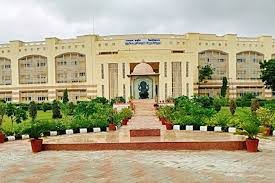
The professor also alleged malpractice in PhD admissions, research projects, and other examinations. He stated that the Vice Chancellor, Registrar, Controller of Examinations, Dean Academics, and some department heads are colluding to perpetrate large-scale academic scams. Ajmer – Amidst the ongoing criticism of the CBSE’s OSM system and the fear spread among students, serious allegations of similar irregularities have now been made at the Central University of Rajasthan, Ajmer. Dr. Rakesh Kumar, Associate Professor in the Physics Department at the Central University of Rajasthan, has accused the university administration of widespread academic scams. He stated that he had complained repeatedly over the past two years, but no one responded, and he was removed from the evaluation process. Earlier in April, Professor Rakesh Kumar had also complained about the university administration’s repressive actions, where he was forcibly taken from his office by the police and detained for approximately four hours. He was detained without any FIR or complaint simply because he had expressed his refusal to attend the Deputy Chief Minister’s program organized on the occasion of Ambedkar Jayanti. Dr. Kumar has described this as a conspiracy to suppress his voice and alleged that the university administration, in connivance with the police, treated him in a communal and discriminatory manner. In his recent post, Rakesh Kumar exposed the scams at the university, saying, “Organized scams, like the NEET scam, are taking place in the education system. I was silent for a long time, but now I felt it was no longer appropriate to remain silent. I wrote several emails to the Vice Chancellor, Registrar, Controller of Examinations, and Dean Academics over the past two years, but no one responded or corrected me. Therefore, I decided to bring such matters to the public domain.” The professor questioned the “digital evaluation” system adopted by the university. He explained that a few years ago, the current Vice Chancellor introduced a new system for evaluating answer sheets, which they call digital evaluation. This is a system of a private company, on which the university is spending crores of rupees. In a detailed post, Kumar wrote, “A few years ago, the current Vice Chancellor changed the system for evaluating answer sheets. He calls this new system “digital evaluation,” although it’s not actually digital evaluation. It’s provided by a private company, and the university pays the company several crores of rupees for the system. In this system, students’ answer sheets are scanned, their first page is hidden, and the resulting images are uploaded to a server. Access to these scanned copies is limited to a desktop located in a room in the university’s administrative building. Simple software supports these scanned copies. University teachers evaluate these scanned copies and write the marks obtained on the scanned pages using the software. Finally, the software adds up those marks. Therefore, there’s no significant benefit, although we waste crores of public money. The biggest drawback of this system is that students are not allowed to view their scanned answer sheets after evaluation. This is a complete violation of transparency.” It’s annoying and frustrating, but it helps scams happen.” Dr. Rakesh Kumar also gave some concrete examples. He explained, “Two years ago, I taught a master’s course and evaluated the answer sheets. The Vice-Chancellor didn’t like the final result of the course, so he withheld it for a few months. Afterward, the result was announced with a massive 160% change. I was shocked and wondered how I had made such a huge error in my evaluation. So, I wrote emails to the Controller of Examinations, the Registrar, and the Vice-Chancellor. I asked them to show me some samples of answer sheets that had been checked by another faculty member. They haven’t responded yet. This is where so-called digital evaluation helps perpetrate massive academic scams. Last year, the Vice-Chancellor did the same thing to me. I was a course instructor and had also prepared the exam question paper for that course. Sadly, without informing me, the university administration assigned the answer sheets for the course to another faculty member for evaluation. That faculty member took a few months. When I learned of this, I emailed the university administration and asked for an explanation.” I asked why they removed me from the evaluation process, and I also requested to see the results and some of the evaluated answer sheets. So far, they haven’t responded to any of my emails. This simply means the results were already decided, and the administration is trying to hide something suspicious.” The professor also alleged malpractice in PhD admissions, research projects, and other examinations. He said the Vice Chancellor, Registrar, Controller of Examinations, Dean Academics, and some department heads were colluding to perpetrate a massive academic scam. Rakesh Kumar says, “Recently, an exam was held for which I served as the course instructor. It’s common practice for the course instructor to set the exam question paper. However, in this case, the question paper was set by a faculty member who had never taught the course! The problem isn’t limited to this. The course has four equally important units. However, 50% weightage was given to just one unit, with obvious repetition and overlap in many questions. The question paper was of very poor quality and tampered with. In this regard, I wrote to the university administration about my concerns, but as usual, I haven’t received a response yet. In the last three Ph.D. admissions, I noticed that many students were selected who either didn’t answer a single question or had very unsatisfactory interviews. I feel that the university administration selects students first and then interviews them later. I’ve also raised these issues with the university administration.” I wrote to the university authorities. Unfortunately, there was no response. Similar scams are also taking place in students’ research projects, labs, and other regular examinations. Just to show good statistics, the Vice-Chancellor is compromising everything! He is perpetrating massive academic scams with the help of the Registrar, Controller of Examinations, Dean of
Honor Killing in Tamil Nadu: A Dalit youth was murdered a month ago, the case was buried under election noise, now the Evidence Report has caused a stir!

Due to the election campaign, the case received little media coverage. The family has demanded compensation of 25 lakh rupees and a separate law against honor killings. Sangottai (Tenkasi) – Sangottai in Tenkasi district, Tamil Nadu, has once again exposed the dark truth of caste-based honor killings. Subhash, a 21-year-old youth from the Devendrakula (Dalit) community, was brutally murdered while he was simply engaging in a friendly conversation with a minor. The killers hacked him with a sickle, crushed him with stones, and then threw him into a well, tying his hands and feet with weights. Due to the election campaign, the case received little media coverage, preventing widespread publicity. The Evidence Organization’s team inspected the scene, and the fact-finding report revealed the gravity of the matter. Subhash’s mother, Leela, and other relatives went to the Evidence Office on May 26th and submitted a formal complaint. Subhash was the youngest son of Sami and Leela. He worked at a private company in Bengaluru. According to reports, 21-year-old Subhash had come to Sangottai to attend his sister’s child’s tonsure ceremony. There, he had a friendly conversation with a 16-year-old girl from the Maravar community. Angered by this, Marichelvam (27), Dhanashankar (24), and a 17-year-old from the Asari community, confronted Subhash on April 15th. According to reports, Subhash worked at a private company in Bengaluru. At around 2:30 a.m. on April 16th, the accused, Dhanashankar, called him. As soon as Subhash arrived on Kannupuli Mettu Road, the three men surrounded him and asked, “How can you talk to a girl from our caste?” He was then severely beaten, his dhoti was torn, his throat was slit with a sickle, and his body was thrown into a ruined well after being covered with large stones. A case has been registered at the Sengottai Police Station under Crime No. 0166/2026, under sections 238 and 103(1) of the BNS Act, 2023, and sections 3(1)(r) and 3(2)(v) of the Scheduled Castes and Scheduled Tribes (Prevention of Atrocities) Act, 1989. All three accused have been arrested and remanded to judicial custody. Police investigations confirmed the presence of liquor bottles, blood-stained stones, and sand at the scene. Police have also recovered the weapon used in the murder. The family and relatives of the girl, with whom Subhash had spoken cordially, were not part of the murder group. Police have confirmed that the murder was committed solely because Subhash had spoken to a girl from an “upper caste.” Sangottai police initially registered a missing person case, but later added other sections. All three accused have been arrested and remanded in custody. The Gangsters Act has also been invoked against two of the accused. Subhash’s mother, Leela, sent a complaint to the Police Chief, Chief Secretary, DGP, and National SC/ST Commission on May 26. Her main demands are: The Tamil Nadu government should immediately enact a separate law against honor killings. The victim’s family should be given compensation of ₹2.5 million, a government job, a monthly pension of ₹20,000, and agricultural land. The three accused should not be granted bail until the verdict is announced. It is noteworthy that between 2021 and 2025, 59 people have been killed in caste-based honor killings in Tamil Nadu. Subhash was murdered in April this year, and a young man named Sanjay was murdered in Kovilpatti in May. Acting Director of Evidence, A. Kathir, says, “This case was overshadowed by the election noise, but now the truth must be revealed. We expect a strict sentence from the court.” Police have currently remanded the three accused in judicial custody, and further investigations are underway. Geetha Sunil Pillai Courtesy: Hindi News
‘This has been our home for 100 years, how can we leave it?’: 7 Dalit families in Kerala struggle against eviction
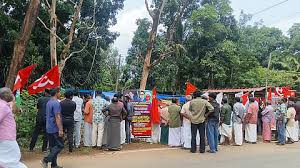
Seven Dalit families living on their land for generations in Malayidamthuruth, Kerala, are facing the threat of eviction due to a land dispute. Learn the full story of this 50-year-old dispute. Kerala: Seven Dalit families living in Malayidamthuruth, near Kizhakkambalam in Ernakulam, say it is unimaginable for them to leave the place where they were born and raised. Their ancestors are buried on this land, and their family has lived here for over 100 years. 74-year-old Chandran, who was injured during a recent violent eviction attempt, described his pain, saying he felt as if his breath had stopped and for a few moments, he felt like he was dying. On May 20th, approximately 200 police officers arrived in Malayidamthuruth to evict these families, injuring several people. This incident occurred just 48 hours after the Congress-led United Democratic Front (UDF) government formed its cabinet. Following this, the opposition Communist Party of India (Marxist) [CPI(M)] has accused the new government of imposing “bulldozer raj” in Kerala. This incident has brought back to the spotlight a decades-old land dispute between a private individual and seven Dalit families who have lived on the land for generations. A 50-Year-Old Land Dispute The dispute concerns 2.65 acres of land occupied by these seven families of the Pulaya caste, which falls under the Scheduled Caste (SC) category. This plot is adjacent to 19 acres of government (Purmbok) land. There is also a dispute over its boundaries, which can only be resolved through a proper survey. The history of these Dalit families in Malayidamthuruth is linked to a bonded laborer named Kalukurumban, who lived on this land nearly a hundred years ago. The current residents are his fifth- and sixth-generation descendants. Legal battles fought in the 1970s confirmed the families’ right to live on this land. According to S. Sathish, Ernakulam District Secretary of the CPI(M), the legal battle over this land occurred in two phases. In 1975, a man named Shankaran Nair filed a case claiming ownership of the property. At the same time, Dalit families approached the Perumbavoor Munsif Court demanding land rights (patta). M.K. Anilkumar, former president of the Kizhakkambalam Panchayat and a member of the CPI(M) local committee, said that Shankaran belonged to a landowning family in the area. He passed away nearly 20 years ago, and the case is currently being handled by his daughters, Subhadra and Ambika, and their family members. In 1975, the court considered both cases jointly and rejected Shankaran’s claim. Regarding the Dalit residents’ demand for a lease, the court clarified that leasing revenue land is a matter of government policy, and only the government has the authority to decide on it. The case then went to the Paravur Sub-Court and then the Kerala High Court, where the lower court’s order was upheld both times. Record Manipulation and Legal Battle The land was resurveyed in the early 1980s. CPI(M) leaders and local residents allege that Shankaran manipulated the records by influencing officials to show the disputed land under a survey number owned by him. Based on these new records, he approached the court a second time in 1984 and obtained a favorable verdict. The case went through the Kerala High Court and finally reached the Supreme Court in 2022, where a verdict was given in Shankaran’s favor. However, the court’s orders could not be implemented due to strong opposition from Dalit residents. Following this, the Perumbavoor Munsif Court issued a strict ultimatum to the police administration to complete the eviction process by May 23 and submit a final execution report by May 26. Following this order, a team of police and the Advocate Commission arrived in the village on May 20 to evict the Dalits. Families say this police action was unprecedentedly severe. Three days after the incident, residents of the area reported that the police had come to evict them 14 times before, but never used such force. According to a LiveLaw report, when the case again reached the Kerala High Court on May 25, the court granted the government two weeks to complete the eviction proceedings. The court remarked that if those people are living on the property, they must have a pre-existing right that has been legally enforced, and until that happens, they cannot create a nuisance. Demand for land measurement and survey The CPI(M) alleges that the police action exposes the UDF government’s cruelty towards Dalits. They argue that after the 2022 decision, the LDF government initiated a survey to determine whether the land was government land. They believe that instead of evictions, the UDF government should continue the land measurement process. Advocate Santhakumari, former MLA and state vice-president of the Pattikajathi Kshema Samiti (PKS), stated that the previous Left Democratic Front (LDF) government appointed a joint verification team to survey 19 acres of land. She said that this decision was made three to four years ago and notices were issued to the concerned people, but the process could not be completed. Following the High Court’s October 10, 2023, order on a writ petition filed by social activist NA Ashraf alleging manipulation of documents related to 19 acres of government land, the Ernakulam Collector also ordered a survey of the 19 acres of Puramboka land on March 23, 2024. Lives in the Shadow of Uncertainty Amidst all this, the future of seven Dalit families hangs in the balance. They have built their homes here with their life savings. Facing the threat of eviction, resident Ebin Thankachan questioned how people who have lived here for five generations can leave this place. These families primarily depend on farming, animal husbandry, and daily wage labor. Ebin explained that they have been paying taxes on their homes, but have not paid land tax due to lack of ownership rights. The graves of their ancestors are also located right behind their homes. They also have two sacred groves (kavu) and temple-related traditions here, which they have followed for generations. Sajitha, 48, said she watched her father fight for this
An elderly Dalit woman in Prayagraj appealed to the Chief Minister: An ancestral land grab, Naini Dandi case, BJP leader comes to her aid
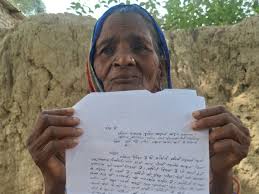
A case of alleged encroachment on the land of an elderly Dalit woman has come to light in Prayagraj. The elderly woman claims her ancestral land is being forcibly encroached upon. She has appealed to the Chief Minister for help in this matter. Shockingly, the BJP leader Ramesh Pasi, who attempted to help her, is now being accused by the other party of breaking and demolishing the boundary wall. Now learn the full story: Naini Dandi is the ancestral land of 75-year-old Indrakali. Indrakali has no son. Since her husband’s death, she has been destitute. Due to her loneliness, her daughter took her to her home in Bara. Following this, Indrakali, along with her daughter, visited the office of BJP leader Ramesh Rawana on May 11th to address the encroachment on her land. Ramesh Rawana informed Lekhpal Sumit Singh about the matter over the phone and asked him to go to the spot and mark the land and help the woman regain possession of her land. Ramesh Pasi then sent a laborer along with Indrakali to assist her. However, some other people later accused Ramesh Rawana of breaking or demolishing the boundary wall. Ramesh claims he did not advise breaking or demolishing the boundary wall and has nothing to do with the matter. Ramesh Pasi went to the spot and summoned both Radheshyam Kotary and Indrakali and said that if the allegations were found to be false after an investigation, he would bear the cost of cement and sand to resolve the dispute. The outpost in-charge instructed both parties not to engage in any conflict for a week. However, that same day, a fake video was circulated on social media accusing Ramesh. The matter has now reached the Chief Minister, where the woman has appealed for justice. Mithilesh Tripathi | Karchana Courtesy: Hindi News
Report Card of Crimes Against Dalits in Uttar Pradesh, Shocking Facts Revealed
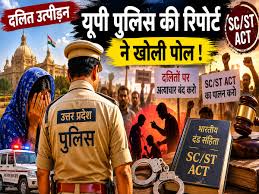
Lucknow: The latest report from the Uttar Pradesh Police on cases of Dalit oppression has revealed several important facts. Between January and April 2026, 14,672 people were named as accused in 4,741 cases registered under the SC/ST Act. Lucknow: The latest report from the Uttar Pradesh Police on cases of Dalit oppression has revealed several important facts. Between January and April 2026, 14,672 people were named as accused in 4,741 cases registered under the SC/ST Act. According to police records, the highest number of accused (2,160) belong to the Yadav community, followed by 1,983 to the Muslim community, 1,698 to the Kshatriya community, and 1,601 to the Brahmin community. The zone-wise data in the report also shows that the number of cases of Dalit oppression continues to be a matter of concern in many districts of the state. These four-month data paint a detailed picture of such crimes being reported in the state. Which communities have the most people accused? According to the police report, the highest number of accused in cases registered under the SC-ST Act, 2,160, belong to the Yadav community. This is followed by the Muslim community with 1,983. Regarding other major communities, 1,698 accused belong to the Kshatriya community and 1,601 to the Brahmin community. These figures only reflect the number of people charged by the police in these cases. The determination of guilt or innocence will be made only after a court hearing. Varanasi Zone Has the Highest Number of Cases Looking at the zone-wise data in the report, the Varanasi zone has the highest number of accused. 650 accused belong to the Yadav community and 428 to the Muslim community. Furthermore, in the Lucknow zone, 410 accused belong to the Yadav community and 428 to the Muslim community. In the Gorakhpur zone, 297 accused were registered from the Yadav community and 344 from the Muslim community. A large number of accused were registered in the Meerut zone, including 319 from the Muslim community. Important statistics also emerged at the commissionerate level The police report also includes commissionerate-level statistics. In the Lucknow commissionerate, 77 accused were from the Yadav community and 82 from the Muslim community. In the Prayagraj commissionerate, 91 accused in SC-ST Act cases were identified as belonging to the Yadav community. These statistics clearly show that the number of such cases is not low even in large cities and densely populated areas. Why is it important to understand the statistics? Experts say that the number of accused registered in police records should not be directly linked to convictions. Being named in an FIR and being convicted by a court are two separate processes. In many cases, facts change during investigation. In some cases, charges are proven, while in others, they are not. Therefore, these statistics should only be used to understand the status of crime registration and police records. Preventing Dalit oppression remains a major challenge The SC-ST Act is an important law designed to protect vulnerable sections of society. Despite this, the filing of cases against thousands of people in the state over four months demonstrates that social conflict and incidents of Dalit oppression remain a concern. These data, from January to April 2026, are considered important indicators for the police and administration. They can help identify areas with a high number of SC-ST Act cases. Based on this, strategies can be developed to increase surveillance in sensitive areas, launch awareness campaigns, and strengthen law and order. Written by Gunateet Ojha Courtesy: Hindi News
The Cockroach Republic: A Dalit founder, political spoof and India’s hunger for humour

Notwithstanding skepticism and cautious optimism, the Cockroach Janata Party (CJP) is a reminder that dissent, satire and self-mockery are democratic necessities Many of us remember popular, non-aligned political movements of angry young people not only from newspapers and history books but also from personal experiences. Recently, following the Israeli strikes on Gaza, universities across the West — notwithstanding threats of exile and jail from organisations like ICE (US Immigration and Customs Enforcement), targeting by the insidious and mysterious Canary Mission in the US, and brutal police thrashing elsewhere — erupted in outrage at what many considered the cruelty of man against man. It has been a long tradition of student and youth politics, especially after World War II, to do so, thanks to the protections offered by democratic societies. In India, the 1970s saw mass mobilisation of students and others that shook the foundations of what is often called India’s Grand Old Party, the Congress. In his 2018 book titled The University as a Site of Resistance (2018), Gaurav J. Pathania writes, “The history of global student activism shows that the University (as a democratic institution) has been fighting for its existence and autonomy while challenging existing traditions in the form of knowledge-production.” At various moments in the world, in the late 1960s and later, young people and progressives, upset with the rot in the bureaucratised politics of their countries, hit the streets calling for change and, in some places, eventually led movements that rang out the old system. The sway of public anger, especially among the young who refused to take things lying down, made its impact all over the world, resulting in the fall and rise of governments. India navigates global economic turmoil with austerity and smart diplomacy In the cities of India, India Against Corruption (IAC), which in late 2012 acquired a political form in the Aam Aadmi Party (AAP), reset, at least briefly, the status quo of Delhi politics by championing political entrepreneurship and lowering entry barriers for people aspiring to become part of the political decision-making process. The anti-corruption movement acted as a force multiplier in a country looking for change in the early years of the past decade. Which means hope often acquires a new meaning in politics when the young crave change and hit the streets vigorously, protesting to usher in a break from the old order. But do we see traits of such movements in the new entity on the block, an online version of earlier ones, the Cockroach Janata Party (CJP), which is all the rage now? A section of the foreign media sees this political organisation, launched by Boston-based Abhijeet Dipke, a 30-year-old millennial student at Boston University, as a challenger to established parties in the country. Dipke, who makes no secret of his Dalit identity, started it “as a joke”, in his own admission, following controversial comments reportedly made by Chief Justice of India (CJI) Surya Kant, who sought to liken unemployed young people in India to cockroaches and parasites. The CJI later said it was not a comment directed at the entire youth population. The joke somehow became India’s biggest viral political movement with the cockroach emerging as the superstar mascot. Clearly, political leaders are upset with CJP getting attention from all quarters, especially given how it has reached millions on social media, especially Instagram, a turf where Gen Z is known not only to congregate but also to shape opinions. Their worries are not unfounded. After all, India is home to an estimated 377 million Gen Z individuals, the largest such population in the world. This demographic, born between 1997 and 2012, accounts for roughly 26 to 28% of the country’s total population and is rated a key driver of the consumer economy. In addition, Gen Z voters, who make up close to a quarter of India’s vote base, have the potential to redefine political engagement, as evident from recent elections in Tamil Nadu where an outsider in the state’s bipolar politics, actor Vijay, cruised to victory. As of 2 pm IST on May 28, CJP has 22.6 million followers on Instagram. Besides politicians, several analysts are not enthused by the rise of CJP, arguing that its members are largely apolitical and unfamiliar with the methods of mobilisation on the ground, not to speak of the administrative experience required for running the most populous country in the world. Without doubt, political leaders in general have reasons to be anxious about what happened next door in Nepal, where a youth-led government came to power in March this year following the mass protests of last September that toppled the incumbent administration. Engineer-rapper Balendra Shah, 35, assumed power as Prime Minister after the Rastriya Swatantra Party (RSP) secured a resounding victory in the general election. Incidentally, in neighbouring Bangladesh too, it was Gen Z and the youth who swayed polls this year, thanks to their “Monsoon Revolution” of 2024 that threw out Sheikh Hasina. Now, notwithstanding the aversion to political parties that appear apolitical, observers, however, see sense in celebrating dissent, even if only for the sake of dissent. In fact, if one looks closely, some of the leaders such movements catapult into the national scheme of things are not as apolitical as they collectively appear while merely opposing corruption. I remember speaking to Tanuja Pandey, who turned 25 on September 15 last year and was among the prominent Gen Z names who helped topple Nepal’s government through an anti-corruption campaign. Pandey is a climate justice organiser and lawyer. I also spoke with award-winning journalist Namrata Sharma of the Center for Investigative Journalism, Nepal, to find some answers about the rise of this political frustration and its eventual outcome. She says: “The Gen Z did not start as a movement. It was not an organised movement. There were actually Gen Zs and other youth who had been continuously voicing their frustration with rising corruption, where top-level political leaders and established political parties were accused of involvement. They were also