
Dalit girl in Etah accused of molestation: Accused threatens to kill victim, police register FIR

A Dalit girl in the Jalesar area of Etah district has accused a young man from the same village of molesting, attempting to strangle her, and threatening to kill her. Police have registered an FIR against the accused and initiated an investigation. In her complaint to the police, the girl stated that she was returning home from her farm at around 7:30 pm on Saturday evening when Sanju, son of Mahipal, a resident of the village, stopped her on the way and molested her. According to the victim, when she resisted, the accused Sanju attempted to strangle her and threatened to kill her. When the girl screamed, the accused fled the scene. The victim also alleged that she is being continuously harassed by the accused, leaving her and her family in fear. The girl has also expressed concern for her safety. The Kotwali police have registered an FIR against the accused Sanju under relevant sections based on the victim’s complaint. Police say the case is being thoroughly investigated and the search for the accused is ongoing. Nand Kumar | Etah Courtesy: Hindi News
LJP launches ‘Towards the Villages’ campaign in Bhadohi: Dalit Chaupal in Tulapur, emphasis on social justice and organizational expansion
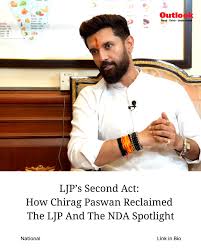
The Lok Janshakti Party (Ram Vilas) organized a Dalit Chaupal and rural public dialogue program in Tulapur village of the Gyanpur assembly constituency in Bhadohi district, aimed at promoting social justice, constitutional rights, and organizational expansion. This program marked the launch of the party’s ambitious campaign, “LJP Goes to the Villages,” in Bhadohi district. A large number of people from the Pasi community, Dalits, backward classes, and all sections of society participated in this program. On this occasion, party leaders pledged to go from village to village, strengthening the organization and spreading the party’s policies and ideology to the last person in society. In his address, Advocate Rajiv Pasi, the chief guest and former President of the Lok Janshakti Party (Ram Vilas), highlighted the contributions of the party’s founder and former Union Minister, the late Ram Vilas Paswan, to social justice and Dalit upliftment. He said that throughout his political career, the late Paswan strongly raised the voice of the poor, the exploited, the deprived, and the Dalit community on the national stage. Postage Stamps Released Pasi stated that due to the efforts of the late Ram Vilas Paswan, postage stamps were issued in honor of Maharaja Bijli Pasi and the brave woman Uda Devi Pasi. He also played a key role in installing the portrait of Bharat Ratna Baba Saheb Dr. Bhimrao Ambedkar in the Parliament House. He said that today the party is reaching out to every village with those same ideals and thoughts. Bhadohi in-charge and State General Secretary Kamal Tiwari said that the party has launched a comprehensive campaign of village-level meetings in Bhadohi district. He expressed confidence that in the future, the Lok Janshakti Party (Ram Vilas) will play an important and decisive role in Bhadohi politics. Addressing the workers, Tiwari said that organizational expansion will be given priority. The target has been set to add 10,000 new workers to the party within the next month. To this end, village-wide gatherings, membership drives, and outreach programs will be organized. Satyam Pandey | Bhadohi (Sant Ravidas Nagar) Courtesy: Hindi News
2027 Assembly Polls: UP Cabinet Expansion Reveals BJP’s Electoral Vulnerabilities
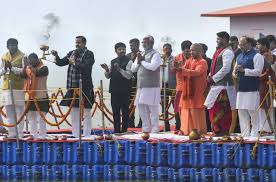
By trying to concede more space to OBCs and Dalits, the BJP has acknowledged the Opposition’s improved caste arithmetic as well as the hard bargaining potential of these communities. Uttar Pradesh Chief Minister Yogi Adityanath with cabinet ministers performs ‘Ganga Pujan’ during a visit to review preparations for the ‘Magh Mela 2026’, at Sangam, in Prayagraj, Saturday, Nov. 22, 2025. Photo: PTI New Delhi: Whether driven by social engineering, compulsions of transactional coalition politics or a defensive response to electoral reverses in 2022 and 2024, there is a jump in Other Backward Classes (OBC) and Dalit castes in Uttar Pradesh chief minister Yogi Adityanath’s council of ministers. Adityanath is serving his second term as chief minister in Uttar Pradesh and faces a tough assembly election next year. An analysis by The Wire of ministerial berths assigned since Adityanath came to power in 2017 makes this shift in their caste composition more visible. In comparison to his first tenure, Adityanath’s current stint has allocated significantly more space to OBCs and Dalits at the direct expense of the traditional ‘upper castes’ (UCs). However, notwithstanding the gradual increase in representation of the marginalised and backward Hindu communities, UCs, in particular Brahmins and Thakurs, continue to enjoy ministerial berths disproportionately higher than their population in the Bharatiya Janata Party’s (BJP’s) rule. Brahmins and Thakurs are the single biggest beneficiaries of ministerial posts under Adityanath 2.0 with a combined strength of 15, which is 25% of the total berths. In comparison, Dalits, who make up 21.5% of the state’s population, have only 18% representation in the council of ministers. This is only marginally better than the 15% representation they enjoyed during the tail-end of Adityanath’s first government. Looking ahead With the assembly elections less than a year away, the BJP has started the process of adjusting its caste arithmetic. After capturing vast swathes of the electoral field in India’s largest and most politically significant state in the 2014 and 2017 elections, the saffron party has been constantly losing ground. This makes the 2027 assembly election the first one the BJP would fight since 2014 on the heels of a popular defeat in the state in the 2024 parliamentary polls. The BJP’s gameplan in UP has primarily hinged on projecting the unity and representation of Hindus, cutting across caste lines. Last week, Adityanath expanded his council of ministers to its maximum allowed strength (60). Six new ministers, including two cabinet ministers, were inducted into Adityanath’s team, while two existing ministers were promoted with independent portfolios. Of these six new ministers, five hail from backward and Dalit Hindu castes. The cabinet expansion and induction of ministers from these communities is part of a considered narrative to project caste balance among different Hindu ‘jatis’. The BJP’s caste realignment also appears to be a direct defensive reaction to a resurgent Opposition led by Samajwadi Party (SP) chief Akhilesh Yadav. The SP chief has made concerted efforts to shift from a rigid ‘Muslim-Yadav’ image, pivoting towards a broader caste rainbow under the banner of PDA (Pichda-Dalit-Alpsankhyak). This reinvention of Mandal politics through a Kanshi Ram-esque formula of ‘proportional representation’ has significantly altered the caste game in the state. The ruling party’s cabinet provides a clear window into the broader socio-political dynamics of its rule. The Wire extracted the caste background of every minister in UP under the two governments of Adityanath and compared them at their peak strength – September 2021 for the first term and May 2026 for the second term. During his first tenure (2017-2022), Adityanath’s council of ministers had a higher percentage of UCs. Out of the 60 ministers, 27 (45%) were UC, while 23 (38.3%) were OBC and nine (15%) were Dalits. The government also had a single token Muslim minister. In comparison, in his second term, the share of OBC and Dalit representation has increased. The number of UC ministers has fallen: of the 60 ministers, 26 (43.3%) are OBC, 22 (36.7%) are UC and 11 (18.3%) are Dalits. The number of Muslims remains the same – one. The second Adityanath government has three more OBCs, two additional Dalits and five fewer UCs than during the first term. It is important to point out that OBCs are the single largest bloc in the state, estimated to be between 40 to 45%, or perhaps even higher. Dalits make up 21.5% of the population while Muslims are 19.5%. UCs such as Brahmins, Tyagis, Bhumihars, Thakurs, Baniyas, Kayasthas and Khatris make up the rest. The redistribution of power becomes even more pronounced while examining the representation of cabinet ministers, the most powerful tier of the three ministerial categories. During his first term, Adityanath had 24 cabinet ministers, including himself. An overwhelming 16 (66.7%) berths belonged to UCs. OBCs lagged far behind with just seven (29.2%) cabinet ministers while Dalits had a solitary representative (4.1%). In comparison, today the 23-member cabinet presents a vastly different social profile. OBCs have leaped ahead to hold 11 berths (47.82%), while UC have dropped to 10 (43.47%) and Dalits hold two (8.69%). The Adityanath 2.0 cabinet, the core team of senior ministers, comprises four Brahmins, three Kurmis, two each from the Thakur, Rajbhar, Bhumihar, Jat and Jatav communities, and one each from the Baniya, Noniya Chauhan, Maurya-Kushwaha, Khatri, Nishad and Lodhi Rajput castes. Adityanath is himself a Kshatriya or ‘Thakur’. This increased representation of OBCs in the cabinet can partly be attributed to the BJP’s increasing dependence on smaller OBC allies. Out of the 23 cabinet ministers, four (three OBCs and one Dalit) belong to BJP’s allies. These are the Suheldev Bharatiya Samaj Party (SBSP), Apna Dal (Soneylal), Nishad Party and the Rashtriya Lok Dal (RLD). Upper castes overrepresented at the cost of Muslims But there is another side to this reality. UCs still continue to be overrepresented under the BJP because the BJP does not field Muslim candidates in elections. With no need to make Muslims ministers, the party can make more OBCs and Dalits ministers, while keeping the UCs overrepresented
Dalit experience in Punjab, felt and seen
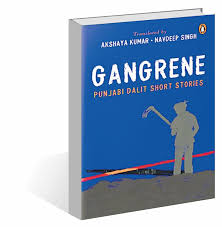
‘Gangrene — Punjabi Dalit Short Stories’ is a ready compendium to understand the psyche of both Punjabi Dalits and their oppressors The works of poets such as Kabir, Ravidas and Namdev have resonated for centuries, but it is only recently that Dalit literature has come to occupy centre stage. With the rise of subaltern studies, literature has developed many a niche segment, where hitherto invisible or suppressed groups have asserted their literary presence. Dalit writing, particularly under the influence of Marathi pioneers like Babasaheb Ambedkar and Namdeo Dhasal, started showing its prowess some 60 years ago, and has now become an irrepressible voice in almost all states of the country. Punjab has a very large presence of Dalits and an equally large body of Punjabi Dalit literature, yet not much has been translated so far to give it readership beyond Punjabi. The anthology ‘Gangrene’ offers for the first time a set of 12 stories in English to fill that gap. Translated by Akshaya Kumar and Navdeep Singh, the book comes with an elaborate introduction that gives an insight into the development of Punjabi Dalit writings as well as the dynamics of Dalit narratives of exploitation, discrimination and oppression. The translators claim that in contrast to progressive writers’ narratives of the poor and the underprivileged, these stories by Dalits themselves explore more authentically their lived experience. Veracity apart, the stories in the collection stand out for the diversity of experience, both in terms of physical and mental trauma, as perceived by Dalits and as enacted by their oppressors. If there are stories like ‘Cry of the Sky’, ‘My Story’, and ‘Everybody’s Story’, in which crimes like rape and violence against Dalits are portrayed, then there are also stories like ‘Doomsday’, ‘Cancer’ and ‘Cactus’, where the dominant caste characters have been shown to harbour deep-seated hatred, but not without giving us a peep into their mental and emotional conflict. The stories are equally divided between rural and urban settings. If the vehra (Dalit colony in a village) is the site of open disdain and exploitation by Jats and other village heads, then the city is an equally inhospitable place where Dalits, even after education and economic progress, cannot live without hiding their identity. A cobbler’s son will remain a cobbler’s son and a Dalit rising up to become a landlord will find trust and strength only in his own community, as in the story ‘Gaurjan’. Religion, the much-touted causa prima of the caste divide, figures in three stories — ‘Gangrene’, ‘Doomsday’ and ‘Roots’. Though Hindu Brahmins’ attitude towards Dalits is well known, in these stories, even Dalits who converted to religions like Sikhism and Buddhism find no respite. One muted theme that runs through almost all the stories is that for a Dalit, there is no escape from being a Dalit. Even if they try to override it with professional progress, pecuniary leap or physical prowess, the Dalit identity does not leave them. It will continue to lead them to misery and humiliation. I particularly liked two stories: ‘Bathloo’ and ‘Aatu Khoji’. Both are proud and professionally skilful workers, yet one ends up dead because of his sense of internalised lowliness, and the other in an effort to save Dalit honour. The book is a ready compendium to understand the psyche of both Punjabi Dalits and their oppressors. At times, it also portrays the Dalit reaction where violence and highhandedness of the dominant caste are met with equal aggression. But the stories largely remain clueless about how the conflict can be reduced or resolved. The book is translated well despite the usual intrusion of local terms here and there. It is going to prove to be a good resource material for comparing the Punjabi Dalit experience with other regional writings, particularly in Marathi and South Indian languages. Article_Author Gurupdesh Singh Courtesy : The Tribune Note: This news is originally published on https:/thetribune.com/bha and is used purely for non-profit/non-commercial purposes, especially human rights
Attacks on Dalits in Tenkasi-Tirunelveli have escalated tensions in southern Tamil Nadu; learn about the full story.
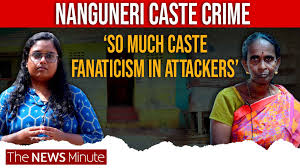
In the past five months, there have been eight incidents against the Dalit community in Tenkasi district. Chennai/Tenkasi—Anti-Dalit violence has once again sparked political turmoil in the southern districts of Tamil Nadu. Seven Scheduled Caste (SC) members were severely injured with sickles in two separate attacks in Tenkasi and Tirunelveli districts within the past 48 hours. This incident has brought back memories of the brutality that occurred in Perumpattu village two to three months ago, where two innocent Dalits were murdered. PMK leader and former Union Minister Dr. Anbumani Ramadoss criticized the state government, calling it a failure and warning that such a situation must not be allowed to reoccur, threatening to escalate social unrest in the tense southern districts. What happened in two districts Nine masked miscreants arrived on three two-wheelers on Mathakovil Street in Nethur village, near Alangulam in Tenkasi district, between 5:30 and 6:00 pm on Friday. The miscreants’ vehicles did not have number plates. Without any provocation, they took out sickles and indiscriminately attacked people standing on the street. Most of the residents on this street belong to the Scheduled Caste (SC-Christian) community. Six people from Nethur village and one from Ayikudi town were injured in the attack. One injured person was treated at a local hospital, while five others were referred to Alangulam Government Hospital and then to Tirunelveli Medical College Hospital in critical condition. According to doctors, two of the injured remain in critical condition. A similar attack occurred in Mannarkovil village, near Ambasamudram in Tirunelveli district. Here, an armed gang attacked a young man named Manikandan, belonging to the Scheduled Caste, with sickles. Manikandan has been hospitalized in critical condition. Locals allege that the police have yet to take any concrete action in the case. Social tension is prevalent in the southern districts, including Nellai and Tenkasi. Even minor disputes can escalate into violent violence. Keeping this in mind, the Tamil Nadu government should ensure that no social conflict or tension arises in the southern districts. – Dr. Anbumani Ramadoss Perumpattu Massacre: A Three-Month-Old Brutality Revisited It is noteworthy that on March 2nd, a gang of nine drunken individuals committed inhumane violence in Perumpattu village near Nanguneri in Tirunelveli district. The gang brutally murdered two innocent people and seriously injured six others. At that time, the incident sparked widespread outrage across the state and prolonged tension in the southern districts. Dr. Anbumani Ramadoss said in an official statement, “Reports of seven people being seriously injured in separate attacks on Scheduled Caste people by armed gangs in Nethur village in Tenkasi district and Mannarkovil village near Ambasamudram in Tirunelveli district are extremely shocking. The government’s failure to prevent such violence in these tense southern districts is condemnable.” Dr. Anbumani Ramadoss said, “The government should have learned a lesson after what happened in Perumpattu two or three months ago. But today the same situation is arising again. The government must now prevent a recurrence of such violence.” He further said, “The government should not allow any social unrest to fester. Even minor disputes in the southern districts can escalate into major tragedies. The state government and district administrations must restore normalcy in the attacked villages with immediate effect.” In addition to Dr. Ramadoss, the Communist Party of India (Marxist) (CPI(M)) also strongly condemned the incident. Party state secretary P. Shanmugam alleged that eight incidents against the Dalit community have occurred in Tenkasi district in the past five months. He said, “It is extremely shocking that such a brutal and deadly attack was carried out on Dalit youth in Tenkasi. The police have not taken any action so far, but have instead tried to suppress the matter through their traditional mediation.” Meanwhile, Ambedkarite organizations have begun protests demanding immediate arrests. They say that if the culprits are not punished soon, they will launch a statewide movement. Geetha Sunil Pillai Courtesy: Hindi News
Power politics peaks in Karnataka, Dalits want Dy CM post for Muniyappa; Lingayat seer pitches for Eshwar Khandre
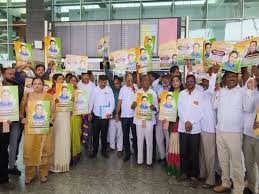
BENGALURU: Leaders from the Dalit community staged a protest at the Kempegowda International Airport on Saturday, urging the Congress party to appoint former minister K H Muniyappa as Deputy Chief Minister. Leaders of the Madara Mahasabha and various Dalit organizations held posters and urged the Congress leadership to grant the DCM post to Muniyappa. The protesters had gathered to submit a memorandum to AICC Karnataka in-charge Randeep Singh Surjewala, who was arriving in the state. The demonstration at Terminal 1 of the airport drew significant attention for several hours. The protesters expressed anger that the Madiga community has never been given key positions such as Chief Minister, Deputy Chief Minister, or KPCC President, and insisted that the community should be represented with a DCM post this time. They warned that denying the DCM position could politically hurt the Congress party and said the community would teach the party a lesson if it was ignored. The protests come even as top brass of the Congress including General Secretaries KC Venugopal and Randeep Surjewala arrived at the Shangri La Hotel in the city. The leaders are expected to hold a meeting prior to the Legislature party meet later this evening. Speaking on the Karnataka Congress Legislature Party (CLP) meeting, Muniyappa said, “Some are proposing, some are seconding. This is the procedure, and we cannot say anything beyond that. But the process will be completed by this evening”. The pressure on the Congress leadership for top posts also came from the Lingayat community. Guru Basava Pattadevaru and his supporters demanded the Deputy CM Chair for senior leader Ishwar Khandre. Guru Basava said, “If Eshwar Khandre is not given the post of DCM, then the Lingayat community will teach the Congress party a lesson in the next assembly elections,” the Swamiji added. The Congress Parliamentary Party (CPP) meeting is scheduled at the Vidhana Soudha later in the day. It is expected that DK Shivakumar will be chosen as the CM while at least two Deputy CMs are likely to be named. Courtesy : Public TV English Note: This news is originally published on https:/publictvenglish.com/bha and is used purely for non-profit/non-commercial purposes, especially human rights
Seven Dalits injured in attacks by gang in Tenkasi, Tirunelveli districts
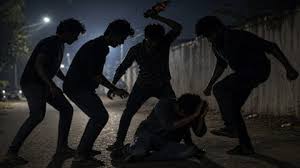
A nine-member masked gang came to Nettur village in Tenkasi district on two-wheelers and attacked the people indiscriminately with sickles. CHENNAI: Seven Dalits were injured after being allegedly attacked by masked men in Tenkasi and Tirunelveli districts, police said on Saturday. A nine-member masked gang came to Nettur village in Tenkasi district on two-wheelers and attacked the people indiscriminately with sickles. One person was injured in a similar attack in Tirunelveli district. The assailants fled the spot immediately after the assaults. A total of seven people were injured and admitted to the government hospital. A case has been registered, and investigation is on, police said. Expressing shock over the attack on Dalits, PMK leader Anbumani Ramadoss on Saturday alleged that the Tamil Nadu government has “failed to prevent” such violence. “These incidents have left the southern districts in a prolonged state of fear”, he said adding “such an incident must not be allowed to recur.” He demanded that the district administrations take immediate steps to restore normalcy in the affected villages. Courtesy : DT Next Note: This news is originally published on https:/dtnext.com/bha and is used purely for non-profit/non-commercial purposes, especially human rights
A young man entered a woman’s house in Haldi: Villagers beat him for molestation; police filed a case.
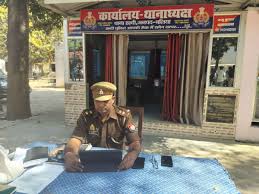
In a village under the Haldi police station area, a young man allegedly entered a woman’s house on Friday morning and molested her. When the woman raised an alarm, villagers gathered and apprehended the accused. The incident occurred around 2 a.m. when a young man from the village entered the woman’s house. When the woman protested and raised an alarm, nearby neighbors arrived at the scene. The villagers caught the accused and beat him. However, he managed to escape. The victim filed a written complaint with the police. Based on the complaint, the police have registered a case against the accused under relevant sections. Haldi police station chief Raju Kumar Rai stated that a case of molestation has been registered. Police are searching for the accused, Abhilash Gupta. Sunil Kumar Dwivedi | Belhari, Ballia Courtesy: Hindi News
FIR against Ajay Rai, Congress sparks statewide protest: In Prayagraj, the party accuses the government of Dalit oppression and corruption.
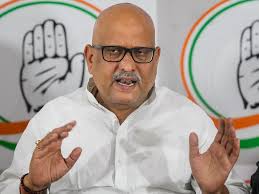
Following the filing of a case against Congress state president Ajay Rai, the party has intensified its statewide protests. Following the instructions of the party high command, Congress leaders in all divisions held press conferences targeting the BJP government. In a similar vein, Congress leader Mohammad Farhan attacked the state government at a press conference in Prayagraj. During the press conference, Mohammad Farhan alleged that the state is experiencing a politics of injustice and oppression, not good governance. He said that those who speak out for Dalits, women, and vulnerable sections are being tried to be suppressed by filing cases against them. Farhan stressed that Congress workers will not fear jail time and will continue their struggle against Dalit oppression, corruption, and injustice. The Congress leader claimed that millions of incidents of Dalit oppression have been reported in the state over the past nine years, as confirmed by National Crime Records Bureau (NCRB) data. He also alleged that corruption has increased in government departments and crimes against women and Dalit daughters are on the rise. Mohammad Farhan recounted an incident in Mahoba where a Dalit girl was allegedly assaulted. He said that when Congress state president Ajay Rai visited the victim’s family, a case was filed against him. Farhan alleged that the government is attempting to suppress the voice of the opposition. He stated that corruption has become widespread in various state government departments. Congress will now launch a campaign to expose the government’s alleged corruption to the public. During the press conference, Congress workers also registered their protest against the government’s policies. Sachin Prajapati | Prayagraj Courtesy: Hindi News
Rethinking the ‘Absolute Bar’ on Scheduled Caste Status in India
By tying caste recognition to religion, the law risks excluding those who continue to face the same discrimination it seeks to remedy. When India’s Supreme Court reiterated that the exclusion of Dalit converts from Scheduled Caste (SC) status is “absolute and admits no exception,” it did more than settle a doctrinal question. It revived a foundational constitutional dilemma: can the law deny protection against caste-based discrimination simply because an individual has changed religion? More critically, does caste itself disappear upon conversion, or does the law merely choose not to see it? This tension between constitutional text and social reality lies at the heart of the debate on SC status for converts to Islam and Christianity. The legal position rests on Clause 3 of the Constitution (Scheduled Castes) Order, 1950. Originally limited to Hindus, and later extended to Sikhs and Buddhists, the Order continues to exclude Muslims and Christians. The Supreme Court has consistently read this provision strictly: SC status is a matter of legal recognition, not lived identity. A Dalit who converts to Christianity or Islam immediately loses access to reservations, scholarships, and protections under the SC/ST (Prevention of Atrocities) Act, 1989. The court has clarified that this bar is categorical – possessing an SC certificate is irrelevant if the individual no longer professes a qualifying religion. This formal clarity sits uneasily with empirical reality. NCRB data shows that tens of thousands of atrocities against Scheduled Castes are registered each year, with pendency rates exceeding 85 percent. Caste-based violence remains a structural feature of Indian society. Sociological studies further demonstrate that caste does not vanish upon conversion. Millions of Dalit Christians and Dalit Muslims continue to face social segregation, occupational immobility, and endogamy mirroring caste hierarchies within Hindu society. Yet they remain largely invisible in state policy. The result is a paradox: the law recognizes caste within certain religions but denies its existence when it crosses religious boundaries. The constitutional validity of Clause 3 has been pending before the Supreme Court since 2004. Meanwhile, multiple institutional exercises have pointed toward the need for reconsideration. The Ranganath Mishra Commission (2007) recommended making SC status religion-neutral, finding no empirical basis for exclusion. The Sachar Committee and subsequent studies reinforced this conclusion, documenting persistent discrimination among converts. In 2022, the Union government constituted a Commission of Inquiry under former Chief Justice K G Balakrishnan to examine whether SC status should be extended to Dalit converts. However, the commission has not submitted its report. Its deadline has been extended to April 2026, prolonging uncertainty for millions. What is striking is not just policy delay but judicial silence. The Supreme Court’s reaffirmation of the “absolute bar” does not engage with the pending constitutional challenge, the Balakrishnan Commission, or the Mishra Commission’s findings. Nor does it revisit Soosai v. Union of India (1985), where the Court acknowledged that resolving this issue requires contemporary socio-economic evidence. Instead, in C Selvarani (2024), the court characterized claims to SC status after conversion as a “fraud on the Constitution.” Together, these developments suggest not just doctrinal continuity but a narrowing of legal space at a time when evidence points toward reconsideration. The constitutional difficulty is clear. Articles 14, 15, and 16 permit affirmative action to remedy historical disadvantage. But if caste-based disadvantage persists irrespective of religion, excluding Dalit converts risks making the classification under-inclusive. The question is not whether affirmative action can differentiate, but whether it can do so while ignoring social reality. A religion-based exclusion begins to resemble constitutional evasion rather than reasonable classification. There is also a quieter constitutional cost. Article 25 guarantees the freedom to profess, practise, and propagate religion. Yet when conversion leads to the loss of legal protections and socio-economic safeguards, that freedom becomes conditional. The law does not prohibit conversion, but it does penalizes it. The price of changing religion is the forfeiture of constitutional benefits, even if the underlying disadvantage remains unchanged. The Supreme Court’s position has been consistent, if cautious. In Soosai v. Union of India (1985), it upheld the exclusion of Christian converts due to insufficient evidence of continued backwardness. In S Anbalagan v. B Devarajan (1984), it acknowledged that caste may persist after conversion but stopped short of extending benefits. In C M Arumugam v. S Rajgopal (1976), it recognised that caste identity can revive upon reconversion, implicitly admitting that caste is not erased by religious change. In State of Kerala v. Chandramohanan (2004), it reaffirmed that SC status is governed strictly by the Presidential Order under Article 341. Even in K P Manu v. Chairman, Scrutiny Committee (2015), while allowing restoration of caste status after reconversion, the Court maintained the rigid framework linking SC recognition to specified religions. These decisions reveal a consistent judicial pattern: acknowledgment that caste may endure beyond religion, combined with reluctance to extend constitutional protection accordingly. The recent reaffirmation of the “absolute bar” reflects fidelity to statutory text but also institutional hesitation to engage with evolving social evidence. The consequences are tangible. Dalit converts are excluded from protections under the SC/ST (Prevention of Atrocities) Act, 1989. In E V Chinnaiah v. State of Andhra Pradesh (2005), the court emphasized the rigidity of SC classification under Article 341. In Chandramohanan (2004), it reiterated that statutory protections cannot extend beyond those recognised under the 1950 Order. This creates a legal paradox: caste-based violence may persist, but victims are denied protection because the law no longer recognizes their caste identity. International human rights law offers a different approach. Instruments such as the ICCPR and CERD emphasize equality and prohibit discrimination based on descent, interpreted to include caste. These frameworks prioritize lived disadvantage rather than formal religious identity. In the United States, affirmative action is anchored in race and historical disadvantage, not religion. South Africa’s jurisprudence similarly prioritizes substantive equality. India’s religion-linked approach to caste recognition thus stands out as an exception. The persistence of caste across religions presents a challenge that the current legal framework struggles to address. Delinking SC status from religion, as recommended by the