
Dalit professor of IIM Bangalore is among the top 20 marketing researchers in the world, but is facing the brunt of caste-based humiliation in the institute.
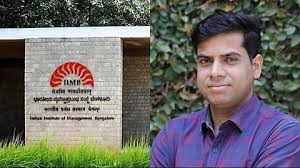
Professor Gopal Das, who is also included in the list of Stanford University, has accused 8 people including the IIM director of harassment, know what was revealed in the DCRE investigation report. Bangalore: On one hand, there is the story of India’s flag flying in the global academic world, on the other hand, the agony of struggling for respect in the country’s prestigious institute. Gopal Das, Marketing Associate Professor and Dalit scholar of Indian Institute of Management Bangalore (IIMB), has registered his name among the top 20 marketing researchers in the world. In this list released by Marketing Big15 USA in August, he has got the first place in India and second place in Asia, while globally he is at the 17th position. This honor has been given to him for his exceptional contribution to the world’s most prestigious ‘Marketing Big 15’ journals from 2018 to 2025. These journals are recognized by global standards like University of Texas at Dallas and Financial Times. Professor Das is the only Indian in this exclusive global list, which is a proud moment not only for IIMB but for the entire country. But behind this glorious achievement lies a bitter truth. Professor Das has made serious allegations of systematic harassment, humiliation and denial of opportunities at IIMB because he belonged to the Scheduled Caste community. A long journey of achievements This global ranking of Professor Das is a testimony to his consistent excellence. He has been making it to the list of top 2% scientists in the world released by Stanford University for five consecutive years, including the recent 2024 list. He joined IIMB in 2017 after completing his PhD from Indian Institute of Technology Kharagpur. His research focuses on areas such as consumer emotions, sensory marketing and ethical decision making. He is also on the editorial review board of several prestigious journals such as the ‘Journal of Public Policy and Marketing’. Serious allegations of discrimination and legal battle Professor Das, who belongs to the Scheduled Caste (SC) community and identifies himself as a Dalit, has publicly alleged caste-based discrimination at IIMB. His claims have sparked a major debate. June 2024: Professor Das lodged a complaint with President Draupadi Murmu, who visited IIMB. In this, he accused the then director of the institute Rishikesh T Krishnan, Dean (Faculty) Dinesh Kumar and six other faculty members of harassment, humiliation and denial of equal opportunities on the basis of caste. He claimed that he was excluded from important committees, not promoted and investigations were initiated against him for financial irregularities and complaints of students in a vindictive manner. November-December 2024: The Directorate of Civil Rights Enforcement (DCRE) of the Government of Karnataka investigated the matter. The inquiry report released on December 19, 2024 confirmed that Professor Das faced “humiliation and exclusion” due to caste discrimination. The report recommended action under the Scheduled Castes and Scheduled Tribes (Prevention of Atrocities) Act, 1989. December 21, 2024: Based on the DCRE report, Bengaluru police filed an FIR against the eight accused under sections of the SC/ST Act and IPC. Student organisations such as the All India OBC Students’ Association (AIOBCSA) demanded the director’s resignation. IIMB’s side However, IIMB dismissed all these allegations as “baseless”. The institute says that these allegations surfaced after Professor Das’ promotion was deferred in 2024 due to complaints of misconduct and sexual harassment by students against him. The institute emphasised its commitment to inclusivity, saying that Professor Das had been appointed to key positions such as the chairperson of the Institutional Review Board before the controversies. Until December 31, 2024, the court stayed all proceedings, giving the accused an opportunity to challenge the FIR. The case has become the centre of a wider discussion on caste dynamics in India’s top institutions. Professor Das’s supporters see his global ranking as a fitting reply to alleged bias against him. As of September 2025, the case is still sub judice with no final verdict. Geetha Sunil Pillai Courtesy : Hindi News
Ahmedabad upper caste full of contempt towards not just Dalits but also OBCs

Who doesn’t know that casteism is all-pervasive in India. However, when one talks of casteism, often things boil down to the intensity of untouchability, officially abolished after India became a republic, found in not just in rural areas but also in towns and cities. I found it existing when I settled down in Ahmedabad, living in a two bedroom apartment in a supposedly posh area. The person who would come to pick up trash daily at our doorstep would be given food leftover in the evening. While we wouldn’t have any leftover, the next door neighbour would give it in such a way that she or he doesn’t come in direct contact (touch) of the person, who would belong to the Valmiki community, “lowest” in the Hindu social ladder. That was in mid-1990s. We are now living in the third decade of the 21st century. It’s a middle class society where I live in Ahmedabad. I often hear phrases like “these scheduled castes” from persons belonging to upper castes to declare how Dalits refuse to live clean when they see footwear lying in the corridors outside the doorsteps of the flats where Dalits live. Of course, they are not so much contemptuous towards Banias or Brahmins, many of whom also keep footwear outside the doorsteps, in the corridor. They are at least not identified with their caste. Be that as it may, I have found, casteism takes various forms in Ahmedabad societies where mainly upper caste people live. Thus, a person very close to me told me how the society chairman angrily protested against the move to sell the flat to an individual with Mali surname. “We were told not to sell to a Mali, who belongs to the other backward class (OBC). We were warned, if the society flat was sold to Mali, the flat wouldn’t be transferred in his name. Only Brahmins and Banias are allowed”, the person close to me told me. Yet, the person told me, the flat was sold to Mali, despite resistance. A rich person, Mali was finally accepted, as he was apparently identified as a good person, an “exception” among OBCs! Apparently, the society chairman found out that a transfer fee of Rs 30,000 wouldn’t be received if the transfer is “not allowed” — and the Mali fellow didn’t care two hoots. By Rajiv Shah Courtesy : Counterview Note: This news is originally published on https:/counterview.com/bha and is used purely for non-profit/non-commercial purposes, especially human rights.
Dalit leader attacked in front of DGP office by ‘VCK workers’
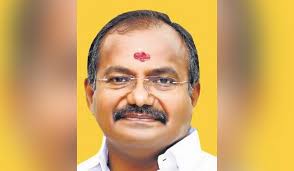
BJP state president Nainar Nagenthran alleged that opposition leaders were increasingly being targeted. CHENNAI: The attack on Puratchi Tamizhagam Katchi (PTK) president ‘Airport’ Moorthy outside the DGP’s office here on Saturday, allegedly by Viduthalai Chiruthaigal Katchi (VCK) cadre, has attracted sharp criticism from opposition parties. Moorthy, who accompanied Pattali Makkal Katchi (PMK) MLA R Arul to submit a complaint to DGP (in-charge) G Venkataraman on Saturday, was attacked and the video of the incident was viral on social media. He later told media persons that he was attacked by a group of VCK cadres over his criticism of VCK president Thol Thirumavalavan. Further, Moorthy alleged that he has been constantly facing threats to his life from VCK cadre. PMK leader Dr Anbumani Ramadoss termed the assault “highly condemnable” and called for the immediate arrest of the attackers, besides calling for security for Moorthy. BJP state president Nainar Nagenthran alleged that opposition leaders were increasingly being targeted. AMMK general secretary TTV Dhinakaran said the attack outside the DGP’s office was a “disgrace to the police force”. Naam Tamilar Katchi leader Seeman described the assault as proof of deteriorating law and order. Both Moorthy and VCK worker Selvam later went to the Greater Chennai Police Commissioner’s office to file separate complaints against each other over the incident. Courtesy : TNIE Note: This news is originally published on https:/thenewindianexpress.com/bha and is used purely for non-profit/non-commercial purposes, especially human rights.
5 years sentence was given after 35 years in caste violence case, now all 32 convicts are out! What happened in the High Court?

Caste violence took place in 1990, the lower court had sentenced 5 years sentence this year. Now the High Court has given relief on the appeal of most of the convicts who are above 65 years of age. Prayagraj: In an important order, the Allahabad High Court has granted bail to 32 people convicted in the 35-year-old caste violence case of Agra. The lower court had sentenced all of them to five years in May this year, after which they were in jail. Justice Shekhar Kumar Yadav gave this verdict on August 28 while hearing the criminal appeal filed by convict Jaidev and 31 others. According to media reports, this case is related to the caste violence that took place in Kagarol police station area of Agra district in 1990. After a long legal process, an Agra court convicted all the accused on May 28 this year and sentenced them to five years of imprisonment. In the High Court, the counsel for the appellants argued that his clients have been wrongly implicated in the case. He argued that there were serious contradictions in the statements of about 27 witnesses produced by the prosecution, which were ignored by the trial court. The counsel also said that the trial court did not properly evaluate the evidence and wrongly sentenced the convicts. The court was also told that most of the appellants are above 65 years of age and are suffering from various health problems. The counsel stressed that all the accused were on bail during the trial and never misused their liberty. They have been continuously in jail since May 28, 2025. Since there is no possibility of final hearing on their appeal in the near future, they should be released on bail till the appeal is pending. During the hearing, it also came to light that one of the appellants, 95-year-old Devi Singh (appellant no. 21), has already been granted short-term bail by the court vide an order dated August 4, 2025. After hearing all the parties, the court said, “Keeping in view the fact that final disposal of the appeal may take some time, the appellants are released on bail without making any comment on the merits of the case.” Rajan Chaudhary Courtesy : Hindi News
Meerut Court: Father murdered after attempting to rape Dalit minor, convict sentenced to life imprisonment
A special court in Meerut has sentenced the accused to life imprisonment and fine in the case of attempting to rape a minor and murder of a Dalit father. Uttar Pradesh: A special (POCSO Act) court in Meerut district has sentenced a 45-year-old man to rigorous life imprisonment for poisoning and killing a Dalit youth. The court gave this verdict in the context of the incident when the accused tried to rape the minor daughter of the deceased in 2011 and the father was killed when he lodged a case against him. According to the prosecution, the deceased was 35 years old and his body was found in a drain in Meerut city on 20 April 2011. This incident took place when a day before, on 19 April 2011, he had lodged a rape case against the accused. ADGC Amit Dhama said that the accused had tried to rape the minor daughter of the deceased that day by taking advantage of her being alone at home. The girl’s parents, who were labourers, were not present at home at that time. After the complaint was lodged, the accused had threatened the victim’s family to withdraw the case. But the very next day, the girl’s father left home for work and a few hours later his body was found in the drain. During the investigation, it became clear that the deceased was addicted to alcohol. The accused called him on the pretext of talking and made him drink alcohol mixed with poison. He died due to consumption of this poisonous liquor. There was no mention of any injury in the post-mortem report, due to which the cause of death could not be ascertained. The body parts were preserved and the Forensic Science Laboratory (FSL) report confirmed that poison was present in the body. Earlier, the accused had been convicted in the rape case and was sentenced to seven years in prison. Now, on Wednesday, the court of Additional District and Sessions Judge Mohammad Aslam Siddiqui convicted him of murder and sentenced him to life imprisonment and a fine of Rs 70,000. The court rejected the mercy plea and remarked that the crime was extremely heinous. The court said, “In such cases, it is the duty of the court to give a harsh punishment considering the gravity of the crime, so that the purpose of the law is fulfilled and the society gets a message that such crimes will not be tolerated.” Rajan Chaudhary Courtesy : Hindi News
Dispute over Dalit family’s land occupation in Meja: Victim family alleges – Police is pressuring for compromise, accused threatened
A land dispute has come to the fore in Bhuipara village of Meja police station area of Prayagraj. In this village of Vikaskhand Uruwa, the Dalit family has accused the neighbors of occupying the land. Kanhaiya Lal Harijan and Neeraj Harijan have lodged a complaint at Jevaniyaan police post. They have accused neighbors Gulshan Harijan and Satish Harijan of forcibly occupying the land. Neeraj said that the accused are threatening to kill them. The victim family says that the police is not taking action in the matter. Instead, they are pressuring for compromise. The victim woman has also accused the police personnel of threatening. Jevaniyaan police post in-charge Manoj Kumar said that the matter will be investigated and action will be taken against the culprits. Gulshan Harijan and Satish Harijan of the other side say that the neighbor’s allegations are baseless. They claim that this is the Bhumidhari land of the village and they already have possession of it. Rajesh Kumar Courtesy: Hindi News
Bihar Election Special: A safai karamchari became MLA 5 times, dalit daughters make their mark in politics

A silent revolution is going on in Bihar. The land which was once known for casteism and social discrimination is today writing a new story of dalit women leadership. This journey from soil to palace is not just a tale of individual achievements but a source of inspiration for the entire society. From Bhagirathi Devi who worked as a safai karamchari on a monthly salary of Rs. 800 to the country’s first woman Lok Sabha Speaker Meira Kumar, the dalit daughters of Bihar have written a new chapter in politics. Bhagirathi Devi: From a safai karamchari to a five-time MLA Born in a Mahadalit family in Narkatiaganj of West Champaran, the story of Bhagirathi Devi is no less than a film story. Bhagirathi Devi who worked as a safai karamchari on a monthly salary of just Rs. 800 is today a five-time MLA. In 2019, she was also awarded the Padma Shri, which is proof that a person is identified by his work, not by caste or social status. Bhagirathi Devi, who raised her issues in Bhojpuri, has today become a strong voice of the poor-Dalit class. The country’s first woman Lok Sabha Speaker Meira Kumar Born on 31 March 1945 in Sasaram, Meira Kumar achieved a new milestone for the Dalit women of Bihar. Despite being the daughter of Dalit leader Jagjivan Ram, she created her own identity. First worked as an officer in the Indian Foreign Service (IFS), then came into politics and became the country’s first woman Lok Sabha Speaker from 2009 to 2014. Meira Kumar’s political journey started in 1985 from Bijnor. After this, she never looked back and became an MP five times. Eight Dalit women became MLAs in 2020 Bihar Assembly Elections 2020 brought a historic turning point for Dalit women leadership. Out of the 40 reserved seats, eight Dalit women won, which is the highest record till date. The prominent names among them are… Bhagirathi Devi (Narkatiyaganj) Veena Bharti (Triveniganj) Kavita Devi (Kondha) Pratima Kumari (Rajpakad) Dr Nikki Hebram (Katoria) Rekha Devi (Masaurhi) Sangeeta Kumari (Mohania) Jyoti Devi (Barachatti) Deepa Manjhi (Imamganj, 2024 by-election) The journey from 1957 to 2020 In the 1957 Bihar assembly elections, only three Dalit women were elected, Shyama Kumari from Scindia, Shailwala from Deoghar and Saraswati Choudhary from Masaurhi. This number shows how weak the beginning was. This number increased in the subsequent elections, but after this the participation of Dalit women kept decreasing and the situation became even worse in 1972 and the 1980s, when no Dalit woman MLA was elected. This was the period when social and political challenges were at its peak. However, gradually the situation improved and a new chapter began in 2020 with the victory of a record eight Dalit women MLAs. Now what will happen in the 2025 assembly elections, only time will tell. Expectations of the new generation Shambhavi Chaudhary Shambhavi Chaudhary, who became the youngest MP from LJP (R) in the 2024 Lok Sabha elections, can become a new symbol of Dalit women leadership. Shambhavi has reached the Lok Sabha by winning the election from Samastipur constituency. She is the daughter of Aashiq Chaudhary, a minister close to CM Nitish Kumar, and daughter-in-law of social worker and former IPS officer late Kishore Kunal. Her success shows that Dalit women of the younger generation are more educated and politically aware. Dalit women face double discrimination Dalit women face double discrimination, that too on the basis of both caste and gender. In the traditional social structure, there have been attempts to suppress their voice. But with education and awareness, they are overcoming these obstacles. The irony is that till date in the political history of Bihar, no party has given its state president post to a woman. This shows that there is still a lot to be done. Success due to the increasing influence of education and awareness The education policies of the Bihar government, especially the bicycle distribution and incentive schemes for girls, have shown a positive impact. Educated Dalit women are coming to the political stage with more confidence. The number and participation of Dalit women candidates is expected to increase further in the upcoming assembly elections. Dalit women of the younger generation are more educated and politically aware. Anand Shekar ABOUT THE AUTHOR Anand Shekar has been working as a content writer in the field of digital journalism for 5 years. He has expertise in political news. He is currently working for Asianet News Hindi. He has experience of working in organizations like News4Nation, Prabhat Khabar and First Bihar Jharkhand. Anand has also been awarded the Best Content Editor Award in Prabhat Khabar. Courtesy : Hindi News
Odisha: Dalit man lynched on claims of killing a cow

Six persons have been arrested for beating the 35-year-old man to death. A 35-year-old Dalit man was lynched in Odisha’s Deogarh district after a mob accused him of killing a cow, PTI quoted the police as saying on Thursday. Six persons have been arrested in connection with the killing, which took place in Kundeijuri village under Riamal police station area on Wednesday. The man was identified as Kishore Chamar, a resident of neighbouring Kaunsidhipa village who worked as a cattle skinner. His coworker, Goutam Nayak also from the same village, was injured in the assault but managed to escape, Deogarh Superintendent of Police Anil Kumar Mishra told PTI. According to Mishra, the mob that lynched Chamar had found both the victims cutting up a cow. The men told the mob that the cow had died naturally and they were only cutting it, but they were accused of killing the animal. The incident came more than two months after two Dalit men in the state’s Ganjam district were assaulted and tonsured by a mob that accused them of cow smuggling. The men, Babula Nayak (54) and Bulu Nayak (42), were transporting two cows and a calf in an auto when they were accosted by a group of cow vigilantes in Kharigumma village. The group allegedly accused the men of smuggling cattle and demanded Rs 30,000 from them. When they refused, they were assaulted, forced to crawl and consume grass. Courtesy : Scroll Note: This news is originally published on https:/scroll.in/bha and is used purely for non-profit/non-commercial purposes, especially human rights.
Tribal youth, who empowered 2000 tribal and Dalit youths with higher education, looks for support
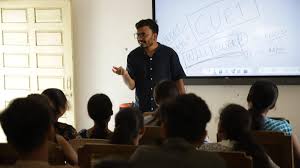
TISS alumnus has been working for the last eight years to democratise higher education for the backward communities of India, has reached five lakh underprivileged youth till now A tribal youth from a nomadic tribe in Vidarbha, who not only made it to the foreign shores for education on the basis of his own merit, but also showed the path of quality higher education to over 2000 tribal and Dalit youths from across the backward regions of India, now seeks support for sustaining the social cause. Raju Kendre, an alumnus of the Tata Institute of Social Sciences and a Chevening scholar who completed his post-graduation from the School of Oriental and African Studies (SOAS), University of London, runs the Eklavya India Foundation for the last eight years. It has so far reached five lakh underprivileged Dalit and tribal youths from over 25 States. Almost all of them are first-generation learners in their families. “Eklavya India Foundation empowers first-generation university students from historically marginalized communities – Scheduled Castes, Scheduled Tribes, Nomadic and De-notified Tribes, and Other Backward Communities, representing over 1 billion people in India, which is 12% the world’s population. We facilitate their successful career transitions by accessing world-class higher education, breaking the poverty cycle, and inspiring them to become community role models,” Raju Kendre said. Many of these students who have attended any of the 700 workshops or residential programmes run by the Foundation, have been able to gain admission to leading national and international universities, gaining prestigious fellowships. Today, not only are they empowered, but the 600-odd alumni have become the role models and community aspirations for the marginalised communities across the country. Take the examples of Nazar Mohideen from Kerala or Eknath Wagh from Maharashtra. Both the youth belong to marginalised communities, and are today pursuing postgraduate courses at the Harvard University. Nazar studies Public Health at the Harvard Medical School, while Eknath pursues his post-graduation in Public Policy at the Harvard Kennedy School. Raju Kendre, an alumnus of the TISS runs the Eklavya India Foundation for the last eight years. Raju Kendre, an alumnus of the TISS runs the Eklavya India Foundation for the last eight years. | Photo Credit: Special arrangement “Over the past eight years, we’ve dedicated approximately one million hours to mentorship and career guidance. Our students have received scholarships totalling more than 7 million USD from government programs, private trusts, and globally renowned institutions. Our mission is empowering the under-represented Indian communities by dismantling education and career barriers, cultivating equitable leadership, fostering social mobility, and building a just society,” he said. Raju was recently awarded the British Council’s Global Alumni Award for social action. As a young man who had himself faced challenges while accessing education, he found his calling in empowering other youths. His parents, married before they even turned 10 years old, could not complete even primary education. “At 18, I dreamed of becoming an Indian Administrative Service (IAS) officer – a prestigious bureaucratic role that I believed could bring change to people like my parents, who spent their entire lives working on farms but never experienced a better future. In 2011, I travelled 300 miles from my village to the metro city of Pune, hoping to access quality higher education – becoming the first in my entire generation to aspire for a university degree. My mother had given me a few thousand rupees – all she could save – but it was not enough to survive in the city. Despite my good academic record, I struggled. I had no financial support, no guidance, and no understanding of how to navigate life in a big city. Within a few months, I was forced to drop out from the Pune University,” Raju Kendre talked about his journey. “I felt like an outsider in the big city. My language, culture, and dialect were not accepted in that elite system. I felt isolated, overwhelmed, and alone – just like many first-generation students who experience university for the first time in India. We often hear about suicide cases and dropouts in this so-called “meritocratic” system, where many struggle to fit in and succeed. After dropping out of university, I returned to my village and continued my studies through distance learning. During this time, I joined a grassroots organization working with indigenous communities in central India. Over two years, I witnessed their struggles – children travelling over 100 miles just to get a basic degree, and entire communities lacking basic resources and opportunities. That’s when I realized that becoming a bureaucrat, working in an office far removed from the real issues, was not my true calling. I wanted to work directly with my community. I saw children fighting to get primary-secondary education, walking miles to attend school, and generations trapped in poverty because they had no access to opportunities. This first-hand experience, combined with my own journey, sparked my passion to create real change,” he said. This made him join the prestigious Tata Institute of Social Sciences. Today, eight years after laying the foundation stone of Eklavya India Foundation, Raju reaches out to the marginalised communities across India, but particularly those in the tribal belts of central India. “Our current annual expenditure is around Rs 1.5 Crore. We receive support from the Echoing Green Fellowship, the Nudge Foundation, and the Mariwala Health Initiative, along with small individual donations and partnerships with smaller CSR contributors. But we have been operating out of a rented campus. We also want sustained funding to expand out work further, to buy our own place for holding regular workshops and training programmes. We are located in barren lands. There is no support system here. For any networking or support, we need to travel to Delhi or Mumbai. All the top universities are located there. There are no good colleges around us. We want to start a central institution in central India, which has dense tribal population. For that, we need good institutional support and mechanism,” he said. He now hopes
Dalit man lynched in Odisha for ‘cow slaughter’; six arrested

Investigations are ongoing to determine whether the cow had indeed died naturally, and if more people were involved in the assault A 35-year-old Dalit man was lynched and his associate seriously injured by a mob on suspicion of cow slaughter in BJP-ruled Odisha’s Deogarh district, police confirmed on Thursday, 4 September. The incident took place on 3 September, Wednesday, in Kundeijuri village, which falls under the jurisdiction of Riamal police station. The victims have been identified as Kishore Chamar, who was killed in the attack, and Goutam Nayak, who sustained injuries but managed to flee the scene. Both men were residents of the neighbouring village of Kaunsidhipa and were known in the area for working as cattle skinners — individuals who remove hides from the carcasses of dead animals, a profession typically associated with marginalised communities. According to police reports, a group of villagers discovered the two men in a nearby forested area as they were chopping beef. A severed cow head was also found at the location, which immediately raised suspicions among the locals that the animal had been slaughtered locally. Though Chamar reportedly attempted to explain that the cow had died naturally and they were only processing the meat, the mob did not accept the explanation and turned violent. “The two were beaten up by the group and Chamar died on the spot. Though Nayak was injured, he managed to escape,” said Deogarh superintendent of police Anil Kumar Mishra, speaking to PTI over the phone. Police have since arrested six individuals in connection with the incident. Investigations are ongoing to determine whether the cow had indeed died naturally — though the materiality of this to the case of assault and manslaughter seems doubtful — and whether more people were involved in the assault. The case has raised concerns once again over mob violence and vigilante justice, particularly in cases involving marginalised communities and sensitive issues such as cow slaughter. Courtesy : NH Note: This news is originally published on https:/nationalherald.com/bha and is used purely for non-profit/non-commercial purposes, especially human rights.