
In a new book, a journalist writes about the life of a young Dalit boy growing up in Mumbai
An excerpt from ‘Scum of the Earth: A True Story from the Margins’, by Rakshit Sonawane. When the Giraffe brand compass box was launched in the market, it became an instant craze among students. Within a week, everyone in Avinash’s class had one – except him. One evening, when he had accompanied Godavari to the market, he saw the compass box at a stationery shop. He told her about it, and she hesitantly inquired about its price. The shopkeeper promptly presented one of the compass boxes at the counter and mentioned its price. “Oh, we’ll buy it later,” she said, handing it back. Avinash knew the reason behind her answer and kept quiet. At school the next day, Panvelkar announced that he would conduct a special coaching class after school hours to prepare deserving students for the elementary and intermediate grade drawing examinations conducted by the state government. A few interested students raised their hands. Avinash wanted to take the class as well, but he did not raise his hand – signing up for the special class meant paying an extra fee. He avoided looking at Panvelkar and kept doodling in his notebook with a pencil stub, desperately wishing for some magic that would make him disappear from his teacher’s sight. “What about you?” he heard Panvelkar ask, but he did not look up. There was silence in the class. “Avinash, I’m asking you,” Panvelkar said. Prasad nudged him, and Avinash’s heart missed a beat. He stood up and looked around. The entire class was agog over the conversation that was unfolding. “Not interested?” Panvelkar asked. Avinash avoided making eye contact with his teacher and didn’t say anything. “You will pick up very fast,” Panvelkar said. “I want students like you.” “I’ll ask my parents,” Avinash mumbled, hanging his head. Panvelkar looked at him, bewildered. “All right,” he said. “Let me know.” That evening, when Avinash brought up the topic at home, Godavari got irritated. “Where will the money come from? You think it grows on trees?” she shouted. Without saying another word, he went and sat on the threshold of the house, looking at the fascinating spectacle of the city spread out below, vibrant as ever. A few days later, while walking in the school corridor during recess, Avinash spotted Panvelkar coming down the corridor from the opposite direction. To avoid him, he started walking behind some students. Keeping his head down as he walked, Avinash hoped that Panvelkar had not seen him, but in vain. “Avinash,” he heard Panvelkar’s voice and stopped. “Have you told your parents about the drawing class?” “Err … yes, sir,” he said. “But they said there was no need to join it.” “Why? What’s the problem?” Panvelkar asked. “They are not interested.” Panvelkar looked at him for a while. “Are you interested?” “I am, but …” “But?” “They say we can’t afford it.” “Oh. Ask your mother or father to see me, and you start coming to the extra class from today,” Panvelkar said. Avinash nodded. He wasn’t sure how his parents would react, but he hoped that Panvelkar would convince them to let him join the class. The temptation of playing with colours was irresistible. So, that day, he stayed back after classes and went to the art classroom. Without a word, Panvelkar opened a cupboard and provided him with pencils, colours, brushes and paper. Then he started instructing all the students in the class, and Avinash soon got lost in his favourite subject. Reaching home late in the evening, he found Godavari busy cooking and his father away on duty. She greeted him with a glare. “Why are you so late?” she demanded. When he told her about what had happened, she calmed down and after a long pause said, “Your education is becoming more and more expensive by the day.” The next day, when Avinash and the other students were in the art class, Dagadoo appeared at the door of the classroom. He was dressed in his watchman’s uniform. Avinash went to Panvelkar and told him that his father had come to meet him. Panvelkar asked him to continue with his work and went to talk to Dagadoo. The students in the class looked at one another, their eyebrows raised in curiosity. “That’s my father,” Avinash said. “Your father is a watchman?” Atharva asked. “Yes,” Avinash replied. Atharva shrugged, while some of the more amused students giggled. After a brief whispered conversation, Dagadoo folded his hands, smiled and left. “Your father has agreed to let you attend this class,” Panvelkar told Avinash when he came back in. “You can continue now.” When Avinash reached home that evening, Dagadoo told him that Panvelkar had waived the fee for him. It came as a beautiful surprise, and from that day onwards, Avinash started finding the school less repulsive. He would wait eagerly for the regular classes to conclude so that he could rush to the art classroom A month later, Panvelkar announced that an inter-school painting competition had been organised. He selected Avinash and three others, including Atharva, from the entire school to participate in it. When Avinash hesitated, Panvelkar called him closer and whispered that he would also provide the necessary drawing material for the competition, which was in two weeks’ time. The competition venue was the spacious hall of another school nearby. On the day of the competition, as he was nearing the entrance, Avinash saw Atharva approaching. They smiled and wished each other luck as they walked in together. “I had gone to a temple today to offer special prayers for my success,” Atharva said, pointing at the tilak, the holy mark, on his forehead. “You didn’t go?” Avinash shook his head. “We follow Buddhism, and there is no god in Buddhism,” he said as Atharva cast him a scornful glance. Suddenly, a cat crossed their path, startling Atharva, who halted and retraced a few paces, muttering something inaudibly. “What happened?” Avinash asked. “Didn’t you see the cat
Telangana HC clears constable post for Dalit woman after 8 yr case
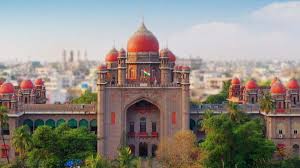
Division Bench upholds single-judge order, dismisses govt appeal against appointment under SC and local quota in 2015 constable recruitment. Hyderabad: A Dalit woman has secured an appointment as a police constable after the Telangana High Court upheld her petition. The court directed that she be considered under the Scheduled Caste reservation and local quota. In the 2015 recruitment for Stipendiary Cadet Trainee Civil Police Constable and Armed Reserve Constable posts, K Sangeetha of Hyderabad’s Gowliguda was rejected on the grounds of being a non-local candidate. She challenged the decision by filing a petition before the High Court in 2017. A single-judge bench ruled in March 2025 that she was entitled to be appointed under the SC reserved category and local quota. The state government and police recruitment board filed appeals questioning this order. A division bench of Chief Justice Apresh Kumar Singh and Justice GM Mohiuddin at the Telangana High Court on Monday dismissed the appeals, upholding the earlier direction for her appointment. Posted by P N Sree Harsha Courtesy : TSD Note: This news is originally published on https:/thesiasatdaily.com/bha and is used purely for non-profit/non-commercial purposes, especially human rights.
13-year-old Dalit girl allegedly raped, filmed by accused in UP village
In a horrific incident in a village under the Bazar Shukul police station area, a 13-year-old Dalit girl was allegedly raped by a man from her village, who also filmed the assault, police reported on Sunday, September 7, 2025. The accused, now in custody and under interrogation, faces serious charges following the crime that has sparked outrage. According to police, the incident occurred on Friday evening when the accused lured the girl out of her home and assaulted her. He recorded the act and threatened to upload the video online and kill her if she disclosed the incident to anyone. Despite the threats, the traumatized girl confided in her mother upon returning home. Her father promptly lodged a complaint at the Bazar Shukul police station on Saturday, detailing the harrowing ordeal. Station Officer Abhinesh Kumar confirmed that a case has been registered against the accused under relevant sections of the Bharatiya Nyaya Sanhita, the Protection of Children from Sexual Offences (POCSO) Act, and the Scheduled Castes and Scheduled Tribes (Prevention of Atrocities) Act. The police are conducting a thorough investigation to ensure justice for the victim. The case highlights the persistent issue of violence against marginalized communities, particularly Dalit girls, in rural India. Authorities are under pressure to act swiftly, as the incident underscores the urgent need for stronger measures to protect vulnerable children and enforce stringent penalties for such heinous crimes. Courtesy : Muslim Mirror Note: This news is originally published on https:/muslimmirror.com/bha and is used purely for non-profit/non-commercial purposes, especially human rights.
Uttar Pradesh: 19-year-old Dalit woman alleges gang rape in Pratapgarh Gang Rape, raped

In a distressing incident in the Patti area of Pratapgarh district, a 19-year-old Dalit woman, a college student, was allegedly raped by two men on Saturday, September 6, 2025, police reported on Sunday. The assault occurred when the victim visited a village under the Patti police station jurisdiction to collect money from a friend’s acquaintance, according to Additional Superintendent of Police (ASP), East, Shailendra Lal. Based on the victim’s complaint, a case was registered on Saturday evening against the two accused, identified as Aman and his accomplice, under relevant legal provisions, including sections of the Bharatiya Nyaya Sanhita and applicable laws for crimes against Scheduled Castes. The police have launched a manhunt, forming four specialized teams to apprehend the suspects. ASP Lal assured that the accused would be arrested soon, emphasizing the authorities’ commitment to swift justice. This case underscores the ongoing issue of violence against Dalit women in India, raising concerns about safety and systemic discrimination. The police are under pressure to act decisively to ensure accountability and provide support to the victim, as the community demands stringent action against the perpetrators to prevent such heinous crimes. — With Agencies Inputs Courtesy : Muslim Mirror Note: This news is originally published on https:/muslimmirror.com/bha and is used purely for non-profit/non-commercial purposes, especially human rights.
Anticipatory bail in SC/ST Act is not easy! Supreme Court’s latest decision to stop Dalit oppression which is very important for you to know
The court, citing Ram Krishna Balothia vs State of Madhya Pradesh (1995), said that such crimes belong to a special category, which are related to untouchability, so the criminal cannot be given a chance to threaten the victims by granting bail. New Delhi- In a recent important decision, the Supreme Court has overturned the order of the Bombay High Court, taking a tough stand on granting anticipatory bail under the Scheduled Castes and Scheduled Tribes (Prevention of Atrocities) Act, 1989 (SC/ST Act). This decision is very important because it limits the facility of anticipatory bail in cases of casteist oppression against Dalit and tribal communities, thereby strengthening the process of getting justice to the victims and preventing the criminals from threatening or influencing the witnesses. The court clarified that there is a complete ban on anticipatory bail under Section 18 of the SC/ST Act, except in cases where the crime is not proved prima facie. This judgment is a strong step towards social justice, which strengthens the principle of abolition of untouchability under Article 17 of the Constitution. The case pertains to the Paranda police station of Dharashiv district of Maharashtra, where the appellant Kiran, who belongs to the Matang (Mang) Scheduled Caste community, lodged an FIR on November 26, 2024 against the accused Rajkumar Jivraaj Jain and others. The FIR registered offences under Sections 118(1), 115(1), 189(2), 189(4), 190, 191(2), 191(3), 333, 324(4), 76, 351(3) and 352 of the Indian Penal Code (BNS) along with Sections 3(1)(o), 3(1)(r), 3(1)(s), 3(1)(w)(i) of the SC/ST Act. The incident took place on 25 November 2024 at 11 am, a day after the assembly elections, when the accused and their associates reached the appellant’s house and attacked him using casteist slurs. According to the FIR, accused Rajkumar Jain hit the appellant on the head and back with an iron rod, saying “Mangtyan, you have become very arrogant”, causing the appellant to fall down. The accused also hurled casteist slurs at the appellant’s mother Mohini and aunt Rekha, pulled their sarees, assaulted them and threatened to burn down the house. During this, the mother’s one tola gold mangalsutra fell off and household articles were damaged. The appellant’s friend Yashwant Bodre was also beaten up for being from the Ramoshi community and voting against the government. The accused had a petrol bottle in their hand and were threatening to burn down the house. Some people from the village came to intervene, following which the appellant was sent to the hospital and an FIR was registered from there. The judgment is significant as it limits the facility of anticipatory bail in cases of casteist atrocities against Dalit and tribal communities, thereby strengthening the process of access to justice for victims and preventing perpetrators from threatening or influencing witnesses. The incident occurred due to the appellant not voting for the accused’s preferred candidate in the assembly election, which is an offence under Section 3(1)(o) of the SC/ST Act, as it deals with punishing a Scheduled Caste member for voting or not voting. The appellant alleged casteist insult, insult in a public place (Sections 3(1)(r) and 3(1)(s)), and touching of sexual nature against women (Section 3(1)(w)(i)). The accused belong to the Jain community, which is not a Scheduled Caste/Tribe, hence the SC/ST Act applies. Additional Sessions Judge, Paranda rejected the anticipatory bail plea of the accused as prima facie offence was proved, caste certificate confirmed the Scheduled Caste of the appellant and statements of witnesses were available. But the Aurangabad bench of Bombay High Court on 29th April 2025 granted anticipatory bail to the accused in Criminal Appeal No. 201/2025, stating that the case appears to be exaggerated, there are inconsistencies in the statements of witnesses and the incident is motivated by electoral politics. The High Court granted bail terming the nature of injuries as minor. The special leave petition of the appellant was heard in the Supreme Court, where Justice N.V. Anjaria along with Chief Justice B.R. Gavai and Justice K. Vinod Chandran delivered the judgment. The court set aside the High Court order and said that there is a complete bar on anticipatory bail under Section 18 of the SC/ST Act, which prevents the application of Section 438 of the Code of Criminal Procedure (CrPC). Citing earlier judgments such as Vilas Pandurang Pawar v State of Maharashtra (2012), Prithvi Raj Chauhan v Union of India (2020) and Shajan Skaria v State of Kerala (2024), the court clarified that the court has to examine the prima facie offence only on the contents of the FIR and not conduct a detailed analysis of the evidence or a mini trial. Here, it is clear from the FIR that the accused insulted the appellant by using the casteist word “mangtyans”, which happened in public view and was caste-related. The court said that in such cases, the bar can be lifted only as an exception when the offence is not made out prima facie, but here all the elements are present. The State of Maharashtra also opposed the bail of the accused. The judgment strengthens the objective of the SC/ST Act, which is to make the Scheduled Castes and Tribes socio-economically strong and protect them from humiliation. Citing Ram Krishna Balothia vs State of Madhya Pradesh (1995), the court said that such crimes belong to a special category, which are related to untouchability, so the offender cannot be given an opportunity to intimidate the victims by granting bail. Referring to the interpretation of “public view” in cases like Swarn Singh (2008), Hitesh Verma (2020) and Karuppudayar (2025), the court said that the incident outside the appellant’s house falls in public view. The judgment clarified that these comments are prima facie and will not affect the trial. The decision has been welcomed by Dalit rights activists, as it will speed up justice in cases of oppression and avoid political pressure. BANAE National President Dr Nagsen Sonare said, “Anticipatory bail cannot be granted under Section 438 of CrPC as it is prohibited
Kerala: Tribal settlements of Idukki still deprived of basic facilities, warning of election boycott
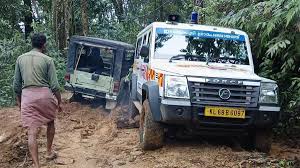
Tribal settlements of Idukki still away from road and health facilities, angry community decided to boycott elections. Kerala: Ahead of the local body and assembly elections in the state, the lack of basic facilities in the major tribal settlements of Idukki district has once again become a topic of discussion. The biggest concern is that two Muthuvan tribal settlements of Edamalkudi Panchayat and five settlements of Vattavada Panchayat are still completely cut off from road connectivity. A report submitted by the State Special Branch to the Kerala Government states that the resentment of the people is increasing due to the continuous lack of facilities in the Edamalkudi area. Carrying patients on bamboo stretchers Due to lack of road connectivity, patients in areas like Edamalakudi, Swamiyarlakudi, Koodallarkudi, Mele Valsapettikudi, Vayaltharakudi and Parasukkadavukudi have to be carried to the hospital through forests on makeshift stretchers made of bamboo. Recently, an elderly woman was carried to the hospital in Mankulam through dense forests for 10 km in a similar way. A child died on August 21. In another incident, a woman suffering from asthma could not be taken to the Family Health Centre in Societykudi in time, due to which her condition deteriorated and she later lost her life. “The tribals of the district have been demanding basic amenities and road connectivity for a long time, but no concrete steps have been taken so far,” said a tribal member of the Vattavada panchayat. Announcement of boycott of elections In a recent meeting of tribal leaders of two wards of the Vattavada Gram Panchayat, a decision was taken to boycott the upcoming elections. In the meeting of tribal chiefs (Ooru Kootam), it was decided that there will be no participation in the elections. To fill the reserved seats in the Panchayat, political parties need to field candidates from these five settlements, but no one is ready to come forward. Unfulfilled hopes even after 15 years According to the information, the recent death of a five-year-old child in Koodallarkudi settlement of Edamalakudi has shaken the people of the Panchayat. It is noteworthy that in the year 2010, the first tribal Gram Panchayat was formed exclusively for the Muthuvan community. But even after 15 years, the community is struggling for basic facilities. The Intelligence Wing report has recommended the government to intervene immediately and solve the problems. Rajan Chaudhary Courtesy: Hindi News
Reservation for SC/ST/OBC students in private educational institutions under Article 15(5): Bahujan population is 90% but only 0.53% Adivasi, 0.89% Dalit and 11% OBC students reached!
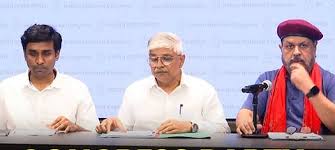
Parliamentary committee’s shocking report: Congress exposed BJP’s 11 years of inaction, said make law immediately! New Delhi- Congress leaders Rajendra Pal Gautam, MLA Dr. Vikrant Bhuria and Anil Jaihind in an aggressive press conference recently made serious allegations against the BJP-led central government for not implementing the constitutional reservation for Scheduled Caste (SC), Scheduled Tribe (ST) and Other Backward Class (OBC) students in private educational institutions. They exposed the ignorance of the rights given under Article 15(5) of the Constitution, which provides for reservation for SC, ST and OBC students in private higher educational institutions. Citing a recent report of a parliamentary committee headed by senior Congress leader Digvijaya Singh, the leaders revealed that only 12% of Bahujan students have access to private institutions. This is a sad fact and underlines the discrimination prevalent in society and the backwardness of underprivileged communities. They attributed this to 11 years of inaction by the BJP, privatisation of education, and rising fees. The Congress demanded immediate legislation, free coaching, scholarships, and anti-discrimination measures to ensure equal opportunities for Bahujan students. Article 15(5) and legal victories, still not implemented AICC SC Department National President Rajendra Pal Gautam at the beginning of the press conference highlighted India’s growing population and the growing demand for higher education. He pointed out that the lack of government educational institutions has led to the rise of private institutions, but the absence of reservation and high fees have made these institutions out of reach for SC, ST and OBC students. Gautam discussed the landmark amendment made by former Prime Minister Manmohan Singh under the UPA-1 government, which added Article 15(5) to the Constitution. This article provides for 27% reservation for OBCs, 15% for SCs, and 7.5% for STs, including in private educational institutions. He referred to three important Supreme Court judgments that upheld this provision. In 2008, in Ashok Kumar Thakur vs Union of India, the Constitutional Bench of the Supreme Court upheld reservation for SC/ST/OBCs in private institutions. This was further strengthened in 2011 by dismissing the challenge of the Indian Medical Association. Finally, in 2014, in Pramati Educational and Cultural Trust vs Union of India, the Supreme Court clearly stated that Article 15(5) is constitutional and does not violate anyone’s fundamental rights. Gautam stressed that the central and state governments can implement it, but no effective law has been made in the 11 years since the BJP came to power in 2014. Gautam also cited the fee structure of private institutions as a hindrance. For example: The annual cost of a B.Pharm degree at BITS Pilani is Rs 11 lakh, which reaches up to Rs 44 lakh for a four-year degree. The tuition fee for a BA programme at OP Jindal Global University for 2025-26 is Rs 6.5 lakh and hostel fee Rs 3.5 lakh, which comes to around Rs 10 lakh per year. Courses like the six-year BA Honours can cost over Rs 60 lakh. Gautam said it is impossible for even Class 1 bureaucrats to afford such fees, depriving SC/ST/OBC students of education. Parliamentary committee report: Only 12% Bahujan representation The leaders cited the report of the standing committee of Parliament headed by Digvijaya Singh, which focused on education, health, women and youth affairs. After extensive interaction with vice-chancellors of universities, higher education officials and leading institutions, the committee presented shocking statistics: the share of SC students in private educational institutions is only 0.89%, ST 0.53%, and OBC 11.16%. This shows only 12% representation for the 90% Bahujan population (SC/ST/OBC), which undermines the principle of equality. All India Adivasi Congress chairman Dr Vikrant Bhuria described education as “lioness’ milk” and quoted Babasaheb Ambedkar’s statement that right to vote and reservation are essential for equality. He accused the BJP of a “planned conspiracy” that includes weakening government institutions, not opening new ones, and closing old ones. This has led to education shifting to the private sector, where reservation does not apply. Bhuria said that 90% of Bahujan society getting only 12% representation is the “biggest irony of democracy”. The committee, which comprised 31 MPs from various parties, unanimously recommended 15% reservation for SCs, 7.5% for STs, and 27% for OBCs in private higher education. Bhuria described Article 15(5) as “revolutionary” but targeted the BJP’s 11 years of inaction, saying the government prioritised corporate interests. He described vote theft, PSU privatisation, and denial of education as a systematic injustice against 90% of the population. The report also mentioned caste-based discrimination in premier institutions, where SC/ST students admitted under reservation quotas face stigma and discrimination from classmates and faculty, which affects their performance and mental health. The committee recommended strict anti-discrimination policies, grievance redressal cells, sensitization programmes, free coaching, bridge courses, and scholarships to prevent dropouts due to financial reasons. The lack of government educational institutions has led to the rise of private institutions, but the lack of reservation and high fees have made these institutions out of reach for SC, ST and OBC students. BJP’s inaction, demands immediate action AICC OBC wing president Anil Jaihind accused Prime Minister Narendra Modi, who claims to be an OBC, of causing more harm than Manusmriti supporters. Chaudhary said that on January 29, 2014, the Supreme Court had upheld the UPA law as constitutional, but the BJP did not take any action on it for 11 years, while EWS reservation was passed in 48 hours. He cited parliamentary data: India has 517 private universities and over 45,000 degree colleges, of which only 21.5% are government (where reservation applies) and 78.5% are private (without reservation). Chaudhary described the last 11 years as the “darkest” for SC/ST/OBCs since Independence, with a return to the Manuwadi system through expensive education and privatisation. He criticised the “Not Found Suitable” (NFS) practice in appointments, where qualified SC/ST/OBC candidates are rejected, and ignoring the OBC creamy layer income limit (Rs 8 lakh since 2017, to be reviewed in 2020). Chaudhary demanded that the vacant seats of non-creamy layer OBCs be given to creamy layer OBCs, as is
Bodoland of Assam became the first tribal region in the country, where 15 lakh land records were digitized – know the full story

Bodoland Territorial Region created history, it became the first tribal area of Assam where all land records are completely digitized. This is being considered a big step towards transparency and resolution of land disputes. New Delhi: Bodoland Territorial Region (BTR) of Assam has become the first tribal council area in the country to completely digitize all its land records. This achievement is considered an important step in the councils formed under the Sixth Schedule of the Constitution. According to officials, more than 15 lakh land-related documents, including text and maps, have been digitized in BTR, spread over an area of 8,970 square kilometers. This work was completed just a few weeks ago, ending the process of manual record-keeping that was going on for decades. Councils under the Sixth Schedule North-east India has a total of 10 autonomous tribal councils under the Sixth Schedule—three each in Assam, Meghalaya and Mizoram, and one in Tripura. Assam’s Karbi Anglong-West Karbi Anglong and Dima Hasao councils were set up nearly five decades before the Bodoland Territorial Council (BTC). The BTC was set up in 2003. The BTC currently administers five districts in north and west Assam. Why was digitisation necessary? The Sixth Schedule gives special rights to tribal areas in matters related to land, forest and local governance. Despite this, these councils face lack of resources, infrastructure challenges and administrative difficulties. The BTR administration has adopted a technology-based governance system to overcome these obstacles. According to officials, the council has made this big change by working on the lines of the e-office system and the Digital India Mission. BTC secretary Dhiraj Saud said the process, which began in 2023, was aimed at bringing transparency in land ownership and simplifying traditional land ownership patterns. “The process involved ground-level surveys in all districts — Baksa, Chirang, Kokrajhar, Tamulpur and Udalguri. Old records, including those dating back several decades, were digitised and matched with revenue records and maps,” he said. Geographical Information System (GIS) mapping was also used to ensure accuracy of land boundaries. Boost to Mission Bwismuthi 2.0 This digitisation has also given new impetus to the BTR government’s Mission Bwismuthi 2.0. The scheme, launched earlier this year, gave land rights to 47,000 landless indigenous families, including about 9,000 small tea growers and rubber farmers. In its first phase, 14 land related services were made available and so far more than 2.11 lakh applications have been settled. New digital facility for the public Through the new digital platform, farmers, landholders and common citizens can now get information related to their land through kiosks, mobile applications and web portals. A revenue department official said, “Land disputes in our region have often become a cause of social tension. Digitization will ensure transparency and the chances of corruption, fraud and conflict will be reduced to a great extent.” An example for other councils Officials believe that the digitization of land records and e-office system in BTR has become an ideal example for other autonomous councils of the North-East. Rajan Chaudhary Courtesy : Hindi News
‘Extremely Vulnerable Tribal Groups’ (PVTGs) may be counted separately in the upcoming census
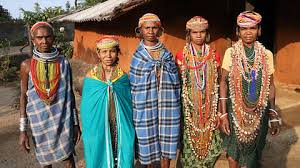
The government may count Extremely Vulnerable Tribal Groups (PVTGs) separately in the upcoming census for the first time New Delhi – The Ministry of Tribal Affairs (MoTA) last month wrote a letter to the Registrar General and Census Commissioner of India (RGI) urging that ‘Extremely Vulnerable Tribal Groups’ (PVTGs) be counted separately in the upcoming census. The ministry said in its letter that the exact number of PVTG families and individuals as well as their demographic, cultural and socio-economic aspects should be recorded. The ministry believes that this information will be helpful in the effective implementation of schemes targeted for PVTGs—such as the Pradhan Mantri Janjati Adivasi Nyay Maha Abhiyan (PM JANMAN). Who are PVTGs? Extremely Vulnerable Tribal Groups (PVTGs) are a special sub-category of Scheduled Tribes (STs). They share some common characteristics—decreasing or stagnant population, geographical isolation, pre-agricultural lifestyle (hunting and gathering), economic backwardness and extremely low literacy levels. This category was formed on the recommendations of the Dhebar Commission set up in 1960-61. The commission’s chairman and then MP U.N. Dhebar studied the socio-economic status of scheduled tribes in collaboration with state governments. His report found that some tribes were far more vulnerable than others. First, 52 groups were identified as PVTGs during the Fifth Five Year Plan (1974-79). Later, 23 more tribal groups were added in 2006. Currently, there are a total of 75 PVTGs in the country, spread across 18 states and the Andaman and Nicobar Islands. Have PVTGs ever been counted separately before? No census has so far counted PVTGs separately. Being a sub-category of Scheduled Tribes, they are usually included in the broader list of STs. At times, multiple PVTG groups are counted under the same name. In a reply to the Lok Sabha in December 2016, the ministry had said that 40 of the 75 PVTGs have been notified as ‘single entry’ Scheduled Tribes under Article 342 of the Constitution. For example, the Baiga community of Madhya Pradesh was counted separately in the 2011 census. But the Abujh Maria, Bharia, Hill Korba and Camara were not listed separately. Later in 2013, Abujh Maria and Hill Korba were added to the ST list of Chhattisgarh through a law of Parliament. According to parliamentary replies, only data of main STs is published by the RGI, which also includes information on their sub-groups and synonymous groups. What is the estimated population of PVTGs? In November 2023, the central government launched the PM JANMAN scheme at a cost of Rs 24,104 crore. It aims to improve the socio-economic condition, health, education, livelihood and infrastructure of PVTG communities. The scheme is being implemented in more than 200 districts. The central and state governments jointly conducted a comprehensive survey for this scheme. In this, data of PVTG settlements was collected and the lack of infrastructure was assessed. According to the survey, the estimated number of PVTGs across the country is 47.5 lakh. Of these, the highest number of 13.22 lakh is in Madhya Pradesh. This is followed by 6.7 lakh in Maharashtra and about 5.18 lakh PVTGs in Andhra Pradesh. The 2011 census also revealed that the population of 13 PVTGs in the country was less than 1,000. These include Jarawa, Onge, Sentinelese and Shompen of Andaman and Nicobar Islands. Apart from this, Raji of Uttarakhand, Kota of Tamil Nadu, Birhor of Odisha, Camera of Madhya Pradesh and Savar, Birhor, Birjia, Korwa, Parhaiya of Bihar also come in this list. The group with the least population was Sentinelese, whose number was recorded as only 15. At the same time, the highest population of 4,14,526 was of Baiga community of Madhya Pradesh. Why is separate census necessary? Government officials say that by getting the correct number of PVTGs and their socio-economic data, major flaws in the implementation of schemes can be removed. Especially schemes like health and education can be implemented more effectively. Also, this information will also help in understanding whether the criteria set for identifying PVTGs are still relevant today or there is a need to change them. This move will not only highlight the real condition of the tribal groups but will also help the government to formulate a concrete strategy towards bringing them into the mainstream and improving their living conditions. Rajan Chaudhary Courtesy : Hindi News
‘Fake caste certificate deprives a qualified tribal candidate of opportunity’: Supreme Court gives relief to MBBS student of Maharashtra, imposes Rs 5 lakh fine on father

On July 7, 2022, the verification committee passed an order that Chaitanya “Mannervarlu” does not belong to the Scheduled Tribe. By this time Chaitanya had not only completed her MBBS degree but also got admission in the Post Graduate (PG) course in the general category, where she is currently in the second year. New Delhi- The Supreme Court has given a big relief to the appellant MBBS pass Chaitanya by giving an important verdict in a famous fake caste certificate case of Maharashtra. But the apex court has imposed a fine of Rs 5 lakh on her father. With a fake caste certificate, Chaitanya not only got admission in MBBS but also completed the degree and internship and now has got admission from the general category for the post graduate degree. The court, while maintaining a balance between equity and law, has granted relief to the student and imposed penalty on the father, saying that “this act has deprived an eligible tribal candidate of an opportunity.” The court ordered Chaitanya’s father to deposit Rs 5 lakh in the National Defence Fund within two months. The case pertains to the “Mannervarlu” category of Scheduled Tribes (ST), under which Chaitanya had claimed she belonged to this tribe. Chaitanya was born on 7 August 1998, and when she was a minor, a caste certificate was issued in her favour on 1 July 2009, declaring her as a member of the “Mannervarlu” Scheduled Tribe under Section 27 of the Presidential Order 1976. Chaitanya, who wanted to take admission in MBBS course, approached the Scheduled Tribe Caste Certificate Verification Committee, Aurangabad for verification of her certificate through her father Sanjay Vithalrao Palekar on 30 July 2015. Unfortunately, the committee delayed the verification of this claim, which led to Chaitanya getting admission to the MBBS course on 24 July 2016 on the basis of his caste certificate. He successfully completed MBBS in 2021 and started internship after completing the final year on 5 May 2021. The records show that Chaitanya excelled in class 12 and his academic performance was also excellent during MBBS. However, on 7 July 2022, the verification committee passed an order that Chaitanya does not belong to the “Mannervarlu” Scheduled Tribe. By this time Chaitanya had not only completed his MBBS degree but also enrolled in the Post Graduate (PG) course in the general category, where he is currently in the second year. Chaitanya filed a writ petition in the Bombay High Court against this decision of the committee, but it was dismissed. The core issue of the case was the fraud committed by Chaitanya’s father and uncle, who obtained new certificates in 2007 by concealing the rejection of their tribal claims in 1989. Bombay High Court gave this decision The Aurangabad Bench of the Bombay High Court, while passing judgement on writ petition no. 8531/2022 on July 24, 2023, upheld the order of the Verification Committee dated July 7, 2022. The High Court found that the tribal claims of Chaitanya’s father Sanjay Palekar and uncle Rajiv Palekar were rejected in 1989, and their appeal was dismissed in 1991. Despite this, they obtained new validity certificates in 2007 by concealing this fact. The High Court termed it a constitutional fraud and said that Chaitanya’s father had filed a false affidavit before the committee, claiming that no one in his family’s claim was rejected. The court cited the Supreme Court case Raju Ramsing Vasave v Mahesh Deorao Bhiwapurkar (2008) 9 SCC 54, which held that certificates obtained by fraud are invalid and not binding on other family members. The High Court also observed that the certificates of other relatives submitted by Chaitanya were also based on fraud, as earlier rejections were concealed. Rejecting the debate on the review power of the committee, the court clarified that this is a clear case of fraud and not an issue of review. The High Court rejected Chaitanya’s reference to other cases where directions were given to issue validity certificates pending scrutiny of relatives’ certificates. The court said that this case is an example of clear fraud on the Constitution and Chaitanya cannot benefit from the fraud of his father and relatives. Dismissing the petition, the High Court said that the affidavits filed by Chaitanya and his father were false and the committee was justified in rejecting the claim. Supreme Court order The Supreme Court bench of Justice J.B. A bench of Justices Pardiwala and KV Vishwanathan partly allowed Chaitanya’s appeal in Civil Appeal No. 11196/2025. The court upheld the High Court’s findings, saying there was no legal error, but granted relief in special circumstances, taking into account Chaitanya’s educational qualifications and career prospects. The court noted that Chaitanya has completed MBBS and is pursuing a PG course in the general category. If the appeal was dismissed, her entire career would be at stake. The court held Chaitanya’s father primarily responsible for the situation, who put his daughter in trouble by concealing crucial facts. Referring to its interim order (28 November 2023), the court took on record the affidavit of the father, in which he gave up the claim of “Mannervarlu” Scheduled Tribe for himself and his family. The court regularised Chaitanya’s MBBS admission and directed the university to issue his degree certificate, which would be final. Chaitanya was, however, barred from claiming Scheduled Tribe anytime in the future. Acknowledging that due to this fraud a deserving Scheduled Tribe candidate lost the opportunity of pursuing MBBS course, the court ordered Chaitanya’s father to deposit Rs 5 lakh in the National Defence Fund within two months. The matter was again listed after two months for a compliance report. The court also observed that if the verification committee had conducted a timely inquiry, this situation might not have arisen. The Supreme Court order overrides the High Court’s decision, regularising only Chaitanya’s MBBS admission, while upholding the High Court’s decision on all other aspects. Geetha Sunil Pillai Courtesy : Hindi News