
Jarange wants govt to keep word on Satara Gazette, form panel for dalits, Muslims, farmers

Chhatrapati Sambhajinagar: Maratha quota activist Manoj Jarange on Thursday said govt’s failure to implement the Satara Gazette within the promised deadline would attract “consequences”. He demanded that a cabinet sub-committee should be formed for dalits, Muslims, farmers, tribals and others, on the lines of the one set up for OBC community. “If govt fails to act, I will be forced to hit the streets again,” he said. Jarange criticised a section of ‘leaders’ and ‘experts’ speaking on Maratha reservation, accusing them of misleading the community on multiple occasions. “We don’t trust anyone else. The Maratha community will not fall into any trap. I will bring the entire community in Marathwada under reservation. People will see this in just a few days,” he said. The activist reiterated his determination to secure OBC status for the Maratha community, while launching a sharp attack on senior minister Chhagan Bhujbal. Speaking to media from a private hospital in Chhatrapati Sambhajinagar, Jarange said, “I will ensure Marathas get included in the OBC category.” Regarding govt’s recent decision to replace Bhujbal with BJP leader Chandrashekhar Bawankule as head of the OBC sub-committee, Jarange said, “It does not concern me who is appointed. My only issue is reservation.” Jarange’s remarks follow state govt accepting six of his eight demands and issuing a govt resolution (GR). Following this, Jarange withdrew his protest at Mumbai’s Azad Maidan. However, the GR angered OBC leaders, with several activists threatening to initiate legal action, prompting the govt to form a sub-committee to address the community’s concerns. Courtesy : TOI Note: This news is originally published on https:/timesofindia.com/bha and is used purely for non-profit/non-commercial purposes, especially human rights.
Mysterious Death of Dalit Man in Amethi

A 45-year-old Dalit man named Ram Bahal Pasi was found dead under mysterious circumstances along a roadside in Amethi, Uttar Pradesh. Police are investigating the case and have sent the body for a post-mortem examination to determine the exact cause of death. The community awaits clarity. ADalit man, aged 45, was discovered dead under suspicious circumstances along a roadside in Amethi, Uttar Pradesh, on Friday, raising concerns in the community. The deceased, Ram Bahal Pasi, hailed from Panwaria Agresar village in the Ramganj police station area. Authorities revealed that Pasi’s body was located near Khargipur Mod on the Ramganj-Sonari road. The Station House Officer of Ramganj, Krishna Mohan Singh, remarked that the body has been sent for a post-mortem examination to ascertain the cause of death. “The exact cause of death will be clear only after the report is received,” Krishna Mohan Singh stated, indicating that a precise understanding of the circumstance surrounding the death is awaited, prompting an ongoing investigation. (With inputs from agencies.) Courtesy : Devdiscourse Note: This news is originally published on https:/devdiscourse.com/bha and is used purely for non-profit/non-commercial purposes, especially human rights.
Why casteist attack on Dalit priest in Bhilwara, Rajasthan? Fact finding team reveals – Conspiracy to capture 400 year old temple
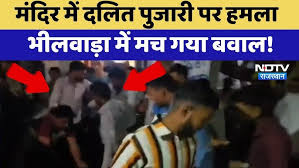
Till July 2025, 3651 cases of atrocities against Dalits were registered in the monthly report of Rajasthan Police, which includes 44 murders and 325 rapes. Bhilwara – Last month, a Dalit priest and his family were attacked by casteist people at Khakhuldev temple in Barana village of Asind police station area of Bhilwara district of Rajasthan. This attack is not just an incident of normal assault, but a well-planned conspiracy to snatch the rights and management of the 400-year-old temple of a Dalit family running for four generations. This conclusion has been presented in its detailed report by a fact-finding team, which visited the spot and talked to the victim’s family, local residents and officials. This report by Dalit Adivasi and Nomadic Rights Campaign Rajasthan, People’s Union for Civil Liberties (PUCL), Ambedkar Welfare Society, and other human rights organizations is based on the investigation of a fact-finding team constituted on 22 August 2025, aimed at uncovering the truth of the well-planned attack on Dalit priest Vishnu Meghvanshi and his family on 14 August, providing speedy justice to the victims and strengthening their voice for the protection of the rights of the Dalit community in Rajasthan. According to the fact-finding team, at around 10 pm on 14 August, a group of about 50-60 people, led by some influential people from casteist Hindu groups, forcibly entered the ‘Khakuldev Temple’ and attacked priest Vishnu Meghvanshi and his family, using caste-related abusive language. The attackers beat up eight people, including women of the family, and tried to drive them out of the temple. The next day, on August 15, the attackers again broke into the temple and looted the donation boxes kept there by cutting them with sharp-edged weapons. Following the attack, Vishnu Meghvanshi filed FIR No. 218/2025 at the Asind police station under sections 189(2), 115(2), 126(2), 303(2), 74, 342(2) of the IPC and sections 3(1)(r), 3(1)(s), 3(2)(va) of the SC/ST (PoA) Act. However, the police have not yet arrested any of the accused and the aggrieved party has accused the administration of bias and inaction. The attackers united non-Scheduled Caste groups under the banner of “Sakala Hindu Samaj” and falsely alleged disorder and violation of traditions in temple management. A protest was organized on August 18, 2025 and a Mahapanchayat on August 21 demanding the removal of the Dalit priest from the temple. This well-planned conspiracy is an attempt to exclude the Dalit community from social and religious activities and spoil social harmony. The background of this incident is very deep and historical. According to the fact finding team, the Khakhole Ji Maharaj temple was established about 400 years ago by the ancestors of Lakshmi Devi, grandmother of priest Vishnu Meghvanshi, on their private land. Since then, the responsibility of worshiping, looking after and managing this temple has been with this Dalit family. It is believed that the deity appeared in the dream of Ghela Meghvanshi, an ancestor of this family, and he ordered the construction of the temple. Over time, the fame of the temple spread and it became a major center of faith in the surrounding area. The report said that some people from the local Shakti community, who had an eye on the growing popularity and resources of the temple, hatched a well-planned conspiracy to oust this Dalit family from the management of the temple. They spread false propaganda in the village that the temple is a ‘trust’ and the Dalit priest is not following the traditions, whereas according to the report there is no legal document like a trust. After the attack, the attackers fueled their false narrative by holding a press conference and dharna in the name of ‘Sarv Hindu Samaj’. The fact-finding team has also raised questions on the role of the administration and the police. The report said that despite the FIR being registered, no accused has been arrested so far, due to which the accused are roaming freely and threatening the victim’s family. This negligence has boosted the morale of the accused and created an atmosphere of fear in the village. The team said in its report that the Dalit community in Rajasthan has been a victim of social boycott, ban on temple entry and violent attacks for a long time. As of July 2025, the monthly report of Rajasthan Police recorded 3651 cases of atrocities against Dalits, including 44 murders and 325 rapes. The Meghvanshi community in Asind area is particularly vulnerable to persecution and the lack of effective action by the administration is further fuelling it. The fact-finding team, based on conversations with the victim’s family, the local Meghvanshi community and other witnesses, found that the attack was entirely motivated by caste discrimination. The Meghvanshi community says that the temple is the heritage of their ancestors and the attempt to forcibly occupy it is not only a violation of their religious rights but also a violation of the principles of constitutional equality. Dalit organisations termed the administration’s inaction a matter of serious concern and demanded immediate action against the culprits. The Asind police and the local administration claimed that they were investigating the case impartially, but the victim’s side alleged that the police delayed filing the FIR and protected the accused. On 20 August 2025, Dalit organizations and the Meghvanshi community submitted a memorandum in Asind demanding a speedy investigation and arrest of the accused. Despite this, no concrete action was taken, due to which the morale of the accused is high. These demands of Nomadic Rights Campaign/ Dalit Rights Organizations: Dalit Adivasi and Nomadic Rights Campaign, PUCL and other organizations demand the following- Immediate arrest and punishment- Immediate arrest of the accused named in FIR number 218/2025 – Sampat Lal son of Shravan Lal Jat, Mishrilal son of Uda Jat, Banna Ram son of Hardev Jat, Daluram son of Kalyan Jat, Shankar Lal son of Banna Jat, Gaju son of Gopi Jat, Pokhar son of Jamna Jat, Sanwar son of Hardev Jat etc. and other co-accused and strict action under
Former minister’s temper flared up in traffic jam! Slapped Dalit constable calling him ‘Harijan’? After FIR, CCTV will now reveal the whole secret
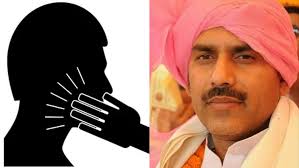
Former minister Krishna Nand Tripathi called the allegations ‘revenge’, said- CCTV footage will reveal the truth. Ranchi: Jharkhand politics has heated up once again. A Dalit police constable has accused former minister of the state and senior Congress leader Krishna Nand Tripathi of assault and using casteist abuses. This incident happened when the convoy of the former minister was stuck in a traffic jam. On the complaint of the victim constable, the police have registered a case and started investigation. What is the whole matter? According to the information received by the police, this incident happened in Latehar at around 1:30 pm. Dalit constable Ravindra Rikhyasan, posted in the personal security squad of former minister Krishna Nand Tripathi, said in his complaint that there was a huge traffic jam on the road due to Karam festival. The former minister’s car also got stuck in this jam. It is alleged that Tripathi, annoyed with the jam, ordered constable Ravindra to get out of the vehicle and clear the way. “As we tried to handle the situation, Netaji (Krishan Nand Tripathi) got out of the vehicle and started abusing us,” Ravindra said in his complaint. The constable also alleged that the former minister insulted him with casteist words like “Adivasi” and “Harijan” and said that he was not fit for the job. Following this, Tripathi also slapped him. Police action A zero FIR has been registered in the Daltonganj town police station in this case. Daltonganj Town police station in-charge Jyoti Lal Rajwar said that a case has been registered against the accused under relevant sections of the Indian Justice Code and the Scheduled Castes and Scheduled Tribes (Prevention of Atrocities) Act, 1989. He also clarified that the case will be transferred to Latehar police for investigation as the incident took place there. Former minister denied the allegations Meanwhile, Krishna Nand Tripathi, former minister of important departments like Rural Development, Labor, Employment and Training and Panchayati Raj, has completely rejected all the allegations against him. He has described this FIR as done out of “revenge”. Tripathi said in his defence, “I just asked my bodyguards to be more vigilant, got the road cleared and then left for the Circuit House. I did not beat or abuse anyone. Everything is clearly visible in the CCTV.” He further said, “When my bodyguards could not get the car out of the jam and I got the road cleared myself within a minute, they felt insulted. That is why they have lodged this FIR.” Police Men’s Association condemned After this incident came to light, the Latehar Police Men’s Association has strongly condemned it. The association has written a letter to the state’s Director General of Police (DGP) and called it an attack on the honor of the uniform. Association president Karan Singh wrote in his letter, “If a leader feels that a bodyguard is unfit for his duty, he should complain about it to senior officials, not attack him. There is clear evidence of the incident in the CCTV footage.” At present, the police have started investigation after hearing the arguments of both the parties. Now everyone’s eyes are on the police investigation and CCTV footage, which will make it clear what the truth is. Rajan Chaudhary Courtesy : Hindi News
Meerut Court: Father murdered after attempting to rape Dalit minor, convict sentenced to life imprisonment

A special court in Meerut has sentenced the accused to life imprisonment and fine in the case of attempting to rape a minor and murder of a Dalit father. Uttar Pradesh: A special (POCSO Act) court in Meerut district has sentenced a 45-year-old man to rigorous life imprisonment for poisoning and killing a Dalit youth. The court gave this verdict in the context of the incident when the accused tried to rape the minor daughter of the deceased in 2011 and the father was killed when he lodged a case against him. According to the prosecution, the deceased was 35 years old and his body was found in a drain in Meerut city on 20 April 2011. This incident took place when a day before, on 19 April 2011, he had lodged a rape case against the accused. ADGC Amit Dhama said that the accused had tried to rape the minor daughter of the deceased that day by taking advantage of her being alone at home. The girl’s parents, who were labourers, were not present at home at that time. After the complaint was lodged, the accused had threatened the victim’s family to withdraw the case. But the very next day, the girl’s father left home for work and a few hours later his body was found in the drain. During the investigation, it became clear that the deceased was addicted to alcohol. The accused called him on the pretext of talking and made him drink alcohol mixed with poison. He died due to consumption of this poisonous liquor. There was no mention of any injury in the post-mortem report, due to which the cause of death could not be ascertained. The body parts were preserved and the Forensic Science Laboratory (FSL) report confirmed that poison was present in the body. Earlier, the accused had been convicted in the rape case and was sentenced to seven years in prison. Now, on Wednesday, the court of Additional District and Sessions Judge Mohammad Aslam Siddiqui convicted him of murder and sentenced him to life imprisonment and a fine of Rs 70,000. The court rejected the mercy plea and remarked that the crime was extremely heinous. The court said, “In such cases, it is the duty of the court to give a harsh punishment considering the gravity of the crime, so that the purpose of the law is fulfilled and the society gets a message that such crimes will not be tolerated.” Rajan Chaudhary Courtesy : Hindi News
Dues of flour mill demanded from Dalit youth in Shivrajpur: Two goons attacked with a rod, he has been visiting the police station for two days
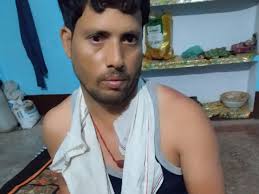
Two goons attacked a Dalit youth in Shivrajpur town of Kanpur countryside. The victim Sudhir Kumar runs a flour mill. He had asked for the outstanding amount from his customers. The incident happened at 7 pm. Sudhir was going home from his mill. On the way, he met Manoj Singh and Mohit Singh Chandel. Sudhir asked them for Rs 6000 for grinding flour. Both the brothers got angry at this. They used caste-specific abusive language. Then attacked with an iron rod. Sudhir got injured in the attack. The victim has accused the sub-inspector of Shivrajpur police station, Shubham Pandey. He says that no action is being taken for two days. Sudhir is continuously visiting the police station. Even after giving the application, the police have not registered a case against the accused. SHO Varun Sharma says that the application has been received and legal action is being taken. Sunil Kumar Courtesy : Hindi News
Dalit government employee falls at feet of DMK councillo
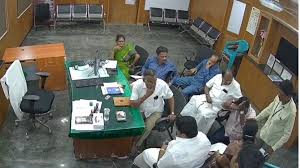
Villupuram: A controversy erupted after CCTV footage of a Dalit revenue assistant S Muniappan (30) falling at the feet of DMK councillor R Ramya, who belongs to the MBC community, and asking for “apology” at the Tindivanam Municipal Commissioner’s office in Villupuram on Wednesday went viral. The Tindivanam police have registered a case under the SC/ST (Prevention of Atrocities) Act against five persons, including Ramya, her husband Marur Raja, Ravichandran (husband of the municipal chairperson), Kamaraj and Birla Selvam. In his complaint to the Tindivanam Deputy Superintendent of Police, Muniappan said, “On August 29, I was looking for a file sought by the Municipal Commissioner when Ward 20 councillor Ramya entered the room and spoke rudely to me when I could not find the file. During the argument that followed, Ramya threatened me for speaking against her.” Following this, Ramya complained to the commissioner about Muniappan’s “misbehaviour” and the commissioner sought a written complaint to take action against him. However, by 4 pm on the same day, Ramya, along with her husband Marur Raja, Ravichandran and others, called Muniappan to the commissioner’s chamber to resolve the matter, the complaint states. At the meeting, Ravichandran and Ramya allegedly threatened Muniappan with termination from his job and demanded that he apologise to Ramya. Courtesy : Hindi News
Dalit youth found dead with throat slit in Uttar Pradesh’s Sultanpur

His body was recovered behind a liquor shop in Kindipur market, creating panic in the locality, officials said. Sultanpur: A Dalit youth was found dead with his throat slit here on Thursday morning, police said. The victim, identified as Mahesh Kumar (35), a resident of Kindipur village, had been missing since Wednesday evening. His body was recovered behind a liquor shop in Kindipur market, creating panic in the locality, officials said. According to police, Kumar’s throat was slit with a sharp-edged weapon. Additional Superintendent of Police Akhand Pratap Singh also visited the spot and reviewed the situation. Courtesy : DH Note: This news is originally published on https:/deccanherald.com/bha and is used purely for non-profit/non-commercial purposes, especially human rights.
‘Dalit devadasis lowest on social ladder’— Karnataka tackles twin stigma of caste, sex work

Despite being banned, the devadasi system still traps tens of thousands of Dalit women in Karnataka. A new survey and state law target both caste oppression and sex work stigma. Ballari/Koppal/Bagalkot: When Huligemma went to school for the first time, the teacher asked her father’s name. She did not have any idea. Whispers followed her down the corridor — “sule maklu”, prostitute’s child. “I never looked for a father. Although I always knew a father figure in life would have security, which my mother did. I heard people saying my mother is a devadasi. It took me time to understand,” said the 21-year-old, who lives with her mother Kenchamma and three siblings in Sandur village, Ballari district. Now a new state law in Karnataka is going beyond a 1982 ban on the devadasi system. It promises housing, healthcare, inheritance rights, and protection from stigma for both devadasis and their children. The practice, which consecrates mostly Dalit women to temples but brands them as prostitutes, continues to haunt tens of thousands of lives across the state. But who benefits also depends on who gets counted. The State Human Rights Commission has asked the Siddaramaiah-led Congress government to finish a survey of Devadasis and submit recommendations by 23 October. The last survey in 2007-08 counted 46,660 women across Karnataka. The reach of the new law’s benefits will depend on how this survey is done. If, as before, it includes only women dedicated before the 1982 ban, younger Devadasis like Kenchamma — and by extension her daughter — will be left out again. Earlier this month, Siddaramaiah announced that the Devadasi survey will be carried out starting from the first week of September. “If the Devadasi system is still alive today, it is a matter of shame for all of us,” he said. Devadasis are poised at the thorny intersection of caste, religion, and sex work. Huligemma first heard about the Karnataka Devadasi (Prevention, Prohibition, Relief and Rehabilitation) Act, 2025, passed in the state assembly on 18 August, through a community newsletter. She narrated it to her mother, who struggles to read. “My mother is hopeful we four children will now be able to live a life free of poverty and discrimination,” said Huligemma. In their single-room home, she prepares sugary milk tea for Kenchamma. “I know the horrors. I will never let my daughter go through this,” said Kenchamma, a frail 45-year-old who was only ten when her parents dedicated her as a devadasi because she was “beautiful” and they needed the money. She pulls out two necklaces hidden under her blouse: a white-red beaded muthu and a mangalsutra tied at the temple. They were meant to mark her as a handmaiden of the goddess; in practice, they marked her out to men as a sex worker. When I was applying for a passport, it was so difficult to get away with the column for my father’s name. It was the worst experience. With this law, devadasi children will no longer be subjected to such atrocity -Nari Kamakshi, daughter of a devadasi “It is the worst practice, people only see you as a sex worker,” said Kenchamma, who now works as a farm labourer. More than her three sons, she dotes on Huligemma, who is doing her BA (general course) at a local college. But it’s a struggle. She has not been able to pay fees for this term. “I do not want to leave studying, it is the only way my family and I can move out of this hell,” Huligemma said. Centuries ago, no one knows exactly when, girls from poor families were dedicated to goddesses to serve in temples. What began as ritual worship turned into systematic sexual exploitation of Dalit women, particularly from Madiga, Madar, and Holeya communities. In Karnataka, about 95 percent of devadasis are Dalit. In 1982, the state banned the practice through the Devadasis (Prohibition of Dedication) Act. Yet the system stayed entrenched across northern districts like Belagavi, Vijayapura, Bagalkot, Koppal, Ballari, Raichur and Kalaburagi. To wrest themselves free, women have relied on educating children and asserting dignity through caste pride. The state’s role has been minimal, though those counted in the last survey received devadasi certificates through which they accessed some benefits. Some received land, pensions of around Rs 2,500, and financial incentives for marriage—Rs 3 lakh for men marrying a devadasi, Rs 5 lakh for women. This time, devadasis had a bigger say in shaping the law. It was drafted after seven months of research by a National Law School of India University (NLSIU) team working with NGOs, activists, and more than 15,000 devadasis. Children of 15 devadasis documented problems and suggestions across districts in northern Karnataka. Consultations followed, with the community itself proposing changes to improve their lives. RV Chandrashekar, coordinator of the drafting committee, said the survey would spell out caste details and show how the practice is bound up with casteist oppression. “Among Dalit women, devadasis are lowest on the social ladder, and the caste census in the survey will prove that,” he said. “It will give them and their children a better life.” In the Harijan colony of Bagalkot’s Rabkavi town, 33-year-old Lakshmi drapes a red-and-white chiffon saree, puts on lipstick and kajal, and sends her two children to the back room. It is sundown, the time when she starts getting customers at her doorstep, though she’s worried the incessant rain might keep them away. Lakshmi is a second-generation devadasi. She was 12 when her mother encouraged her into the profession. Unlike her four sisters, who were good at studies, her only skill was singing and dancing. For her desperately poor Dalit household, dedicating her was a way out. “Ma told me not to make noise, cooperate with the man, just do the deed,” said Lakshmi. “I did not cry, I was numb. It was just for 20 minutes.” She laughed as she spoke, as if the memory belonged to someone else. Fifteen years later, Lakshmi sits in
UP man gets death penalty for rape, murder of 8-yr-old Dalit girl
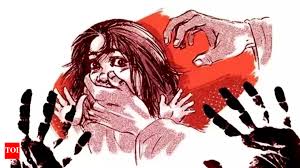
Agra: A special SC/ST court in Mathura on Tuesday awarded the death penalty to a 50-year-old man for abducting, raping and murdering an eight-year-old Dalit girl in 2020, calling it a “rarest of rare case for its brutality”. The autopsy report revealed multiple sharp injuries to the victim’s private parts, with severe damage to her uterus and internal bleeding in her kidneys and liver, which led to her death. Additional district govt counsel Subhash Chaturvedi said, “The doctor, Sonu Chaturvedi, who conducted the autopsy, also found injuries on the rectum and neck, deep bite marks on her shoulder and scratches on several parts of her body. She possibly died due to acute blood loss, as the convict, after assaulting her, strangled and left her to die in the forest at night.” On Nov 26, 2020, the Class II student was abducted while collecting firewood with a woman from her village in Mathura district. Her father filed a missing person complaint when she didn’t return home that evening. Police later found her body in a forested area of Vrindavan, where she had been strangled with her own clothes. The accused, a local villager, was arrested two days later on Nov 28. An FIR was registered under IPC sections 363 (kidnapping), 376 (rape), 377 (intercourse against the order of nature), 302 (murder) and 201 (destruction of evidence), along with sections of the Pocso Act and SC/ST Act. A chargesheet was filed on Jan 25, 2021, and the trial began the following month. During the trial, police presented testimonies of nine individuals, scientific evidence and autopsy findings. Investigators found the convict’s skin tissues in the victim’s nails, and a woman from the village testified that the man was a habitual offender who often misbehaved with girls. Chaturvedi said the court of additional sessions judge Brijesh Kumar rejected the convict’s plea for leniency, which claimed it was his first offence. Considering the savagery of the act, the court held him guilty and ruled that “the convict be hanged by neck till death”. It also imposed a fine of Rs 3,20,000 on the convict. Courtesy : TOI Note: This news is originally published on https:/timesofindia.com/bha and is used purely for non-profit/non-commercial purposes, especially human rights.