
Allegations of demolition of a Dalit woman’s hut and throwing away of her belongings: Despite numerous complaints, no action was taken, now a petition has been filed at the Tehsil Day.
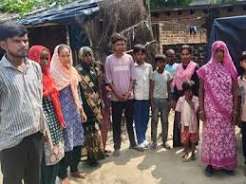
Strongers have vandalized and encroached upon a Dalit woman’s land. Despite numerous complaints, the administration took no action. Following this, the woman submitted a written complaint at the Tehsil Day, demanding action. Anita, a resident of Dhurpur in Simaria village, under the Thathiya police station area, submitted a written petition to officials at the Tirwa Tehsil Day on Saturday. The woman alleges that plot numbers 1376 and 1378 are registered with the Gram Panchayat. Anita stated that the powerful, in collusion with revenue department officials and employees, demolished her hut and kiosk and threw her belongings onto the road. The woman also alleges that the powerful have registered the land in plot number 1377, but with the help of the revenue department, she is being treated unfairly. The woman submitted several petitions to the police and revenue department for action, but no action has been taken. On Saturday, under the leadership of Blue Revolution Bahujan Ekta Organization’s State Secretary Arvind Jatav and District President Karan Kumar, they submitted a written complaint at the Tehsil Day. Regional accountant Ramdas stated that legal action was taken in the presence of a joint team of the Naib Tehsildar and police. Tirwa Sub-District Magistrate Vaishali stated that the matter will be investigated and action will be taken. Bhairav Dutt | Umarda (Kannauj), Kannauj Courtesy: Hindi News
Bihar Family Performs Daughter’s Funeral After Inter-caste Marriage
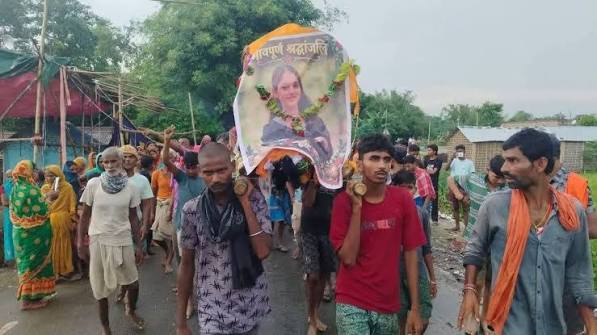
Brahmin girl marries a dailt boy in the Chapay village of Bihar Purnia: Riya Goswami, 18, from Bihar’s Purnia district, wanted to marry a boy of her choice. She had little idea that the family with whom she had spent eighteen years would perform her last rites for marriage outside her caste. “I, too, wanted to marry someone I lived with. But parents often intimidate their children by threatening to kill them if they marry outside their caste. That is why we are forced to take such a step,” said Riya. She entered into an inter-caste marriage with Milan Paswan, 23, evoking resistance from her family, which performed the girl’s last rites. “Parents fight for the sake of caste and society, but they fail to consider their own daughter,” rues Riya. Brahmin Girl Marries Dalit Boy Riya, the Brahmin girl, married Milan from the Paswan community in the Chapay village in the Gangeli Panchayat under the Maranga police station area of Purnia. According to Riya, she and Milan married at the Purnia court on September 9. A few days later, without informing her family, Riya left for her in-laws’ home with the boy and after searching for her, her family filed a complaint with the police. The police subsequently recovered the girl and had her statement recorded in court under Section 183 of the Bharatiya Nagarik Suraksha Sanhita. According to her family, Riya stated in the court that she wished to go with Milan. Family Carries Out Funeral Procession After the marriage of Riya with Milan, villagers convened a Panchayat meeting in the Chapay village, where members of the boy’s side were asked to return the girl. Her family explained that Milan used to visit their home and was a good friend of Riya’s brother. As the boy would visit the family, love developed between the two following which they decided to marry. Following the marriage, the family fashioned an effigy of the daughter, decorated a funeral bier, took out a procession, and performed her last rites. A large number of villagers were present during the proceedings. Riya’s parents also announced throughout the village that their daughter was now dead. “My daughter has left. For us, she is dead now. Her last rites have been performed. We are Brahmins. In our community, accepting water from that household is forbidden. If someone in our society does something like this, this is the inevitable consequence. If we don’t do this, we would have to leave the village. Tell me, how would we live here then?,” asked Raja Ram Goswami, the girl’s grandfather. The girl’s father, Manoj Goswami, stated that on the night of September 9, around midnight, his daughter left home with Milan—who lives about 100 meters away—and contracted a court marriage. He said that they would no longer have any ties with the girl. Subsequent rituals, including the “Nakhabal” (hair and nail trimming), “Dashvi” (tenth-day ritual), and “Terahvi” (thirteenth-day ritual), would be performed in accordance with traditional customs, the family said. Girl Gets Emotional Following the marriage, Riya remains miffed with her parents. “If parents simply asked their children if they liked someone, why would we take such a step? That is why I no longer have any relationship with my parents; my in-laws are my family now, I have no one else in the world,” she said. As she spoke, tears welled up in Riya’s eyes. “I am pursuing a BA degree, and I do not believe in the caste system; casteism does not exist. I am very happy today.” Not Afraid Of Society When asked if he feared society, Milan said, “Society won’t run my household or earn a living to feed me. So, I don’t care what people think.” Milan’s father, Dilip Paswan, said, “The villagers were pressuring us, but both the boy and the girl insisted they wanted to be together. They said they would die if they couldn’t get married. So, we agreed. Now, we will treat Riya as both a daughter-in-law and a daughter.” Courtesy : ETV Bharat Note: This news is originally published on https:/etvbharat.com/bha and is used purely for non-profit/non-commercial purposes, especially human rights
Over 120 Erravalli Dalit farmers receive revenue department notices

The Telangana revenue department has served notices to over 120 Dalit farmers in Erravalli following a land survey after Chief Minister A Revanth Reddy announced plans to take back the lands. Farmers have sought protection of their holdings and livelihoodGeographic Reference Siddipet: After Chief Minister A Revanth Reddy announced in the State Assembly that he would take back the lands in Erravalli and distribute them to other farmers, the revenue department served notices on over 120 Dalit farmers of Erravalli, leaving them in a state of shock. After carrying out surveys of lands in Survey No. 325 for three consecutive days until Saturday, the revenue department served notices on 120 farmers. The revenue department asked them to appear before the authorities with all the documents in their possession regarding the ownership of their lands. Sources in the revenue department said notices would be served on all farmers holding lands in the survey number. The 388 acres and 5 guntas of land were distributed to Dalit farmers in Erravalli and neighbouring villages some 60 years ago. Since then, the farmers had been in possession of the land. However, former Chief Minister K Chandrashekhar Rao had changed their lives considerably by helping them cultivate the fallow lands after 2014. He built a lake close to the lands and helped the farmers get a drip irrigation system and other facilities. Gajwel RDO Chandrakala directed the farmers to appear before the authorities on September 21. The farmers demanded that the government keep their lands intact, as they were their only source of livelihood. Meanwhile, farmers of Sivaru Venkatapur, a neighbouring village to Erravalli, alleged that some 180 acres of land in the survey number belonged to them. They demanded that the government earmark the lands properly, following the old revenue records. Courtesy : Telangana Today Note: This news is originally published on https:/telanganatoday.com/bha and is used purely for non-profit/non-commercial purposes, especially human rights
After 12 years, a Dalit student claimed the post of president at JNU’s Kaveri Hostel, sparking uproar; election cancelled – learn the full story
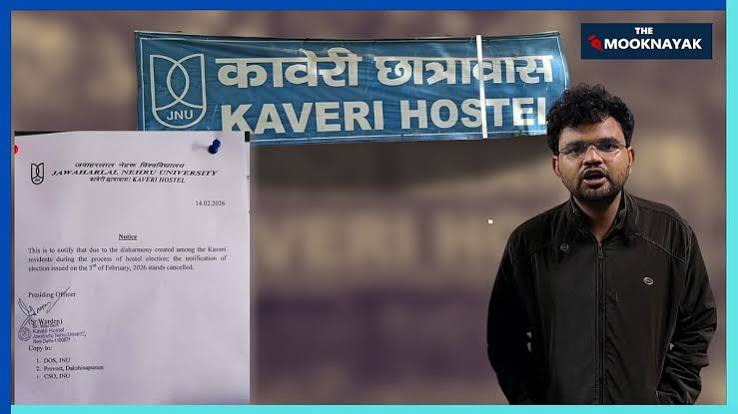
Students say that those with a casteist and Manuwadi mindset could not tolerate the candidacy of a Dalit candidate, so they hacked the democratic system and disrupted it. New Delhi – A major controversy has erupted over the student union elections at Jawaharlal Nehru University’s (JNU) Kaveri Hostel. The hostel election process has been cancelled, following allegations of casteism and violence surrounding a Dalit candidate’s candidacy for the post of president. This is the same Kaveri Hostel where hateful casteist slogans like “Chamar, Dalit, leave India” and “Brahmin, Baniya, Zindabad” were recently painted on the walls, drawing widespread condemnation. Kaveri Hostel houses a total of 308 students, including PG, UG, and PhD students. Every year, the Student Union (Students’ Body) is elected to address issues related to student welfare, such as improved infrastructure, quality food, cleanliness, mess facilities, and other student interests. This year, after 12 years, a Dalit student contested for the position of president. For all these years, there have been no SC community representatives on the hostel committee. There have been students from the tribal community, but they are considered to be staunchly RSS-oriented. Ajay Kumar Rao, a PhD student in Hindi literature, a candidate for president from the Progressive Panel, shared his experience with The Mooknayak. He said that elections are held every year to improve hostel infrastructure, protect students’ interests, and address welfare issues. The hostel election process is completely democratic and transparent. The Election Committee presents the names of nominated candidates for various positions (such as president, member, etc.) to the General Body Meeting (GBM). At this meeting, students’ support is sought against each candidate’s name. Students show their support by raising their hands. The candidates who receive the most hands, or a majority, are elected to the respective position. This process is based on consensus and direct democracy, allowing all resident students to participate. This method is common at the hostel level in campuses like JNU, where decisions are made by raising hands instead of using ballot papers, ensuring a speedy, fair, and universal participation. This method clearly expresses the collective will of the students, and in the event of any dispute, a decision is immediately reached within the GBM. This year, the election process began as follows: the election notification was issued on February 3rd. The body conducting the elections is the Election Committee, which consists of six students with neutral and open ideologies. The election committee was elected at the hostel’s General Body Meeting (GBM), in which Talha Ansari was elected. The election of the remaining five students, Vijay Jaiswal, Anubhav Tripathi, Priyanshu Chaturvedi, Ritul Joshi, and Animesh Kumar, was not democratic because they adhere to the RSS ideology, and an investigation is underway against some of them by the Proctor. Ajay Kumar Rao alleges that the election of the remaining members, except for Talha Ansari, was not conducted democratically and by consensus. The opposition, enraged by the idea of a Dalit student becoming president, created a ruckus. A scuffle and fight broke out between the students. Ajay’s glasses were broken during the altercation, and some others suffered minor injuries. The students complained to the warden, following which the election process was cancelled. Bahujan students say that those with a casteist and Manuwadi mindset could not tolerate the candidacy of a Dalit candidate, so they hacked the democratic system and disrupted it. Citing incidents of caste discrimination occurring on campuses across the country, Ajay said that Kaveri Hostel is no exception. South Asians and Expatriates The two major student organizations active in the hostel are the ABVP and the Progressive Panel. The Progressive Panel is a joint alliance of students from the Congress, Left, and Ambedkarite ideologies, seeking a system based on the principles of social inclusion, equity, and equality. Meanwhile, students with opposing ideologies are stuck in the age-old narrow-minded notions of superiority and inferiority. Non-vegetarian food is available in the hostel mess five days a week, but there have been debates and protests over not preparing non-vegetarian food on festivals. Religious events like Ram Navami and processions on campus are events that violate constitutional values and the principles of equality in an academic campus. This incident exposes the deep roots of casteism on a supposedly progressive campus like JNU, where attempts to suppress the voices of Dalit students continue. Ajay Kumar and his colleagues have appealed for the restoration of democratic processes. Geetha Sunil Pillai Courtesy: Hindi News
Dalit student at IIT Bombay commits suicide; father says a professor used to make ‘casteist’ comments about his son
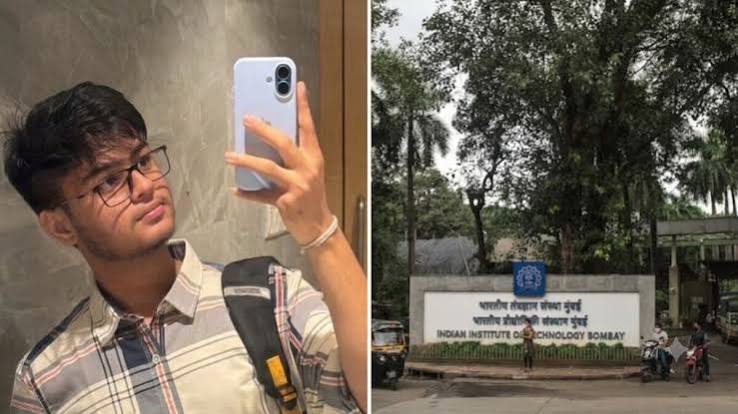
DCP Dattatreya Nalawade of Mumbai Police stated that a case has been registered under sections of abetment to suicide, the SC/ST Act, and other relevant sections, and an investigation is underway against all individuals named by the family. Mumbai – Following the suicide of a second-year student at the Indian Institute of Technology (IIT) Bombay’s Powai campus on Friday evening, his family has leveled serious allegations of caste discrimination and institutional harassment. The deceased student has been identified as Sahil Ravindra Wakode (22), a resident of Maharashtra’s Yavatmal district and a second-year B.Tech student in the Department of Energy Science and Engineering at IIT Bombay. Sahil belonged to the Scheduled Caste community, and his classmates describe him as a very hardworking student who had achieved an 8.5 CGPA in his first year. An FIR has been registered at the Powai police station in this case, which has been charged under the SC/ST Act following allegations from family members, and the investigation has now been transferred to the Mumbai Police Crime Branch. This is reported to be the third suicide case reported on the IIT Bombay campus this year. Sahil was found hanging from a ceiling fan in his room in Hostel No. 4 on Friday evening. When his roommates received no response, they informed the administration, which then called the police. No suicide note was recovered from the scene, and the police initially reported the case as an accidental death. According to the IIT Bombay administration, Sahil was caught using a mobile phone in the examination hall on the day of the incident and attempted to find answers by uploading the question paper to ChatGPT. The institute also clarified that no disciplinary action was initiated against the student following the incident. The institute stated that Sahil was assured that the incident would not impact his academic future. The institute has pledged support to Sahil’s friends, classmates, teachers, and others affected by the incident. It also stated that the circumstances surrounding his death are being investigated. According to students, Sahil was asked to leave the hall after an alleged confrontation during an exam and was reprimanded by a professor in the corridor. About an hour after this alleged confrontation, Sahil hanged himself in his hostel room, and his body was recovered around 6 p.m. Sahil’s mother, Sonali Wakode, spoke to the media on Saturday, directly alleging that her son had been subjected to caste-based harassment and torture. She also alleged that he had been assaulted and demanded justice. Sahil’s father, Ravindra Wakode (47), alleged that for the past few months, Professor Suryanarayan Dulla of the Department of Energy Sciences had been making caste-based remarks and mentally harassing his son. The father demanded the professor’s immediate arrest and a Crime Branch investigation into the matter. However, all these allegations are still under investigation and have not been independently verified. The father also claimed that the professor threatened to implicate Sahil in a false case. Following the family’s complaint, a case has been registered at the Powai police station under Section 108 (abetment to suicide) of the Indian Penal Code (IPC) as well as relevant sections of the Scheduled Castes and Scheduled Tribes (Prevention of Atrocities) Act. DCP Dattatreya Nalawade of Mumbai Police stated that the case has been registered under sections of abetment to suicide and other relevant sections, and an investigation is underway against all the individuals named by the family. The family initially refused to accept Sahil’s body, but later accepted it when the case was handed over to the Crime Branch on Saturday night. An ACP-rank officer will now lead the investigation. Protests on Campus As news of the death spread, a large number of students gathered, surrounded the office of Director Shirish Kedare, and demanded the resignation of both the Director and Professor Dulla. The students also blocked the main gate of the institute, prompting police to arrive. By late evening, approximately 400 students had gathered, and by midnight, the number had grown to over a thousand. A third-year electrical student said during the protest that this was the third such incident at IIT Bombay this year and the second in the last two months. Students are demanding accountability and transparency from the administration. Another student described the incident as shocking, saying, “It feels like one of us has been left behind. The situation is still management versus students, but first, we should remember the soul that left us.” Union Minister of State Raksha Khadse, reacting to the incident, said that the government will conduct a thorough investigation and ensure appropriate action. The Darshan Solanki Case Recalls This is not the first time allegations of caste discrimination have surfaced at IIT Bombay. In February 2023, first-year B.Tech student Darshan Solanki jumped to his death from the seventh floor of his hostel, and his family had also alleged caste discrimination. According to Solanki’s mother’s statement, recorded in the police chargesheet, Darshan had told his mother that his fellow students’ behavior had changed when they learned about his caste. This incident marks the third student suicide at IIT Bombay in six months, raising serious questions about student mental health at higher education institutions nationwide. Between October 2022 and October 2025, 154,046 college students aged 18-25 called the Tele-Manas helpline, of which approximately 4%, or 5,642, were related to suicide-related concerns. The Supreme Court has also underscored the severity of this crisis, with 13,044 student suicides recorded in 2022 alone, representing 7.6% of the total suicides that year. Geetha Sunil Pillai Courtesy: Hindi News
Dalit girl accused of rape at gunpoint: FIR not filed even after 4 days, complaint filed with SP
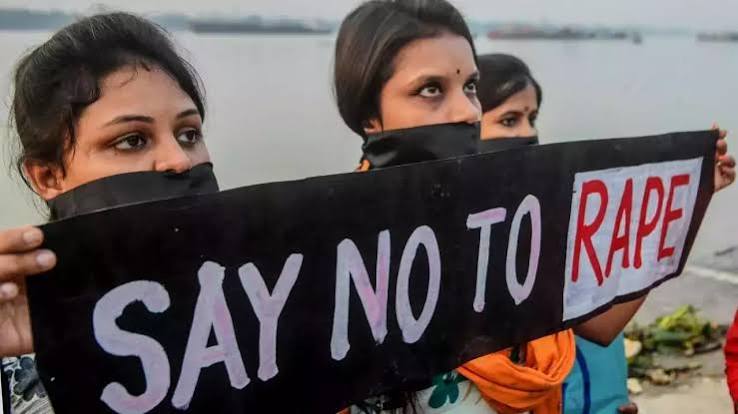
A Dalit girl has been accused of being raped at gunpoint in a village in the Mahoba city Kotwali area. The victim alleges that two young men entered her home and committed the crime at gunpoint. The accused are also accused of stealing ₹2 lakh (approximately $200,000) of wedding-related money and gold and silver jewelry. The victim, accompanied by Samajwadi Party leader Hari Singh Verma, reached the SP’s office to complain that an FIR had not been filed and a medical examination had not been conducted even four days after the incident. Woman alone at home, two young men entered According to the victim, the incident occurred around 1:30 pm on September 14th. Her parents and brother had gone to work. She was alone at home. It is alleged that two young men from the same village entered her house armed with a pistol. One of the men held a pistol to her temple and threatened to kill her. The other young man then raped her. The victim alleges that after the incident, the accused took away ₹2 lakh in cash and gold and silver jewelry purchased for the wedding. The wedding money was saved over 25 years. According to the family, they had saved ₹2 lakh through hard labor over 25 years. The woman and her brother were to be married in January, and the money and jewelry were kept safe for this purpose. The victim’s family alleges that when they went to the accused’s house to complain after the incident, they were subjected to casteist slurs and threatened with death. FIR and medical examination not completed even after four days The victim alleges that even four days after the incident, the police had not registered a case based on her complaint. She had not even been medically examined. Following this, she went to the Superintendent of Police’s office with SP leader and former Block Chief Hari Singh Verma and demanded action. Given the seriousness of the case, the Superintendent of Police has directed the City Superintendent of Police to investigate and take strict action within two days. The victim’s family is demanding strict action and the death penalty against the accused. Irfan Khan Pathan | Mahoba Courtesy: Hindi News
AAP’s Dalit Paradox: Ambedkar On The Wall, And A Minister Facing Grave Questions
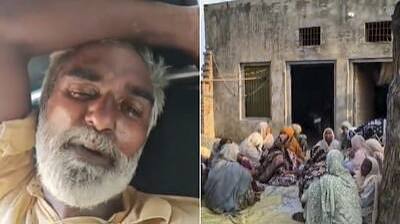
Gulzar Singh’s death has pointed to major loopholes in the state’s high-decibel campaign ‘Yudh Naheyan Virudh’ (War On Drugs). Chandigarh; Punjab is home to the largest proportion of Dalits in its population among all states, and some recent developments have put the politics concerning them on the boil, giving the Opposition ammunition to fire at the ruling Aam Aadmi Party (AAP). A party that displays Dalit icon and eminent jurist Bhim Rao Ambedkar’s portraits in its offices is now in the dock for a Dalit man’s death. And it’s linked to the drug crisis and rural distress, which have emerged as major issues on their own, six months ahead of the state polls. Gulzar Singh was a resident of Toor Banjara village that fell under the Dirba assembly constituency, from where Finance Minister Harpal Singh Cheema is the MLA. This area falls in Sangrur, the home district of Chief Minister Bhagwant Mann. Gulzar Singh’s death has raised questions over the state’s high-decibel campaign ‘Yudh Naheyan Virudh’ (War On Drugs). On September 6, 2026, Harpal Cheema, a Dalit himself, was present in Toor Banjara when Gulzar Singh confronted him publicly and asked why drugs were openly being sold in the village. Instead of supporting Gulzar Singh for providing information about drug smuggling in the village, the minister, staff, and locals allegedly moved him aside. Later that evening, Gulzar Singh was allegedly summoned and subjected to severe pressure, intimidation, and demands to issue an unconditional public apology for questioning the minister. Distressed, Gulzar Singh consumed a poisonous substance on September 8 and died. Before his death, he recorded a video statement (dying declaration) naming minister Cheema and local panchayat members regarding the intimidation he faced. The minister has denied any role, and a case has been registered against some local leaders. The death triggered massive statewide political outrage and demands for accountability. He’d said his son was a drug addict. He not only told the minister publicly that his village was stressed due to the availability of drugs but also said three young men had died due to addiction. Opposition parties had already dubbed the anti-drugs campaign as mere propaganda, and are now accusing the AAP of double standards regarding promises made to the Dalit community and protecting their rights. Police charged the sarpanch, her husband, and three others with abetment to suicide and under the SC/ST Act, but Harpal Cheema is not named in that FIR, despite the man having made a dying declaration in a viral video clearly naming him as the reason behind his death. The political fallout is larger than one FIR. The Congress, BJP and Shiromani Akali Dal have all called the FIR a “cover-up”. AAP calls it “vulture politics”. Another AAP minister, Laljit Singh Bhullar, had resigned from the cabinet on March 21, 2026, following allegations that he abetted the suicide of a state warehousing official. The Opposition wants action against Harpal Cheema along those lines. Opposition Attacks AAP Over “Promises Not Kept” Since Dalits form 32 per cent of the population, parties made a beeline to console Gulzar’s family. The AAP government did swing into action and announced compensation of Rs 5 lakh besides promising employment to a member of his family. But the Opposition wants Cheema’s resignation and action against him. “Sangrur is the district that elected the Chief Minister and the Finance Minister to the Assembly. The deceased, Gulzar Singh, complained in front of Harpal Cheema that ‘chitta’ (heroin) was being sold in his locality, that three children in his neighbourhood had already died of drug overdose, and that his own child was also taking drugs. Instead of investigating the accused and acting against the drug mafia, the Finance Minister sends his goons, pressure is put on the family, and Gulzar Singh is pushed to the point of suicide,” BJP leader and Rajya Sabha MP Tarun Chugh alleged. Congress’s Punjab affairs in-charge Sachin Pilot also put Cheema in the dock. “The point at which the state of Punjab stands today is a matter of concern for the entire country,” he said, “The Chief Minister of this government had said we will end the drug problem in three months. Today four and a half years have passed, and more drugs are being sold than before.” “Today a poor Dalit daily-wage earner, Gulzar Singh, took his own life. Which human being takes his own life except when hope is already finished? That man’s crime was that he spoke about his children’s drug problem. He committed the crime of asking a question, and under pressure, he was forced to take his own life,” he added. “We have no caste enmity with Harpal Singh Cheema, but he is the Finance Minister,” he further said. “A man is taking his life and making a video saying he is taking his life with his own hands because of that person. Does the law not even require that there should be an investigation?” he asked, reminding AAP of its poll promise to appoint a Dalit MLA as Punjab’s Deputy Chief Minister. Punjab Leader of Opposition Partap Singh Bajwa of the Congress said AAP chief Arvind Kejriwal is trying to “hide Harpal Cheema’s sins”, as the party had earlier dropped another cabinet minister, Laljit Singh Bhullar, who was also accused of abetment to suicide. “There cannot be two laws in this country. District manager (of Punjab State Warehousing Corporation) Gagandeep Singh Randhawa had also died by suicide. In his dying declaration, he named a cabinet minister, Laljit Singh Bhullar. The minister was arrested and has been in jail for seven months. Gulzar Singh clearly stated that Harpal Cheema was responsible for his death. Five people were arrested, but Harpal Cheema was not arrested,” he noted. “Harpal Cheema is Kejriwal’s adopted son. We will ensure his resignation. We will come onto the streets. From the Punjab and Haryana High Court, there will be his resignation, there will be his arrest, and he will also go to jail,” Partap Singh Bajwa said.
Literary window to Dalit life, ideology at book fair
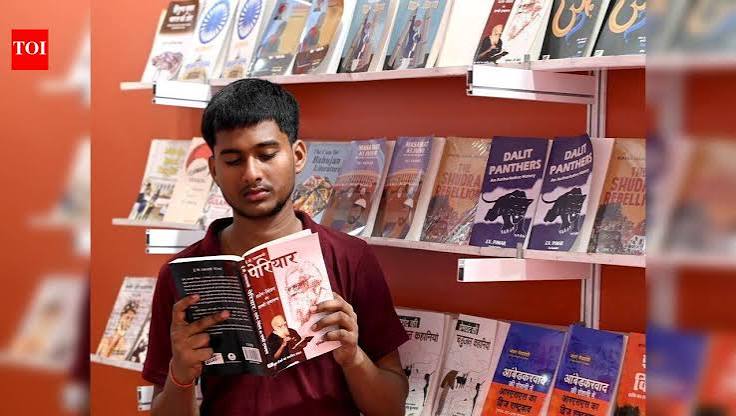
Lucknow: Where stories travel across languages, generations and social backgrounds, literature on caste and equality is drawing the attention of young readers. From autobiographies documenting discrimination, to work tracing the history of marginalised communities, Dalit literature has emerged as a significant section at the Gomti Book Festival. Books such as Omprakash Valmiki’s ‘Joothan’, Bama’s ‘Karukku’, and Sharankumar Limbale’s ‘The Outcaste’ are finding readers alongside work, including B R Ambedkar’s ‘Who Were the Shudras?’ and ‘The Untouchables’, as well as literature on the Dalit Panthers movement. The collection also features writings of social reformer Jyotirao Phule, including ‘Gulamgiri’ and ‘Shetkaryacha Asud’, along with works by authors and thinkers who have examined caste, identity, dignity, social justice and resistance. For many students, buying these books is an opportunity to understand experiences different from their own. “I wanted to read ‘Joothan’ because it gives a first-person account of caste discrimination and shows why equality cannot remain only an idea,” said Amitesh Pal, a student. Another student, Jahnvi Singh, said she bought ‘Who Were the Shudras?’ to understand the historical development of the caste system and its impact on people’s lives, adding that students should read such books to develop a better understanding of society. “Among the books on caste and social justice, ‘Annihilation of Caste’ is drawing strong interest from young readers, with around seven copies being sold each day. Students are increasingly picking up such books because they want to understand caste, equality and social reform through the writings of those who challenged existing social structures,” said a publisher at the festival, Kamla Kumar. Courtesy : TOI Note: This news is originally published on https:/timesofindia.com/bha and is used purely for non-profit/non-commercial purposes, especially human rights
Six police officers suspended in Firozabad after a pregnant Dalit woman died during police action
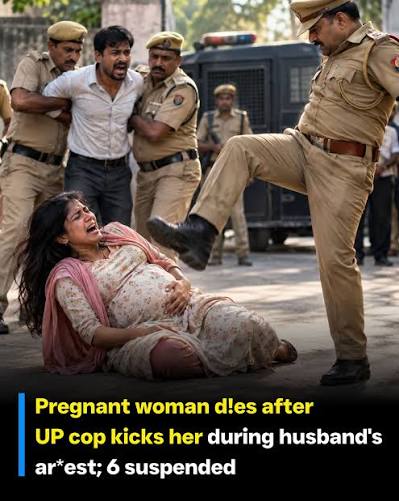
The death of a 28-year-old pregnant Dalit woman in Firozabad, Uttar Pradesh, has led to serious allegations against the police. The family alleges that during a scuffle with police who had arrived to take her husband for questioning in a theft case, the woman was pushed or kicked in the stomach, causing her health to deteriorate. Six police officers have been suspended in connection with the case. According to a report in Maktoob Media, the incident occurred in Labhaua village, under the jurisdiction of the Shikohabad police station. According to Gaurav Kumar, the husband of the deceased, Anjali Verma, a police team led by Sub-Inspector Dharampal Singh arrived at their home around 11:45 pm on Sunday night. The police had come to arrest Gaurav in connection with a theft at a local grocery store. According to the family, Anjali, who was approximately eight and a half months pregnant, resisted the arrest of her husband. The family alleges that during this time, the police officers pushed or kicked Anjali in the stomach, causing her to fall. The police then took Gaurav with them. Following the incident, Anjali’s condition deteriorated and she was taken to the government hospital in Shikohabad. On Monday morning, she gave birth to a son, but her condition worsened after delivery. She was taken to a private hospital in Firozabad, where doctors declared him dead. The newborn’s condition was also reported to be critical and he was referred to Agra for further treatment. Following the incident, protests erupted in the village, with villagers demanding action against the police officers. Based on a preliminary investigation, Firozabad Superintendent of Police Aditya Langhe suspended six police officers: Sub-Inspectors Dharampal Singh and Satyapal Singh, Head Constables Mohan Singh and Arvind Kumar, and Constables Bhavtosh Kumar and Kuldeep Kumar. The responsibility for conducting an impartial investigation into the matter has been assigned to Shikohabad’s Additional Superintendent of Police and IPS officer Jaibind Kumar Gupta. However, the police have denied the allegations of assaulting the woman. According to the official statement from Firozabad police, Gaurav was brought to the police station on the evening of September 13th for questioning in connection with case number 724/2026 and was released to his family the following morning after questioning. Police say Anjali was taken to the hospital by her family for delivery, where she died during delivery. Police also stated that the post-mortem revealed no external injury marks. Political leaders have also demanded action in the case. Samajwadi Party National General Secretary and Rajya Sabha MP Ramji Lal Suman, after meeting the victim’s family, staged a protest at the Shikohabad police station, demanding a murder case against the allegedly responsible policemen and a fair investigation. Azad Samaj Party chief and MP Chandrashekhar Azad also demanded an investigation into the case, legal action against those found guilty, and financial assistance to the family. Courtesy: Hindi News
UP: Allegations of discrimination against Dalit engineers in the power department, SC/ST Commission demands high-level investigation from CM Yogi

Following a complaint from the UP Power Officers Association, the SC/ST Commission has taken a firm stance, recommending an impartial investigation to the Chief Minister regarding the alleged double standards faced by Dalit engineers in the power department. Lucknow: The issue of alleged discrimination against Dalit engineers working in the Uttar Pradesh Power Department (DISCOM) is gaining momentum. Baijnath Rawat, Chairman of the Uttar Pradesh Scheduled Caste/Tribe (SC/ST) Commission, has written a letter to Chief Minister Yogi Adityanath on this serious issue, demanding a high-level and impartial investigation into the matter. In the letter, written on Wednesday, Rawat specifically mentioned a memorandum submitted by UP Power Officers Association President RP Kane and other officials. The association alleged that Dalit engineers have been facing persistent discrimination for several years and that service rules are being selectively enforced in certain cases. However, this letter from the Commission’s Chairman does not independently confirm these allegations. Nevertheless, the letter urges the Chief Minister to investigate the facts stated in the association’s memorandum and appeals for appropriate and strict action based on the findings of the investigation. Regarding this controversy, the UP Power Officers Association issued a statement stating that it has submitted detailed records of more than a dozen Dalit engineers working in various state power companies to the Commission. The organization claims that different criteria have been applied in the cases of these officers. To prove its serious allegations, the association has presented several documents to the Commission. Association President RP Kane, Acting President Awadhesh Kumar Verma, Vice President PM Prabhakar, and office bearers Harishchandra Verma and Mukesh Babu expressed hope that an investigation will soon be initiated to establish the true facts. The organization clarified that its primary objective is not to create any conflict with the government or the department, but to protect the rights of its engineers under constitutional and legal provisions. Rajan Chaudhary Courtesy: Hindi News