
Delhi Red Fort Blast: Rahul Gandhi, Mamata Banerjee, Arvind Kejriwal, and others have expressed their condolences on the Delhi blast.
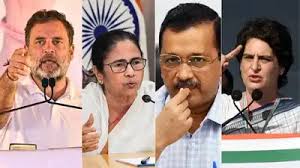
Leader of the Opposition Rahul Gandhi and West Bengal Chief Minister Mamata Banerjee, along with other national leaders, have expressed grief over the Red Fort blast in Delhi. Ten people are reported dead and several others injured. New Delhi: A massive explosion occurred in a car parked near the busy Red Fort Metro Station in Delhi on Monday evening. Reports claim that 10 people have died, while several others have been injured and admitted to LNJP Hospital. Police have issued a high alert in Delhi. Other major cities across the country are also on high alert, while the second phase of assembly elections in Bihar is scheduled for Tuesday. Home Minister Amit Shah is in contact with the Delhi Police and the Intelligence Bureau. He is also updating Prime Minister Narendra Modi on the situation. Meanwhile, leaders across the country have expressed their grief over this heartbreaking incident, including opposition leader Rahul Gandhi and West Bengal Chief Minister Mamata Banerjee. Priyanka Gandhi Vadra expressed grief, writing, “The news of the death and injury of many people in the Delhi blast is deeply saddening. May the departed souls rest in peace. My deepest condolences to the bereaved families. I wish the injured a speedy recovery.” West Bengal Chief Minister Mamata Banerjee wrote, “I am deeply shocked to hear about the tragic blast in New Delhi. My condolences are with the families who lost their loved ones, and I pray for strength and a speedy recovery for all the injured.” Leader of the Opposition in the Lok Sabha and Congress MP Rahul Gandhi wrote, “The news of the car explosion near Delhi’s Red Fort Metro station is deeply painful and worrying. The news of the death of many innocent people in this tragic accident is deeply saddening. I stand with the bereaved families who lost their loved ones in this hour of grief and offer my deepest condolences. I hope all the injured recover as soon as possible.” Former Delhi CM Arvind Kejriwal wrote, “The news of the blast near the Red Fort is deeply worrying.” It is being reported that some people have lost their lives in this incident, which is extremely sad. The police and government should immediately investigate how this blast occurred and whether there is a larger conspiracy behind it. Negligence regarding Delhi’s security cannot be tolerated. AAP leader Sanjay Singh wrote, “Only Pakistan could commit such a despicable act. Modi’s ceasefire has emboldened the Pakistani thugs. The terrorists who killed our innocent citizens should also be killed. The attack on the Red Fort is an attack on a symbol of our pride. The country is not safe under Modi. May God grant peace to the souls of the deceased.” Congress National President Mallikarjun Kharge wrote on Twitter, “Extremely saddened to hear the news of the car bomb explosion near Delhi’s Red Fort Metro Station. Initial reports indicate that many precious lives have been lost in this incident. Our condolences and prayers are with the bereaved families in this hour of grief, and we wish the injured a speedy recovery.” The government must ensure a prompt and thorough investigation into this explosion, which occurred in a highly secure and often crowded area, so that those responsible for this lapse and incident can be held accountable. Curated by: Nityanand Pathak About the Author Nityanand Pathak is a Senior Journalist (Assistant Editor) at Navbharat Times Digital. He previously served as Sports Editor at NBT (Digital) for the past seven years. Courtesy: Hindi News
Scripts of Power: Caste and the Missing Voice in Indian Newsrooms
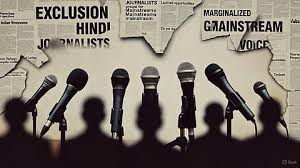
The Mirchpur violence of 2010 shows how this monopoly works. After a Dalit boy and his disabled father were burned alive by upper-caste attackers in Haryana, most channels described it as a clash. India loves to call itself a democracy of a billion voices. But when it comes to who controls the microphone, the story is very different. According to Oxfam–Newslaundry Report 2022, nearly 90% of key editorial and executive positions across major English and Hindi media outlets are held by upper-caste individuals, highlighting deep structural inequality. This isn’t just imbalance; it’s exclusion disguised as merit. The media doesn’t merely reflect society, it manufactures it. Newsrooms decide what counts as violence, whose pain is exceptional, and whose is routine. When upper-caste men commit crimes, headlines describe them as Bahubali, Chhote Sarkar, or local strongmen. But when a Dalit or someone from a marginalized community is involved in crime, the same channels label it as hooliganism, ‘lawlessness’, or ‘chaos’. The meaning of the same event changes depending on who is involved. This does not in any way imply that anyone has a license to commit crimes, or that violence of any kind is acceptable. What it highlights is the narrative-building itself, exposing the media’s clear double standard. In his essay “Who Speaks for Whom?”, Avichal Warke captures this crisis perfectly. He writes that the problem isn’t only who is represented in the media but who gets to define representation itself. Dalits appear in news, but almost never in the newsroom. They are rarely allowed to report. While much of media coverage falls into this pattern, there are occasional outlets and journalists attempting to challenge this monopoly. Yet, these remain exceptions rather than the rule. The Mirchpur violence of 2010 shows how this monopoly works. After a Dalit boy and his disabled father were burned alive by upper-caste attackers in Haryana, most channels described it as a clash. No major prime-time debates, no major editorial campaigns and sustained coverage. The story vanished after a few days. What should have been a national reckoning became just another “incident.” This is what Stuart Hall meant when he said media doesn’t reflect reality, it constructs it. This silence is not neutral; it is political. Indian media, like Indian society, runs on what Antonio Gramsci called Hegemony (the ability to make inequality appear normal and natural). When every anchor, editor, and owner comes from the same social background, caste power becomes common sense. The public stops noticing that the truth is being told from one side only. Behind this cultural bias lies a harder fact: money. Indian media – whether English, Hindi, or regional, relies primarily on advertising rather than subscriptions. The people and corporations who pay for ads are largely from the same privileged castes that dominate newsrooms. A channel that questions caste hierarchy also risks questioning its sponsors. So the bias is not just ideological; it is financially built in. What looks like professionalism often hides the economics of caste comfort. Even entry into journalism follows this logic. As Pierre Bourdieu would say, those with symbolic capital (status, credentials, and influential networks), naturally occupy positions of legitimacy. They do not need to be openly casteist; their world already excludes those who do not fit. Many Dalits who enter journalism are confined to “caste stories,” while politics and economy remain safely in upper-caste hands. The Oxfam–Newslaundry report makes this visible in numbers. Analysis of hundreds of prime-time debates found that over 85% of panellists came from upper-caste backgrounds, while Dalits and Adivasis were rarely represented. This absence produces what Warke calls “a silence that sounds like balance.” It teaches viewers that upper-caste perspectives are objective and Dalit perspectives are emotional, that neutrality belongs to the powerful. After the Black Lives Matter protests in the United States, major newspapers admitted their racial bias. The Washington Post and The New York Times published diversity reports and appointed Black editors. It wasn’t charity; it was accountability. Society forced its media to confront its reflection. In India, there has been no such reckoning. Speaking about caste bias in newsrooms can still end a career. The result is a democracy that talks endlessly, but listens selectively. The latest World Press Freedom Index shows India ranked 151st out of 180 countries in 2025, a slight improvement from 159th in 2024, but still in the “very serious” category for press freedom. While government pressure on the media is real, the deeper rot lies within: a press that has historically never represented marginalized communities cannot suddenly defend them when power turns hostile. Persistent structural issues, such as concentrated media ownership, economic dependence on the state, and threats to journalists ensure that India’s media environment remains fragile and unresponsive to those most in need of a voice. A democracy’s health is not measured by how loudly it speaks, but by who it allows to speak. Today, Indian media remains a closed echo chamber, powerful and self-assured. To break this cycle, newsrooms need more inclusive representation, and audiences must critically engage with the narratives presented. — ✍️ Mohit Nirmender – The author is an Independent Researcher / Blogger Courtesy : The Mooknayak Note: This news is originally published on https:/themooknayak.com/bha and is used purely for non-profit/non-commercial purposes, especially human rights
Asothar police accused of assaulting a Dalit family: Woman suffers head injury, station in-charge calls allegations baseless

Police in Fatehpur’s Asothar police station area have been accused of assaulting women and girls from a Dalit family. The incident came to light after a video went viral on social media, allegedly showing two girls and two women being assaulted by policemen inside the police station premises. It is alleged that 10 to 12 policemen kicked, punched, and beat a young woman with belts, both inside and outside the police station, resulting in serious head injuries. The medical report also documented the injuries.Family members of the victim, Deepika, stated that the incident stemmed from a dispute over the payment for a pig. Deepika’s elder mother had sold a pig to a trader, and an argument ensued over the payment. The businessman filed a complaint at the Asothar police station, following which a police team arrived at Kauder village and summoned the family. The family alleges that upon arriving at the police station, the policemen misbehaved with the women and their daughters and then began beating them inside.According to the victim, Deepika, after the beating, the police issued a challan under Section 151. Despite suffering a serious head injury, she was not given a medical examination. The family reported that Deepika’s health is continuously deteriorating and she is vomiting. The woman’s wedding is scheduled for November 22nd, which is worrying the family.Asothar police station in-charge Abhilash Tiwari presented his side of the story. He stated that people who had come to buy pigs were assaulted and injured. A case has been registered in this regard, and some of the accused have been detained and presented in court, while one is still absconding. The station in-charge alleged that false videos and photographs are being circulated against the police to protect the absconding accused. He clarified that the police did not assault anyone and all the allegations are baseless.Amar Kesharwani Courtesy : Hindi News
Bihar Elections: If 18% of Dalits support… you’ll win the crown. Find out who’s in the mood?

Bihar Politics: Campaigning for the second and final phase of the Bihar Assembly elections has concluded. All eyes are now on Dalit and Muslim voters, who are considered to hold the key to power. Bihar Assembly Elections: Campaigning for the second and final phase of the Bihar Assembly elections has concluded. All eyes are now on Dalit and Muslim voters. According to analysis, the key to the mandate lies in the hands of 18% Dalit voters, who have the power to swing the outcome in nearly 100 seats. This phase also holds clues to the future political future of the Muslim community, which has a significant presence in three dozen seats, including Seemanchal. The situation this time is slightly different from the previous election. VIP, which supported the NDA last time, is now with the Grand Alliance, while Chirag, who contested the elections on his own, is working to strengthen the NDA this time. Why is PK trying his best? Beyond the opposition Grand Alliance, the Jan Suraj Party, following the AIMIM, is also striving to establish itself as the leader of Muslims. In a close contest, the NDA narrowly reached the magic majority mark by winning 17 more seats than the Grand Alliance. A 1.6% Vote Shift In the last election, the NDA received 1.6% more votes than the Grand Alliance. This lead helped it win 66 seats compared to the Grand Alliance’s 49. The NDA secured a significant lead in Anga Pradesh, Tirhut, and Mithila, while the RJD secured a significant lead in the Magadh region. In Seemanchal, the close contest and the presence of the AIMIM gave the NDA a slight advantage. The Dalit community is the most important constituency in this phase. Of the Dalit community, which constitutes 18% of the total vote share, 13% are Mahadalits (of which 2.5% are Musahars) and 5% are Paswan (Dusadh). There are approximately 100 seats where the voter population of this community is between 30,000 and 40,000 per seat. Chirag came and Sahni left. JDU directly lost 22 seats due to Chirag contesting the elections on his own. The BJP and political pundits believe that the alliance between Chirag and Jitan Ram Manjhi will consolidate 7.5% of the Paswan and Musahar community votes in favor of the NDA. Muslims are hoping for new leadership. For decades, RJD’s powerful leaders were the face of Muslim politics in Seemanchal. Now, there is a clear anxiety among Muslims about new leadership. The AIMIM, which won five Muslim-dominated seats in Seemanchal in the last election, has linked the Mahagathbandhan’s failure to field a deputy CM candidate to an insult to the community. Furthermore, the newly formed Jan Suraj Party, which is contesting this election, is also striving to establish itself as a leader of Muslims. The AIMIM has fielded Muslim candidates in all Muslim-dominated seats. The Jan Suraj Party has also fielded candidates from the same community in Muslim-majority seats. By Abhishek Singh Courtesy: Hindi News
“My feminism begins in the fields, barns, and settlements…!” With the victory of Dalit girl Komal Devi in JNUSU, BAPSA makes a resounding comeback after 11 years; the Bahujan community rejoices.
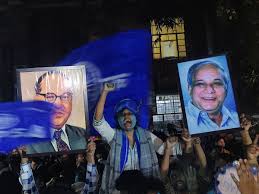
Ambedkarite thinkers are hailing Komal’s victory as a triumph of marginalized women worldwide and a triumph of indomitable courage against Brahminical patriarchy. New Delhi – Komal Devi of the Birsa Ambedkar Phule Students’ Association (BAPSA) has won a landslide victory for the post of councilor from the School of Social Sciences (SSS) in the Jawaharlal Nehru University Students’ Union (JNUSU) elections 2025. This victory marks a milestone for the Bahujan community, marking the return of BAPSA to the SSS after an 11-year struggle. Komal Devi’s election slogan, “My feminism begins in the fields, barns, and settlements…,” ignited a fire in the hearts of Dalit-Bahujan students, and her victory filled the campus with celebrations. Dalit student Komal Devi, a postgraduate student at SSS, embraced Dr. B.R. Ambedkar’s principle of “Educate! Agitate! Organize!” in her campaign. This passionate statement in a video message—”My feminism begins from the fields, barns, and ghettos…”—brought the voice of women from rural India to the corridors of JNU. Her outspoken opposition to “Hindutva fascism” and “upper caste leftist hypocrisy” sparked a wave of enthusiasm among Bahujan students. Following the announcement of the election results, #KomalDevi and #BAPSAVictory began trending on social media, with Bahujan activists hailing her victory with chants of “Jai Bhim” and “Hul Johar.” The Bahujan Community’s Excitement: A Comeback After 11 Years The School of Social Sciences (SSS) is JNU’s largest school, with over 2,000 students, and Komal’s victory signals the restoration of Bahujan representation. The organization’s official statement said, “This victory is a step towards reclaiming our spaces, our voices, and our dignity. We reject absorption, we reject tokenism—this is the politics of self-respect and autonomy.” The Bahujan community is celebrating this victory like a festival, with hundreds of posts on Twitter (formerly Twitter) hailing it as a “Bahujan awakening.” Allied groups like the Neelam Cultural Center have offered their congratulations. Political analyst and assistant professor at Jadavpur University, Subhajit Naskar, celebrated her victory in a social media post, writing: “Komal, a Dalit girl from the extremely marginalized Valmiki community of Haryana, has become a councilor at the School of Social Sciences. Her victory is a victory for marginalized women worldwide and a testament to the indomitable courage of those facing Brahminical patriarchy.” BAPSA won a total of one seat in this election, from the SSS councilor. The Left Unity (SFI, AISA, AISF) made a clean sweep in the central panel, including the posts of president, vice-president, general secretary, and joint secretary. The ABVP did not win any seats, a setback after last year’s single victory. BAPSA contested the elections independently, and Komal’s victory reinforced the organization’s legacy of Ambedkar, Phule, and Birsa Munda. Komal Devi’s campaign emphasized caste-based discrimination, gender equality, and equitable distribution of resources. Outperforming her rival, Rahul Motghare, she conveyed a message of Bahujan unity. As a councilor, she will strengthen the Bahujan perspective in council debates. Media reports have called her victory the “end of an 11-year drought.” Amidst the post-election excitement on the JNU campus, Komal’s win opens the possibility of new alliances for progressive reforms. BAPSA celebrated in its post, saying, “We have our own tunes and rhythms that celebrate our struggles and victories.” Geetha Sunil Pillai Courtesy: Hindi News
A Dalit PhD scholar at Kerala University makes a heartbreaking post: “I can hear the cries of my brother Rohith Vemula… Life is slipping away again!”
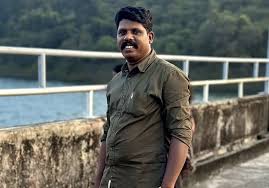
Thiruvananthapuram—A new case of casteism has surfaced in the Sanskrit Department of Kerala University. Dalit PhD scholar Vipin Vijayan has made serious allegations of caste discrimination, abuse of power, and withholding his PhD degree from the department’s Dean, Dr. C.N. Vijayakumari. Vipin claims that Dr. Vijayakumari, who is said to be associated with the RSS-BJP, deliberately disrupted his academic journey. This case has shaken the entire state and brought back memories of the Rohith Vemula case. According to a Facebook post by Vipin, he holds a B.A. and M.A. in Sanskrit from Sri Sankaracharya University, a B.Ed. and M.Ed. from Kerala University. He completed his M.Phil. in Sanskrit from the Kariavattom campus, guided by the head of the Sanskrit department, Dr. Vijayakumari. But now the same Dean is blocking his PhD, calling him “unintelligible to Sanskrit.” Citing the Dean’s alleged casteist statement, Vipin stated, “No matter how much the Pulayanas or Parayans (considered lower castes in Kerala) bow down, Sanskrit will never bow down to them like the Brahmins.” Vipin says that his dissertation, “Epistemological Review of Kenopanishad,” was praised by the examiners and recommended for a PhD. However, the Dean wrote a letter to the university claiming that Vipin doesn’t know Sanskrit, even though university rules permit research in English or Malayalam. Vipin claims that he is left-leaning and the Dean is an active member of the Sangh Parivar teachers’ organization, making her stance casteist. Vipin says, “My political ideology is being questioned, but why the silence on her ideology?” Vipin says he completed his M.Phil. in Sanskrit, guided by Dr. Vijayakumari. From Vipin Vijayan’s Facebook post The researcher alleges in his Facebook post that the university’s dean, Dr. C.N. Vijayakumari, filed a false report against him, alleging that he cannot read or write Sanskrit. According to the researcher, this allegation is completely baseless and false. Read the PhD scholar’s poignant post: “I can still hear the cries of my own brother, Rohith Vemula. I can hear the horrific mockery of casteism. I can’t sleep, and life is slipping away again. The epithet “not knowing Sanskrit” has been forever imprinted on me like a never-fading stain. There’s not a shred of truth in this propaganda, but it has left a never-healing wound in my life.” Will my words, moments from my life, ever be published on any channel or newspaper? I don’t know. I received my M.Phil. in Sanskrit from the Sanskrit Department of the University of Kerala. I am pursuing research on the basis of my M.Phil. qualification. My M.Phil. dissertation is titled “An Epistemological Critique of the Kenopanishad,” and it was guided by Dr. C.N. Vijayakumari Teacher! Yes, the same Dean who stated in her report to the university that I cannot read or write Sanskrit. What qualifications does Dr. C.N. Vijayakumari Teacher, who helped me in awarding an unqualified M.Phil. degree to someone who doesn’t know how to read or write Sanskrit, have to continue as a lecturer? Did my M.Phil. dissertation reviewer, Dr. Vijayakumari Teacher, deceive the university? Is Dr. C.N. Vijayakumari Teacher a fraud for aiding me in this fraud? Or have I forgotten Sanskrit after receiving my M.Phil.? How did I suddenly become someone who cannot read or write Sanskrit? The essence of that transformation is casteism! How did I, who didn’t even submit a nomination in the Research Students’ Association elections, become featured in the news as the General Secretary of the Research Students’ Association, an important position? I have a political bias, and Dr. Vijayakumari Teacher also has a clear political bias. I am left-wing. Teacher follows RSS-BJP politics and is an active worker in the Sangh Parivar Teachers’ Association at Kerala University. How did my political bias become a topic of discussion? Didn’t the Dean of the Sangh Parivar Teachers’ Association’s report against the SFI leader become news? Why is Dr. C.N. Vijayakumari Teacher’s political bias not being exposed? How did I become a criminal, and Dr. C.N. Vijayakumari Teacher a holy angel? I don’t know whether the media will think so. Do facts have no value in news? By ignoring the dissertation examiners and open defense chairman selected by the Vice Chancellor, the Dean, who is trying to establish non-existent power, is distrusting and challenging the Vice Chancellor’s decisions. The examiners and chairman have recommended the award of a PhD for my dissertation. C.N., who thinks and acts inappropriately for the noble academic position of Dean, Vijayakumari Teacher should not remain in that position even for a moment. Otherwise, the relevant authorities should remove the Dean. This university with its great tradition should not be disgraced; the Dean should not continue. The reason is that no other student should suffer from such abuse of power. My PhD dissertation was prepared in English, as university rules permit it. Sanskrit is not mandatory in the open defense; English and Malayalam are acceptable. If you check the Sanskrit Department library, you will find numerous theses and M.Phil theses prepared in English. Some wicked people from Thiruvananthapuram, who roam around with their faces covered in the name of protecting the university, came running to attack me like frightened dogs. Who entrusted them with the responsibility of assessing my abilities? Several media personnel called me when the news broke. Appearing before the media is impossible; I fear even venturing out. My entire life is being cut and bleeding because of a letter from the Dean. My PhD is my life. It’s as if all the academic achievements and abilities I’ve accumulated over the years have been destroyed in a single day. Does truth have no value? Otherwise, I wouldn’t exist either. Darkness is filling my life… FIR filed under SC/ST Act Following a complaint by Vipin Vijayan, the Srikarayam police have registered a case of caste-based insult against Dr. C.N. Vijayakumari, Dean of the Faculty of Oriental Studies and Head of the Sanskrit Department at the Kariavattom campus. According to the FIR filed late Saturday night, Vijayakumari refused to sign Vipin’s thesis after
Mirzapur: Woman arrested for allegedly pressuring Dalit laborer to convert to Christianity with the promise of money.
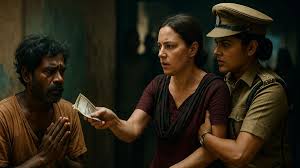
Rajgarh police took action following a complaint from a Dalit laborer. She was pressuring him to convert to Christianity by promising him money and other benefits. Mirzapur: District police arrested a 32-year-old woman on Saturday for allegedly attempting to forcibly convert. The arrest came following a complaint filed by a Dalit laborer alleging that the woman was repeatedly persuading him to convert to Christianity by luring him with money and other benefits. Police said the accused woman has been identified as Pramila. A case has been registered against her at the Rajgarh police station under relevant sections of the Uttar Pradesh Prohibition of Unlawful Conversion of Religion Act. Rajgarh Police Station Station House Officer (SHO) Daya Shankar, providing details of the case, said, “The accused, Pramila, was arrested on Saturday and later produced before a local court in Mirzapur, where she was remanded to judicial custody.” According to police, complainant Dhruv Chandra stated in his complaint that the accused woman had been meeting him repeatedly for the past few months and pressuring him to convert to Islam. Investigation revealed that the complainant lives in the Rampur-38 area, while the accused woman is a resident of Chandanpur village, about 7 kilometers away. Police sources also claim that Pramila’s husband had strongly objected to these activities, leading to frequent conflicts within the family. Rajan Chaudhary Courtesy: Hindi News
‘You Have No Right to Drink With Me’: Dalit Man Stabbed and Beaten With Stone by Friend in MP’s Gwalior

A disturbing case of caste-based violence has been reported from Gwalior, Madhya Pradesh, where a drunken argument between two friends turned into a assault. According to the police, Balveer Valmiki and Vijay Sharma, both residents of Mahavir Colony, were friends. On Sunday afternoon, Vijay allegedly invited Balveer to drink near Badanpura on Tighra Road. The two consumed alcohol together, but as evening fell, an argument erupted between them. Vijay reportedly began hurling casteist slurs, saying, “You belong to a lower caste; you have no right to drink with me.” When Balveer protested, Vijay’s anger escalated he allegedly pulled out a knife and stabbed Balveer in the neck. When the victim collapsed, bleeding heavily, Vijay picked up a large stone and struck him on the head before fleeing the spot. Balveer remained unconscious throughout the night until passersby discovered him the next morning and alerted the police. He was rushed to a nearby hospital, where doctors said his condition is now stable but that he sustained deep wounds to his neck and skull. Based on Balveer’s statement, police registered a case and launched a search operation. Acting on the directions of Station Officer Ratnambar Shukla, a team arrested the accused Vijay Sharma near his home. This is not an isolated incident. In October, a Dalit driver from Gwalior had alleged that three men kidnapped, assaulted, and forced him to drink urine in Bhind district. Just days earlier, another Dalit youth was reportedly urinated on in Katni for protesting against illegal mining. According to the National Crime Records Bureau (NCRB) 2023 data, crimes against Scheduled Castes continue to rise nationwide, with 57,789 cases registered last year, marking an increase from 2022. Madhya Pradesh recorded 8,232 such cases, placing it among the top three states for caste-related crimes, after Uttar Pradesh and Rajasthan. Courtesy : TOP Note: This news is originally published on https:/theobserverpost.com/bha and is used purely for non-profit/non-commercial purposes, especially human rights
UPSC Gender Gap: Women See Gradual Progress, Transgender Inclusion Remains Almost Nonexistent

Despite forming nearly half of India’s population, women and transgender individuals continue to be vastly underrepresented in the country’s most prestigious recruitment process — the UPSC Civil Services Examination. Data from the Union Public Service Commission’s (UPSC) Annual Reports between 2010 and 2021 paints a telling picture: while women’s participation has slowly increased, transgender representation remains almost invisible. Women’s Representation: A Slow but Steady Climb According to the UPSC’s 2021 Annual Report, women constituted 32.98% of candidates appearing for the Preliminary Examination. However, only 14.75% progressed to the Mains, 26.87% reached the Interview stage, and ultimately, a mere 15.66% — or 201 women — made it to the final list of selected candidates. Although modest, the upward trend is clear: women’s participation rose from 23% in 2010 to nearly 33% in 2021, signaling a slow but steady shift toward gender inclusion in India’s civil services. Transgender Participation: Progress Still Out of Sight In contrast, the transgender community remains almost absent from the UPSC landscape. Following a 2016 court directive, the Commission added a “third gender” option in its application forms — a milestone for inclusivity. However, the impact has been minimal. In 2021, only 19 transgender candidates applied, with just four appearing for the exam — none qualified. Similarly, 2020 saw 16 applicants and five appearances, while 2018 and 2019 recorded just one application each. Experts attribute this near-zero participation to systemic barriers — widespread stigma, identity-based exclusion, and a lack of institutional support prevent many transgender students from even reaching higher education, let alone competing in national-level exams. Professor Rajeev from Delhi University explained that while initiatives like his department’s Transgender Resource Center offer training and counseling, broader social awareness and inclusive educational policies are urgently required to bridge the gap. Societal Pressures Continue to Constrain Women Aspirants For countless women, preparing for the UPSC remains a struggle against entrenched cultural expectations. Anshika Moyal from Rajasthan recalled how her decision to move to Delhi for exam preparation invited constant reminders from relatives to get married. “There’s still a belief that girls should be married by their late twenties. That constant pressure makes it hard to stay focused,” she said. Similarly, Aayushi from Uttarakhand, a government employee, shared that she faced ridicule from family elders for continuing her studies instead of marrying. “My grandmother used to say I was wasting time, but my mother stood by me and encouraged me to keep going,” she added. IAS officer Ira Singhal noted that many families see the UPSC as a “risky pursuit” for women, preferring the perceived stability of marriage over the uncertainty of years-long preparation. Economic and Structural Challenges Deepen the Divide Beyond social barriers, financial constraints often determine who can afford to chase their civil services dream. UPSC preparation typically demands hefty expenses — coaching fees, accommodation, and study materials add up quickly. Aayushi shared that while her parents funded her education, they couldn’t afford to send her to Delhi for coaching, forcing her to rely on self-study. Such financial disparities highlight how families often invest more readily in sons’ education, while daughters’ ambitions are seen as secondary. The Balancing Act: Marriage, Family, and Ambition For married women and mothers, the challenge intensifies. Anshika noted that several of her married friends preparing for UPSC can barely dedicate three to four hours a day to study after managing household and childcare responsibilities. These stories underline the dual burden of domestic expectations and academic competition that women face, often making their journey longer and harder. The Road Ahead: Building a Gender-Just Bureaucracy The trends suggest that while women are gradually carving a space in India’s administrative services, transgender representation is still at a nascent — almost invisible — stage. Experts argue that meaningful reform will require inclusive educational policies, gender-sensitive coaching programs, targeted scholarships, and affirmative institutional support. As India strives toward a modern, equitable civil service, the challenge is clear: to build a system where merit prevails over gender, ensuring that every talented individual — regardless of identity — can aspire to serve the nation through its most respected bureaucratic institutions. Parijat Tripathi Courtesy : North Block South Block Note: This news is originally published on https:/northblocksouthblock.com/bha and is used purely for non-profit/non-commercial purposes, especially human rights
Unpacking transgender rights
Scholarship on queer and non-binary identities emerged relatively later, with Judith Butler’s work on gender performativity standing out as especially influential. “Can you provide a definition for the word ‘woman’?” When Republican Senator Marsha Blackburn asked the then–DC Circuit Court Judge Ketanji Brown Jackson this question at her confirmation hearing for a seat on the United States Supreme Court in 2022, Jackson replied (with some hesitation), “I am not a biologist.” This should come as no surprise, for this very question has long preoccupied scholars, lawyers, writers, philosophers, activists, and lawmakers alike. Early thinkers like Aristotle and Plato viewed women as inherently inferior to men, relying on naturalist assumptions about their supposed incapacity for reason or leadership. Simone de Beauvoir challenged these assumptions in her magnum opus, The Second Sex, arguing that distinctions between the sexes were socially—rather than naturally—constructed. Yet like many early feminist theorists, she conceptualised gender within a limited binary framework. Gender not fixed or innate Scholarship on queer and non-binary identities emerged relatively later, with Judith Butler’s work on gender performativity standing out as especially influential. In the book, ‘Gender Trouble’, Butler demonstrated that gender was neither innate nor fixed, but rather something enacted—a series of repeated performances shaped by social norms and expectations. And yet, naturalist conceptions about gender persist in contemporary political thought. In April 2025, the UK Supreme Court issued a landmark ruling that held that the term “woman” in the Equality Act 2010 did not include transgender women. This ruling followed Donald Trump’s second presidential victory, during which attacks on the transgender community became both frequent and central to the Republican Party’s platform. In January 2025, just hours into his first day back in office, President Trump signed an executive order declaring it official US policy to recognise “only two sexes, male and female,” further asserting that these sexes were fixed, immutable, and “grounded in fundamental and incontrovertible reality.” What do these developments tell us? They show that in many parts of the West, transgender people continue to be excluded—either by omission or active resistance—from legal and policy frameworks meant to otherwise include them. Even in Canada and the EU, backlash is growing: public opinion on transgender rights is divided in Canada too, while far-right movements in the EU continue to frame gender diversity as a threat to national identity. What we’re witnessing, therefore, is not hesitation, but a deliberate global rollback of hard-won LGBTQ+ rights. India’s principled stance In this broader context of shrinking protections and rising hostility, India’s jurisprudence on transgender rights stands out as surprisingly principled. In 2014, the Supreme Court of India formally recognised the “third gender” as a distinct legal category and unequivocally affirmed transgender individuals’ right to selfidentify their gender, along with their entitlement to full constitutional rights. More recently, in Viswanathan Krishna Murthy v State of Andhra Pradesh, the Andhra Pradesh High Court held that transgender women in heterosexual marriages could be legally recognised as “women” for the purposes of invoking protections under laws that traditionally apply only to cisgender women; a position that stands in stark contrast to the view taken by the UK Supreme Court months earlier. Interestingly, the Andhra Pradesh High Court arrived at this conclusion by relying on the Supreme Court of India’s 2023 marriage equality ruling, which denied same-sex couples the right to marry yet affirmed transgender individuals’ right to enter heterosexual marriages. Holding that denying a transgender woman legal status as a “woman” under Section 498-A of the IPC based on her reproductive capacity is discriminatory, the Court said: “Such a contention, therefore, deserves to be rejected at the outset.” To be clear, transgender people in India continue to face challenges with the law. For instance, the Transgender Persons (Protection of Rights) Act, 2019, India’s primary legislation governing transgender rights at the national level, still subjects transgender individuals to a burdensome bureaucratic certification process in direct violation of the Supreme Court of India’s 2014 ruling, which affirmed transgender people’s right to self-identify their own gender. Petitions challenging these and other provisions have yet to be heard by the Supreme Court. Despite that, in a global political climate where transgender rights are being rolled back at a disheartening pace, it is encouraging to see judgments like Viswanathan Krishna Murthy affirm transgender people’s dignity and right to equality. As the law tightens its noose around transgender lives, one can only hope that lawmakers and judges listen with greater intent and empathy to the plurality of gendered experiences. As Simone de Beauvoir once wrote, “I am a woman; on this truth must be based all further discussion” — may we take this as an opening to defend our freedom to define ourselves beyond imposed categories. (The author is a communications manager at Nyaaya, the Vidhi Centre for Legal Policy and can be reached at sahgalkanav@gmail.com) Kanav Narayan Sahgal. Courtesy : DH Note: This news is originally published on https:/deccanherald.com/bha and is used purely for non-profit/non-commercial purposes, especially human rights