
‘Why would Gen-Z listen to him?’: Prashant Kishor questions Rahul’s influence; plays down his impact

NEW DELHI: Jan Suraaj chief Prashant Kishor on Sunday dismissed the “notion” that Congress leader Rahul Gandhi holds any meaningful sway over Gen Z voters in Bihar. He further criticised Gandhi’s limited engagement and understanding of the state. In an exclusive interview with news agency ANI, Kishor said, “How much knowledge does Rahul Gandhi have here? Rahul Gandhi comes here, roams around, does a couple of show bites and then he is gone.” He questioned the idea that Bihar’s youth would rally behind Gandhi’s calls on issues like “vote theft” or protecting democracy. “When the people of Bihar are not listening to him (Rahul Gandhi), then why would Gen Z listen to him? Gen Z is not a homogeneous group in Bihar who acts on someone’s call or on the basis of their assessment,” he said. — ANI (@ANI) Referring to recent protests in Nepal that led to the fall of the former PM KP Sharma Oli’s government, Kishor said some people were “getting excited” after the Gen Z movement there but stressed that Bihar’s political landscape is different. “Bihar is a very political place. It is not like Bangalore. People won’t have clothes, food, jobs, but there is a lot of political optimism among the people here. And the result of this is that people are leaving their work and doing politics day and night. But I don’t think there is going to be a revolution by someone’s call here,” he said. Kishor underlined that youth play an important role in Bihar’s politics, primarily because of unemployment and migration. “The youth between 20 and 30 years, who are facing a bit of unemployment. Not a bit, I mean he is facing a lot of difficulties due to unemployment. They are forced to go out, enduring the tough life there. That is definitely a big factor in Bihar. You can call him Gen Z, you can call him a youth, you can call him a millennial. This is the terminology,” he said. Commenting on the Congress party’s role in the upcoming elections, Jan Suraaj founder said it remains marginal. “I had also said at that time that Congress is a follower of RJD in Bihar. They are a big party of the country. They are the leaders of the opposition in the country. They belong to the Gandhi family. So it is natural that the media will cover them,” he said. “But from the point of view of Bihar, there is no presence of Congress. Congress is not a factor. There is no discussion of Congress. What is Congress doing? Congress has little effect. Politically, you can see it in Seemanchal. In Seemanchal, I think that even today, the Muslims are more tilted towards Congress than RJD,” he added. Hours before the first phase of polling, Gandhi had appealed to young voters, particularly Gen Z to come forward and “save democracy through truth and non-violence.” In a video message posted on X, Congress leader addressed “Gen Z brothers and sisters” from Bihar, urging them to turn out in large numbers and vote responsibly. “My young friends from Bihar, my Gen-Z brothers and sisters — tomorrow is not just a day for voting, but a day to decide the direction of Bihar’s future,” he said. — RahulGandhi (@RahulGandhi) Referring to his repeated “vote theft” allegations, Gandhi added, “You’ve seen how in Haryana, a nefarious game of vote theft was played. In Maharashtra, Madhya Pradesh, Chhattisgarh — everywhere, these people have tried to suppress the people’s voice. Now their eyes are on Bihar, on your votes, on your future.” He urged voters to “stay vigilant against every conspiracy” and to “walk the path of truth and non-violence” while supporting Mahagathbandhan candidates in their constituencies. The first phase of the Bihar assembly elections concluded peacefully on Thursday with a record voter turnout, while the remaining 122 constituencies will vote in the second phase on November 11. Counting will take place on November 14. Courtesy : TOI Note: This news is originally published on https:/timesofindia.com/bha and is used purely for non-profit/non-commercial purposes, especially human rights
Modi, Shah will be caught for being ‘involved’ in ‘vote chori’: Rahul

Patna: Leader of opposition in Lok Sabha, Rahul Gandhi, on Sunday alleged that the people in the country were being taken for a ride since the govt was not being formed in a fair manner, but through ‘vote chori’. He said PM Narendra Modi and Union home minister Amit Shah would eventually be caught for being “involved” in the “vote chori”. He said if voters managed to prevent vote theft at the polling booths, the opposition alliance would form the next govt in Bihar. Addressing election rallies in Kishanganj and Purnia on the last day of the poll campaign for the second and last phase of polling, Rahul alleged Modi and Shah never won elections in a fair manner, rather by “fraudulent means”, adding they would eventually be caught. “Modi and Shah chunao nahin jitate hain, vote chori karke chunao jitate hain (Modi and Shah don’t win elections, they emerge victorious by stealing votes),” Rahul said, accusing the chief election commissioner (CEC) of being a part of the conspiracy. “I have proof of vote theft and they will be caught in the end,” he said. He alleged the BJP won elections by fraudulent means in several states such as Maharashtra and Haryana, and it is now planning to “steal votes” in Bihar too. Asking the voters to remain alert at the polling booths, he said the formation of the INDIA bloc govt in Bihar is certain if they prevent vote theft. “I can say with certainty that the ‘Mahagathbandhan’ (INDIA bloc) is going to form the next govt. There is a cent per cent chance. But, you must prevent the BJP from vote theft. Be on the guard at the polling stations on the day when votes will be cast (Nov 11),” Rahul said, adding it is now the duty of every youngster, worker, and farmer to thwart vote theft. He said barely a few days back, he exposed “vote chori” in Haryana but both the BJP leaders and the EC have not replied so far. “Haryana has 2 crore voters, but 25 lakh fake electorate cast their votes in the elections… several BJP leaders from UP also voted in Haryana,” Rahul alleged, describing “vote chori” as the biggest theft in the country. He said the BJP fears people’s voices and hence they are either involved in vote theft or trying to cause bitterness in the society or talking about free data so that the youths remain engrossed on social media. “Social media is the biggest addiction in the 21st century and the NDA people want the young generation to be engaged in it,” he alleged, adding youths need employment. Rahul said the BJP and RSS have been pursuing a “divisive agenda”, with the objective of “deflecting attention from vote theft”, adding “Modi and Shah are scared of the people’s voice. They have betrayed the soul of India. They are bound to be caught.” Courtesy : TOI Note: This news is originally published on https:/timesofindia.com/bha and is used purely for non-profit/non-commercial purposes, especially human rights
SIR an attempt to institutionalise ‘vote chori’: Rahul

Bhopal: Loading his ‘vote chori’ (vote theft) jibe as fresh ammunition to gun for the BJP-led NDA, Congress MP Rahul Gandhi said the ruling party at the Centre was working in collusion with the Election Commission (EC) to destroy the country’s democratic framework while also inflicting wounds on the soul of the ‘Constitution.’ Amid the ongoing Special Intensive Revision (SIR) the Congress leader alleged that the enumeration exercise was a cover for ‘institutionalising vote chori’. “This is an attack on our democracy and the Constitution as conceived by Dr Ambedkar. PM Modi, Amit Shah and CEC Gyanesh Kumar are working in collusion to damage Bharat Mata,” Rahul alleged. In his parting address at Pachmarhi where he had arrived on Saturday to attend a training camp organised for District Congress Committee (DCC) presidents there, the Leader of Opposition (LoP) in the Lok Sabha said, “The main issue facing the country today is vote chori. As you must have seen during my presentation on Haryana (assembly polls), there were 25 lakh fake voters, which means that one in every eight voters was fake. After going through the data on Haryana (polls), I am sure ‘vote chori’ happened in MP, Maharashtra and Chhattisgarh as well.” Asked if he had evidence of vote theft in MP as well, Rahul responded, “Yes, we have a lot of information from different places. We shall present all information and evidence before the country in due course of time. This is just the beginning.” he said. Courtesy : TOI Note: This news is originally published on https:/timesofindia.com/bha and is used purely for non-profit/non-commercial purposes, especially human rights
Issue fresh documents to trans persons after transition surgery, High Court tells UP education department
PRAYAGRAJ: In a landmark order upholding the rights of transgender persons, Allahabad HC has directed UP education department to issue fresh marksheets and certificates with the required changes to a petitioner who underwent gender transition surgery. Justice Saurabh Shyam Shamshery allowed the petition filed by Sharad Roshan Singh and set aside the order dated April 8, passed by the regional secretary of Madhyamik Shiksha Parishad, Bareilly, which had rejected his plea for a name change. The rejection was on the ground that the relevant provisions and govt orders did not provide a procedure for name correction in educational documents at a belated stage. Authorities had also stated that provisions of Transgender Persons (Protection of Rights) Act, 2019, read with the Rules, 2020, were not applicable to him. However, the district magistrate concerned had, under Section 6 of the 2019 Act, already issued a certificate of identity, officially recognising Sharad’s gender transition after surgery. Subsequently, he requested modification of his educational certificates to reflect his new name and gender. However, the regional secretary rejected his application on April 8, 2025. In its judgment delivered on Thursday, the court observed, “Transgender Persons (Protection of Rights) Act, 2019 is a special Act. Section 20 of the Act provides that its provisions shall be in addition to, and not in derogation of, any other law for the time being in force. Therefore, the concerned respondents (education authorities of the state) committed a legal error by not applying the provisions of the Act of 2019 in favour of the petitioner.” Appearing for the petitioner, senior advocates HR Mishra and Chitrangada Narayan cited verdicts of SC and HCs to assert petitioner’s right to have his name changed after gender reassignment. Courtesy : TOI Note: This news is originally published on https:/timesofindia.com/bha and is used purely for non-profit/non-commercial purposes, especially human rights
HC to edu dept: Issue fresh documentsto transgender after transition surgery
Prayagraj: In a landmark order to uphold the rights of transgenders to change their genders and also get their names changed accordingly, the Allahabad high court has directed the Uttar Pradesh education department authorities to make the required change in documents of a petitioner. The court ordered the education dept officials to issue fresh marks sheet certificates after the petitioner underwent a gender transition surgery, from female to male. Allowing a writ petition filed by one Sharad Roshan Singh, Justice Saurabh Shyam Shamshery set aside an order dated April 8, 2025 passed by regional secretary, Madhyamik Shiksha Parishad, Bareilly, by which the application of the petitioner for the change of name after the gender change was rejected on the ground that that relevant provisions and government order did not provide any procedure for correction of name in educational documents at a very belated stage. The order also said that provisions of the Transgender Persons (Protection of Rights) Act, 2019 read with Rules, 2020 were not applicable on him. The petitioner was recognized as transgender person under the aforesaid Act of 2019. The district magistrate concerned in terms of section 6 of the Act of 2019 had issued a certificate of identity. Sharad had also obtained official recognition of his gender change from the DM after undergoing the transition surgery. Subsequently, he requested the modification of his educational certificates to reflect his new name and gender. However, regional secretary, Madhyamik Siksha Parishad, rejected his application on the aforesaid grounds on April 8, 2025. Appearing on behalf of the petitioner, senior advocate HR Mishra and Chitrangada Narayan relied on various judgments of apex court and high courts of the other state to assert the right of the petitioner to get his name changed after gender change. The court held that the Board and government authorities had violated Section 20 of Transgender Persons (Protection of Rights) Act, 2019 Act. This section provides a special legal framework granting priority over other laws. Under Rule 5(3) and Annexure-1 of the Act, transgender persons can modify all official documents. This includes educational certificates, which can be updated to reflect their correct name, gender, and photograph. In his judgment on Nov 6, the court said, “The Transgender Persons (Protection of Rights) Act, 2019 is a special Act. Section 20 of the Act, 2019 provides that provisions of this Act shall be in addition to, and not in derogation of, any other law for the time being in force. Therefore, the concerned respondents (education authorities of the state) have committed a legal error by not applying the provisions of the Act of 2029 in favour of the petitioner.” Courtesy : TOI Note: This news is originally published on https:/timesofindia.com/bha and is used purely for non-profit/non-commercial purposes, especially human rights
BJP bets big on Dalits, Mahadalits as Bihar gears up for Phase 2 polls

For the second phase, the BJP has put its focus on consolidating Dalit and Mahadalit votes, which account for 18% of Bihar’s electorate. This bloc wields considerable influence on more than 100 assembly seats As Bihar gears up for the second phase of assembly elections, the BJP has put its focus on consolidating Dalit and Mahadalit votes, which together account for around 18% of the state’s electorate. This bloc wields considerable influence on more than 100 assembly seats, and its voting pattern holds the key as to which side will form the next government. Leading up to November 11, the BJP has centred its campaign on constituencies bordering Uttar Pradesh — particularly in the districts of West Champaran, Gopalganj, Siwan, Saran, Bhojpur, Buxar, and Kaimur. These districts are adjacent to UP’s Deoria, Kushinagar, Maharajganj, Ghazipur, Chandauli, Ballia, and Sonbhadra. UNITING MAHADALIT AND PASWAN VOTERS The BJP estimates that Mahadalits constitute about 13% and Paswan voters around 5% of Bihar’s electorate. In the 2020 assembly election, the votes got split after Chirag Paswan’s Lok Janshakti Party (LJP) contested separately. This time, Chirag Paswan is in the NDA fold, and the BJP is determined to prevent that split. The BJP estimates that former chief minister Jitan Ram Manjhi’s HAM will help secure nearly 2.5% of the Musahar votes, while Chirag Paswan will ensure that about 5% of Paswan votes end in the NDA’s kitty. EYE ON MAYAWATI FACTOR The BJP is also closely monitoring Mayawati’s Bahujan Samaj Party (BSP). While Mayawati initially announced candidates for all 243 seats, only about 190 are in the fray after some nominations were cancelled. At a recent rally in Kaimur’s Bhabua, Mayawati attempted to consolidate the Ravidas community, a significant Dalit sub-group. BJP believes Mayawati’s party may secure up to 5% of Ravidas votes. A split will only indirectly benefit the NDA. In the last Assembly polls, the BSP fielded candidates on 78 seats and secured 2.37% of the total votes. It won one seat, Chainpur, whose MLA later joined the JD(U). The party has a relatively strong base in western Bihar, especially in districts like Kaimur, Rohtas, Ara, and Buxar. NDA’S CANDIDATE MATH To appeal to the Dalit community, the NDA has fielded 39 candidates from the Scheduled Castes. The NDA has also attempted to maintain a careful caste balance within Dalit and Mahadalit sub-groups, ensuring representation for Ravidas, Musahar, Pasi, Bhuiya, Dhobi, Dom, Nat, Bhogta, and Kanjhar communities. For the second phase, the BJP’s mission is clear: prevent the fragmentation of Dalit and Mahadalit votes like the 2020 polls. It remains to be seen if the BJP’s intricate social engineering pays off. Himanshu Mishra Courtesy : India Today Note: This news is originally published on https:/indiatoday.com/bha and is used purely for non-profit/non-commercial purposes, especially human rights
“Faith cannot be fenced by caste”: Madras HC allows temple chariot to pass through Dalit neighbourhood
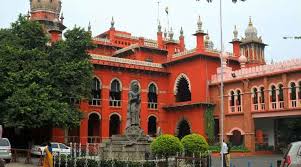
The Madras High Court has ordered that temple chariot of Muthu Kolakki Amman Temple be allowed to pass through a Dalit neighbourhood, observing that “faith cannot be fenced by caste or creed,” while hearing a plea by a Dalit man seeking permission to pass through the Dalit colony for his community to enter the Temple and participate in its rituals amid opposition from upper-caste residents,” the Live law reported. “Faith cannot be fenced by caste or creed and divinity cannot be confined by human prejudice. God does not reside in certain streets alone. No street is unworthy of the chariot or the god it carries. God never discriminates. So discrimination cannot be wrapped in the sanctity of tradition,” Justice PB Balaji remarked. The court was hearing a petition filed by a man belonging to the Scheduled Caste community, directed authorities to allow the Muthu Kolakki Amman temple car to pass through the Dalit colony and ensure peaceful conduct of the procession. The petitioner had approached the court seeking directions to the Kancheepuram District Collector, Superintendent of Police, HR&CE Joint Commissioner, Tahsildar, and others to permit his community to enter the temple and participate in its rituals and car festival. He alleged that upper-caste residents had long resisted their participation, despite the temple being managed by the Hindu Religious and Charitable Endowment Department, and that representations to officials had gone unanswered. The court observed that through Article 17 of the Constitution, untouchability was abolished “not just in physical form but in true letter and spirit,” stressing that no one could dictate “who is entitled to stand before the deity and worship.” It further noted that all respondents had affirmed there was no bar on anyone entering the temple or participating in its festivals. The District Collector informed the court that a field inspection revealed no restriction preventing Scheduled Caste members from entering the temple or taking part in the car festival. Although private respondents opposed altering the traditional chariot route, citing decades of custom and possible complications, the Collector found that the requested extension was feasible without disrupting the festival’s historic character. Taking note of this report, the court directed the Collector to implement the proposed integrated route during both the trial and main processions, ensuring that the event proceeds smoothly with adequate police protection. Reiterating that “faith cannot be fenced by caste or creed,” the court held that “discrimination cannot be wrapped in the sanctity of tradition.” Many believe that despite constituting around 16.6% of India’s population, Dalits continue to face deep-rooted social stigma, exclusion, and violence. From being denied entry into temples to facing social boycotts and even brutal assaults for asserting their identity, caste-based discrimination remains pervasive. Earlier in 2024, Tamil Nadu’s Tiruvannamalai district, the village of Thenmudiyanur, became a site of struggle for Dalit dignity when upper-caste Hindus boycotted a temple after Dalits were granted entry. Courtesy : Maktoob Media Note: This news is originally published on https:/maktoobmedia.com/bha and is used purely for non-profit/non-commercial purposes, especially human rights
Dalit Mythology: The Durga of Dalit Narrative
Because this retelling comes from a Dalit scholar, any challenge to it is immediately painted as casteist. In recent years, there has been a growing clash between ‘Sanatani mythology’ and ‘Dalit mythology’. During the festival season last month, a well-known Dalit activist argued that the worship of Durga is nothing but the celebration of an Aryan invasion of Dravidian lands. In his retelling, Mahishasur, the buffalo demon, represents dark-skinned Dravidians while Durga represents fair-skinned Aryans. Because this retelling comes from a Dalit scholar, any challenge to it is immediately painted as casteist. But the Dalit retellers are following the toolkit long used by Sanatani activists who brand their critics as anti-national or communist. This is how ideological battles are fought today. Labels need to be weaponised. Myths need to be reimagined. Political groups across the spectrum have always bent old stories to fit new narratives. In his 1873 book Gulamgiri (Slavery), Jyotiba Phule reimagined the Devas-Asuras wars as colonisation of ancient Dravidian lands by Aryan infiltrators. Great Asura kings like Prahalad, Virochana, and Bali were seen as demons. By turning ‘gods’ into colonisers and ‘demons’ into heroes, Phule gave Bahujan communities a counter-history. If Brahmins could use mythology to establish their supremacy, surely Dalits could use the same for social justice. Sanatanis have long tried to debunk the Aryan Invasion Theory (AIT), arguing it was simply colonial propaganda. Some even propose the Out of India Theory (OIT) that claims Brahmins gave civilisation to the world. Ironically, it was Balgangadhar Tilak, the founding father of the Sanatani political ideology, who first decoded astronomy-based Vedic hymns to show that the Aryan homeland may have been north of the Himalayas, near the Arctic, probably. The Vedic ‘Usha’ hymns spoke of a land where there were dawns without any visible sun. In the 20th century, Babasaheb Ambedkar rejected AIT as it was a racial theory aimed at establishing Brahmin-European-Aryan superiority. He argued caste was a social, economic, and political problem, not a racial one. But now, in the 21st century, we have a new source of evidence – genetics! DNA studies clearly show migration of Steppe pastoralists and horses into India took place over 3,000 years ago. Aryans did come to India. But not as invaders who destroyed the Harappan cities. They came to trade Central Asian horses for Indian iron, 500 years after Harappan cities had ceased to exist. Both Sanatani and Dalit activists rarely bother with art or ritual history. The image of Durga with many arms, killing the buffalo, first appeared around 2,000 years ago in Kushan art (100 AD). It was first carved in stone during the Gupta period (400 AD). The Sanskrit story of Durga being created by the gods and restoring paradise to Indra appears much later in the Markandeya Purana (600 AD). Across India, especially in the Deccan, there are folk traditions where worship of the goddess involves a ritual slaughter of a buffalo. These orally transmitted tales are fragmentary and layered. The young, virile priest who performs the ritual is called Pota Raju, the Buffalo King. He, typically, hails from a ‘low’ caste. He calls himself the servant and son of the goddess. He leads the procession to the temple. The goddess is pleased by rituals involving violence (fire-walking, hook-swinging, blood sacrifice). Every year, a young male buffalo (reda, in the local language) is chosen to be slaughtered the following year, a ritual mimicry of the renewal of earth’s fertility. This suggests that the festival originally had little to do with grand cosmic battles between gods and demons. It was an agricultural ritual, deeply tied to cycles of sowing and harvesting. This story has nothing to do with the Vedic world. Brahmins, who rarely participate in such boisterous village rituals, insist the goddess of the village was once a Brahmin girl. She was tricked into marrying a beef-eating man. When she discovered this, she killed him, and that event is remembered each year. They argue this is why many goddess temples are now vegetarian – the Chamunda temple in Mysuru, the Ambabai temple in Kolhapur. In fact, many Sanatanis think Bengalis need to stop offering meat and fish to Durga during their annual Pujo. Dalit myth-makers are using this very same story to make the outraged Brahmin’s daughter the symbol of Aryan oppression and her beef-eating husband the embodiment of the oppressed. Today, young Dalit activists are raising foundational questions: who makes the rules of Hinduism? Do those categorised as ST/SC have any say in the matter? Who classified those who eat cow meat as impure and those who drink cow urine as pure? It could not have been the goddess or the buffalo. The writer works with gods and demons who churn nectar from the ocean of Indian, Chinese, Islamic, Christian, even secular mythologies. Disclaimer: The views expressed above are the author’s own. They do not necessarily reflect the views of DH. Devdutt Pattanaik Courtesy : DH Note: This news is originally published on https:/deccanherald.com/bha and is used purely for non-profit/non-commercial purposes, especially human rights
‘Mahagathbandhan fighting Mahatma’s battle’: Priyanka Gandhi Vadra targets PM Modi; calls for ‘change’ in Bihar

NEW DELHI: Congress general secretary Priyanka Gandhi Vadra on Saturday said the opposition Mahagathbandhan alliance, of which her party is a part, is fighting the same battle in Bihar today that Mahatma Gandhi fought during India’s freedom struggle. Addressing an election rally in Kadwa, Katihar district, ahead of the second and final phase of polling on November 11, she likened the Congress and Mahagathbandhan’s campaign to a fight for citizens’ rights and democracy. “The battle that the Congress Party and the Mahagathbandhan are fighting today is the same battle that Mahatma Gandhi fought back then. Even today, we are fighting for your rights, for the truth, against an empire — and that is the empire of Narendra Modi. Today, he is running this country in the same way, by suppressing people,” the Wayanad MP remarked. Priyanka Gandhi Vadra also accused the BJP of attempting to “weaken” the Constitution and “undermine” the democratic process. “The rights Mahatma Gandhi fought for are at risk. One of the most essential rights is the right to vote. The BJP has tried its best to weaken the Constitution — they have even started stealing votes,” she alleged. Her comments come amid ongoing opposition claims of electoral manipulation. Her brother and Leader of Opposition in the Lok Sabha, Rahul Gandhi, has addressed three press conferences since August — including one on Wednesday, the eve of the first phase of voting — alleging that the Election Commission and the ruling BJP “colluded” to “steal” votes in the 2024 Lok Sabha elections and state polls before and after. Both the BJP and the Election Commission have dismissed the accusations. The first phase of polling in Bihar covered 121 assembly constituencies, while the second phase will be held across the remaining 122 seats on November 11. Counting of votes for all 243 constituencies will take place on November 14. Courtesy : TOI Note: This news is originally published on https:/timesofindia.com/bha and is used purely for non-profit/non-commercial purposes, especially human rights
Rahul calls for district-level action, to target all households before 2028

Bhopal: Leader of Opposition in Lok Sabha Rahul Gandhi is on a two-day visit to Pachmarhi where he held an in-depth session with state party seniors and then held a marathon meeting with newly appointed district presidents. Rahul Gandhi arrived by a special plane from Delhi on Saturday afternoon and then headed for Pachmarhi in a chopper. Just before boarding the special flight to Bhopal, Rahul Gandhi took to X and posted a video of children eating their mid-day meal on fragments on newspapers and not plates. “I am going to Madhya Pradesh today,”@RahulGandhi wrote. “And ever since I saw this news that children are being served mid-day meals on newspapers, my heart has broken.” Reacting to this tweet, the state BJP said that it is an old video, and action was taken after the news surfaced. “The self-help group responsible for this was blacklisted,” the state BJP tweeted. Upon reaching Pachmarhi, Rahul Gandhi addressed senior state party leaders on decentralisation of the state unit – how to make the district offices strong and take district-based decisions there. Sources said that Rahul Gandhi instructed that strengthening of district units will enable the party to reach the villages. The target is to reach every household before the 2028 assembly elections. In a state where the party has been out of power since Dec 2003, except for the 15-month Kamal Nath govt, the Congress wants to return to power through the districts. The party so far has been unable to match the organisational strength of the ruling BJP. On June 3, Rahul Gandhi launched the Sangathan Srajan Abhiyan in the state with the goal of strengthening the organisation at the districts to panchayat levels. These newly elected district presidents were appointed under that campaign – some of whom are popular faces like Jaivardhan Singh, son of former chief minister Digvijaya Singh, former ministers Omkar Singh Markam, Priyavrat Singh and former NSUI state chief Vipin Wankhede. Those present in the hour-long senior leaders’ meeting included former chief minister Digvijaya Singh, former LoPs Ajay Singh and Dr Govind Singh, PCC chief Jitu Patwari, LoP Umang Singhar, Rajya Sabha MP Vivek Tankha, former Union ministers Kantilal Bhuria, Arun Yadav and others. However, former chief minister Kamal Nath could not come to Pachmarhi because of medical reasons. After the meeting, leaders who spoke to reporters emphasised that Rahul Gandhi wants action and hard work in the field. Former LoP Ajay Singh refused to divulge the instructions given to the party top-brass, but said, “If anybody does not work, whether at the district or state level, the person will now be held accountable. Inactivity means that the person will be changed.” This was confirmed by former minister and party veteran Govind Singh, “Work review will be done. And inactivity means that you can be removed.” Later, he addressed the 72 organisational district presidents who were seated on the floor of a metal roofed hall with Rahul Gandhi walking in the centre and speaking to them. Family members including children of the district presidents were invited to Pachmarhi to have dinner with Rahul Gandhi. Rahul halted the night in Pachmarhi. He is scheduled to hold a small meeting with Congress leaders on Sunday morning before leaving around 10:30 am for the campaign in Bihar. Courtesy : TOI Note: This news is originally published on https:/timesofindia.com/bha and is used purely for non-profit/non-commercial purposes, especially human rights