
Karnataka: Dalits prevented from entering temple, allowed entry in presence of police and administration
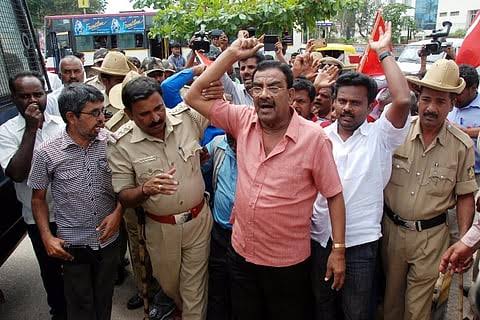
Allegations of attack on Dalits entering temple. Complaint filed against 42 people. Entry into temple led by officials. Davanagere (Karnataka): An allegation of Dalits being prevented from entering a temple has surfaced in Davanagere, Karnataka. The incident reportedly occurred in the Channagiri taluk of the district on Friday night. Three Dalits filed a complaint at the Basavapatna police station, alleging that a group of 20 people attacked them while they were entering the temple. As soon as the incident came to light, Tehsildar Nagaraj, AC Dr. Channappa, SP H.T. Shekhar, and police force visited Malalakere village. They inspected the area and escorted the Dalits inside the temple. Following this, they held a meeting with leaders of both communities in the village and instructed them to live in harmony. According to the police, the victims told them that the ‘Ajji Habba’ festival was being celebrated on Friday. While returning from the festival, they were attacked by 20 people on their way to the temple. They were not allowed inside. Meanwhile, a leader from the other community denied these allegations. He said, “They were trying to enter the temple after consuming alcohol, so they were stopped.” PSI Imtiaz of Basavapatna police station said, “Last night, there was a minor clash between two groups. Dalits alleged that they were not allowed to enter the temple, while the other group claimed they were drunk. A peace meeting was held in the presence of members of both groups and officials.” A complaint has been filed against a total of 42 people at the Basavapatna police station. Channagiri Assistant Commissioner (AC) Channappa said, “A case of SC-ST atrocities has been registered at the Basavapatna police station. We will take action against the culprits.” He further said that the youths who were attacked are being treated at the Chigateri District Hospital. Channappa said, “The police are investigating the matter. The truth will emerge only after the investigation. No one should take the law into their own hands. We have resolved this dispute by allowing the Dalits to enter the temple and perform puja.” Courtesy: Hindi News
Explainer: Why Dalits are marginalized in Punjab despite having the largest population, marginalized in politics
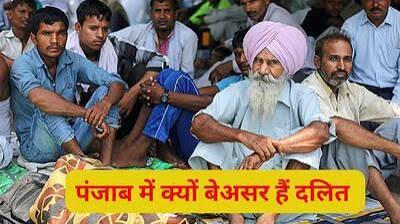
Despite constituting a third of Punjab’s population, why is Dalit politics weak? Let’s explore the reasons… In states like Uttar Pradesh and Bihar, Dalit politics has always held sway. Whether it’s previous generation leaders like Kanshi Ram, Ram Vilas Paswan, and Mayawati, or newer leaders like Chandrashekhar Azad and Chirag Paswan, these leaders have a strong appeal, and this has led to significant Dalit votes in Bihar. However, this is not the case in Punjab, one of the country’s leading states in terms of Dalit population. It has been a matter of curiosity for people across the country as to why this community is not at the center of politics in a state with a 32 percent Dalit population. Not only this, Dalits are also in a weak position in terms of education, social influence, and economic status. Their participation in the Punjab government’s cabinet has also been low. 96.6 percent of Dalits in Punjab do not own any agricultural land. Nearly 60 percent of these people follow the Sikh faith, yet they are considered untouchables and face discrimination. The state has a total of 117 assembly seats, and 34 of these seats are reserved for Dalits. The number of Dalit MLAs in the assembly is crucial for any government. Yet, they have never ruled Punjab. This is because their population is divided among various castes, and there is also a divide between Hindus and Sikhs. While Dalit votes are divided, Jat Sikhs have a strong hold on the social system in Punjab. This is because they control most of the agricultural land. They also have a strong hold on various institutions and rural systems, including gurdwaras. Bhagwant Mann’s cabinet includes five Dalit leaders: Harpal Singh Cheema, Dr. Baljit Kaur, Lalchand Kataruchak, Ravjot Singh, and Mohinder Bhagat. This figure represents 27 percent of the total 18 ministers in the cabinet. The previous Congress government had three ministers. However, it is also a fact that Charanjit Singh Channi was made the Chief Minister, becoming the state’s first Dalit Chief Minister. The Akali-BJP government that lasted until 2017 also had three Dalit ministers. Channi was subsequently appointed Chief Minister by the Congress in 2022, but this failed to significantly bolster the Dalit vote. He received only 31 percent of Dalit votes, while the AAP secured 38 percent. Punjab lost the Congress under the leadership of Charanjit Singh Channi, the only Dalit Chief Minister, and even now, he is in no position to be considered the leader of the Punjab Congress in the upcoming elections. While the Jat community constitutes only 22 percent of the population in Punjab, they have a significant representation. Interestingly, the BSP originated in Punjab, and Kanshi Ram was also a native of the state. However, the BSP has never been very strong in Punjab. Dalits here have primarily voted for different parties. These include the Congress, the Akali Dal, and now the Aam Aadmi Party. The BSP received less than 2% of the vote here in 2022. Why Dalits lack political dominance despite constituting 32% of the population? Although the Dalit population in Punjab is 32%, they own only 3.5% of the total land. According to the Punjab Village Common Land Act of 1964, one-third of the land belonging to the village community is reserved for Dalits. However, this provision remains only on paper and has not been properly implemented on the ground. Due to landlessness, the development of Dalits has been hampered. 73% of Dalits living in villages are landless. Furthermore, due to lack of land, their income is low, and unlike other communities, their children are not able to go abroad. This is because they have limited means of earning. It is also true that while the Sikh faith advocates equality, casteism is a reality here as well. They are denied entry into Gurudwaras established by Jat Sikhs or other upper castes. According to a study, Dalits who converted to Sikhism have established 10,000 Gurudwaras and Ravidas Deras. This is to ensure autonomy, at least in religious matters. Furthermore, a large number of Dalits are also converting to Christianity. Dalits in Doaba are a different story, with children also migrating abroad. While the situation of Dalits is weak in most parts of Punjab, the situation in the Doaba region is different. There are many villages here where the Dalit population ranges from 40 to 65 percent. Exposure to urban life and employment have strengthened their position. Furthermore, a significant number of Dalits from here have migrated abroad. This has allowed them to maintain a strong position despite the decline in farming. However, this has little impact on electoral politics, as the Dalit community is divided along caste and religion lines. Courtesy: Hindi News
Karnataka Cabinet expansion, KCV to arrive with final list
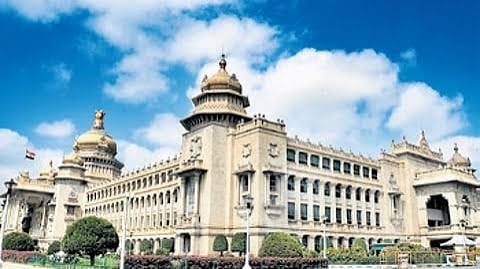
The names of PM Narendraswamy, Basavanthappa, Sharath Bachegowda, Kaneez Fathima Zameer Ahmed and Tanvir Sait too are doing the rounds. BENGALURU: AS cabinet expansion is most likely on Monday, AICC General Secretary KC Venugopal is expected to arrive here from Kerala on Sunday evening with the list of twenty legislators to be inducted as ministers. The swearing-in ceremony at Lok Bhavan is likely at 4 pm. Ministerial aspirants made last-ditch efforts by meeting former CM Siddaramaiah at his Cauvery residence on Saturday. MLAs Yashwant Rayagouda Patil, Appaji Nadagouda, Rizwan Arshad, Vijayananda Kashappanavar, AS Ponnanna, Yasir Ahmed Khan Pathan, Appaji C S Nadagouda, Yashwant Rayagouda Patil and Ashok S Pattan were among them. Transport Minister Byrathi Suresh also met Siddaramaiah. The list of probable include, Ajay Dharam Singh – Kalaburagi (Rajput), Yashwantrayagouda Patil – Indi (Lingayat), T Raghumurthy – Challakere (Valmiki), B Nagendra – Bellary Rural (Valmiki), Shivaraj Tangadagi – Kanakagiri (Bovi Dalit), Salim Ahmed – MLC (Muslim), NS Bosa Raju – MLC (Raju Kshatriya), Santosh Lad – Kalaghatagi (Maratha), SS Mallikarjun – Davanagere (Lingayat), Vijayanand Kashappanavar – Bagalkot (Lingayat), Puttaranga Shetty – Chamarajanagar (Uppara), AS Ponnanna – Virajpet (Kodava), N Cheluvarayaswamy – Nagamangala (Vokkaliga), Shivalingegowda – Arasikere (Vokkaliga), Basavaraj Shivannavar – Byadagi (Kuruba), Laxman Savadi(Lingayat), Laxmi Hebbalkar (Lingayat), Dr Arathi Krishna (Vokkaliga), Annapoorna E Tukaram (ST), and Anekal Shivanna (SC). The names of PM Narendraswamy, Basavanthappa, Sharath Bachegowda, Kaneez Fathima Zameer Ahmed and Tanvir Sait too are doing the rounds. Courtesy : TNIE Note: This news is originally published on https:/thenewindianexpress.com/bha and is used purely for non-profit/non-commercial purposes, especially human rights
Ram Temple skit row: Rahul Gandhi, Pappu Yadav, Awadhesh Prasad booked for ‘insulting Sanatan Dharma’
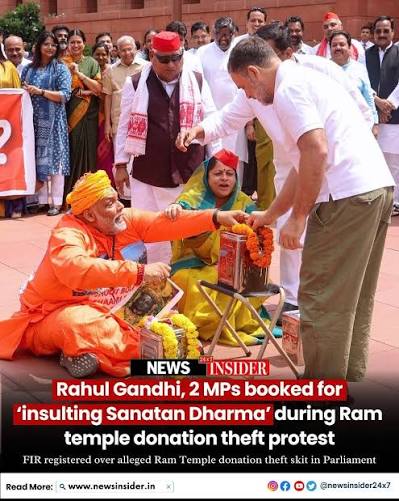
NEW DELHI: Varanasi Police on Saturday registered a case against leader of opposition in the Lok Sabha Rahul Gandhi and two other MPs for allegedly “insulting Sanatan Dharma” and “hurting religious sentiments” during an opposition protest in Parliament, an official said. Rahul Gandhi, independent MP Rajesh Ranjan alias Pappu Yadav, Samajwadi Party’s (SP) Awadhesh Prasad, and several other opposition parliamentarians had on Friday enacted a skit depicting the alleged theft of offerings from the Ram Temple in Ayodhya. Pappu Yadav and Awadhesh Prasad have also been named in the FIR. While Pappu Yadav, dressed in saffron robes, portrayed a temple priest who “stole” the offerings, Awadhesh Prasad represents the Faizabad constituency, which includes Ayodhya.According to Gaurav Banswal, Deputy Commissioner of Police, Kashi Zone, an FIR was registered based on a formal complaint submitted at Kotwali police station by some seers, who alleged that the trio had “insulted” Sanatan Dharma in Parliament. Seer Jagatguru Balak Das described Pappu Yadav’s conduct as “unforgivable”. “No follower of Sanatan Dharma can forget this act. It has hurt our religious sentiments. So we have demanded that a case be registered,” PTI quoted him as saying. On Friday, MPs of the Congress-led opposition INDIA bloc held a protest over the alleged Ram Temple donation theft and police action against student agitators during their July 20 Parliament march. The opposition leaders staged a skit to highlight the alleged temple donation theft. As part of the protest, they placed donation boxes near the stairs leading to the Makar Dwar of Parliament. MPs, including Rahul Gandhi, put money into the boxes, while Pappu Yadav, who sat nearby, was shown slipping it into his pockets. Congress MP Priyanka Gandhi Vadra, SP’s Dharmendra Yadav, and Jharkhand Mukti Morcha’s Mahua Maji were among those who participated in the protest. The SP is aggressively highlighting the issue ahead of the Uttar Pradesh assembly elections scheduled for February-March 2027. The Akhilesh Yadav-led party has been out of power since March 2017. Courtesy : TOI Note: This news is originally published on https:/timesofindia.com/bha and is used purely for non-profit/non-commercial purposes, especially human rights
India’s students do not need PM Modi’s forgiveness, they are owed his apology: Rahul Gandhi
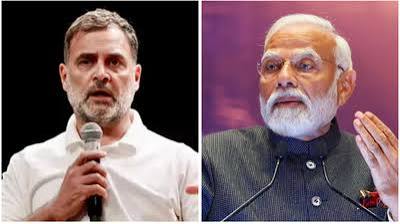
NEW DELHI: Reacting sharply to Prime Minister Narendra Modi’s late night Instagram video on Friday, Leader of Opposition in Lok Sabha Rahul Gandhi while citing leaked papers, cancelled exams and years of hard work of students destroyed in the process, lashed out at the PM for having the “audacity” to speak of “forgiving” students. “India’s students do not need his forgiveness. They are owed his apology,” Gandhi said. In an Instagram video posted on Friday night PM said that he will forgive young protesters accused of abusing him and his late mother, saying they are misguided children and it is “our job to show them the right way”. “Nothing is more painful than seeing a parent grieve their child. Behind every young life lost is a family carrying pain that will never leave them – and serious questions about a broken education system,” Gandhi said in a post on X where he also shared images of his interaction with parents and students. “Leaked papers. Cancelled exams. Years of preparation destroyed overnight. Our students are told to work honestly in a system that is not honest with them. And the Prime Minister has the audacity to speak of “forgiving” students,” Gandhi added. Alleging that the PM has not met a single grieving parent and has not sat with a single student whose future was stolen by a leaked paper, Gandhi said that the students don’t need Modi’s forgiveness rather “they are owed his apology”. Reacting sharply to the PM”s video, Congress general secretary Jairam Ramesh said in a post on X that the “PM enjoys playing the victim card” and added that Modi’s “InstaGram Sabhas are fooling no one”. “Late last night, in an act of supreme self-obsession, the PM said that he forgave our youth. This is an insult to the nation and to our youth which has suffered under his govt and is legitimately demanding an apology from him,” Ramesh said. The Congress leader went on to accuse the PM of using “vile vitriol against his predecessors and political opponents”. “He very frequently peddles lies to defame them, not just in his public speeches but in Parliament itself. He unleashes an army of foul-mouthed abusers both in Parliament and outside and gives them full protection,” Ramesh alleged. The Congress leader said that “the entire nation is wanting the PM to apologise for the trauma suffered by the youth due to paper leaks and the brutality unleashed on student protesters. Ramesh also raised the donation theft by Ram Temple Trust in Ayodhya. “The entire nation is waiting for the PM to apologise for the ‘Chanda Chori Astha Dhoka’ by the Ram Mandir Trust, an establishment which he had grandly announced in the Lok Sabha on February 5, 2020,” he added. Ramesh further said that “the entire nation is still expecting his apology for his Tughlakian decision of Nov 8 2016 that destroyed crores of livelihoods and shuttered lakhs if MSMEs. The list is endless.” Courtesy : TOI Note: This news is originally published on https:/timesofindia.com/bha and is used purely for non-profit/non-commercial purposes, especially human rights
‘Disappointed with PM Modi’: Shehzad Poonawalla’s sarcastic ‘dictator’ jibe at oppn after quitting BJP
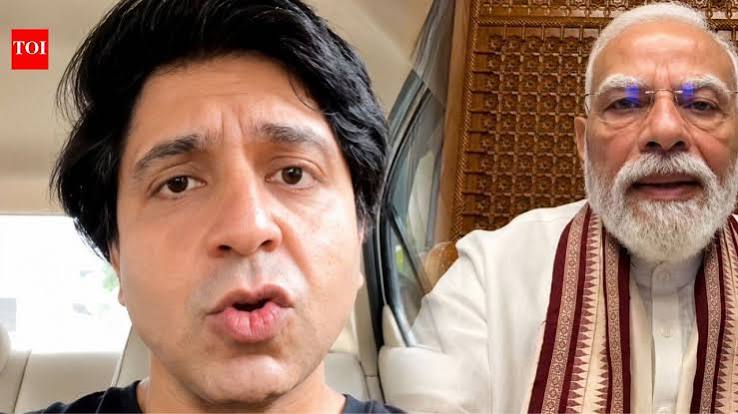
NEW DELHI: A day after resigning from the party, former BJP national spokesperson Shehzad Poonawalla on Saturday released an Instagram video saying he was “disappointed” with Prime Minister Narendra Modi. In a sarcastic jibe at the Congress and its most prominent face, leader of opposition in the Lok Sabha Rahul Gandhi, Poonawalla said that unlike Congress prime ministers, PM Modi, despite being in office for 12 years, was still to become a “dictator.” Poonawalla’s remarks came after PM Modi, in his fifth Instagram video since the recent student protests in Delhi, said he had “forgiven” protesters who allegedly abused him and his late mother during the agitation. Several people, mostly youngsters, were booked for allegedly abusing the PM and his mother, after the protests ended with the resignation of Dharmendra Pradhan as Union education minister on July 25. “I am completely disappointed with Prime Minister Narendra Modi. It has been 12 years and he has still not learnt how to be a dictator,” Poonawalla said in his Hindi video, adding that instead of becoming a dictator, the prime minister appealed for those who abused him to be forgiven. He urged the prime minister to learn “real dictatorship” from former prime ministers Indira Gandhi and Jawaharlal Nehru, Rahul Gandhi’s grandmother and great-grandfather, respectively. Poonawalla, a former Congress member, also referred to cases filed against students in Congress-ruled Karnataka and Kerala. He further referred to the alleged curbing of free speech during Nehru’s tenure and invoked the Emergency imposed by Indira Gandhi in 1975. “Who got all parliamentarians put in jail? Indira Gandhi. Who ordered police to fire at seers? Indira Gandhi,” Poonawalla remarked. The second incident he referred to appeared to be a reference to the 1966 police firing on protesters outside Parliament during a demonstration demanding a nationwide ban on cow slaughter. The former BJP spokesperson also referred to several protest movements that he alleged were “crushed” by Congress governments at the Centre and in various states. “We saw during the 2011 Anna Hazare agitation that 1,200-1,300 people were arrested. Anna Hazare himself was arrested. Rajbala lost her life,” he remarked, referring to the anti-corruption movement led by activist Anna Hazare that had put the then Congress-led UPA government under pressure. Rajbala was a woman protester who died following a Delhi Police crackdown at Ramlila Ground during the agitation. “Come on, Modi ji. It has been 12 years and you have still not become a dictator. You have poured water on the hopes of the Left-liberals,” Poonawalla concluded. PM Modi’s Instagram videos have been described as an attempt by the prime minister to reach out to “Gen Z” — the demographic with the largest participation in the recent student protests. Courtesy : TOI Note: This news is originally published on https:/timesofindia.com/bha and is used purely for non-profit/non-commercial purposes, especially human rights
Govt teacher suspended for raping Class 11 Dalit student in Churu
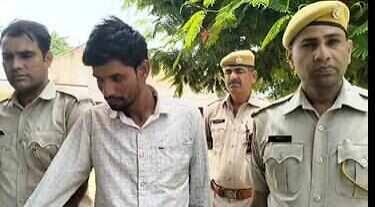
Jhunjhunu: A physical training instructor (PTI) at a govt school in Churu district was suspended Friday following allegations of raping a 16-year-old Class 11 Dalit student. Outraged family members and local villagers locked the main gate of the school under the Sandwa police station area and staged a demonstration, demanding the teacher’s immediate arrest. The protest disrupted school operations for nearly two hours before police persuaded the locals to unlock the premises and allow students inside. According to Sandwa SHO Mahendra Kumar, the survivor’s father filed a complaint stating that the incident occurred on July 30. The girl had gone to school as usual but went missing after recess. Prompted by school staff, her father began searching for her. Around 12:30pm, the survivor returned to the school premises in a visibly shaken state. She later disclosed to her family that the accused PTI had signalled her to come outside the school gate around 10:20am. The teacher allegedly coaxed and pressured her onto his motorcycle, taking her to his empty residence nearby. There, he allegedly locked her inside a room and sexually assaulted her before letting her go. Taking administrative action given the gravity of the matter, Churu District Education Officer Sajjan Singh Saini suspended the accused teacher with immediate effect and initiated a formal departmental inquiry. Police confirmed that the survivor’s medical examination has been conducted and a case has been registered under relevant sections, including POCSO and SC/ST Acts. The accused fled the village shortly after the incident and remains at large. Dy SP Darjaram Bos is leading the investigation, and special police teams have been deployed to trace and apprehend the absconding govt teacher. Courtesy : TOI Note: This news is originally published on https:/timesofindia.com/bha and is used purely for non-profit/non-commercial purposes, especially human rights
Four get 20 years’ RI for gang rape of Dalit woman
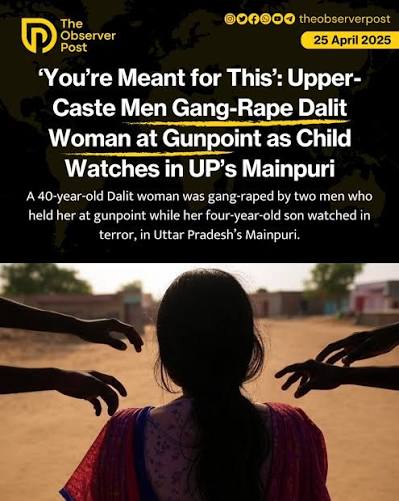
Mangaluru: The Second Additional District and Sessions (Special) Court here on Friday sentenced four to 20 years of rigorous imprisonment for the gang rape of a Dalit woman. The second additional district and sessions (special) court Friday sentenced four men to 20 years of rigorous imprisonment for the gang rape of a Dalit woman in 2018. According to the prosecution, the convicts, Prajwal, Arun Amin, Adithya Salian and Abdul Riyaz, sexually assaulted the woman on Nov18, 2018. At 12.30pm that day, the accused and three minors approached the victim, asked her name, hometown and caste details, intimidated and physically assaulted the friend who was with her. They then took the friend away and restrained him while dragging the victim into the bushes. The accused threatened her and gang-raped her in turns. They also threatened to kill the victim and her friend if they revealed the assault or filed a complaint. Mangaluru Women’s Police registered a case under IPC sections 341, 323, 354, 376(D) and 506, and sections 3(2), (v-a) and 3(1)(w)(i) of the SC/ST (Prevention of Atrocities) Act. The then police inspector, Kalavathi K, and assistant commissioner of police (ACP) Manjunath Shetty investigated the case. Later, the then ACP Srinivasa Gowda R filed the chargesheet. Special public prosecutor Jyothi Pramod Nayak conducted the prosecution. The court examined 40 of the 65 witnesses listed by the prosecution. Judge Jagadeesh VN held the accused guilty Thursday. Prajwal, Arun Amin, Adithya Salian and Abdul Riyaz were awarded 20 years of rigorous imprisonment and a fine of Rs 10,000 each under IPC section 376(D) read with 34 and sections 3(2), (v-a) of the SC/ST (Prevention of Atrocities) Act. The court also awarded one year imprisonment and a fine of Rs 5,000 each under IPC Section 354 read with 34 and sections 3(1)(w)(i), 3(2), (v-a) of the SC/ST (Prevention of Atrocities) Act. In addition, the court imposed one year’s imprisonment and a fine of Rs 2,000 each under IPC Section 506 read with 34 and sections 3(2), (v-a) of the SC/ST (Prevention of Atrocities) Act. The accused were further sentenced to six months’ imprisonment and fined Rs 1,000 each under IPC Section 323 read with 34 and sections 3(2), (v-a) of the SC/ST (Prevention of Atrocities) Act, besides a fine of Rs 500 each under IPC Section 341 read with 34. All sentences will run concurrently. Of the total penalty amount, Rs 60,000 will be paid to the victim. Courtesy : TOI Note: This news is originally published on https:/timesofindia.com/bha and is used purely for non-profit/non-commercial purposes, especially human rights
Govts weakening Dalit unity in the garb of justice: Dr Ratnakar
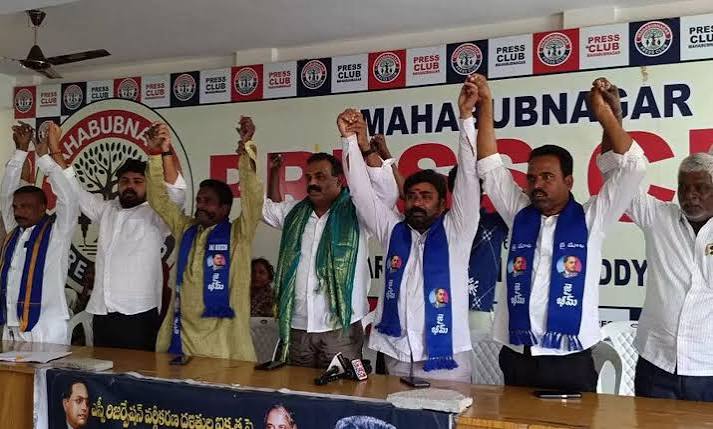
Mala Mahanadu leader Dr. RS Ratnakar announces ongoing peaceful protests against SC sub-categorisation in Telangana, urging for unity and equitable representation for all Scheduled Caste communities. Mahabubnagar: Alleging that the implementation of SC sub-categorisation threatens the existence of the Mala community in Telangana, Mala Mahanadu and RAKS National President Dr RS Ratnakar said his organisation would continue its peaceful agitation until legal changes are made in Parliament. Addressing a press conference in Mahabubnagar on Friday, Dr Ratnakar alleged that the Congress government had laid the foundation for SC sub-categorisation, which later expanded across the country. He said that since the benefits under SC reservations are already limited, both the Central and State governments must clarify how equal opportunities would be ensured for all Scheduled Caste communities across India, including all SC groups in the Telugu states. He accused governments of weakening Dalit unity in the name of social justice. He demanded that the principle of social justice should not be confined to reservations alone but should also be reflected in the distribution of national wealth and representation in Union and State CabinetsHe also called upon elected representatives from the Mala community in both Telugu states to raise their voice on the issue and unite to safeguard the interests of their community. He also called upon elected representatives from the Mala community in both Telugu states to raise their voice on the issue and unite to safeguard the interests of their community. Courtesy : THI Note: This news is originally published on https:/thehansindia.com/bha and is used purely for non-profit/non-commercial purposes, especially human rights
Teacher booked for allegedly beating up 8-year-old Dalit boy for drinking water from his bottle in Madhya Pradesh
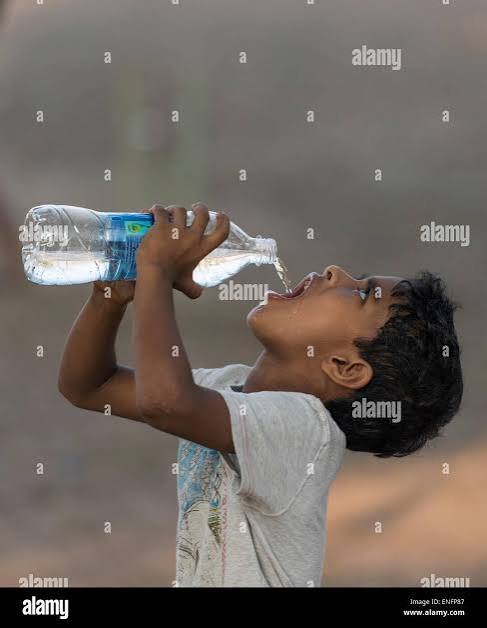
According to officials,the teacher, Lokesh Sharma, beat up the class 4 student using a cane in front of his fellow students after which the boy narrated the incident to her parents An eight-year-old Dalit boy was thrashed and targeted with racial slurs by a teacher in a government school in Madhya Pradesh’s Shivpuri district for drinking water from his bottle, officials said on Friday (July 31, 2026). According to officials, the incident took place on July 28 in a government primary school in Ukawal village under the Kolaras police station area, where the teacher, Lokesh Sharma, beat up the class 4 student using a cane in front of his fellow students after which the boy narrated the incident to her parents. The need to address caste-based atrocities Speaking to The Hindu, Shivpuri Superintendent of Police (SP) Yangchen Dolkar Bhutia said that an FIR has been registered under relevant provisions of the BNS and the SC/ST (Prevention of Atrocities) Act, based on a complaint from the student’s family. The teacher has been questioned in the matter, she said. As per the complaint, Ms. Bhutia said the teacher hit him on the hands with a cane and used racial slurs against him. “The family and the boy have alleged that the incident took place as he drank water from the teacher’s bottle. The teacher, however, is denying the allegation and is saying that he scolded the boy over the homework,” she said. Ms. Bhutia also said that the police have also taken statements from the boy’s schoolmates. “They are confirming the beating up but are unclear on the reason. We have also looked into the teacher’s record but have not found any such incident or complaint,” she said, adding that the police are probing the case from all angles. Mehul Malpani Courtesy : The Hindu Note: This news is originally published on https:/thehindu.com/bha and is used purely for non-profit/non-commercial purposes, especially human rights