
Issue fresh documents to trans persons after transition surgery, High Court tells UP education department

PRAYAGRAJ: In a landmark order upholding the rights of transgender persons, Allahabad HC has directed UP education department to issue fresh marksheets and certificates with the required changes to a petitioner who underwent gender transition surgery. Justice Saurabh Shyam Shamshery allowed the petition filed by Sharad Roshan Singh and set aside the order dated April 8, passed by the regional secretary of Madhyamik Shiksha Parishad, Bareilly, which had rejected his plea for a name change. The rejection was on the ground that the relevant provisions and govt orders did not provide a procedure for name correction in educational documents at a belated stage. Authorities had also stated that provisions of Transgender Persons (Protection of Rights) Act, 2019, read with the Rules, 2020, were not applicable to him. However, the district magistrate concerned had, under Section 6 of the 2019 Act, already issued a certificate of identity, officially recognising Sharad’s gender transition after surgery. Subsequently, he requested modification of his educational certificates to reflect his new name and gender. However, the regional secretary rejected his application on April 8, 2025. In its judgment delivered on Thursday, the court observed, “Transgender Persons (Protection of Rights) Act, 2019 is a special Act. Section 20 of the Act provides that its provisions shall be in addition to, and not in derogation of, any other law for the time being in force. Therefore, the concerned respondents (education authorities of the state) committed a legal error by not applying the provisions of the Act of 2019 in favour of the petitioner.” Appearing for the petitioner, senior advocates HR Mishra and Chitrangada Narayan cited verdicts of SC and HCs to assert petitioner’s right to have his name changed after gender reassignment. Courtesy : TOI Note: This news is originally published on https:/timesofindia.com/bha and is used purely for non-profit/non-commercial purposes, especially human rights
HC to edu dept: Issue fresh documentsto transgender after transition surgery

Prayagraj: In a landmark order to uphold the rights of transgenders to change their genders and also get their names changed accordingly, the Allahabad high court has directed the Uttar Pradesh education department authorities to make the required change in documents of a petitioner. The court ordered the education dept officials to issue fresh marks sheet certificates after the petitioner underwent a gender transition surgery, from female to male. Allowing a writ petition filed by one Sharad Roshan Singh, Justice Saurabh Shyam Shamshery set aside an order dated April 8, 2025 passed by regional secretary, Madhyamik Shiksha Parishad, Bareilly, by which the application of the petitioner for the change of name after the gender change was rejected on the ground that that relevant provisions and government order did not provide any procedure for correction of name in educational documents at a very belated stage. The order also said that provisions of the Transgender Persons (Protection of Rights) Act, 2019 read with Rules, 2020 were not applicable on him. The petitioner was recognized as transgender person under the aforesaid Act of 2019. The district magistrate concerned in terms of section 6 of the Act of 2019 had issued a certificate of identity. Sharad had also obtained official recognition of his gender change from the DM after undergoing the transition surgery. Subsequently, he requested the modification of his educational certificates to reflect his new name and gender. However, regional secretary, Madhyamik Siksha Parishad, rejected his application on the aforesaid grounds on April 8, 2025. Appearing on behalf of the petitioner, senior advocate HR Mishra and Chitrangada Narayan relied on various judgments of apex court and high courts of the other state to assert the right of the petitioner to get his name changed after gender change. The court held that the Board and government authorities had violated Section 20 of Transgender Persons (Protection of Rights) Act, 2019 Act. This section provides a special legal framework granting priority over other laws. Under Rule 5(3) and Annexure-1 of the Act, transgender persons can modify all official documents. This includes educational certificates, which can be updated to reflect their correct name, gender, and photograph. In his judgment on Nov 6, the court said, “The Transgender Persons (Protection of Rights) Act, 2019 is a special Act. Section 20 of the Act, 2019 provides that provisions of this Act shall be in addition to, and not in derogation of, any other law for the time being in force. Therefore, the concerned respondents (education authorities of the state) have committed a legal error by not applying the provisions of the Act of 2029 in favour of the petitioner.” Courtesy : TOI Note: This news is originally published on https:/timesofindia.com/bha and is used purely for non-profit/non-commercial purposes, especially human rights
Noida News: Transgenders will also be able to travel for free on DTC buses.
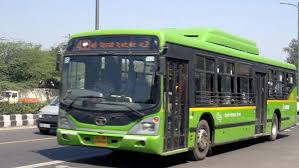
Drivers, conductors, and marshals will receive sensitivity training. New Delhi. The Delhi government will soon launch a free bus service for transgender people. Transgenders will be able to travel fare-free on DTC and cluster buses using the Pink Saheli smart card. This initiative has been taken to provide the underprivileged sections of society in the capital with the opportunity to live a life with equal rights and dignity. Disclosing this information on Friday, Social Welfare Minister Ravindra Indraj Singh said that this scheme will facilitate easy transportation and social equality for transgender people. Before launching this service, the Transport Department has been directed to provide special training to bus drivers, conductors, and marshals so that transgender passengers do not face any inconvenience or discrimination. Chief Minister Rekha Gupta has implemented the mantra of “Sabka Saath, Sabka Vikas, Sabka Samman” in Delhi. Work has been initiated for the welfare of every underprivileged section of society. Transgenders will also receive the same respect and opportunities. Transgender option mandatory on application forms The Minister stated that the government has already directed all departments to make the transgender option mandatory in application forms for schemes for which transgender individuals are eligible. This will ensure that eligible beneficiaries are not denied access to government schemes due to technical reasons. Transgender individuals have long been fighting for respect and recognition. This initiative by the Delhi government has not only made travel easier for them but has also sent a message of equality and compassion in society. Courtesy: Hindi News
US Supreme Court allows Trump to enforce two-gender passport policy

The US Supreme Court allowed Trump’s administration to enforce a policy restricting passport gender markers to only “male” or “female,” sparking debate over transgender rights. The US Supreme Court on Thursday allowed President Donald Trump’s administration to enforce a policy restricting passport gender markers to only “male” or “female,” reversing lower-court orders and igniting sharp debate over transgender rights and safety. The ruling permits the administration to proceed with the policy while a lawsuit challenging it continues. It halts a lower-court order that had required the State Department to let applicants choose “M,” “F,” or “X” on passports to align with their gender identity. The court’s three liberal justices dissented, according to The Associated Press. The decision marks another victory for Trump on the court’s emergency docket. Since the beginning of his second term, the Supreme Court has issued nearly two dozen short-term orders favouring his administration in various policy disputes, including one that barred transgender people from serving in the military. In an unsigned order, the conservative majority said the policy does not violate equal protection principles. “Displaying passport holders’ sex at birth no more offends equal protection principles than displaying their country of birth,” the court wrote. “In both cases, the Government is merely attesting to a historical fact without subjecting anyone to differential treatment.” Justice Ketanji Brown Jackson, joined by the court’s two other liberal justices, issued a strong dissent. She warned that the ruling puts transgender and nonbinary Americans at risk. “This Court has once again paved the way for the immediate infliction of injury without adequate (or, really, any) justification,” Jackson wrote, arguing that the policy stems from Trump’s executive order describing transgender identity as “false” and “corrosive.” Jackson noted that several plaintiffs reported being strip-searched, sexually assaulted, or accused of using fake documents at airports because their passports did not match their gender presentation. The majority argued that blocking the policy would harm the government’s ability to manage passports under the president’s foreign affairs authority. The dissenters countered that the link between personal identification documents and foreign policy was unclear. The passport policy originates from Trump’s January executive order declaring that the United States would “recognize two sexes, male and female,” based strictly on birth certificates and “biological classification.” Sex markers first appeared on US passports in the mid-1970s. By the early 1990s, applicants could change them with a doctor’s note. Under President Joe Biden, the State Department in 2021 removed documentation requirements and introduced an “X” option for nonbinary applicants after years of legal challenges. Attorney General Pam Bondi welcomed the ruling, saying it affirms “the simple truth that there are only two sexes,” and pledged to continue defending the administration’s position. Courtesy : India Today Note: This news is originally published on https:/indiatoday.com/bha and is used purely for non-profit/non-commercial purposes, especially human rights
Bar Council Approves Kerala’s Proposal To Reserve Seats For Trans Students
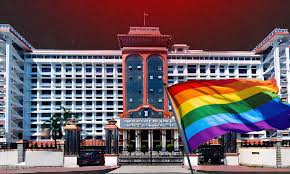
The approval follows a directive from the Kerala High Court on October 24, which had asked the BCI to consider and approve the government’s request. Kochi: The Bar Council of India (BCI) has granted interim approval to the Kerala government’s proposal to create two supernumerary seats for transgender students in all law colleges across the state. The move is being hailed as a significant step towards inclusivity in legal education. The approval follows a directive from the Kerala High Court on October 24, which had asked the BCI to consider and approve the government’s request. The Kerala government had submitted its proposal on August 6, seeking permission to introduce additional seats under the transgender category in both three-year and five-year LLB programmes. When the matter came up on Thursday, Justice VG Arun recorded his satisfaction over the progress made. “It is heartening to note that pursuant to this Court’s order dated 24/10/2025, the Bar Council of India has granted interim approval to the proposal of the Government of Kerala for two supernumerary posts in each law college for the transgender category for the academic year 2025-26,” the court observed. The development came during the hearing of a petition filed by a transgender woman, who had qualified in the Kerala Law Entrance Examination (KLEE) 2025 and was ranked eligible for admission to the Government Law College, Kozhikode. However, she was denied admission since no separate category or seat existed for transgender candidates in the allotment list prepared by the Commissioner for Entrance Examinations (CEE). The petitioner argued that the denial violated her fundamental rights, as well as the Supreme Court’s NALSA judgment and provisions of the Transgender Persons (Protection of Rights) Act, 2019, which mandate equal access to education and non-discrimination. She sought the court’s direction to secure her admission under the transgender category and to ensure that such reservations are implemented across all government law colleges and universities in the state. Following the BCI’s submission, the petitioner’s counsel informed the court that they would implead all law colleges and universities in Kerala in the case, noting that only the University of Calicut had been named so far. The court posted the matter for further hearing on Friday, November 7, to issue appropriate directions. “Let this be helpful to others also,” Justice Arun orally remarked. (Except for the headline, this story has not been edited by NDTV staff and is published from a syndicated feed.) Courtesy : NDTV Note: This news is originally published on https:/ndtv.com/bha and is used purely for non-profit/non-commercial purposes, especially human rights
Ministers, Actor, Singer And Transgender Up For Election In Bihar Phase 1

The list, among others, includes Tejashwi Yadav of the Rashtriya Janata Dal, his estranged brother Tej Pratap Yadav who has formed his Janshakti Janata Dal, the state’s two Deputy Chief Ministers — Samrat Choudhary and Vijay Kumar Sinha – and the party’s cultural face Maithili Thakur. New Delhi: The first phase of the assembly election in Bihar has begun with polling being held on 121 constituencies across 18 districts. The rest of the 243 constituencies will go to polls on November 11. The first phase will see many of the state’s heavyweights contesting. The list, among others, includes Tejashwi Yadav of the Rashtriya Janata Dal, his estranged brother Tej Pratap Yadav who has formed his Janshakti Janata Dal, the state’s two Deputy Chief Ministers — Samrat Choudhary and Vijay Kumar Sinha – and the party’s cultural face Maithili Thakur. Some of the prominent candidates in this phase of election: Tejashwi Yadav (RJD): Raghopur Latest and Breaking News on NDTV Rashtriya Janata Dal’s Tejashwi Yadav, the Chief Ministerial face of the Grand Alliance, is up for another contest from family turf Raghopur. His opponent is the BJP’s Satish Kumar. The contest in this Yadav-dominated constituency is seen by many as just a formality. The seta has been voting for the RJD since 1995, when Lalu Yadav came to power – the exception was the one time between 2010-2015, when the JD(U) held the seat. Tejashwi Yadav has been the sitting MLA here since 2025. Even so, the Jan Suraaj party of election strategist-turned politician Prahsant Kishor has pitched a candidate — Chanchal Kumar. Tejashwi Yadav’s promise of a government job for one member of every household is being seen by his party as a game-changer in this election. Tej Pratap Yadav (JJD): Mahua Latest and Breaking News on NDTV Tej Pratap Yadav, Lalu Yadav’s son, had formed his own party, Janshakti Janata Dal, after the very public estrangement with his family when his 12-year relationship with a woman came to light. Tej Pratap Yadav said the Facebook post that laid it bare was the result of hacking. But his family took exception to the situation and disciplinary action was taken against him. The elder brother of Tejashwi Yadav, Tej Pratap was a minister in Nitish Kumar’s government when the Janata Dal United was part of the Grand Alliance. This time, he is up against RJD’s Mukesh Kumar Raushan, the sitting MLA in Vaishali district’s Mahua constituency. Sanjay Singh, leader of Chirag Paswan’s Lok Janshakti Party, is also in fray. JJD comprises five regional parties – Vikas Vanchit Insaan Party (VVIP), Bhojpuria Jan Morcha (BJM), Pragatisheel Janata Party (PJP), Wazib Adhikar Party (WAP), and the Sanyukt Kisan Vikas Party. Maithili Thakur (BJP): Alinagar Latest and Breaking News on NDTV The BJP’s cultural pick in Bihar, folk singer Maithili Thakur, will contest her maiden election from Alinagar in Darbhanga district, the area from where her family hails. For long, Alinagar has been the territory of Lalu Yadav’s Rashtriya Janata Dal. In 2020, the seat was won by Mishri Lal Yadav, who held the ticket from Vikassheel Insaan Party and then defected to the BJP. The singer expects to win the seat – which was formed in 2008 after delimitation. Darbhanga is one of the two districts that comprise Mithilanchal and the BJP now hopes that the 25-year-old Thakur will help rope in the young voters. Maithili Thakur joined the BJP in October, saying she wants to “carry forward the culture of the region”. She is facing RJD’s Binod Mishra and Jan Suraaj Party’s Biplaw Kumar Chowdhary. Samrat Choudhary (BJP): Tarapur Latest and Breaking News on NDTV The BJP’s Samrat Choudhary, Chief Minister Nitish Kumar’s deputy who handles the finance ministry, will contest his first election in 15 years from Tarapur in Munger district. His challenger is RJD’s Arun Shah, who has a tough battle on his hands in this constituency dominated by backward castes. Shah had lost the 2021 by-poll by a slender margin of less than 4000 votes to JD(U)’s Rajiv Kumar Singh. The JD(U) has been holding the seat since 2010, when the sitting MLA and three-time winner, RJD’s Shakuni Chowdhary, died. Samrat Choudhary, who joined the BJP after engineering a split in the RJD and walking out with his supporters, belongs to the Kushwaha community, seen as the state’s largest caste group after the Yadavs. Vijay Kumar Sinha (BJP): Lakhisarai Latest and Breaking News on NDTV Chief Minister Nitish Kumar’s other deputy, Vijay Kumar Sinha, a five-time MLA, will be contesting for a sixth term from Lakhisarai in Munger district. His opponent will be Jan Suraaj Party’s Suraj Kumar. The constituency, dominated by Bhumihars, has been a BJP stronghold for the last 15 years. Sinha has been the sitting MLA there since 2010. He also won in the first assembly election in 2005 from Lakhisarai. But in the second one held later that year because of the fractured verdict, he was replaced by Rashtriya Janata Dal’s Fulena Sinha. Sinha, a Bhumihar leader and former RSS worker, had become the BJP’s first-ever Speaker in Bihar after the party came to power in alliance with the JD(U) in 2020. But he stepped down in 2022 after the Grand Alliance – following Nitish Kumar’s switch — moved a no-confidence motion against him. Bhojpuri actor Khesari Lal Yadav (RJD): Chhapra Latest and Breaking News on NDTV Bhojpuri superstar Khesari Lal Yadav, one of the best-known singers and actors in the most popular dialect of Bihar and eastern Uttar Pradesh, is RJD’s answer to Maithali Thakur. He is facing Chhoti Kumari from the BJP. The contest has become triangular with the entry of Independent candidate Rakhi Gupta. The actor, who appeared in more than 70 films, and had given his voice to over 5,000 songs, had drawn attention by taking on the BJP over temples during his campaign. One can build temples, but “will they decide our children’s future,” he had questioned. “If temples decide our children’s future, I want you to build 200
‘Transgender people deserve dignity:’ Jan Suraaj Transgender Candidate Priti Kinnar

A rare candidature marks a significant step for transgender visibility in Bihar politics, despite the continued stigma faced by the community. Social worker Priti Kinnar (Preeti Kinnar), a transgender activist, is the candidate fielded by Prashant Kishor’s Jan Suraaj Party for the 2025 Bihar Assembly elections. Her candidature is also a strong message of inclusion and signals the changing political engagement by the marginalized groups in Bihar. Transgender candidates have been contesting elections for over a decade in India, but not many win. Her victory may be historic like that of Shabnam Mausi, who remains the most-well known transgender MLA, representing Sohagpur assembly constituency in Madhya Pradesh, elected in 1998. Speaking to Outlook, Priti stressed, that she believes that she will winning this election as she has complete faith in her community and the work she has done in the region. Priti faces a tough battle as she would be challenging the sitting Janta Dal (United) MLA currently the State Education Minister and former IPS office, Sunil Kumar as a candidate for the Bhorey constituency, Gopalganj district. What does she count as her strength? “My strength lies in the fact that I have been a part of every aspect of my constituency. I live here and take part in every activity here. I don’t think my opponent can challenge that. So, I am certain of my victory.” Originally from Sitamarhi district, Priti was forced to leave her parents’ home at the age of 20 after facing humiliation from the local residents. She lives in the Kalyanpur village of Bhore block, where her source of livelihood is farming and Badhai gana, the traditional celebratory singing. “Even the little money that I make from attending to the door-to-door celebrations, I give it back to the society. This is how I have lived my life since I left my home. That is why I have earned a lot of respect from people here. But having said that the stigma that I faced back then persists in the society even today for the transgender people,” he says. Bhorey, is a reserved seat for Scheduled Castes and falls under the Gopalganj Lok Sabha constituency. It’s located in northwestern Bihar, bordering UP. The region depends on agriculture for their livelihoods. There is hardly any industrial activity. “You can say, I have earned the trust of my people,” says Priti, 41, as she continues to talk about her social work and community engagement . “I have been engaged in social work for over two decades. Wherever someone needs help, I try and I reach them and provide whatever help I can. I go and meet those affected by distress and disaster,” Priti told Outlook. Although transgender vote in her constituency is limited, what made her decide on contesting the elections? “Even my decision to join politics is due to the suggestions given by the people of Bhorey Assembly constituency. I initially hoped to contest as an independent contestant with a focus on social justice, equality and empowerment of all the marginalized groups. I realised that my vision aligned with the Jan Suraag Party and that is when I decided to join them.” So, what is it that she truly wants to achieve through active politics? “Access to education, medical care and guaranteed employment should be granted to transgender people. At the same time, I want to speak on behalf of all the oppressed groups, who don’t get a fair representation. Meanwhile, the transgender community continues to face stigma and exclusion and I take it as my responsibility to do something about it. To begin with, equals rights and dignity with more access to education and medical care for the community. And it can be achieved through political engagement,” she says. For the Bihar 2025 Assembly elections, Prashant Kishor’s newly-formed Jan Suraaj party has fielded 239 candidates. The candidates include doctors and educators, with a focus on local identity and community contributions. Fozia Yasin Courtesy : Outlook India Note: This news is originally published on https:/outlookindia.com/bha and is used purely for non-profit/non-commercial purposes, especially human rights
EC’s electoral roll revision in Bengal sparks citizenship concerns among transgender community
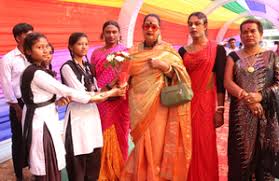
Kolkata: As the Election Commission of India (ECI) commenced the first phase of the three-stage Special Intensive Revision (SIR) in West Bengal on Tuesday, the state’s transgender community, particularly those who have undergone gender affirming surgery (GAS) or gender confirmation surgery (GCS), expressed an acute sense of uncertainty regarding their voter status. Their concerns, to an extent, are genuine, mainly on two grounds. The primary concerns among community members centre on significant mismatches in identity documents, namely, gender, name, and appearance after their transition. The second concern is that the “transgender identity card” issued by the Union government, as well as the certificate given through the National Portal for Transgender Persons, which are often required to update one’s gender in documents such as PAN, Aadhaar, and even passports, do not appear among the twelve supporting documents listed by the Election Commission for the SIR process. IANS spoke with several transgender activists in the city, as well as legal experts, to understand the community’s concerns regarding the SIR and possible ways to resolve them. Prominent activist and former member of the West Bengal Transgender Development Board, Ranjita Sinha, told IANS that there is a fear of having to fight once again for the right to an Indian identity for transgender persons. Sinha said, “People who changed their identity, whether through surgery or selfdeclaration, will face serious difficulty. If someone’s name was on the 2002 voters’ list, the photograph and name recorded then will not match their present identity. Booth Level Officers will also visit homes for verification. Many transgender persons were forced out of their homes after choosing to live according to their identity. Some parents even declared their children dead. What will happen to such individuals?” She added that many community members now stay in transgender shelter homes. Sinha said, “Many do not even possess the transgender cards issued by the government. How will they get their names added to the voters’ list when they will first be asked to prove their citizenship? The government formulates policy without taking into consideration the plight of the transgender community. There is uncertainty among our community members, and we need clear guidance from the government to remove this anxiety.” Speaking to IANS, Debangshi Biswas Chowdhury, founder of Transgender Odhikar Sanghati Mancha, said that recognising the “transgender identity card” as a valid proof would have supported a large section of the community. Chowdhury said, “Since the transgender card is not on the approved list, each individual must now approach the Booth Level Officer in their area to establish identity. This is troublesome, particularly for those whose families have already declared them dead. They must first prove they are alive and then prove who they are. Many also hold birth certificates, school leaving certificates, and other papers only in their previous identity. How will they now present documents that reflect their present identity? Our community is discussing the matter and plans to request the Election Commission to include the transgender card as an accepted proof.” Debika Barua, a social media figure and transgender activist, said that the affidavit made during a change of identity would assist many in linking their present identity to their earlier one. The difficulty, she pointed out, is that some members of the community lacked the means to file such an affidavit in court and, therefore, do not have this proof. “From what we have learnt, those who still hold old documents such as birth certificates or school leaving certificates, where their parents’ names appear, will be able to establish their identity. If their parents’ names were on the 2002 voters’ list, their citizenship will be accepted, and only an affidavit will then be required to confirm their present identity. The difficulty will arise for those who do not have such an affidavit,” Barua said. Senior advocate at Calcutta High Court, Kaushik Gupta, told IANS that many transgender persons fear their citizenship will be questioned through the SIR exercise. “If they do not appear in the 2002 voters’ list and their parents’ names are also missing, their right to vote may come under scrutiny. Citizens have the right to vote and also the right not to vote. The SIR cannot be used as the yardstick to establish both citizenship and identity. It places an unfair burden on the people, as several of them were thrown out of their houses by their parents years ago, and many do not even have proper documents with them. However, the saving grace is their affidavit or gazette notification, which they had done to change their identity. That document will be crucial to prove their identity,” Gupta said. An official within the Election Commission acknowledged that this remains a grey area in the SIR process and requires attention. The official said, “A solution will certainly be found to safeguard the voting rights of eligible transgender voters. In my view, the affidavit or gazette notification made during their identity change will serve as a useful document for establishing identity.” Courtesy : THI Note: This news is originally published on https:/thehansindia.com/bha and is used purely for non-profit/non-commercial purposes, especially human rights
Meet Akkai Padmashali, first transgender person from Karnataka to be part of SC-appointed panel
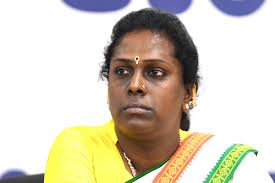
Trans rights activist Akkai Padmashali speaks about being named as a member of a Supreme Court-appointed committee. Trans rights activist Akkai Padmashali has been named as a member of a Supreme Court-appointed committee that has been to formulate an equal opportunity policy for the protection of the rights of transgender persons. With this, Ms. Padmashali becomes the first transgender person from Karnataka to be part of a panel appointed by the apex court. It is also the first Supreme Court-appointed committee to have representation from the transgender community. Reporting: Shilpa Elizabeth Courtesy : The Hindu Note: This news is originally published on https:/thehindu.com/bha and is used purely for non-profit/non-commercial purposes, especially human rights
Delhi government launches Pink Saheli Smart Card: Who can avail and how to register
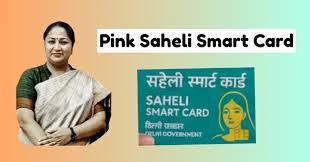
The Delhi government’s new Pink Saheli Smart Card aims to make public transport safer, easier, and free for women and transgender individuals in the capital. The Delhi government has launched the ‘Pink Saheli Smart Card’, a special initiative that allows free travel for women and transgender individuals in all Delhi Transport Corporation (DTC) and cluster buses. Announced by Chief Minister Rekha Gupta on Sunday, the scheme is designed to promote public transport, ensure safety, and make daily commuting more accessible for women and trans people across Delhi. With this move, all daughters, sisters, and mothers above 12 years of age will now be able to travel free of cost on DTC and cluster buses. The government said this is part of its broader effort to empower women, reduce transport costs, and encourage the use of public transport over private vehicles. The Pink Saheli Smart Card is a travel pass introduced by the Delhi government that enables women and transgender individuals to travel for free on all DTC and cluster bus routes. The initiative is part of Delhi’s ongoing mission to improve mobility, safety, and inclusivity in public transport. WHO CAN AVAIL THE BENEFITS? The free ride scheme applies to women and transgender individuals aged 12 years and above. They can use the card for unlimited free rides on Delhi’s public buses. HOW TO REGISTER FOR THE PINK SAHELI CARD Eligible passengers can register online through the Delhi Transport Department’s official portal or at designated DTC counters across the city. After registration, the Pink Saheli card will be issued, which can be used on all buses offering free travel under the scheme. Chief Minister Rekha Gupta said the initiative is a “significant step towards making travel easier and safer for women in Delhi.” She added that the government wants to promote the use of public transport and provide more facilities and respect for women’s power. The Pink Saheli card also encourages more women to use public buses, thereby reducing dependency on private transport and helping cut down traffic and pollution in the capital. The initiative has also been praised for extending benefits to transgender individuals, marking a step towards gender inclusivity in public services. Officials said the move reflects Delhi’s commitment to creating a fair and inclusive transport system for all sections of society. Courtesy : India Today Note: This news is originally published on https:/indiatoday.com/bha and is used purely for non-profit/non-commercial purposes, especially human rights