
Uttar Pradesh: Transgender Student Strives To Get Toilet Built For Her Community At her College
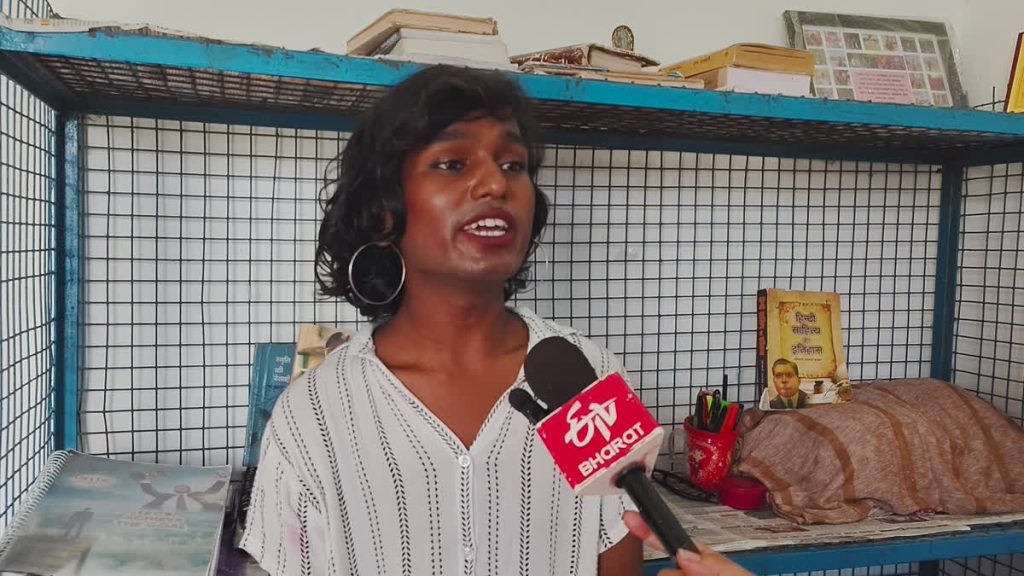
Hetvi, a student of Mahatma Gandhi Kashi Vidyapeeth, has written to the Vice Chancellor for a toilet for her community in the college. Varanasi: The transgender community in India remains marginalised despite legislations and voices of support for them from various quarters. But there are a few from the community who have vowed to fight for their rights. One of them is Hetvi from Varanasi who has sought restrooms for transgenders in colleges across Uttar Pradesh. Hetvi was born on September 8, 2003, in Chitaipur area of Varanasi. Her father is a delivery agent, and her mother, Babita, a housewife. She has a brother and a sister. Hetvi’s childhood normal. But as she reached the age of 12, she she began experiencing changes in her body which she ignored initally. However, As time progressed, she became increasingly worried. Hetvi said she gradually came to understand the changes and she gradually learned to live with it. Unlike other families, that of Hetvi supported her during the unusual transition. Hetvi said she continued her studies while managing herself during difficult times. After passing her high school and Intermediate exams, she enrolled at Mahatma Gandhi Kashi Vidyapeeth in 2023. Hetvi said when she joined the college, she couldn’t find a restroom for transgender. “I faced significant difficulties using the men’s restroom. At that moment, I realized that other transgenders might be facing similar problems. I decided to take the initiative to address the issue and wrote a letter to the Vice Chancellor, demanding the construction of a transgender restroom in the college,” she said. The transgender community in India remains marginalised despite legislations and voices of support for them from various quarters. Hetvi with her mother and siblings (ETV Bharat) Hetvi said only time will tell what decision the college administration will take on her letter, but she has fulfilled her responsibility. Hetvi is a member of the Transgender LGBT Group of Varanasi which has approximately 250 members. This group works for the welfare of transgenders and has joined Hetvi’s campaign. The group, along with Hetvi, runs a transgender culturalization programme and strives to bring transgenders into the mainstream of society. Hetvi said she formed an organization called ‘Rang’ to amplify the voice of the transgenders. “Transgender students studying at Kashi Vidyapeeth and its affiliated colleges are its members. Currently, 30 members have joined us,” she said. The transgender community in India remains marginalised despite legislations and voices of support for them from various quarters. Hetvi’s mother Babita (ETV Bharat) Babita said, when she learned about her child’s transformation, she began receiving taunts from society. “Whatever he is, he is my child. Nothing is more important to a mother than that. I have always raised him like my son. He will always be my son; I will never abandon him,” she said. Incidentally, Kashi Vidyapeeth has special facilities for transgender students. It also has the first transgender cell which works to help such students and address their problems. Hetvi said such an institution must also have a toilet for transgenders. Hetvi said at present she is focused on her objective of getting a toilet for transgenders constructed in the college. “I will raise other issued concerning the transgender community through ‘Rang’”, she said. Courtesy : ETV Bharat Note: This news is originally published on https:/etvbharat.com/bha and is used purely for non-profit/non-commercial purposes, especially human rights
Delhi govt launches ‘Pink Saheli Smart Card’ to provide free travel for women and transgender commuters across DTC buses

NEW DELHI: The Delhi government introduced the ‘Pink Saheli Smart Card’ on Sunday, a special initiative aimed at providing free and convenient travel for women and transgender individuals across Delhi Transport Corporation (DTC) and cluster buses.With this new scheme, daughters, sisters, and mothers above the age of 12 can now enjoy free rides across the capital. Delhi chief minister Rekha Gupta made the announcement on X post. “The Delhi government has launched the ‘Pink Saheli Smart Card’ for women and transgenders. Now, daughters, sisters, and mothers above 12 years of age will be able to travel free and conveniently on DTC and cluster buses,” CM Gupta said on X. “This initiative is a significant step towards making travel easier for women in Delhi, promoting the use of public transport, and providing more facilities and respect to women’s power,” the post further read. Earlier, Delhi education minister Ashish Sood on Friday announced that the Delhi government has taken a historic and significant decision under the visionary leadership of chief minister Rekha Gupta to grant recognition to private unaided schools operating in non-conforming areas of the city. According to a release, it’s a long-pending reform that restores the constitutional right to education for thousands of children across the city. According to this decision, all private unaided schools that have been functioning in non-conforming areas for a long time but have not yet obtained recognition from the Directorate of Education, either due to procedural reasons or due to the discriminatory approach of previous governments, can now apply for recognition from the Directorate of Education, Government of Delhi. The Directorate of Education’s online portal for submission of applications opened on November 1, 2025. All such schools willing to seek recognition may apply till November 30, 2025. After the completion of the application process, the received applications will be scrutinised, and a list of such schools that meet all the prescribed criteria for recognition will be issued thereafter, the release said. The education minister said, “For over a decade, this issue remained buried in files while children were denied their constitutional right to education. Previous governments played favouritism, recognising a few while neglecting many. Under the leadership of Chief Minister Rekha Gupta, we have ended this selective discrimination. This is not just administrative reform, it is justice for our children, fairness for our institutions and a genuine step towards democratising education in Delhi.” Courtesy : TOI Note: This news is originally published on https:/timesofindia.com/bha and is used purely for non-profit/non-commercial purposes, especially human rights
International CircuitTrump admin to restrict medical care for transgender youth
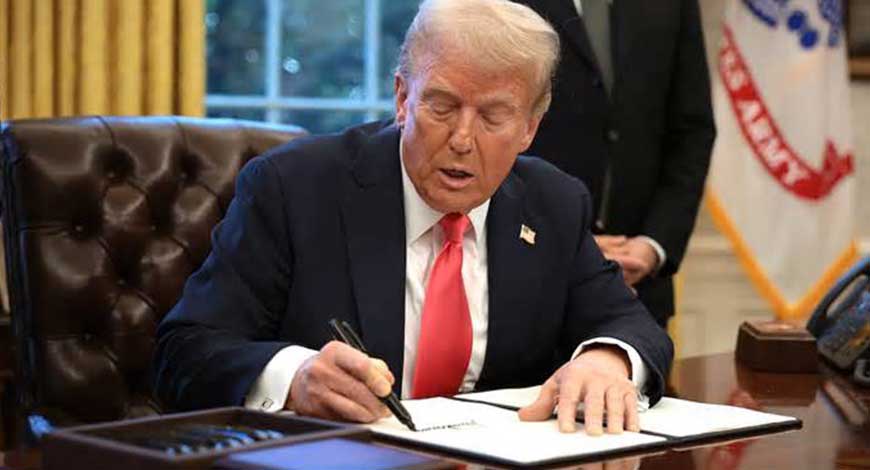
Access to gender-affirming care for transgender youth will be dramatically restricted by the Trump administration under new proposals by the Department of Health and Human Services. NPR has obtained the draft text of a proposed rule that would prohibit federal Medicaid reimbursement for medical care provided to transgender patients younger than age 18. It also prohibits reimbursement through the Children’s Health Insurance Program or CHIP for patients under age 19. An additional proposed rule would go even further, blocking all Medicaid and Medicare funding for any services at hospitals that provide pediatric gender-affirming care. The rules are being prepared for public release in early November, according to an employee at the Centers for Medicare and Medicaid Services. The employee asked that NPR not use their name because they fear professional retribution for speaking to the media without authorization. An HHS spokesperson did not respond to a request for comment about the planned timing of the proposed rules’ release. A near ban in all states Both supporters and opponents of transgender rights agree that, taken together, the forthcoming rules could make access to pediatric gender-affirming care across the country extremely difficult, if not impossible. The care is already banned in 27 states. “These rules would be a significant escalation in the Trump administration’s attack on access to transgender health care,” says Katie Keith, director of the Center for Health Policy and the Law at Georgetown University. “I think it’s really, really important to note that nothing is changing immediately,” she explains. “These would be proposals that would go out for public comment, it would take months for the Trump administration to issue a final rule, and then, if past is prologue, we would see litigation over whatever the final rules are.” Administration goals In his first days in office, President Trump signed an executive order declaring that the United States “will not fund, sponsor, promote, assist, or support the so-called ‘transition’ of a child from one sex to another.” In the months since, HHS released a report critical of the research that supports access to this care. A federal suicide prevention lifeline specifically for transgender youth was cancelled, as were hundreds of millions of dollars in scientific research funding related to LGBTQ people. Federal health officials warned state Medicaid directors to tread carefully, and the Department of Justice announced subpoenas of some children’s hospitals and threatened providers with prosecution. “I think these restrictions are very good,” says Terry Schilling of the forthcoming rules. Schilling is president of the American Principles Project, a conservative advocacy group. “It’s going to change the entire transgender industry, and it’s going to take away a lot of their funding streams.” He points to an opinion poll from the spring, which found 66% of the public opposes Medicaid coverage for this type of care for young people. “They believe that if you want to get some type of sex-trait modification procedure, you should have to pay for it,” Schilling says. “The American people are fully behind this effort.” Dramatic new expansion of power The proposal to condition a hospital’s participation in Medicaid and Medicare on halting gender-affirming care for youth represents an “unprecedented” use of the executive branch’s power to control what medical care is available in hospitals, says Keith. “Because Medicare is such a significant portion of many hospitals’ revenue,” she explains, the rule would essentially force hospitals to end their gender care programs for transgender youth. That would mean all of those programs’ patients — whether they have Medicaid or private insurance — would lose access. This is not how the federal government normally uses this type of rule, Keith says. She served in the Biden administration on the Gender Policy Council, and worked on some “conditions of participation” regulations for Medicare and Medicaid, she says. “They’re so basic — it’s like, you have to have a crash cart [with] enough medicine to help a pregnant woman in crisis.” Instead of health and safety standards, this proposal would instruct hospitals “to stop offering a certain type of care completely to a certain patient population,” she says. Law professor Katie Eyer of Rutgers University questions whether such a rule would survive a court challenge. “But if it were successful, I shudder to think what this administration would do with such a tool in their hands,” she says. It could open the door for any White House to withhold all federal funding from hospitals over the provision of medical care that it disfavors. “The writing has been on the wall that this has been coming,” says Lindsey Dawson, director of LGBTQ Health Policy at KFF, a nonpartisan health research organization. Yet the timing of the release has been a mystery for months. Notice of both proposed rules — though not the rules themselves — appeared on a government register over the summer, and it’s been unclear why they have yet to be released, Dawson says. NPR Courtesy : Medical Buyer Note: This news is originally published on https:/medicalbuyer.com/bha and is used purely for non-profit/non-commercial purposes, especially human rights
Bihar Election 2025: Jan Suraaj Fields Transgender Social Worker Preeti Kinnar from Bhore Assembly Seat in Bihar

Jan Suraaj Party nominates transgender social worker Preeti Kinnar from Bhore Assembly seat to showcase the party’s image of inclusivity. The Bhore Assembly constituency in Gopalganj district is emerging as one of the most closely watched seats in the upcoming Bihar Assembly elections. Reserved for Scheduled Castes, Bhore has long been a stronghold of traditional political faces. But this time, the contest has taken a new turn with the Jan Suraaj Party fielding Preeti Kinnar, a transgender social worker, as its candidate — a move that has drawn both attention and controversy. The Bhore Constituency Bhore, located in southern Gopalganj, has a mixed voter base of Dalits, Extremely Backward Classes (EBCs), and minorities. The constituency has seen tough contests in the past, with narrow victory margins. In the 2020 Assembly elections, JDU’s Sunil Kumar, who also serves as Bihar’s Education Minister, defeated CPI (ML)’s Jitendra Paswan by just 462 votes — one of the slimmest margins in the state. The tight race reflects how volatile and unpredictable Bhore’s political mood can be. This time, the entry of the Jan Suraaj Party, led by political strategist-turned-politician Prashant Kishor, has added a new dimension. Kishor’s party has positioned itself as an alternative to Bihar’s mainstream players — JDU, RJD, and BJP — by focusing on grassroots leaders and social workers instead of established politicians. On October 9, 2025, Prashant Kishor released Jan Suraaj’s first list of 51 candidates. Among doctors, lawyers, retired bureaucrats, and community leaders, one name stood out — Preeti Kinnar. Her nomination from Bhore symbolized Kishor’s promise of giving space to people from underrepresented and marginalized groups. Who is Preeti Kinnar? Preeti is from Khap village of Sonbarsa block in Sitamarhi district. Aged 41, she has been living in Kalyanpur village of Bhore block for the past 22 years. A matriculate by education, she earns her living through singing devotional songs and animal rearing. But what defines her most is her long-standing commitment to social service. Since 2008, Preeti has been actively working for the poor, especially women and girls. She has arranged marriages for over 27 underprivileged couples and provided food and essentials to hundreds of families during the COVID-19 lockdown. During natural calamities and accidents, she has often stepped in with relief materials, using her personal funds and community donations. Preeti’s nomination has not come without controversy. Jan Suraaj leader Vijay Aman has accused her of falsely claiming Dalit status to contest from the reserved constituency. He alleges that Preeti belongs to an upper-caste family and that her Scheduled Caste certificate was obtained fraudulently. Some of Preeti Kinnar’s caste is listed as Paswan on some documents, while official records like land registries list her father’s name as Harischandra Srivastava. This is why questions are being raised about her caste. Preeti has strongly denied these allegations. According to Jan Suraaj officials, a party team had visited her village in Sitamarhi and found no grounds to doubt her caste identity. Despite the controversy, Preeti’s candidacy has been welcomed by many locals. People believe that this could be a good strategy by Jan Suraaj to showcase its inclusive image. There are only 13 transgender voters in Bhore and 67 in the entire district, but the symbolic importance of her nomination goes beyond numbers. The representation of the third-gender community in politics is still very low. For Jan Suraaj, the move signals its commitment to a politics of inclusion. For Preeti, it’s a chance to transform years of grassroots work into legislative action. [Rh] Author: Varsha Pant Courtesy : News Gram Note: This news is originally published on https:/newsgram.com/bha and is used purely for non-profit/non-commercial purposes, especially human rights
Kerala halts PM SHRI scheme after CPI’s protest, coalition tensions rise
Kerala has frozen all procedures linked to the PM SHRI schools project after the Communist Party of India (CPI) strongly objected to the move. A cabinet subcommittee will now review the matter as tensions rise within the ruling Left Democratic Front (LDF). The Kerala government has suspended all procedures related to the implementation of the Pradhan Mantri Schools for Rising India (PM SHRI) scheme following strong objections from the Communist Party of India (CPI), a key ally in the Left Democratic Front (LDF) coalition. Chief Minister Pinarayi Vijayan’s administration announced the decision after four CPI ministers boycotted the latest cabinet meeting in protest. The party accused the state government of signing the PM SHRI memorandum of understanding (MoU) without consulting the cabinet or coalition partners. SEVEN-MEMBER PANEL TO REVIEW DECISION A seven-member cabinet subcommittee has been formed to examine the scheme in detail. All related procedures will remain frozen until the committee submits its report. Kerala will write to the Centre seeking relaxations in the scheme’s conditions, calling certain provisions “unacceptable”. The chief minister has also instructed the Education Department to halt the process of finalising schools to be brought under the project. The decision followed a CPI(M) secretariat meeting at the AKG Centre, attended by Chief Minister Pinarayi Vijayan, CPI(M) national secretariat member M A Baby, state secretary M V Govindan, and LDF convener T P Ramakrishnan. However, no official government announcement has been made yet. COALITION CRACKS DEEPEN The CPI’s four ministers, K Rajan, P Prasad, G R Anil Kumar, and J Chinchurani, skipped the cabinet meeting, demanding that the government formally freeze the MoU and inform the Centre in writing, with the letter made public. Reports suggest Kerala may not be able to withdraw from the project since state representatives have already signed the agreement. Under the PM SHRI guidelines, the Centre can recover funds if a state violates the terms of the deal. Efforts to resolve the crisis have so far been unsuccessful. Chief Minister Vijayan held discussions with CPI state secretary Binoy Viswam and CPI ministers earlier this week, but talks failed to produce a consensus. POLITICAL TENSIONS OVER EDUCATION POLICY The CPI has accused the PM SHRI initiative of being a backdoor route to impose the National Education Policy (NEP) and “communalise, centralise, and commercialise” education. Union Minister of State George Kurian, however, recently clarified that the scheme does not impose any central syllabus or policy on participating states. With the dispute intensifying, the episode marks one of the sharpest rifts between the CPI and CPI(M) within the LDF government since it assumed office. Courtesy : India Today Note: This news is originally published on https:/indiatoday.com/bha and is used purely for non-profit/non-commercial purposes, especially human rights
Transgender and two others arrested for possessing mephedrone

Pune: The Anti-Narcotics Task Force of Maharashtra police on Tuesday evening arrested a transgender person (21), a woman (27), and a Ghorpadi-based man (22) for allegedly possessing mephedrone. Other than the drugs, a weighing machine and a scooter — collectively estimated at Rs 4.32 lakh — were seized from them, police said. A police officer said the transgender and the woman were searching for customers on Manjari Road near Hadapsar when they were nabbed by a team, headed by deputy superintendent of police Ganesh Ingle. Later, the two told police that the Ghorpadi resident supplied them the drugs to sell, the officer said. An FIR under sections of the Narcotic Drugs and Psychotropic Substances Act was registered at the Hadapsar police station. Police said the transgender and the woman are residents of Hadapsar. Courtesy : TOI Note: This news is originally published on https:/timesofindia.com/bha and is used purely for non-profit/non-commercial purposes, especially human rights
Kerala High Court Directs BCI to Approve Two Seats for Transgender Students in All Law Colleges
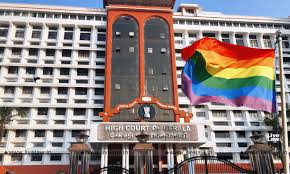
The order came after a transgender woman, denied admission despite qualifying in the Kerala Law Entrance Examination 2025, cited the NALSA judgment and the Transgender Persons Act, 2019. The Kerala High Court on Friday directed the Bar Council of India (BCI) to approve two seats for transgender students in all law colleges across the state. Justice V.G. Arun issued the interim order while hearing a petition seeking to expedite the decision on the proposal, which had been pending before the BCI. The court noted that the issue could not be kept waiting indefinitely for the Council to act. During the hearing, the petitioner’s counsel informed the court that the BCI had earlier been directed to finalise a date for its General Council meeting to decide on the matter. However, the BCI’s standing counsel told the court that the proposal had been placed before the Standing Committee for Legal Education, which, after deliberation, decided that the final decision must be taken by the General Council. The standing counsel also said it was not possible to specify when the next General Council meeting would be held. Taking note of the delay, Justice Arun remarked, “In my opinion, the issue cannot wait endlessly for the General Council of the Bar Council to meet.” Accordingly, the court issued an interim direction to the BCI to approve the Kerala government’s request, communicated through a letter dated August 6, for the creation of two seats for transgender students in all law colleges across the state. The directive came while hearing a petition filed by a transgender woman who was denied admission to Government Law College, Kozhikode, despite qualifying in the Commissioner for Entrance Examinations’ Kerala Law Entrance Examination (KLEE) 2025. The petitioner referred to the landmark NALSA v. Union of India judgment and the Transgender Persons (Protection of Rights) Act, 2019, in support of her plea. Courtesy : Outlook India Note: This news is originally published on https:/outlookindia.com/bha and is used purely for non-profit/non-commercial purposes, especially human rights
UPSC Editorial Analysis: Supreme Court’s 2025 Judgment on Transgender Rights
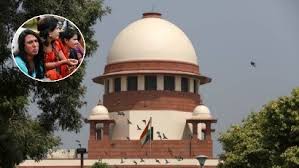
General Studies-2; Topic: Welfare schemes for vulnerable sections of the population by the Centre and States and the performance of these schemes; mechanisms, laws, institutions and Bodies constituted for the protection and betterment of these vulnerable sections. Introduction The Supreme Court’s judgment in Jane Kaushik vs Union of India (2025) has reignited national debate on the implementation failure of transgender rights in India. Despite the 2014 NALSA judgment and the Transgender Persons (Protection of Rights) Act, 2019, the apex court found that most governments—both central and state—failed to enforce protections and welfare schemes for transgender persons. Background: NALSA Judgment (2014) In National Legal Services Authority (NALSA) vs Union of India (2014), the Supreme Court: Recognized transgender persons as the “third gender.” Affirmed their fundamental rights under Articles 14, 15, 16, and 21 of the Constitution. Upheld the right to self-determination of gender identity, independent of medical or surgical proof. Directed the Central and State governments to: Treat transgender persons as a socially and educationally backward class (SEBC). Provide reservations in education and employment. Ensure access to health care, education, and public facilities. Conduct sensitization programs to promote inclusivity. The verdict was hailed globally as a landmark for gender justice, comparable to judgments on LGBTQ+ rights in other democratic nations. Legislative Follow-Up: Transgender Persons (Protection of Rights) Act, 2019 Enacted to implement NALSA’s directions and protect transgender persons from discrimination. Key provisions: Prohibits discrimination in education, employment, healthcare, housing, and public services. Establishes the National Council for Transgender Persons (NCTP) to advise the government. Mandates welfare measures and social inclusion. Criticisms of the Act: Requires a certificate of identity from a District Magistrate, diluting NALSA’s principle of self-identification. Does not provide clear reservation quotas, despite NALSA’s directive. Lacks penalties or monitoring mechanisms for non-compliance. Insufficient attention to livelihood generation and healthcare access. Hence, while the law exists, it has remained largely symbolic and poorly implemented across India. Significance of the Supreme Court’s Intervention Reinforces judicial commitment to substantive equality, not just formal equality. Recognizes state inaction as a violation of fundamental rights, expanding accountability. Institutionalizes implementation by creating a committee-led reform structure. Sends a clear message to bureaucracies that neglect of marginalized groups invites constitutional scrutiny. Revives public discourse and empowers civil society movements advocating transgender rights. Key Directives Issued by the Supreme Court The Court issued a series of directions to revive enforcement and accountability: Formation of an Advisory Committee headed by Justice (Retd.) Asha Menon, to: Evaluate the implementation of the 2019 Act and its Rules. Recommend a “viable equal opportunity policy” for transgender persons. Time-bound implementation: Union and state governments must frame policies within three months of receiving the Committee’s report. Guidelines to institutions: Educational and healthcare institutions must ensure gender-sensitive policies, infrastructure, and grievance mechanisms. Recognition of omission as violation: The Court held that failure to act (state inaction) can also violate fundamental rights under Article 21. Dimensions of Failure and Exclusion Administrative Apathy Many states have not formed welfare boards, notified rules, or allocated budgets. Lack of data collection and absence of performance indicators hamper monitoring. Welfare schemes, where they exist, remain underfunded and uncoordinated. Social and Institutional Prejudice Transgender persons continue to face stigma, ridicule, and exclusion in schools, workplaces, and healthcare systems. Institutional structures—police, schools, and local governance—often remain insensitive or discriminatory. The failure of governance reflects broader societal bias and not mere bureaucratic delay. Multi-Dimensional Exclusion Education: Dropout rates are high due to bullying and lack of acceptance. Employment: Many transgender persons depend on begging or sex work due to exclusion from formal jobs. Health: Lack of access to gender-affirming care, hormone therapy, and mental health support. Social Security: Difficulty in obtaining identity cards, ration cards, or bank accounts due to mismatched gender details. Way Forward Institutional Measures Establish Transgender Welfare Boards and grievance redressal mechanisms in every state. Conduct annual audits on policy outcomes and fund utilization. Create gender desks in educational and healthcare institutions. Affirmative Action Implement reservations in education and employment, in line with NALSA. Introduce skill development programs, entrepreneurship schemes, and micro-credit access. Extend coverage under PM Jan Dhan Yojana, Ayushman Bharat, and housing schemes. Legal and Administrative Reforms Amend the 2019 Act to make self-identification absolute. Strengthen enforcement provisions and penalize discrimination. Introduce Uniform Guidelines for recruitment, HR policies, and workplace inclusion. Awareness and Sensitization Conduct mandatory gender-sensitization training for public officials, teachers, and medical staff. Integrate gender diversity modules in school curricula. Promote positive media representation to challenge stereotypes. Access to Health and Welfare Provide free gender-affirming care in government hospitals. Establish dedicated mental health and counselling units for the transgender community. Simplify procedures for changing name and gender in official documents. Social Transformation Encourage community-based organisations (CBOs) to participate in implementation. Launch public campaigns to normalize transgender presence in public life. Promote political representation and participation in decision-making. Conclusion For India, ensuring the dignity and inclusion of transgender persons is not only a legal obligation but also a moral and developmental necessity. True democracy can be achieved only when every citizen, irrespective of gender identity, lives with dignity, security, and equality before the law. Courtesy : Insight IAS Note: This news is originally published on https:/insightias.com/bha and is used purely for non-profit/non-commercial purposes, especially human rights
Yrs of rejection, bias took trans teacher Jane Kaushik to SC. She finally got justice—‘it’s about dignity’
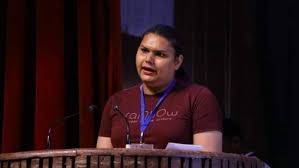
Jane faced discrimination while looking for employment in schools, and even from institutions meant to protect her rights. She now calls for systemic change. New Delhi: After years of facing rejection and prejudice for being a transgender, Jane Kaushik, a trained teacher, finally found justice in the Supreme Court, which held both private schools and state authorities accountable for failing to protect her rights. The court on 17 October delivered a landmark judgment addressing systemic discrimination against transgender persons in employment. The two-judge bench of Justices J.B. Pardiwala and R. Mahadevan criticised both central and state governments for failing to implement the Transgender Persons (Protection of Rights) Act, 2019, and the 2020 Rules, despite these laws being in force for several years. It noted that the absence of functional grievance redressal mechanisms, welfare boards, and complaint officers had rendered legal protections for transgender individuals largely symbolic. At the heart of the case is Jane Kaushik who faced discrimination in two private schools solely because of her gender identity. Her perseverance for justice culminated in the Supreme Court awarding her a total compensation of Rs 2 lakh: Rs 50,000 each from the Centre, the states of Uttar Pradesh and Gujarat, and Rs 50,000 from a private school in Gujarat. Speaking exclusively to ThePrint, Jane recounted her first experience of discrimination at a school in Uttar Pradesh. “One of the students discovered my gender identity, and the principal also found out. Immediately, I was terminated, not allowed to take classes that day, and asked to vacate the hostel even though there was no train available to Delhi. I had to take a late-night bus, traveling alone, which was terrifying,” she said. Despite being from Delhi and holding two Master’s degrees, one in political science and another in English, along with a Bachelor of Education degree, Jane said she faced repeated rejections while looking for a teaching job. “When I mentioned my gender identity while applying to schools in Delhi, there was silence. Some HR persons even told me that principals were not interested in entertaining my CV once they got to know I am a transgender,” she added. Jane’s experience in Gujarat in 2023 further highlighted deep-seated bias. She had been selected for a teaching position but was refused employment once the school became aware of her transgender identity. “They literally scolded me over the phone, asking whether I would negatively influence children. Instead of giving me a job, they suggested I should work in a big city area,” she told ThePrint. The recurrent bias left Jane traumatised, affecting her mental health. She continues to seek psychiatric help for depression and anxiety resulting from years of discrimination, she said. Institutional failure Before approaching the Supreme Court, Jane had sought help from key rights institutions, including the National Commission for Women, the National Human Rights Commission and the National Council for Transgender Persons. She said their committees often overlooked her testimony and were influenced by the schools. “A committee set up by the National Commission for Women didn’t even ask me about the discrimination I faced. They relied on statements from the school instead,” she asserted. Even the police failed to offer meaningful support. “I could have called the police when I was terminated, but as a transgender woman, I feared insensitivity or abuse. It was only through guidance from the Delhi Commission for Women that my complaint was registered (against the school) in Lakhimpur Kheri, UP,” she said. While the Supreme Court’s order of Rs 2 lakh compensation is a recognition of her ordeal, Jane said the amount does not fully reflect the financial and emotional losses she suffered. “I stayed at home for six-seven months with a salary of Rs 45,000 per month. This amount does not compensate for my mental trauma and the impact on my career,” she told ThePrint. Jane also highlighted a broader issue while urging for systemic change. “Even with NALSA 2014 (SC judgement recognising transgender people as ‘third gender’), Transgender Persons Act (2019), and the 2020 Rules, implementation is lacking. Without political and bureaucratic will, such discrimination continues. Transgender persons are often treated as second-class citizens,” she said. “It’s not just about money. It’s about visibility, dignity, and representation in schools, public offices and universities. Until the Supreme Court directions and laws are fully implemented, nothing will change.” Ruchi Bhattar (Edited by Nida Fatima Siddiqui) Courtesy : The Print Note: This news is originally published on https:/theprint.com/bha and is used purely for non-profit/non-commercial purposes, especially human rights
CU plans separate hostel for trans applicants

Kolkata: In a recent notification for hostel allocation, Calcutta University has asked transgender applicants to indicate their gender on the application form. The university uploaded a set of rules and regulations where it was mentioned, “Transgender students, please specify in the form by mentioning ‘TRANSGENDER’ on the right side of the form.” Officials said the university is planning separate arrangements for transgender students. Sources said the university is planning to conduct repairs across several hostels that are in poor condition. An official said, “There is a section in the admission portal for transgender students to specify their gender, and, as far as I can remember, there are some transgender students in some departments. If transgender students take admission, they may need hostel accommodation if they live far from campus.” Another official said, “We are a student-friendly university and keen to provide the most comfortable environment for them. We have girls’ hostels and boys’ hostels, but transgender students need separate arrangements, including gender-neutral washroom facilities.” Transgender activist Ranjita Sinha said: “This is a good move but we are living in a society where there is still stigma against trans people. So, the university needs to sensitise other boarders, and, in the name of making separate arrangements, trans students should not be isolated. The university should check all these matters before making separate hostel facilities.” Courtesy : TOI Note: This news is originally published on https:/timesofindia.com/bha and is used purely for non-profit/non-commercial purposes, especially human rights