
BJP’s Anil Bonde Alleges Forced Conversions Of Transgender Persons In Maharashtra

The Rajya Sabha MP claims a network is coercing transgender individuals in Amravati and Yavatmal to convert to Islam, urges urgent police action. Anil Bonde alleges a coercive conversion racket targeting transgender persons in Amravati and Yavatmal. Some affected individuals reportedly reconverted to Hinduism at the Kumbh Mela in Prayagraj. Bonde plans to inform Chief Minister Devendra Fadnavis and has demanded immediate police action. A BJP Rajya Sabha member has claimed that a racket is forcing transgender persons in Maharashtra’s Amravati and Yavatmal districts to convert to Islam, prompting demands for immediate police action. PTI reported that Anil Bonde told reporters on Saturday that several transgender individuals from Amravati had approached him alleging forced religious conversion, which he said had created fear within the community. Some of those who complained had reconverted to Hinduism through a ritual at the Kumbh Mela held earlier this year in Prayagraj, Uttar Pradesh, he said. According to PTI, Bonde added that he would inform Chief Minister Devendra Fadnavis about the matter and pressed the state government to initiate urgent police action. Courtesy : Outlook India Note: This news is originally published on https:/outlookindia.com/bha and is used purely for non-profit/non-commercial purposes, especially human rights
Transgender from Indore, MP, raped: 25 lakh rupees defrauded and physically exploited under pressure to change gender

Police are taking this case seriously and investigating from various angles. Financial transactions, bank details, chat records, and medical documents are also being examined. Bhopal. Serious allegations made by a transgender model in Indore, Madhya Pradesh, have raised deep concern within the police department and society. The 23-year-old victim, a resident of Indore and working in the field of modeling and fashion designing, has accused Yuvraj Rajput, a resident of Dewas, of rape, fraud, pressure to change her gender, and extorting 25 lakh rupees. Police have registered an FIR in the case, arrested the accused, and initiated an investigation. First acquaintance, then conversation According to the victim, she met Yuvraj Rajput, a resident of Dewas, some time ago during a family function. A casual introduction at the event led to a social media conversation, and the two remained in constant contact on Instagram. During this conversation, the victim clearly told Yuvraj that she was transgender. According to the victim, Yuvraj did not object to this information at that time, but instead, the conversation and their closeness grew. Reached the house under the pretext of meeting and committed rape According to the details recorded in the FIR, on May 9, 2024, Yuvraj arrived at the victim’s house under the pretext of meeting her. It is alleged that during the meeting, he forcibly had physical relations with her. When she resisted, Yuvraj threatened her and told her that if she liked him and wanted to marry him, she would have to become a woman. The victim claims that from that day on, Yuvraj began continuously exploiting her mentally, physically, and financially. Pressed to undergo gender reassignment surgery, forced her to undergo treatment with a doctor, and extorted money The victim told the police that Yuvraj pressured her to undergo gender reassignment surgery and forced her to undergo treatment with a doctor. He extorted a large sum of money from her in the name of transgender surgery and hormonal treatment. It is alleged that he took approximately 25 lakh rupees from her under the pretext of medical treatment and marriage. Furthermore, the victim stated that Yuvraj used the money to buy a car for himself, which was paid for with her own money. Pressure to have relationships with friends, allegations of drugging and assault The complaint also states that Yuvraj would pressure her into relationships with his friends after drugging her. He would beat and threaten her if she refused. According to the victim, she endured prolonged mental and physical torture, after which she mustered the courage to file a complaint with the police. Accused arrested, molestation cases filed previously Following the incident, police took action and arrested Yuvraj Rajput. Preliminary investigations also revealed that Yuvraj runs a gym in Dewas. According to police records, some young women who visited the gym had previously filed complaints of molestation against him, and a case was registered in that case as well. Cybercrime and economic crimes are also being investigated. Police are taking this case seriously and investigating from various angles. Financial transactions, bank details, chat records, and medical documents are also being examined. Police say the allegations are serious and if concrete evidence is found, additional charges may be added against the accused. Ankit Pachauri Courtesy: Hindi News
Transgender students are not eligible for NCC recruitment! Learn what the Kerala High Court told the Central Government to address this policy gap.
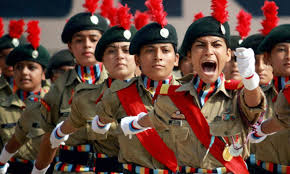
Suggestion to consider establishing an NCC Transgender Division Ernakulam: The Kerala High Court dismissed a petition filed by a 22-year-old transgender student seeking admission to the NCC due to the lack of a provision in the NCC admission rules. However, the court made an important recommendation to the Central Government, stating that transgender students should also be given the opportunity to join the NCC. The High Court directed the Ministry of Defense and the Ministry of Law to seriously consider this issue. The current law does not provide for admission of transgender students into the NCC, which the court emphasized needs to be amended. A bench headed by Justice N. Nagaresh dismissed the petition filed by transgender student Janvin Cleetus, but also directed the Central Government to review the issue and take necessary action. This decision marks a significant turning point in the fight for equal opportunities in public life for the transgender community. What is the whole matter? Janvin Cleetus, a resident of Valiathura, Thiruvananthapuram, applied for admission to the 30(K) Battalion NCC, Calicut. Cleetus possesses a transgender identity card issued by the Thiruvananthapuram District Collector on February 14, 2024, and met all the eligibility criteria and participated in the selection process. However, during the interview, he was informed that he could not be admitted to the NCC due to his gender identity. Advocate Dhanuja M.S., representing the petitioner, argued that this discrimination based on gender identity is a direct violation of Articles 14 (equality before the law), 15 (prohibition of discrimination), 19 (freedom of speech and expression), and 21 (right to life and personal liberty) of the Indian Constitution. The NCC and the central government stated in their response that Section 6 of the NCC Act, 1948, currently provides for the admission of only male and female students as cadets. They argued that NCC training involves physical exercises, sports, and long camps, where cadets are required to live together in field conditions. Therefore, the gender-specific admission policy is designed to ensure the safety and well-being of cadets of different genders. It is true that transgender candidates are disadvantaged in NCC admissions, and ideally, transgender students should also be given the opportunity to enroll in the NCC. Kerala High Court What did the High Court say? The court acknowledged that depriving transgender students of opportunities like the NCC is a matter of concern. The court made important observations in its judgment: “It is true that transgender candidates are disadvantaged in NCC admissions, and ideally, transgender students should also be given the opportunity to enroll in the NCC.” However, the court also stated that there is an “intelligible difference” in treating individuals of different genders differently, given the provisions of the existing law and the nature of the training. The court clarified that creating a transgender division in the NCC would require legislative intervention and a clear policy. Justice Nagaresh said: “The formation of an NCC transgender division would require a minimum/sufficient number of transgender students to constitute a separate division. These are matters of policy that require adequate study, which is the function of the executive. Legislative intervention is also required for their implementation.” Despite dismissing the petition, the High Court suggested a course of action on the issue. The court directed that a copy of its decision be sent to the Secretaries of the Ministry of Defence and the Ministry of Law and Justice, Government of India, “for consideration and necessary action on the issue.” Geetha Sunil Pillai Courtesy: Hindi News
HC asks govt to implement quota in jobs for transgenders with 6 months
Vijayawada: Andhra Pradesh high court has directed the state govt to introduce reservation for transgender persons in all govt recruitments within six months, marking a major push towards inclusive governance. Justice Nyapathy Vijay issued the orders while hearing a petition filed by a transgender applicant who was denied consideration in the recent mega DSC recruitment. The HC observed that transgender community remains “one of the most marginalised groups in the country”, suffering long-standing social, economic, cultural, and political exclusion. Though the Supreme Court’s historic NALSA judgment and the Transgender Rights Protection Act of 2019 mandate equal opportunities, Andhra Pradesh has yet to implement reservations for the community, unlike states such as Karnataka, Kerala, Tamil Nadu, Telangana, and West Bengal. The judgement stressed on the constitutional obligation under Articles 14, 15, and 16(4) to uplift backward and disadvantaged groups. It noted that reservation is essential to ensure equal access to jobs and to integrate transgender persons into mainstream society. The court issued specific directions in the case of K Rekha from Eluru district, who secured 671st rank in the mega DSC but was not considered due to the absence of a transgender quota. The authorities were asked to consider her for the post of school assistant. Courtesy : TOI Note: This news is originally published on https:/timesofindia.com/bha and is used purely for non-profit/non-commercial purposes, especially human rights
Madras HC Seeks Centre’s Reply on Transgender Exclusion in Adoption Rules by Dec 4
Despite the 2019 law guaranteeing equality, transgender persons in India remain excluded from adoption, prompting the Madras High Court to seek immediate government clarification. The Madras High Court has directed the Union government to clarify why current adoption rules under the Central Adoption Resource Authority (CARA) still exclude transgender persons, despite the 2019 Transgender Persons Act mandating non-discrimination and equal rights. The move follows a petition by a transgender individual challenging the validity of restrictive adoption laws, with the Centre now required to respond by December 4, 2025. This judicial intervention could mark a turning point in legal recognition and the rights of transgender persons to adopt children in India. Judicial Intervention: Challenging Exclusion In a landmark hearing on November 3, 2025, the Madras High Court’s division bench, comprising Chief Justice Manindra Mohan Shrivastava and Justice G. Arul Murugan, asked the central government to provide written clarification as to why CARA guidelines remain untouched by the principles of equality codified in the Transgender Persons (Protection of Rights) Act, 2019. The court’s involvement was prompted by a petition filed by B. Shama, a transgender plaintiff who highlighted the ongoing discrimination in India’s adoption laws-specifically, that CARA’s registration forms on its website exclude transgender individuals from even applying as prospective adoptive parents. Advocate Karthikaa Ashok, representing Shama, argued that CARA’s reference to “male” and “female” should now be interpreted to cover “transgender” applicants as well, reflecting the requirement in the 2019 law for equal treatment. According to the petition, the denial of adoption rights based on gender identity not only violates the 2019 Act but also Articles 14 and 21 of the Indian Constitution, which guarantee equality and life with dignity. During proceedings, the court remarked that CARA functions under the Ministry of Women and Child Development and therefore it is incumbent on the central government to clarify in detail the reasons for the lack of reform. The Additional Solicitor General, A.R.L. Sundaresan, asked for additional time to prepare the government’s reply, resulting in an adjournment of the case to December 4, 2025. Legal Precedents: Barriers and Advocacy This hearing was not the first time the exclusion of transgender persons from adoption had come before the judiciary. In October 2025, Justice M. Dhandapani of the same court dismissed a similar petition by K. Prithika Yashini, India’s first transgender police officer. Justice Dhandapani stated that without explicit legislative amendments, his “hands were tied” since adoption regulations currently classify applicants strictly as male or female, with no mention of non-binary or transgender identities. This legal binary leaves India’s transgender citizens with no official route to adopting under existing frameworks. The recent intervention by the Madras High Court’s division bench moves away from a narrow reading of the law and places the onus on the Union Ministry of Women and Child Development to justify the delay in compliance with Section 8 of the 2019 Act, which explicitly obligates the government to institute transgender-inclusive welfare schemes and rules. Advocates, including Ms. Ashok, have called for an “inclusive interpretation” of existing laws. They underline that parenthood is a fundamental human dignity and that exclusion based on gender is contrary to the spirit of constitutional rights and previous Supreme Court pronouncements, most notably the NALSA judgment establishing equality for transgender persons. National Impact: Law, Families, and Social Change With India’s adoption framework still essentially referencing a binary understanding of gender, the implications extend far beyond legal technicalities. The judiciary’s increasing engagement with the shifting definition of “family” reflects a broader movement in society, where diverse family units are increasingly recognised but not yet enshrined in central legal policy. Recently, the Supreme Court’s split verdict in 2023 around joint adoption by unmarried and queer couples highlighted both progress and persisting barriers within the system. For the transgender community, legal recognition through adoption rights is about more than bureaucracy-it is about dignity, family, and their place in Indian society. Experts caution that continued exclusion keeps “equality trapped in rhetoric,” and that law reform should not lag behind constitutional commitments. The ongoing proceedings and mandated government reply could offer vital clarity and possibly set a precedent affecting thousands seeking to realise their parental aspirations. The Logical Indian’s Perspective The Madras High Court’s proactive intervention reinforces that Indian law must reflect empathy, inclusiveness, and justice. Every citizen, regardless of gender identity, deserves equal opportunity to experience parenthood and familial joy. By amending CARA guidelines and strictly implementing the 2019 Act, the government can move closer to building a truly inclusive society where respect and kindness override stereotypes. Syed Muskan Shafiq Courtesy : TLI Note: This news is originally published on https:/thelogicalindian.com/bha and is used purely for non-profit/non-commercial purposes, especially human rights
Journalist stops transgender protester from jumping off bridge in Tamil Nadu
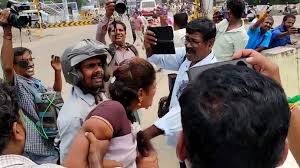
Transgender persons in Tamil Nadu’s Tirunelveli staged a protest demanding free house-site pattas or government housing. One protester attempted to jump off a bridge but was stopped by journalists. The District Collector assured action, and protesters dispersed. A tense moment unfolded in Tamil Nadu’s Tirunelveli on Wednesday when journalists intervened and stopped a transgender protester from jumping off a bridge during a demonstration demanding free house-site pattas or government houses. A group of transgender persons had gathered outside the Tirunelveli District Collector’s office, sitting on the Tirunelveli–Thiruvananthapuram Highway and blocking traffic. They held placards and raised slogans, alleging that despite submitting petitions several times, including during Chief Minister MK Stalin’s special grievance redressal camp, no action had been taken on their request for land pattas or housing. During the protest, one of the participants suddenly ran towards the Thamirabarani river bridge and attempted to jump. Journalists covering the protest chased after her and managed to pull her back, preventing a tragedy. Officials on the spot attempted to negotiate with the protesters. As District Collector’s convoy was exiting the premises, demonstrators blocked the vehicle, forcing the Collector to step out and speak to them. Surrounded by authorities, the Collector assured that steps would be taken to address their housing demands. Following the assurance, the protesters dispersed. Courtesy : India Today Note: This news is originally published on https:/indiatoday.com/bha and is used purely for non-profit/non-commercial purposes, especially human rights
How India’s Higher Judiciary Is Steadily Advancing Transgender Rights Amid Global Anti-Trans Backlash
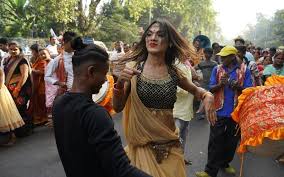
Through several landmark judgments, India’s Supreme Court has redefined inclusion for transgender people Today, supposed good-faith debates around gender theory are too often recast as a moral panic around gender, specifically, around what many on the right wing pejoratively call “gender ideology.” To be clear, from the very outset, the non-duality of gender is not an ideology; it is both theory and fact. For instance, one of US President Donald Trump’s first actions after taking office for his second presidential term was to eliminate the word “transgender” from the official lexicon of the United States federal government. This came amid his administration’s broader efforts to scrap federal DEI (Diversity, Equity, and Inclusion) policies and dismantle USAID projects around the world, which have had disastrous repercussions globally. That same year, the United Kingdom Supreme Court handed down a disappointing ruling that held that under the UK’s Equality Act (2010) — the primary anti-discrimination legislation in the UK — transgender women could be excluded from single-sex spaces and services. Across Europe and Central Asia, too, transgender people are witnessing a sharp erosion of their rights and protections under the guise of “protecting traditional values.” Thus, at a time when global backlash against transgender rights is surging, the Supreme Court of India is charting a totally different path, moving towards the “full realisation” of equality for transgender people under the law. A breath of fresh air The Supreme Court of India’s recent jurisprudence on transgender rights is a breath of fresh air in an otherwise polluted, anti-transgender global climate. More than 10 years ago, the Supreme Court of India, in NALSA v. Union of India (commonly known as the NALSA judgment), recognised the “third gender” as not only a legally distinct gender category under the law, but also endowed them with the same fundamental rights as everyone else. Then in 2019, the Indian government passed the much-contested Transgender Persons (Protection of Rights) Act, 2019 and the accompanying Rules, 2020, to codify the principles laid down in the NALSA judgment. Over the years, however, the on-the-ground impact of these progressive developments has remained limited, and transgender people continue to face multiple barriers in exercising their rights — including, and especially, in obtaining their official gender identification documents. Yet, amid this administrative ambiguity at home and rising anti-transgender sentiment globally, India’s constitutional courts have continued to (somewhat surprisingly) stand by the transgender community through progressive and expansive interpretations of the law. Recent progressive developments Most recently, on October 20, in Jane Kaushik v. Union of India, the Supreme Court of India handed down an important judgment that directed the formation of a high-level advisory committee tasked with drafting a practical policy framework to strengthen transgender rights and ensure the effective implementation of the beneficial provisions of the Transgender Persons (Protection of Rights) Act, 2019. Earlier this year, in June 2025, the Andhra Pradesh High Court issued a landmark judgment clarifying that transgender women were to be legally recognised as women under Indian law. This ruling further affirmed that transgender women in heterosexual marriages were entitled to the same legal protections as cisgender women under Section 498A of the Indian Penal Code (which criminalises cruelty, harassment, and domestic abuse by a husband or his relatives). It is worth noting that, unlike other jurisdictions that do not explicitly recognise the third gender as a distinct gender category, India’s constitutional position also means that transgender women are legally recognised in their own right, thereby ensuring that the advancement of their interests cannot be seen as an encroachment on or undermining of the rights of their female cisgender counterparts. A case in point is Shanavi Ponnusamy v. Ministry of Civil Aviation (2022), where a transgender woman seeking employment as a cabin crew member at Air India was forced to apply under the “female” category because no separate option existed for transgender applicants. Despite clearing all medical tests, she was ultimately denied employment. When she challenged the decision before the Supreme Court, the Court ruled in her favour. This was therefore not a case of a transgender woman attempting to unfairly “encroach upon women’s spaces,” as some right-wing activists might suggest, but rather an instance where the airline simply failed to provide a legally required, designated category or space for a transgender individual. Several other cases also echo this progressive judicial trend, including a widely reported 2023 same-sex marriage case. While the Supreme Court declined to grant legal recognition to same-sex marriages, it nevertheless made an exception for transgender people in heterosexual marriages and extended legal recognition to them. This marked a significant expansion from an earlier, narrower interpretation of the law, which recognised only a limited subset of such relationships under Hindu personal law alone. While these cases collectively signal the higher judiciary’s proactive approach toward expanding the scope of transgender rights in India, there is still room for improvement. For instance, transgender people in non-heterosexual relationships cannot yet have their marriages legally recognised. Similarly, various petitions challenging certain provisions of the Transgender Persons (Protection of Rights) Act, 2019, were filed before the Supreme Court years ago but are still awaiting adjudication. That being said, these judicial developments represent a promising trajectory, particularly when viewed in the troubling and volatile global context in which they are embedded. Therefore, there is reason to remain hopeful about India’s higher judiciary and its inclination to expand, rather than restrict, the scope of transgender rights under the law. This is a trend that activists can only hope continues in the years, if not decades, to come. By Kanav Narayan Sahgal Courtesy : The Good Men Project Note: This news is originally published on https:/thegoodmenoroject.com/bha and is used purely for non-profit/non-commercial purposes, especially human rights
IOC set to ban transgender women from all female events at LA 2028 amid fairness debate

The International Olympic Committee (IOC) is planning a total ban on transgender women from playing in women’s events at the 2028 Los Angeles Games. The new IOC president, Kirsty Coventry, is leading this move to “protect fairness in female sports,” according to Daily Mail Sport and AP News. Right now, every sport can make its own rules for transgender athletes, based on their testosterone levels. But the IOC now wants one rule for all sports, which would stop all transgender women from competing in women’s categories. Sources told Daily Mail Sport this new rule could be announced in early 2025 and might take six months to a year to fully pass. It will likely start before the Winter Olympics in Italy next February. IOC officials said this is the “direction of travel,” but no final decision has been made yet. An IOC statement to Daily Mail Sport said, “The working group is continuing discussions. No decisions have been taken yet.” Imane Khelif’s Paris 2024 boxing win sparks IOC debate on DSD and transgender athlete ban for LA 2028 The new rule also raises a big question, what happens to athletes like Imane Khelif from Algeria?Imane Khelif, who won boxing gold at the 2024 Paris Olympics, has what reports call a “difference in sexual development” (DSD). That means she has male chromosomes but was raised as female. Her win, and that of Lin Yu-ting from Taiwan, caused a huge storm. Both had earlier been disqualified from the 2023 World Championships for not passing gender tests. But the IOC still allowed them to fight in Paris, which led to global outrage. — dailymail (@dailymail) Now, the IOC is deciding if DSD athletes should also face limits like transgender athletes. But insiders told Daily Mail Sport that there’s internal opposition to banning them completely. The IOC’s medical chief, Dr. Jane Thornton, gave a report in Lausanne last week about transgender and DSD athletes. The report reviewed the latest science on hormones and performance. It showed how hard it is to set fair rules for everyone. President Kirsty Coventry, a former Olympic swimmer from Zimbabwe, promised to “protect the female category” when she was elected. Many think the upcoming rule will help her keep that promise, and also avoid clashes with U.S. President Donald Trump, who already signed an order banning transgender women from female sports earlier this year. For now, the IOC says no final decision has been made. But all signs point to a total ban coming before the Los Angeles 2028 Olympics. Courtesy : TOI Note: This news is originally published on https:/timesofindia.com/bha and is used purely for non-profit/non-commercial purposes, especially human rights
UPSC Gender Gap: Women See Gradual Progress, Transgender Inclusion Remains Almost Nonexistent

Despite forming nearly half of India’s population, women and transgender individuals continue to be vastly underrepresented in the country’s most prestigious recruitment process — the UPSC Civil Services Examination. Data from the Union Public Service Commission’s (UPSC) Annual Reports between 2010 and 2021 paints a telling picture: while women’s participation has slowly increased, transgender representation remains almost invisible. Women’s Representation: A Slow but Steady Climb According to the UPSC’s 2021 Annual Report, women constituted 32.98% of candidates appearing for the Preliminary Examination. However, only 14.75% progressed to the Mains, 26.87% reached the Interview stage, and ultimately, a mere 15.66% — or 201 women — made it to the final list of selected candidates. Although modest, the upward trend is clear: women’s participation rose from 23% in 2010 to nearly 33% in 2021, signaling a slow but steady shift toward gender inclusion in India’s civil services. Transgender Participation: Progress Still Out of Sight In contrast, the transgender community remains almost absent from the UPSC landscape. Following a 2016 court directive, the Commission added a “third gender” option in its application forms — a milestone for inclusivity. However, the impact has been minimal. In 2021, only 19 transgender candidates applied, with just four appearing for the exam — none qualified. Similarly, 2020 saw 16 applicants and five appearances, while 2018 and 2019 recorded just one application each. Experts attribute this near-zero participation to systemic barriers — widespread stigma, identity-based exclusion, and a lack of institutional support prevent many transgender students from even reaching higher education, let alone competing in national-level exams. Professor Rajeev from Delhi University explained that while initiatives like his department’s Transgender Resource Center offer training and counseling, broader social awareness and inclusive educational policies are urgently required to bridge the gap. Societal Pressures Continue to Constrain Women Aspirants For countless women, preparing for the UPSC remains a struggle against entrenched cultural expectations. Anshika Moyal from Rajasthan recalled how her decision to move to Delhi for exam preparation invited constant reminders from relatives to get married. “There’s still a belief that girls should be married by their late twenties. That constant pressure makes it hard to stay focused,” she said. Similarly, Aayushi from Uttarakhand, a government employee, shared that she faced ridicule from family elders for continuing her studies instead of marrying. “My grandmother used to say I was wasting time, but my mother stood by me and encouraged me to keep going,” she added. IAS officer Ira Singhal noted that many families see the UPSC as a “risky pursuit” for women, preferring the perceived stability of marriage over the uncertainty of years-long preparation. Economic and Structural Challenges Deepen the Divide Beyond social barriers, financial constraints often determine who can afford to chase their civil services dream. UPSC preparation typically demands hefty expenses — coaching fees, accommodation, and study materials add up quickly. Aayushi shared that while her parents funded her education, they couldn’t afford to send her to Delhi for coaching, forcing her to rely on self-study. Such financial disparities highlight how families often invest more readily in sons’ education, while daughters’ ambitions are seen as secondary. The Balancing Act: Marriage, Family, and Ambition For married women and mothers, the challenge intensifies. Anshika noted that several of her married friends preparing for UPSC can barely dedicate three to four hours a day to study after managing household and childcare responsibilities. These stories underline the dual burden of domestic expectations and academic competition that women face, often making their journey longer and harder. The Road Ahead: Building a Gender-Just Bureaucracy The trends suggest that while women are gradually carving a space in India’s administrative services, transgender representation is still at a nascent — almost invisible — stage. Experts argue that meaningful reform will require inclusive educational policies, gender-sensitive coaching programs, targeted scholarships, and affirmative institutional support. As India strives toward a modern, equitable civil service, the challenge is clear: to build a system where merit prevails over gender, ensuring that every talented individual — regardless of identity — can aspire to serve the nation through its most respected bureaucratic institutions. Parijat Tripathi Courtesy : North Block South Block Note: This news is originally published on https:/northblocksouthblock.com/bha and is used purely for non-profit/non-commercial purposes, especially human rights
Unpacking transgender rights

Scholarship on queer and non-binary identities emerged relatively later, with Judith Butler’s work on gender performativity standing out as especially influential. “Can you provide a definition for the word ‘woman’?” When Republican Senator Marsha Blackburn asked the then–DC Circuit Court Judge Ketanji Brown Jackson this question at her confirmation hearing for a seat on the United States Supreme Court in 2022, Jackson replied (with some hesitation), “I am not a biologist.” This should come as no surprise, for this very question has long preoccupied scholars, lawyers, writers, philosophers, activists, and lawmakers alike. Early thinkers like Aristotle and Plato viewed women as inherently inferior to men, relying on naturalist assumptions about their supposed incapacity for reason or leadership. Simone de Beauvoir challenged these assumptions in her magnum opus, The Second Sex, arguing that distinctions between the sexes were socially—rather than naturally—constructed. Yet like many early feminist theorists, she conceptualised gender within a limited binary framework. Gender not fixed or innate Scholarship on queer and non-binary identities emerged relatively later, with Judith Butler’s work on gender performativity standing out as especially influential. In the book, ‘Gender Trouble’, Butler demonstrated that gender was neither innate nor fixed, but rather something enacted—a series of repeated performances shaped by social norms and expectations. And yet, naturalist conceptions about gender persist in contemporary political thought. In April 2025, the UK Supreme Court issued a landmark ruling that held that the term “woman” in the Equality Act 2010 did not include transgender women. This ruling followed Donald Trump’s second presidential victory, during which attacks on the transgender community became both frequent and central to the Republican Party’s platform. In January 2025, just hours into his first day back in office, President Trump signed an executive order declaring it official US policy to recognise “only two sexes, male and female,” further asserting that these sexes were fixed, immutable, and “grounded in fundamental and incontrovertible reality.” What do these developments tell us? They show that in many parts of the West, transgender people continue to be excluded—either by omission or active resistance—from legal and policy frameworks meant to otherwise include them. Even in Canada and the EU, backlash is growing: public opinion on transgender rights is divided in Canada too, while far-right movements in the EU continue to frame gender diversity as a threat to national identity. What we’re witnessing, therefore, is not hesitation, but a deliberate global rollback of hard-won LGBTQ+ rights. India’s principled stance In this broader context of shrinking protections and rising hostility, India’s jurisprudence on transgender rights stands out as surprisingly principled. In 2014, the Supreme Court of India formally recognised the “third gender” as a distinct legal category and unequivocally affirmed transgender individuals’ right to selfidentify their gender, along with their entitlement to full constitutional rights. More recently, in Viswanathan Krishna Murthy v State of Andhra Pradesh, the Andhra Pradesh High Court held that transgender women in heterosexual marriages could be legally recognised as “women” for the purposes of invoking protections under laws that traditionally apply only to cisgender women; a position that stands in stark contrast to the view taken by the UK Supreme Court months earlier. Interestingly, the Andhra Pradesh High Court arrived at this conclusion by relying on the Supreme Court of India’s 2023 marriage equality ruling, which denied same-sex couples the right to marry yet affirmed transgender individuals’ right to enter heterosexual marriages. Holding that denying a transgender woman legal status as a “woman” under Section 498-A of the IPC based on her reproductive capacity is discriminatory, the Court said: “Such a contention, therefore, deserves to be rejected at the outset.” To be clear, transgender people in India continue to face challenges with the law. For instance, the Transgender Persons (Protection of Rights) Act, 2019, India’s primary legislation governing transgender rights at the national level, still subjects transgender individuals to a burdensome bureaucratic certification process in direct violation of the Supreme Court of India’s 2014 ruling, which affirmed transgender people’s right to self-identify their own gender. Petitions challenging these and other provisions have yet to be heard by the Supreme Court. Despite that, in a global political climate where transgender rights are being rolled back at a disheartening pace, it is encouraging to see judgments like Viswanathan Krishna Murthy affirm transgender people’s dignity and right to equality. As the law tightens its noose around transgender lives, one can only hope that lawmakers and judges listen with greater intent and empathy to the plurality of gendered experiences. As Simone de Beauvoir once wrote, “I am a woman; on this truth must be based all further discussion” — may we take this as an opening to defend our freedom to define ourselves beyond imposed categories. (The author is a communications manager at Nyaaya, the Vidhi Centre for Legal Policy and can be reached at sahgalkanav@gmail.com) Kanav Narayan Sahgal. Courtesy : DH Note: This news is originally published on https:/deccanherald.com/bha and is used purely for non-profit/non-commercial purposes, especially human rights