
‘Will fight under Kharge, Rahul’: Punjab Congress president Amrinder Singh Raja Warring hints at no CM face for Congress in 2027 Punjab polls
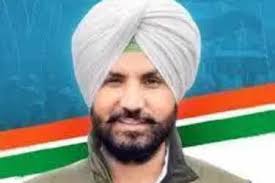
Chandigarh: Punjab Congress president Amrinder Singh Raja Warring on Thursday hinted at the party not contesting the 2027 assembly elections with a CM face, and instead planning to fall back on its national president Mallikarjun Kharge and Lok Sabha leader of the opposition Rahul Gandhi. Interacting with media, Warring said the Congress would fight under the leadership of Kharge and Rahul, and there was no doubt about it. Asked about his own role, he said he always was a worker of the party and would continue to serve it as one. Warring’s statement comes amid claims by the opposition that there were too many contenders for the CM face in the Congress. In the 2017 assembly elections, which it had won, the Congress had projected Capt Amarinder Singh, who has since moved to the BJP, as its CM face. In 2022, the party’s choice was Charanjit Singh Channi. Asserting that the Congress was in a commanding position, Warring said the Congress would form the next govt in Punjab. “Every Congress worker in the state wants it and is committed to achieving it,” he added. Replying to another question on AAP leaders describing the Akalis and the BJP as the “chitta party” and the “ED party”, respectively, Warring said the BJP was undoubtedly misusing central agencies against opposition leaders across the country. “However, AAP is no different. It misuses the vigilance bureau against its political opponents in Punjab. If BJP is the ‘ED party’, AAP is the ‘vigilance party’,” he said. Courtesy : TOI Note: This news is originally published on https:/timesofindia.com/bha and is used purely for non-profit/non-commercial purposes, especially human rights
Malout police arrest 7 in Jhorar Dalit youths assault case; 4 accused still at large
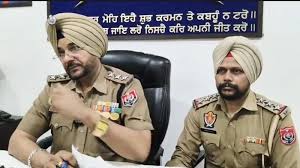
Victims were allegedly paraded semi-naked, tied to a tree and beaten over mobile phone theft allegations The Malout Sadar police have traced and arrested all seven unidentified people in the case relating to two Dalit youths, accused of snatching a mobile phone, who were allegedly paraded semi-naked, dragged through fields, tied to a tree and beaten by a group of people at Jhorar village in Muktsar district on Saturday afternoon. However, those already named in the FIR and yet to be arrested are Hardeep Singh, his father Avtar Singh, Rimpa Singh and Manpreet Singh, all residents of Jhorar village. Malout DSP Jaspal Singh said the arrested accused have been identified as Ram Chander, Ramesh Kumar, Hira Sahni, Basant Sahni, Ram Babu Sahni, Ram Bali Sahni and Varinder Sahni, all residents of Nepal, who were staying at co-accused Avtar Singh’s house in the village. The DSP said all seven accused have been sent to judicial custody. A case under various Sections of the BNS and the SC/ST (Prevention of Atrocities) Act had earlier been registered against four accused and seven unidentified persons. Notably, the Punjab State Scheduled Castes Commission had taken cognisance of the incident and sought a report from the district police in this regard. Article_Author Archit Watts Courtesy : The Tribune Note: This news is originally published on https:/thetribune.com/bha and is used purely for non-profit/non-commercial purposes, especially human rights
Dalit youths dragged and paraded half-naked in a field in Punjab on charges of phone theft

In an alleged video circulating on social media, some people can be seen dragging the two youths by their feet through a field. On Saturday, a mob attacked two Dalit youths in Jharod village, Punjab, stripping them half-naked and dragging them through a field with their hands tied. The mob accused them of snatching a mobile phone. According to police, the two youths were allegedly drug addicts and had tried to snatch a mobile phone from a migrant laborer. Villagers caught them, tied them up, and beat them. In an alleged video circulating on social media, some people can be seen dragging the two youths by their feet. The mother of one of the accused said she did not know what her son had done, but he was brutally beaten. He said that if his son had committed a crime, he should have been handed over to the police. Malout Deputy Superintendent of Police (DSP) Jaspal Singh said that police arrived at the scene after learning about the incident through a video. Police stated that a case had previously been registered against one of the two men in a case involving 200 narcotic pills. According to officials, both have undergone medical examinations, which revealed blunt force injuries. Police stated that appropriate action will be taken based on the medical report and the victims’ statements. Police also stated that a case has been registered against both men for snatching a mobile phone. The Punjab State Scheduled Caste Commission has taken suo motu cognizance of the incident and has sought a report from the Muktsar Senior Superintendent of Police (SSP) by June 9. It is worth noting that a week ago, a man was arrested in Deoria, Uttar Pradesh, for allegedly tying a Dalit girl to a tree and beating her. According to police, the incident occurred in a village in Deoria district, where the accused allegedly caught the girl stealing from his shop. According to a report in Deccan Herald, police took action after a purported video of the incident went viral on social media. It was reported that the incident occurred in Mishrauli village, under the Tarkulwa police station area. According to police, the accused, Harikesh Gupta, who runs a grocery store, caught a 14-year-old girl on suspicion of theft. The girl’s family and villagers alleged that Gupta first dragged her by her hair throughout the village and later tied her to a neem tree outside his house and beat her. A video of the incident was recorded by a bystander, which was later shared on social media. Police stated that they received information about the incident through the emergency helpline 112 on May 31st. Upon receiving the information, police arrived at the scene and rescued the girl safely. According to the police, the victim belongs to the Scheduled Caste (SC) community. A case has been registered against the accused under relevant sections of the Indian Penal Code (IPC) and the Scheduled Castes and Scheduled Tribes (Prevention of Atrocities) Act, and he has been arrested. Circle Officer Sunil Kumar Reddy said that the police took cognizance of the matter after receiving information that a shopkeeper was forcibly interrogating a girl on suspicion of theft. He said, “The accused has been taken into custody.” Courtesy: Hindi News
Brutality in Punjab: Two Dalit youths were stripped, beaten, tied with ropes, and paraded through the village on suspicion of mobile phone theft.
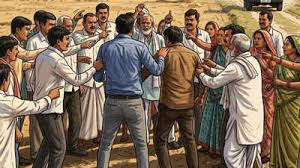
In Sri Muktsar Sahib, two Dalit youths were tied with ropes, beaten, and paraded publicly on suspicion of mobile phone theft. The police and SC Commission took strict action after the video of the incident went viral. Punjab: A horrific incident that shames humanity has come to light in Sri Muktsar Sahib district. Two youths were tied with ropes, beaten, and paraded publicly through the village on suspicion of mobile phone theft. Videos of this brutal incident are rapidly going viral on social media, sparking widespread outrage. According to initial information, this entire incident took place in Jhorad village. It is being reported that these two youths were suspected of snatching mobile phones from migrant laborers. Based on this accusation, some villagers allegedly forcibly abducted them from their homes. They were then tied with ropes and brutally beaten. According to eyewitnesses and viral videos, the mob went to extremes, stripping the victims, brutally beating them, and parading them publicly through the village streets. Following this inhumane incident, the victims’ families have made several serious allegations. The families claim that the two young men belong to the Dalit community and were deliberately subjected to this brutality. The families allege that the mob not only physically assaulted the young men but also hurled vulgar caste-related abuses at them throughout the incident. They strongly condemn this violent act by the mob, calling it a gross violation of human dignity and the law. On the other hand, the villagers have a different perspective on the matter. They claim that the two young men were directly involved in the frequent incidents of mobile phone snatching in the area. These conflicting and contradictory claims from both sides have significantly complicated the police investigation. Given the seriousness of the matter, the police administration has taken prompt action. Police officials have confirmed that both suspects have been detained and a case has been registered against them. At present, both youths have undergone medical examinations, and further legal action will be taken based on the facts revealed in the initial police investigation. Officials have also made it clear that strict action will be taken against those who allegedly took the law into their own hands and assaulted the victims. DSP Jaspal Singh Dhaliwal of Malout issued a strong statement on the incident. DSP Dhaliwal categorically stated that although the youths were suspected of wrongdoing, the villagers had no right to take the law into their own hands. He said that instead of taking the punishment themselves, the villagers should have immediately reported the incident to the police. Following the outrage and growing outrage on social media, the State Scheduled Caste Commission has also taken strict cognizance of the matter. Chairman of the Punjab State Scheduled Caste Commission, Jasvir Singh Garhi, expressed deep displeasure over the violent incident. It has summoned a detailed investigation report from the Senior Superintendent of Police (SSP) of Sri Muktsar Sahib, through the Superintendent of Police Headquarters. The Commission has set a deadline of June 9, 2026, for the police to submit this detailed report. Rajan Chaudhary Courtesy: Hindi News
Two Dalit youths stripped, tied, & dragged over theft suspicion in Muktsar; SC panel seeks report from SSP By June 9

Bathinda: Two Dalit youths were allegedly stripped, tied, and dragged through agricultural fields in scorching heat over suspicion of theft in Punjab’s Muktsar district on Saturday. The incident comes just two days after a viral video surfaced from Haryana’s Hansi district showing a Dalit youth hanging upside down in a well over the alleged theft of a water pump. Punjab State Scheduled Castes Commission has taken suo motu notice of the incident in Jhord village, seeking a report from the Muktsar SSP, to be submitted through the SP (headquarters) by June 9. Sources said a group of villagers stormed the homes of the two local youths after learning about the theft of a mobile phone from a migrant labourer. The two were taken to the paddy fields, where they were initially tied to a tree, partially undressed, and bound by their hands before being dragged, showed a video that later went viral and sparked outrage. Ashok Mahindra, a representative of a local pro-Dalit organisation, said, “The villagers acted in a Taliban style. Even if these youths committed a crime, there is a legal system to deal with them. We will request the Punjab social security minister, who represents the Malout constituency, to take serious note of this incident.” Malout DSP JS Dhaliwal identified the two youths as Gurpinder Singh (27) and Sandeep Singh (28), both residents of Jhord. Police said Gurpinder already faces a case under the Narcotic Drugs and Psychotropic Substances (NDPS) Act. DSP Dhaliwal said the police are not overlooking the assault. “While we are investigating the alleged mobile snatching and the background of the youths, strict action is simultaneously being taken against those who indulged in this inhumane act.” Villagers claimed the two men confessed to the theft during the ordeal. Former Punjab SC Commission member Karanbir Singh Indora also strongly condemned the incident. “The villagers acted in a highly objectionable manner. No one has the right to take the law into their own hands.” Locals admitted to the assault but said they acted out of rage, claiming the two were involved in drug abuse and targeted a migrant labourer. Courtesy : TOI Note: This news is originally published on https:/timesofindia.com/bha and is used purely for non-profit/non-commercial purposes, especially human rights
Dalit experience in Punjab, felt and seen
The works of poets such as Kabir, Ravidas and Namdev have resonated for centuries, but it is only recently that Dalit literature has come to occupy centre stage. With the rise of subaltern studies, literature has developed many a niche segment, where hitherto invisible or suppressed groups have asserted their literary presence. Dalit writing, particularly under the influence of Marathi pioneers like Babasaheb Ambedkar and Namdeo Dhasal, started showing its prowess some 60 years ago, and has now become an irrepressible voice in almost all states of the country. Punjab has a very large presence of Dalits and an equally large body of Punjabi Dalit literature, yet not much has been translated so far to give it readership beyond Punjabi. The anthology ‘Gangrene’ offers for the first time a set of 12 stories in English to fill that gap. Translated by Akshaya Kumar and Navdeep Singh, the book comes with an elaborate introduction that gives an insight into the development of Punjabi Dalit writings as well as the dynamics of Dalit narratives of exploitation, discrimination and oppression. The translators claim that in contrast to progressive writers’ narratives of the poor and the underprivileged, these stories by Dalits themselves explore more authentically their lived experience. Veracity apart, the stories in the collection stand out for the diversity of experience, both in terms of physical and mental trauma, as perceived by Dalits and as enacted by their oppressors. If there are stories like ‘Cry of the Sky’, ‘My Story’, and ‘Everybody’s Story’, in which crimes like rape and violence against Dalits are portrayed, then there are also stories like ‘Doomsday’, ‘Cancer’ and ‘Cactus’, where the dominant caste characters have been shown to harbour deep-seated hatred, but not without giving us a peep into their mental and emotional conflict. The stories are equally divided between rural and urban settings. If the vehra (Dalit colony in a village) is the site of open disdain and exploitation by Jats and other village heads, then the city is an equally inhospitable place where Dalits, even after education and economic progress, cannot live without hiding their identity. A cobbler’s son will remain a cobbler’s son and a Dalit rising up to become a landlord will find trust and strength only in his own community, as in the story ‘Gaurjan’. Religion, the much-touted causa prima of the caste divide, figures in three stories – ‘Gangrene’, ‘Doomsday’ and ‘Roots’. Though Hindu Brahmins’ attitude towards Dalits is well known, in these stories, even Dalits who converted to religions like Sikhism and Buddhism find no respite. One muted theme that runs through almost all the stories is that for a Dalit, there is no escape from being a Dalit. Even if they try to override it with professional progress, pecuniary leap or physical prowess, the Dalit identity does not leave them. It will continue to lead them to misery and humiliation. I particularly liked two stories: ‘Bathloo’ and ‘Aatu Khoji’. Both are proud and professionally skilful workers, yet one ends up dead because of his sense of internalised lowliness, and the other in an effort to save Dalit honour. The book is a ready compendium to understand the psyche of both Punjabi Dalits and their oppressors. At times, it also portrays the Dalit reaction where violence and highhandedness of the dominant caste are met with equal aggression. But the stories largely remain clueless about how the conflict can be reduced or resolved. The book is translated well despite the usual intrusion of local terms here and there. It is going to prove to be a good resource material for comparing the Punjabi Dalit experience with other regional writings, particularly in Marathi and South Indian languages. Courtesy : Dailyhunt Note: This news is originally published on https:/dailyhunt.com/bha and is used purely for non-profit/non-commercial purposes, especially human rights
Khaira demands murder case against police over death of Dalit youth
Senior Congress leader and Bholath MLA Sukhpal Singh Khaira strongly condemned the death of 22-year-old Dalit youth Lovepreet Singh, alias Labha, of Bangiwal village in Mehatpur, and demanded the immediate registration of a murder case against all police personnel involved in the firing incident. Khaira also urged the Chief Justice of the Punjab and Haryana High Court to take suo motu cognisance of the matter and order an independent judicial probe into the circumstances surrounding the youth’s death. Lovepreet Singh, who was wanted in connection with a case registered in January 2026, succumbed to injuries sustained after he was allegedly shot by police personnel during a raid at his residence on Friday evening. While the police have maintained that officers opened fire in self-defence following hostility from villagers, the victim’s family and local residents have disputed the official version. They alleged that Lovepreet was assaulted by the police before being shot and further claimed that he was denied timely medical treatment. Villagers have also questioned why no FIR had been registered against any police personnel, despite criminal cases being filed against members of Lovepreet’s family. In a statement, Khaira said the incident raised serious concerns about the conduct of the Punjab Police and reflected what he described as a culture of impunity under the AAP government. “The killing of a young Dalit man at the hands of the police cannot be brushed aside through a departmental inquiry alone. When a citizen dies in police firing, the law demands the highest standards of transparency and accountability. The police cannot be allowed to investigate themselves and then grant themselves a clean chit,” he said. The Congress MLA said the emergence of videos from the scene and the widespread protests by villagers further strengthened the case for an independent investigation under judicial supervision. He noted that several organisations, along with local residents, had already demanded action against the police personnel involved in the shooting. Khaira called for the immediate registration of an FIR for culpable homicide or murder against the officials responsible for the firing, suspension of all personnel involved pending investigation, and the preservation of all video footage, records and other evidence related to the incident. He also demanded adequate compensation and rehabilitation support for the bereaved family and reiterated his appeal for the Punjab and Haryana High Court to intervene and ensure a fair, impartial and independent investigation. Article_Author Aparna Banerji Courtesy : The Tribune Note: This news is originally published on https:/thetribune.com/bha and is used purely for non-profit/non-commercial purposes, especially human rights
Dalit experience in Punjab, felt and seen
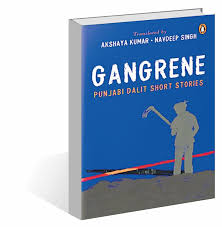
‘Gangrene — Punjabi Dalit Short Stories’ is a ready compendium to understand the psyche of both Punjabi Dalits and their oppressors The works of poets such as Kabir, Ravidas and Namdev have resonated for centuries, but it is only recently that Dalit literature has come to occupy centre stage. With the rise of subaltern studies, literature has developed many a niche segment, where hitherto invisible or suppressed groups have asserted their literary presence. Dalit writing, particularly under the influence of Marathi pioneers like Babasaheb Ambedkar and Namdeo Dhasal, started showing its prowess some 60 years ago, and has now become an irrepressible voice in almost all states of the country. Punjab has a very large presence of Dalits and an equally large body of Punjabi Dalit literature, yet not much has been translated so far to give it readership beyond Punjabi. The anthology ‘Gangrene’ offers for the first time a set of 12 stories in English to fill that gap. Translated by Akshaya Kumar and Navdeep Singh, the book comes with an elaborate introduction that gives an insight into the development of Punjabi Dalit writings as well as the dynamics of Dalit narratives of exploitation, discrimination and oppression. The translators claim that in contrast to progressive writers’ narratives of the poor and the underprivileged, these stories by Dalits themselves explore more authentically their lived experience. Veracity apart, the stories in the collection stand out for the diversity of experience, both in terms of physical and mental trauma, as perceived by Dalits and as enacted by their oppressors. If there are stories like ‘Cry of the Sky’, ‘My Story’, and ‘Everybody’s Story’, in which crimes like rape and violence against Dalits are portrayed, then there are also stories like ‘Doomsday’, ‘Cancer’ and ‘Cactus’, where the dominant caste characters have been shown to harbour deep-seated hatred, but not without giving us a peep into their mental and emotional conflict. The stories are equally divided between rural and urban settings. If the vehra (Dalit colony in a village) is the site of open disdain and exploitation by Jats and other village heads, then the city is an equally inhospitable place where Dalits, even after education and economic progress, cannot live without hiding their identity. A cobbler’s son will remain a cobbler’s son and a Dalit rising up to become a landlord will find trust and strength only in his own community, as in the story ‘Gaurjan’. Religion, the much-touted causa prima of the caste divide, figures in three stories — ‘Gangrene’, ‘Doomsday’ and ‘Roots’. Though Hindu Brahmins’ attitude towards Dalits is well known, in these stories, even Dalits who converted to religions like Sikhism and Buddhism find no respite. One muted theme that runs through almost all the stories is that for a Dalit, there is no escape from being a Dalit. Even if they try to override it with professional progress, pecuniary leap or physical prowess, the Dalit identity does not leave them. It will continue to lead them to misery and humiliation. I particularly liked two stories: ‘Bathloo’ and ‘Aatu Khoji’. Both are proud and professionally skilful workers, yet one ends up dead because of his sense of internalised lowliness, and the other in an effort to save Dalit honour. The book is a ready compendium to understand the psyche of both Punjabi Dalits and their oppressors. At times, it also portrays the Dalit reaction where violence and highhandedness of the dominant caste are met with equal aggression. But the stories largely remain clueless about how the conflict can be reduced or resolved. The book is translated well despite the usual intrusion of local terms here and there. It is going to prove to be a good resource material for comparing the Punjabi Dalit experience with other regional writings, particularly in Marathi and South Indian languages. Article_Author Gurupdesh Singh Courtesy : The Tribune Note: This news is originally published on https:/thetribune.com/bha and is used purely for non-profit/non-commercial purposes, especially human rights
Punjab civic polls: Transgender influencer Komal Mahant scripts historic victory in Samana

Mahant secured the victory by a margin of 505 votes, emerging as one of the most talked-about winners in the civic polls In a result that has generated considerable buzz in Patiala’s Samana, transgender candidate Komal Mahant transformed her social media popularity into electoral success by winning the Municipal Council election from Ward No. 18 on a Shiromani Akali Dal (SAD) ticket. Mahant secured the victory by a margin of 505 votes, emerging as one of the most talked-about winners in the civic polls. Her campaign stood out for blending digital outreach with traditional grassroots politics, helping her connect with both young voters and residents at the neighbourhood level. Known for her strong presence on social media, Mahant and her team used Instagram, where she has over 64,000 followers, to amplify campaign messages focused on youth welfare, anti-drug awareness and civic development. However, supporters say it was her extensive door-to-door interaction with residents that ultimately converted online support into votes. Celebrations erupted in Ward 18 as the result was declared. Amid chants by supporters, an emotional Mahant thanked voters for placing their faith in her. “Namaskar and Sat Sri Akal to all the people of Samana. I pray for the happiness of every family. The love and support of the people of Ward 18 have brought me to this position. I will work honestly to live up to their expectations,” she said. Mahant’s election campaign revolved around a promise of visible change in the ward. She pledged to spend Rs 6 lakh annually from her personal resources on social welfare activities, launch campaigns against drug abuse among youth and improve damaged streets and open drains that residents have long complained about. Political observers described her victory as more than just an electoral upset. They said it reflected a growing willingness among voters to look beyond conventional political identities and support candidates who maintain direct engagement with the public and focus on local issues. Article_Author Kulwinder Sandhu Courtesy : The Tribune Note: This news is originally published on https:/thetribune.com/bha and is used purely for non-profit/non-commercial purposes, especially human rights
BJP’s Social Engineering In Punjab: Jat Sikh Face, Hindu Connect, Dalit Outreach
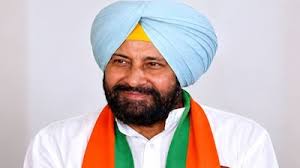
The BJP’s move is being seen as part of a larger political gamble aimed at breaking the perception of the party as primarily a “Hindu party” in Punjab. Chandigarh, Ahead of the Punjab Assembly elections, the Bharatiya Janata Party (BJP) has begun reshaping its political strategy in the state with a clear focus on caste and regional balancing. In a major organisational shift after nearly 26 years, the party has appointed Sardar Kewal Singh Dhillon as the President of the Punjab BJP, signalling a renewed attempt to expand its appeal beyond its traditional Hindu voter base. The BJP’s move is being seen as part of a larger political gamble aimed at breaking the perception of the party as primarily a “Hindu party” in Punjab and strengthening its reach among Sikh voters, especially the influential Jat Sikh community. Why the BJP Chose a Jat Sikh Face Punjab’s demographic and electoral realities have always made caste and community representation politically significant. Sikhs constitute nearly 57 per cent of the state’s population, while Hindus account for around 38 per cent. For decades, the BJP’s political support in Punjab remained largely concentrated among urban Hindu voters. By appointing Kewal Singh Dhillon – a former Congress leader and close associate of former Chief Minister Captain Amarinder Singh – the BJP appears to be sending a strong message that it wants to emerge as a broader social coalition in Punjab politics. The move also comes after the party’s earlier attempt to attract Sikh voters through Captain Amarinder Singh failed to produce substantial electoral gains during the last Assembly elections. BJP’s Focus On Malwa, Doaba And Majha Political observers believe the BJP is now strategically targeting Punjab’s three major regions – Malwa, Doaba and Majha. Kewal Singh Dhillon belongs to the politically crucial Malwa belt, which alone accounts for 69 of Punjab’s 117 Assembly seats. The Majha region has 25 seats, while Doaba contributes 23. By elevating Dhillon, the BJP appears to be strengthening its organisational presence in Malwa, while Haryana Chief Minister Nayab Singh Saini has reportedly been tasked with increasing outreach among OBC voters, particularly in the Doaba region. He has been holding programmes in Punjab with OBC and other castes to attract voters. Around 70 political personal programmes have been attended by Haryana Chief Minister Nayab Singh Saini from 2025 onwards. The party’s broader strategy indicates an attempt to consolidate support across caste and regional lines before the 2027 Assembly elections. BJP’s Caste Combination Strategy Ahead of the elections, the BJP appears to be balancing caste and regional representation through a mix of prominent leaders and targeted community outreach. Prominent Hindu leaders such as Sunil Jakhar and Ashwani Sharma are seen focusing on the Hindu vote bank in urban constituencies, including Ludhiana, Jalandhar, Amritsar, Gurdaspur and Pathankot. In the Malwa region, Jat Sikh leaders, including Kewal Singh Dhillon, former Chief Minister Captain Amarinder Singh and Union Minister Ravneet Singh Bittu, are expected to play a key role in strengthening the party’s outreach among Jat voters. For Dalit outreach, the BJP has relied on leaders such as former Union Minister Vijay Sampla, former union minister of state Som Parkash and former chief parliamentary secretary Avinash Chander. These leaders were also involved in facilitating a meeting between Dera Sachkhand Ballan chief Sant Niranjan Dass and Prime Minister Narendra Modi in Delhi ahead of the 649th Guru Ravidas Jayanti. Prime Minister Narendra Modi’s visit to Dera Sachkhand Ballan in Jalandhar was also viewed as politically significant due to the dera’s deep emotional and religious influence among the Ravidassia community in Punjab. BJP’s Political Message Ahead of 2027 The appointment of Kewal Singh Dhillon is also being viewed as an effort to politically accommodate Captain Amarinder Singh and put to rest speculation regarding his possible return to the Congress. Interestingly, despite losing both the Sangrur Lok Sabha election and the Barnala Assembly election, Dhillon has been elevated to the party’s top organisational post in Punjab – underlining the BJP’s focus on social equations and regional representation over immediate electoral performance. BJP leader Anil Sarin, however, dismissed suggestions that the appointment was based on religion or caste politics. Calling it a routine organisational process, he said the BJP works collectively with leaders and workers from all communities for the prosperity of Punjab. Yet politically, the message from the BJP is becoming increasingly clear: ahead of the 2027 Punjab Assembly elections, the party is attempting to build a new social coalition by combining Hindu urban support, Jat Sikh leadership and Dalit outreach under one political framework. How Former Barnala MLA Kewal Singh Dhillon was Appointed Former Barnala MLA Sardar Kewal Singh Dhillon, a prominent Jat Sikh leader and close confidant of former Punjab Chief Minister Capt Amarinder Singh, is being viewed as the BJP’s attempt to strengthen its connection with Sikh voters in the state and expand beyond its traditional urban Hindu support base. Current Punjab BJP president Sunil Jakhar’s three-year term is set to conclude in July. However, the party sources indicate that Jakhar will continue to play an active role in shaping the BJP’s campaign strategy for the upcoming Assembly elections. Within the BJP, there had been growing support for appointing a Sikh face to lead the Punjab unit. Insiders said BJP national general secretary Tarun Chugh strongly backed Dhillon’s candidature. RSS Punjab in-charge Mantri Srinivaslu and Haryana Chief Minister Nayab Singh Saini were also reportedly supportive of the move. Political discussions around Punjab’s changing equations had intensified recently after Capt Amarinder Singh’s meeting with Dera Beas chief Baba Gurinder Singh Dhillon. Besides Kewal Singh Dhillon, several other leaders were also said to be in contention for the post, including Jagmohan Raju, Manjit Singh Rai, Union Minister Ravneet Singh Bittu and former Finance Minister Manpreet Badal. Born in Tallewal village in Barnala district, Kewal Singh Dhillon served as MLA from Barnala from 2007 to 2017. He later lost the seat to AAP leader Gurmeet Singh Meet Hayer. Dhillon joined the BJP in June 2022 along with several