
Punjab Commission Investigates Alleged Anti-Dalit Audio Clip

Punjab State Scheduled Castes Commission investigates an alleged anti-Dalit audio by Congress leader Amrinder Singh Raja Warring, who claims the clip is fake. Warring has requested the police to file an FIR, alleging a smear campaign amid local elections. The Punjab State Scheduled Castes Commission is investigating an audio clip allegedly featuring anti-Dalit remarks by Congress president Amrinder Singh Raja Warring. Warring has denied the authenticity of the clip, claiming it is fabricated and part of a smear campaign against him during local elections. He has called for the Punjab police chief and the State Election Commission to file an FIR against those spreading the alleged false audio. The commission has requested a report from Muktsar police and a forensic analysis of Warring’s voice amid concerns over the timing of the audio’s release. The Punjab State Scheduled Castes Commission, led by Jasvir Singh Garhi, has initiated a probe into a controversial audio clip purportedly featuring anti-Dalit comments by Amrinder Singh Raja Warring, the state Congress president. The audio has led to significant political turmoil, with Warring denying its authenticity and claiming it was fabricated. Warring has urged the Punjab police chief and the State Election Commission to file a First Information Report (FIR) against those circulating the alleged false clip. He asserted that similar attempts to malign his image occurred seven years ago and are resurfacing during ongoing local elections. Garhi has requested a detailed report from the Muktsar police and has called for a forensic analysis of Warring’s voice. Warring expressed his disbelief at the commission’s quick decision to act on the clip without verifying it. He implied that releasing the audio at this crucial election time suggests a deliberate attempt to damage his reputation. Warring stated his commitment to identifying those responsible for what he calls a targeted smear campaign. Courtesy : Devdiscourse Note: This news is originally published on https:/devdiscourse.com/bha and is used purely for non-profit/non-commercial purposes, especially human rights
Casteist language in census forms! NCSC issues notice to Punjab government on complaint

The main issue concerns words included in Punjab’s official list of Scheduled Castes, which are associated with the Valmiki community of sanitation workers. These words have been in use for a long time, but the community now considers them derogatory. New Delhi/Chandigarh – The National Commission for Scheduled Castes (NCSC) has taken cognizance of a complaint regarding the use of allegedly casteist words in the official list of Scheduled Castes being used in the upcoming census. The Commission has directed the Punjab Census Director and the Principal Secretary of the Social Justice and Empowerment Department to submit a detailed action taken report (ATR) in this matter within 15 days. The Commission’s recent notice states that it has taken cognizance of a complaint submitted on May 6 by Hardeep Singh Gill, Vice Chairman of the National Commission for Safai Karamcharis. The complaint describes certain words used in both English and Punjabi in the Punjab government’s Scheduled Caste list (specifically Entry No. 2 relating to the Valmiki community) as casteist and derogatory. The Commission has informed both officials that if a response is not received within the stipulated time, it may, invoking the powers of a civil court under Article 338 of the Constitution, issue summons to the concerned officials to appear before it either personally or through a representative. The main issue concerns the inclusion of words associated with the Safai Karamchari community (Valmiki/Balmiki) in the official list of Scheduled Castes in Punjab. These words have been in use for a long time, but the community now considers them derogatory. These words are included in the proforma being used during the preparation of the 2027 Census. Census Operations Director Navjot Khosa has clarified that this list is not new. It has been in existence for decades, and the same proforma was used in the 2011 Census. It is used only for caste enumeration, not to insult anyone. The National Commission for Scheduled Castes has taken this complaint seriously and initiated an investigation. Community representatives have demanded the removal of these words and action under relevant provisions. Geetha Sunil Pillai Courtesy: Hindi News
Punjabi Dalit fiction is reaching an English audience at last. The book is called Gangrene

Dalit literature in India is usually tied to the Ambedkar-Phule revolutionary legacy and raw Marathi autobiographies. Now a new translation of Punjabi-Dalit stories shows caste as Punjab lives it. Navdeep Singh and Akshaya Kumar with a copy of Gangrene: Punjabi Dalit Short Stories, published last month by Penguin | Photo: Sakshi Mehra | ThePrint Navdeep Singh and Akshaya Kumar translated “Gangrene: Punjabi Dalit Short Stories” to bring nuanced Punjabi Dalit fiction to a national audience. Unlike more explicit Marathi Dalit literature, these stories explore subtle, diffused caste discrimination, identity struggles, and the enduring presence of caste in Punjab, even within Dalit communities, seeking wider recognition for this important literary tradition. *AI-generated summary. Check context in original text. Chandigarh and Jalandhar: During a visit to Panjab University, Navdeep Singh kept looking at the blue book in his hands as if it might disappear. The title is Gangrene: Punjabi Dalit Short Stories, a collection published by Penguin. The assistant professor at MR Government College in Fazilka has his name on the cover, along with that of Panjab University professor Akshaya Kumar. Yet, he is still unable to celebrate it. There is a disconnect between his academic world and his Mazhabi Dalit Sikh community in Firozpur’s Panjawa village. He has dedicated the book to his parents, but the question that haunts him is this: will the book mean anything to his community of mostly farm labourers? “I can’t fully grasp it. My parents don’t understand how big this is, and I don’t think I can quite explain it either. Maybe the next book I’m working on with Prof Akshaya will bring a sense of happiness and pride,” said the 28-year-old teacher of English literature, smiling anxiously as he sat in Kumar’s allotted quarter in Chandigarh. Gangrene brings fiction by writers such as Attarjit, Prem Gorkhi, Mohan Lal Phillauria, and Bhagwant Rasulpuri to a pan-India audience. Their stories explore what it means to be Dalit in a state where nearly a third of the population belongs to the community, but the literature has barely had any reach even within Punjab. We wanted to translate the works of Punjabi Dalit writers and bring them to a national audience. Even within the Punjabi Dalit literary landscape, these stories often struggle to find space. Yet the body of work is rich and robust, deserving a wider audience -Prof Akshaya Kumar Dalit writing in India is usually associated with Maharashtra — the raw, explosive autobiographies born from extreme deprivation and the Ambedkar-Phule revolutionary legacy. But Punjabi Dalit writing emerged from a very different terrain, influenced by agricultural abundance, the egalitarian ethos of Sikhism, Marxist thought, Dera culture, and the pre-independence Ad Dharmi socioreligious movement of the ‘untouchables’. In Punjab, the dominant social tension is not the typical “Brahmin versus Dalit” divide seen elsewhere in North India, but a conflict over land and power between dominant Jatts— classified as OBC nationally but General locally— and Dalits. “Punjab may lack the raw, in-your-face brutality seen elsewhere, but discrimination here is postponed and diffused, taking many forms,” said Kumar, who belongs to the Bania community and has lived in Chandigarh for 30 years. The subtle ways in which discrimination manifests in the state has lent itself particularly well to layered, sharply observed fiction rather than autobiographical outbursts. Here, oppression whispers through averted glances at communal wells, stolen wages, or the unequal flow of diaspora remittances. Since the 1970s, Punjabi Dalit writers have written about caste as it is lived, from exploitation in the village to alienation in the city. Attarjit’s Bathlu Chamiar is about a leatherworker in a village. Mohan Lal Phillauria’s Mochi da Put follows a man with a government job who tries to hide that he is a cobbler’s son. In Bhagwant Rasulpuri’s Roots, a man converts to Buddhism to escape caste but it doesn’t work as well as he had hoped. In contrast to portrayals by non-Dalits, such as Gurdial Singh’s 1964 novel Marhi da Deeva, which depicted Dalits as passive victims, these modern stories are infused with Ambedkarite consciousness and agency. They are also rooted in much older traditions of caste defiance—from the 17th-century warrior-poet Bhai Jaita, born into the Mazhabi community, whose epic Sri Gur Katha provided an account of the birth of the Khalsa to Giani Ditt Singh’s 19th-century polemics against caste hypocrisy. “Unlike Marathi Dalit literature, which mostly began in the 20th century as a response to extreme hardship, Punjabi Dalit writing has a much longer history,” said Rajkumar Hans, a historian and expert on Dalit studies, Punjabi literature, and Sikh history. “Punjabi Dalit stories and poems capture both subtle everyday oppression and broader social change, showing how the community has navigated inequality across generations.” No escaping caste? On the second floor of Bhagwant Rasulpuri’s spacious home in Jalandhar, rows of Punjabi books fill every wall. His wife and daughter are writers too, he says. Rasulpuri is one of Punjab’s most prominent Dalit literary voices. His day job is editing the Sunday edition of the daily Nawan Zamana, but he also runs Kahani Dhara, a quarterly Punjabi literary magazine he founded over a decade ago. It is in his writing, though, that he is most completely himself. Rasulpuri has written six short story collections and one novel over the course of 30 years, but it is relatively recently that wider recognition has come his way. His collection Delivery Man won a 2025 Dhahan Prize for Punjabi fiction, which took him to Surrey in Canada. The stories explore loneliness, displacement and gender struggles, including one in which a divorced female professor finds comfort with a delivery man. In 2017, one of his earlier stories was adapted into the acclaimed Punjabi film Chamm, about a Dalit slaughterhouse worker caught between his community’s leather-working traditions and the dominance of Jat landowners. The film also shows how some Dalits in the trade refuse to kill injured animals for money on ethical grounds. A persistent question runs through much of his work: can a person ever truly escape
Why many Dalits in Punjab who convert to Christianity do not change names, religion in records

Practice of not changing names or religion is more prevalent among those under the influence of self-styled pastors of Pentecostal churches In Punjab, many Dalits are embracing Christianity, but official records often remain unchanged. The trend has come under focus after a recent Supreme Court decision upheld that Dalits who convert to Christianity or Islam are no longer entitled to SC reservations, highlighting the immediate socio-economic consequences of changing one’s religion in documents. Many people in Punjab who have embraced Christianity are not changing their names or religion in official records. They want to keep their Scheduled Caste (SC) certificates so they can continue getting reservation benefits in jobs and education. The same trend is seen across Doaba — Jalandhar, Kapurthala, and Hoshiarpur. Churches are full, but the change of faith is not shown in official records. Even some popular Christian leaders are following the same names, just as the former Chairperson of the Christian Welfare Board Punjab, Amandeep Gill, or Christian Youth Punjab leader Charanjit GIll. Hailing from a village of Jalandhar Cantonment, Mangat Ram and his family embraced Christianity about two years ago. He attends the holy mass every week in the church of his village. His daughter Sunita took wedding vows as per Christian rituals. But the family has neither changed their names nor altered anything in the official records. Their SC certificates are still intact. Article_Author Deepkamal Kaur Courtesy : The Tribune Note: This news is originally published on https:/thetribune.com/bha and is used purely for non-profit/non-commercial purposes, especially human rights
Punjab police drag Dalit woman by hair, assault her in broad daylight

Incident came to light after CCTV footage of the incident went viral on social media. Chandigarh: In an alleged case of police brutality, a Dalit woman was assaulted and dragged by her hair in Punjab’s Jalandhar by a police officer on Friday, March 20. The incident came to light after CCTV footage of the incident went viral on social media. The victim, Mamta Bhagat, claimed that she was trying to protect her son from the assault when the Assistant Sub-Inspector (ASI) attacked her. He reportedly used extreme force and treated her with cruelty while dragging her out of the house. “The ASI crossed all limits. When he came, there was no woman police personnel with him. My sons were asleep at that time. I tried to talk to him, but instead he grabbed me by my hair and also entered into scuffle with my sons,” Mamta told reporters. The CCTV footage shows police officers beating half-clothed young men in the middle of the road. Mamta sustained severe head injuries and was seen with a bandage around her forehead. The issue escalated when Bharatiya Janata Party (BJP) and Congress leaders from Jalandhar West demanded action against the officer responsible for the attack. Former MLA Sheetal Angural, councillor Tarsem Lakhotra and former councillor Vipan Kumar were among those who staged a protest at Bhargo Camp Chowk. The protestors later arrived at the police station with the victim seeking action against the ASI. “We will not relent till the victim gets justice. We have been told that action is being mulled against the ASI concerned. We will also take the matter to the state commission for women and for SCs tomorrow,” Sheetal Angural said. Courtesy : TSD Note: This news is originally published on https:/thesiasatdaily.com/bha and is used purely for non-profit/non-commercial purposes, especially human rights
Rahul attends wedding of farmer’s daughter in a Sonipat village
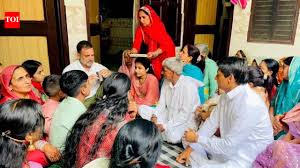
Sonipat: Lok Sabha leader of opposition (LoP) Rahul Gandhi on Tuesday attended the wedding of a farmer’s daughter in Medina village of Sonipat district, fulfilling a promise he made to the family during an earlier visit. The village falls under Baroda assembly segment in Gohana. Gandhi reached the village at 10.10am and spent nearly an hour at the ceremony hosted by farmer Sanjay Malik, whose daughter Tanu was getting married. He was accompanied by party MP Deepender Hooda and MLA Indu Raj Narwal. Villagers welcomed Gandhi by presenting him with a turban. When he walked towards the house where the rituals were underway, locals greeted him with “Ram-Ram, Rahul Bhai”, to which he responded with folded hands and a smile. During the ceremony, Gandhi met members of the bride’s family and blessed the couple. He interacted with villagers and spent some time seated among family members, enquiring about local customs and wedding traditions. Women in the household were singing traditional wedding songs as he joined them briefly and asked about the rituals associated with the ceremony. Gandhi also sampled traditional dishes served during the celebrations. He had churma with milk, tasted missi roti prepared by the bride, and also tried sweets including balushahi, laddoos and freshly prepared jalebis. At one point, he was seen offering jalebi to Deepender and the bride’s father, Sanjay Malik. Family members said they were surprised by Gandhi’s presence. Kirti Jakhar, a relative of the bride, said the family had invited him, but did not expect him to actually attend the ceremony. According to her, women in the house were singing ritual songs when the news of his arrival spread, creating excitement among the guests. The family also said a day before the wedding, Gandhi had sent a 55-inch LED television as a gift. During the ceremony, he presented the bride with a traditional ‘shagun’ envelope. The bride’s mother Sunita Devi said his presence at their home was itself the biggest blessing for the family. Gandhi’s association with the family dates to 2023, when he had visited Medina and joined Sanjay Malik in his fields. During that visit, he drove a tractor and participated in paddy transplantation, an interaction that drew considerable public attention. Later, he had invited Malik and several other farmers to his residence at 10 Janpath in New Delhi. Courtesy : TOI Note: This news is originally published on https:/timesofindia.com/bha and is used purely for non-profit/non-commercial purposes, especially human rights
Jakhar mocks Rahul Gandhi’s Barnala rally call for unity in Punjab Cong
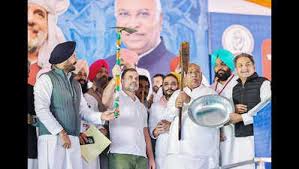
Chandigarh: Following Rahul Gandhi’s call for unity in the faction-ridden Punjab Congress at a rally in Barnala, Punjab BJP president Sunil Jakhar on Saturday mocked the Congress leadership, claiming the event was aimed at reprimanding the party’s state leaders rather than addressing public issues. The remarks came in response to Gandhi’s address at the Barnala rally, where he stressed the need for unity among Punjab Congress leaders and warned that factionalism within the party would not be tolerated. Referring to Gandhi’s remark, “No matter how big you are, be a team player; otherwise, Kharge ji and I will set you right,” Jakhar said the statement itself summed up the purpose of the rally. In a post on social media, Jakhar alleged that the Congress gathering had neither an agenda for Punjab nor any discussion on issues concerning farmers and labourers. Instead, he said, it appeared to be “a desperate attempt” by Gandhi, on behalf of the Congress high command, to publicly reprimand the party’s divided state leadership and compel them to unite through what he described as a warning. He further claimed that, in doing so, Gandhi exposed the internal divisions within the Punjab Congress before the public and, at the same time, raised questions about his own leadership ability. Jakhar also targeted the Congress leadership at the Centre, including party president Mallikarjun Kharge, alleging that the high command failed to provide direction to the party in Punjab. Courtesy : TOI Note: This news is originally published on https:/timesofindia.com/bha and is used purely for non-profit/non-commercial purposes, especially human rights
‘No matter how powerful…’: Rahul cracks whip on Punjab Cong rifts
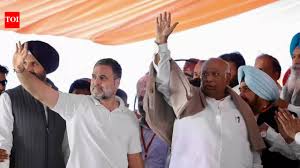
Barnala: Rahul Gandhi on Tuesday warned senior leaders of the faction-ridden Punjab Congress that even the most powerful among them would be sidelined if they failed to unite and work as a team. Gandhi, who was at the Barnala grain market as part of the Congress’s MGNREGA Bachao Sangram, also urged senior leaders to respect party workers, describing them as the real strength of the organisation. “Whatever is achieved can only be done through teamwork. No single person can ensure victory. We have a complete team, become a team player or you will be put among the reserve players and be benched. No matter how senior a leader is, he cannot be bigger than the party. If you do not mend your ways, Kharge ji and I will set you right. Our workers are our real strength, and decisions should be taken with their consent and by keeping them in the loop,” Gandhi said to loud applause from party workers at the fag end of his address. The Lok Sabha leader of opposition’s remarks come amid rising complaints of factionalism in the Congress. Even expelled Congress functionary Navjot Kaur Sidhu, wife of former Punjab Congress chief Navjot Singh Sidhu, had taken a dig at the rifts within the unit late last year, claiming the party had “five to six CM faces”. In Barnala, Gandhi also hailed the people of Punjab. “Punjab is our strength, the protector and foundation of India. We love Punjab. Politics is fine, but I love the people of Punjab. The Congress wants to safeguard the future of Punjab, its farmers and youth, who need to succeed,” he said, appearing to show more concern for the audience than for the leaders sharing the dais. The state unit has struggled to present a united face, which has reflected in the bypolls held since the 2024 Lok Sabha elections. While the Congress won seven of the state’s 13 Lok Sabha seats, it has managed to win only one of the six assembly bypolls held thereafter, Barnala in 2024. Courtesy : TOI Note: This news is originally published on https:/timesofindia.com/bha and is used purely for non-profit/non-commercial purposes, especially human rights
Rahul to attend Congress rally in Barnala on Feb 28
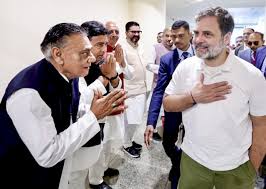
Chandigarh: The leader of opposition in Lok Sabha, Rahul Gandhi, will attend a public rally in Barnala on Feb 28. The event will be organised by the Punjab Congress. Punjab Pradesh Congress Committee president Amrinder Singh Raja Warring said the rally would be held against the scrapping of MGNREGA and the signing of the trade deal with the United States, which, according to him, will have a devastating impact on Punjab. In an informal interaction with the reporters, the PCC president said while the new law on MGNREGA would impact the livelihood of the poor, the trade deal with the US would destroy Punjab’s farmers. He said Punjab would be among the worst-hit states since agriculture was the mainstay of its economy. Warring also warned that the trade deal might have a long-term impact and could pose multiple challenges. The Ludhiana MP said as the trade deal had the potential to destroy local agriculture once agricultural goods were allowed to be imported at a 0% tariff, there would be no work, no jobs, and no earnings for a majority of farmers in the state. They will be jobless, he said about the farmers. “We are really concerned about such a situation if that happens,” said Warring, adding that such a situation could always be exploited by enemies who were continuously trying to foment trouble in the state. He pointed out that Punjab’s youth were already falling prey to drugs smuggled from Pakistan, and the state could not afford any other risks. The Congress leader, meanwhile, refused to react to the charges levelled by expelled party leader Navjot Kaur Sidhu. “Given the state of her mind and health, I don’t think I need to react or respond to what she has been saying,” he remarked, while dismissing her charges. The PCC president noted that she was not the only one targeting him with baseless allegations and criticism. He pointed out that even chief minister Bhagwant Singh Mann, Akali Dal president Sukhbir Singh Badal, Bikram Majithia, and the state BJP president Sunil Jakhar also targeted him. Courtesy : TOI Note: This news is originally published on https:/timesofindia.com/bha and is used purely for non-profit/non-commercial purposes, especially human rights
Navjot Kaur Sidhu targets Rahul Gandhi; flags issues in Punjab Congress: ‘You don’t deserve that chair’
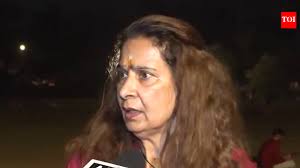
COIMBATORE: Former Congress leader Navjot Kaur Sidhu has launched a sharp attack on Rahul Gandhi, accusing the Leader of Opposition in the Lok Sabha of being “disconnected from ground realities” and failing to act against alleged corruption within the Punjab Congress unit. Addressing the media in Coimbatore, Sidhu alleged that Gandhi’s inaction is damaging the party’s prospects in Punjab, according to news agency PTI. She claimed that members of his inner circle are engaged in selling election tickets while he remains unaware of developments on the ground. “Rahul Gandhi talks good. He talks sense. But what he does and what he says is very different. For the past eight months, I have been asking for a time to tell him that your people, your president or your person appointed in Punjab is not doing justice to Punjab. He’s killing Congress in Punjab. I’m just asking you for a seating to tell you that your party is being destroyed in Punjab. They have already sold the tickets,” said Sidhu. She further stated, “If you are not aware of what is happening beneath you, then I am sorry. You do not deserve that chair. You are responsible for what you are doing. We left everything for Punjab, and you promised us a deputy CM post with seven departments and me as an MP, but you gave us nothing. You gave us local bodies and tourism, and you wanted them to be run according to the CM. Why are you talking against corruption when your own people are corrupt? And you are liking those corrupt people around you. The people surrounding you are totally corrupt. You have no time for the honest people who want to come and tell you that this is going wrong, you are not going to win Punjab.” “Probably it is been gifted to him. He has not worked his way through the lower steps to actually be on the lower ground. I think it’s very important to be grounded. What’s happening at ground zero is very important for anyone. You have to be in touch with the ground reality to know. You can’t be living in a dream world,” said Sidhu. “We have been honest throughout our lives. We have just gained the confidence of the people of Punjab, of the people of India, by being honest and struggling financially because of that. You can point a finger at PM Modi. Try to touch him. Does he have a penny? Does he have a file against him? Try touching him personally. There is nothing against him,” Sidhu added. Courtesy : TOI Note: This news is originally published on https:/timesofindia.com/bha and is used purely for non-profit/non-commercial purposes, especially human rights