
New state, old script: Infighting returns to haunt Congress’s Punjab poll plan

NEW DELHI: The Congress is staring at a crisis in Punjab. Does this read as a surprise? Well, not really! It’s the same old story of infighting and power tussle between the state leaders which has played out so many times for the Congress in so many states in the last one decade. Remember Rajasthan, Haryana, Madhya Pradesh, Chhattisgarh and yes, also Punjab in the run up to the 2022 assembly elections. Each of these states had the same story unfolding almost in a similar pattern. Step 1: Making of the crisis – power tussle between state leaders. Step 2: Incubation period – a procrastinating Congress high command preferring to look the other way Step 3: Cosmetic actions – Verbal warnings and probe panels to find the obvious and delay real action Step 4: The rebellion – a delayed or at times no meaningful intervention pushing one faction to revolt Step 5: The defections – disgruntled leaders leaving the party for greener pastures making it easy for the leadership as they no longer need to act Step 6: Electoral defeat – And finally, a loss in the elections Well, this may read harsh. But this is closer to the truth. Analyse the crisis in each of the states mentioned above and you will find this pattern playing out step by step – perhaps with some variations. In most of these states, leadership tussle was allowed to blossom into a full blown crisis because of the reluctance of Congress high command to intervene decisively at the right time. Congress Punjab crisis Now, let’s look at the crisis brewing in Punjab. Around 10 days back, Rahul Gandhi – the “Bhagya Vidhata” of the Congress – gave a pep talk to the leaders in Punjab. This is what he said: “You have to fight collectively, Punjab is an important state, and we stand a very good chance … ” Some questions: What has the Congress done to ensure that its leaders in Punjab fight unitedly? What ground work has the party done since its last defeat in the state to claim that it has a very good chance? Now, either Rahul Gandhi was not briefed about the real ground situation in poll-bound Punjab or he was intentionally ignoring the obvious and following the drill of pep talk. Whatever be the reason, the cracks in Punjab Congress are now out in the open. And it took just one decision from the high command to trigger this crisis. Ironically, a close look and you realise that even this decision, which was perhaps over four years late, steered clear of any change and focussed on maintaining the status quo in the state. Congress3 Decision four years late? Well, it was in 2022 that the Congress was decimated in Punjab by Arvind Kejriwal’s AAP. The grand-old-party came down from 77 to 18 while the AAP went up from 20 to 95. That sums up the story of the 2022 elections. The Congress had four long years to rejig the state organisation and give the new leadership time to prepare for the 2027 elections. Dissents if any would have been handled with time. But then we all know that the Congress does not believe in the age old adage : “A stitch in time saves nine.” So, nothing happened till the next elections came knocking on the doors. And finally when the leadership eventually focused on Punjab – it triggered a crisis. The fact that this decision was to “maintain the status quo” meant that the state leaders who were hoping to get a prominent role were left disappointed. Senior leader Manish Tewari, who was assigned no role in the rejig, raised the first voice of dissent with a cryptic note on X in which he wished he had an antidote for the “insecurities of individuals” and “institutions”. Then followed former chief minister and 2022’s compromise candidate Charanjeet Singh Channi – who had led the Congress to its historic defeat five years back. Channi, who lost from both the assembly seats he contested then, is unhappy with the leadership after being ignored for the post of state president. Channi was appointed as the chairman of the campaign committee but did not bother with the customary thanks to the leadership in a subtle dissent. A meeting called by “unhappy” Channi to discuss the leadership issue was attended by several important state leaders posing a question mark on the Congress’s decision to continue with Amarinder Singh Raja Warring as the state party chief. The BJP was quick to take digs at the Congress. Union minister Ravneet Singh Bittu, a former Congressman (remember Rahul Gandhi’s traitor jibe that stirred a storm) who joined BJP in 2024, took a swipe at Warring. Bittu recalled a famous scene from Sholay. Drawing a parallel with Asrani’s iconic jailor, whose entire contingent marches away with commands of “right, left” while he is left standing alone, Ravneet Singh said a similar situation has unfolded in the Punjab Congress with Raja Warring retained on the top post. He said almost Raja Warring’s entire team has drifted towards Charanjit Channi, leaving the state Congress chief isolated. In a tongue-in-cheek remark, Bittu advised Warring to stop resisting the inevitable, join the “Channi wagon”, and head to Channi’s residence along with the rest of his colleagues. Congress4 Does faction-ridden Congress stand a chance in Punjab? Well, theoretically “yes”, but practically perhaps “no.” Punjab has traditionally been one of the best bets for the Congress over the years. The Congress has won five of the 13 assembly elections between 1966 and 2022 and as a party has given maximum chief ministers to the state. With Akalis the only challenger for years, the grand-old-party kept returning to power in the state despite controversies and infighting. Even the scars of 1984 – the operation Blue Star and the anti-Sikh killings – did not cause a permanent harm to the party’s electoral prospects. Not any more. The 2022 assembly election changed the template.
‘Is Rahul Gandhi from Jandiala Guru?’: AAP taunts Congress over high command
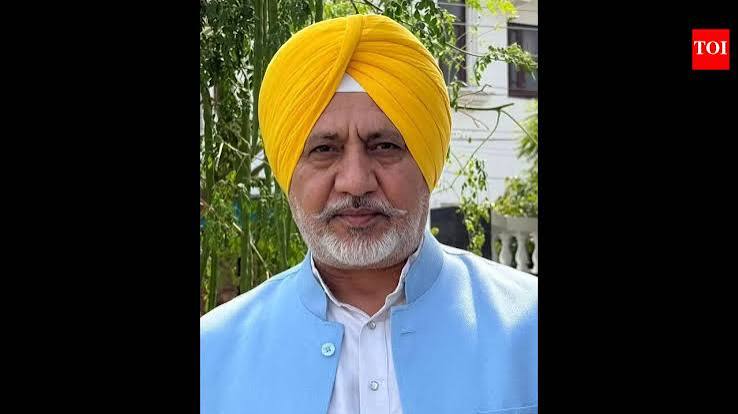
Chandigarh: Mocking the Congress over its continuing internal turmoil in Punjab, the ruling AAP on Sunday accused the party of “double standards”, asking why it was waiting for directions from the high command after repeatedly attacking AAP over alleged remote control from Delhi. Addressing a press conference, AAP Punjab media in-charge Baltej Pannu said the Congress had criticised AAP by claiming it was being run from Delhi, but was now itself looking to the central leadership to resolve its internal crisis. “Is Rahul Gandhi from Jandiala Guru?” Pannu asked, taking a swipe at the Congress amid AICC in-charge Bhupesh Baghel’s visit to Punjab to meet party functionaries. Pannu said the Congress had become “directionless”, with its leaders consumed by an internal leadership battle instead of presenting an agenda for Punjab. He also alleged that the Congress, BJP and Shiromani Akali Dal had become “Team A, B and C”, united only in targeting chief minister Bhagwant Mann because they had “no answer” to the AAP govt’s performance. Taking another swipe at the BJP, Pannu claimed the party had effectively become a “Congress wing” in Punjab, saying most of its prominent faces had crossed over from the Congress while its original leadership had been sidelined. Courtesy : TOI Note: This news is originally published on https:/timesofindia.com/bha and is used purely for non-profit/non-commercial purposes, especially human rights
Punjab Congress fault lines deepen ahead of 2027 polls; Warring denies factionalism
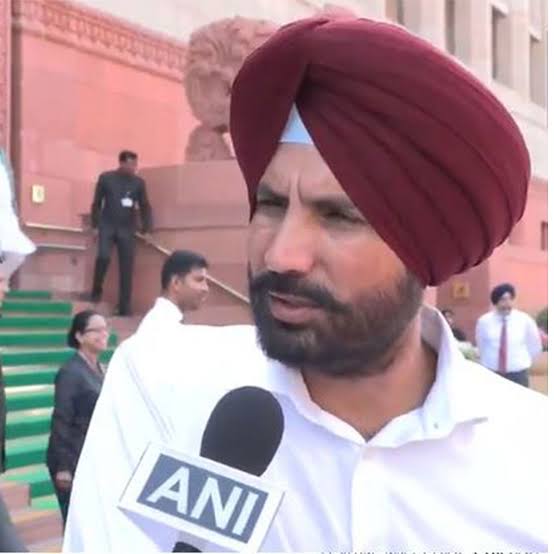
Amarinder Singh Raja Warring on Saturday said former Chief Minister Charanjit Singh Channi is like his elder brother and there is no factionalism in the party. The fault lines in the Punjab Congress ahead of the 2027 Assembly elections are now clearly visible. While rejecting speculation about internal divisions, state unit president Amarinder Singh Raja Warring on Saturday said former chief minister Charanjit Singh Channi is like his elder brother. He added that there is “no factionalism” in the party and expressed confidence that all senior leaders would appear together on a common stage within the next one or two days. Channi’s Delhi visit On the other hand, a day after a large number of senior Congress leaders, gathered at Channi’s residence, demanding that the party high command review its decision on the state leadership, the former chief minister left for Delhi on Saturday. Sources said Channi’s visit to Delhi has triggered speculation over possible efforts to break the political deadlock that has emerged in the state unit following recent organisational appointments made by the Congress ahead of the 2027 Assembly elections. Leaders close to Channi argue that the present arrangement has failed to enthuse workers at the grassroots level and that the party leadership needs to address their concerns before preparations for the Assembly polls gather momentum. They remain firm on their demand for a change in state leadership and have indicated that the dissident group could adopt a tougher stance if their concerns are ignored. Throughout these developments, Channi has maintained complete silence. Meanwhile, the dissident camp is awaiting a response from the party high command to its demand for a change in the Punjab Congress leadership. ‘Nothing unusual’ Warring said there was nothing unusual about Congress leaders gathering at Channi’s residence, describing the former chief minister as a senior leader and Chairman of the party’s Campaign Committee. “Channi is our elder brother, a senior leader, and former chief minister. If some Congress leaders meet at his house, there is nothing wrong with that. Tomorrow, leaders may gather at my residence or at Sukhjinder Singh Randhawa’s home as well. That should not be interpreted as infighting,” he said, adding that whenever Channi wants, he can meet the high command; nobody can stop him, and the senior leadership respects him. Warring further said that Rahul Gandhi and the Congress high command hold Channi in high regard, and there is nothing inappropriate about the former Chief Minister meeting the party leadership. He added that neither Channi nor any other senior leader has acted against party interests, and that strict action would be taken against those former MLAs or leaders found making statements against the party or indulging in indiscipline. ‘No leader above organisational rules’ Warring said that no leader, including himself, is above the organisation’s rules. “No one is allowed to cross the party’s limits, even if that person is the state president. Everyone must know their boundaries,” he said. He also urged party workers to exercise restraint and introspect before making public statements. ‘Tickets to contest polls would be allotted on merit’ On ticket distribution, Warring said tickets would be allotted on merit and that this decision was not in anyone’s control. “As far as tickets for the Assembly elections are concerned, everything will be on merit. If Raja Warring likes someone’s face or not, it will not matter. The person who is deserving will get the ticket. The high command will decide; our job is only to recommend. I do not know whose names will be shortlisted or rejected. After proper analysis, tickets will be given. This is the criteria of Rahul Gandhi,” he said. Warring added that the Congress wants to give tickets to common people and new faces, as India is a young country and youth should be better represented. “Tickets will be given to both experienced leaders and the youth in the coming elections,” he said. Meanwhile, his supporters have been posting messages claiming that only a small section of Congress leaders attended Friday’s meeting at Channi’s house, and that the overwhelming majority of the party continues to stand with the decision taken by the Congress high command. Harpreet Bajwa Courtesy : TNIE Note: This news is originally published on https:/thenewindianexpress.com/bha and is used purely for non-profit/non-commercial purposes, especially human rights
SPECIAL | Rahul Gandhi weighs bigger role for Charanjit Singh Channi as Punjab Congress eyes Dalit, Sikh and Hindu vote balance ahead of 2027
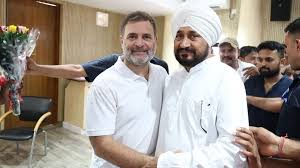
Sources familiar with the deliberations said the leadership, under Rahul Gandhi, is examining a formula that combines social representation with organisational stability. The Congress high command is learnt to be considering one of its biggest organisational exercises in Punjab since the 2022 Assembly election, with discussions indicating that former Chief Minister and Jalandhar MP Charanjit Singh Channi could be entrusted with a larger role in the state unit as part of a broader strategy to rebuild the party before the 2027 polls. According to party sources, the proposed restructuring goes far beyond a routine leadership change. The exercise is understood to be aimed at creating a carefully balanced organisational structure that gives representation to Punjab’s three most significant electoral segments, Dalits, Jat Sikhs and urban Hindu voters, while ensuring that senior leaders continue to remain politically relevant within the organisation. Sources familiar with the deliberations said the leadership, under Rahul Gandhi, is examining a formula that combines social representation with organisational stability. Alongside the appointment of a new state leadership, key election-related responsibilities, including campaign management, coordination, manifesto preparation and organisational planning, are also expected to be distributed among experienced leaders in an effort to minimise factionalism ahead of the Assembly election. Dalit vote bank at the centre of Congress calculations Political observers believe the reported move is primarily driven by Punjab’s unique social composition. Punjab has the highest proportion of the Scheduled Caste population among all Indian states, with Dalits accounting for nearly 32 per cent of the state’s population. The community plays a decisive role not only in the 34 Assembly constituencies reserved for Scheduled Castes, but also influences electoral outcomes in dozens of general seats across Doaba, Malwa and parts of Majha. Within the Congress, Channi is regarded as the party’s most recognisable Dalit Sikh leader. His tenure as Punjab’s first Dalit Chief Minister and his victory from the Jalandhar Lok Sabha constituency in the 2024 parliamentary election have strengthened perceptions within the party that he continues to enjoy considerable political acceptability among sections of Dalit voters. Party strategists are believed to feel that projecting a strong Dalit face at the organisational level could help the Congress regain a section of the traditional support base that has shifted towards rival political parties over the past several years. Balancing the Jat Sikh leadership is equally important Even as the Congress attempts to consolidate Dalit voters, the party is understood to be equally cautious about maintaining its influence among Punjab’s politically dominant Jat Sikh community. Although Jat Sikhs constitute an estimated 20 to 22 per cent of Punjab’s population, they continue to exercise significant political influence across rural constituencies, particularly in the Malwa region, which sends the largest number of MLAs to the Assembly. Party insiders believe any organisational restructuring that overlooks this influential community could create fresh internal challenges. Consequently, discussions are said to include assigning major organisational and election-management responsibilities to senior Jat Sikh leaders, allowing them to continue playing a central role in shaping the party’s campaign strategy while maintaining social equilibrium within the organisation. Urban Hindu voters also part of the strategy Another important element of the reported formula is the urban Hindu electorate. According to the 2011 Census, Hindus account for nearly 38.5 per cent of Punjab’s population. However, political strategists generally estimate that the decisive urban Hindu voting bloc constitutes around 25 to 26 per cent of the electorate and significantly influences election results in cities such as Ludhiana, Amritsar, Jalandhar, Patiala, Pathankot and several municipal centres. Congress leaders are believed to be exploring ways to ensure adequate organisational representation for leaders who enjoy influence in urban constituencies, thereby broadening the party’s appeal beyond its traditional rural support base. Lessons from the 2022 defeat The reported restructuring also reflects the Congress leadership’s assessment of the mistakes made during the 2022 Punjab Assembly election. The party had projected Channi as its chief ministerial face only a few months before polling. However, persistent factionalism, competing leadership centres, and organisational disunity overshadowed the campaign, reducing the Congress to 18 seats in the 117-member Assembly, while the Aam Aadmi Party secured a landslide victory. Many within the party now believe that social representation alone cannot deliver electoral success unless it is backed by organisational unity, clearly defined responsibilities and coordinated campaigning. 2024 Lok Sabha performance revives confidence The Congress’s improved performance in the 2024 Lok Sabha election, in which it won seven of Punjab’s 13 parliamentary seats, has reportedly prompted the central leadership to accelerate organisational restructuring well before the next Assembly polls. Party leaders are believed to view the parliamentary results as evidence that the Congress continues to retain substantial support in Punjab despite its defeat in the previous Assembly election. The leadership now appears keen to convert that momentum into a stronger organisational framework capable of sustaining a statewide campaign. Social engineering before 2027 Political analysts believe Congress is attempting to build a broader electoral coalition rather than relying on any single community. The reported strategy seeks to combine the electoral strength of Punjab’s nearly 32 per cent Dalit population, the politically influential 20-22 per cent Jat Sikh community, and the decisive urban Hindu electorate that plays a crucial role in several Assembly constituencies. If implemented successfully, such a leadership structure could allow the party to simultaneously target multiple voter segments while reducing internal friction among senior leaders. Unlike previous organisational changes that largely focused on individual appointments, the latest exercise appears to be centred on building a leadership model designed around Punjab’s electoral arithmetic and social realities. Although speculation over the proposed changes has intensified, Congress has not made any official announcement regarding the restructuring. The final shape of the Punjab unit is expected to emerge only after the party leadership completes its internal consultations. With less than a year and a half left before political activity gathers full momentum for the 2027 Assembly election, the decisions taken by the Congress in the coming weeks could play a significant role in determining whether
Mangu Ram Mugowalia and Ad Dharm movement: A century of Dalit assertion in Punjab
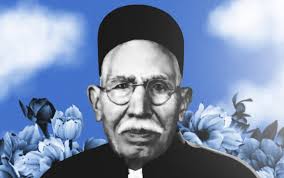
The Ad Dharm Movement, led by Mangu Ram Mugowalia, marked a transformative assertion of Dalit identity and dignity in Punjab, whose legacy continues to shape ongoing struggles for social and economic equality. June 11–12, 2026, marks the centenary of the Ad Dharm Movement, one of the most significant yet underappreciated chapters in the history of anti-caste struggles in India. Formally launched on June 11–12, 1926, under the leadership of Mangu Ram Mugowalia, the movement emerged as a powerful assertion of dignity, self-respect, and independent identity among the oppressed castes of Punjab. At a time when untouchability and caste discrimination structured everyday life, Ad Dharm challenged the social order by proclaiming that Dalits were not merely victims of caste oppression but a people with their own history, culture, and spiritual traditions. While anti-caste movements led by Jyotiba Phule in Maharashtra, Periyar in Tamil Nadu, and Ayyankali in Kerala have received recognition, the contribution of Mangu Ram Mugowalia remains relatively absent from mainstream narratives of social reform. Yet his role in shaping Dalit consciousness in Punjab was no less transformative. Through the Ad Dharm Movement, he laid the foundations of a distinct political and cultural identity that continues to influence Dalit assertion in the region even today. The movement also occupies an important place in the wider history of Dalit politics in India. Emerging during the same period that Dr. B.R. Ambedkar was mobilizing the Depressed Classes in India, Ad Dharm represented one of the earliest organized expressions of Dalit self-assertion in Punjab. Although they developed in different regional contexts, both Ambedkar and Mangu Ram shared a commitment to dignity, self-respect, and the rejection of caste-based oppression. From Ghadar revolutionary to a leader Born in 1886 in Hoshiarpur district, Mangu Ram’s political journey began with the Ghadar Movement, the revolutionary organization established by Indian migrants in North America to challenge British colonial rule. However, upon returning to India, he realized that political freedom alone could not guarantee social equality for the oppressed castes. The everyday reality of untouchability, exclusion, and humiliation demanded a separate struggle. This realization pushed him toward organizing Dalits and confronting caste oppression directly. The emergence of Ad Dharm must be understood within the social context of Punjab, where Dalits continued to face discrimination in social, religious, and economic spheres. Mangu Ram understood that emancipation required more than political representation; it required the creation of a collective consciousness rooted in dignity and self-respect. Religiousstudies books Long before the Ad Dharm Movement emerged, Guru Ravidas occupied a central place in the spiritual life of Punjab’s oppressed communities. His teachings of equality, human dignity, and the vision of Begampura—a society free from hierarchy, oppression, and suffering—had inspired generations of Dalits. Yet this reverence largely remained within the religious sphere. Mangu Ram recognized the immense emancipatory potential of Ravidas’s teachings. Through the Ad Dharm Movement, he transformed this spiritual legacy into a vehicle for social and political mobilization. Guru Ravidas became not merely a saint to be worshipped but a symbol of collective identity, resistance, and self-respect. The movement encouraged Dalits to take pride in their history and reject the caste labels imposed upon them by the oppressive social order. By placing Guru Ravidas at the centre of Dalit public consciousness, Mangu Ram created a cultural language through which oppressed communities could articulate dignity and equality. In this sense, he transformed an existing devotional tradition into a powerful instrument of social assertion. Ad Dharm: Transforming faith into assertion The Ad Dharm Movement sought to construct an alternative historical narrative. It argued that Dalits were the original inhabitants of the land and possessed an identity independent of the hierarchical framework of the social order. By promoting the term “Ad Dharm,” the movement challenged the legitimacy of caste classifications and asserted a distinct social existence. This was not merely a symbolic gesture. It represented a profound challenge to a social order that defined Dalits through exclusion and degradation. Ad Dharm offered dignity where caste society offered humiliation, and identity where caste hierarchy imposed stigma. The Ad Dharm Movement can be understood as Punjab’s own self-respect movement. Just as Jyotiba Phule’s Satyashodhak movement challenged Brahmanical domination in Maharashtra, Periyar’s Self-Respect Movement attacked caste hierarchy in Tamil Nadu, and Ayyankali fought for the rights of oppressed communities in Kerala, Mangu Ram developed a language of resistance suited to the social realities of Punjab. Each of these movements sought to restore dignity to those historically denied it. In Punjab, Ad Dharm became the vehicle through which Dalits asserted their humanity, cultural autonomy, and political agency. It gave Punjab’s Dalits a collective identity and a sense of pride that transcended caste-imposed inferiority. The movement demonstrated that social transformation requires more than political reform; it also requires cultural self-respect. Like the Self-Respect Movement in Tamil Nadu and the Satyashodhak Samaj in Maharashtra, Ad Dharm challenged the ideological foundations of caste and inspired oppressed communities to imagine themselves as equal citizens. The politics of recognition: The 1931 Census The movement’s impact became particularly visible during the 1931 Census, when thousands identified themselves as Ad Dharmis rather than under traditional caste labels. This was one of the earliest and most successful attempts in modern India to use the census as a tool of political assertion and collective self-definition. By refusing imposed identities and embracing Ad Dharm, Dalits challenged both colonial categories and caste hierarchies. The census thus became a site of resistance, demonstrating the transformative power of collective mobilization. The significance of the Ad Dharm Movement extends far beyond the colonial period. Its influence can be seen in the continued centrality of Guru Ravidas in Punjab’s Dalit public sphere, the emergence of Ravidasia religious institutions, and the enduring tradition of Dalit political mobilization in the state. Religiousstudies books Yet the centenary of Ad Dharm is an opportunity to reflect on the unfinished tasks of social justice. Punjab today has the highest proportion of Scheduled Castes among all Indian states, constituting nearly one-third of its population. Despite this demographic strength and
Punjab CM Announces Rs 4,500 Financial Support To Dalit Women, Rs 3,000 For Other Categories
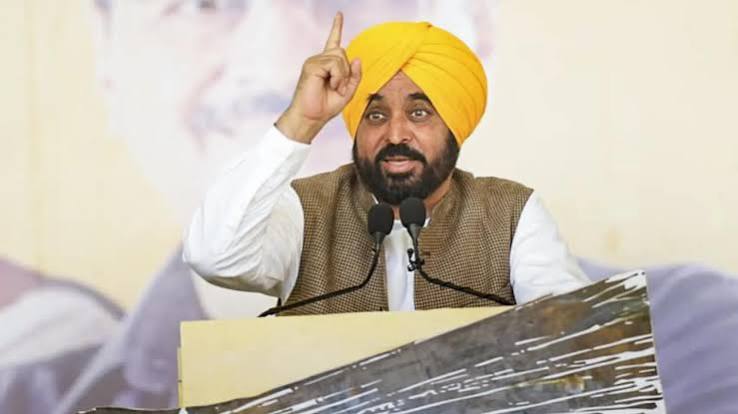
Punjab Chief Minister Bhagwant Singh Mann announced the launch of the Maavan Dheeyan Satkar Yojna, aimed at empowering women economically. Marking a historic step towards women’s economic empowerment, Punjab Chief Minister Bhagwant Singh Mann announced that the countdown for the Maavan Dheeyan Satkar Yojna has begun, with the first installment of three months’ Satkar Rashi set to be credited directly into the bank accounts of eligible women on July 1. Under the scheme, Dalit mothers and sisters will receive ₹4,500, while women from all other categories will get ₹3,000. During a Lok Milni programme after inaugurating various development works in Village Chanarthal Kalan of Fatehgarh Sahib constituency, CM Bhagwant Mann said the initiative reflects the AAP Government’s commitment to ensuring dignity, financial security, and social empowerment for women, adding that the assistance will continue uninterrupted as long as the AAP Government remains in Punjab. Addressing the Lok Milni in Fatehgarh Sahib, Mann stated, “After nine days, on July 1, women beneficiaries above the age of 18 years will receive notifications on their mobile phones informing them about the financial assistance being credited to their accounts. Women belonging to the general category will receive ₹1,000 per month while Scheduled Caste women will receive ₹1,500 per month.” “The money will be transferred directly into their bank accounts without any middlemen. Women who are already receiving social security pensions will also be eligible under the scheme. Nearly 97% women in Punjab are expected to benefit from this initiative and the Punjab Government has made a budgetary provision of ₹9,300 crore for it.” The Chief Minister stated, “This financial assistance may not make women rich, but it will certainly give them dignity, self-respect and confidence. Women deserve the highest respect because they are the source of life itself. The blessings of mothers and sisters help overcome every challenge in the world. Strengthening women’s financial autonomy is essential for improving household welfare, promoting gender equity and enhancing women’s participation in social and economic decision-making. When women become financially empowered, families prosper and society moves forward.” Speaking on another issue, CM Mann said, “The Punjab Government will not allow any genuine vote to be deleted during the ongoing SIR exercise by the Election Commission of India. I want to caution the people that the BJP may try to misuse the SIR process to delete valid votes, as has happened in other poll-bound states. However, we are fully vigilant and will not allow the nefarious designs of the saffron party to succeed. Every genuine voter in Punjab will be protected.” The Chief Minister said, “My predecessors never met the common people. They used to come out of their luxurious homes only after checking the temperature. On the other hand, I remain available to the people round the clock. Public service is not an occasional activity for me, it is my responsibility.” Taking a swipe at previous governments, the Chief Minister said, “These leaders built huge palaces by amassing enormous wealth through misuse of their official positions. The walls of those palatial residences were high and their gates remained closed to ordinary people. They remained inaccessible to the masses and ultimately the people showed them the door. When leaders stop listening to people, people eventually stop listening to those leaders.” “The people of Punjab have repeatedly rejected those who looted them turn by turn. These leaders fooled the people for a very long time, but Punjabis are now wise enough not to be swayed by their misleading propaganda. These arrogant politicians always took the people of Punjab for granted and ultimately paid the political price for it. Today, they are baffled because people are not responding to them. Their entire agenda revolves around the welfare of their own families rather than the welfare of the people,” said CM Mann. Continuing his attack on previous rulers, the Chief Minister said, “These leaders studied in convent schools in the hills and remained completely disconnected from ground realities. They were unaware about the money, properties and even the buses they owned. During their regimes, they exploited people by illegally seeking shares in successful ventures across the state. Such practices pushed Punjab backwards. These leaders ruined the state and their hands were drenched with the blood of Punjab’s youth.” Highlighting the progress achieved by the present government, CM Bhagwant Singh Mann said, “It is a matter of immense pride and satisfaction that Punjab’s development has been put back on track. The Punjab Government is accelerating the pace of development with every passing day. We have filled a gap of nearly seventy years and are making concerted efforts to build a Rangla Punjab.” “The AAP Government is perhaps the first government in the country that is implementing the People’s Manifesto in its true spirit. Every genuine demand raised by the people is being translated into action. We do not make promises merely for elections. We fulfil them once entrusted with responsibility,” he added. Taking on the Akali Dal leadership, Mann said, “Sukhbir Singh Badal is not aware of the ground realities of Punjab because throughout his life he has lived in a secure environment surrounded by luxuries and opulence. He wants to attain political power in Punjab, but he is not even aware of the basic topography of the state.” “Leaving everything aside, the former Deputy Chief Minister cannot even differentiate between the basic crops grown in Punjab. He has very little understanding of the issues concerning ordinary people. Someone who does not understand Punjab cannot provide leadership to Punjab,” said Punjab Chief Minister. The Chief Minister further said, “The sins committed by these leaders are unpardonable. The people of Punjab can never forgive them for their long saga of misdeeds. Those memories remain fresh in the minds of the people even today.” “These are opportunist leaders who change their colours and their stance like a chameleon according to their convenience and political interests. They patronised gangsters in Punjab and infused drugs into the veins of the youth by shielding drug smugglers.
Rahul meets 5 key Punjab netas ahead of call on party rejig
NEW DELHI: As Congress rethinks its organisational leadership in poll-bound Punjab, Rahul Gandhi Sunday met five key state functionaries ahead of a decision on a reshuffle. Leader of the opposition Partap Singh Bajwa, state chief Amarinder Raja Warring, ex-CM Charanjit Singh Channi, Sukhjinder Randhawa and Vijay Inder Singla met Rahul at 10, Janpath. Sources said Rahul asked them to fight the polls collectively, a day after the party brass discussed a report of the Ajay Maken panel set up to look into the Punjab unit. Meenakshi Natarajan and Bhajan Lal Jatav were other members of the panel. The five state functionaries are said to have given their views on the nature of the team with which Congress should go to the polls. Rahul called the leaders individually and sought their opinions. Bajwa told reporters, “I put forward my viewpoint on what is best for the party, and I said whatever decision you (Rahul) take, we’ll stand by it. We’re committed soldiers of Congress.” Courtesy : TOI Note: This news is originally published on https:/timesofindia.com/bha and is used purely for non-profit/non-commercial purposes, especially human rights
Rahul meets Punjab Congress’ top leaders amid speculations of organisational change; calls for unity

According to the leaders, Rahul Gandhi held one-on-one meetings with each of them, to get their views on the roadmap in the run-up to the Punjab Assembly polls. Amid speculations of an organisational restructuring in Punjab Congress, Rahul Gandhi on Sunday met top leaders of the state unit and urged them to fight the upcoming Assembly elections collectively, stressing that the party has a “very good chance” to win. Punjab goes to polls early next year. Punjab Congress chief Amarinder Singh Raja Warring, Leader of Opposition in the Punjab Assembly Pratap Singh Bajwa, former Punjab chief minister Charanjit Singh Channi, senior leaders Sukhjinder Singh Randhawa and Vijay Inder Singla met Rahul Gandhi at 10, Janpath, Sonia Gandhi’s residence. “I put forward my viewpoint on what is best for the party, and I’ve said whatever decision you (Rahul Gandhi) take, we will stand by that. We are committed soldiers of the Congress. Our families have sacrificed for the interest of Punjab, for the unity and integrity of this nation,” Bajwa told reporters after the meeting. “The leadership decision is with Rahul, whatever position he may give or not give, we stand by him,” Bajwa asserted. Gandhi met the five leaders one-on-one separately to get their views on the roadmap in the run-up to the Punjab Assembly polls, according to the leaders who met Gandhi. “Rahul Gandhi’s message was, ‘You have to fight collectively, Punjab is an important state, and we stand a very good chance.’ The leaders shared their views on the leadership issue and the best way forward. Basically, he stressed that we must protect Punjab’s interests,” a source privy to the meetings said. Earlier this month, the Congress named Ajay Maken, Meenakshi Natarajan and Bhajan Lal Jatav as All India Congress Committee observers to assess and submit a report on the current political scenario in Punjab. They submitted their report to the high command. Courtesy : TNIE Note: This news is originally published on https:/thenewindianexpress.com/bha and is used purely for non-profit/non-commercial purposes, especially human rights
PU launches admission helpline for transgender students

Chandigarh: Panjab University (PU) has launched a dedicated admission helpline for transgender students for the academic session 2026-27 to assist applicants during the admission process. The initiative has been introduced through the Permanent anti-discrimination cell for transgender students (PADCTS), functioning under the centre for human rights and duties. According to Dr Upneet Kaur Mangat, coordinator of PADCTS, the helpline will provide guidance and support to transgender applicants regarding admissions and related procedures. Applicants can seek assistance through helpline numbers 8437807999, 8437220625 and 9815064997, or via email at transgendercell@pu.ac.in. The PADCTS office is located at the Emerging Areas Building, Centre for Human Rights & Duties, Panjab University, Sector 14. The university currently provides one additional seat in each course for transgender students, a provision approved by the PU Syndicate in 2023 and implemented from the 2024-25 academic session. The provision applies across teaching departments, regional centres, constituent colleges and affiliated colleges. Admission-related guidelines for transgender students are available in the PU Handbook of Information (HBI-2026) on the university admission portal. Courtesy : TOI Note: This news is originally published on https:/timesofindia.com/bha and is used purely for non-profit/non-commercial purposes, especially human rights
Punjab Congress eyes Dalit-OBC consolidation ahead of 2027 polls, Channi emerges as frontrunner for party chiefPublished Date: 14-06-2026 | 7:01 pmAayush Goel
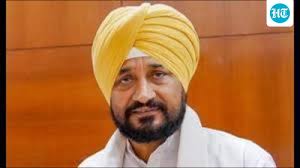
Chandigarh: With the 2027 Punjab Assembly elections now firmly on the horizon, the Congress is scrambling to resolve a leadership crisis that has simmered for months — and is increasingly pointing toward former chief minister Charanjit Singh Channi as its best bet to lead the state unit and anchor the party’s Dalit and OBC outreach. Punjab’s demographic arithmetic makes the calculus compelling. Dalits constitute approximately 32 per cent of the state’s population — the highest SC share of any state in India — while OBCs account for an estimated 15–20 per cent. Together, the two groups represent nearly half the state’s electorate, spread across communities including Mazhabi Sikhs, Ravidassias, Balmikis, Sainis, Kamboj, Ramgarhia and Gujjars. Yet despite their numbers, neither group has historically exercised political influence proportionate to their share of the vote. The Congress high command convened a meeting of top party leaders last week to finalise the shape of an organisational overhaul in Punjab. The party has also appointed senior leaders Ajay Maken, Meenakshi Natarajan and Bhajan Lal Jatav as observers for Punjab, a move seen within the organisation as part of the ongoing exercise to assess the state unit and recommend structural changes ahead of the 2027 elections. According to party sources, internal popularity surveys conducted as part of the Congress leadership’s review of the Punjab unit have shown Channi in a stronger position than incumbent PPCC chief Amrinder Singh Raja Warring — a finding that has sharpened the pressure on the high command to act. When contacted, Channi refused to confirm or deny his candidature for the post. Sources in Delhi Congress, however, said he remained the party’s most viable option given his mass appeal, Dalit identity, and ability to cut across regions. His strongest appeal lies among sections of the Dalit electorate, particularly in Doaba, with some resonance in Malwa. As Punjab’s first Dalit chief minister, his identity adds a powerful political dimension that no other contender in the race can replicate. A section of leaders has been flagging that ahead of the 2027 polls, the optics of two Jat leaders — Warring and CLP leader Partap Singh Bajwa — occupying both top positions would need to be reworked by adjusting Dalit, OBC and Hindu faces. Channi himself raised the point publicly, questioning why all key positions — PPCC chief, Leader of Opposition, and women’s wing president — were held by upper-caste leaders, despite Dalits alone constituting over 32 per cent of the population and OBCs adding a further 15–20 per cent. Others in contention for the PPCC post include Partap Singh Bajwa, former minister Pargat Singh, Fatehgarh Sahib MP Dr Amar Singh, and former MP Vijay Inder Singla. Warring’s position has weakened considerably. The pressure has intensified after the recent municipal elections, where the Congress failed to convert anti-incumbency sentiment into a statewide challenge. Out of 1,977 wards, AAP won 954, while Congress finished a distant second with 393. Independents secured 251 wards, followed by SAD with 192, BJP with 172 and BSP with seven. The results reinforced AAP’s organisational advantage at the grassroots level despite Congress leaders’ claims of growing public discontent with the Mann government. Concerns have mounted over the party’s organisational performance, particularly after setbacks in Gidderbaha — considered his traditional stronghold — where AAP swept 17 of 19 wards in municipal council elections. At the May 29 meeting in New Delhi — attended by Rahul Gandhi, Congress president Mallikarjun Kharge, Punjab in-charge Bhupesh Baghel, and senior state leaders — most state party leaders pressed for Warring’s replacement, though Baghel publicly denied any immediate proposal to do so. The party’s Punjab unit has long been dominated by Jat Sikhs, who account for roughly 25–30 per cent of the population but have held the chief ministerial post for all but a brief interlude since 1966. While Congress has made conscious efforts since 2021 to broaden its social coalition through Dalit, OBC and Hindu outreach, structural realities — land ownership, rural seats, and community mobilisation — continue to give Jat Sikhs the upper hand internally. The dilemma for the high command is acute. Replacing Warring with Channi could consolidate the Dalit-OBC bloc — collectively the state’s single largest voting constituency — that Congress desperately needs to dent AAP’s 2022 mandate of 92 seats. But any move risks deepening Jat Sikh alienation within a party already down to 15 of 117 assembly seats. The Congress top brass has so far not signalled enthusiasm for projecting Channi as a chief ministerial face, with Bhupesh Baghel recently stating the party would not declare a CM candidate ahead of the 2027 polls. That position, insiders say, is unlikely to hold. Aayush Goel Courtesy : The Financial World Note: This news is originally published on https:/thefinancialexpress.com/bha and is used purely for non-profit/non-commercial purposes, especially human rights