
Mayawati attacks the creamy layer in SC/ST reservations, urges RSS to stop advocating for any tampering with reservations.
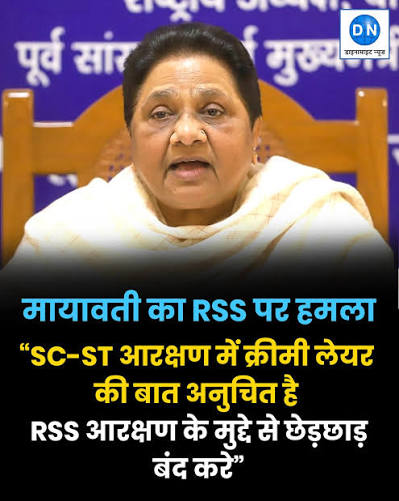
The BSP chief appealed to the central government that if it effectively and properly advocates, based on valid arguments, and persuades the court to exclude SC and ST communities from the creamy layer, it would be completely justified and constitutional. New Delhi: Bahujan Samaj Party chief Mayawati has strongly opposed the issue of the “creamy layer” in Scheduled Caste (SC) and Scheduled Tribe (ST) reservations. Mayawati stated that bringing SC/ST reservations under the creamy layer is not only unfair but also against the humanitarian objectives of Dr. Bhimrao Ambedkar’s Constitution. She also accused the Rashtriya Swayamsevak Sangh (RSS) of politicizing the reservation issue and urged the RSS to stop advocating for any tampering with reservations. In a social media post on Sunday, Mayawati described reservations as a very important and sensitive issue related to “social transformation and economic liberation” and self-respect for the SC, ST, and OBC communities. Mayawati stated that SC and ST communities have faced caste-based discrimination, exploitation, oppression, and social exclusion for centuries. According to her, caste hatred, injustice, and atrocities have not completely ended even today. She argued that in such circumstances, it is inappropriate to talk about a creamy layer in SC/ST reservations. She stated that reservation cannot be viewed solely on the basis of economic status, as the impact of caste discrimination can persist despite economic advancement in various areas of a person’s life. Mayawati stated that the purpose of reservation is not merely to provide financial assistance, but to ensure social equality, respect, and constitutional rights for historically disadvantaged communities. Mayawati’s comments follow RSS chief Mohan Bhagwat’s recent statement regarding reservations. Bhagwat had stated that reservations should continue as long as social discrimination exists. He also stated that those who have already benefited from reservations should consider voluntarily relinquishing them, so that its benefits can reach those who are currently deprived. She also criticized the politicization of reservations as a cause of social tension. Challenging Bhagwat’s view, Mayawati said that such statements about reservation undermine constitutional objectives. She accused the RSS of claiming that such views on reservation may serve narrow political interests, but undermine the constitutional goal of social equality. The BSP chief stated that it would be inappropriate to measure reservation solely by economic status. According to her, the problems faced by SC/ST communities are not only poverty but also caste discrimination and social inequality. She stated that caste-based discrimination does not automatically disappear even if an individual or family’s economic status improves. Based on this, she opposed the concept of implementing a creamy layer in SC/ST reservations. Referring to the current stance of the central government, Mayawati said that if the government effectively advocates in court, based on its arguments, to exclude SC/STs from the creamy layer, it would be a just and constitutional step. Indeed, the central government, in its recent submission to the Supreme Court, opposed the implementation of a creamy layer in SC/ST reservations. The government argues that the historical and social discrimination faced by SC/ST communities differs from the creamy layer concept applied to OBCs, and that caste discrimination can persist despite economic progress. Mayawati stated that weak legal advocacy by governments often fails to achieve the desired results in matters related to social change. Therefore, she urged the central government to provide strong legal support for its position on excluding SC/STs from the creamy layer. In a direct message to the RSS, Mayawati said that it should respect Dr. Bhimrao Ambedkar’s humanitarian and welfare-oriented Constitution. She urged the RSS to stop politicizing reservations and refrain from advocating for any changes to reservations. According to Mayawati, the Constitution’s objective is to establish an “egalitarian social system” in the country, and all organizations should cooperate in achieving this goal. Geetha Sunil Pillai Courtesy: Hindi News
Yavatmal Murder Case | Dalit woman elected Sarpanch on a general seat, then murdered her husband out of enmity: Bombay High Court upholds life imprisonment for 10 convicts!
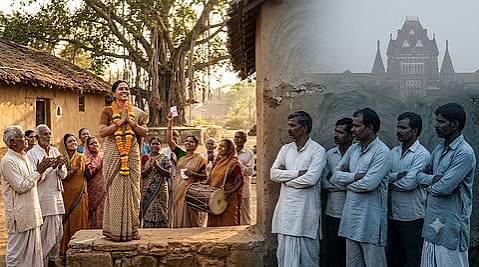
The division bench stated in its 179-page judgment that a comprehensive consideration of the oral evidence, medical and forensic evidence, and other proven facts establishes beyond reasonable doubt that the accused assembled unlawfully and, with a common objective, committed the murder of Mahesh Gawande out of political enmity. Yavatmal – The Nagpur bench of the Bombay High Court has delivered a major verdict in the highly publicized 2018 Sarpanch-husband murder case in Parwa village, Yavatmal district. The division bench of Justice Urmila Joshi-Phalke and Justice Nivedita Mehta dismissed the appeals of the ten convicts, upholding the life imprisonment sentences awarded by the Special (Prevention of Atrocities) Court in Yavatmal. The verdict was delivered on August 4. The murder of a woman’s husband in broad daylight by multiple assailants in a village political battle, and the subsequent eight-year legal battle, has reached a crucial juncture with this High Court decision. What is the whole matter? Nalini Gawande, a resident of Parwa village in Yavatmal district, was elected as a Gram Panchayat member in April 2015. In January 2016, after a no-confidence motion was passed against the then Sarpanch, Rama Chimurkar. The post of Sarpanch was reserved for the general category, and Nalini, who belonged to the Dalit Buddhist community, became Sarpanch, a move opposed by a faction in the village. Munna Thakur, a prominent among the accused, openly objected to this election, and since then, a continuous conflict has erupted between the two factions. In December 2017, the accused abused Nalini’s husband, Mahesh Gawande, on the basis of caste, while in January 2018, a dispute erupted again over the distribution of hand pumps in the village. On January 27, 2018, accused Munna Thakur directly threatened over the phone that “her husband would be killed.” The very next day, on January 28, the accused attacked Nalini’s home, vandalized household items, and also assaulted Prafull Shabarkar. Fed up with this constant harassment, Nalini Gawande and her family moved to Yavatmal city. Murder in broad daylight On March 27, 2018, at around 1 p.m., Nalini returned to Parwa village with her husband Mahesh, son Mayur, and nephew Samyak to carry out repairs. At around 1 p.m., Mahesh Gawande left the house to have a snack with Sheikh Imran and Sheikh Israel, the repairmen. Mahesh was talking to Prashant Shabarkar, Nitin Lokhande, Raju Kawale, and Prakash Bhagat, who were playing cards near the Anganwadi, when the accused, armed with deadly weapons, formed an unlawful assembly and attacked Mahesh Gawande. Hearing the noise, son Mayur and nephew Samyak rushed to inform Nalini of the incident. Nalini then rushed to the scene and witnessed the accused attacking her husband with weapons. She screamed for help, which drew a crowd, and the accused fled the scene. Police arrived at the scene, and Mahesh was rushed to the Yavatmal District Hospital, where he had already died by the time they arrived. Nalini filed a police complaint that evening. According to the post-mortem report, a total of seventeen wounds were found on Mahesh Gawande’s body, including stab wounds near the left eye, on the cheek, on the jaw, on the forehead, on the chest, and on the abdomen, and a slit wound was also found. Medical officials concluded that these wounds were caused by sharp and sharp weapons, such as a knife, chopper, sword, and sickle, and determined the cause of death to be multiple stabbings and slashing of the throat. What the Investigation Revealed During the investigation, police recovered swords, sickles, and other weapons from the accused. The chain of custody of these weapons was established by the police through various panchnamas. Samples of soil collected from the crime scene and the nails of the body matched, which was confirmed by forensic examination and strengthened the eyewitness testimony. A total of eighteen witnesses were examined during the investigation, including Nalini Gawande, her son Mayur, and key eyewitnesses Sharda Narayane and Prashant Shabkar. Following the completion of the investigation, the police filed a charge sheet, and the trial was held in the Special (Prevention of Atrocities) Court of Additional Sessions Judge-2 in Yavatmal under Special Case No. 18/2018. On January 20, 2020, the Sessions Court convicted the accused under sections 302 (murder), 149 (unlawful assembly, offence committed with common intention), 120-B (conspiracy), 143, 147, 148, and 201 of the Indian Penal Code and sentenced them to life imprisonment. The accused appealed to the High Court. Ten convicts—Sunil Deotale, Hanuman Pendor, Shubham Tekam, Raj Thakur, Munna Thakur, Vinod Chapriya, Sumit alias Pandya alias Sumedh Meshram, Praveen Bhagat, Bhimrao Awathare, and Swapnil Kumbhekar—filed five separate criminal appeals against the Sessions Court’s decision. Defense lawyers argued that there were inconsistencies in the eyewitnesses’ statements, that their testimony was unreliable because they were relatives of the complainant, and that the guilt of the accused had not been proven beyond a reasonable doubt. However, the High Court rejected these arguments. The court noted that eyewitness Nalini Gawande, a woman from a rural background, could not be expected to provide an accurate and photographic account of an incident that unfolded over a few minutes when multiple attackers were attacking with deadly weapons. Citing the Supreme Court’s decision in State of Punjab vs. Hakam Singh, the division bench clarified that minor inconsistencies are not appropriate when evaluating the testimony of rural witnesses. The bench also elaborated on the thirteen principles of evidence evaluation laid down in the Supreme Court’s decision in Balu Sudam Khalde v. State of Maharashtra (2023). The court stated that the testimonies of Nalini Gawande, Mayur Gawande, Sharda Narayane, and Prashant Shabkar were corroborative, consistent, and reliable, and that minor discrepancies, despite their existence, did not affect the fundamental facts of the case. The judgment noted that the post of Sarpanch was held by the general category, and Nalini belonged to the Scheduled Castes. The accused party opposed her election as Sarpanch. This background was seen as the origin of the political rivalry that arose in the case. The court’s observations on unlawful
Huge rally in Nanded against Scheduled Caste sub-classification
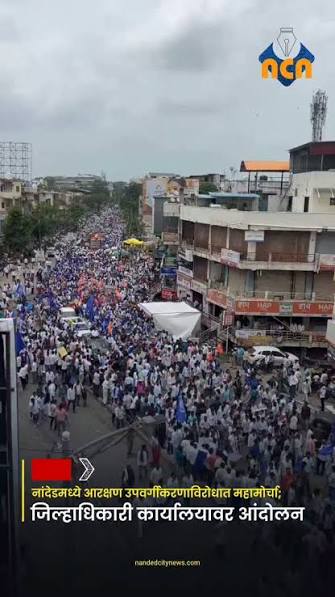
Chhatrapati Sambhajinagar: A massive rally opposing the alleged move to sub-classify the Scheduled Caste (SC) category was held in Nanded on Sunday, with Dalit activists accusing state govt of trying to divide the community and warning of intensified protests if the proposal goes ahead. The rally, attended by several Dalit and social leaders, culminated in a public meeting where speakers expressed strong opposition to reservation sub-categorisation and called for unity among SC communities. Republican Sena functionary Anandraj Ambedkar alleged that govt was creating social divisions under the pretext of implementing a Supreme Court ruling. “We are not fighting against any elements of the society, but govt. To achieve the success, we have to remain united,” Ambedkar said. He further accused chief minister Devendra Fadnavis of misleading people on the issue of reservation sub-categorisation. Former minister Chandrakant Handore said the move would create divisions within the Dalit community and warned of stronger resistance if govt failed to reconsider its stand. Courtesy : TOI Note: This news is originally published on https:/timesofindia.com/bha and is used purely for non-profit/non-commercial purposes, especially human rights
Rajasthan: ‘Justice’ Murdered in the Dangawas Dalit Massacre Case
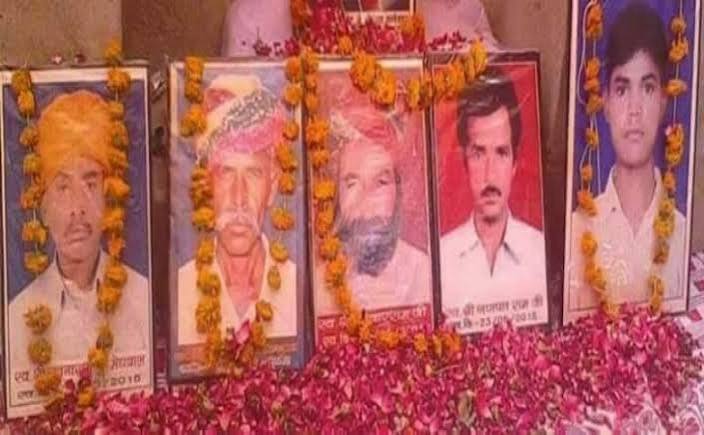
On August 5, 2026, the Special SC/ST Court in Merta acquitted all 40 accused in the case, granting them the benefit of the doubt. The court concluded that the incident was proven and its perpetrators were unproven. This single sentence from the court encapsulates the entire tragedy of the Dangawas Dalit massacre. Bhanwar Meghvanshi explains.First, let’s understand what happened that day in Dangawas, a village in Nagaur district, Rajasthan. How the violence that began with a land dispute escalated into a Dalit massacre, and how the search for justice became a long struggle. Finally, a court verdict, delivered 11 years later, now appears to be a case of injustice.To simply describe the Dangawas Dalit massacre as a land dispute between two parties would be an injustice to the entire incident. If we piece together the events, a horrific story emerges, in which an old land dispute, caste dominance, administrative inaction, open threats, the controversial role of the illegal village panchayat, armed mobs, tractor crushes, firing, alleged sexual and physical violence against women, and subsequent attacks on victims in the hospital all appear interconnected. The most important question is: was what happened on May 14, 2015, a sudden communal clash or a serious consequence of already building tensions and threats?Dangawas is a village in the Merta City area of Nagaur district. According to the 2011 census, the village had 1,578 families and a total population of approximately 7,470. Dalits constituted approximately 16.59 percent of the population. There had been a long-standing dispute in the village over the occupation of Dalit land by non-Dalits and tenancy rights. The land dispute that later became the backdrop for the Dangavas massacre is 23 bighas and 5 biswas of land. This land has been in the name of the Dalit Meghwal family since its inception in government records. Later, a dispute arose over its alleged purchase, sale, transfer, and possession. According to the occupying Jat family, they had purchased the land, but it was only in the Dalits’ names on paper. Meanwhile, the Dalit family claims the land was mortgaged and was reclaimed after making a reasonable payment. However, the Jat family continued to illegally occupy it, leading the aggrieved Dalit family to approach the courts and the administration. Ultimately, proceedings before the Sub-Divisional Officer resulted in a decision in favor of the Dalit family, ordering the transfer of physical possession.This is where the story becomes more serious. While the land belonged to the Dalits on paper, the land was in the hands of another party. The law stated one thing, while the powers that be asserted another. This cannot be explained by a single incident; it is a series of events. For example, on April 20, 2015, there was mention of an attempt to cut down trees and build a pond on the disputed land. Subsequently, on April 21, an incident of attempted rape and assault of a Dalit widow was reported. When the police failed to register a case, the victim had to go to court. Subsequently, threats against Dalits escalated.On May 11, Dalits sought protection from the local administration. Dalit families living on the disputed land were receiving threats of eviction, and several local administration officials were aware of the dispute. That same day, members of the Jat community submitted a memorandum to the local administration, demanding the removal of Dalit families from the land and threatening to remove them themselves if action was not taken. The Dalit families again sought protection from the local administration, but the local administration remained silent.This suggests that signs of danger were present before the violence of May 14. On the morning of May 14, 2015, members of the Jat community convened an illegal panchayat in the village regarding the disputed land, where a large number of people gathered. From there, this frenzied mob, armed with weapons, arrived on tractors, motorcycles, and other vehicles at the disputed land, where Dalit families were present with their relatives.A mob of hundreds of people targeted and began killing Dalit men and women present there. The violent mob not only surrounded the Dalits and hurled caste-related slurs at them, but also attacked them with sticks, rods, axes, and other weapons. Their huts and houses were set on fire. Their vehicles were burned. But the most horrific part of the violence was tractor justice. Tractors were driven over Dalits. Many were hit by the tractors. Two Dalits, Ratnaram and Pokharram, died on the spot, and nearly a dozen others were seriously injured. Pancharam also succumbed to his injuries later. Ganeshram and Ganpatram died while undergoing treatment in the hospital. Thus, five Dalits were killed in the mob lynching of May 14, 2015.To simply call the Dangawas incident a “murder” would be to minimize its full scale. Among those injured, many had broken limbs and head injuries. Several parts of their bodies also bore serious wounds and other injuries. When I visited the Dangawas victims after the incident, they also alleged that, in addition to caste-based slurs, women were assaulted, their clothes torn, and attempts were made to sexually assault them. This means that the attack wasn’t just on their bodies; their dignity and self-respect were also deeply hurt.Another horrific chapter of the Dangawas Dalit massacre involves hospitals in Merta City and Ajmer. After the incident, the injured were taken to hospitals, but due to the police’s late arrival at the scene and the tense situation at the hospital, the mob targeted the injured at Merta Hospital. Most importantly, those who should have been protected in the hospital were forced to endure fear even there.The case of Rampal Goswami’s gunshot death also came to light amid the violence on May 14th. Rampal’s family alleged that he was forcibly taken away by the mob. He later died of gunshot wounds. The Dalit community was blamed for the murder. According to the case report, the deceased Goswami had gone to Dangavas as an emissary of an illegal village council of villagers to convene
Adivasi-Dalit groups to hold rights declaration, gathering for fresh push for justice in Muthanga case
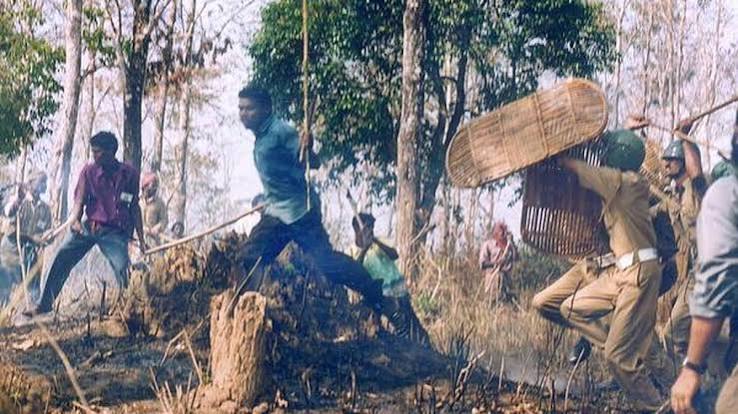
Adivasi and Dalit organisations are demanding a comprehensive inquiry into the death of Yogi (Jogi), who was reportedly killed in police firing during the 2003 Muthanga land agitation and and the alleged human rights violations in connection with the stir Adivasi and Dalit organisations will intensify protests demanding a comprehensive inquiry into the death of Yogi (Jogi), who was reportedly killed in police firing during the 2003 Muthanga land agitation and the alleged human rights violations in connection with the stir. An Adivasi-Dalit gathering and Declaration of Rights will be held at Municipal Town Hall in Sulthan Bathery (Jogi Nagar) on Sunday (August 9) on the occasion of the International Day of the World’s Indigenous Peoples. Bommi Amma of Cheeral, the oldest surviving participant in the Muthanga struggle, will inaugurate the gathering at 9 a.m. Sivan Yogi, son of Jogi, will preside over the event. 2003 Muthanga land struggle: two decades later, all accused who faced trial in constable murder case acquitted; Geethanandan, three others convicted in related offences Cultural procession The programme is being organised by the Muthanga Solidarity Committee, a collective of several organisations and individuals led by the Adivasi Gothra Mahasabha (AGMS) and the Ambedkarite Democratic Front (ADF). Participants in the Muthanga struggle will share their experiences at the meeting. A cultural procession will subsequently be taken out through the town, followed by a public meeting at Jogi Nagar (Town Hall) at 4 p.m. ADF State working chairperson K. Ambujakshan will inaugurate the public meeting, while AGMS general secretary P.G. Janardhanan will make the Declaration of Rights. The Muthanga land agitation has returned to the limelight after the Kalpetta Principal Sessions Court, on July 31, acquitted all the accused who stood trial, including social activist M. Geethanandan, in the case relating to the murder of police constable K.V. Vinod. However, the court convicted Geethanandan and three others on other charges related to the case and sentenced each to five years of rigorous imprisonment. In a joint statement issued on Saturday, the organisers said the programme was being held against the backdrop of nearly 25 years of struggles by indigenous communities for land, control over natural resources, self-governance and justice. They said that under the agreement reached following the historic Kudilketty Samaram in 2001, the government was bound to distribute between one and five acres of land to landless Adivasis. However, the failure to implement the agreement led to the Muthanga agitation, during which Adivasi families erected huts on their “ancestral land” inside the Muthanga Wildlife Sanctuary in Wayanad and launched a “peaceful” protest. The subsequent police firing on and attack against the protesters, allegedly carried out without negotiations or warning, shocked the conscience of the world, the organisers said. Jogi, who was killed in the firing, was yet to receive justice as no proper investigation had been conducted into his death, they said. The organisers also alleged that around 55 people, including an eight-month-old child, died later after being subjected to police atrocities. They further said that even a direction issued by the then National Human Rights Commission to conduct a comprehensive probe into the alleged human rights violations, including those against women and children, was not implemented. The Hindu Bureau Courtesy : The Hindu Note: This news is originally published on https:/thehindu.com/bha and is used purely for non-profit/non-commercial purposes, especially human rights
Death threats to family in Soraon: Allegations of demolition of ancestral thatch, no action even after a week
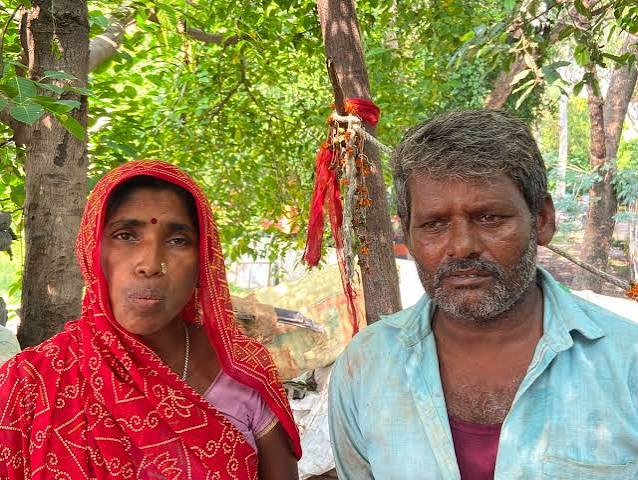
Shyamlal, a Scheduled Caste resident of Abdalpur (Pakditar) village in the Soraon police station area, has alleged that his ancestral thatch was demolished, he was assaulted, and threatened with death. He has filed a complaint against the opposing party. The victim alleges that even after a week has passed, no action has been taken in the matter. According to Shyamlal, a thatched house covered with cement sheets is located on his ancestral plot number 608. He stated that a settlement was not reached during the hearing in the SC/ST court on July 12th. Subsequently, at around 1 a.m. on July 31st, six people from the neighborhood entered his house and began demolishing the thatch and breaking the cement sheets. When Shyamlal protested, it is alleged that the accused, armed with sticks, abused him and chased him with the intention of killing him. Shyamlal saved his life by running into his house. The victim also alleged that the next morning, when he went to lay bricks with his family, the same men returned and assaulted his daughter-in-law, Bachni Devi, and son, Kamlesh. The victim immediately called the police on 112. After the police arrived, the family was able to escape safely. The accused fled the scene, threatening life and property. Shyamlal alleges that after the incident, he filed several complaints with the Soraon police station and the Soraon Circle Officer. However, even after a week, neither the police arrived at the scene nor a case was registered. The victim has demanded immediate action and protection for his family. In this regard, Inspector-in-Charge Deendayal Singh stated that the matter will be investigated seriously. Whoever is found guilty in the investigation will be prosecuted as per the law. Shyam Babu Gupta | Mauaima (Prayagraj), Prayagraj (Allahabad) Courtesy: Hindi News
Lakhimpur Kheri: Dalit Woman Found Dead, Family Alleges Rape and Murder; 12 Police Teams Deployed

12-Year-Old Dalit Girl Allegedly Gang Raped by Five Juveniles in Uttar Pradesh’s Shahjahanpur A pall of grief and anger has descended over the Neemgaon police station area of Lakhimpur Kheri district in Uttar Pradesh following the suspicious death of a young Dalit woman. Her distraught family has leveled serious allegations, claiming she was raped and then murdered by strangulation. They further alleged that her body was dragged after the killing. Police have launched a large-scale investigation, though they have stated that these allegations remain unconfirmed until the postmortem report and forensic findings are complete. Family’s Anguish and Allegations The father of the deceased woman has spoken out about the brutality he believes his daughter suffered. He said that simply looking at the condition of the crime scene gives a clear indication of the seriousness of the incident. “The way things were at the spot, one can understand what happened to my daughter,” he expressed, his voice heavy with grief. However, he has not yet named any specific individual as a suspect. Police are considering all possible angles as the investigation unfolds. Massive Police Operation Underway Upon receiving information about the incident, a police team immediately rushed to the location and conducted a thorough inspection of the crime scene. A forensic team was also called in to gather scientific evidence. According to police, several items including the deceased woman’s sickle were recovered from the spot. Investigators are now meticulously scanning footage from CCTV cameras installed in the surrounding areas.The scale of the police response is significant. Neemgaon Station House Officer Praveer Kumar Gautam and Circle Officer Mitauli Yadavendra Yadav confirmed that over a dozen police teams have been formed to crack the case. These include SWAT teams, the Local Intelligence Unit, and police station-level squads, all working on different aspects of the investigation. Teams under the leadership of the Mitauli Inspector are also gathering information on the activities of suspects. Forensic and Technical Evidence Key to Probe Police officials emphasized that they are making progress. “We are receiving important clues and are getting closer to solving the case. Efforts are being made to reveal the truth very soon,” said a senior officer. Raids are being conducted continuously to locate and detain suspects, and several people have already been questioned. Despite the swift police mobilization, the final truth behind the young woman’s death remains shrouded. Authorities have made it clear that the exact cause of death and the identification of the perpetrators will depend entirely on the postmortem report, the forensic evidence collected from the scene, and the technical data still being analyzed. Courtesy : TOP Note: This news is originally published on https:/theobserverpost.com/bha and is used purely for non-profit/non-commercial purposes, especially human rights
Three arrested in linked cases involving Dalit woman in Kollur
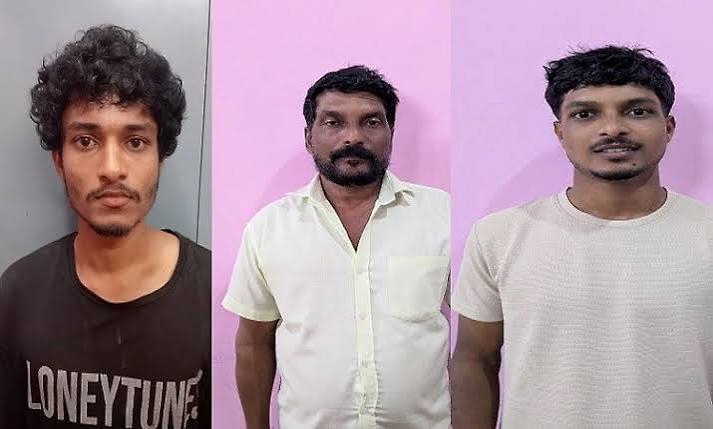
Byndoor: Kollur police have arrested three people in connection with two separate but related cases involving alleged caste-based abuse of a Dalit woman and a subsequent assault on a youth in Bellala village. The incidents reportedly occurred on Thursday, August 6, within the limits of Kollur police station. Police have registered separate cases based on complaints from both sides and are investigating the allegations. Youth arrested under SC/ST Act In the first case, police arrested Sanath Kundapur following a complaint filed by a Dalit woman. According to the complaint, Sanath allegedly approached the woman near her residence and behaved in a manner that outraged her modesty. She also alleged that he verbally abused her using casteist slurs. Based on the complaint, Kollur police registered a case under provisions of the Scheduled Castes and the Scheduled Tribes (Prevention of Atrocities) Act and arrested Sanath in connection with the allegations. Police are examining the circumstances surrounding the alleged incident and recording statements as part of the investigation. Counter-case filed after alleged assault Meanwhile, a counter-case was registered following a complaint filed by Sanath Kundapur. In his complaint, Sanath alleged that after the earlier incident, members of the woman’s family tied him up, assaulted him and attempted to kill him. Acting on his complaint, police registered a separate case under various provisions of the Bharatiya Nyaya Sanhita (BNS), including the section relating to attempt to murder. Following the complaint, police arrested two people identified as Ram Kumar and Nandish Kumar in connection with the alleged assault. The arrests have resulted in three people being taken into custody in the two connected cases. Police investigate both complaints Police are now investigating the allegations made by both parties to establish the sequence of events and determine the circumstances that led to the two incidents. The cases involve serious allegations on both sides, including offences under the SC/ST (Prevention of Atrocities) Act and an alleged attempt to murder. Investigators are expected to examine witness statements and other available evidence before taking further action. Police have stated that the investigation into both cases is currently underway. Officials are also working to identify and apprehend any other people allegedly involved in the incidents. Police said remaining accused persons, if their involvement is established during the investigation, will be apprehended in accordance with the law. Investigation underway The linked cases have drawn attention because of the serious allegations made by both sides. While the first complaint concerns alleged caste-based abuse and behaviour against a Dalit woman, the counter-complaint alleges that the accused in the first case was subsequently assaulted and subjected to an alleged attempt on his life. Police are treating the two complaints separately while examining whether and how the incidents are connected. Further details are expected to emerge as the investigation progresses. Authorities have not yet disclosed additional information regarding the condition of those involved or the specific circumstances surrounding the alleged assault. The Kollur police are continuing their investigation and are expected to take further legal action based on the evidence gathered. Courtesy : News Karnataka Note: This news is originally published on https:/newskarnataka.com/bha and is used purely for non-profit/non-commercial purposes, especially human rights
Health officials wash hands off Dalit girl’s life with Rs 2L
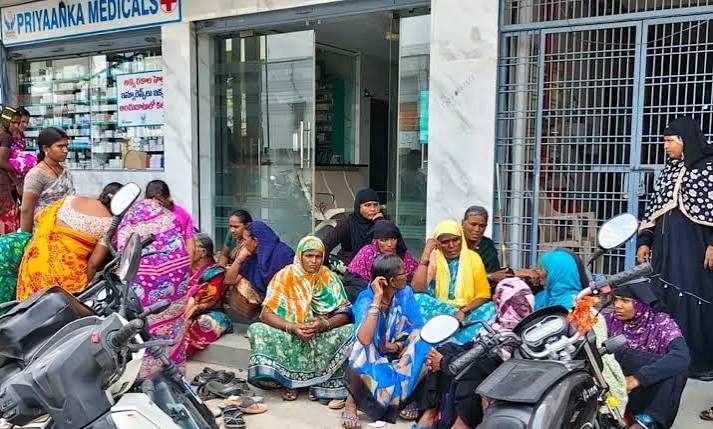
Private hospitals in Pebbair “settling” deaths due to alleged medical negligence Wanaparthy: Recent incidents of deaths resulting from alleged medical complications and negligence at private hospitals in Pebbair have caused public alarm. Allegations are surfacing that settlements regarding the deaths are being negotiated over the bodies in the presence of intermediaries to prevent the matter from becoming public and/or legal. Recounting a horrifying incident that occurred on September 28, 2025, locals informed that a young girl, who visited a private corporate hospital in the municipality with stomach pain, died following a medical complication. This incident occurred near the Subhash Chandra Bose Crossroads. Ramudu and Shirisha, a couple from the Dalit colony in Govardhanagiri village (Veepanagandla mandal), brought their five-year-old daughter, Ramya, to the hospital after she suddenly complained of stomach pain. Without conducting any tests, the doctor allegedly administered two injections; upon noticing foam coming from the child’s mouth, he took an X-ray and administered two more injections. As her condition deteriorated, the doctor advised the parents to take her to Mahbubnagar and sent her there in a private ambulance. However, doctors at the Mahbubnagar hospital examined the child and declared her dead. Alleging that the girl died due to the doctor’s negligence, family members and relatives staged a protest at the hospital. The price of a Dalit girl’s life settled by the hospital was Rs 2 lakhs. When questioned, DMHO Sainath Reddy said, “The medical officer conducted ground-level inspections and submitted a report to the Deputy DMHO who in turn also inspected the hospital. However, the submission of the report was delayed because he fell ill (fever). As there are holidays from tomorrow through Monday, the report is expected to reach me on Tuesday. I will take action once the report is received.” Meanwhile, many such incidents are being revealed by locals, such as the one on July 7 involving Sabera Begum (35) of Etigadda Sagapuram village, who came for delivery of twins after 16 years of marriage but was instead sent to the grave. Doctors had allegedly applied sutures without removing the placenta, which the family says attributed to the complication of her uterus. Residents of the municipality and district are criticising the situation, questioning whether anything can be done when medical officials appear to place a monetary value on human lives. They lament that officials, who ought to ensure such incidents don’t recur, are merely settling for paperwork instead of taking concrete action to prevent future occurrences Courtesy : THI Note: This news is originally published on https:/thehansindia.com/bha and is used purely for non-profit/non-commercial purposes, especially human rights
Case of Dalit boy beaten for drinking water from a bottle: Police issues notice to teacher, Human Rights Commission also seeks response
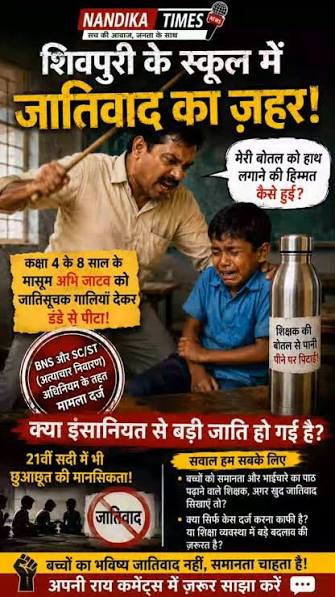
An FIR has been registered against a teacher under various sections of the SC/ST Act, including the SC/ST Act, for allegedly assaulting a Dalit student and making casteist remarks at a government school in Ukawal village, Shivpuri. The National Human Rights Commission has taken suo motu cognizance and sought a detailed report from the Madhya Pradesh government and police within two weeks. A case of alleged assault on a Dalit student at school has come to light in Kolaras, Shivpuri district. The teacher is accused of assaulting and using casteist slurs against the 8-year-old fourth-grade student at the government primary school in Ukawal village. Following the complaint, the police have registered an FIR against the accused teacher under sections of the BNS and the SC/ST Act and have initiated an investigation. The police have issued a notice to the accused teacher. The National Human Rights Commission has also taken cognizance of the matter and requested a report. The incident dates back to July 27th. An 8-year-old Dalit student, studying in the fourth grade at the Government Primary School in Ukawal village, Kolaras tehsil, has been allegedly assaulted. Family members allege that the child was thirsty and drank from the teacher’s water bottle. Angered by this, the teacher beat him with a stick. According to family members, the child returned home crying and informed the family about the entire incident at school. Following this, the family filed a police complaint. Based on the complaint, the Lukwasa police station has registered a case against the accused teacher, Lokesh Sharma. The FIR includes relevant sections of the BNS Act, as well as sections of the SC/ST Act. Following the registration of the case, the police have initiated an investigation. According to Kolaras Police Station Officer Puneet Vajpayee, a notice has been issued to the accused teacher. Police say the investigation is ongoing and further action will be taken based on the facts and evidence that emerge. Only after the police investigation will it be clear what actually happened at the school. Meanwhile, the alleged assault and casteist remarks against a minor student have raised questions about the safety of children in government schools and the conduct of teachers. NHRC seeks report from Madhya Pradesh government and police The National Human Rights Commission has taken suo motu cognizance of the matter. The Commission stated that if the claims made in media reports are true, this constitutes a serious human rights violation. The Commission has issued notices to the Chief Secretary of Madhya Pradesh and the Superintendent of Police of Shivpuri, seeking a detailed report within two weeks. The report should also include details of the legal relief provided to the victim and the action taken in the case. Published by: Dinesh Sharma Courtesy: Hindi News