
Dalit Women Allegedly Attacked for Entering Shiva Temple in Odisha, One Arrested
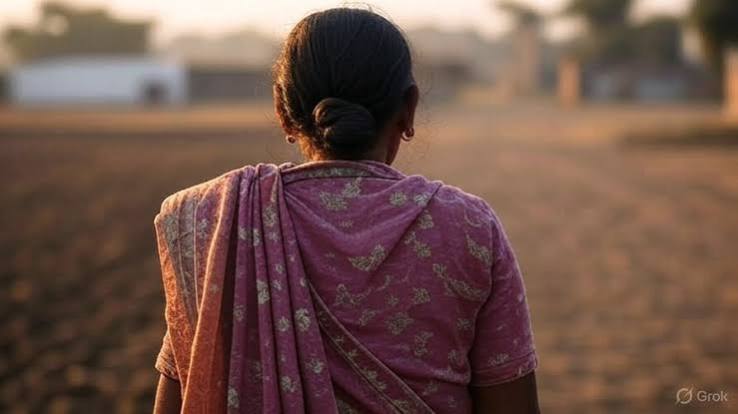
Tension was reported in Atimati village under Erasama police limits in Odisha after a group of Dalit women were allegedly stopped and assaulted when they tried to enter a Shiva temple to offer prayers during Shravan. The women alleged that some villagers prevented them from entering the temple, hurled casteist and abusive remarks at them, and threatened them with physical violence if they did not leave the premises. According to police, the incident took place on Monday when the women visited the local Shiva temple. Some villagers allegedly carrying sticks and lathis stopped them from entering, leading to an argument between the two groups. Dalit Woman Allegedly Attacked With Knife The situation reportedly escalated after the women refused to leave the temple premises. The villagers allegedly snatched their puja offerings and threw them on the ground. During the confrontation, one of the accused, identified as 40-year-old Satya Rout, allegedly attacked a 55-year-old Dalit woman with a knife, leaving her seriously injured. He is also accused of kicking and physically assaulting her. The injured woman later approached the Erasama police station and filed a complaint against eight people. Based on her complaint, police registered a case against all eight accused persons. Police Arrest One Person Erasama IIC Parthsarthi Beura confirmed that a case had been registered and said Rout had been arrested in connection with the alleged assault. He was subsequently produced before a court. Police are investigating the role of the other accused named in the complaint. “The involvement of the other accused persons would be verified during the investigation and appropriate action would be taken if they are found guilty,” Beura said. He added that the situation in the village was currently under control, but police personnel had been deployed to prevent any further escalation. “The situation is now normal, but police are maintaining strict vigil in the village to prevent any untoward incident,” he said. Courtesy : TOP Note: This news is originally published on https:/theobserverpost.com/bha and is used purely for non-profit/non-commercial purposes, especially human rights
BJP can’t tolerate BCs, Dalits’ growth: Minister Nagendra
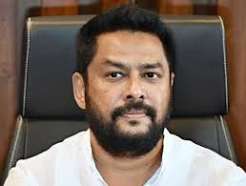
The world knows how the money was misappropriated. KOPPAL: Minister B Nagendra on Tuesday alleged that the BJP could not tolerate the growth of leaders from Backward Classes and the Dalit community. Addressing reporters at Munirabad near here, he said, “We are bringing back the money that was siphoned off from Karnataka Maharshi Valmiki Scheduled Tribes Development Corporation Limited. The world knows how the money was misappropriated. The case is before the court. I will come out clean in the alleged scam. Keep watching, my work as a minister will receive appreciation from people across the state.” “I will work under the guidance of the CM and the former CM,” he said. Reacting to some BJP leaders’ statements that they would not allow the Assembly to function till Nagendra is dropped from the cabinet, he said, “Their only aim is to suppress Dalits and BCs. We are ready to give them a fitting reply in the Assembly. Our chief minister has already responded to them. It is the Opposition’s job to corner us, and let them do so. All members of the Cabinet will respond. We are committed to our party’s ideology of taking people from all communities together.” “Whenever I travelled outside the state, I obtained permission. BJP leaders are unaware of it. I have not violated any rules. The court has granted a stay order in this case,” he said. Courtesy : TNIE Note: This news is originally published on https:/thenewindianexpress.com/bha and is used purely for non-profit/non-commercial purposes, especially human rights
Before the Constitution: How ‘Scheduled Caste’ Was Born a Hindu Category — And Why the British Kept It That Way Part 1

Every argument about who is entitled to Scheduled Caste (SC) status in India today is, at bottom, an argument about history. Proponents of extending SC status to Dalit converts to Christianity and Islam often present the current religion-linked definition — Hindus, Sikhs, and Buddhists only — as a post-1950 anomaly, an accident of drafting that a more enlightened Republic ought to correct. The historical record says otherwise. The link between Scheduled Caste status and the Hindu social order was not invented by the Constituent Assembly in 1949. It was inherited, fully formed, from more than two decades of colonial administrative and political practice — practice that itself confronted, and rejected, the demand to extend caste-based protections to Christian and Muslim converts. This first article in the series traces that history. Untouchability as an Administrative Fact, Not a Legal Category Before “Scheduled Caste” existed as a term, the colonial state grappled with the reality of untouchability as a sociological fact peculiar to Hindu society. The 1881 census and subsequent decennial enumerations recorded a large population subjected to social disabilities on account of birth communities barred from temples, wells, schools, and public roads, and confined hereditarily to degrading occupations. British ethnographers and administrators, working through successive census operations, consistently identified this system of graded exclusion as an internal feature of Hindu social organisation, rooted in notions of ritual pollution that had no doctrinal counterpart in Islam or Christianity, notwithstanding that both faiths had, by then, acquired converts from the same untouchable communities. This is the crucial starting point often erased from public memory: the British did not invent the idea that untouchability was a Hindu phenomenon. They found it that way, documented it that way, and built their entire administrative response around that understanding. The Simon Commission and the Depressed Classes The Indian Statutory Commission of 1927 — the Simon Commission — was among the first bodies to give the phrase “Depressed Classes” (the pre-Independence term for what became Scheduled Castes) an administrative shape. Its enquiries, like the census operations before it, confirmed that the disabilities in question attached to caste communities within Hindu society. The Commission’s engagement with the question set the template that later instruments would follow: identify the castes suffering ritual and social disability, and confine protective measures to the community that generated and sustained that disability in the first place. The Communal Award of 1932: The First Legal Separation of Converts from Depressed Class The decisive administrative moment came in 1932. Prime Minister Ramsay MacDonald’s Communal Award, framed to allocate separate electorates among India’s communities, drew a sharp and deliberate line: it treated “Indian Christians” as a distinct political and electoral minority, wholly separate from the Depressed Classes. A Dalit who had converted to Christianity was, under the Award, an Indian Christian for electoral purposes, not a member of the Depressed Classes. Such a person could neither vote in, nor contest, the seats specifically reserved for the Depressed Classes. This was not an oversight. The British administration, dealing daily with the realities of caste, religion, and colonial governance, took the considered position that conversion to an Abrahamic faith changed a person’s political and social classification. It dissolved, for electoral law, the individual’s identity as a member of the Depressed Classes. The Poona Pact of the same year, the settlement between Gandhi and Ambedkar that replaced separate electorates with reserved seats within the general electorate, likewise operated within this same framework: the reserved seats were for the Depressed Classes as a Hindu social category, not for a religion-neutral class of the economically disadvantaged. The Government of India Act, 1935 and the 1936 Order Three years later, the Government of India Act, 1935 authorised the Governor-General to specify, by order, which castes, races, or tribes would be treated as Scheduled Castes for representation and administration. Acting under this power, the colonial government issued the Government of India (Scheduled Castes) Order, 1936, the instrument that coined the very term “Scheduled Castes.” The 1936 Order restricted the definition strictly to persons professing the Hindu religion. Indian Christians of Dalit origin were explicitly and knowingly excluded. It is worth pausing on the significance of this. The post-Independence Constitution (Scheduled Castes) Order, 1950, the instrument at the centre of today’s controversy, did not invent the religion criterion. It inherited it, almost verbatim, from an instrument that had already been in continuous administrative use for over a decade. When Dr Ambedkar and the framers of India’s Constitution came to address the question of Scheduled Castes in 1949, they were not writing on a blank slate. They were ratifying and, in the case of Sikhs and later Buddhists, cautiously extending a classification that colonial administrators, working from census data and ground-level observation rather than any ideological programme, had already settled a generation earlier. Early Representations for Inclusion — and Their Rejection The demand to bring Christian Dalits within the ambit of Depressed Classes protections is not a new one; it is, in fact, older than Independence itself. Christian organisations in South India — where a substantial proportion of Dalit conversions to Christianity had occurred through nineteenth and early twentieth-century missionary activity — periodically pressed the colonial government to recognise continuing caste-based disadvantage among converts and extend the same statutory protections available to Hindu Depressed Classes. These representations were considered and were not accepted. The colonial state’s position — later inherited without significant modification by the Constituent Assembly, as the second article in this series will show — was that the disability in question was untouchability, a phenomenon rooted in the Hindu social order, and that the act of conversion to a faith which formally repudiated caste distinctions was itself evidence that the convert had exited the social system generating the disability. The state did not deny that Christian converts of Dalit origin might continue to face economic hardship or informal social prejudice. It declined, however, to treat that hardship as equivalent to the specific, ritualised, birth-imposed disability of untouchability for which the Depressed Classes framework
Tamil Nadu: Dalit outfit seeks aid, job for Kodaikanal murder victim’s wife
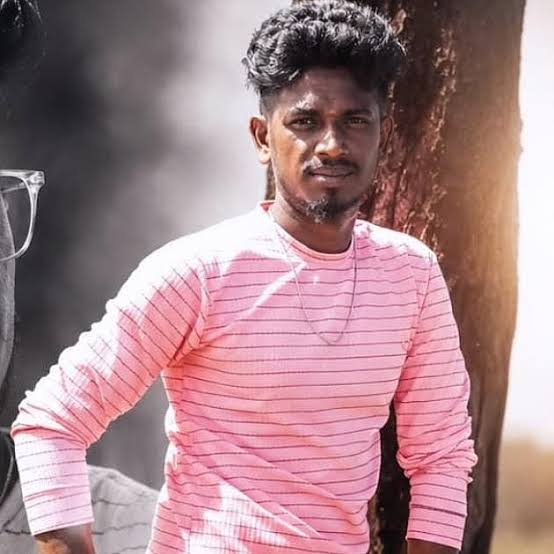
According to sources, V Ramar (28), a daily wager from Poombarai panchayat in Kodaikanal, was deployed at farmland in the hill region. DINDIGUL: Alleging delay in providing compensation to the family of a Scheduled Caste murder victim in Kodaikanal, a Dalit outfit sought a government job for the victim’s wife in accordance with her qualifications along with the immediate dispersion of the compensation. According to sources, V Ramar (28), a daily wager from Poombarai panchayat in Kodaikanal, was deployed at farmland in the hill region. On July 30, a group of members from the dominant community allegedly hacked him to death. An FIR was registered at the Kodaikanal police station on July 31. Speaking to TNIE, Dalit Liberation Front (DLM) state president C Karuppiah said that under the Scheduled Castes and the Scheduled Tribes (Prevention of Atrocities) Amendment Rules, 2016, `6 lakh should be provided as compensation after the postmortem, while the remaining `6 lakh should be given after the chargesheet is filed in court. “Ramar’s postmortem was conducted on July 31, but the first instalment has not been given. Apart from this, the victim’s wife was offered a job within a week. But she was given a cook’s job at an Adi Dravidar Welfare School in Kodaikanal. The eligibility for a cook is no formal education, whereas she has completed Class XII. She could have been given a clerk or assistant position in the district administration,” he said. An official from the Adi Dravidar Welfare Department, Dindigul, said the job vacancy was within the purview of the department, and the cook’s post was offered as the victim’s wife had sought immediate employment for survival. “Based on the approval of the collector, the appointment was sanctioned. Other government job vacancies come under the Tamil Nadu Public Service Commission (TNPSC), and it takes time for the victim’s family to get such a job,” the official said. Regarding the compensation, the official said there are five legal heirs. “The `6 lakh compensation will be settled in two instalments. `1.88 lakh will be given on Tuesday and the remaining amount within a week. Since one part comes from the state government and the other from the Union government, the process is being carried out accordingly,” the official said. Courtesy : TNIE Note: This news is originally published on https:/thenewindianexpress.com/bha and is used purely for non-profit/non-commercial purposes, especially human rights
Why are you not suspending him? Kerala HC pulls up State over inaction against cop in Dalit student suicide case
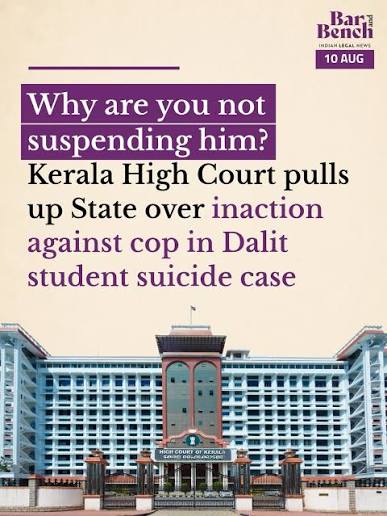
The Court asked whether higher-ranking police officials were attempting to protect their colleague from disciplinary action. The Kerala High Court on Monday questioned the State over its failure to suspend Deputy Superintendent of Police (DSP) Sudheer Kallan despite a finding of serious procedural lapses in the arrest of an accused in the case concerning the suicide of Dalit dental student Nithin Raj. Justice A Badharudeen said police’s negligent approach had initially led to the release of the prime accused Dr M Kodanda Ram, a Kannur Dental College professor. “Why are you not suspending him? The report states that there are serious procedural lapses coupled with a careless and negligent approach in the investigation by the police personnel who arrested him. The preparation of the arrest-related documents resulted in the release of the accused. Even after finding all this, he has not been suspended?” Justice Badharudeen orally asked. The Court was hearing the plea fled by victim’s parents, who have been seeking clarity on the investigation and circumstance surrounding the arrest of Dr. Ram. Nithin Raj, a dental college student in Kerala, died by suicide on April 10 after jumping from a building near the college. Before his demise, Raj is alleged to have faced caste-based harassment from the faculty at the dental college. The police registered a case for abetment of suicide and offences under the Scheduled Caste and Scheduled Tribes (Prevention of Atrocities) Act, 1989 (SC/ST Act) and arrested the prime accused, Dr. Ram. However, his initial arrest had been declared illegal by a trial court after the police failed to furnish mandatory grounds of arrest to the accused. He was subsequently re-arrested by the Crime Branch. Today, Special government pleader Rasheed C Nooranad told the Court that following a preliminary enquiry by Superintendent of Police of Wayanad, the State Police Chief has recommended disciplinary proceedings against DSP Kallan. However, he added that the disciplinary proceedings would be initiated only after the completion of a proposed enquiry by a panel of officers. Justice Badharudeen questioned the need for another enquiry when an oral enquiry has already found serious lapses in the arrest. The Court further asked whether higher-ranking police officials were attempting to protect the DSP. The judge made it clear that the government should take necessary action rather than wait for the Court to direct every step. “I don’t have an opinion that the government is not bonafide. The remedies available to the accused let him avail those, you (government) do your job. The job of police is to arrest. Court’s job is to take decision when such action is challenged,” Justice Badharudeen remarked. The Court in its order today, recorded that the officer had committed serious lapses but no immediate action was being taken by the State and instead a panel of competent enquiry officers is slated to be appointed. It directed the State Police Chief to consider the enquiry report and pass necessary orders while also directing that the proposed panel be constituted within one week. The matter will be heard next on August 17. Praisy Thomas Courtesy : Bar and Bench Note: This news is originally published on https:/barandbench.com/bha and is used purely for non-profit/non-commercial purposes, especially human rights
Protests escalate after the acquittal of 40 accused in the Dangawas massacre, with the Dalit community taking to the streets.
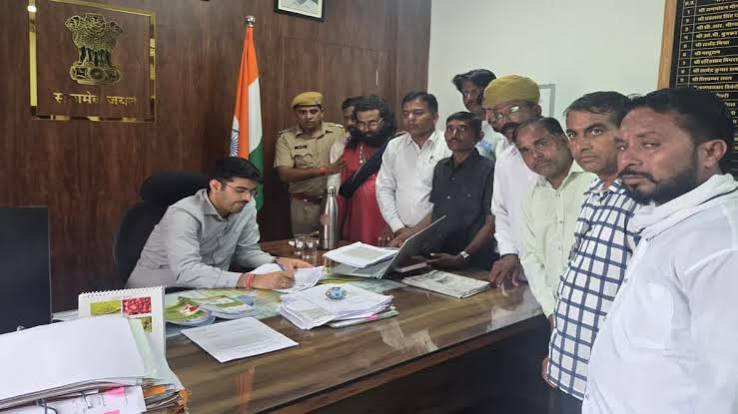
Representatives of the community questioned who committed these murders if all the accused are innocent. Kuchaman City: Activists of the Bhim Army-Azad Samaj and the Meghwal Samaj in Didwana submitted a memorandum to the President, Governor, Chief Minister, and Chief Justice of the Rajasthan High Court through the District Collector in protest of the Special SC/ST Act Court, Merta, granting the benefit of doubt to all 40 accused in the highly controversial Dangawas massacre case in Didwana-Kuchaman district. The memorandum stated that all 40 accused were acquitted after nearly 11 years of trial in the Dangawas case. Community representatives questioned that if six people were murdered in this case, and all the accused are innocent, who committed these murders? The verdict has created a sense of insecurity and distrust in law and order among the victim families and the Dalit community. Read: Politics heats up again after the acquittal of the accused in the Dangavas massacre; former minister Bhupesh Baghel meets with the victim’s family Demand for High Court Appeal: The memorandum demanded the Rajasthan government appeal the verdict in the Dangavas case in the Rajasthan High Court. It also demanded effective steps to enhance the security of the victim families and ensure justice for them. The memorandum also questioned the presiding officer’s decision during the hearing, stating that the verdict was unjust to the victims. Community representatives demanded an impartial review of the entire case. Allegations of Most of the 18 Demands Not Fulfilled: Bhim Army District Secretary Rajuram Chand Basni stated that after the Dangavas incident, an agreement was reached with the government on 18 demands. According to him, many of the demands, except for a CBI investigation, remain unfulfilled. The memorandum demanded the fulfillment of all these demands so that the victim families and society can reassure that the law is equal for all. Chand Basni stated that the verdict in the Dangavas massacre has deeply shocked the victim families and society. The acquittal of all accused in the murder case of six people raises serious questions. He said that the government should strongly appeal this decision in the High Court and provide security to the families of the victims. He added that society’s struggle will continue until justice is achieved. Six deaths: Advocate Manjit Gandhi said that six people died in this long-drawn-out case, and now all the accused have been acquitted, giving them the benefit of the doubt. Therefore, the government should conduct a legal review of the decision and appeal to the High Court. Courtesy: Hindi News
Punjab Election 2027: BJP prepares to break into the Dalit vote bank. Will the Punjab situation change in 2027?
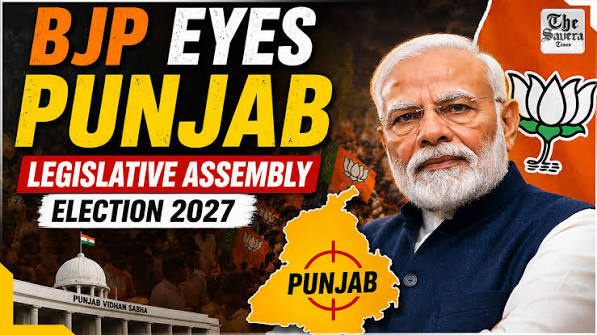
The BJP has now grasped the power of Dalit voters and the caste equations in Punjab. In the last Punjab elections, a simple Dalit candidate from the Aam Aadmi Party defeated the veteran former Congress Chief Minister Charanjit Singh Channi. The BJP now sees Dalit voters as game-changers. Punjab has the highest percentage of Scheduled Caste (SC/Dalit) population in any state in India. Dalits constitute approximately 32% to 33% of Punjab’s population. The Jat Sikh population is approximately 19% to 21%. Urban non-Dalit Hindus constitute approximately 18% to 20%. Other Backward Classes constitute approximately 20% to 31%. With the approach of the 2027 Punjab Assembly Elections, the political landscape in the state is beginning to unfold. The BJP, which has long relied on Punjab’s urban Hindu vote and as a stooge of the Akali Dal, is now fully prepared to take the lead. For decades, the BJP, confined to a minor coalition partner in Punjab, is preparing for a major political shift. The party has set its sights on the Dalit vote bank, the state’s largest social force. Following the success of the Haryana model of non-Jat and backward-Dalit alliances, the BJP is also constructing a maze of non-Jat Sikh and Dalit-Hindu alliances in Punjab. Its direct aim is to directly target the support base of the Congress and the Aam Aadmi Party. Dalits constitute approximately 32% to 33% of Punjab’s population. Jat Sikhs constitute approximately 19% to 21%. Urban non-Dalit Hindus constitute approximately 18% to 20%. Other Backward Classes constitute approximately 20% to 31%. However, Punjab’s Dalit community is not a unified whole; rather, it is primarily divided into two or three major religious and social factions: Sikhs and Hindus of the Ravidassia group, influenced by Dera Sachkhand Ballan. They constitute approximately 13% of the population and reside in the Doaba region of Jalandhar and Hoshiarpur. Second, the Mazhabi Sikhs, primarily affiliated with the Sikh religion, constitute approximately 10% of the population. They reside in the Malwa and Majha regions. Third, the Bhangi Hindu Sikhs constitute approximately 3.5% of the population and reside in urban and rural areas across Punjab. The BJP is now eyeing these voters. Will this BJP move be successful? Punjab’s 117 assembly seats are divided into three major regions. The BJP is seeking its counterweight in these regional and social dynamics. The Malwa region, which has 69 seats, will be the BJP’s target this time. Malwa, traditionally a stronghold of the Shiromani Akali Dal and the Congress, has completely shifted to the Aam Aadmi Party in 2022. There has been a long-standing tension between Jat Sikh farmers and Mazabi Sikh laborers over land and resources. What are the preparations for this time in Malwa, Doab, and Majha? Doab, which has 23 seats, is primarily a Congress-held area. It is considered the “Dalit capital” of Punjab, with a Dalit population of over 40%. This region has been a traditional stronghold of the Congress and Bahujan Samaj Party, where the Ravidassia and Ad-Dharma communities play a decisive role. Majha, meanwhile, has 25 seats. The last election saw a direct contest between the Congress and the Aam Aadmi Party, with the latter winning. This region encompassing Amritsar, Gurdaspur, and Tarn Taran is considered the center of sectarian Sikh politics, with the Congress, AAP, and the Akali Dal competing here. Will Dalit votes be divided along Haryana lines? In Haryana, the BJP consistently won elections by uniting Jats versus non-Jats and non-Jat Dalits. The BJP is pursuing a similar strategy in Punjab. For decades, the Chief Minister’s post in Punjab has been held by the Jat Sikh community, with the exception of Charanjit Singh Channi. The BJP is attempting to convey the message to non-Jat Sikh, Dalit, and Hindu voters that they have not received their due share in the state’s political leadership. The BJP is also working to bridge the social divide within Punjab’s Dalits between the religious Sikh and Ravidassia-Valmiki communities. The BJP’s primary goal is to attract sub-groups that received less representation in power during the Akali Dal and Congress regimes through organizational and welfare schemes. The BJP’s ‘Chakravyuh’ to encircle the Congress and AAP The BJP has prepared a three-pronged siege for Punjab 2027. First, deras like Dera Sachkhand Ballan and Dera Radha Soami Satsang Beas have a strong influence on Punjab’s Dalit vote bank. Through the central government, the BJP has prioritized direct contact with dera leaders and connectivity projects like the Kartarpur Corridor and the beautification of Guru Ravidas Maharaj sites. Second, the Congress made a major move by appointing Charanjit Singh Channi as the first Dalit Chief Minister in 2021. The BJP is now questioning why the Congress did not continue this experiment after Channi, which could have dented the Congress’s Dalit base. Third, the central government’s welfare schemes will be used to counter AAP’s freebies. The Aam Aadmi Party won in 2022 with significant support from Dalits and the poor. The BJP is now attempting to counter AAP’s freebies by capitalizing on the PM Awas Yojana, free rations, and schemes for Dalit entrepreneurs directly in villages, thus neutralizing the impact of AAP’s free electricity and water. Overall, the road ahead for the BJP in Punjab is not easy. The resentment against the BJP in rural areas, particularly among Jat Sikh farmers, stemming from the protests against the three agricultural laws remains a major challenge. Furthermore, the BJP lacks a strong local grassroots cadre like other parties in rural Punjab and the Malwa region. Furthermore, if the BJP focuses solely on the Hindu and Dalit equation, it risks facing a blanket opposition from the Sikh sectarian vote. Reported by: Ravi Shankar Singh Courtesy: Hindi News
Adivasi-Dalit convention seeks justice for Jogi, Muthanga violence victims

Adivasi-Dalit convention and Declaration of Rights held at Sulthan Bathery in Wayanad on Sunday. Bommi Amma of Cheeral, the oldest surviving participant in the Muthanga struggle, inaugurated the gathering Bommi Amma, the oldest surviving participant in the Muthanga agitation, inaugurating the Adivasi-Dalit gathering at Sulthan Bathery in Wayanad on August 9. Bommi Amma, the oldest surviving participant in the Muthanga agitation, inaugurating the Adivasi-Dalit gathering at Sulthan Bathery in Wayanad on August 9. | Photo Credit: Special Arrangement As part of intensifying protests demanding a comprehensive inquiry into the death of Yogi (Jogi), who was reportedly killed in police firing during the 2003 Muthanga land agitation and the alleged human rights violations in connection with the stir, an Adivasi-Dalit convention and Declaration of Rights were held at Sulthan Bathery in Wayanad on Sunday (August 9) on the occasion of the International Day of the World’s Indigenous Peoples. The gathering was inaugurated by Bommi Amma of Cheeral, the oldest surviving participant in the Muthanga struggle. Several people who participated in the land stir shared their experiences at the meeting, organised by the Adivasi Gothra Mahasabha (AGMS) and the Ambedkarite Democratic Front (ADF). In the evening, a cultural procession was taken out through the town under the leadership of the Adi Shakti Summer School, followed by a public meeting at the Municipal Town Hall. It was inaugurated by ADF State working chairperson K. Ambujakshan. AGMS general secretary P.G. Janardhanan made the Declaration of Rights. The resolution demanded a fair investigation into Jogi’s death, implementation of the direction issued by the National Human Rights Commission calling for a comprehensive inquiry into the human rights violations during the Muthanga agitation and adequate compensation for all those affected by the violence. Sivan Yogi, son of Jogi, and others attended. The Muthanga land agitation has returned to the limelight after the Kalpetta Principal Sessions Court, on July 31, acquitted all the accused who stood trial, including social activist M. Geethanandan, in the case relating to the murder of police constable K.V. Vinod. However, the court convicted Geethanandan and three others on other charges related to the case and sentenced each to five years of rigorous imprisonment. The Hindu Bureau Courtesy : The Hindu Note: This news is originally published on https:/thehindu.com/bha and is used purely for non-profit/non-commercial purposes, especially human rights
15-year-old girl missing in Umri Begamganj: Case registered based on father’s complaint
A case of kidnapping of a 15-year-old Dalit girl has come to light in the Umri Begamganj police station area. Based on the girl’s father’s complaint, police have registered a case against Vishram Chauhan, son of Shyamu Chauhan, a resident of Umri, and have begun an investigation. Family members stated that after the girl went missing, they searched for her extensively, but no trace of her was found. Following this, the father submitted a written complaint to the police, demanding action. Station House Officer Pawan Mishra informed that a case has been registered in this matter. Police are searching for the girl based on the location of the accused’s mobile phone. He also stated that the girl will be recovered soon and the accused will be arrested. Ravi Prakash Mishra | Belsar (Gonda), Gonda Courtesy: Hindi News
TM Special | IRS officer Netra Pal’s 10 arguments against the ‘creamy layer’ and generational reservation ban for SC/STs: What do the data reveal?
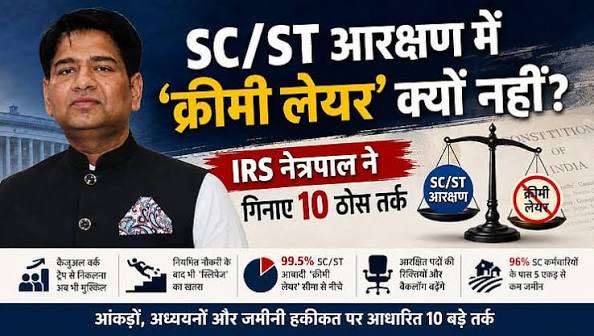
The claim that wealthy Dalits are enjoying the benefits of reservation is not supported by statistics. The Bihar Caste Census revealed that 99.5 percent of the Scheduled Caste/Tribe population is below the economic creamy layer threshold. Even in national income tax data, the number of people earning more than ₹1 crore is negligible in the total population; this number is statistically almost zero in the Scheduled Caste/Tribe community. New Delhi – Amidst the debate over implementing a ‘creamy layer’ in reservations for Scheduled Castes (SC) and Scheduled Tribes (STs) and excluding the next generation from reservation benefits after one generation of a family has received it, senior IRS officer Netra Pal has put forward 10 key arguments against it. He argues that the socio-economic status of the SC/ST community cannot be judged solely on the basis of current income, employment, or success of a single individual. The data he cites draws attention to factors such as intergenerational employment, the possibility of moving from regular jobs to the informal sector, lack of assets, a high share of casual employment, social differences in higher education, and vacancies in reserved positions. Netrapal argues that before implementing a “creamy layer” or generational restriction, it is important to understand its impact based on solid empirical data. Escape from the “Casual Work Trap” Remains Effortless Netrapal’s first argument is based on intergenerational employment data provided in the “State of Working India 2023.” The report clearly demonstrates caste-wise differences in the distribution of the workforce and income, where social identity impacts labor market outcomes. In 2018, among SC/ST men who worked as daily wage laborers, 75.6% of their sons also worked as daily wage laborers. According to these data, in 2018, among “other” caste groups, if the father was a casual worker, the probability of his son also remaining a casual worker had decreased to approximately 53 percent. In contrast, among the SC/ST community, this probability was approximately 75 percent. In comparison, this figure was 86.5% in 2004, suggesting that the sons of SC/ST daily wage laborers have now moved into other forms of employment, especially informal, regularly paid work, but this growth is very slow. According to Netrapal, this difference indicates that it remains more difficult for SC/ST families to break the cycle of casual and temporary employment than for other social groups. Without continued government support, such as reservations, the cycle of manual labor and irregular employment is difficult to break. He argues that if one generation gains access to employment and education through government support or reservations, then the next generation is excluded from reservations, the true nature of this intergenerational mobility may be overlooked. The risk of ‘slippage’ even after achieving regular employment The second argument is that a member of an SC/ST family securing a regular salaried job does not in itself guarantee lasting socio-economic security. According to data provided by Netrapal, even children of SC/ST parents who achieve regular employment are at risk of moving into the informal sector, casual work, or self-employment. This means that regular employment for one generation does not guarantee the continuation of that status for the next generation. Limiting reservation to one generation ignores the fragility of this social climb for Dalits. On this basis, Netrapal argues that excluding the next generation from reservation based solely on the first generation’s access to regular employment may ignore the instability of social progress. How large is the ‘creamy layer’? The argument in favor of implementing a creamy layer in reservation is that economically well-off SC/ST families are consistently benefiting from reservation. Netrapal, in response, questions the actual size of the creamy layer. He cites data from the Bihar Caste Survey, which shows that 99.5 percent of the SC/ST population falls below the creamy layer threshold. Furthermore, the national income tax data also shows a very low number of people with incomes exceeding ₹1 crore compared to the total population. According to Netrapal, the number of people falling within this income bracket within the SC/ST community is even more limited. On this basis, he argues that the presence of a very small economic group should not be used as a basis for limiting reservation eligibility for the entire SC/ST community. The Creamy Layer Threatens to Increase Vacancies in Reserved Positions Netrapal’s fourth argument relates to the vacancies in reserved positions and seats. According to him, the problem of many positions and seats remaining vacant within reserved categories already exists. In such a situation, if creamy layer or second-generation candidates are excluded from reservation, the pool of eligible candidates will narrow further. This could reduce the number of candidates available for reserved positions and increase backlog vacancies. According to Netrapal, before limiting the scope of reservation beneficiaries, it is important to assess how many reserved positions are being filled and how many are vacant under the current system. Increasing income does not necessarily mean generational wealth According to Netrapal, it is not appropriate to consider the current income of SC/ST employees as an indicator of their family’s generational wealth. He cites a study on government employees. According to this, 96 percent of SC employees owned less than five acres of land. Similarly, among rural SC graduates, 82 percent owned less than 1.23 acres of land. Based on these data, Netrapal argues that many SC employees who have entered government service come from families that do not own large amounts of land or family property. Therefore, a person’s current income and their family’s generational wealth cannot be viewed on the same scale. Reserved categories already face a crisis of vacant seats. Excluding the so-called creamy layer or second-generation educated youth will further shrink the pool of eligible graduates. This is likely to further increase backlog vacancies, defeating the very purpose of representation. Casual employment is very high among SC workers Netrapal’s sixth argument relates to the employment patterns of the SC community. According to 2021-22 data, approximately 40 percent of SC workers were in casual employment. In comparison, the share