
Farmer Beaten by Thugs in Hamirpur; Attempted Murder: Locked in Tubewell Room and Nearly Hanged with a Rope

Bharua Sumerpur: In Bank village within this region, a Dalit farmer was brutally beaten by a group of thugs following a dispute over the installation of thorny fencing along a farm embankment. The accused also attempted to kill the farmer by locking him inside a tubewell room and trying to hang him with a rope. The police have registered a case regarding this incident. Raghuvar Prasad, a resident of Triveni Maidan in the town, has filed a complaint with the police. He stated that he was in his ancestral village, Bank, installing thorny fencing along the farm embankment to protect his fruit-bearing trees. During this time, Babu Kushwaha, Nokhelal, Chhote, Rajkumar, and others—all residents of Bank—stormed onto the scene. It is alleged that these individuals hurled casteist slurs at Raghuvar Prasad and, drawing a country-made pistol, charged at him with the intent to kill. To save his life, Raghuvar Prasad fled into the tubewell room. The attackers followed him inside, where they brutally beat him with kicks and punches, leaving him covered in blood. Subsequently, they placed a rope around Raghuvar Prasad’s neck and attempted to hang him. The police have registered a case against the accused under the Dalit Atrocities Act (SC/ST Act), along with other relevant sections of the law. The police are currently investigating the matter and have launched a search for the accused. Deepak Kumar | Kalauli Teer (Hamirpur) Courtesy: Hindi News
Rape Convict Sentenced to 10 Years in Sonbhadra: Court Imposes Fine of ₹55,000 in Case Involving Rape Under False Pretext of Marriage

In a significant verdict delivered on Tuesday, the court of Special Judge (SC/ST Act) Abid Shamim in Sonbhadra convicted Dhanesh—alias ‘Stander’ Patel—of rape and sentenced him to 10 years of rigorous imprisonment. The court also imposed a monetary fine of ₹55,000 on the convict. The court clarified that in the event of non-payment of the fine, the convict would be required to undergo an additional six months of imprisonment. The period already spent in judicial custody will be adjusted against the sentence. Half of the imposed fine amount is to be awarded to the victim. This case dates back approximately five years, when a young Dalit woman from the Karma police station area filed a complaint. The woman alleged that Dhanesh—alias ‘Stander’ Patel (son of Rajkumar Raja Patel, a resident of Khairpur Sirsiya Thakurai, under Karma Police Station, District Sonbhadra)—had engaged in sexual relations with her on multiple occasions under the false pretext of marriage. According to the victim, when Dhanesh announced his intention to marry a girl from his own caste community and was confronted about it, he verbally abused her and issued death threats. Subsequently, on May 17, 2021, the Karma police registered an FIR against him under various sections, including those pertaining to rape and the SC/ST Act. The Circle Officer (CO) investigated the matter and, based on sufficient evidence, filed a chargesheet in the court. The court heard the arguments presented by the counsels for both the prosecution and the defense, recorded the statements of seven witnesses, and conducted a thorough examination of the case records. Based on all these facts, Dhanesh—alias ‘Stander’ Patel—was found guilty. Government Counsel C. Shashank Shekhar Katyayan represented the prosecution during the arguments. Manoj Kumar Verma | Sonbhadra Courtesy: Hindi News
Can Dalit voters become game-changers in 2027 UP polls?:SP banks on Constitution; Congress leans on Jagjivan Ram’s legacy

Two recent political statements have made it clear that Dalit voters—who constitute around 21% of Uttar Pradesh’s population—could play a decisive role in the 2027 Assembly elections. “Mayawati only used Dalits and later abandoned them. Even today, Dalits and weaker sections remain marginalized,” said Ajay Rai on April 2. “We will celebrate Ambedkar Jayanti at the village level and discuss the threats facing the Constitution,” said Akhilesh Yadav on April 3. These remarks indicate that both the Samajwadi Party (SP) and Congress are actively trying to consolidate Dalit voters ahead of the elections. Congress revives Jagjivan Ram’s legacy Jagjivan Ram, India’s first Dalit Deputy Prime Minister, played a crucial role in the 1971 India-Pakistan war that led to the creation of Bangladesh. As Agriculture Minister, he also contributed to the Green Revolution. His rise to the top echelons of power sent a strong message that Dalits could play a decisive role in mainstream politics. Although Jagjivan Ram hailed from Bihar, Congress used his legacy for decades to maintain a strong hold over Dalit voters in Uttar Pradesh. Read in this report… Samajwadi Party cheif Akhilesh Yadav said on Friday in Lucknow that the constitution will be discussed in every village. Samajwadi Party cheif Akhilesh Yadav said on Friday in Lucknow that the constitution will be discussed in every village. Congress outreach through Meira Kumar To reinforce this connection, Congress is organizing a seminar in Lucknow on the eve of Jagjivan Ram’s birth anniversary (April 4). The party has invited his daughter Meira Kumar and Dalit thinker and Delhi University professor Ratan Lal as key speakers. Through this, Congress aims to send a message that Dalit interests are best protected under its leadership. Party workers have also been instructed to spend more time in Dalit localities and engage directly with their concerns. Why Dalit votes matter Senior journalist Ratan Mani Lal explains that Dalits constitute around 20–21% of UP’s population. There are 84 Assembly seats reserved for Scheduled Castes, and nearly 120 constituencies where Dalit voters exceed one lakh. Since Mayawati weakened after 2012, there has been no single dominant Dalit leader to unify the community. In 2014, a significant section of Dalit voters supported Narendra Modi, contributing to the BJP’s sweeping victories. However, voting trends suggest that such support typically lasts about a decade before voters begin exploring alternatives. Dalit vote shifts and Political competition After a BSP rally on October 9, 2025, there were indications that Dalit voters were returning to Mayawati. This prompted SP and Congress to intensify efforts to prevent a consolidation of Dalit votes in BSP’s favor. Their strategy showed partial success in the 2024 Lok Sabha elections, where the alliance secured around 43% of the vote in UP, with significant support from Dalit voters. They now aim to replicate this in the 2027 Assembly polls. Election data reflects changing trends In the 2022 Assembly elections, Congress contested 399 seats independently but won only two, with a vote share of 2.33%. However, in the 2024 Lok Sabha elections, the party won six seats and increased its vote share to 9.46%. The Samajwadi Party also saw a 2% increase in vote share compared to 2022. Percentage of Major Dalit Sub-Castes Sub-Caste % in Dalit Population % in Total UP Population (Approx.) Area of Influence Jatav/Chamar 54.2% 11.3% Strong in Western and Eastern UP Pasi 15.8% 3.2% Influence in Awadh and Purvanchal Dhobi 5.9% 1.2% Central and Eastern UP Kori 5.5% 1.1% Bundelkhand and Awadh Valmiki 3.2% 0.7% More in urban areas Khatik 2.2% 0.5% Small but active Search for a new Dalit leadership Senior journalist Sharat Pradhan notes that Dalits once saw Jagjivan Ram’s image reflected in Mayawati. However, as her influence declined post-2012, dissatisfaction grew among Dalit voters. This has led to the emergence of new leaders like Chandrashekhar Azad. Congress, traditionally seen as the “old home” of Dalits, regained some traction in 2024, aided by Rahul Gandhi’s campaign centered on the narrative that the Constitution is under threat. This messaging also benefited SP, helping consolidate Dalit support for the opposition alliance. Dalit sub-castes and Voting patterns Dalits make up about 20.7% of UP’s population (around 41.4 million people) and are divided into 66 sub-castes. Six major sub-castes account for 87% of the Dalit population The remaining 60 sub-castes are smaller and fragmented Among them, the Jatav community is the most influential and forms the core vote base of BSP. Non-Jatav Dalits—including Pasi, Kori, Dhobi, Khatik, and Balmiki communities—are more divided. The BJP successfully consolidated these groups between 2017 and 2024. However, in the 2024 Lok Sabha elections, a section of non-Jatav voters shifted towards the opposition alliance, contributing to its strong performance with 43 seats. Santosh Singh, Uttar Pradesh Courtesy : Bhaskar English Note: This news is originally published on https:/bhaskarenglish.com/bha and is used purely for non-profit/non-commercial purposes, especially human rights
The quiet denial of justice to Dalit converts: Conversion without freedom in India
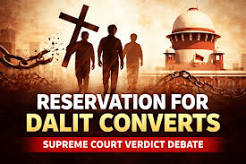
India often takes pride in being the world’s largest democracy, a constitutional republic anchored in rights, representation, and the promise of equality. But as B. R. Ambedkar warned, political democracy without social democracy is fragile – perhaps even hollow. Nowhere is this contradiction starker than in the experience of Dalits who convert out of Hinduism, seeking dignity, only to find that the law withdraws its protection the moment they do so. Ambedkar powerfully expressed this sentiment: “Turn in any direction you like, caste is the monster that crosses your path”. In India’s long and unfinished struggle with caste, there exists a paradox so glaring that it ought to trouble the conscience of any constitutional democracy. A Dalit may change their religion, but not their social reality. Yet, in the eyes of the law, that act of conversion is treated as if it dissolves centuries of oppression. The result is a quiet but profound injustice—one that is not always loudly proclaimed, but deeply felt. At the heart of this paradox lies a legal and constitutional anomaly, upheld and sustained over decades, including by the Supreme Court of India. The issue concerns Dalits who convert to Islam or Christianity and, in doing so, lose their Scheduled Caste (SC) status—and with it, the protective safeguards and affirmative action benefits designed to address historical discrimination. The question that demands asking is simple: does conversion erase caste? And if not, can a constitutional democracy justify withdrawing protection from those who continue to suffer its consequences? A Legal Framework Built on a Narrow Assumption The origins of this exclusion lie in the Constitution (Scheduled Castes) Order, 1950, which initially restricted SC status to Hindus. Subsequent amendments extended this recognition to Sikhs and Buddhists, but conspicuously left out Muslims and Christians. The rationale offered has been that caste – and specifically “untouchability”- is a phenomenon unique to Hindu society. This reasoning, though convenient, is increasingly difficult to defend. It relies on a theological abstraction rather than a sociological reality. Courts, including the Supreme Court of India, have often deferred to this framework, as seen in cases such as Soosai v. Union of India, where the burden of proof was placed on demonstrating that caste-based disabilities persist after conversion. But decades of scholarship, lived experiences, and community testimony suggest that caste does not disappear – it adapts, survives, and often reasserts itself in new forms. The Persistence of Caste Beyond Religion Dalit Christians and Dalit Muslims across India continue to face forms of discrimination that are unmistakably caste-based. Segregated burial grounds, separate seating in places of worship, endogamous marriage practices, and social exclusion are not uncommon. These are not isolated incidents but patterns that have been documented by sociologists, activists, and even government-appointed commissions. To suggest that conversion erases caste is to ignore this lived reality. It is to privilege doctrinal ideals over empirical truth. And when such an assumption informs policy and judicial reasoning, it risks turning the Constitution’s promise of equality into a selective guarantee. The legal and social status of Dalit converts in India – particularly those who convert to Christianity or Islam—represents a critical intersection of religious freedom, constitutional rights, and enduring social reality. While conversion is intended as an act of liberation, it often leads to a “quiet denial of justice,” where individuals lose state-mandated protections against caste discrimination without escaping the stigma of their birth. A Penalty for Seeking Dignity (The Wire) Perhaps the most troubling aspect of this framework is the implicit message it sends: that a Dalit who seeks to escape caste through conversion must pay a price for that choice. By losing SC status, the convert is effectively stripped of access to reservations in education and employment, as well as other safeguards intended to level a historically uneven playing field. The act of seeking dignity—of rejecting a system that has long dehumanised—is met not with support, but with withdrawal. This creates a perverse situation. Those who remain within the fold of the caste system are eligible for protection, while those who attempt to leave it behind are rendered invisible to the law. It is a paradox that borders on coercion, subtly discouraging religious freedom by attaching material consequences to it. The Constitutional Tension This framework sits uneasily with the broader principles enshrined in the Constitution, particularly Article 14 of the Constitution of India and Article 15 of the Constitution of India. If two individuals suffer the same social and economic disadvantages rooted in caste, can the State justify treating them differently solely on the basis of religion? The answer, from a strictly moral standpoint, would seem to be no. Yet, legally, the distinction persists. The judiciary, including the Supreme Court of India, has often adopted a cautious approach, refraining from issuing sweeping directions and instead deferring to the executive or calling for further study. While judicial restraint has its place, there are moments when restraint can appear indistinguishable from reluctance. The Burden of Proof and the Politics of Delay One of the recurring features of this issue has been the insistence on “adequate data” to establish that caste discrimination persists among converts. While the demand for evidence is not unreasonable in itself, it has, in practice, contributed to a cycle of delay. Commissions are appointed, reports are commissioned, and findings are debated—but the status quo remains unchanged. In the meantime, generations of Dalit converts continue to navigate a system that acknowledges their marginalisation in society but not in law. This raises a difficult question: how much evidence is enough? And at what point does the demand for further proof become a means of postponing a necessary decision? Between Law and Justice It would be simplistic to attribute this entire situation to judicial failure. The framework itself is rooted in legislation and executive orders, and any comprehensive reform would likely require political will as much as judicial intervention. Yet, the role of the judiciary in interpreting and, where necessary, challenging unjust frameworks cannot be overlooked. The Supreme Court of
80% of Pakistan is gay: Karachi transgender activist Hina Baloch’s viral claim

Pakistani transgender activist Hina Baloch claimed in a viral video that “80% of Pakistanis are gay,” calling it an “open secret” hidden by social and religious pressures. How do cultural pressures affect LGBTQ+ visibility in Pakistan? What basis does Hina Baloch use for her 80% claim? How do cultural pressures affect LGBTQ+ visibility in Pakistan? Why do Indian trans activists oppose the 2026 bill? A viral video featuring Pakistani transgender activist Hina Baloch has triggered widespread debate after she claimed that “80% of Pakistan is gay and the remaining 20% are bisexual,” arguing that sexuality in the country is largely hidden due to social pressure, religion, and family honour. In an interview with Queer Global YouTube Channel, Baloch describes what she calls an “open secret” in Pakistani society. “I believe that more than half of Pakistan is quite gay actually. They don’t want to just say it out loud, but I guess 80% of Pakistan is gay and the remaining 20% are bisexuals, so I don’t think that anybody is straight in Pakistan in terms of their sexuality,” she says. She adds that people often deny or conceal their sexual orientation, citing cultural and religious factors. “They will deny it, they will bring religion into it, they will bring culture into it, but this is an open secret. Nobody’s straight in Pakistan,” Baloch says, while recounting her own perceptions growing up. Reflecting on her personal experiences, Baloch says her concerns were less about sexuality and more about gender expression. “What I was worried about was how to apply lipstick and not get lots of shit from the family for that. How do I get to dress feminine, wear jewellery and not get the beatings?” she says. Baloch also speaks about the structural challenges faced by the khawaja sira community in Pakistan, noting that many are pushed into limited and often exploitative livelihoods such as begging, dancing, or sex work. Rejecting these constraints, she became actively involved in organising for gender and minority rights. She went on to co-found Sindh Moorat March and participated in Pakistan’s Aurat March, positioning herself as a vocal advocate for transgender and minority rights. Baloch has previously said she faced violent retaliation after raising a Pride flag at a protest and survived kidnapping and abuse by law enforcement, experiences that ultimately forced her to leave Pakistan. She later secured a scholarship to SOAS, University of London, and sought refugee status in the United Kingdom. Written By: Akshat Trivedi Courtesy : India Today Note: This news is originally published on https:/indiatoday.com/bha and is used purely for non-profit/non-commercial purposes, especially human rights
Bhadohi Crime News: Elderly Dalit Man Murdered in Bhadohi; Attacker Stabs Him to Death in Broad Daylight, Arrested

In Bhadohi, Uttar Pradesh, a deranged young man publicly stabbed a 60-year-old elderly Dalit man to death. A live video of this heart-wrenching incident has also surfaced. Acting with promptness, the police have arrested the accused, Shravan Kumar, seizing the blood-stained knife from his possession. Bhadohi News: A spine-chilling report has emerged from Bhadohi, Uttar Pradesh. The authority of the law appeared to crumble here when a deranged youth publicly stabbed a 60-year-old elderly Dalit man to death in a bustling market. A “live video” of this bloody crime has surfaced, leaving everyone who witnessed it in shock. This daylight murder has spread terror throughout the entire locality. However, demonstrating swift action, the police have arrested the killer—recovering the “blood-stained knife” from him—and have commenced further investigations. The events that unfolded at Pal Crossing in Jagdishpur village have put humanity to shame. The images captured on camera bear witness to how a 32-year-old youth chased after the elderly Bachhan Ram—a man twice his age—wielding a “knife of death.” The elderly man pleaded for his life and begged for mercy, but the attacker, Shravan Kumar, was consumed by a murderous rage. He continued to strike the elderly man in the middle of the street until he breathed his last. In the ensuing chaos, several bystanders who attempted to intervene and save the victim also sustained injuries, yet the killer’s brutality remained undiminished. Knife Attack in the Middle of the Market A blood-soaked Bachhan Ram was rushed to the hospital in a frantic effort to save him, but fate had other plans. He breathed his last moments before even reaching the hospital’s doorstep. As soon as the news of his death reached the village, it was met with an outpouring of grief and wailing. The protective shadow of a father has now been lifted forever from over the heads of the deceased’s four sons. There is widespread outrage throughout the entire Dalit settlement over this audacious act. This broad-daylight murder has shaken the Bhadohi police department to its core. Deputy SP (CO) Prabhat Rai personally took charge of the situation and stepped into the field to lead the operation. He stated that, thanks to the police cordon, the prime accused—32-year-old Shravan Kumar—was apprehended within just a few hours. From the killer now in police custody, the police have recovered the very “blood-stained knife” used to carry out this bloody crime. **Police Arrest the Accused** Circle Officer Prabhat Rai stated that, according to preliminary investigations, the aforementioned incident appears to stem from an old feud and a personal dispute. Prabhat Rai emphasized that intense interrogation of the accused is currently underway, and anyone who takes the law into their own hands will not be spared at any cost. Currently, police personnel are patrolling the village streets, and appeals are being made to maintain peace. Rohit Gupta Courtesy: Hindi News
Five Dalit stories that changed how I read
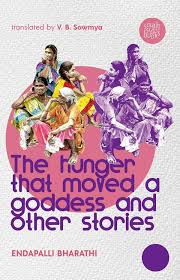
These books pushed me to confront what I thought I understood and to sit with discomfort I am still reading to learn. But this year, I am learning to heal. Healing is not always soft. Sometimes, it comes with a lot of pain. Sometimes, it burns before it soothes. Through these books I’m not just gathering my scattered pieces of history, I am also sharpening them. The Hunger That Moved a Goddess and Other Stories (Hyderabad Book Trust) by Endapalli Bharathi, trs. V.B. Sowmya Bharathi’s stories are demographically rooted in rural Andhra Pradesh, but ideologically they travel far beyond geography. They centre women’s lives from Dalit communities with an honesty that refuses pity. There is hunger, yes, but also defiance, humour, and small, everyday rebellions. The “goddess” in the title doesn’t sit in temples; she walks in bodies that endure and resist. What struck me most is how quietly radical these short stories are. And in between these lives, almost gently, the book teaches you how to eat, how to cook, how to remember through food. Recipes and eating habits appear not as instructions but as stories — of survival, of scarcity, of community. Exquisite Cadavers (Context/Westland) by Meena Kandasamy This is not a conventional novel. It is not biographical or fictional. It is fragmented, self-aware, almost impatient with storytelling itself. Kandasamy weaves together multiple narratives: a love story, a political landscape, a writer’s struggle with form. The title itself suggests bodies — broken, rearranged, reimagined. It feels like a response to violence, not by narrating it cleanly, but by refusing coherence. The book asks: how do you write when language itself has been wounded? Untouchable Goa (Panther’s Paw Publication) by Dadu Mandrekar, trs. Nikhil Baisane Mandrekar disrupts the postcard image of Goa. Through essays and reflections, he exposes the deep entrenchment of caste in Goan society — within Catholic communities, within everyday social structures, within spaces that claim modernity. The writing is sharp, almost journalistic at times, but never distant from storytelling. It forces you to confront how caste adapts, survives, and hides behind narratives of progress, liberalism, and tourism. Pulayathara (OUP India) by Paul Chirakkarode, trs. Catherine Thankamma Set in Kerala, Pulayathara documents the life of the Pulaya community with a depth that feels archival and intimate at once. It engages with landlessness, bonded labour, and generational trauma, but also with community, memory, and continuity. The novel doesn’t rush; it lingers. It allows you to sit with the weight of history. What stays is not just the suffering, but the persistence of life despite it. My Father’s Garden (Speaking Tiger) by Hansda Sowvendra Shekhar This collection of stories is deeply tied to Santhal Adivasi life. Shekhar writes about land, family, migration, and loss with a quiet, observational style. There is no spectacle here — just layered, lived realities. The “garden” becomes a metaphor for belonging and rupture. Development, displacement, and memory intersect in ways that feel both personal and political. It made me think about how landscapes hold histories we are often taught to ignore. Special mention: Ek Dalit Banker Ki Atmakatha by Nimesh Gautam For Hindi readers, this autobiography brings us into a very different terrain — the formal, bureaucratic world of banking. Gautam traces his journey as an employee of the State Bank of India, navigating the institution that claims meritocracy but is structured by caste. He reveals how discrimination operates subtly: in postings, promotions, everyday behaviour, and silence. It’s a rare account that connects caste to white-collar spaces, showing that oppression doesn’t disappear with education or employment. These books didn’t just meet me where I am. They pushed me further. To learn more. To heal more. Siddhesh Gautam The writer is an artist, thinker, and Ambedkarite. Courtesy : The Hindu Note: This news is originally published on https:/thehindu.com/bha and is used purely for non-profit/non-commercial purposes, especially human rights
Dalit History Month | Shocking RTI Revelation from IIM Ahmedabad: Out of 100 Filled Faculty Positions, 99 Belong to Upper Castes—Not a Single Dalit or Adivasi!

This situation stands in stark contrast to the reservation policy, which was designed to promote diversity and social equity. According to the policy, positions for the OBC, SC, and ST categories should ideally constitute 27%, 15%, and 7.5% of the total, respectively; however, in this instance, there is absolutely no representation from these categories. New Delhi—A recent Right to Information (RTI) response from the Indian Institute of Management Ahmedabad (IIM-A) has revealed the category-wise distribution of faculty positions within the institute. The findings are startling: the entire faculty belongs to the ‘General’ category, with not a single member hailing from the Bahujan community. Gaur Kiran Kumar, National President of the All India OBC Students Association (AIOBCSA), had filed the RTI application in January 2026. In its response, IIM Ahmedabad stated that the institute has a total of 120 sanctioned faculty positions across the ranks of Professor, Associate Professor, and Assistant Professor. Of these, 100 positions are currently filled, while 20 remain vacant. According to the data provided in the RTI response, out of the 100 filled positions, 99 belong to the General category, while only one position belongs to the OBC category—and that, too, at the Assistant Professor level. No filled positions were reported from the SC, ST, EWS, or PwD categories. This RTI revelation comes amidst the ongoing struggle regarding the implementation of reservation policies in higher education institutions. On January 29, 2026, the Supreme Court stayed the University Grants Commission (Promotion of Equity in Higher Education Institutions) Regulations, 2026, thereby allowing the 2012 regulations to remain in force. Multiple RTI applications filed by Kiran Kumar Gaur across various IITs and IIMs nationwide have consistently highlighted the overwhelming dominance of the General category in faculty positions. In these premier institutions, more than 80 percent of the faculty members belong to the General category, while in several institutions, this figure exceeds 90 percent. *The Mooknayak* has previously reported on similar facts, highlighting cases involving several IIMs where reserved posts for the SC, ST, and OBC categories have remained vacant for years. **The Situation in Other IIMs** A response received from IIM Indore in 2024 revealed that out of 150 faculty positions, numerous vacancies reserved for specific categories have not been filled. Of these, 106 positions have been filled by General category candidates, leaving 41 positions vacant. In the OBC category, there were only two Assistant Professors, while in the Scheduled Caste/Scheduled Tribe category, there were none. According to an RTI response received in October 2024, the total sanctioned strength of faculty members at IIM Calcutta stood at 126. However, the data reveals significant discrepancies in filling these positions in accordance with the reservation policy. 53 positions were allocated for Unreserved (UR) candidates. The RTI revealed that a total of 73 UR faculty members were recruited—exceeding the allocated limit by 20 positions—and, additionally, 20 UR positions remain vacant. Another RTI inquiry directed at IIM Tiruchirappalli brought to light startling figures: 83.33% of faculty positions for OBCs, 86.66% for SCs, and 100% for STs remained vacant, whereas all positions in the General category were filled. Multiple reports indicate that in many premier institutions, over 80 percent of the faculty members belong to the General category, with some institutions recording a representation of over 90 percent from this category. **Upper Castes Dominate in IITs as Well** Data obtained from IIT Delhi, Kharagpur, Kanpur, Roorkee, BHU, Guwahati, Hyderabad, Gandhinagar, Ropar, Palakkad, Mandi, Jodhpur, Bhubaneswar, Indore, Tirupati, Dharwad, Goa, and Patna reveals a consistent pattern: representation from the General category is disproportionately high, while there is a severe deficit in the representation of OBC, SC, and ST communities. IIT Palakkad: Out of 161 faculty members, 121 (75.15%) belong to the General category; OBC members number 24 (14.9%), SC members 15 (9.31%), and there is only 1 (0.62%) from the ST category. The institute does not have a single SC or ST professor. IIT BHU (Varanasi): Out of 344 faculty members, 79.36% belong to the General category, 11.63% to OBC, 7.85% to SC, and only 1.16% to ST. Out of 608 sanctioned posts at the institute, 260 remain vacant; however, the institute failed to provide a category-wise breakdown of these vacant positions. IIT Kharagpur: This large institution has 775 faculty members, with the General category holding the largest share at 91.22%. Representation for OBC stands at a mere 5.55%, for SC at 2.71%, and for ST at a negligible 0.26%. Out of 1,600 sanctioned posts, 825 are vacant, and no category-wise data has been provided. IIT Gandhinagar: Out of 135 faculty members, 85.93% belong to the General category, while OBC members constitute 5.93%, SC members 5.91%, and ST members 2.96%. At the professor level, representation for OBC, SC, and ST categories is zero. IIT Ropar: Out of 177 faculty members, 78.53% belong to the General category, 14.69% to OBC, 5.65% to SC, and 1.69% to ST. IIT Patna: One of the few institutes that has provided data on category-wise sanctioned posts. Out of 390 sanctioned posts, 228 have been filled. Among the filled posts, 38.16% belong to OBC, 21.49% to SC, and 12.72% to ST; these figures are significantly better compared to other IITs. IIT Roorkee: Here, there are 939 sanctioned posts, but only 533 have been filled. The institute has not provided any category-wise breakdown of sanctioned, filled, or vacant posts. IIT Tirupati: Out of 114 faculty members, 69.30% belong to the General category, 18.42% to OBC, 8.77% to SC, and 2.63% to ST. IIT Mandi: Out of 175 faculty members, 81.14% belong to the General category, 11.43% to OBC, 5.71% to SC, and 1.71% to ST. At the Professor level, the number of faculty members belonging to the OBC, SC, and ST categories is zero. IIT Bhubaneswar: Out of 213 faculty members, 80.28% belong to the General category, 13.15% to OBC, 5.63% to SC, and only 0.46% to ST. IIT Jodhpur: Out of 244 faculty members, 79.10% belong to the General category, 13.11% to OBC, 6.15% to SC, and 0.82% to ST. IIT
Why Did the UNHRC Outrage Over India’s Transgender Amendment Bill? Expressing Opposition, It Warned of Far-Reaching Consequences

In India, the Transgender Persons (Protection of Rights) Amendment Bill, 2026, has received Presidential assent. This amendment bill had faced significant opposition within India. Now, the United Nations Human Rights Council (UNHRC) has also weighed in on the matter, expressing regret over the passage of the Transgender Amendment Bill. Geneva: The United Nations Human Rights Council (UNHRC) has issued a sharp reaction regarding India’s legislation concerning transgender persons. It has alleged that this law was passed in haste, without adequate consultation with stakeholders. The UNHRC further stated that this Indian law would have far-reaching implications for the right to privacy and poses a risk of further marginalizing transgender individuals. However, this is not the first instance in which the UNHRC has attempted to interfere in India’s internal affairs; the Council has previously adopted an aggressive stance toward India regarding the issue of Kashmir. What Did the UNHRC Say Regarding the Transgender Law? Writing on X (formerly Twitter), the UNHRC stated: “We regret that the Transgender Persons (Protection of Rights) Amendment Bill, 2026, was passed so rapidly without adequate stakeholder consultation. These amendments risk eroding the hard-won rights of transgender persons by replacing ‘self-identification’ with mandatory medical examination procedures. India has historically been a leader in upholding the rights of transgender and gender-diverse individuals. This Bill will have far-reaching implications for the right to privacy and poses a risk of further marginalizing transgender persons.” What Is the Transgender Amendment Bill? In India, the Transgender Persons (Protection of Rights) Amendment Bill, 2026, recently received Presidential assent. This amendment primarily seeks to narrow the definition of a transgender person, rendering it more “medically-based.” Under this framework, a certificate from a medical board has been made mandatory for obtaining an identity card. Now, to receive legal recognition as a transgender person, one must obtain a certificate from a Medical Superintendent or a Chief Medical Officer (CMO), following which the District Magistrate (DM) will issue the identity card. What is the United Nations Human Rights Council? The United Nations Human Rights Council is a principal inter-governmental body of the United Nations. Its primary objective is to promote and protect human rights worldwide, as well as to investigate human rights violations. The United Nations Human Rights Council was established in 2006. Its headquarters are located in Geneva, Switzerland. The United Nations Human Rights Council comprises 47 member states, which are elected by the General Assembly for a three-year term. Globally, the United Nations Human Rights Council works on issues such as freedom of expression, freedom of religion, women’s rights, and the rights of racial and ethnic minorities. Provision for Stricter Punishment for Violence Against Transgender Persons Furthermore, the punishment for sexual, physical, or economic abuse committed against transgender persons has been increased; the sentence can now range from 2 years up to 14 years of rigorous imprisonment. There is a provision for imprisonment ranging from 5 to 10 years for anyone who forces a transgender person into begging or bonded labor. The government states that the objective of this amendment is to ensure the safety and welfare of the transgender community. Reported by: Priyesh Mishra About the Author Priyesh Mishra, He currently serves as a Principal Digital Content Producer at Navbharat Times Online. He is associated with the ‘World’ section of Navbharat Times. He possesses 10 years of experience in digital journalism, during which he has worked in various roles involving both reporting and desk operations. Courtesy: Hindi News
Dalit IAS Officer Rinku Singh Rahi Resigns from U.P. Cadre Alleging Harassment and Bureaucratic Corruption

2022-batch Dalit IAS officer Rinku Singh Rahi resigns from Uttar Pradesh cadre, alleging harassment, sidelining, and bureaucratic corruption, calling the system morally flawed. Rinku Singh Rahi, a 2022-batch IAS officer of the Uttar Pradesh cadre, resigned from his position on March 31, 2026, alleging systematic harassment and a denial of meaningful work. Rahi, who belongs to the Dalit community, claimed he was “sidelined” and kept in an “attached” position at the U.P. Revenue Board without any public-service responsibilities. Despite receiving a salary, the officer termed his lack of duties as a “form of corruption” and a moral failure of the administrative system. His resignation has sparked criticism from political figures like Nagina MP Chandra Shekhar Aazad, who highlighted the struggle of honest officers within the current bureaucracy. A “Moral Decision” Against Bureaucratic Inertia In his resignation letter, Rahi articulated that being paid to do no work was fundamentally against his principles of integrity. He alleged that a “parallel system” exists within the administration where honest officials are effectively neutralised by being denied active roles. Rahi’s marginalisation intensified in July 2025 after a video went viral showing him performing sit-ups as a gesture of “moral responsibility” for the poor state of public toilets in Shahjahanpur. Following this incident, he was removed from his post as Sub-Divisional Magistrate (SDM) of Puwayan within just 36 hours. “In the system, there is perhaps a special kind of punishment reserved for honest people they get paid, but no work is assigned to them,” Rahi stated, describing his tenure at the Revenue Board as a period of forced inactivity. A Legacy of Defiance and Survival Rinku Singh Rahi’s journey to the Indian Administrative Service is one of extraordinary resilience. Before becoming an IAS officer, he served in the Provincial Civil Service (PCS), where in 2009, he exposed an ₹83-crore scam in the social welfare department. His whistleblowing led to a brutal assassination attempt where he was shot seven times, leaving him disfigured and blind in one eye. Despite the trauma, he cleared the UPSC examination in 2021 under the disability quota. His recent resignation is seen by supporters as the final straw in a long-standing battle against a system he feels has consistently opposed his efforts to instill transparency. Member of Parliament Chandra Shekhar Aazad echoed this sentiment, stating, “A Dalit IAS officer was forced to quit due to neglect. It raises a question mark on the entire administrative system.” The Logical Indian’s Perspective At The Logical Indian, we believe that the strength of a democracy lies in the protection of its whistleblowers and the empowerment of its honest officers. Rinku Singh Rahi’s resignation is not just the story of one individual; it is a distressing symptom of a system that often prioritises silence over accountability. When an officer who survived seven bullets for the truth feels forced to leave because he is “denied work,” it reflects a failure to foster an inclusive and ethical work environment. We advocate for a bureaucracy that values empathy and transparency over rigid hierarchies and political convenience. True social change can only occur when those within the system are allowed to work with dignity, regardless of their background or their refusal to stay silent against corruption. Sandipta Ghosh Courtesy : TLI Note: This news is originally published on https:/thelogicalindia.com/bha and is used purely for non-profit/non-commercial purposes, especially human rights