
SC/ST Commission Chief Warns Against Discrimination
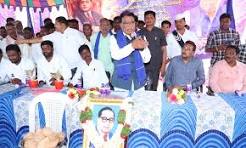
Dalits allowed to enter temple, community dining programmes held NIZAMABAD: SC/ST Commission chairman Bakki Venkataiah,, warned that strict action would be taken under the SC/ST Atrocities Act against any injustice or discrimination towards Dalits, and urged victims to come forward and file complaints without fear. He said the Indian Constitution guarantees equality and stressed the need to eliminate caste-based discrimination and divisions in society, adding that it is a collective responsibility to ensure equal rights for all. A social equality programme was conducted in Narsampalli village of Kamareddy district on Wednesday, aimed at addressing caste discrimination in rural areas. As part of the initiative, Dalits were allowed entry into temples in the village, and community dining programmes were organised. Officials and villagers also visited the Anjaneya Swamy and Shiva temples and performed prayers, with participation from all sections. Venkataiah said coordinated efforts by the government, officials and the public were necessary to address discrimination, and emphasised equal access to temples, social events and festivals. Additional collector (revenue) Victor, SC Corporation official Venkateshwarlu, sarpanch Ravi, DTDVO Soujanya and tahsildar Himabindu were present. At the start of the programme, Venkataiah paid tributes to B.R. Ambedkar by garlanding his portrait. Community meals were later organised, with participation from villagers across sections. Narender Pulloor Courtesy : Deccan Chronicle Note: This news is originally published on https:/deccanchronicle.com/bha and is used purely for non-profit/non-commercial purposes, especially human rights
‘Where Will I Go?’: Inside Delhi’s Trans Shelter Home As Care Networks Face Uncertainty
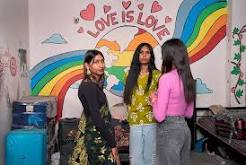
Denial of self-identification and narrowing definitions have left residents worried about identity recognition, access to schemes and the future of care systems. Summary of this article Shelter homes often face chronic underfunding and limited reach, with staff warning that existing facilities are far from sufficient. New provisions raise concerns that offering shelter or support could be legally challenged, while stricter identity requirements may restrict access to care networks. Despite fear and instability, community members continue to rely on each other for emotional and practical support, even as their futures grow uncertain. ‘Panchhi banoo udti phiroon mast gagan mein, Aaj main azad hoon duniya ke chaman mein.’ (Like a bird, I wish to soar merrily in the boundless sky; Today I am free in this garden of the world.) Sanam, who identifies as a trans woman, quoted this song to describe how she felt after India overturned a 19th-century ban on homosexuality. However, she feels differently now. On the day the Trans Amendment Bill was tabled in the Rajya Sabha, Sanam, 22, was in Delhi’s Kalkaji, overwhelmed by anxiety. Unable to collect her thoughts, she broke down and cried all the way to the Garima Greh where she lives. “Men were catcalling me even as I struggled to catch my breath. They misbehave with us all the time, now they’ll feel emboldened to do so,” Sanam said gazing blankly from the balcony, her expression settling into a faint smile. It has just been four days since she began hormone therapy. Now, with the President’s assent, she feels her existence hangs by a thread. It has been over a year since Sanam left her home, where she said she was constantly monitored, and began living in the shelter home. She says she feels familiarity there—accepted for who she is. After the new Act, she questioned, quietly: “Where will I go? I don’t know what to do.” Sanam lives with at least 25 other transpeople in Delhi’s Garima Greh, the only one enlisted on the government’s website in the national Capital. As per the 2011 Census, Delhi has 4,213 transgender persons, while India’s total stands at 4,87,803; a number the community members say is grossly underreported. As per an August 2025 Press Release, at present, the Department of Social Justice and Empowerment runs 18 such shelters across India, and approval has been granted to set up three more in 2025-26. A total of 429 people are currently residing in these shelters. “These facilities are simply not enough,” said Ankit*, a trans man who works as a project manager at the shelter home. He explained that the shelter accepts anyone who comes seeking help, and while they try their best to manage, finances are often strained. With lack of access to shelter, the homeless transpeople may never come out, or take extreme steps like suicide, he said. Kanta, the programme manager at the Garima Greh, which has been running since 2021, said they struggle with funding and sometimes go up to six months without support. The point of this scheme was to provide transpeople with a home, she said. “This is a government-run shelter home. We have not received a single penny from the government in this financial year,” she claimed. The new act has removed the right to gender self-identification recognised by the Supreme Court in the landmark National Legal Services Authority v. Union of India in 2014 and introducing medical certification for identity recognition. It has also changed the definition of a transgender person, only including intersex people and socio-cultural identities as kinner, hijra, aravani and jogta, or eunuch. With the changes, the community is faced with a range of unanswered questions about the funding of government run shelter homes, welfare schemes, the validity of the transgender identity cards which have already been issued, and access to the care community. “If the process of recognising identity becomes more restrictive, then access to these schemes will also become more uncertain,” Don Hasar, a Queer-Trans rights activist explained. It will affect how beneficiaries are identified, she said. She continued to note that ideally, shelter homes should not require a trans ID card for entry. People often arrive through informal networks, referred by someone they trust, even if they do not yet have a trans ID. Shelters do not turn them away; instead, they provide support and help them obtain the necessary documents. “Many of these shelters are run by community members,” she said. However, certain clauses in the new act raise concerns about how such support could be interpreted. “Even if somebody wants to help somebody who needs shelter home access, a case could be filed against them, saying that this is allurement. So how will organisations function now?” she questioned. In the new act, the government has introduced four new offences in addition to the existing ones, one of which carries a punishment of 10 to 14 years’ imprisonment, said Kanmani Ray, a trans woman and advocate based in Chennai. One provision addresses cases where a child is, by “force, threat, coercion, allurement, deception, inducement, undue influence or otherwise”, made to present as a transgender person and is then exploited for begging, solicitation, servitude, or any form of forced or bonded labour. Ray stated that there are already kidnapping and abduction provisions under the Bharatiya Nyaya Sanhita, which are regularly being invoked. Introducing a new set of offences was not needed. “Of course, as long as it is a criminal offence and it is not explicitly stated, the State has the burden to prove that they have a case. But let me make this clear, it is not about whether you did the offence or not. It is about the fact that the process is the punishment,” Ray said. At Delhi’s shelter home, hope has dimmed. Community members, some employed, some undergoing hormone therapy, some recovering from traumatic experiences at home, and others still finding their footing, are struggling to understand why the new law has redefined their identities. “I had so
Rape Convict Sentenced to 10 Years in Sonbhadra: Court Imposes Fine of ₹55,000 in Case Involving Rape Under False Pretext of Marriage
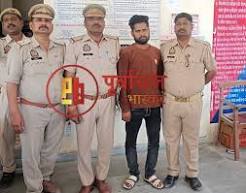
In a significant verdict delivered on Tuesday, the court of Special Judge (SC/ST Act) Abid Shamim in Sonbhadra convicted Dhanesh—alias ‘Stander’ Patel—of rape and sentenced him to 10 years of rigorous imprisonment. The court also imposed a monetary fine of ₹55,000 on the convict. The court clarified that in the event of non-payment of the fine, the convict would be required to undergo an additional six months of imprisonment. The period already spent in judicial custody will be adjusted against the sentence. Half of the imposed fine amount is to be awarded to the victim. This case dates back approximately five years, when a young Dalit woman from the Karma police station area filed a complaint. The woman alleged that Dhanesh—alias ‘Stander’ Patel (son of Rajkumar Raja Patel, a resident of Khairpur Sirsiya Thakurai, under Karma Police Station, District Sonbhadra)—had engaged in sexual relations with her on multiple occasions under the false pretext of marriage. According to the victim, when Dhanesh announced his intention to marry a girl from his own caste community and was confronted about it, he verbally abused her and issued death threats. Subsequently, on May 17, 2021, the Karma police registered an FIR against him under various sections, including those pertaining to rape and the SC/ST Act. The Circle Officer (CO) investigated the matter and, based on sufficient evidence, filed a chargesheet in the court. The court heard the arguments presented by the counsels for both the prosecution and the defense, recorded the statements of seven witnesses, and conducted a thorough examination of the case records. Based on all these facts, Dhanesh—alias ‘Stander’ Patel—was found guilty. Government Counsel C. Shashank Shekhar Katyayan represented the prosecution during the arguments. Manoj Kumar Verma | Sonbhadra Courtesy: Hindi News
Dalit History Month | Students Complete All Formalities, Yet Mahatma Gandhi International Hindi University Denies Permission to Screen ‘Ulgulan’!
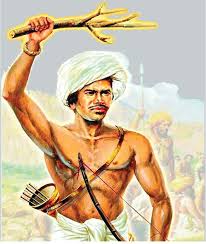
Despite the completion of all formalities, students have yet to receive permission to use the auditorium for this event, which is scheduled for April 3. The students are disheartened regarding the screening of the film on Birsa Munda. Wardha — The screening of the feature film *Ulgulan: Ek Kranti* (Ulgulan: A Revolution)—based on the life of freedom fighter Birsa Munda and organized by students from Jharkhand at the Mahatma Gandhi International Hindi University—has stalled due to administrative confusion and the bureaucratic shuffling of files from one department to another. Despite having completed all necessary formalities, the students have not yet received permission to use the auditorium for this event, which is scheduled for April 3. Rahul Kumar, a resident of Jharkhand’s Garhwa district and a student in the Department of Mass Communication, told *The Mooknayak* that on March 20, he submitted a formal application to the university administration seeking permission to screen the film at the Ghalib Auditorium, located within the Tulsi Bhawan complex. According to the regulations established by the university, it is mandatory to submit such applications at least 10 days prior to the scheduled event—a requirement the student duly fulfilled. The application was forwarded by the Head of the Department, Dr. Sandeep Kumar Verma. On the very same day, the Dean of Student Welfare, Dr. Awadhesh Kumar Shukla, also approved the application and forwarded it to the Registrar, Qader Nawaz Khan. A situation of administrative delay and uncertainty continues to prevail at the Mahatma Gandhi International Hindi University regarding the screening of the feature film *Ulgulan: Ek Kranti*—based on the life of freedom fighter Birsa Munda—which is being organized by students hailing from Jharkhand. Subsequently, on March 23, the file reached the Registrar’s office; however, from there, it was sent back to the office of the Dean of Student Welfare. The file was then forwarded to the Cultural Committee, where the review and certification of the film were completed by March 26. Despite the completion of all necessary formalities, the students have not yet been granted final permission. The administration has now deferred the matter to a meeting scheduled for April 1, a delay that has left the students feeling deeply disappointed. University Regulations Regarding Programs With a view to ensuring that the various programs organized by students are conducted in a systematic, disciplined, and orderly manner—and in alignment with the objectives of the University—the following set of regulations has been established. According to a circular issued by the Registrar, Kader Nawaz Khan, on January 19, 2026: The program must be academic in nature and consistent with the objectives of the University. Applications related to a program must be submitted to the Registrar’s Office at least 10 (ten) days prior to the scheduled date of the program. With the exception of special occasions—such as the birth or death anniversaries of eminent personalities—programs shall be organized exclusively on working days. Applications must be forwarded through the respective Head of the Department. The organization of the program must be conducted under the supervision of the concerned Head of the Department or a committee of faculty members nominated by them. Permission shall not be granted for any student-organized program on days when a program is being organized by the University itself. It is mandatory to attach the subject matter and detailed description of the program along with the application. The application form must be accompanied by a list containing the names of at least 10 students (or, in departments with fewer than 10 students, the names of all enrolled students), along with their department names, mobile numbers, and email addresses. Additionally, the name of the hostel and the respective room numbers must be specified. The resources available within the auditorium must be utilized responsibly. In the event of any damage, the cost of repairs or replacement must be borne by the program coordinator or the organizing team of research scholars/students. Pasting posters, banners, or similar materials on the walls within the University campus is strictly prohibited. The auditorium shall be allocated exclusively to the specific organizing team that applied for it; this allocation is non-transferable and cannot be altered. Posters and banners may be displayed only at the specific venue of the program and at locations designated by the University. The display of posters and banners at any location other than those designated is prohibited. The organizing team must submit an Undertaking (Declaration of Compliance) regarding adherence to the regulations governing the event, forwarded through their respective Head of the Department. 13. The duration of the program shall not exceed two hours, and permission for the program shall be valid until 9:00 PM. Apart from the auditorium and the resources currently available, the university will not provide any additional resources. The organizers themselves must make arrangements for these. Students state that for the past 10 days, they have been continuously making rounds of various offices seeking permission to use an auditorium, yet they have received no clear response. Student Rahul Kumar remarks, “We submitted our application on March 20. The regulations stipulate that permission should be granted within 10 days; however, we are facing nothing but stalling tactics. The file is simply being shuffled from one department to another.” The students have also raised the pertinent question: given that the film has already received certification from the Central Board of Film Certification and all administrative formalities have been completed, why is there such a delay in granting permission? They allege that the deliberate shuffling of the file between departments is a calculated attempt to postpone the event. It is noteworthy that this event had already been announced during the screening of another documentary. Consequently, the failure to secure permission at the eleventh hour casts a shadow of doubt over the students’ efforts and has completely sapped their enthusiasm for organizing the event. Geetha Sunil Pillai Courtesy: Hindi News
The Promise of SC/ST Empowerment Remains Unfulfilled: A Mere 1.79% Share in Government Tenders; MP Prof. Varsha Gaikwad Seeks President’s Intervention

New Delhi—Under the Central Government’s Public Procurement Policy, the statutory target of procuring a minimum of 4 percent of goods and services from Micro and Small Enterprises (MSEs) owned by Scheduled Castes (SC) and Scheduled Tribes (ST) has, even after nine years, reached only 1.79 percent. This revelation emerged in a written response to Starred Question No. 171 in the Rajya Sabha on March 9. Lok Sabha MP Prof. Varsha Eknath Gaikwad (Mumbai North-Central) wrote to President Droupadi Murmu, appealing for immediate intervention regarding the “inconsistent and neglected” implementation of the policy. What Questions Were Asked in the Rajya Sabha, and What Answers Were Received? MP Golla Baburao asked the Minister of Micro, Small and Medium Enterprises: What are the objectives of the National SC/ST Hub Scheme currently being implemented for Scheduled Caste/Scheduled Tribe entrepreneurs? Is it not true that the government has mandated a 4 percent procurement from SC/ST-owned Micro and Small Enterprises under the Public Procurement Policy for MSEs? And (c) if so, what is the percentage of procurement made from SC/ST enterprises since the implementation of the mandatory 4 percent procurement clause—specifically in the context of the state of Andhra Pradesh? Responding to the question in the Rajya Sabha, the Minister of Micro, Small and Medium Enterprises (MSME), Jitan Ram Manjhi, clarified: (a) Objective of the National SC/ST Hub (NSSH) Scheme: Operational since October 2016, the scheme aims to promote SC/ST entrepreneurship and to facilitate the fulfillment of the mandatory 4% procurement target from MSEs under the Public Procurement Policy. (b) Confirmation of the 4% Target: Yes, under the Public Procurement Policy for MSEs Order, 2012, it is mandatory for all Central Government Ministries, Departments, and Central Public Sector Enterprises (CPSEs) to procure 25% of their total annual purchases from MSEs, and—within that allocation—4% specifically from SC/ST-owned MSEs. (c) Actual Figures: According to data recorded on the MSME Sambandh Portal (launched on December 8, 2017), the percentage of procurement from SC/ST-owned MSEs across the country has been as follows (as of March 5, 2026): Minister Jitan Ram Manjhi stated in the Rajya Sabha that the NSSH scheme has been operational since 2016 specifically to fulfill this 4% target. Nevertheless, the figures indicate that despite rising from ₹544 crore in 2017-18 to ₹3,364 crore in 2025-26, the actual percentage achieved remains far short of the stipulated target. The Minister also acknowledged that data is not maintained on a state-wise basis; therefore, separate data specifically for Andhra Pradesh is not available. What are the Government Regulations? (Public Procurement Policy, 2012) Procurement of 25% of total purchases from MSEs is mandatory. Within that, 4% must be procured from SC/ST-owned MSEs (constituting 4% of the *total* procurement value, not merely 4% of the 25% MSE quota). 3% must be procured from women-owned MSEs. Definition of an SC/ST-owned MSE: In a proprietorship, the owner must belong to the SC/ST category; in a partnership, SC/ST members must hold a 51% stake; or in a company, SC/ST members must hold 51% of the promoter shares. Provision for free tender forms, exemption from Earnest Money Deposit (EMD), reservation of 358 specific items for procurement, and mandatory Vendor Development Programs. The central policy mandates that a minimum of 10 percent of the total value of government procurement and tenders must be sourced from SC/ST entrepreneurs. How are these regulations being disregarded? Responses provided in the Rajya Sabha, along with data from the MSME Samadbandh portal, clearly demonstrate that over a period of nine years, the percentage has risen from a mere 0.48% to just 1.79%. In other words, not even 55% of the 4% target has been achieved. While many CPSEs (Central Public Sector Enterprises) and ministries successfully meet the 25% target for MSEs (Micro and Small Enterprises), they frequently overlook the sub-target specifically designated for SC/ST entrepreneurs. The reasons for this include: A lack of capacity building and market access for SC/ST entrepreneurs. The failure of certain departments to include SC/ST categories in tender documents, or their refusal to accord priority even when an L1 (lowest bid) is received from such entities. A tendency among state governments to either not fully adopt or not effectively implement the Central government’s policy. A lack of effective oversight and monitoring. Addressing this very issue of neglect, Prof. Varsha Gaikwad stated in a letter addressed to the President on March 24: “The Central policy mandates that a minimum of 10 percent of the total value of government procurement and tenders must be sourced from SC/ST entrepreneurs. This policy was formulated with the objective of fostering inclusive economic growth, encouraging entrepreneurship among marginalized communities, and ensuring their equal participation in national development. However, at the state level, this policy is being implemented inconsistently—and, in most instances, is being completely disregarded. Consequently, SC/ST entrepreneurs are being denied their rightful entitlements, and the broader objectives of socio-economic empowerment remain unfulfilled.” She urged the President to issue strict directives to all Central ministries, departments, and state governments to ensure the uniform and equitable implementation of this policy. Furthermore, she called for the establishment of robust monitoring mechanisms, the creation of awareness among procurement officials, and the launch of capacity-building programs specifically tailored for SC/ST entrepreneurs. Geetha Sunil Pillai Courtesy: Hindi News
Why is the participation of Dalit-Adivasi entrepreneurs in government tenders so low? The 4% promise exists only on paper, while in reality, it stands at a mere 1.79% | TM Special
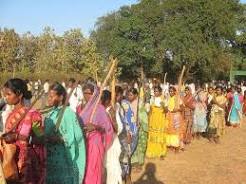
The Promise of SC/ST Empowerment Remains Unfulfilled: A Mere 1.79% Share in Government Tenders; MP Prof. Varsha Gaikwad Seeks President’s Intervention New Delhi—Under the Central Government’s Public Procurement Policy, the statutory target of procuring a minimum of 4 percent of goods and services from Micro and Small Enterprises (MSEs) owned by Scheduled Castes (SC) and Scheduled Tribes (ST) has, even after nine years, reached only 1.79 percent. This revelation emerged in a written response to Starred Question No. 171 in the Rajya Sabha on March 9. Lok Sabha MP Prof. Varsha Eknath Gaikwad (Mumbai North-Central) wrote to President Droupadi Murmu, appealing for immediate intervention regarding the “inconsistent and neglected” implementation of the policy. What Questions Were Asked in the Rajya Sabha, and What Answers Were Received? MP Golla Baburao asked the Minister of Micro, Small and Medium Enterprises: What are the objectives of the National SC/ST Hub Scheme currently being implemented for Scheduled Caste/Scheduled Tribe entrepreneurs? Is it not true that the government has mandated a 4 percent procurement from SC/ST-owned Micro and Small Enterprises under the Public Procurement Policy for MSEs? And (c) if so, what is the percentage of procurement made from SC/ST enterprises since the implementation of the mandatory 4 percent procurement clause—specifically in the context of the state of Andhra Pradesh? Responding to the question in the Rajya Sabha, the Minister of Micro, Small and Medium Enterprises (MSME), Jitan Ram Manjhi, clarified: (a) Objective of the National SC/ST Hub (NSSH) Scheme: Operational since October 2016, the scheme aims to promote SC/ST entrepreneurship and to facilitate the fulfillment of the mandatory 4% procurement target from MSEs under the Public Procurement Policy. (b) Confirmation of the 4% Target: Yes, under the Public Procurement Policy for MSEs Order, 2012, it is mandatory for all Central Government Ministries, Departments, and Central Public Sector Enterprises (CPSEs) to procure 25% of their total annual purchases from MSEs, and—within that allocation—4% specifically from SC/ST-owned MSEs. (c) Actual Figures: According to data recorded on the MSME Sambandh Portal (launched on December 8, 2017), the percentage of procurement from SC/ST-owned MSEs across the country has been as follows (as of March 5, 2026): Minister Jitan Ram Manjhi stated in the Rajya Sabha that the NSSH scheme has been operational since 2016 specifically to fulfill this 4% target. Nevertheless, the figures indicate that despite rising from ₹544 crore in 2017-18 to ₹3,364 crore in 2025-26, the actual percentage achieved remains far short of the stipulated target. The Minister also acknowledged that data is not maintained on a state-wise basis; therefore, separate data specifically for Andhra Pradesh is not available. What are the Government Regulations? (Public Procurement Policy, 2012) Procurement of 25% of total purchases from MSEs is mandatory. Within that, 4% must be procured from SC/ST-owned MSEs (constituting 4% of the *total* procurement value, not merely 4% of the 25% MSE quota). 3% must be procured from women-owned MSEs. Definition of an SC/ST-owned MSE: In a proprietorship, the owner must belong to the SC/ST category; in a partnership, SC/ST members must hold a 51% stake; or in a company, SC/ST members must hold 51% of the promoter shares. Provision for free tender forms, exemption from Earnest Money Deposit (EMD), reservation of 358 specific items for procurement, and mandatory Vendor Development Programs. The central policy mandates that a minimum of 10 percent of the total value of government procurement and tenders must be sourced from SC/ST entrepreneurs. How are these regulations being disregarded? Responses provided in the Rajya Sabha, along with data from the MSME Samadbandh portal, clearly demonstrate that over a period of nine years, the percentage has risen from a mere 0.48% to just 1.79%. In other words, not even 55% of the 4% target has been achieved. While many CPSEs (Central Public Sector Enterprises) and ministries successfully meet the 25% target for MSEs (Micro and Small Enterprises), they frequently overlook the sub-target specifically designated for SC/ST entrepreneurs. The reasons for this include: A lack of capacity building and market access for SC/ST entrepreneurs. The failure of certain departments to include SC/ST categories in tender documents, or their refusal to accord priority even when an L1 (lowest bid) is received from such entities. A tendency among state governments to either not fully adopt or not effectively implement the Central government’s policy. A lack of effective oversight and monitoring. Addressing this very issue of neglect, Prof. Varsha Gaikwad stated in a letter addressed to the President on March 24: “The Central policy mandates that a minimum of 10 percent of the total value of government procurement and tenders must be sourced from SC/ST entrepreneurs. This policy was formulated with the objective of fostering inclusive economic growth, encouraging entrepreneurship among marginalized communities, and ensuring their equal participation in national development. However, at the state level, this policy is being implemented inconsistently—and, in most instances, is being completely disregarded. Consequently, SC/ST entrepreneurs are being denied their rightful entitlements, and the broader objectives of socio-economic empowerment remain unfulfilled.” She urged the President to issue strict directives to all Central ministries, departments, and state governments to ensure the uniform and equitable implementation of this policy. Furthermore, she called for the establishment of robust monitoring mechanisms, the creation of awareness among procurement officials, and the launch of capacity-building programs specifically tailored for SC/ST entrepreneurs. Geetha Sunil Pillai Courtesy: Hindi News
Controversy over Registrar Appointment at Madras University: Dalit Professor Alleges Discrimination and Procedural Irregularities in Interview Process
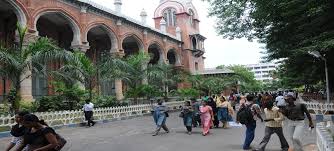
Madras University Registrar Appointment: Allegations of Discrimination and Procedural Irregularities in Interview; SC/ST Commission Seeks Report Tamil Nadu: A 54-year-old Associate Professor belonging to the Dalit community, currently serving at a college in Chennai, has leveled serious allegations regarding the selection process adopted for the post of Registrar at the University of Madras (UoM). He claims that irregularities were committed at multiple levels during the interview held in June 2025. The professor himself was one of the candidates for this position. He expressed astonishment that, despite five out of the nine candidates being Dalits, not a single representative from this community was included in the entire selection committee. Regarding this matter, the professor approached the Madras High Court in December of last year. He has petitioned the court to direct the university to conduct a fair selection process utilizing a valid and properly constituted committee. Furthermore, he has demanded that the appointment be made strictly on the basis of merit, while also ensuring that his own candidature is duly considered. Applications for the post of Registrar were invited in May of last year, as the then-Registrar, S. Elumalai, was scheduled to step down from his position in June. Initially, a total of 15 individuals applied; of these, four were declared ineligible, and two candidates failed to appear for the interview. Consequently, a total of nine candidates appeared for the interview on June 24. The Associate Professor—who possesses over 24 years of experience in the fields of teaching and research—stated in an interview that the majority of the candidates did not perceive the process as fair. He asserted that not everyone was accorded equal opportunities and that the entire exercise appeared to be nothing more than a mere eyewash. He alleged that it seemed as though the selection committee had already pre-determined the current Registrar, Rita John, as the chosen candidate for the post. Another candidate—a 55-year-old professor from Madras University itself who appeared for the interview—also raised questions regarding the allocation of time during the process. He stated that while all other candidates were allotted only 10 to 15 minutes, the incumbent Registrar was evaluated for a full 46 minutes. He further alleged that Rita John already shared a close acquaintance with several members of the committee. According to the rules, the Vice-Chancellor (VC) is supposed to preside over this interview. In the VC’s absence, this responsibility typically falls to a Syndicate Committee constituted under the Secretary of the Higher Education Department. However, in this instance, the responsibility was entrusted to J. Innocent Divya—the then Commissioner of the Directorate of Technical Education (DoTE)—a move that casts a shadow of doubt over the entire process. According to departmental sources, Divya was appointed by the former Higher Education Secretary, C. Samayamoorthy. Samayamoorthy was transferred on June 23, and the interviews were scheduled for the very next day, June 24. Candidates are now questioning why the interviews were conducted with such haste—specifically, before the new Secretary, P. Shankar, could assume charge. The professor further questioned why the process was not deferred until the arrival of the new Secretary, Shankar, given that there is no provision allowing anyone other than the designated selection committee members to conduct such proceedings. Notably, the former Secretary, Samayamoorthy himself, had appeared for an interview for the post of Registrar at Bharathiar University just one week prior to the interviews held at the University of Madras. Candidates have also expressed strong objections regarding the lack of Dalit representation within the committee. They argue that, in accordance with UGC regulations, representation from the Dalit community is mandatory within such committees and cannot be compromised under any circumstances. In light of this, a member has lodged a complaint regarding these irregularities with the SC/ST Commission. Consequently, the Commission has issued stern directives to the Higher Education Department, mandating the submission of a comprehensive report on the entire interview process by the first week of April. Responding to these allegations, a senior administrative official at the University of Madras presented the institution’s stance. He asserted that the interviews were conducted in a completely impartial manner and that the position was awarded strictly on the basis of merit. The official clarified that this appointment does not involve any form of bribery, pressure, or irregularity. The official also informed that, since assuming the post of Registrar, Rita John has relinquished her previous positions as a Syndicate member and Head of the Department (HoD) of Theoretical Physics. Rajan Chaudhary Courtesy: Hindi News
MRPS founder flays SC order on Dalit converts, seeks SC status for them
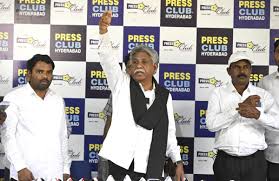
Opposes SC ruling denying SC status to Dalit converts, urging equal recognition for Dalit Christians Emphasising the need to recognise India’s continuing reality of caste discrimination, Madiga Reservation Porata Samithi (MRPS) founder-president Manda Krishna Madiga criticised the recent Supreme Court ruling that Dalits who convert to religions other than Hinduism, Sikhism or Buddhism lose their Scheduled Caste (SC) status. He called for SC status to be extended to Dalit Christians on par with the recognition granted to Sikh and Buddhist Dalits, and expressed MRPS’ support for Dalit Christians if they choose to fight for their rights. Addressing a press conference at the Press Club in Somajiguda here on Monday, he said the authorities and the judiciary must consider the fact that the preaching classes of both Christianity and Islam in India largely come from upper castes. He alleged that upper castes such as Brahmins, Vaishyas, Kammas and Reddys who converted to other religions carried forward discriminatory caste practices even within religions that preach equality. “The Supreme Court judgment is completely against Articles 14, 15 and 25 of the Constitution. Because of various conspiracies, Dalits lost the benefits of the Communal Award and their rights to religious freedom. During the framing of the Constitution, upper castes represented Christians, which is why they did not speak for Dalit Christians’ rights,” he alleged. When upper-caste Christians are eligible for EWS reservations, why should Dalit Christians not be eligible for SC reservations, he asked, claiming that B.R. Ambedkar had clarified that conversion to Christianity does not alter the social conditions of Dalits. The Hindu Bureau Courtesy : The Hindu Note: This news is originally published on https:/thehindu.com/bha and is used purely for non-profit/non-commercial purposes, especially human rights
Kerala Assembly polls 2026: Adivasi, Dalit outfits extend support to UDF, flag exclusion in candidate selection
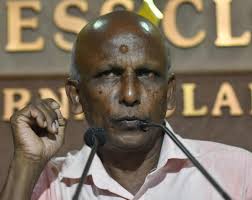
Independent candidature plan scrapped to consolidate anti-LDF votes Various Dalit and Adivasi organisations, including the Adivasi Gothra Mahasabha (AGMS) and the Ambedkarite Democratic Front (ADF), have decided to support United Democratic Front (UDF) candidates in all three constituencies in Wayanad district and across the State in the upcoming Assembly elections. Addressing a press conference at Kalpetta on Monday, M. Geethanandan, State coordinator, AGMS; Sreejith P. Sasi, State council member, ADF; Manikandan C and Mary Lydia of the Adi Shakti Summer School said they had submitted a charter of demands on Dalit and Adivasi issues to the UDF leadership, which had assured that the concerns would be considered. However, they expressed strong protest over the exclusion of eligible candidates from Adivasi communities such as the Paniya, Adiya, Kattunayaka and Vettakuruma in the selection of Scheduled Tribe candidates in Wayanad district by both the Left Democratic Front (LDF) and the UDF. The collective said that the denial of social justice in candidate selection in Wayanad for over 60 years had been brought to the attention of Rahul Gandhi, former MP of the Wayanad Lok Sabha constituency and Priyanka Gandhi Vadra, the current MP. The issue was also communicated to the Congress State leadership, but to no avail, Mr. Geethanandan said. They further alleged that neither Mr. Gandhi during his tenure nor Ms. Vadra at present were willing to directly engage with Adivasi communities to understand their issues. In response, the group announced plans to form a “political agitation committee” to bring the matter to national attention. The committee will be officially announced at an Adivasi manifesto convention to be held in Wayanad after the Assembly election results are declared. The organisations had earlier decided to field an independent candidate from the Paniya community in the Mananthavady constituency in protest against the sidelining of marginalised communities by major political fronts. However, they withdrew the decision due to the early announcement of the election schedule and the lack of adequate preparation. They also said they did not want to miss the opportunity to politically challenge the continuation of the LDF government, which had “undermined Dalit and Adivasi rights”. The collective alleged that ₹7,411 crore of SC/ST development funds had been wasted during the decade of Left rule. Despite adequate budget allocations, the government disrupted the distribution of e-grants for students, forcing many to drop out of their studies. Around 500 Adivasi families displaced by landslides and floods are yet to be rehabilitated, they said. While a township was inaugurated for victims of the Mundakkai disaster, no rehabilitation package was provided for tribal communities, the organisations added. They further alleged that instead of rehabilitating the landless, the government had illegally handed over Adivasi land to the Centre for a museum project. They also claimed that reservation policies were being undermined and that backdoor appointments were being made to benefit insiders. The group said that O. R. Kelu, Minister for the Welfare of Scheduled Castes, Scheduled Tribes and Backward Classes, should respond to these issues as he seeks re-election from Mananthavady. The Hindu Bureau Courtesy : The Hindu Note: This news is originally published on https:/thehindu.com/bha and is used purely for non-profit/non-commercial purposes, especially human rights
Samiti seeks probe into SCs population data in Nagamohan Das report
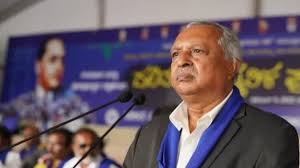
There are discrepancies in data used in the Nagamohan Das Commission report on internal reservation among Scheduled Castes, says S.R. Kollur Stating that there are discrepancies in population data used in the Nagamohan Das Commission report on internal reservation among Scheduled Castes, State coordinator of the Dalit Sangharsh Samiti (Ambedkarite) S.R. Kollur has sought a high-level inquiry to determine accurate figures of various communities coming under the Scheduled Castes. Addressing a press conference here on Monday, Mr. Kollur said that, according to the 1951 State Census, the population of the Dalit right communities was higher than that of the Dalit left communities. However, the commission’s report shows that the Dalit left population is higher, while indicating a decline in the population of Dalit right communities, he said. He said that the reported decline in the Dalit right community population over the years raises questions. He also pointed to differences in the district-wise data of the 2011 Census, particularly in Chitradurga district, where the Dalit right population has been shown to be in very low numbers. Mr. Kollur stated that several Scheduled Castes communities are seeking internal reservation based on their population and any errors in data can result in injustice. He said that higher population figures shown for the Dalit left community have given them priority in the A category, affecting the interests of the Dalit right communities and others. He urged the Siddaramaiah-led State government to order a comprehensive inquiry to determine the exact population of Scheduled Castes and to continue the recruitment process as per the earlier roster system until the issue is resolved. The Hindu Bureau Courtesy : The Hindu Note: This news is originally published on https:/thehindu.com/bha and is used purely for non-profit/non-commercial purposes, especially human rights