
Wherever Indians go, caste travels with them: Scholar | Off The Beaten Track

Scholar-author Suraj Yengde explains how caste persists across global Indian diaspora, influencing identity, discrimination and politics beyond India’s borders “Caste is not something Indians consciously carry abroad—but it travels with them as part of their cultural instinct,” said Suraj Milind Yengde in an interaction, underlining the central argument of his book Caste: A Global Story. As debates around caste intensify within India—from court rulings to political mobilization —his work expands the conversation beyond national borders, showing how caste persists and evolves across diasporas. In this episode of Off The Beaten Track, The Federal spoke to Yengde, an Indian scholar, author and activist known for his work on caste and race. He is also an assistant professor of history and African Studies and a Ford Foundation Presidential Fellow at the University of Pennsylvania. Does caste follow Indians abroad like a birthmark—something inescapable regardless of geography or profession? I think the migratory aspects of caste were actually documented early on by SV Ketkar, an anthropologist from Cornell. He wrote a succinct text on caste in the early 20th century. Dr BR Ambedkar also picked up on this theory—that caste remains attached to the Indian body politic. In my research, I’ve covered nearly 15 countries. I’ve interviewed descendants of indentured labourers from Bihar, Uttar Pradesh, Bengal, and Odisha, as well as Gulf migrants and contemporary IT professionals. Across all these groups, caste persists. When people leave India, they don’t consciously think they are carrying caste. They carry it as part of their cultural identity, a kind of ‘lightweight carry-on’. But it shapes interactions, relationships, and hierarchies abroad as well. Caste also evolves in conversation with global structures—colonial histories, white societies, and economic systems. The global caste dynamic is not isolated; it is constantly interacting with other power structures. How does caste discrimination—especially against Dalits—play out abroad? And what about Dalits who converted to Christianity or Islam? If you look at history, caste has remained persistent across time and geography. That’s why you can talk about 19th-century Caribbean societies like Trinidad and connect them to contemporary India. In Trinidad, for example, Dalits and other lower castes were assimilated into a broader national religious identity. Religion there often reflected culture more than rigid hierarchy. But conversion does not erase caste. Along India’s coastal belt—from Odisha to Andhra Pradesh to Tamil Nadu—many Dalits converted to Christianity over 150 years ago. Yet caste identity continues. Even within Sikh communities abroad, we see caste divisions. In Canada, on remote islands, you find separate congregations formed due to caste discrimination. Over generations, identity evolves. Diaspora communities become ‘hyphenated’—IndianAmerican, Indian-Canadian—but caste consciousness doesn’t disappear. In fact, in recent decades, caste awareness has intensified, partly influenced by developments in India. How are upper-caste diaspora communities responding to growing Dalit assertion globally? From what I’ve observed, many professionals in the diaspora—especially those from technical fields—come from environments shaped by anti-reservation sentiment. Some dominant caste individuals resist acknowledging caste discrimination. Their common argument is that they were treated unfairly themselves. At the same time, second- or third-generation diaspora communities often treated caste as an ‘innocent identity marker’ because Dalit assertion was less visible earlier. Now, as Dalit communities assert themselves—demanding dignity and equality—this creates discomfort. But assertion is not about pushing anyone back. It is simply about claiming equal space. The challenge is that many diaspora communities still operate with a frozen image of India —often shaped by post-1947 narratives. When they encounter the realities of caste and inequality, it can be jarring. Have Dalit movements abroad influenced institutional or legal changes, such as anticaste policies in universities and cities like Seattle? Yes, there has been significant movement. I witnessed early discussions at universities like Brandeis, where students shared experiences of caste discrimination. These efforts led to institutional responses—task forces, policies, and broader recognition of caste as a form of discrimination. While Dalit voices triggered these discussions, the movement expanded into a broader human rights concern among South Asian academics. You now see Ambedkarite student groups across the world. Even in places like Kyrgyzstan, students celebrate Ambedkar Jayanti. This is not just resistance—it’s assertion. Students are saying: ‘This is our culture, our history, our identity. We deserve space too.’ Did your own experience as a Dalit shape how you encountered caste abroad? Yes, very much. Stigma is not something you can easily shed—it requires deep psychological unlearning. I grew up in a Dalit colony with open sewage and extreme marginalisation. That environment shapes your consciousness. For years, I hid my identity—telling people I was from Pune or Mumbai instead of Nanded. It took time to reclaim that identity. My work reflects this journey. I call it a kind of ‘cosmopolitan Dalit universalism’—a worldview shaped by marginality but connected globally. My upbringing also exposed me to global Black movements. My father admired figures like Kofi Annan. That influenced how I understood solidarity between Dalit and Black struggles. You draw parallels between Dalit struggles and Black movements. How has this played out globally? The Dalit movement has long relied on literature, poetry, and cultural expression as tools of resistance. Dalit literary conferences are major events—spaces where communities gather, share, and assert identity. This mirrors Black cultural movements globally. These spaces are not just artistic—they are political and deeply rooted in dignity and resistance. For me, growing up in that environment naturally led to comparative thinking. It wasn’t forced—it was part of lived experience. You describe an ‘irony’ during the global protests after the George Floyd protests. What did you observe? It was striking. Many Indian elites in the US participated in protests after George Floyd’s killing. But I asked: What have you done to address caste inequality in your own society? There is an irony here. By aligning with Black struggles, some elites seek recognition as ‘oppressed minorities’ in the West—while ignoring caste privilege. Caste creates a worldview where one centres oneself and ignores others’ struggles. That contradiction was very visible during those protests. How does the Indian diaspora respond to caste violence and
Rs 16,500 crore contracts, zero data: Rahul Gandhi questions Centre on Dalit, Adivasi share
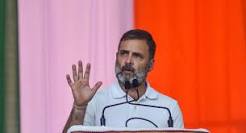
Government says public works contracts are awarded through open tendering processes and no centralised data on Dalit, Adivasi share is kept on the social category of contractors The Centre has told Parliament that it does not maintain data on the share of public works contracts, worth around Rs 16,500 crore, awarded to Dalit, Adivasi and OBC entrepreneurs in the past year, prompting Congress leader Rahul Gandhi on Tuesday to question the transparency and inclusiveness of government spending. Raising the issue on social media, Gandhi, Leader of the Opposition in the Lok Sabha, said he had sought a clear break-up of beneficiaries from marginalised communities in large public works tenders. “The answer was extremely concerning, the government does not keep any such data,” he said. The response assumes significance in light of the Centre’s public procurement policy, which mandates that 25 per cent of purchases be sourced from micro, small and medium enterprises (MSMEs), with 4 per cent earmarked for enterprises owned by Scheduled Castes and Scheduled Tribes. However, the government clarified that this provision is not mandatory for public works contracts, which are typically among the largest and most profitable government tenders. This creates a gap between policy intent and implementation, particularly in infrastructure and construction projects where contract values run high and participation is limited to fewer players. Gandhi argued that the absence of such data is not merely an administrative issue but raises broader concerns about equitable access. He questioned why Bahujan entrepreneurs remain largely invisible in the country’s biggest public contracts. In its written reply, the government said public works contracts are awarded through open tendering processes and that no centralised database is kept on the social category of contractors. Article_Author Shekhar Singh Courtesy : The Tribune Note: This news is originally published on https:/thetribune.com/bha and is used purely for non-profit/non-commercial purposes, especially human rights
Undoing hard-won transgender rights
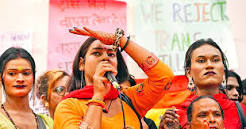
Chittajit Mitra on why the new transgender law is regressive On 13 March, the social justice and empowerment minister Virendra Kumar tabled the Transgender Persons (Protection of Rights) Amendment Bill, 2026 in the Lok Sabha. When I first heard this, I thought, in all my naïveté, they’re finally bringing in the changes the transgender community has been asking for. Provisions for horizontal reservations, for example, or just punishment for the different kinds of violence (against trans people) that had been clubbed together in the 2019 Act. But reality bit hard. The new Bill, instead of expanding the rights of the community, retracts almost all the rights they had won after fighting for decades. Even amid demands by the Opposition that the Bill be referred to a select committee for wider consultation, and a plea by lawyers and activists that the President withhold assent, the regressive provisions are now the new law. Why are these changes regressive? How do the amendments undermine or violate fundamental rights and dilute protections under Article 14 (equality before the law), Article 15 (non-discrimination), Article 19 (freedom of expression) and Article 21 (protection of life, personal liberty, bodily integrity)? First, the new law narrows the definition of ‘transgender person’. It delegitimises self-identification and empowers medical boards and district magistrates to grant recognition. In doing this, it goes against the Supreme Court’s landmark NALSA ruling (of 2014) that recognised the constitutional rights of transgender persons and established the principle of self-identification of gender identity. The system of graded punishments introduced in the new law, ostensibly to criminalise coercion/ deception/ allurement to make someone present themselves as transgender, uses overbroad language where even gender-affirming care can be interpreted as coercion. It ignores the community’s lived realities and potentially criminalises their support systems. I grew up in Uttar Pradesh listening to rumours about the transgender community: they are supposedly people with indeterminate genitals; they are involved in stealing and kidnapping children; they force people to castrate themselves… and so on. This kind of demonisation, which marginalised the community, now has the force of law behind it. In narrowing the definition of ‘transgender person’ to specific socio-cultural identities (kinnar, hijra, aravani, jogta) plus intersex variations, and in folding intersex persons into the transgender category — even though intersex variations are biological and distinct from gender identity — the new law disenfranchises individuals who don’t belong to these socio-cultural groups (what about trans groups like the Nupi Manbi from Manipur?) and non-binary, gender-diverse individuals. It attaches biological markers to ‘transgender-ness’ that contradict internationally accepted definitions of gender identity. As the European Institute for Gender Equality puts it, gender identity is ‘each person’s deeply felt internal and individual experience of gender, which may or may not correspond to the sex assigned at birth, including the personal sense of the body (which may involve, if freely chosen, modification of bodily appearance or function by medical, surgical or other means) and other expressions of gender, including dress, speech and mannerisms’. It reintroduces the formation of district-level medical boards to effectively certify transgender persons. This contentious provision has a history: it was initially proposed in 2016, flagged by activists as medical and bureaucratic gatekeeping and as a violation of the NALSA judgement (2014) and then withdrawn in the 2019 Act. The 2019 Act was far from ideal. Its disregard for the community’s right to dignity was conspicuous in the manner that violent crimes like rape and physical abuse were clubbed with milder offences against the community (like obstructing their use of public spaces) under a catch-all provision, carrying the same light punishment. Is it really, then, about ‘Protection of Rights’ — as the phrasing of the law may have you believe? When transgender members of the National Council for Trans Persons (NCTP) were called from different parts of the country for an urgent meeting with social justice minister Virendra Kumar, he thought it better to skip the interaction and sent bureaucrats instead. Resigning from the NCTP on 25 March (when the bill was passed by Rajya Sabha), Council members Kalki Subramaniam and Rituparna Neog shared what transpired during the deliberations. Asked about the unequal rape laws, for instance, the bureaucrats cited “biological differences” between trans women and cisgender women. This reveals the discriminatory mentality and the bio-essentialism — the belief that biological factors are the essence of who a person is — sitting at the core of the new law. Another treacherous amendment introduces severe punishment (10 years to life imprisonment) for attempts to ‘compel’ any person or child ‘to outwardly present a transgender identity’. The clause may appear harmless, even benevolent, but the overbroad definition of abuse can have a chilling effect on the support systems the community has relied on — NGOs, CBOs (community-based organisations), even traditional groups. Many trans individuals face natal violence and are forced to hide their true self at home. If they run away and seek refuge at any of these institutions, their families can easily file an ‘abduction or allurement’ case against those who gave them a safe space. This archaic understanding that parents or natal families can do no harm to the child has been proven wrong time and again, and yet we are blindly handing over the rights of transgender individuals to the family. Finally, the Indian queer community must understand that politics based on the disenfranchisement of any section of society will one day come round to haunt them as well. A small section of India’s LGBTQ+ has been desperately trying to seek validation from majoritarian forces; the new law should tell them where they stand. The malicious attempt to further marginalise and undercount us in the upcoming Census will not be tolerated. It is time to raise our voices as one. India travel guide Chittajit Mitra Chittajit Mitra (he/they) is a writer and translator based in Allahabad Courtesy : National Herald Note: This news is originally published on https:/nationalherald.com/bha and is used purely for non-profit/non-commercial purposes, especially human rights
As temperatures soar, water woes for tribals rise
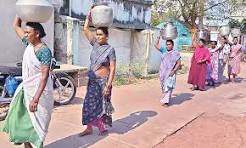
Anakapalli: Astemperatures soar, tribals of a few villages near Devatamma area and neighbouring hamlets at Ravikamatham mandal have to think twice before using water for their daily needs as taps installed four years back turned into mere showpieces. For the tribals residing at Ravikamatham mandal of Anakapalli district, in Kothakota panchayat centre water woes continue to trouble them. Over 200 Dalit families living across Devata Amma area and neighbouring tribal villages are facing severe hardship due to inaccessibility to safe drinking water. What makes the situation more alarming is that the issue is not new but reflects years of neglect, broken promises and apathy of the officials concerned. Even as public water taps were installed in the area four years ago, followed by household pipeline connections three years ago, respite to residents did not last for long. Under the ambitious Jal Jeevan Mission, the Central government sanctioned funds amounting to Rs 6 crore to ensure a reliable water supply system for every household. Initially, water was supplied for 15 days on a trial basis, raising hopes among residents but the supply abruptly stopped, leaving families disappointed. Today, tribals in the area are forced to ration water to an extent that bathing is possible only once every two days. Many are compelled to travel to distant areas in search of water, carrying it back home in containers and pots, an exhausting routine that has become their daily norm now. Pointing out that despite multiple protests and appeals over the years, tribals express anguish that no permanent solution has been provided to fix their water woes. The infrastructure now stands as a stark reminder of administrative failure, with water pipelines lying unused. Officials had recently performed a groundbreaking ceremony for the construction of a new water tank, assuring residents that water supply would resume soon. However, those promises remain unmet. Unable to bear the apathy, Dalit women took to streets carrying empty pots in a display protest, symbolising both their daily struggle and demand for immediate action. Demanding justice and immediate intervention, the protest saw participation from local Dalits, including CPM district executive member K Govinda Rao, along with Dalit women leaders Eshwaramma, K Lavatalli, G Kalyani and Peddamma. The unfolding crisis in Kothakota indicates how access to safe drinking water for the villagers remains elusive. By Vasu Potnuru Courtesy : THI Note: This news is originally published on https:/thehansindia.com/bha and is used purely for non-profit/non-commercial purposes, especially human rights
Dalit Father and Son Beaten in Mainpuri; Thugs Unleash Violence Over Ribbon-Cutting at Fair

It is alleged that the *Pradhan* (village head) and his supporters were armed with illegal weapons; following the assault, they fled the scene after openly issuing death threats. Both the father and son sustained serious injuries in the incident. In Mainpuri, Uttar Pradesh, a Dalit father and son were beaten by a group of thugs over a dispute regarding the ribbon-cutting ceremony at the Radha-Krishna Fair. The incident took place in Lakhanmau village, under the jurisdiction of the Barnahal police station, where the *Pradhan* and his supporters assaulted the Dalit father and son. Despite the presence of the police, the thugs brutally beat and intimidated the victims without any hindrance. In Mainpuri, Uttar Pradesh, a Dalit father and son were brutally beaten by a group of thugs over a dispute concerning the ribbon-cutting ceremony at the Radha-Krishna Fair. A video of this entire incident is rapidly going viral on social media. It is reported that the *Pradhan* and his supporters took strong offense to a member of the Dalit community performing the ribbon-cutting ceremony at the Radha-Krishna Fair, which was organized in Lakhanmau village under the Barnahal police station area. Enraged by this, the thugs launched a violent assault on the Dalit youth and his father. Shockingly, the entire incident unfolded in the presence of the police; however, the thugs were so emboldened that they showed no regard for anyone. Throughout the assault, the young victim kept pleading for mercy, but the accused remained unmoved. **Injured Father and Son Referred to Saifai** It is alleged that the *Pradhan* and his supporters were armed with illegal weapons; following the assault, they fled the scene after openly issuing death threats. Both the father and son sustained serious injuries in the incident; they were initially admitted to a local hospital but were subsequently referred to Saifai after their condition deteriorated. **Case Registered Against 5 Named Individuals and Others** The victims have filed a formal complaint at the police station against five named individuals and several unidentified persons. Currently, the police are engaged in investigating the entire matter. Reported by: Pramod Kumar, Edited by: Abhishek Pareek Courtesy: Hindi News
Congress Targets Rajasthan Govt Over Ajmer Dalit Rape Case
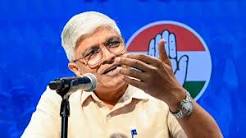
New Delhi: The Congress on Saturday launched a sharp attack on the Rajasthan government, alleging that those accused in the gang rape of a 15-year-old Dalit girl in Ajmer are being shielded and that the victim’s family has been left without adequate protection. The party also flagged what it described as a broader rise in atrocities against Dalits in BJP-ruled states. Speaking at a press conference, Rajendra Pal Gautam said the handling of the case reflects serious lapses by the police. He stated that the incident occurred in July 2024 but came to light only after the minor became pregnant. A Zero FIR was initially registered in New Delhi and later transferred to Ajmer. Despite the victim recording her statement before a magistrate under Section 164 of the CrPC, Gautam alleged that no arrests were made for nearly eight months. He said that out of the three accused, only one has been arrested so far, while the other two were briefly detained under preventive provisions and subsequently released. Gautam further alleged that on March 16, just ahead of a scheduled court hearing, the victim’s family was attacked with axes after they refused to agree to a compromise. He added that a counter-FIR was filed against the family, though it was later closed. Raising legal concerns, Gautam pointed to alleged violations of the Scheduled Castes and Scheduled Tribes (Prevention of Atrocities) Act. He said the authorities failed to provide protection to the victim as mandated under Section 15(A) and did not take action against officials responsible for negligence under Section 4. He demanded immediate security for the victim and her family, adequate compensation, and strict legal action, including the arrest of police officials found to have violated the law. Highlighting a wider trend, Gautam cited data claiming that 76 percent of reported atrocities against Dalits are concentrated in five BJP-ruled states. He said Uttar Pradesh, Madhya Pradesh and Rajasthan account for the highest number of such cases, followed by Bihar and Maharashtra, and argued that the figures point to a systemic issue requiring urgent attention. The Congress also referred to related political developments, noting that Rahul Gandhi has written to the Prime Minister seeking withdrawal of cases linked to the 2018 protests held to protect the SC/ST Act. Gautam said this reflects the party’s continued focus on safeguarding the rights of marginalised communities. He also announced that Rahul Gandhi will flag off a “Run for Ambedkar, Run for Constitution” marathon in Delhi on April 12 to mark the birth anniversary of B. R. Ambedkar, calling on people to participate in large numbers. The Congress maintained that the Ajmer case underscores the need for accountability, stronger enforcement of laws, and timely justice for victims, warning that failure to act decisively would further erode public trust in the system. By Purna Singh Courtesy : THI Note: This news is originally published on https:/thehansindia.com/bha and is used purely for non-profit/non-commercial purposes, especially human rights
76% of Dalit atrocities in 5 BJP-ruled states: Congress
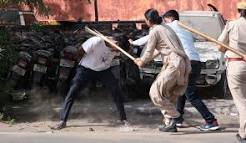
The Congress on Saturday accused the BJP government in Rajasthan of shielding the perpetrators in the gang rape of a 15-year-old Dalit girl in Ajmer and a subsequent life-threatening attack on her family. Addressing a press conference, AICC SC Department Chairman Rajendra Pal Gautam said the police had failed to act and added that atrocities against Dalits were rising in BJP-ruled states. Citing data, Gautam said 76 per cent of cases of atrocities against Dalits were reported from five BJP-ruled states, with Uttar Pradesh, Madhya Pradesh, and Rajasthan topping the list, followed by Bihar and Maharashtra. He said the crime took place in July 2024 but came to light only after the minor became pregnant, following which a Zero FIR was registered in New Delhi and later transferred to Ajmer. Gautam noted that despite the victim recording her statement before a magistrate under Section 164 of the CrPC, no arrests were made for eight months. Article_Author Tribune News Service Courtesy : The Tribune Note: This news is originally published on https:/thetribune.com/bha and is used purely for non-profit/non-commercial purposes, especially human rights
Identity vs dignity: Virudhunagar Dalits to boycott TN polls over caste-based village name

Because of the village name – “Paraicheri” – residents say they are forced into a position of humiliation even at workplaces. Synopsis: Over 60 Dalit families in North Achamthavilthan, Virudhunagar, face daily humiliation as their locality is officially recorded as “Paraiyar Cheri.” Despite petitions for 15 years, the caste-marked name persists in voter lists, Aadhaar, and bank records. Frustrated by inaction, residents have resolved to boycott the 2026 Assembly elections, demanding dignity through a permanent name change. “Hey Suryakala, come here” — this is how Kannan (name changed), a 30-year-old man, calls out to Suryakala, who is over 60 years old, without even a trace of respect. Ironically, Kannan studied in school with Suryakala’s daughter. Not just Suryakala — over 60 families from North Achamthavilthan village in Srivilliputhur taluk of Virudhunagar district have been facing such disrespect and humiliation for years, solely because they belong to the Dalit community. What is more troubling is that not only the general public, but even government records refer to their locality as “Paraicheri,” explicitly marking their caste identity. The residents say that wherever they go, this name subjects them to humiliation and caste-based discrimination. For over 15 years, they have submitted petitions—from local Tahsildar to the Chief Minister—requesting a change in the village name. But as no action has been taken so far and the indignity continues, the residents of North Achamthavilthanhave now announced that they will boycott the 2026 Assembly elections. Village carrying burden of caste humiliation North Achamthavilthan is located in Achamthavilthan revenue village under Achamthavilthan panchayat in Srivilliputhur taluk of Virudhunagar district. While multiple intermediate communities live across the broader village, over 60 families belonging to the Dalit Paraiyar community reside in the northern part. Because of this, the area has come to be referred to as “Paraicheri” — not just by neighboring villagers but also in official records. This name appears in documents such as voter lists, bank records, Aadhaar, and PAN cards. However, in land patta records, the village is still officially recorded as Achamthavilthan. Thus, while some government documents mention Achamthavilthan, others continue to use “Paraicheri.” A Abi, a native of this village who is currently pursuing a PhD in Chennai, shared how this caste-based naming has affected her since childhood. “I did all my schooling in and around my village. We had to go to a neighboring village for school, where students from other communities also studied. They would mock us by calling out our village name, and even write it on classroom desks to ridicule us,” she said. She added that upon hearing the name of their village, some students from certain intermediate castes would even avoid speaking to them. “Not just students, even today, elders from those communities expect us to address even their children with respect, using ‘vaanga, poonga.’ But they, from children to adults, never extend the same respect to us,” she said. Even though Suryakala is over 60, she, and others from her community, are still addressed disrespectfully by people from intermediate castes in the same village, often being called by name without basic courtesy. Abi noted that while the intensity of such behaviour may have reduced over the past decade, it still continues. 15-year-long struggle Because of the village name, residents say they are forced into a position of humiliation even at workplaces. SV Kumar, a resident, has been leading the fight to change the name for over 15 years. “When children go to school, they hesitate to even say the name of our village. Even when we go to work, if someone asks where we are from, we say Achamthavilthan. But those who know will immediately correct it and say ‘No, they are from Paraicheri.’ At that moment, we feel deeply humiliated. We lose the sense of being free individuals and are pushed into a mindset of inferiority, as if we are slaves to others,” he said. Despite years of suffering, residents continue to fight for change. While in manual processes at local offices they manage to get the name recorded as North Achamthavilthan, digital government services like Aadhaar and tax records still reflect “Paraicheri.” “In some cases, during Aadhaar enrolment or updates, we insist and get the name corrected. But many people who cannot argue are left at the mercy of e-service operators, who continue to enter ‘Paraicheri,’” Kumar said. He added that even when opening bank accounts, despite submitting the name as North Achamthavilthan, officials, often local and from other communities, override it and record “Paraicheri.” Even the Election Commission’s voter list continues to carry the caste-based name. This is despite residents submitting forms with the correct name during the recent Special Intensive Revision. “We have submitted petitions to everyone, from the Tahsildar to the Chief Minister. There is no one we haven’t approached. Yet nothing has changed,” Kumar said. Over the past decade, resolutions demanding the name change have been repeatedly passed in the gram sabha. Petitions have been sent at every level. Seeking accountability, Kumar even filed RTI queries with the district collector’s office. According to the RTI response, in March 2023, the Srivilliputhur revenue divisional officer recommended changing the name from “Paraicheri” to North Achamthavilthan and forwarded it to the Virudhunagar district collector. In July 2025, the collector forwarded the recommendation to the Commissionerate of Revenue Administration and Disaster Management in Chennai. However, Kumar says the RTI reply revealed that the request is currently pending at that department. “Our village has central government employees, award-winning teachers, and highly educated graduates. Yet, wherever we go, we are humiliated because of our village name,” said Abi. “No matter how far we progress, the moment we say our village name, people’s perception of us changes. We feel like we are not free individuals. Changing the name will give us the dignity of being equal citizens of this country. It will free the next generation from the humiliation we have endured for years,” Kumar said. “When people hear our village name, some look at us with ridicule,
NCTP representatives file plea in SC challenging Transgender Amendment Act
The plea raised certain constitutional question, as to whether the State, through legislation, can define who a person is by substituting biological or socio-medical classifications for a person’s lived and self-perceived identity. NEW DELHI: National Council for Transgender Persons (NCTP) Chairperson Laxmi Narayan Tripathi and member Zainab Patel have and filed a petition in the Supreme Court challenging the Constitutional validity of the Transgender Persons (Protection of Rights) Amendment Act, 2026 which introduced many changes to the legal framework governing the recognition, rights and protection of transgender persons. The amendment was passed by the Parliament recently, taking away the right to self-determination of gender, the plea claimed. The law had received presidential assent recently on March 31. The petition filed by Tripathi and Patel, is expected to come up for hearing within a week in the top court, a senior official from the Supreme Court registry told TNIE. “Keeping in view the sensitivity of the case, the plea will likely to come up for hearing in a week or so,” he said. It is to be noted that the controversial law amends the Transgender Persons (Protection of Rights) Act, 2019. It redefines who qualifies as a “transgender person,” while also strengthening penal provisions to address serious offences such as forced identity and bodily harm. The petition challenged the Amendment Act, as causing “irreparable constitutional injury” to the fundamental rights of transgender persons guaranteed under Articles 14, 15, 19 and 21 of the Constitution. The plea raised certain constitutional question, as to whether the State, through legislation, can define who a person is by substituting biological or socio-medical classifications for a person’s lived and self-perceived identity. “The amendments dismantle the principle of self-identification of gender recognised as a fundamental right by the Supreme Court in the landmark National Legal Services Authority (NALSA) v. Union of India judgment. The petitioners submit that the Court is now called upon to protect a right that it had previously declared to be intrinsic to dignity and personal autonomy under Article 21,” the plea stated. It further submitted that the Parliament has, by the stroke of a legislative pen, repealed the statutory right that this Court held to be a fundamental right under Article 21. “The impugned deletion does not even require elaborate constitutional analysis to expose its unconstitutionality: a provision that directly codifies a right declared fundamental by this Court cannot be omitted by ordinary legislation without violating Article 21 and the doctrine of non-retrogression of fundamental rights,” the plea says. After the new legislation was made, it was being severely criticised by pposition parties and LGBTQIA+ (Lesbian, Gay, Bisexual, Transgender, Queer, Intersex and Agender etc) communities. Those who opposed the legislation have argued that they were not consulted at all prior to the introduction of the Bill in parliament. Two members of the NCTP, Kalki Subramanium and Rituparna Neog, resigned from their posts the day the Rajya Sabha passed the Bill. Suchitra Kalyan Mohanty Courtesy : TNIE Note: This news is originally published on https:/thenewindianexpress.com/bha and is used purely for non-profit/non-commercial purposes, especially human rights
‘No one is going to fall for their rhetoric…’ Rajbhar hits back at Akhilesh’s statement
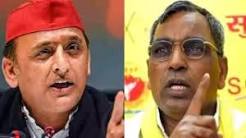
Om Prakash Rajbhar, hitting back at Akhilesh Yadav’s statement, has asserted that the Dalit and Backward Classes will no longer be swayed by the Samajwadi Party (SP). Rajbhar hits back at Akhilesh Yadav’s statement. Dalits and Backward Classes will not fall for the SP’s rhetoric. SP accused of abolishing Dalit reservation and instigating riots. State Bureau, Lucknow. Om Prakash Rajbhar—President of the Suheldev Bharatiya Samaj Party (SBSP) and a cabinet minister—has hit back at the statement made by SP President Akhilesh Yadav on Friday, declaring that the Dalit and Backward Classes have now seen through his strategy of misleading the public. “No one is going to fall for their rhetoric,” he asserted. Rajbhar stated that this is the very same SP that worked to abolish reservation for Dalits in promotions. He noted that while BSP Chief Mayawati had established districts and universities named after prominent Dalit icons, it was the SP that subsequently worked to change those names. During the SP’s rule, riots were a frequent occurrence, and Dalits often lost their lives in the ensuing violence. SP goons, he alleged, used to encroach upon and seize land belonging to Dalits. He further remarked that whenever the SP forms a government, a single specific caste comes to dominate the administration; even the Muslims—who play a pivotal role in bringing the party to power—are subsequently sidelined. Rajbhar acknowledged that the SP had benefited in the recent Lok Sabha elections from false propaganda claiming that the Constitution was under threat of being abolished; however, he asserted that Dalits and Backward Classes will no longer fall for their deceptive ploys. BY HEMANT KUMAR SRIVASTAVA | EDITED BY: AYSHA SHEIKH Courtesy: Hindi News