
Tamil Nadu Gets ‘Rainbow Ministry’ as Vijay Adds Dalit, Minority Representatives to Cabinet

Tamil Nadu Chief Minister C Joseph Vijay on Friday completed his Cabinet expansion by inducting two more MLAs, marking a further consolidation of what is being described as a coalition-based “rainbow ministry” in the state. The new inductees include Vanni Arasu of Viduthalai Chiruthaigal Katchi (VCK) and A M Shahjahan of the Indian Union Muslim League (IUML). Governor Rajendra Vishwanath Arlekar administered the oath of office and secrecy at a simple ceremony held at Raj Bhavan, in the presence of the Chief Minister and senior officials. The induction has triggered political friction, with the DMK , a former ally in the opposition alliance, objecting to the inclusion. Senior DMK leader A Raja made remarks on social media, later deleted, which were widely interpreted as criticism of the VCK and IUML joining the Vijay-led Cabinet. His comments, including a “bent coconut tree” metaphor, sparked a war of words between parties. VCK and TVK leaders strongly condemned the remarks, with Public Works Minister Aadhav Arjuna demanding an apology from the DMK leadership. Amid escalating tensions, DMK president M K Stalin intervened, urging restraint and asking party cadres to avoid harsh language. The Cabinet expansion is being viewed as a major political shift, with increased representation from Dalit and minority communities. The new ministry reportedly includes eight Dalit ministers , two Brahmin ministers , and multiple representatives from minority communities, making it one of the most diverse Cabinets in the state’s recent history. VCK leader Vanni Arasu described his induction as a “dream come true,” calling it a step towards coalition governance, while IUML leader Shahjahan called it a historic moment for his party. The Cabinet strength now stands at 35 ministers, including the Chief Minister , the constitutional maximum. Laaheerie P Courtesy : TMV Note: This news is originally published on https:/themorningvoice.com/bha and is used purely for non-profit/non-commercial purposes, especially human rights
Indian legislation borrows UK’s gatekeeping to limit what being Trans+ looks like
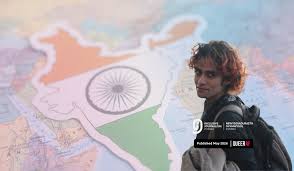
This article is from our (award-winning) free weekly newsletter that helps you understand the LGBTQIA+ news and support queer creatives to change the media. Join 10,000+ curious queer readers every Saturday morning. When India passed the 2026 Transgender Persons (Protection of Rights) Amendment Bill, nationwide protests erupted against the changes that will devastate the fundamental rights of transgender people in the country. As India is home to almost 1.5 billion people, this bill changes the rights of 1 in 5 Trans+ people in the world. Protesters have demanded that the amendment be revoked, accusing the legislators of acting with “undue and unjustifiable haste” in passing the bill and calling for consultations with transgender and gender diverse communities. The bill is an amendment to Transgender Persons (Protection of Rights Act) 2019. One of the most crucial and devastating changes is to narrow the definition of who a transgender person is. The Act now requires a medical transition to take place in order for someone to receive legal gender recognition. Historically integrated Trans+ groups such as hijra and kinner, as well as intersex persons, will still be legally recognised, but anyone who self-identifies as a trans man, trans woman, or non-binary person is no longer included in the category of a legally recognised transgender person, unless they go through a medicalised process. As a trans person, it is obvious to me that the right to self-identify without approval from a doctor is a crucial aspect of what it means to be Trans+ and, for most of us, this self-identification occurs before medical intervention (if we choose to pursue that). Social transitioning is not enough for many, and those Trans+ people who need more are often stuck on long wait lists with no other way to further their transition. And yet, even as we wait for treatment on someone else’s timeline, that first moment of defiance and expression is our power. Self-identification is about our autonomy. This power of self-identification is a scarf in the wind, a moment of unauthorised, nonmedicalised determination away from the proscription of gender. When the scarf blows, anyone can see it: it offers that freedom to the world. In her writing, Indian academic ‘VQueer’ Aditya Sahai said “this is the difference between the amendment and its critique, state and the people — one sees trans as population that needs to be controlled, an identity, the other understands it as possibility. The fight is not for the rights of some people who identify as trans but for trans to be a possibility.” When transgender becomes a category in legislation, that power shifts away from the Trans+ community and to the lawmakers who write the definitive, singular definition for all of us. As often happens, this was done without our consultation, consent, or representation. Part of the reason I left India was to transition in the relative safety and peace of the UK. As I began the medical process here, I was advised by my friends to contort my story to increase my likelihood of fitting the antiquated profile the UK system requires in order for me to get a ‘diagnosis’ of gender dysphoria, which is what opens up support for gender affirming care. My friend sent me a template of their ‘trans story’ that I could use. Toy cars, gym clothes, wrestling with brothers. Another friend told me he was sick of lying about himself and committed to telling the truth to doctors. I didn’t quite know which option made sense to me. Throughout my journey through this medicalised process, I paused at many moments to consider what would get me healthcare and what felt true to who I am. I delicately rode the balance of truth and exaggeration. On reflection, the real and more substantive reason I returned to the UK to transition was to be within my established trans community. Not for our broken medical system, whose historical bias and decades of malpractice have been thoroughly reported on. The medicalised route being introduced in India like the UK’s is designed to control and limit what being Trans+ looks like. The fear of giving us rights, autonomy, and self-definition comes from the patriarchal system that knows that if Trans+ people can challenge the gender binary, anyone can. In other words, this bill reflects that their fear of us is stronger than their fear for us. Aliyy Azad Malik (A Writer & Artist) Courtesy : QueerAF Note: This news is originally published on https:/queeraf.com/bha and is used purely for non-profit/non-commercial purposes, especially human rights
Hope for justice and ruin Homes: Dalits being evicted from land in Kerala express anger, FIR filed against 50
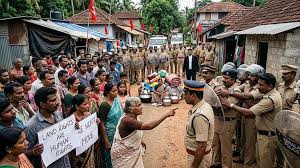
Massive protests erupt in a Dalit settlement in Ernakulam, Kerala, over a land dispute. FIR filed against 50 people for obstructing police action. A Dalit settlement in Kerala’s Ernakulam district witnessed a massive uproar during an eviction drive. Police announced on Thursday that a case has been filed against approximately 50 identified individuals for obstructing government work during the drive. The incident occurred in the Pariyathukavu area, where a long-standing dispute has been ongoing over the ownership of a piece of land. Residents prevented the police and the accompanying Advocate Commission from carrying out the eviction proceedings. This action stems from a property dispute in which a private individual has legally established ownership of the land where these Dalit families have lived for many years. An officer from the Thadiyittaparambu police station stated that a case has been registered under relevant provisions of the Indian Penal Code (IPC) for obstructing a public servant from performing his official duty, taking a tough stand against the protesters. Amid this tense situation, political activity has also intensified. The CPI(M) has formed a special protection committee to ensure the safety of families in the area from any potential police action. Subject to a visit to the affected area, senior CPI(M) leader P. Rajeev spoke to reporters. He clarified that the previous LDF government intended to grant land rights to the residents in accordance with the rules after the survey work was completed. Rajeev stated that the government in the state changed before the survey process was completed, leading to the administration’s use of force, which is highly condemnable. He stated that a protection committee has been formed to address this situation. The CPI(M) leader also claimed that while they could have protected these people without a committee, the situation has now changed and only a public protest can provide security to these families. He urged the state government to take the necessary steps to complete the survey process as soon as possible. He also demanded that no other punitive action be taken regarding the disputed land until the survey is completed. This eviction drive in Pariyathukavu has been a contentious issue for several years. According to reports, the administration has made several attempts to clear the area in the past, but all were unsuccessful. On Wednesday, the dispute turned violent when protesters began threatening suicide. They completely blocked the path of the heavily deployed police personnel equipped with anti-riot equipment. Given the presence of women and children at the protest, State Home Minister Ramesh Chennithala immediately intervened. To prevent the situation from getting out of control, he ordered the police to withdraw from the area. Meanwhile, the affected Dalit families have repeatedly approached the courts against their eviction. However, their appeals have been dismissed each time. These families have consistently claimed that the land they live on is government property and not owned by any private individual. On the other hand, the Supreme Court has upheld the ownership rights of the private individual in the legal battle. In light of this decision, the Kerala High Court directed the enforcement of the private individual’s rights, forcing the administration to launch the eviction drive. Rajan Chaudhary Courtesy: Hindi News
Karnataka: Caste-Based Insults at Madeeshwara Temple Festival; Shobha Yatra Denied Entry to Dalit Settlement Despite Receiving Donations!
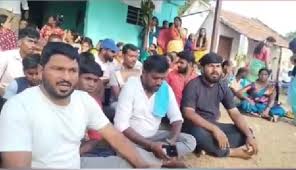
The Dalit community alleges that they face such disrespectful treatment every year. The procession never enters their settlement, and if they do visit the temple, they are forced to stand at a distance. Members of the Dalit community in Machalli, a remote village in Krishnaraja Nagar taluk of Mysuru district, have alleged severe untouchability and caste discrimination surrounding the Madeeshwara Temple and the deity’s Shobha Yatra. According to local residents, it is a long-standing tradition in the village that during the annual festival of Lord Madeeshwara, the bull procession is taken to every home and every settlement. This tradition was not followed in the Dalit settlement during last week’s festival. The Dalit community alleges that they are forced to perform puja in a humiliating and unequal manner. As soon as their festival is over, the idol is immediately removed and taken away, depriving them of the opportunity to worship the deity. Residents of the Dalit neighborhood reported waiting for two to three hours, but no arrangements were made for their worship. The temple doors were closed, and people left. One member said, “This is happening even in the 21st century, which is very sad.” The community alleges that this happens every year. The procession never comes to their settlement, and if they go to the temple, they are forced to stand at a distance. According to the Dalit community, this time the village elders had agreed in a public meeting and promised that full arrangements would be made for the worship in the Dalit settlement as well. Trusting this promise, every Dalit family contributed thousands of rupees for the worship. But when the deity’s procession reached the Dalit settlement, the situation suddenly changed. Within just two minutes, the idol was snatched away, and the worship was not performed. Following this, some elders and young people of the village gathered and openly declared, “They only have 15 houses, what can they do?” Members of the Dalit community allege that they were subjected to severe abuse, death threats, and other atrocities. Dalit residents also stated that they pay taxes and volunteer for public and religious events in the village, yet they are not allowed to enter the temple’s sanctum sanctorum, touch the deity, or worship on an equal footing. The village is home to approximately 60 Dalit families, most of whom are agricultural laborers. Following this incident, members of the Dalit community have protested in the village, demanding immediate action from the district administration and equal rights in the temple. They have also accused the Social Welfare Department and local authorities of failing to reach the village despite repeated complaints. Geetha Sunil Pillai Courtesy: Hindu News
She Trained With a Secret & Fought Closed Gates To Become India’s First Trans Woman Cricket Umpire
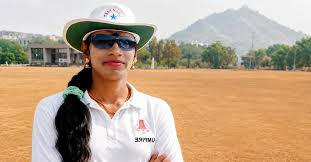
Rithika Sri from Salem, Tamil Nadu, once feared losing her cricket dream if she revealed her truth. Today, she is India’s first trans woman cricket umpire, officiating matches and aiming for the BCCI panel. Rithika Sri’s journey to the cricket field began with a late-night IPL broadcast and a dream she initially kept hidden. Photograph: (AI-assisted image) There is a particular kind of courage required to stand at the crease in a white coat, arm raised, the eyes of twenty-two players on you, knowing that every call you make will be scrutinised, and that getting there at all was in itself a battle that had nothing to do with cricket. That is the world Rithika Sri inhabits every time she walks onto a ground in Tamil Nadu’s Salem, Namakkal, or Coimbatore. At 31, she has become India’s first trans woman cricket umpire, officiating league fixtures and association matches across the State. But before the white coat, before the “ma’am” from players who now address her with ease, there was a gate — and a security guard who would not let her through. An unlikely beginning Rithika’s love affair with cricket umpiring was born not in Tamil Nadu but in Punjab. In 2019, she was working at a BPO company in Mohali under her birth name, Muthuraj, when she found herself riveted to the IPL on television. The athleticism of the players was one thing; what arrested her attention was the stillness of the umpires — their authority, their calm. She went online, researched the pathway, and discovered a clear ladder: district panel, state panel, BCCI panel. Then the pandemic came. Job opportunities dried up for outsiders in Punjab, and she returned to her hometown of Salem. But what looked like a setback became a turning point. A mentor who said ‘Yes’ Back in Salem, Rithika tracked down Jayaraman, the chairman of the Salem District Association’s umpire committee, through an online search and he offered her a chance. For months, she trained, made errors, felt discouraged, and considered giving up. She also carried a secret — her gender identity — terrified that revealing it would cost her the only professional dream she had allowed herself. It was Jayaraman’s wife who eventually broke the silence for her, after observing Rithika over time. The umpire committee chairman’s response, when he learned the truth, was decisive. If the government extended opportunities to the third gender, he said, why wouldn’t he? Cricket He encouraged her to build her qualifications first, transition when she felt ready, and return to the field. It was the kind of acceptance that changes a life. In 2024, Rithika underwent gender-affirming surgery in Coimbatore and, through Jayaraman’s reference, was introduced to Ramesh, the umpire committee chairman of the Coimbatore District Cricket Association, who welcomed her immediately. ‘Cricketers call me ma’am’ Her debut as a trans woman umpire was not without turbulence. At one ground in Coimbatore, security personnel stopped her at the entrance. She had official credentials and told them she was there to officiate, but they turned her away regardless. It was a moment that could have ended everything. Instead, it hardened her resolve. The Coimbatore Cricket Association intervened, ensured she had access, and made clear that she was to be treated with the same respect as any umpire on their panel. The players caught up quickly. “Cricketers call me ‘ma’am’,” Rithika said. “I am happy and grateful.” A door opened by policy Rithika’s historic achievement was also enabled by a consequential institutional reform. The Tamil Nadu Cricket Association introduced an “Other” gender category in its State Panel Umpire examination application — an administrative change that may seem minor on paper but carried enormous weight in practice. Without that third box to tick, the formal pathway would have remained closed. Rithika, who holds a diploma in mechanical engineering and was raised by a single mother alongside six siblings, now officiates matches organised by local clubs, corporates, and district associations. On the field, she is known for calm, firm decision-making — the very qualities that first drew her to the white coat. Eyes on the horizon Her ambitions are clear and unambiguous: state-level recognition, a place on the BCCI panel, and eventually, the IPL and international stages. The road is long, but Rithika Sri has already demonstrated that the longest distances can be covered one decision and one step at a time, whether it is a raised finger on the field, or the daily but important act of showing up as exactly who you are. By Avantika Krishna Edited By Khushi Arora Courtesy : The Better India Note: This news is originally published on https:/thebetterindia.com/bha and is used purely for non-profit/non-commercial purposes, especially human rights
‘Blood and animal flesh on the body…’ Delhi woman gang-raped and forced to convert; 4 accused arrested

A case has come to light in Delhi in which a Dalit woman was gang-raped. Blood and flesh were also thrown at her. Four people have been arrested in this case. New Delhi: A shocking incident has come to light in the national capital. A 23-year-old Dalit woman was abducted by some men in Delhi’s Batla House area. The woman alleges that she was gang-raped and brutally tortured. According to the woman, the men also tried to force her to convert. The woman complained that in 2021, she was in contact with a man named Sahil through social media. She later learned his name was Faheem. The accused told her that he was from a wealthy Hindu family and wanted to marry her. Gang rape and pornographic video made: The woman stated that in 2022, the accused called her to Batla House, where other people were present. She was gang raped there. Furthermore, he, along with his friends, made a video of her and blackmailed her. The woman was then taken to Meerut, where she alleged she was sexually assaulted again. The woman described her ordeal: The woman stated that Faheem and his relatives were involved in illegal arms dealing. To intimidate her, Faheem would pour blood on her. Furthermore, he would throw animal meat on her. She also alleged that a man named Tasleem Maulvi tortured her afterward. Four accused arrested: Southeast Delhi Police registered an FIR in the gang rape case and have arrested four accused. Police stated that the woman was first gang raped in the Batla House area. An FIR was registered in this regard at the Jamia Nagar police station. Four people have been arrested in connection with the gang rape of the woman. It should be noted that in 2025, Gurugram police arrested Faheem and confiscated his phone. Edited By: Shilpa Srivastava Courtesy: Hindi News
Casteist language in census forms! NCSC issues notice to Punjab government on complaint

The main issue concerns words included in Punjab’s official list of Scheduled Castes, which are associated with the Valmiki community of sanitation workers. These words have been in use for a long time, but the community now considers them derogatory. New Delhi/Chandigarh – The National Commission for Scheduled Castes (NCSC) has taken cognizance of a complaint regarding the use of allegedly casteist words in the official list of Scheduled Castes being used in the upcoming census. The Commission has directed the Punjab Census Director and the Principal Secretary of the Social Justice and Empowerment Department to submit a detailed action taken report (ATR) in this matter within 15 days. The Commission’s recent notice states that it has taken cognizance of a complaint submitted on May 6 by Hardeep Singh Gill, Vice Chairman of the National Commission for Safai Karamcharis. The complaint describes certain words used in both English and Punjabi in the Punjab government’s Scheduled Caste list (specifically Entry No. 2 relating to the Valmiki community) as casteist and derogatory. The Commission has informed both officials that if a response is not received within the stipulated time, it may, invoking the powers of a civil court under Article 338 of the Constitution, issue summons to the concerned officials to appear before it either personally or through a representative. The main issue concerns the inclusion of words associated with the Safai Karamchari community (Valmiki/Balmiki) in the official list of Scheduled Castes in Punjab. These words have been in use for a long time, but the community now considers them derogatory. These words are included in the proforma being used during the preparation of the 2027 Census. Census Operations Director Navjot Khosa has clarified that this list is not new. It has been in existence for decades, and the same proforma was used in the 2011 Census. It is used only for caste enumeration, not to insult anyone. The National Commission for Scheduled Castes has taken this complaint seriously and initiated an investigation. Community representatives have demanded the removal of these words and action under relevant provisions. Geetha Sunil Pillai Courtesy: Hindi News
₹730.51 crore diverted from Scheduled Caste Welfare Fund in Maharashtra to ‘Chief Minister Majhi Ladki Behen Yojana’, activists say “This is caste-based financial violence.”
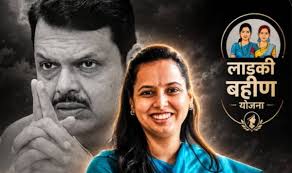
Allegations are that funds reserved for SC/STs are routinely being diverted to other projects to suit political expediency. Mumbai – The Maharashtra Government’s Social Justice and Special Assistance Department issued a government order on May 20th approving the use of funds allocated under the Scheduled Caste (SC) Component Scheme for the Chief Minister Majhi Ladki Behen Yojana. Under this decision, a provision of ₹3000 crore has been made for the financial year 2026-27, of which a total of ₹730.51 crore (₹365.2550 crore each month) is being distributed to the Women and Child Development Department for March 2026 and April 2026. The order clearly states that, in accordance with the Finance Department’s circular dated 09.04.2026, the framework for fund distribution for the financial year 2026-27 has been prepared and submitted. Accordingly, the Finance Department has obtained approval for this. Under this budget head, for the “Chief Minister Majhi Ladki Behen” Scheme (2235-D767), an amount of ₹365.2550 crore for the month of March 2026 and ₹365.2550 crore for the month of April 2026 for female beneficiaries, totaling ₹730.51 billion, has been approved by the government for distribution through the budgetary fund distribution system to the Secretary, Department of Women and Child Development, as the administrative head of the department. This move was criticized on Twitter and other social media platforms. Critics and opposition leaders termed this move as a misuse of funds meant for the welfare of a particular class. Human rights advocate Priyadarshi Telang reacted sharply to the issue, stating that funds reserved for SC/STs, from the ministry to the district collectorate level, are routinely being diverted to other projects tailored to suit political expediency. He alleged that Dalit and tribal settlements are deliberately being deprived of amenities such as roads, drainage, drinking water, schools, and basic sanitation. Telang said, “Using crores of rupees of SC/ST welfare funds to build roads for influential institutions or to fill gaps in other departments is not merely an administrative lapse but a systematic attack on constitutional justice.” He termed the siphoning of ₹730.51 crore from the SC/ST component fund for the Ladki Behen Yojana as “blatant opportunism” and described it as caste-based fiscal violence. He demanded that the Maharashtra government enact a stringent law to prevent such diversion, providing for jail terms for erring officials and politicians. Telang asked whether those who appeal to Dalit votes in the name of social justice, especially the Maharashtra Congress, will demand the restoration of rights for SC/ST communities and oppose the fund diversion? Activist Rajendra Patode called it a loot. In his post on x, he wrote, “The ₹730.51 billion allocated for the ‘Ladki Behen Yojana’ for Scheduled Castes was diverted today! Through reclassification, reserving ‘open categories’ for ‘reserved categories’ without making appointments, the Chief Minister’s pilgrimages, the division of the Scheduled Castes and Tribes Commission, caste and religion registration in the census, and voter re-verification programs, the state government has once again looted the ₹730.51 billion reserved funds for education, scholarships, fellowships, the ‘Swadhar’ scheme, employment, health, water supply, housing, and development works for Scheduled Castes and Tribes.” In February, Maharashtra Social Justice Minister Sanjay Shirsat expressed dissatisfaction with his own government’s policies, reiterating that his department’s funds were being used for schemes like “Ladki Behen,” which was unacceptable. He also stated that due to the financial burden, the government would not increase the promised amount of ₹1,500 under the “Ladki Behen” scheme to ₹2,100. Geetha Sunil Pillai Courtesy: Hindi News
Abhijeet Dipke, founder of the “Cockroach Janata Party,” hails from the Dalit community and boasts 14.5 million followers on Instagram. X accounts banned in India.
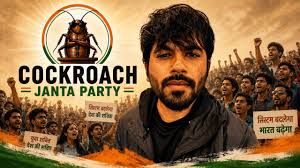
What began as a satirical movement against the CJI’s controversial remarks has now become the country’s largest digital youth movement; after surpassing the world’s largest party, the BJP, in social media following, the government has resorted to digital censorship over its “legitimate demand.” New Delhi: Rarely in India’s judicial and political history has a single verbal comment morphed into such a widespread and explosive mass movement as is currently being witnessed. The “Cockroach Janata Party” (CJP), which emerged in protest against Supreme Court Chief Justice Surya Kant’s reference to youth as “cockroaches” during a hearing on a fake degrees case, is no longer merely a social media trend. This movement has seen two major and historic turning points that have shaken the country’s political analysts and the establishment. The first turning point is that Abhijeet Dipke, the movement’s architect and founder, who is pursuing a Masters in Public Relations from Boston University, has openly revealed his social background and clarified that he comes from the Dalit community. Second, within just four days, the movement has shattered all records of popularity on social media, leading to the complete banning of its official X (formerly Twitter) handle in India as a retaliatory measure. “I am a Dalit and this is the voice of the oppressed against the system.” The social background of CJP founder Abhijeet Dipke, who initially presented himself as merely a “lazy and unemployed” youth, gives the entire movement a new ideological edge. Abhijeet’s political understanding and his Dalit discourse are nothing new. In a Twitter post made on June 6, 2024, at 1:04 pm, Abhijeet openly discussed his identity and made candid comments on Dalit politics in Maharashtra. Criticizing Prakash Ambedkar’s politics in the context of the India Alliance after the Lok Sabha elections, Abhijeet wrote: “Prakash Ambedkar’s arrogance cost him dearly. Coming from a Dalit community, I personally witnessed how unhappy Dalits in Maharashtra were with his refusal to join the India Alliance. When Dalits rallied behind the India Alliance, Prakash Ambedkar chose the opposite path. Although I personally don’t see him as a BJP agent, people in the community were convinced that he was helping the BJP by not joining the India Alliance. You can’t demand 16 MP seats when you don’t have a single MLA in the state.” This post by Abhijeet makes it clear that he is not just a ‘chronically online’ youth, but has a deep understanding of the ground political reality and the pulse of the Bahujan Samaj. Analysts believe that the Chief Justice’s remarks are being seen not just as “anti-youth” but as a reflection of the system’s profound insensitivity towards the “historically exploited and marginalized.” When those at the helm of power call the youth “cockroaches,” it reflects a feudal and casteist mindset that has for centuries treated the oppressed as vermin. Over 14.5 million followers in just 4 days: Surpasses the BJP’s digital empire The grassroots and digital strength of this movement can be gauged from the fact that the Cockroach Janata Party has established a record of popularity on the social media platform Instagram, a level that traditional political parties take decades to achieve. According to the latest media reports, the number of followers on the CJP’s Instagram handle has incredibly increased from 10.5 million to over 14.5 million (14.5 million). With this record-breaking number, the CJP has surpassed even the Bharatiya Janata Party (BJP), the world’s largest political party, in terms of Instagram following. Currently, the BJP’s official Instagram handle has approximately 8.7 million followers, while the CJP has surpassed them by several hundred thousand. According to digital experts, Instagram’s entire system operates on an algorithm. The short videos posted by the CJP—which include sharp satire, youth anger, demands for employment, and direct criticism of systemic flaws—received millions of views immediately. Young people connected directly with this content. The number of followers reached 5.5 million in just 48 hours, 6.2 million in three days, and surpassed 14.5 million on the fourth day. Additionally, more than 600,000 young people have formally registered for membership on the CJP website so far. Is the government afraid of its growing popularity? The CJP’s ‘X’ account has been suspended in India. As the Cockroach Janata Party’s digital reach began to challenge mainstream politics, the system’s repressive nature also became apparent. CJP founder Abhijeet Dipke confirmed that the Cockroach Janata Party’s official Twitter account, X, has been completely banned in India in response to a “legal demand” from the Indian government. Prior to the ban, CJP’s X handle had amassed over 200,000 followers in a short period of time. X typically bans accounts when it receives a “legitimate and reasonable request” from an authorized government entity. Whenever a movement or voice begins to stray from the control of the government, attempts are made to suppress it. However, despite the ban on the X account, CJP’s Instagram account remains fully active with 14.5 million followers. Reacting to this digital censorship, young people have called it a “sign of fear.” In a statement released on its website, the CJP clarified: “We were fully aware that there would be attempts to eliminate us and portray us as anti-social elements. But we want to make it clear that the CJP firmly believes in the Constitution of India and will always work to protect its values.” Constitutional Dignity and the 5-Point Agenda: The Serious Message Behind the Satire Political parties should not mistake the CJP for a mere ‘funny trend,’ as the five demands included in its manifesto directly attack the biggest flaws in the country’s democratic system: Impartiality of the Judiciary: No Chief Justice will hold a Rajya Sabha seat or any other government post after retirement. Protection of Voting Rights: If any valid vote is deleted in any state, the Chief Election Commissioner will be held responsible and arrested under the UAPA. True Women’s Reservation: 50% direct reservation will be provided to women without increasing parliamentary seats, and 50% of cabinet positions will also be reserved
Who is Veera Pasi, the “unsung hero” of the 1857 revolution, whose statue Rahul Gandhi unveiled in Rae Bareli?
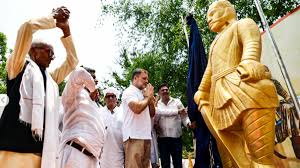
Rahul Gandhi unveils Veera Pasi’s statue in Rae Bareli: Learn about the glorious history of the unsung Dalit hero of 1857 and the full dynamics of Dalit vote bank politics ahead of the UP Assembly elections. Uttar Pradesh: Rahul Gandhi, Leader of the Opposition in the Lok Sabha, on Wednesday unveiled the statue of Veera Pasi, the “unsung hero” who fought the British during the 1857 rebellion, in Rae Bareli. This is not the first attempt by political parties in Uttar Pradesh to woo the Pasi community through their legends. However, Gandhi’s move in his constituency is considered significant ahead of next year’s UP Assembly elections. On the same day, he also addressed a “Bahujan Swabhiman Sabha” in memory of Veera Pasi. At the event, Gandhi said that while we remember Veera Pasi and Dr. Ambedkar, their ideology is not being properly defended, as the Constitution is being constantly attacked before our eyes. Who was Veera Pasi? In the 19th century, Veera Pasi was the most trusted companion and commander of Rana Beni Madhav Bakhsh Singh, the ruler of the Shankarpur estate in modern-day Rae Bareli. This Dalit warrior, belonging to the Pasi caste, was born on November 11, 1835, into a poor family in Lodhwari village, Rae Bareli district. After losing his parents in his childhood, he went to live with his sister. In the local dialect, a brother living with his sister’s family was called “Veerna,” which later changed to “Veera.” Impressed by his extraordinary physical strength, Singh recruited him into his army. With his loyalty and bravery, he soon became one of his most trusted associates. According to local folklore, when Singh was captured by the British during the 1857 rebellion, Pasi displayed indomitable courage and rescued him safely from prison. The British government, in a panic, announced a hefty reward of 50,000 rupees for Pasi’s capture or information about his whereabouts. Although Veera Pasi’s name is not prominently recorded in history books, his legacy lives on in Rae Bareli and its surrounding areas. The Pasi community lives in large numbers in these areas, and their oral traditions have preserved this hero. Folklore also says that Pasi attained martyrdom while protecting Singh from the British army. Dalit History and Politics in Uttar Pradesh In recent years, political parties in Uttar Pradesh have begun to prominently commemorate Dalit icons of the past and their contributions to the freedom struggle. A clear example of this was provided by Samajwadi Party (SP) MP from Faizabad (Ayodhya) Awadhesh Prasad, while taking oath in the Lok Sabha after the 2024 general elections. During his oath, he specifically mentioned two prominent figures from the Pasi (Dalit) community: “Veerangana” Uda Devi and “Maharaja” Bijli Pasi. Uda Devi was part of the royal guard of Begum Hazrat Mahal of Awadh and actively participated in the 1857 rebellion. She is credited with mobilizing the common people to take up arms against the British. In recognition of this historical contribution, the Samajwadi Party celebrated Uda Devi’s death anniversary on a grand scale at its party headquarters in November 2022. The Bijli Pasis, who ruled parts of Uttar Pradesh during the medieval period, are considered one of the most prominent Dalit symbols. The Yogi Adityanath-led BJP government in Uttar Pradesh has announced plans to develop Bijli Pasi’s fort in Lucknow as a tourist destination. In December 2025, Prime Minister Narendra Modi also paid a heartfelt tribute to Maharaja Bijli Pasi. Chief Minister Adityanath echoed the Prime Minister’s sentiments, describing him as a brave warrior from Lucknow who openly challenged foreign rule to protect India’s eternal traditions. Dalit leaders and academics in Uttar Pradesh clearly believe that historians have largely “ignored” the community’s great men. Ajay Kumar, Assistant Professor in the Department of Sociology at Babasaheb Bhimrao Ambedkar University, says that mainstream history writing has often neglected the contributions of Dalits, tribals, and other marginalized communities. According to Professor Kumar, these communities have long strived to reclaim their historical and cultural heritage in response to this neglect. This process is not limited to rediscovering the past, but is also a powerful means of reviving identity, self-respect, and political consciousness. He further explained that since these communities traditionally had very few written records, their history was passed down from generation to generation through folklore, folk songs, memories, and oral traditions. These oral traditions became the most important carriers of their social experiences, struggles, and collective consciousness. SP leader Manoj Paswan, who belongs to the Pasi community, also openly supported Professor Kumar’s views. He said that it was Kanshi Ram who brought Dalit heroes to the forefront and appealed to the community to learn to be proud of their history rather than be ashamed of it. Paswan believes that Dalit leaders played a vital role in the country’s freedom struggle. Despite this, unlike upper caste heroes like Mangal Pandey, they did not receive the place they deserved in history books, and now there is a dire need to correct this historical mistake. The Pasi Community and Uttar Pradesh’s Dalit Vote Bank The Pasi community constitutes approximately 7 percent of the state’s total Scheduled Caste population. This figure makes them the second largest and most influential group among Dalits in Uttar Pradesh, after the Jatavs. Although they also have a significant presence in other Indian states, their largest population resides in Uttar Pradesh. When the Samajwadi Party (SP) performed remarkably well in the 2024 Lok Sabha elections, winning 37 seats, the party benefited significantly from this community. Five Pasi candidates fielded by the SP won, while only three Pasi candidates from the BJP managed to win their seats. The Mayawati-led Bahujan Samaj Party (BSP), once a strong force in Uttar Pradesh politics, is now steadily losing its support base. The BSP’s total vote share in the 2017 assembly elections was 22.23 percent, which fell to 12.88 percent in the elections held exactly five years later. Interestingly, this remaining vote share is roughly proportional to the Jatav-Ravidasi Dalit population, which has been