
In Gujarat’s Sabarkantha, Violence, Discrimination and Social Boycott are Pushing Dalit Families to Flee

Representatives of the community, who submitted a memorandum, alleged that people are being mentally, physically and economically harassed, leaving them with no option but to consider leaving their native village. In Gujarat’s Sabarkantha, Violence, Discrimination and Social Boycott are Pushing Dalit Families to Flee Dalit villagers from Rupal and Prantij gather at the Collector’s office at the district office in Himmatnagar. Photo: Dhiraj Leua New Delhi: An exodus may be imminent in some Gujarat villages, where members of the Dalit community have alleged they are increasingly facing harassment, intimidation and violence at the hands of upper-caste communities and OBC communities. “It will happen, if not today, then very soon,” says Somabhai, a resident of Rupal village in Gujarat’s Sabarkantha district, alleging that the upper-caste communities do not wish to see their community prosper. On May 18, members of the Dalit community from villages in Sabarkantha district submitted a memorandum to the Resident Additional Collector at the district office in Himmatnagar demanding immediate intervention and protection from such atrocities. In it, Dalit villagers from Rupal village have alleged that despite repeated requests and appeals to the local administration, they continue to face harassment at several levels. They feel that the administration has failed to provide justice and a sense of security to the community, which now finds itself facing an effective social boycott within the village. Representatives of the community alleged that people are being mentally, physically and economically harassed, leaving them with no option but to consider leaving their native village. In the memorandum, the community clearly writes that if a lasting resolution is not reached within the next seven days, families from the Scheduled Caste community may be forced to migrate. Dalit leaders submit a memorandum to Krishna A. Vaghela, Resident Additional Collector, at the district office in Himmatnagar seeking protection from atrocities. Photo: Dhiraj Leua The allegations emerging from Rupal village are part of a wider and deeply entrenched pattern of caste violence and discrimination in Gujarat, a state often projected as a ‘model of economic development’, but where Dalit communities continue to report systemic exclusion, intimidation and violence. According to official data, thousands of cases of crimes against Scheduled Castes have been registered in Gujarat over the past decade, ranging from assault and social boycott to rape and murder. While the National Crime Records Bureau (NCRB) data cited in the Gujarat assembly showed that more than 9,000 cases of crimes against Dalits were reported in the state between 2016 and 2022 alone, rights groups and Dalit activists argue that the actual number is likely much higher due to underreporting, pressure on victims to “settle” disputes locally, and fear of retaliation from dominant caste groups. Dhiraj Leua, a teacher and activist from Rupal village, believes that the police and administration have no will to protect them. “Does the government not have mechanisms to ensure our safety? Thakors (an upper-caste community) don’t let us build good homes, they don’t let us sport moustaches, they don’t let us ride motorcycles or cars. Why can’t we be allowed to live?” he asks, speaking to The Wire. Like Leua, others from his community have become accustomed to anti-Dalit slurs, caste based abuse which have become a daily affair. However, what made them write to the Resident Additional Collector, was a recent incident where members of the Thakor community tried to run a Dalit man over with a tractor. Bystanders filmed this, preventing the Thakors from crushing the Dalit man. “After that, we couldn’t take it anymore. We cannot die everyday just because they think we are lesser humans than them,” Leua says. He notes that in several instances when members of the Scheduled Caste community approach police stations to file FIRs against their oppressors, they are instead booked in counter cases themselves. “First we are harassed and when we go to claim our rights, we are slapped with cross FIRs with POCSO Act cases, attempt to murder, attempt to rape to break our spirit” he said. Caste violence in Gujarat has drawn national attention several times in the past, from the flogging of Dalit men by cow vigilantes in Una, 2016, to recurring reports of segregation in villages, denial of access to temples, separate utensils in schools and economic boycotts targeting Dalit families. However, according to data tabled in Rajya Sabha, the conviction rate in cases of atrocities against Scheduled Castes between 2018 and 2021 was a mere 3.065 %, much lower than the national average. According to data reported in response to a query under the Right to Information (RTI) Act, acts of discrimination in urban Gujarat are extremely high as well. Ahmedabad city reported 189 cases – the highest number in the state – of atrocities against SC people in 2022. The state recorded a total of 1,425 such cases. From 2018 to 2021, only 32 cases out of the 5,369 registered cases were proved against the accused. In at least 1,012 registered cases, the accused were acquitted, even when the charges were as serious as murder and rape. Researchers studying caste violence have also linked such attacks to assertions of social and economic mobility among Dalit communities, arguing that upward mobility often triggers backlash from dominant caste groups seeking to preserve traditional hierarchies. In many villages across Gujarat, activists say the threat of social ostracisation, denial of work, and violence continues to function as a mechanism to discipline Dalit assertion and maintain caste control. In nearby Prantij town, too, the Scheduled Caste community is mustering the courage to call out their oppressors. Gujarat MLA from Vadgam and Working President, Gujarat Pradesh Congress Committee, Jignesh Mevani recently took to Instagram to highlight the issue, where he said that the Dalits in Prantij felt below pests and claimed to be treated in an extremely inhuman manner. Mevani, who is also convener of Rashtriya Dalit Adhikar Manch, said that the police and administration just register cases for formality and then forget about the issue and this leaves Dalits in a very
Brutality in Delhi: Dalit girl trapped by posing as Hindu, bathed in blood, threatened with pieces of meat, married at gunpoint

Delhi Crime News: A heartbreaking incident has come to light from Delhi’s Jamia Nagar area. A Dalit girl was lured by posing as Hindu on social media. She was then held hostage and gang-raped. The accused subjected the girl to horrific atrocities to force her to convert. Blood and pieces of flesh were thrown at her to frighten her. Police have registered an FIR in this case and arrested four accused. New Delhi: A horrific and chilling incident has come to light from the Jamia Nagar area of South East district. A 23-year-old Dalit girl was held hostage and gang-raped, but she was also forced to convert. The mastermind behind this entire conspiracy is an illegal arms supplier named Faheem. He lured the girl by posing as a Hindu on social media. To intimidate and demoralize the victim, the accused would throw animal blood and pieces of meat at her. Serious questions have also been raised about the police’s approach in this case. Initially, the police were reluctant to register a case. Now, Delhi Police has filed an FIR and arrested four people. How did Faheem, posing as “Sahil” on Instagram, weave a web of lies? This entire story began on social media in 2021. The accused, Faheem, concealed his identity and created a fake profile on Instagram under the name “Sahil.” He described himself as a boy from a very wealthy Hindu family. The victim fell for his deception, and they began communicating. The accused even promised to marry her. In 2022, the accused invited the girl to meet him in Delhi’s Batla House area. Upon arriving, the girl discovered that Sahil was actually Faheem. Faheem and his associates then held the girl hostage and gang-raped her. The victim’s descriptions in her complaint are chilling. According to the victim, Faheem and his relatives are involved in illegal arms trafficking. The accused subjected the girl to mental and physical abuse. Animal blood was smeared all over her body to frighten her. Furthermore, pieces of meat were thrown at her to completely terrify her. Following this, a cleric named Tasleem tortured the girl and forced her to convert to Islam. How were they being targeted by threatening to kill their innocent daughter? The brutality of the accused did not stop there. After gangraping her in Batla House, the accused also made an objectionable video of the victim. She was continuously blackmailed using this video. The accused also took her from Delhi to Meerut and gangraped her there as well. When the victim tried to resist, they threatened to kill her young daughter. For the safety of her daughter, the victim endured this hell for two years, from 2022 to 2024. How did a raid by the Gurugram police change the entire case? The turning point in this case came in 2025. The Gurugram police arrested the main accused, Faheem, in another case. The police confiscated his mobile phone, which contained incriminating videos and photos of the victim. When the victim was assured that the videos had been deleted from the accused’s possession and could not be leaked, she mustered the courage to approach the police. She then contacted the Delhi Police. Which five people are named in the FIR, and what action did the police take? According to South East Delhi DCP Hemant Tiwari, an FIR was registered in this case at the Jamia Nagar police station on May 14, 2026. The victim has named five main individuals in her complaint. The FIR names Faheem, Khurshid, Zaid, Azim, Taleem, and Nafees. Police have taken action and arrested four of the accused so far. Another accused is currently in Meerut jail in connection with a separate case. Police are preparing to bring him to Delhi on a production warrant from the court. Edited by: Deepak Verma About the Author Deepak Verma, Deputy News Editor, Works as Deputy News Editor in the digital newsroom of News18 Hindi. He has over a decade of experience in journalism. Courtesy: Hindi News
TM Mega Report | Will the system learn from Jeetu Munda’s story? RBI promises the banking system will be sensitive to the needs of the underprivileged!
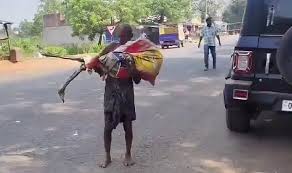
Official response comes after Rajya Sabha MP Sasmit Patra’s meeting with the RBI Governor | Right to Food Campaign’s fact-finding report also raises serious questions New Delhi – The action taken by Jeetu Munda, a poor tribal elder from Diyanali village in Odisha’s Keonjhar district, on April 27th shocked the entire nation. He dug up the grave of his deceased sister, Kalra Munda, packed her bones in a jute sack, and walked barefoot for 2-3 kilometers in the scorching afternoon to reach the Odisha Gramin Bank, Malliposhi branch, to provide proof of her death to bank employees and withdraw ₹19,600 from her account. This money was deposited by selling his two bullocks. This heartbreaking incident has even shocked the Reserve Bank of India (RBI). Rajya Sabha MP and Biju Janata Dal spokesperson Sasmit Patra recently met with the RBI Governor in Mumbai to formally raise the issue and submitted a detailed report on May 7. In response, the RBI wrote in a letter on May 15, stating that the “tragic incident” involving Jeetu Munda has been taken seriously and that suggestions for improving the banking system are being “actively considered.” Signed by Sonali Sen Gupta on behalf of the RBI, the letter stated that “appropriate measures will be taken” to provide better banking services to underprivileged and vulnerable citizens. “For us, a full meal is like a guest, hunger is like a member of the family.” The story of Jeetu Munda and his sister Kalra Munda is not just an incident; it is a story of the failure of the government system. The Right to Food Campaign’s fact-finding team visited Dianali village on May 8, and the facts revealed are shocking. Kalra Munda was a widow and lived with her brother, Jeetu. They had no agricultural land or a permanent livelihood. Both survived on daily wages and sometimes begging. In Jeetu Munda’s words, “Filling the stomach is like having a guest, while hunger has become a member of the family.” In such circumstances, the ₹19,600 deposited in Kalra’s bank account was their only support. In October-November 2025, when Kalra’s health began to deteriorate, Jeetu repeatedly went to the bank. Each time, he was turned away, saying that he was not an account holder and could not withdraw the money. The bank suggested that Kalra come and withdraw the money herself, but by then, Kalra was bedridden and unable to get up on her own. Jeetu tried to arrange a small vehicle to take her to the bank, but no one agreed. On April 27, Jeetu Munda took what is perhaps the most difficult step a person can take. He dug up his sister’s grave, placed her bones in a jute sack, and carried them over his shoulders, barefoot, to the bank in the hot afternoon. According to documentary evidence collected by the Right to Food Campaign’s fact-finding team, Kalra Munda was entitled to two major social security schemes: The Antyodaya Anna Yojana (AAY), which falls under the National Food Security Act (NFSA). According to her ration card, her last ration distribution was on December 2, 2025, when she received a quota of 105 kilograms of rice for the months of January, February, and March 2026. Widow pension at the rate of ₹1,000 per month under the State Social Security Scheme. According to her pension passbook, she received her last monthly pension on January 17, 2026. Furthermore, Kalra and Jitu lived in a house that was allotted to Kalra Munda under the Rural Housing Scheme in 2021-22. In contrast, Jitu Munda had neither a ration card nor an old-age pension before the incident, although he was eligible for both. Therefore, the brother and sister relied almost entirely on Kalra’s ration quota and pension for their livelihood. Since these resources were never enough to feed them, they were sometimes forced to beg. Sister’s death certificate was not issued even after three months, but it was issued within 48 hours of the incident. As per the rules, the standard procedure for issuing a death certificate should be completed within seven days. After a person’s death, the ASHA worker follows the following process: The ASHA worker meets the family of the deceased and collects the Aadhaar card of the deceased and the Aadhaar card of the guardian/family member. These documents are submitted to the Sub-Center. The Sub-Center verifies the documents and then forwards them to the Primary Health Center (PHC)/Community Health Center (CHC). The Primary Health Center (PHC) or Community Health Center (CHC) issues the death certificate. Kalra Munda passed away on January 26th. Everyone in the village knew about her death—the ASHA worker, the Anganwadi worker, and the Panchayat representative. Yet, for more than three months, the death certificate remained unissued. The ASHA worker submitted the documents to the sub-center, but the ANM wouldn’t process them. Every time Jitu went to the bank, he was told to bring proof of death. Then, on April 27th, Jitu Munda took the most difficult step any human being can take. He dug up his sister’s grave, placed her bones in a jute sack, and, carrying them on his shoulders, walked barefoot to the bank in the hot afternoon. He sat on the veranda for nearly two hours. When a crowd began to gather, the bank employees closed the gate. When the police arrived, they told Jeetu, “Take the bones back and walk back to the village.” The policemen left in their car, and Jeetu Munda once again walked barefoot, in the sweltering heat, carrying his sister’s bones on his shoulders. As soon as the matter reached the media, the entire machinery swung into action. On April 29th, a death certificate was issued, which could have been issued three months earlier. That same day, Jeetu’s bank account was opened, and the money from his sister’s account was transferred to it. On April 30th, he was enrolled for a ₹1,000 monthly old-age pension, and the April pension was issued that day. He also received a ration card.
UP: Dalit daughter missing from Ambedkar Nagar for a year, accused remarried, mother seeking justice hurled casteist slurs at police!
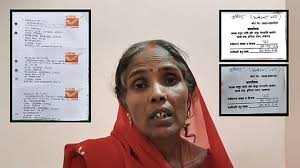
This case is from Akbarpur police station in Ambedkar Nagar. The accused poses for photos with ruling party leaders and police. After the Azad Samaj Party intervened, the FIR was filed under mild pressure, leaving the mother fearing her daughter’s murder. Ambedkar Nagar (Uttar Pradesh): Amidst claims of “zero tolerance” and “Mission Shakti” in Uttar Pradesh, a Dalit mother has been searching for her kidnapped daughter for the past year. But far from getting justice, her protectors have become predators. When this helpless mother went to the police to plead for justice, instead of justice, she received forced signatures on blank papers, threats, and vulgar casteist slurs like “Chamriya Saali.” This entire case, involving the Ahirauli and Akbarpur police stations in the Ambedkar Nagar district, presents a chilling picture of Dalits’ access to the justice system and the nexus between police, criminals, and politicians. What is the full story? Urmila (wife of Munnu), a Dalit woman, lives in Tiwaripur village under the Ahirauli police station. According to Urmila, on May 2, 2024, Ved Prakash Mishra, alias Bhola, a powerful upper caste man from the village, and his brother, Satya Prakash Mishra, alias Sattu, kidnapped her elder daughter, Jyoti. Following a complaint to Dial 100, the police pressured her into a compromise, claiming it was a “rural matter.” For safety, Urmila sent her daughter to her maternal home in Imampur village (Akbarpur police station). The mother alleges that the brazen men were so emboldened that on May 19, 2025, at around 12 noon, Ved Prakash, Satya Prakash, and their associates entered the Imampur home and forcibly abducted Jyoti in broad daylight. Since then, there has been no trace of Jyoti. Abused Dalit mother at the police station: “You Chamariya bitch… I will throw you in jail.” After her daughter’s second kidnapping, when Urmila went to the Akbarpur police station seeking justice, the police’s attitude resembled that of criminals. According to the victim’s video statement and the complaint to the Superintendent of Police, the police not only attempted to protect the accused but also forced Urmila to sign a blank paper. The extreme point was reached when policemen openly hurled casteist abuses at Urmila in the police station premises. In a complaint to the Uttar Pradesh State Women’s Commission, the victim’s mother accused the police of using them as a pretext: “You Chamariya bitch, you force girls into prostitution. I will file a false case against you and throw you in jail.” The police threatened Urmila and drove her away, saying, “You will be beaten with 50 sticks. Run away from here.” The accused’s influence: From the police inspector to the Deputy Chief Minister The reason for this police action is evident in the photos viral on social media. Satya Prakash Mishra, alias Sattu, brother of the main accused, Ved Prakash, has strong political influence. In the photos, the accused, Satya Prakash Mishra, is seen exchanging bouquets with Uttar Pradesh Deputy Chief Minister Brajesh Pathak, Minister of State Dayashankar Mishra “Dayalu,” and other senior BJP leaders. The most shocking photo is of Akbarpur’s police inspector, Srinivas Pandey, to whom the accused, Sattu Mishra, is presenting a memento on his birthday. When the inspector himself is seen standing with the kidnapping accused, how can a poor Dalit woman get justice? 60,000 forcibly deposited into her account, now the accused has married again According to the victim, the accused, with the connivance of the police, forcibly deposited 60,000 rupees into her son’s bank account to hush up the matter and promised that “the girl would return in two or three days.” However, the daughter never returned. The mother was devastated when she learned that Ved Prakash Mishra, the main accused in her daughter’s disappearance, had married another woman a few days ago (on the 14th). Now, Urmila fears that the kidnappers may have gang-raped and murdered her daughter and hidden her body somewhere. Azad Samaj Party’s Intervention and Legal Battle After administrative negligence reached its limits, the State Secretary of the Azad Samaj Party (ASP) intervened in the case. According to the ASP leader, only after she exerted pressure on police officers was a nominal FIR (FIR No. 293/2026) registered at the Akbarpur police station. The ASP leader told The Muknayak that the police deliberately omitted the serious sections of kidnapping and the SC/ST Act mentioned in the application in the FIR, so that the accused could be easily protected. The police are not arresting the accused. ASP officials have filed a caveat in the High Court to prevent the accused from obtaining an arrest stay from the High Court. A complaint has also been filed with the State Women’s Commission, the Human Rights Commission, and the SC/ST Commission in Lucknow. Questions Raised by the System This incident raises serious questions about Uttar Pradesh’s law and order model. Is the law different for criminals with political influence? Why are the police using caste-based abuse against the victim’s mother instead of searching for her Dalit daughter who has been missing for a year? What action will the department take against the police inspector, whose photographs of his cordial relationship with the accused have been publicly available? These are questions that remain unanswered. However, Urmila has only one demand: “I want my daughter. No matter what, they should bring my daughter back to me.” Rajan Chaudhary Courtesy: Hindi News
Dalit content creator’s Instagram account suspended for making a video criticizing Goa CM; find out what happened to ‘Deepak Dialogues’
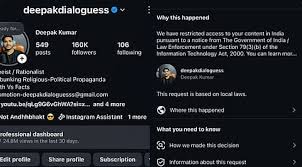
Deepak Kumar, whose account had approximately 1.6 lakh followers and a monthly reach of approximately 1.4 crore, had uploaded a video criticizing Goa Chief Minister Pramod Sawant. Case after case of action against social media accounts of content creators critical of the government is increasing. In this series, the Instagram account of Dalit rationalist content creator Deepak Kumar, also known as ‘Deepak Dialogues’, was also suspended a month ago. Deepak Kumar, whose account had approximately 1.6 lakh followers and a monthly reach of approximately 1.4 crore, had uploaded a video criticizing Goa Chief Minister Pramod Sawant. In the video, he questioned the alleged silence of the Chief Minister and the government regarding the sex scandal involving Soham Naik, son of a BJP councilor in Goa. Subsequently, his account was suspended in India without any prior notice. Deepak alleges that Meta suspended his account based on a complaint from the Goa Police. Deepak Kumar uploaded the video in March, amid widespread public outrage over allegations of a sex scandal involving Soham Naik, the son of a BJP councilor in Goa. In the video, he questioned the silence of the Goa government and Chief Minister Pramod Sawant. Deepak stated that the Epstein Files scandal was being discussed globally at the time, so he cited it as an example. He accused the Chief Minister of adopting double standards, claiming he had previously protested on public issues but remained silent on this issue. The controversy escalated after the video referred to some leaders as “useless leaders.” Speaking to Bahujan Lives Matter, Deepak stated that the word “useless” was intended as criticism, not an insult. Despite this, his Instagram account was suspended in India on April 8th without any prior notice, email, or notice. Deepak stated that Meta told the Delhi High Court that this action was taken following communication from the Goa Police. Cockroach Janata Party’s X account was also shut down in India, gaining record followers since its launch on May 16th. The Goa CID Cyber Crime notice accused the account of posting “objectionable/defamatory content” and cited sections 353 and 356 of the BNSS. The notice directed Meta to disable the account and blacklist the device and phone number to prevent the creation of new accounts. Furthermore, the Goa Crime Branch summoned Deepak to Goa for questioning under section 35(3) of the BNSS. According to Deepak, before he could appear on the notice, Goa police arrived in Delhi, where he was staying at a friend’s house for medical treatment. The police traced not only his phone but also the phones of those he was in regular contact with. Deepak stated that he could not travel 2000 kilometers immediately due to health reasons. The police left after speaking with a lawyer. Deepak also received threats following this incident. He stated that the account closure has severely affected his livelihood. Suspending his entire account instead of removing a single video is tantamount to taking away his source of income. Deepak Kumar has now filed a writ petition in the Delhi High Court challenging the account suspension and is awaiting further legal action. Geetha Sunil Pillai Courtesy: Hindi News
Dalit Politics and the Limits of Power in Tamil Nadu
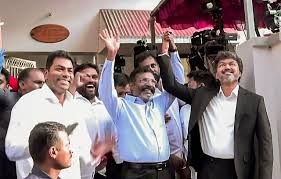
The brief buzz around Thol Thirumavalavan’s reported chief ministerial ambitions once again exposed an old reality: Dalit leaders remain constrained by caste arithmetic, political compromise and their own failures From Ambedkar to Uttar Pradesh’s Ravan, Dalit leaders have always had an uphill struggle to gain even a modicum of progress for their community. Barring Babasaheb himself, the rest have not exactly been able to achieve a broad spectrum acceptability even when they seek to voice the grievances of the marginalized as a whole. Kanshiram’s bahujan experiments did yield some limited dividends, but Mayawati’s greed and quirks have only rolled back the clock yet again. With the reascent or consolidation of the savarnas in the Modi era, the Dalits find what little political power they had achieved being steadily whittled away. Of course the same could be said of Muslims, their persecution getting progressively vicious. But this column will confine itself to Dalits, particularly of Tamil Nadu, in the context of the short-lived brouhaha over reports that Thol Thirumavalavan of the Viduthalai Chiruthaigal Katchi (VCK) was angling for Chief Ministership or at least the Deputy position, even though his party had won just two seats in the 234-member house – in a hung assembly anyone could seek to vault a great height, and his position as a Dalit leader was seen to provide some heft to his claims, when apparently the two major Dravidian parties, the DMK and the AIADMK, wanted to stall actor Vijay’s fledgling Tamilaga Vetrik Kazhagam from forming the government even though it had emerged the largest single party. Nothing of course came of it all predictably, for one, the combined strength of the Dravidian parties was nowhere near the majority required, and secondly it would have been laughable for Vijay to cede Chief Ministership to a two-member Dalit party, or even Deputy Chief Ministership. A Dalit leader breathing down his neck all the time would have been too much to bear for him, even otherwise what message such an august position for a marginalized caste would have sent to the OBCs lording it over for decades? So after a few days of humming and hawing, once even seemingly going underground, not accessible for anyone, particularly for an anxious TVK, Thirumavalavan eventually surfaced to hand over the letter of support. Predictably many partisans went on an overdrive, crying foul, lamenting that even after nearly eighty years of Independence, so-called progressive states too were reluctant to welcome a Dalit Chief Minister. But then the bitter truth is barring Ambedkar himself, and to some extent Kanshi Ram, none of the Dalit leaders have exactly been sincere in their claims of working for the empowerment of their long-suffering community, and there is nothing much to grieve over their fate. But there is a chorus of praise for Thirumavalavan, projecting him as some kind of a latter day Ambedkar and claiming if he hasn’t been able to do much, it is essentially because of the harsh realities of the milieu in which he is operating. But that is not true. He has come a long way since his political baptism of the late nineties, while the other major Dalit leader of the times, Dr Krishnasamy of Puthiya Thamizhagam, commanding influence essentially among the Pallar segment, has fallen by the wayside. Actually Thirumavalavan’s current stature is attributable more to his Parayar origins – that community is widely distributed in the state, unlike the Pallars, broadly confined to south and central regions. Also he is a lot more politically savvy, knows how to negotiate his way in an OBC-dominated electorate, whereas Krishnasamy is perceived as very arrogant and anyway casting his lot with BJP at one stage has lost much of the goodwill he used to enjoy. He failed to win anywhere this time and is considered a very marginal player. Thirumavalavan’s VCK first tried an alliance with the Pattali Makkal Katchi (PMK), representing the interests of Vanniars, a populous OBC of northern and central districts, it was indeed a masterstroke of sorts, for Vanniars and Paraiyars are generally hostile to each other, and so the coming together of the two parties could usher in a new dawn, it was hoped. But quickly PMK founder Dr Ramadoss backtracked and the VCK slowly veered towards the DMK and stuck to it, managing to get a few elected to the assembly, thus strengthening its legitimacy as a representative of a major segment of the Dalits. Unfortunately though, even as he gained ever greater political mileage, Thirumavalavan only belied the fiery rhetoric of his early days, waffling, and didn’t go beyond mouthing platitudes, only complaining that Dalit outfits are not accorded their due by the major parties. Interestingly he did a lot of sabre-rattling as a champion of the Liberation Tigers of Tamil Eelam (LTTE) of Sri Lanka, but there was not a single significant initiative against the disabilities faced by the Dalits everywhere. While jumping into the Tiger rebel bandwagon seemed to enrich the VCK coffers, its functionaries began to acquire notoriety as some kind of dons wherever the Parayars are in some considerable number. They even have a TV channel. Major political parties, controlled by OBCs, could be held responsible for using the VCK to serve their own ends while conveniently turning a blind eye to problems encountered by the Dalits at various levels, even drawing water from a common source is dicey, and in many places tea is served in separate glasses. No effort is ever made to reappropriate the ‘Panchami’ lands, gifted by our erstwhile colonial masters but since taken away from the Dalits through devious means. Upper and intermediate caste families literally get away with murder when Dalit boys dare marry or even fall in love with their girls. Why in almost the entire rural Tamil Nadu, Dalits of any and every denomination still live in their own ghettos and there are no common cremation grounds. But barring sotto voce grumblings, rarely is any sustained protest campaign organized. If Dr Krishnasamy,
Iyothee Thass and the intellectual roots of Dalit assertion in Tamil Nadu
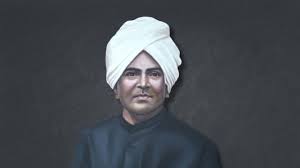
At a time when they were denied access to education, public spaces and social dignity, Thass emphasised the need for oppressed people to organise independently and articulate their own political demands. Synopsis: Rather than merely demanding reform within the Hindu social framework, Iyothee Thass questioned the very foundations of caste hierarchy and sought to create an alternative historical imagination for oppressed communities. In doing so, he shifted the discourse from social accommodation to historical reclamation and self-respect. He argued that the oppressed castes were not “untouchables” by origin, nor were they naturally part of Hindu society; they were the original Tamils and Buddhists whose dignity, culture and social status had been systematically destroyed under Brahminical domination. One of the earliest anti-caste intellectuals and pioneers of Dalit assertion in Tamil Nadu, C Iyothee Thass was born in 1845 in Royapettah in present-day Chennai. 20 May 2026 marked his 181st birth anniversary. Long before anti-caste politics became part of mainstream public discourse, Thass was questioning Brahminical domination, reclaiming the histories of oppressed communities and building intellectual spaces for social equality and dignity. Thass emerged from a community subjected to untouchability and systematic exclusion under caste society. Yet he transformed the experience of humiliation into a powerful political and intellectual movement. Through organisations, journalism, Buddhism and historical reinterpretation, he laid the foundation for an autonomous Dalit consciousness in Tamil Nadu. Today, when Dalit assertion in Tamil Nadu is visible through literature, cinema, music, student movements and political organisations such as Viduthalai Chiruthaigal Katchi (VCK), the relevance of Thass continues to grow. His life remains central to understanding the history of anti-caste movements in South India. Reclaiming history through the idea of Adi-Dravida One of Thass’s most important interventions was his articulation of the identity of the oppressed castes as Adi-Dravidas, the original inhabitants of Tamil society. This distinction is politically and intellectually significant. Unlike later Dravidian politics, which broadly mobilised a non-Brahmin identity, Thass centred the lived realities of untouchability and caste degradation experienced by Dalit communities. His politics emerged directly from the experiences of those placed outside the social order. At a historical moment when dominant nationalist politics largely ignored untouchability and caste violence, Thass was already foregrounding caste as a structural system of oppression rather than merely a social evil. His interventions demonstrated an early understanding that political freedom without social equality would only reproduce existing hierarchies. Rather than merely demanding reform within the Hindu social framework, he questioned the very foundations of caste hierarchy and sought to create an alternative historical imagination for oppressed communities. In doing so, he shifted the discourse from social accommodation to historical reclamation and self-respect. He argued that the oppressed castes were not “untouchables” by origin, nor were they naturally part of Hindu society; they were the original Tamils and Buddhists whose dignity, culture and social status had been systematically destroyed under Brahminical domination. According to him, caste oppression was not a natural or divine arrangement but a historical process through which communities were dispossessed of their identity and humanity. By using terms such as “Adi-Dravida”, “Original Tamils” and “Casteless Tamils”, he attempted to reconstruct a new historical consciousness for marginalised communities. These terms were not merely symbolic labels, but powerful political categories intended to restore pride, memory and collective identity among oppressed people who had long been denied history and dignity. For Thass, reclaiming identity was itself an act of resistance. It was a means of rejecting the degrading identities imposed through caste society and asserting an autonomous past rooted in equality and dignity. His reinterpretation of history enabled marginalised communities to view themselves not as degraded sections of Hindu society, but as people with an independent cultural and intellectual heritage. Through this intellectual intervention, Thass transformed questions of identity into questions of power, history and social justice. His ideas continue to remain significant in contemporary anti-caste thought because they challenge dominant narratives of Indian history and foreground the experiences, memories and struggles of Dalit communities in the making of modern political consciousness. Organisations and early Dalit political mobilisation Thass understood very early that the liberation of oppressed communities could not be achieved merely through moral appeals or isolated reform efforts; it required collective organisation, intellectual awakening and political consciousness among the marginalised themselves. At a time when caste hierarchy was deeply entrenched in society and oppressed communities were denied access to education, public spaces and social dignity, Thass emphasised the need for oppressed people to organise independently and articulate their own political demands. In 1876, he established the Advaidananda Sabha in the Nilgiris, one of his earliest organised initiatives aimed at creating social and intellectual awareness among oppressed communities. The Sabha sought to challenge caste-based exclusion and encouraged critical engagement with questions of religion, social inequality and self-respect. Through such initiatives, Thass attempted to cultivate a sense of collective identity among communities that had long been fragmented and oppressed under the caste order. His organisational efforts became more politically articulated with the establishment of the Dravida Mahajana Sabha in 1891, one of the earliest political organisations representing oppressed castes in South India. The Sabha marked a significant moment in the history of Dalit political assertion because it sought to transform the grievances of marginalised communities into concrete political demands. It called for access to education, representation in government employment, social equality, protection from caste discrimination and the restoration of dignity and civil rights for communities subjected to untouchability. The conference organised by the Sabha in Ooty emerged as an important milestone in early Dalit political mobilisation in South India. It provided a public platform through which oppressed communities could collectively articulate their experiences of exclusion and demand institutional reforms. At a historical moment when dominant nationalist politics largely ignored untouchability and caste violence, Thass was already foregrounding caste as a structural system of oppression rather than merely a social evil. His interventions demonstrated an early understanding that political freedom without social equality would only reproduce existing hierarchies. Thass’s politics differed fundamentally from
PHOTO ESSAY: A symbolic marriage ritual and beauty pageant brings India’s trans community together
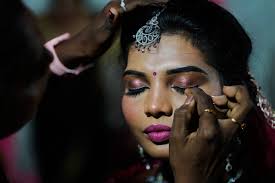
KOOVAGAM, India (AP) — Under stage lights, hundreds of transgender women adjusted their sarees, tucked flowers into their hair, and waited to be called onstage. One by one, they waved to cheering crowds and struck poses at one of India’s largest gatherings for the transgender community. Held each year in Koovagam village in southern India’s Tamil Nadu, the annual Koovagam festival brings faith and beauty together. By day, transgender women gather at a temple to honor a Hindu deity through rituals rooted in mythology and grief. By night, they celebrate glamour, identity, and joy as they take part in a vibrant beauty pageant. The festival centers on the Hindu legend of Aravan, a warrior from the Hindu epic Mahabharata who agreed to sacrifice himself before battle but wished to marry first. According to the story, the Hindu god Krishna transformed into a female form to wed Aravan. Many transgender women in India see the tale as a rare sacred recognition of gender fluidity, and each year reenact the marriage during the festival. The celebration, which drew hundreds of transgender women last month, has become both a sacred pilgrimage and a powerful expression of identity in a country where many transgender people still face discrimination, violence and exclusion. It also unfolded under a cloud of anxiety for the transgender community. Many attendees arrived amid growing concern over a controversial national bill that activists warn could erode hard-won rights for India’s transgender community by requiring medical-board approval for legal gender recognition. For many participants, the festival was deeply spiritual. Shanshi, who goes by just one name, has been attending the festival for five years and described Aravan as “God for all transgender people.” “When we gather here, it is for one reason — to worship Lord Aravan by getting married to him,” she said, after a Hindu priest tied a sacred thread around her neck, symbolically marrying her to the deity. Others spoke of violence and hardship beyond the festival grounds. Nazariya Kutty, 28, said she was forced out of her family home as a teenager and later survived domestic abuse and sexual assault in a marriage she hoped would bring stability. She rebuilt her life through delivery jobs before reopening her travel business. Now back at Koovagam with friends, she said the rituals give her strength. “I am waiting to be the bride of Lord Aravan,” Kutty said. “I have faith he will restore whatever I have lost.” Amid the festival’s spiritual fervor, the atmosphere remained celebratory. The village of Koovagam also transformed into a vibrant beauty pageant, where glamour and community took center stage. Backstage at this year’s beauty pageant, contestants in shimmering sarees shared mirrors and makeup brushes before stepping onto the stage as music echoed through the village. For 24-year-old Surya Kutty, winning the Miss Koovagam crown marked a personal turning point after years of returning to the festival with close friends. “This win has given me the confidence to participate in national and international events,” she said. Beyond the pageantry and rituals, many attendees described the gathering as a rare space of belonging for a community that continues to face barriers to jobs, housing and healthcare across India. Surya said the festival creates a rare sense of belonging. “Here we meet other transgender people and feel loved and cared by everyone,” she said. “These are special days meant exclusively for us.” By MAHESH KUMAR and SHEIKH SAALIQ Courtesy : AP News Note: This news is originally published on https:/apnews.com/bha and is used purely for non-profit/non-commercial purposes, especially human rights
Rahul Gandhi makes Constitution jibe at top BJP leadership, party seeks apology
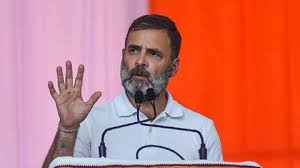
The Congress MP also called upon the people to describe PM Narendra Modi, Union Home Minister Amit Shah and the RSS as “traitors”. LUCKNOW/NEW DELHI: Firing a fresh salvo at the BJP and the RSS over the alleged threat to the ‘Constitution of India’ from them, Congress MP and Leader of Opposition in the Lok Sabha, Rahul Gandhi, questioned the silence of the people when the “Constitution is torn” while exhorting them to protect it as their duty. The Congress MP also called upon the people to describe PM Narendra Modi, Union Home Minister Amit Shah and the RSS as “traitors”. Attacking the BJP and its parent organisation, the RSS, in Rae Bareli, Gandhi on Wednesday said that the Constitution carried the voice and blood of the people. While addressing a ‘Bahujan Swabhiman Sabha’ in his parliamentary constituency on the second day of his two-day visit to Raebareli and Amethi, Gandhi said, “You all are clapping… but when RSS functionaries tear and throw away this Constitution right in front of you, you remain silent.” Since the 2024 Lok Sabha elections, Gandhi has been reiterating that the Constitution of India is under attack by the BJP and RSS. It has been one of the main elements of his speeches against rival BJP, which, he says, have destroyed the values of the document. Meanwhile, BJP president Nitin Nabin launched a sharp counterattack on Rahul Gandhi over his “traitor” remarks allegedly directed at the PM and Amit Shah, calling them “unfortunate” and reflective of Gandhi’s “anarchic mindset and character”. Nabin said Gandhi had insulted 140 crore Indians by targetting the PM and demanded a public apology. “The tradition of Indian politics has always been one of dialogue, decorum and mutual respect, but this state of his goes against that very propriety,” he said. Escalating the attack, Nabin accused the Congress of compromising national interests for political gains. “Those whose ancestors kept this country’s land and conscience mortgaged for years have lost the moral right to lecture on patriotism and democracy today,” he said. He further alleged that Congress never worked to boost soldiers’ morale and instead prioritised politics during critical moments. UP CM Yogi Adityanath described Congress as the “mother of divisive and appeasement politics” and demanded an apology for his “objectionable, unparliamentary and frustration-driven statement”. Namita Bajpai, Rajesh Kumar Thakur Courtesy : TNIE Note: This news is originally published on https:/thenewindianexpress.com/bha and is used purely for non-profit/non-commercial purposes, especially human rights
UP Congress serves notices to two Dalit leaders over outreach to Mayawati
The UP Congress leadership, reportedly upset over the unauthorised visit, issued show-cause notices to both leaders while describing the visit as a personal attempt to enquire about Mayawati’s health. LUCKNOW: Amid growing political buzz in Uttar Pradesh, two senior Dalit leaders of the Indian National Congress were served show-cause notices after they allegedly led a delegation of party leaders to the Lucknow residence of Mayawati on Tuesday evening. According to sources, the delegation, which included Barabanki MP Tanuj Punia and Congress Scheduled Caste Department national chairman Rajendra Pal Gautam, was denied an audience with the BSP chief and returned without meeting her. The UP Congress leadership, reportedly upset over the unauthorised visit, issued show-cause notices to both leaders while describing the visit as a personal attempt to enquire about Mayawati’s health. The development came at a time when Congress leader and Leader of Opposition in Lok Sabha Rahul Gandhi was in Rae Bareli for two Dalit outreach programmes, including a “Bahujan Swabhiman Sabha” and the inauguration of a statue of freedom fighter Veera Pasi. Congress general secretary and UP in-charge Avinash Pande and UP Congress chief Ajay Rai clarified that the delegation had no authorisation from the party, prompting the issuance of notices seeking explanations from the leaders. Denying any political motive behind the visit, Tanuj Punia, son of senior Congress leader P. L. Punia, said the issue of Mayawati’s health had come up during a meeting of the party’s SC cell. He said he and Rajendra Pal Gautam decided to visit her residence as it was located close to the Congress office. Punia said the delegation failed to meet Mayawati because they had not informed BSP leaders in advance. Political observers, however, see the episode as a reflection of unease within sections of the Congress over its alliance with the Samajwadi Party ahead of the 2027 Uttar Pradesh Assembly elections. Despite assurances from SP chief Akhilesh Yadav about continuing the alliance, some Congress leaders are reportedly concerned about the number of seats the SP may allocate to the party. Differences between the two allies have also surfaced repeatedly on various issues. According to political analysts, a section within the Congress has started exploring alternative alignments, including a possible understanding with the Bahujan Samaj Party, to strengthen its position against the BJP on issues related to the Constitution, Dalits and minorities. The same section also believes that an alliance with the BSP could help consolidate Dalit votes in favour of the opposition across the country. In the 2024 Lok Sabha elections, the Congress-SP alliance had made gains in Uttar Pradesh by campaigning around the issue of protecting the Constitution and Dalit rights against the BJP. Mayawati, however, has repeatedly ruled out alliances with other parties, maintaining that the BSP gained little from its 2019 alliance with the Samajwadi Party. She has argued that while the BSP’s Dalit vote transferred to its ally, the reverse did not happen in adequate measure. Namita Bajpai Courtesy : TNIE Note: This news is originally published on https:/thenewindianexpress.com/bha and is used purely for non-profit/non-commercial purposes, especially human rights