
‘Merely adopting blue colour doesn’t make anyone Ambedkarite’: Mayawati on SP’s student wing uniform
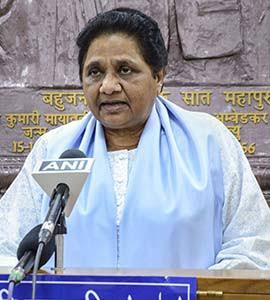
Akhilesh Yadav wearing a blue scarf around his neck during a press conference on August 21 has triggered a political row in Uttar Pradesh over Dalit interest. LUCKNOW: With the UP Assembly election inching closer, the colour blue is buzzing as the Samajwadi Party (SP) and the Bahujan Samaj Party (BSP) are engaging in verbal spats over it. It may be recalled that Samajwadi Party chief Akhilesh Yadav had launched the blue uniform for the Samajwadi Party’s student wing (SP Chhatra Sabha) recently. Moreover, three days before the launch of the uniform, Akhilesh Yadav had arrived wearing a blue scarf around his neck during a press conference. The move laid the path to a common belief that SP was seeking to woo Dalit voters through it. Meanwhile, BSP supremo Mayawati hit out at Akhilesh Yadav. Without naming him, she said on Friday that adopting the BSP’s blue colour, wearing a blue scarf around the neck, dressing in blue clothes or putting blue fabric on a stage would not change a party’s casteist mindset. Taking to social media platform X, Mayawati wrote: “If you genuinely care about the poor, Dalits, tribals, backward classes and other neglected sections, then all opposition parties, including the SP and Congress, must first cleanse their hearts and minds. Merely adopting the colour blue does not make anyone an Ambedkarite.” On the purported offer to Mayawati’s nephew Akash Anand to join the Congress, Mayawati said: “Congress is like a sinking ship. Why would anyone put their political future in darkness by joining it?” After Akash was expelled from the BSP, Uttar Pradesh Congress in-charge Rajendra Pal Gautam had said that the doors of the Congress were open to Akash and that he would receive due respect. At a press conference in Lucknow on Thursday, when asked whether Akash Anand could join the SP, Akhilesh Yadav said: “You are a journalist; you tell him to come, and we will take him.” Similarly, BJP ally Nishad Party president Sanjay Nishad said, “Akash Anand should join us. He will be given full respect and a major responsibility. He could even be made national president. The dream of Ambedkar and Kanshi Ram remains incomplete, and we can all work together to fulfil it.” Uttar Pradesh Congress president Ajay Rai had said, “Akash Anand was speaking about his people, which Mayawati did not like.” Congress leaders also believe that decisions taken by the party have played a major role in damaging Akash Anand’s political career. Meanwhile, hitting out at the political rivals, Mayawati said: “Opposition parties have continuously changed their colours on issues concerning backward classes and Dalits. These parties say one thing and do exactly the opposite.” Questioning the Samajwadi Party’s PDA slogan, referring to backward classes, Dalits and minorities, she said the BSP was the only party working for the cause of the Bahujan Samaj. She described the BSP as the only well-wisher of Bahujan Samaj and the only Ambedkarite party. Mayawati added that those who were expelled from the BSP had switched parties several times. “This is a reflection of their selfish and opportunistic politics. Such people cannot do good for any party,” posted the BSP chief. She said a few expelled leaders, while acting at the behest of other parties, even go on to form small parties and organisations. Mayawati said: “SP and Congress cannot even contest elections without alliances. At the same time, when a major party forms the government, they cannot stay away from joining it.” Referring to Dr BR Ambedkar, Mayawati said that during his lifetime, he had warned members of the Bahujan Samaj to maintain distance from the Congress. She said it was important for the people associated with the BSP and its movement to understand those lines in the current political circumstances. Namita Bajpai Courtesy : TNIE Note: This news is originally published on https:/thenewindianexpress.com/bha and is used purely for non-profit/non-commercial purposes, especially human rights
With eye on poll, BJP to begin ‘drug-free Punjab’ drive amid row over Dalit villager’s death
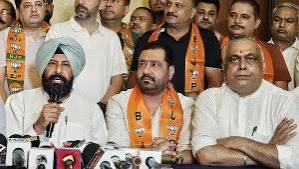
The campaign comes close on the heels of a row that erupted following the death of a Dalit villager, who was reportedly under pressure to apologise for questioning Finance Minister Harpal Singh Cheema over the supply of ‘chitta (synthetic drugs)’ in the State. With an eye on the 2027 Assembly poll, the BJP on Friday (September 11, 2026) announced the launch of ‘Nasha Mukt Punjab Yatras’ from September 18 to “highlight the drug menace” in the State. State BJP president Kewal Singh Dhillon said the yatras will cover all 117 Assembly constituencies and turn the fight against drugs into a mass movement. He was addressing a press conference along with party national vice-president Manpreet Badal and former State chief Sunil Jakhar. Rahul Gandhi, Bhagwant spar over the alleged suicide of a Dalit man in Punjab The campaign comes close on the heels of a row that erupted following the alleged death by suicide of a Dalit villager, who was reportedly under pressure to apologise for questioning Finance Minister Harpal Singh Cheema over the supply of ‘chitta (synthetic drugs)’ in the State. Mr. Dhillon alleged that three major challenges are confronting Punjab – growing drugs menace, deteriorating law and order situation, and corruption. “The yatras are not merely an anti-drug awareness campaign, but an attempt to confront the grave threat that it poses to Punjabiyat, our culture, values and the proud identity of the land of the gurus. The drug crisis is tearing families apart, pushing Punjab’s youth, traditionally known for their contribution to the armed forces, sports and nation-building, towards violence and gang-related activities. It is also imposing a heavy financial burden on families forced into debt or to sell their land and assets for treatment,” he said. Punjab govt treats over 90,000 drug victims in rehabilitation centres Mr. Dhillon said BJP president Nitin Nabin will flag off the first yatra on September 18 from Pathankot district. It will be followed by marches from Fatehgarh Sahib (September 19), Fazilka (September 20) and Talwandi Sabo (September 21). In March, Union Home Minister Amit Shah had sought a chance to form the next government, promising that the BJP will free the State from the scourge of drugs within two years. (Those in distress can contact Tele MANAS at 14416 to seek help) The Hindu Bureau Courtesy : The Hindu Note: This news is originally published on https:/thehindu.com/bha and is used purely for non-profit/non-commercial purposes, especially human rights
Dalit couple assaulted for protesting tree felling: Case filed against constable and contractor in Basti on court order, 5-year-old case
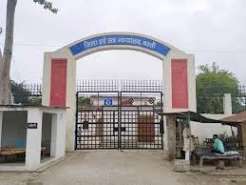
Following an order from the Special Judge SC/ST Act Court in Basti, Walterganj police have filed a case against a former constable and a contractor from their own department. The case dates back to May 26, 2021. Reena Devi, a resident of Ganeshpur, alleges that contractor Durgesh Choubey was cutting down two green mango trees planted along the PWD road in front of her house without valid permission. When she protested, the contractor used casteist slurs. Meanwhile, Vinod, a constable at the then Ganeshpur outpost, who was in plain clothes, assaulted her husband, Rajesh Kumar Sonkar, and forcibly detained him at the outpost. Allegations of having the trees cut while her husband was locked up in the outpost According to Reena Devi, when she protested against the tree felling, the constable dragged her husband by the collar and locked him in the outpost. It is alleged that the contractor had the trees cut down while her husband was detained and took away the wood. Later, as the dispute escalated, the constable had the wood pulled by a tractor and stored at the police station. The victim alleges that her husband was released after threatening to send him to jail under false charges. Following the incident, she sent a complaint to the Chief Minister’s Portal, as well as to police officers and the District Magistrate, demanding action, but she alleges that no action was taken at the police level. Five years later, a case was filed on a court order. Following the police’s inaction, Reena Devi filed a petition in the court of the Special Judge, SC/ST Act. Following the court’s order, Walterganj police registered a case against then-constable Vinod and contractor Durgesh Choubey at 5:04 pm on September 10th. The police are now investigating the matter based on the court order and the allegations made in the victim’s complaint. Raj Prakash | Basti Courtesy: Hindi News
Dalit family forced to live in hut with 5 children: Multiple complaints for housing in Achhalda, officials demand action
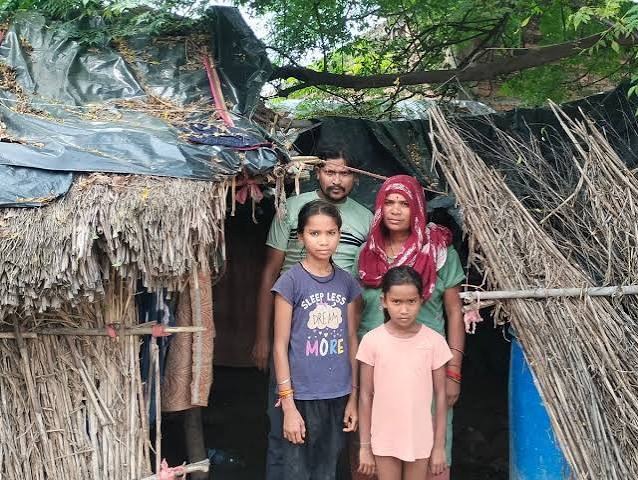
A poor Dalit family in Purva Ramdas, a hamlet in Bhasora Gram Panchayat of Achhalda development block, is struggling to find housing. Village resident Rajneesh Kumar, along with his wife and five children, are forced to live in a hut made of straw and tarpaulin. Family members reported that the hut floods during the rainy season, making it extremely difficult to live with the children. They have been struggling with housing for several years. Dalit woman Kalpana Devi reported that she has filed numerous complaints seeking benefits under the Pradhan Mantri Awas Yojana (Prime Minister’s Housing Scheme). However, her pleas have remained unanswered. She has also repeatedly appealed to the village head for housing, but the problem remains unresolved. The family has appealed to the Block Development Officer and the district administration to investigate the matter. They have demanded action against the responsible officials who were negligent in providing them with the Pradhan Mantri Awas Yojana (Prime Minister’s Housing Scheme). Akhilesh Kumar | Harchandpur (Bidhuna), Auraiya Courtesy: Hindi News
Don’t go public about quitting electoral politics: Rahul Gandhi to Siddaramaiah
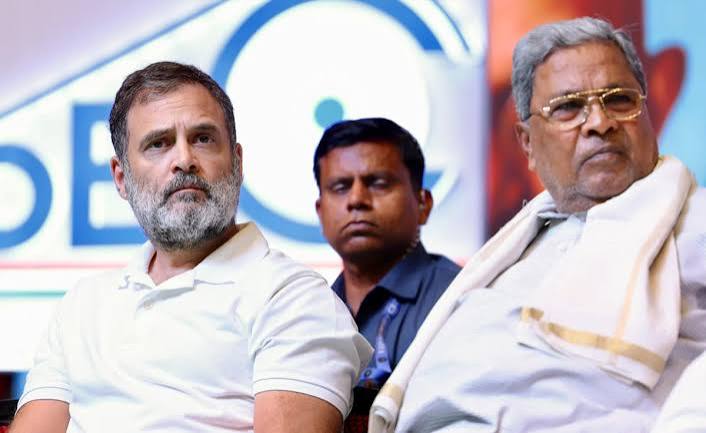
The proposed caste enumeration as part of the 2027 Census also figured prominently during Siddaramaiah’s meeting with Rahul, the sources said. BENGALURU: Leader of Opposition in the Lok Sabha Rahul Gandhi on Friday reportedly advised former chief minister Siddaramaiah not to make public statements about quitting electoral politics. At a meeting with Siddaramaiah in Delhi, Rahul told him that such remarks could hurt the Congress. The two are learnt to have discussed the political situation in the state and party organisational and electoral issues for nearly one-and-a-half hours, sources close to Siddaramaiah said. Rahul is also understood to have told Siddaramaiah that the Congress needs senior leaders of his experience. Siddaramaiah is learnt to have explained that his decision is limited to electoral politics. He wants to remain active in public life and continue to raise issues concerning people. He cited his age and the changing nature of electoral politics for his decision not to contest the 2028 Assembly elections. Siddaramaiah recently said that he would not contest the 2028 Assembly elections, triggering speculation about his political future. He subsequently clarified that he had referred only to retirement from electoral politics and not active politics. Siddaramaiah, however, downplayed the significance of his meeting with Rahul. He told reporters that he had sought an appointment with Rahul and met him. The sources said Siddaramaiah also discussed filling two vacancies in the Shivakumar Cabinet and nomination of five MLCs. He is learnt to have proposed the names of some of his loyalists. Siddaramaiah is understood to have conveyed his concerns over his role being overlooked during the recent Cabinet expansion. He had backed Byadgi MLA Basavaraj Shivannanavar, a Kuruba leader, for a cabinet berth. However, the high command considered Chikkamagaluru MLC Gayathri Shanthegowda, also a Kuruba leader, before dropping her at the last minute. Political observers said Siddaramaiah is keen that his suggestions be given weightage while choosing Kuruba leaders for important posts, given his influence among the community members. Siddaramaiah also met AICC general secretary (organisation) KC Venugopal. The proposed caste enumeration as part of the 2027 Census also figured prominently during Siddaramaiah’s meeting with Rahul, the sources said. Rahul is learnt to have sought Siddaramaiah’s views on the Centre’s decision to include caste enumeration in the 2027 Census. Being a prominent Congress leader familiar with issues related to Backward Classes and member of the Congress Working Committee, Siddaramaiah could be assigned a key role in shaping the party’s response to the exercise. The sources said Siddaramaiah may have discussed the implementation of the findings of the Karnataka State Backward Classes Commission’s socio-educational survey. The meeting assumes significance as the Congress seeks to build its campaign around social justice, caste representation and the rights of Backward Classes ahead of the 2028 Assembly and 2029 Lok Sabha elections. Devaraj B Hirehalli Courtesy : TNIE Note: This news is originally published on https:/thenewindianexpress.com/bha and is used purely for non-profit/non-commercial purposes, especially human rights
UP Election 2027: Akhilesh Yadav targets Brahmins, Dalits and Gen-Z with new PDA and blue gamcha strategy | Explained
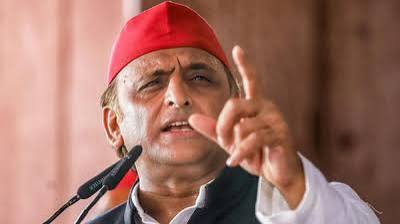
With UP elections due in early 2027, the SP chief is redefining his party’s coalition, courting Brahmins with one hand and Dalits with the other — while BJP watches its most loyal vote bank show early signs of restlessness On August 5, Samajwadi Party national president Akhilesh Yadav stood before a Brahmin Sammelan at his party’s Lucknow headquarters and made a statement that carried considerably more weight than it appeared to on the surface. He declared that the ‘P’ in ‘PDA’ stands for ‘Pandits’. This was not a slip of the tongue. When Akhilesh coined the term PDA during the 2022 UP Assembly elections, the ‘P’ explicitly stood for ‘Pichhda’, meaning backwards or Other Backward Classes. That formulation was the foundation of the social coalition he was building: Pichhda, Dalit, Alpsankhyak — backward castes, Dalits and minorities. It was a direct challenge to the BJP’s dominant Hindu consolidation strategy and helped the SP make significant gains, even if it was not ultimately enough to form the government. Now, with the 2027 UP elections scheduled for February or March of next year, the ‘P’ has been expanded, or perhaps repositioned, to include Pandits. The question being asked across Lucknow’s political circles is whether this represents a genuine strategic evolution or an opportunistic repositioning. The answer, on examination, appears to be both, and that combination is precisely what makes it interesting. Why Brahmins Matter So Much in Uttar Pradesh To understand Akhilesh’s Brahmin outreach, you need to understand the electoral arithmetic of Uttar Pradesh at a granular level. Political analysts estimate that the Brahmin community can decisively influence outcomes in more than 115 of the 403 Assembly constituencies across the state. This is not simply a function of numbers — Brahmins constitute approximately 10 to 11 percent of UP’s population — but of their geographic distribution across constituencies and their traditional role as opinion leaders in rural and semi-urban settings. The data across successive elections makes the pattern unmistakable. In 2007, when Mayawati led the BSP to a landmark 206-seat majority, the party had achieved something genuinely unprecedented: it secured 16 percent of the Brahmin vote through a deliberate Brahmin-Dalit alliance strategy. The BJP still received 44 percent, but the split was significant enough to help the BSP sweep to a majority. The 2012 SP victory saw the party win 224 seats, partly on the strength of 19 percent of the Brahmin vote, double its 2007 performance of 10 percent. The BJP got 38 percent of Brahmin votes that year, with the community fractured across multiple parties. Then came 2017, and the numbers tell a stark story. Riding the Modi wave, the BJP secured approximately 83 percent of Brahmin votes and more than 300 seats. The SP collapsed to 7 percent of Brahmin votes. In 2022, the consolidation deepened further. The BJP captured 89 percent of Brahmin votes. The SP got 6 percent. Those two numbers, 89 and 6, are the context for everything Akhilesh is doing with the Brahmin Sammelan and the reframed PDA acronym. Even a modest swing in Brahmin votes, from 6 percent to 15 or 20 percent, could alter outcomes in dozens of constituencies. What Is Driving Brahmin Discontent With the BJP? The opposition’s narrative about Brahmin disenchantment with the BJP government under Chief Minister Yogi Adityanath centres on two overlapping allegations. The first is that Thakurs or Rajputs, the caste community to which Yogi himself belongs, have been disproportionately favoured for appointments across state administration, police postings and government positions. This allegation of Thakur dominance in the state’s power structure has been circulating within Brahmin circles for several years and carries enough traction that the BJP has felt compelled to respond. The second is the Maha Kumbh episode. Akhilesh has repeatedly alleged that Shankaracharya Avimukteshwaranand Saraswati, a revered religious figure with significant standing among Brahmins, was prevented from taking a holy dip during the Maha Kumbh. Whether or not this allegation is fully accurate, it has served as a powerful symbolic touchpoint for Brahmin grievance politics, suggesting that even high-status religious figures from the community are not immune to being marginalised under the current administration. At the Brahmin Sammelan, Akhilesh wove these threads together: the BJP targets SP workers, it targets Brahmins, and now it is even after the ‘P’ in PDA. The framing positions Brahmins not as a group being invited into the SP’s coalition out of political convenience but as a community that shares a common adversary with the SP’s traditional base. How much of this narrative has actually penetrated Brahmin opinion is difficult to assess. Many Brahmins in UP remain deeply sceptical of the SP, which they have historically associated with minority appeasement policies and a governance culture they see as hostile to their interests. The gap between Brahmin discontent with the BJP and Brahmin willingness to vote SP is wide, and bridging it requires more than a well-attended sammelan. The BJP’s Response: Playing Defence on Its Own Ground The BJP has not sat passively while Akhilesh pursues his Brahmin outreach. The party’s response has been both structural and strategic. Its appointment of Nagendra Nath Tripathi, an RSS ideologue, as national organiser for senior workers’ outreach is the most revealing signal. Tripathi previously served as BJP’s zonal general secretary for Bihar and Jharkhand and is considered an expert in grassroots-level organisation. Deploying him specifically for senior workers’ outreach, a category in which Brahmin party workers are prominently represented, is a clear message that the BJP intends to actively retain rather than passively assume the loyalty of its most historically reliable upper-caste constituency. Newly appointed UP in-charge Vinod Tawde has also specifically targeted the PDA strategy in his early public interventions, signalling that the BJP has decided to contest Akhilesh’s social coalition framing rather than ignore it. The BJP’s structural advantage in this contest is considerable. It has 89 percent Brahmin votes to protect rather than 6 percent to build from. Even if Brahmin discontent is real, translating it into votes for the SP
Telangana ‘Purification’ Row: Congress, Dalit Groups Slam BRS; Hold Ex-CM KCR Responsible
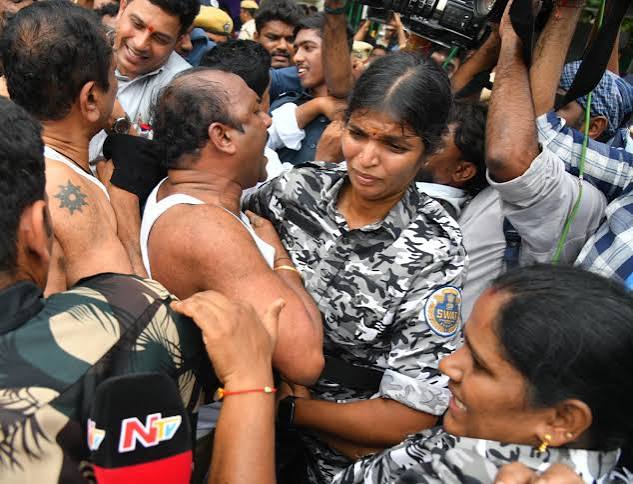
A day before the ‘purification’ ritual was performed, Congress leaders and Dalit members took out a procession in protest against two BRS MLCs, Tata Madhusudhan and Naveen Kumar Reddy, who they said had insulted assembly speaker G. Prasad Kumar, a Dalit, on September 7. Hyderabad: A month after a ‘purification’ ritual was performed in Uttarakhand following Congress president Mallikarjun Kharge’s address at a rally in Haldwani, a similar anti-Dalit practice was publicly demonstrated in Telangana on Wednesday (September 9). This happened a day after Dalit leaders and Congress workers held a protest against Bharat Rashtra Samiti (BRS) president and former chief minister K. Chandrasekhar Rao. On Tuesday, September 8, a large number of Dalit leaders and Congress workers had marched in a ‘Chavu-Dappu’ procession to Rao’s farmhouse on the outskirts of Varadharajapuram village in Siddipet district. Funereal drums, ‘Chavu-Dappu’, were beaten during this procession. Beating the drums in a funeral procession is an occupation traditionally associated with Dalits. The Congress leaders’ procession was in protest against two BRS MLCs, Tata Madhusudhan and Naveen Kumar Reddy, who they said had insulted assembly speaker G. Prasad Kumar, a Dalit, on September 7. That was on the first day of the state assembly’s monsoon session, when the BRS MLAs and MLCs had tried to gatecrash into the assembly premises against severe security restrictions in the area. Alleging that the area near the farmhouse was “desecrated” by the drum-beating procession, the BRS cadre on Wednesday poured turmeric-water and milk on the road and nearby places to symbolise ‘purification’ of the entire area. The Scheduled Caste cell of the Congress termed this as an attempt to promote untouchability, and, alleging that it was done the blessings of Rao, demanding action against him under the Scheduled Castes and Scheduled Tribes (Prevention of Atrocities) Act, 1987. Scheduled Caste organisations representing Mala and Madiga sub-castes reacted strongly to the ritual after videos went viral on social media. A Congress leader, Satish Madiga, said a zero FIR had been registered at Saifabad against Rao and other BRS leaders. Congress party’s Choppadandi MLA, Medipally Sathyam, said he had filed a complaint at Saifabad police station. His complaint says the procession led by Congress workers near the farmhouse was part of a statewide call by the party to protest the intemperate remarks previously made by the two BRS MLCs – Tata Madhusudhan and Naveen Kumar Reddy – against Speaker Kumar’s late mother. Sathyam’s complaint said that the call for “dandora” – a traditional drumbeat to gather people and share important news – was issued to seek an apology from Rao for the misconduct of his party’s MLCs. The Congress protest and aftermath Congress workers had proceeded towards K. Chandrasekhar Rao’s farmhouse from four directions. A large group had also gathered on the Hyderabad-Karimnagar highway, led by former MLA T. Narsa Reddy. This group alone could approach the farmhouse, breaching the obstacles set up by the police along the way. Narsa Reddy was injured in clashes with police during this march. His group still remained two kilometres away from Rao’s farmhouse. Speaking to the media later, Sathyam alleged that the ‘purification’ ritual which followed the march was conducted on the instructions of Rao. He said it was evident that the BRS practiced caste discrimination. Another Congress MLA, K. Shankaraiah, wished “bad times” befall Rao, which BRS later said meant that the rival party aimed to “kill” him. Following this series of developments, the Congress has said it will “expose” the anti-Dalit stand of the BRS. Over a dozen party MLCs demanded that the Election Commission of India derecognises the BRS. A delegation of Congress legislators from non-elite castes, led by deputy chief minister Mallu Bhatti Vikramarka, called on Governor Shiv Pratap Shukla and said the BRS was trying to push the state into a “dark era”. They compared the developments to Germany under the Nazi Party and the activities of the American far-right hate group Ku Klux Klan. BRS working president K.T. Rama Rao in a scuffle with police as the BRS legislators tried to gatecrash into the Assembly wearing black T-shirts to protest against the Congress-led Telangana government failures on September 7. photo by arrangement. The BRS, led by working president K.T. Rama Rao, met the governor separately and complained that the procession to the farmhouse was an aborted attempt to murder Rao, and alleged that it had been authorised by chief minister Revanth Reddy. He said the Congress had mobilised thousands of people with police escort to lay siege to the farmhouse. However, the Congress maintained that the police stopped them at several places enroute. Monsoon Session chaos The purification ritual topped a series of incidents that unfolded since the BRS legislators tried to gatecrash the assembly premises wearing black T-shirts. There were scuffles between them and a huge police force that sought to stop anyone wearing black clothing or carrying black items from entering the Assembly. That is when Tata Madhusudhan and Naveen Reddy allegedly made remarks about the Speaker and his family. BRS MLC Naveen Kumar Reddy stopped by women police from entering the Assembly on September 7. Photo by arrangement. During this incident, a few MLAs had taken off their T-shirts and confronted the police, including women constables, in a half-dressed state. A woman constable trying to catch BRS MLA and former minister P. Sabita Indra Reddy was caught on camera. The video was aired on TV channels and weaponised by the BRS as an assault against a legislator. The party has sought action against the police. Police and Assembly actions so far On Wednesday, BRS members stormed into the well of the House and 22 were suspended for the rest of the session, which ends on Saturday (September 12). At the same time, the police arrested Madhusudhan and Naveen Reddy. They were released within hours in court. The verbal abuse by both the legislators has been referred to the ethics committee of the Legislative Council. Chief minister A. Revanth Reddy has announced a comprehensive inquiry
Cong will continue to fight for dignity of Dalits: Ganesh Godiyal
Dehradun, The political controversy over the alleged ‘purification’ of the Ramlila Maidan in Haldwani following Congress national president Mallikarjun Kharge’s rally on 8 August further escalated today with hundreds of Congress leaders and workers marching towards the Chief Minister’s residence in Dehradun despite heavy rain. The protesters were stopped by the police near Hathibarkala, where barricades had been erected to prevent them from proceeding further. Tension prevailed for some time as Congress leaders and workers attempted to cross the barricades, resulting in pushing and shoving between the protesters and the police personnel. Some Congress leaders and workers were later taken into custody by the police. The protest, organised by the Uttarakhand Pradesh Congress Committee, was led by state president Ganesh Godiyal and saw the participation of party state in-charge Kumari Selja, Leader of the Opposition Yashpal Arya, former minister Harak Singh Rawat, former state Congress president Pritam Singh and several Congress MLAs and senior leaders. The protesters assembled at Parade Ground, where senior leaders addressed the gathering before the march towards the Chief Minister’s residence began. The Congress has stepped up its agitation over the alleged purification ritual performed at the Haldwani venue after Kharge addressed a public meeting there. The party has described the incident as an insult to its national president and an affront to democratic values and the dignity of the Opposition. Congress leaders have also objected to the alleged failure of the authorities to register FIRs on complaints submitted at various police stations against those responsible for the ritual, while an FIR has been registered against Lok Sabha Leader of the Opposition Rahul Gandhi in connection with his remarks on the controversy. Addressing party workers, Godiyal said the Congress would continue its democratic agitation until action was taken against those responsible for the incident. He said the party was demanding accountability and would continue to raise the voice of the people and its workers before the State Government. Godiyal added that the party will continue to fight for the dignity of the Dalits and for the justice. Kumari Selja accused the BJP government in Uttarakhand of betraying the sentiments and trust of the people of the State. She alleged that the venue of a rally addressed by the Congress national president was subjected to ‘purification’ by people associated with the BJP after the programme. She alleged that the BJP is resorting to every possible tactic in view of the forthcoming elections and said the Congress would not remain silent on issues involving social discrimination and the dignity of its leaders. The Congress has also linked the controversy with the FIR registered against Rahul Gandhi and has alleged that the authorities are adopting a discriminatory approach by failing to act on complaints against those who conducted the alleged purification ritual while taking action against the Leader of the Opposition. It may be recalled that the protest had been planned as a major show of strength by the State Congress. The party workers from different districts reached Dehradun for the programme despite heavy rain at the time of the march. The large gathering also affected traffic movement in several parts of the city, with police and district administration making extensive security arrangements along the proposed route to the CM’s residence. The rally also threw the traffic arrangements across the city into disarray. Traffic jams were witnessed almost at all important roads in the city. The Police were unable to manage the traffic. As the protesters moved towards Hathibarkala, police stopped them at the barricading. Congress workers raised slogans against the State Government and demanded action against those responsible for the Haldwani incident. Several protesters climbed onto the barricades during the confrontation before being pushed back by the police. The situation remained tense for some time but did not escalate into major violence. As the Congress has turned the incident into a Dalit issue, the controversy has now widened far beyond Uttarakhand. Congress president Mallikarjun Kharge has raised the issue at the national level, while the party has been seeking action against those involved in the alleged purification ceremony. Congress leaders have argued that the incident carries implications beyond party politics and relates to the larger question of caste discrimination and social equality. The BJP, on the other hand, has rejected the Congress’ interpretation of the incident and has accused the Opposition of attempting to disturb social harmony for political purposes. The party had announced ‘Samajik Sauhard Sankalp Dharna’ programmes at its organisational district headquarters across Uttarakhand on Monday to counter the Congress campaign. A Zero FIR was registered in Bengaluru against BJP State President Mahendra Bhatt despite Bhatt and the BJP distancing from the purification event. Bhatt has maintained that the ritual was related to a havan after garbage had allegedly been left at the venue but the BJP had no connection to the purification exercise. The Congress protest in Dehradun also saw several prominent personalities joining the party in the presence of Kumari Selja and other senior leaders. Those who joined the Congress included former Roorkee mayor Yashpal Rana, former Yamkeshwar block chief Bhuvanesh Kharkwal, former principal and former chairman of the Haridwar Cane Committee Manoj Saini, former minister of state rank Ram Kumar Walia, former Dehradun Mandi Samiti chairman Ravindra Anand, advocate Sachin Kumar and others. By ARUN PRATAP SINGH Courtesy : Garhwal Post Note: This news is originally published on https:/garhwalpost.com/bha and is used purely for non-profit/non-commercial purposes, especially human rights
Dalit middle-aged man beaten for demanding repayment of 13-year-old loan: 80,000 rupees case in Hardoi, assault with sticks, allegations of casteist slurs
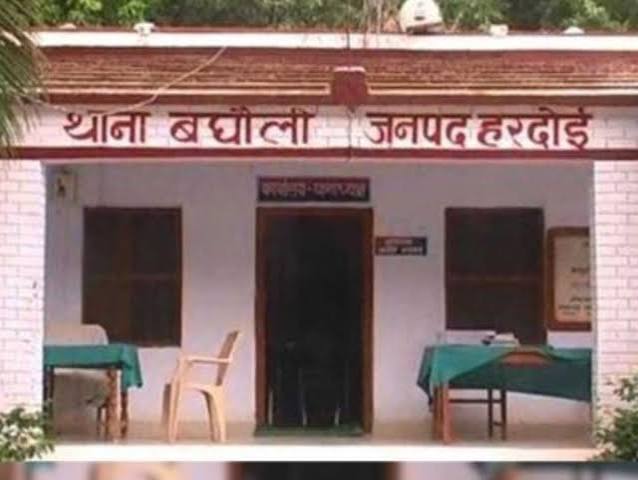
In Baghauli, Hardoi, demanding repayment of a 13-year-old loan proved costly for a Dalit middle-aged man. When he demanded the return of 80,000 rupees given in 2013, the accused kicked, punched, and beat him with sticks. He used casteist slurs and threatened to kill him. A case has been registered against the accused following court intervention based on the victim’s complaint. The report was filed at Baghauli police station at 9:15 pm on Thursday. Ram Avtar (52), a resident of Jutela village, had lent 80,000 rupees to Kamlesh Kumar Dixit of his own village in 2013. Ram Avtar paid the amount in four installments via check from the Aryavart Regional Rural Bank branch in Baghauli. This included ₹40,000 on May 23, ₹8,000 on June 4, ₹12,000 on June 11, and ₹20,000 on June 15, 2013. This transaction was documented on a ₹100 stamp in front of witnesses. When the money wasn’t returned, Ram Avtar complained to the Superintendent of Police. Threat of being implicated in a false case The police had arranged for payment by November 22, 2024, but even then, the money was not received. When the victim went to ask for the money again at 5 p.m. on June 12, 2026, the accused assaulted him with sticks and hurled casteist slurs at him. He also threatened to implicate him in a false case. When his complaint was not heard at the police station, the victim filed an application in the court of the Special Judge, SC/ST Act. On the court’s orders, Baghauli police registered a case against the accused, Kamlesh, and began an investigation. The police are investigating the matter. Shahnawaz Khan | Hardoi Courtesy: Hindi News
Searing questions that Mallikarjun Kharge saga throws up over Dalit rights, law
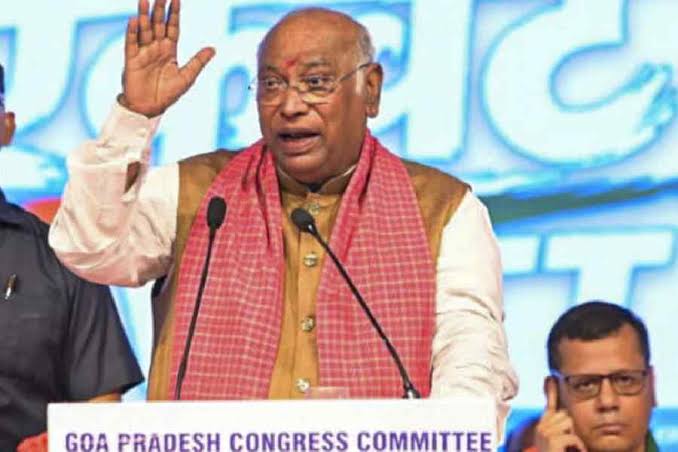
Justice Madan Lokur says the ritual is a cognisable offence as delayed police action and the FIR against Rahul Gandhi raise concerns over Uttarakhand policing In Indian law is it a crime to conduct a shuddhikaran at a site where a Dalit leader has just held a rally? Is the filing of an FIR necessary? Can the organisers of the shuddhikaran really claim they were only responding to slogans they deemed inappropriate and not Mallikarjun Kharge? And what about the FIR against Rahul Gandhi accusing him of promoting enmity and outraging religious feelings? Is that justified? Or ludicrous? Finally, what does all of this tell us about the Uttarakhand government’s attitude to crimes against Dalits and the way it enforces the law, which it’s sworn to uphold? These are some of the questions that underlie the shuddhikaran saga that haven’t been addressed adequately. It’s possible they haven’t been asked of the right people. I want today to focus on what I, at least, believe are the right answers. Justice Madan Lokur, one of our finest former Supreme Court judges, says a shuddhikaran at the Haldwani Ramlila Maidan, days after Kharge’s rally, was definitely a crime under Indian law. It’s a cognisable offence. Justice Lokur adds that under the applicable Act, if a public servant — and that includes police officers — fails to respond, he too will be deemed complicit in the crime. So, then, what should we make of the refusal of the Uttarakhand government to register an FIR for almost a month? Of course, they were wrong not to. But consider the explanations given. The organisers of the shuddhikaran, the Shri Ram Sena Dharmarth Seva Nyas Sangathan, claim it wasn’t targeted at Kharge but to counter-slogans raised by Congress members during the rally and a previous statement by Kharge comparing the BJP and RSS to a poisonous snake. Does that argument carry weight? Even if true, Kharge is still the target. He stands at the core of these explanations. Mahendra Bhatt, the BJP Uttarakhand chief, defends the shuddhikaran on the grounds that the venue had been polluted by slogans that were not appropriate for a religious place. But the Ramlila Maidan is not a religious place. It’s a public venue. Surely, this defence has little value unless, of course, it was a hint to the police how to respond. The chief minister of Uttarakhand claims the people of his state are not aware of Kharge’s caste. In other words, they don’t know he’s a Dalit and can’t be accused of untouchability. Can we really believe that? And is ignorance a defence? Let’s now come to the bizarre twist this story has taken. Whilst delaying registering an FIR against those who conducted the shuddhikaran, an FIR was registered against Rahul, on the complaint of a certain Amit Kumar, a Scheduled Caste member, who’s claimed his sentiments were hurt by the Congress leader’s characterisation of the shuddhikaran as an act of untouchability. The FIR accuses Rahul of promoting enmity on grounds of religion, deliberate and malicious acts intended to outrage religious feelings and giving false information to mislead a public servant. Let me ask you bluntly: do you believe Rahul Gandhi is guilty of any of this? I certainly don’t. T.C. Manjunath, the senior superintendent of police in Nainital, has said: “Amit Kumar submitted all the required evidence to substantiate his allegations, following which an FIR has been registered.” What possible evidence could there be? As Justice Lokur puts it, this is a classic instance of turning the law on its head. I can’t resist the feeling the Uttarakhand police have not acted of their own volition but were directed by the BJP government to file the FIR. On their own I doubt they would have done it. And that raises a significant question. If a shuddhikaran can be held when someone as senior as Kharge makes a speech at a rally and no action is taken for nearly 30 days, what does this tell us about the Uttarakhand government’s attitude to crimes against Dalits? And what does it say of the way it enforces the law, which it’s sworn to do? Think carefully before you answer. I’m not exaggerating when I say it’s the key issue in this sorry tale. Karan Thapar Courtesy : The Telegraph Note: This news is originally published on https:/thetelegraph.com/bha and is used purely for non-profit/non-commercial purposes, especially human rights