
“Unhappy with the Bihar ticket distribution, seniors are not respected in this Congress,” Shakeel Ahmed questions Rahul Gandhi

Shakeel Ahmad Resigns: Following Shakeel Ahmed’s resignation from the Bihar Congress, a new revelation has now emerged. This revelation was made by Shakeel Ahmed himself. He has raised questions about ticket distribution and the new Congress of Rahul Gandhi’s era. Patna: Senior Congress leader Dr. Shakeel Ahmed has resigned from the party’s primary membership. He stated, “I am saddened. I was also unhappy with the ticket distribution in the Bihar elections.” Shakeel Ahmed resigned from the Congress in a lengthy letter. Although he cited personal reasons in the letter, he later revealed the truth in a conversation. Shakeel Ahmed was unhappy with the ticket distribution Senior leader Dr. Shakeel Ahmed said, “The reason is that I am angry, and what happened in the elections, especially the ticket distribution, was disappointing.” Although I announced three years ago that I wouldn’t contest elections. People stay in the party for family, but none of my sons wants to join the party now. People also stay in the party for respect and recognition, and if that’s not provided, why would anyone stay? Seniors are no longer respected in the Congress – Shakeel Ahmed Taking a dig at the party, he said, “Only those created by Rahul Gandhi are left in the party today. Why should we stay where seniors are not respected? We are resigning from the party, but we still have full faith in it. It’s not so easy to say that Rahul Gandhi’s leadership is failing. If senior leaders, even those who have said they don’t want to become MPs or MLAs, nor do they want their children to become MLAs, are still in the party, it’s for respect and recognition.” The decision was made 15 days ago. He said, “I deliberately chose today because I had made the decision 15 days ago, but I didn’t want to send the wrong message by resigning in the middle of the elections. I didn’t want the party to lose even five votes because of me, so I didn’t resign earlier. The elections ended at 6 p.m., and I sent my resignation to the Congress President around 6:05-6:10 p.m.” Exit polls aren’t always accurate – Shakeel On the IANS-Matterize exit poll for the Bihar Assembly elections, Dr. Shakeel Ahmed said, “I haven’t seen any exit polls yet, but exit polls and opinion polls aren’t always accurate. Even in 2015, all opinion polls and exit polls failed. We don’t believe they are always accurate.” Edited by: Rishikesh Narayan Singh About the Author Rishikesh Narayan Singh is in-charge of Bihar-Jharkhand for Navbharat Times Digital. His 20-year journey in journalism spanned from Janmat TV, IBN7, ETV Bihar-Jharkhand, News18 Bihar-Jharkhand to Times Internet. After starting in the national capital, Delhi, he now works in Bihar. Courtesy: Hindi News
Former IPS Dr. B.P. Ashok, who resigned in 2018 over changes to the SC/ST Act, said, “Like demonetization, a ‘caste ban’ law should be enacted.”
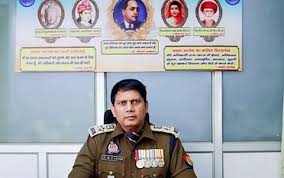
Dr. Ashok shared several experiences of caste discrimination during his police career. He claimed that despite his outstanding work, he was denied service medals, while officers with lesser qualifications received medals based on their caste and recommendations. Dr. Ashok offered a unique suggestion to empower the weaker sections of society, saying that at least one member of every family should study law. He said, “Knowledge of law gives a person respect and reduces the fear of injustice. No one asks a lawyer’s caste; it’s their status.” New Delhi – Dr. B.P. Ashok, a former senior officer of the Uttar Pradesh Police Service, social reformer, and founder of the ‘Caste Eradication Campaign,’ has said that true equality in the country can only be achieved when caste identification is completely eliminated. Describing the caste system as the biggest curse on society, he stressed the need for a “caste ban” law. In a candid conversation on the “Power Talk with Sanjeev” podcast, Dr. Ashok discussed his resignation to the President in protest of the Supreme Court’s decision on the SC/ST Act in 2018, the injustices he faced during his service due to casteism, and the issues of caste discrimination prevalent in society. Dr. Ashok recalled the 2018 incident when the Supreme Court, in a decision, weakened the provision for immediate arrest under the SC/ST Act and made investigation mandatory. Dr. Ashok was in the Training Department at the time. He explained, “This provision was made so that dominant classes could not oppress the weaker classes and force them into compromises. When this provision was abolished, there was anger among the Dalit and tribal communities across the country.” He further said, “Peaceful protests were planned across the country on April 2nd, but some people resorted to violence. Violence broke out in districts like Meerut, Agra, and Aligarh, resulting in the death of 13 young people in police action. Hurt by this incident and demanding strengthening of the law, I submitted my resignation to the President.” However, despite the intervention of then-Chief Minister Yogi Adityanath and assurances that the law would be reinstated within a month, his resignation was not accepted. Dr. Ashok said that Parliament reinstated the law on August 9, 2018. Encountering Casteism During Service Dr. Ashok shared several experiences of caste discrimination during his police career. He claimed that despite his outstanding work, he was not awarded service medals, while less qualified officers received medals based on their caste and recommendations. He said, “When it came to getting shot, I was at the forefront, but when it came to receiving medals, I was not.” Regarding the recent suicide of IPS officer Puran Kumar, Dr. Ashok said the incident was shameful for both the police department and society. He said a strong individual like an IPS officer would only take such a step when their morale is repeatedly undermined. He demanded a thorough investigation into the matter. Citing the example of former IPS officer Prasad, he said Prasad returned with degrees after being suspended for 11-12 years. “Have willpower, don’t commit suicide.” There should be a caste-banning law, just like demonetization. Dr. Ashok stressed that a strict law is needed to end discrimination and atrocities based on caste. He said, “We should enact a ‘caste-banning’ law, just like demonetization. All traces of caste should be erased from people’s pockets, nameplates, homes, neighborhoods, and shops.” He praised the order of Justice Vinod Diwakar of the Allahabad High Court, which directed a ban on writing caste-based names on vehicles and shops. Dr. Ashok believes that casteism cannot be eradicated until interview-free examinations and a caste-banning law are enacted. He said, “Increase inter-caste marriages and conduct interview-free recruitment. If the Mandal Commission had been implemented, democracy would have been strengthened. If OBCs had received a share, bullying would have stopped.” Sharply criticizing the caste system, he said, “Even a 100-year-old Kshatriya is inferior to a Brahmin. The situation of women is even worse.” “Why should a Brahmin in Kashmir give a share to the SCs of Kerala?” He called reservations “share.” “If you don’t like reservations, then practice inter-caste marriages. The next generation will benefit.” Provide top-to-bottom reservations in the private sector, and a 5-10% tax exemption. “Conduct a caste census, and balance will be created.” Family Background: A Legacy of Education and Struggle Dr. Ashok was born in Siyana village (Laung Sarai) in Bulandshahr. His father, Dr. Devi Singh Ashok, is a retired IG who traveled from village to village, sending SC/ST children to school. He said, “My father removed the fear of chanting ‘Jai Bhim’. We celebrated Dr. Ambedkar’s birth anniversary and wrote books. There was a tradition of education at home.” Dr. Ashok himself earned a PhD and D.Litt. in Buddhist philosophy. His daughter is in the IRS, his son-in-law is also in the civil service, and his son is pursuing an IIT. He said, “Ambedkarism is our inspiration. Buddha, Phule, Savitribai, Ambedkar—these are our icons.” Be educated, fight, stay organized.” His village also boasts a 53-foot-high “Bahujan Kranti Stambh,” dedicated to the martyrs of April 2, 2018. Dr. Ashok advised the youth to abandon superstition and fatalism for success and adopt a scientific mindset. “We waste 60 hours a year on superstition. China invests in R&D, we invest in gurus. 111 people commit suicide due to superstition. Buddha said to be guided by logic. Invest 25% of your surplus in savings; don’t borrow during festivals.” He emphasized time management, STEM education (science, technology, engineering, math), English, internet usage, and financial literacy. He said that without these skills, progress is difficult in today’s times. Geetha Sunil Pillai Courtesy: Hindi News
Bhadohi: Dalit women who went to relieve themselves were molested; a case was filed against two youths under the SC/ST Act on a court order.

Police did not register an FIR; the victim appealed to the court, and now a case has been filed against two youths under the SC/ST Act. Bhadohi: A shameful incident of ambushing and molesting Dalit women who were going to relieve themselves near a pond in Bhadohi district, Uttar Pradesh, has come to light. After accusing the local police of inaction, the victim’s family moved the court. Now, on the orders of a local court, a case has been filed against two youths under serious sections. Police stated on Monday that both accused are currently absconding and efforts are being made to arrest them. What is the whole matter? According to the police, this incident occurred in the Gyanpur Kotwali area. 60-year-old Raj Bahadur Gautam filed a petition in the court of Special Judge (SC/ST Act) Amit Verma on April 23rd of this year. Gautam stated in his petition that there is a pond in front of his house, where his family, as well as women and girls from several neighboring houses, go to defecate at night. The heinous acts were committed under the cover of darkness. The petition made the serious allegation that two young men, Ramesh Bind and Shyamdhar Bind, would hide near the pond under the cover of darkness. When women arrived, they would molest and engage in obscene acts. The victim’s wife was also abused. Petitioner Raj Bahadur Gautam alleged that on the evening of February 24th, when his wife went to the pond to defecate, the two accused subjected her to the same heinous acts. When his wife strongly objected, the accused not only abused her but also used casteist slurs and drove her away. Upon returning home, the woman narrated the entire ordeal to her husband. Husband beaten after complaining, police accused of inaction Gyanpur Kotwali SHO Manoj Kumar stated that after listening to his wife, Raj Bahadur Gautam went to confront the accused. It is alleged that the two youths also abused Gautam and beat him so severely that he had to be taken to the hospital for treatment. The victim Gautam also alleges that when he complained to the police about the incident, his FIR was not registered. Failing to receive justice, he was forced to approach the court. Case filed on court order After hearing arguments in the case, Special Judge (SC/ST Act) Amit Verma on November 8th clearly ordered the police to file a case. The police stated that, in compliance with this court order, a case was registered against both accused—Ramesh Bind and Shyamdhar Bind—at the Gyanpur Kotwali on Sunday under relevant sections of the Indian Penal Code (IPC) and the Scheduled Castes and Scheduled Tribes (Prevention of Atrocities) Act. Police are now searching for the absconding accused. Rajan Chaudhary Courtesy: Hindi News
How India’s Higher Judiciary Is Steadily Advancing Transgender Rights Amid Global Anti-Trans Backlash
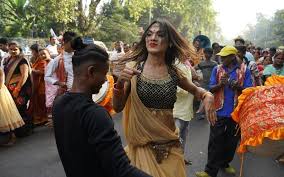
Through several landmark judgments, India’s Supreme Court has redefined inclusion for transgender people Today, supposed good-faith debates around gender theory are too often recast as a moral panic around gender, specifically, around what many on the right wing pejoratively call “gender ideology.” To be clear, from the very outset, the non-duality of gender is not an ideology; it is both theory and fact. For instance, one of US President Donald Trump’s first actions after taking office for his second presidential term was to eliminate the word “transgender” from the official lexicon of the United States federal government. This came amid his administration’s broader efforts to scrap federal DEI (Diversity, Equity, and Inclusion) policies and dismantle USAID projects around the world, which have had disastrous repercussions globally. That same year, the United Kingdom Supreme Court handed down a disappointing ruling that held that under the UK’s Equality Act (2010) — the primary anti-discrimination legislation in the UK — transgender women could be excluded from single-sex spaces and services. Across Europe and Central Asia, too, transgender people are witnessing a sharp erosion of their rights and protections under the guise of “protecting traditional values.” Thus, at a time when global backlash against transgender rights is surging, the Supreme Court of India is charting a totally different path, moving towards the “full realisation” of equality for transgender people under the law. A breath of fresh air The Supreme Court of India’s recent jurisprudence on transgender rights is a breath of fresh air in an otherwise polluted, anti-transgender global climate. More than 10 years ago, the Supreme Court of India, in NALSA v. Union of India (commonly known as the NALSA judgment), recognised the “third gender” as not only a legally distinct gender category under the law, but also endowed them with the same fundamental rights as everyone else. Then in 2019, the Indian government passed the much-contested Transgender Persons (Protection of Rights) Act, 2019 and the accompanying Rules, 2020, to codify the principles laid down in the NALSA judgment. Over the years, however, the on-the-ground impact of these progressive developments has remained limited, and transgender people continue to face multiple barriers in exercising their rights — including, and especially, in obtaining their official gender identification documents. Yet, amid this administrative ambiguity at home and rising anti-transgender sentiment globally, India’s constitutional courts have continued to (somewhat surprisingly) stand by the transgender community through progressive and expansive interpretations of the law. Recent progressive developments Most recently, on October 20, in Jane Kaushik v. Union of India, the Supreme Court of India handed down an important judgment that directed the formation of a high-level advisory committee tasked with drafting a practical policy framework to strengthen transgender rights and ensure the effective implementation of the beneficial provisions of the Transgender Persons (Protection of Rights) Act, 2019. Earlier this year, in June 2025, the Andhra Pradesh High Court issued a landmark judgment clarifying that transgender women were to be legally recognised as women under Indian law. This ruling further affirmed that transgender women in heterosexual marriages were entitled to the same legal protections as cisgender women under Section 498A of the Indian Penal Code (which criminalises cruelty, harassment, and domestic abuse by a husband or his relatives). It is worth noting that, unlike other jurisdictions that do not explicitly recognise the third gender as a distinct gender category, India’s constitutional position also means that transgender women are legally recognised in their own right, thereby ensuring that the advancement of their interests cannot be seen as an encroachment on or undermining of the rights of their female cisgender counterparts. A case in point is Shanavi Ponnusamy v. Ministry of Civil Aviation (2022), where a transgender woman seeking employment as a cabin crew member at Air India was forced to apply under the “female” category because no separate option existed for transgender applicants. Despite clearing all medical tests, she was ultimately denied employment. When she challenged the decision before the Supreme Court, the Court ruled in her favour. This was therefore not a case of a transgender woman attempting to unfairly “encroach upon women’s spaces,” as some right-wing activists might suggest, but rather an instance where the airline simply failed to provide a legally required, designated category or space for a transgender individual. Several other cases also echo this progressive judicial trend, including a widely reported 2023 same-sex marriage case. While the Supreme Court declined to grant legal recognition to same-sex marriages, it nevertheless made an exception for transgender people in heterosexual marriages and extended legal recognition to them. This marked a significant expansion from an earlier, narrower interpretation of the law, which recognised only a limited subset of such relationships under Hindu personal law alone. While these cases collectively signal the higher judiciary’s proactive approach toward expanding the scope of transgender rights in India, there is still room for improvement. For instance, transgender people in non-heterosexual relationships cannot yet have their marriages legally recognised. Similarly, various petitions challenging certain provisions of the Transgender Persons (Protection of Rights) Act, 2019, were filed before the Supreme Court years ago but are still awaiting adjudication. That being said, these judicial developments represent a promising trajectory, particularly when viewed in the troubling and volatile global context in which they are embedded. Therefore, there is reason to remain hopeful about India’s higher judiciary and its inclination to expand, rather than restrict, the scope of transgender rights under the law. This is a trend that activists can only hope continues in the years, if not decades, to come. By Kanav Narayan Sahgal Courtesy : The Good Men Project Note: This news is originally published on https:/thegoodmenoroject.com/bha and is used purely for non-profit/non-commercial purposes, especially human rights
Rahul Gandhi spoke to Gen Z on reservations, business-education in Bihar, and the RSS, and made these remarks on politics.

While speaking to Gen Z children, Rahul Gandhi responded to a question about caste-based reservations by stating that he was not talking about reservations for Scheduled Castes and Scheduled Tribes, but rather that he wanted every section of society to have access to the country’s resources according to their population. New Delhi: Congress MP Rahul Gandhi has been frequently discussing the new generation recently. He also urged Gen Z to participate in the Bihar elections. In this context, on Monday, he spoke with some Gen Z children on a variety of issues. Responding to a question about caste-based reservations, Rahul Gandhi stated that he was not talking about reservations for Scheduled Castes and Scheduled Tribes, but that he wanted every section of society to have access to the country’s resources according to their population, as advocated by the Congress party. Answering serious questions with a smile Congress released a 10-minute video on Monday, in which Rahul Gandhi appeared in a light mood while talking to children. The children, while laughing, asked him serious questions. The first question was about politics. Rahul Gandhi said he would simply share his own experiences. He said that responsibility and honesty are essential in politics. Everyone calls politics a dirty game…but in reality, it’s hard work. It’s real work. What did he say about reservations? A girl asked, “The BJP practices Hindutva politics, while the Congress talks about SC/ST reservations. What should we do?” To this question, Rahul Gandhi said, “Congress doesn’t talk about SC/ST reservations. Congress is saying that India’s wealth should be distributed honestly. Whether you’re a Dalit, an OBC, a Muslim, an EBC, or a tribal, you should all have equal opportunities. It shouldn’t be that two percent get all the wealth, while the rest are left screaming.” He further said, “If you say I fight for the rights of tribals, then you can say they vote for us (Congress). You wouldn’t call it a vote bank.” You can say this: whose rights are you working for? Rahul Gandhi said that while the term “vote bank” may sound appealing in the media, the real reason is that when you work for someone’s rights, that’s politics. He said this in response to a question about the Bihar elections. One question was, “In 2012, you went to Kashmir with several business tycoons and said you wanted to bring business to Kashmir. Do you have such a plan for Bihar?” Regarding this question about the Bihar elections, Rahul Gandhi said, “If I were to go to Bihar today with five businessmen, the state government would destroy the businesses. Nitish Kumar’s government has been in power in Bihar for 20 years. He has destroyed Bihar, and the education system in Bihar has also been destroyed. Education is almost nonexistent.” Rahul Gandhi alleged that young people in Bihar prepare for exams, but those who control the government leak the papers and give them to their own people. They appoint RSS chancellors to universities, who have destroyed the basic structure of education. There are professors who teach physics but don’t know physics. Those who teach biology don’t know biology. The healthcare system has also been destroyed. The healthcare system in Bihar has been privatized. Under the flyover at Delhi AIIMS, you’ll find many patients from Bihar who come to Delhi for treatment because they can’t be treated in Bihar. Curated by: Varun Shailesh About the Author Varun Shailesh is an Assistant News Editor at Navbharat Times Online. He has over 15 years of experience covering current affairs, politics, social issues, and features. He began his career with the news agency IANS in 2009. He worked on the central desk of Hindustan (Hindustan Times Group) for over five years. Courtesy: Hindi News
Delhi Red Fort Blast: Rahul Gandhi, Mamata Banerjee, Arvind Kejriwal, and others have expressed their condolences on the Delhi blast.
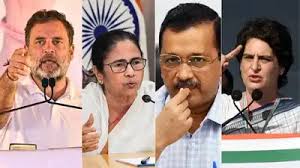
Leader of the Opposition Rahul Gandhi and West Bengal Chief Minister Mamata Banerjee, along with other national leaders, have expressed grief over the Red Fort blast in Delhi. Ten people are reported dead and several others injured. New Delhi: A massive explosion occurred in a car parked near the busy Red Fort Metro Station in Delhi on Monday evening. Reports claim that 10 people have died, while several others have been injured and admitted to LNJP Hospital. Police have issued a high alert in Delhi. Other major cities across the country are also on high alert, while the second phase of assembly elections in Bihar is scheduled for Tuesday. Home Minister Amit Shah is in contact with the Delhi Police and the Intelligence Bureau. He is also updating Prime Minister Narendra Modi on the situation. Meanwhile, leaders across the country have expressed their grief over this heartbreaking incident, including opposition leader Rahul Gandhi and West Bengal Chief Minister Mamata Banerjee. Priyanka Gandhi Vadra expressed grief, writing, “The news of the death and injury of many people in the Delhi blast is deeply saddening. May the departed souls rest in peace. My deepest condolences to the bereaved families. I wish the injured a speedy recovery.” West Bengal Chief Minister Mamata Banerjee wrote, “I am deeply shocked to hear about the tragic blast in New Delhi. My condolences are with the families who lost their loved ones, and I pray for strength and a speedy recovery for all the injured.” Leader of the Opposition in the Lok Sabha and Congress MP Rahul Gandhi wrote, “The news of the car explosion near Delhi’s Red Fort Metro station is deeply painful and worrying. The news of the death of many innocent people in this tragic accident is deeply saddening. I stand with the bereaved families who lost their loved ones in this hour of grief and offer my deepest condolences. I hope all the injured recover as soon as possible.” Former Delhi CM Arvind Kejriwal wrote, “The news of the blast near the Red Fort is deeply worrying.” It is being reported that some people have lost their lives in this incident, which is extremely sad. The police and government should immediately investigate how this blast occurred and whether there is a larger conspiracy behind it. Negligence regarding Delhi’s security cannot be tolerated. AAP leader Sanjay Singh wrote, “Only Pakistan could commit such a despicable act. Modi’s ceasefire has emboldened the Pakistani thugs. The terrorists who killed our innocent citizens should also be killed. The attack on the Red Fort is an attack on a symbol of our pride. The country is not safe under Modi. May God grant peace to the souls of the deceased.” Congress National President Mallikarjun Kharge wrote on Twitter, “Extremely saddened to hear the news of the car bomb explosion near Delhi’s Red Fort Metro Station. Initial reports indicate that many precious lives have been lost in this incident. Our condolences and prayers are with the bereaved families in this hour of grief, and we wish the injured a speedy recovery.” The government must ensure a prompt and thorough investigation into this explosion, which occurred in a highly secure and often crowded area, so that those responsible for this lapse and incident can be held accountable. Curated by: Nityanand Pathak About the Author Nityanand Pathak is a Senior Journalist (Assistant Editor) at Navbharat Times Digital. He previously served as Sports Editor at NBT (Digital) for the past seven years. Courtesy: Hindi News
Scripts of Power: Caste and the Missing Voice in Indian Newsrooms

The Mirchpur violence of 2010 shows how this monopoly works. After a Dalit boy and his disabled father were burned alive by upper-caste attackers in Haryana, most channels described it as a clash. India loves to call itself a democracy of a billion voices. But when it comes to who controls the microphone, the story is very different. According to Oxfam–Newslaundry Report 2022, nearly 90% of key editorial and executive positions across major English and Hindi media outlets are held by upper-caste individuals, highlighting deep structural inequality. This isn’t just imbalance; it’s exclusion disguised as merit. The media doesn’t merely reflect society, it manufactures it. Newsrooms decide what counts as violence, whose pain is exceptional, and whose is routine. When upper-caste men commit crimes, headlines describe them as Bahubali, Chhote Sarkar, or local strongmen. But when a Dalit or someone from a marginalized community is involved in crime, the same channels label it as hooliganism, ‘lawlessness’, or ‘chaos’. The meaning of the same event changes depending on who is involved. This does not in any way imply that anyone has a license to commit crimes, or that violence of any kind is acceptable. What it highlights is the narrative-building itself, exposing the media’s clear double standard. In his essay “Who Speaks for Whom?”, Avichal Warke captures this crisis perfectly. He writes that the problem isn’t only who is represented in the media but who gets to define representation itself. Dalits appear in news, but almost never in the newsroom. They are rarely allowed to report. While much of media coverage falls into this pattern, there are occasional outlets and journalists attempting to challenge this monopoly. Yet, these remain exceptions rather than the rule. The Mirchpur violence of 2010 shows how this monopoly works. After a Dalit boy and his disabled father were burned alive by upper-caste attackers in Haryana, most channels described it as a clash. No major prime-time debates, no major editorial campaigns and sustained coverage. The story vanished after a few days. What should have been a national reckoning became just another “incident.” This is what Stuart Hall meant when he said media doesn’t reflect reality, it constructs it. This silence is not neutral; it is political. Indian media, like Indian society, runs on what Antonio Gramsci called Hegemony (the ability to make inequality appear normal and natural). When every anchor, editor, and owner comes from the same social background, caste power becomes common sense. The public stops noticing that the truth is being told from one side only. Behind this cultural bias lies a harder fact: money. Indian media – whether English, Hindi, or regional, relies primarily on advertising rather than subscriptions. The people and corporations who pay for ads are largely from the same privileged castes that dominate newsrooms. A channel that questions caste hierarchy also risks questioning its sponsors. So the bias is not just ideological; it is financially built in. What looks like professionalism often hides the economics of caste comfort. Even entry into journalism follows this logic. As Pierre Bourdieu would say, those with symbolic capital (status, credentials, and influential networks), naturally occupy positions of legitimacy. They do not need to be openly casteist; their world already excludes those who do not fit. Many Dalits who enter journalism are confined to “caste stories,” while politics and economy remain safely in upper-caste hands. The Oxfam–Newslaundry report makes this visible in numbers. Analysis of hundreds of prime-time debates found that over 85% of panellists came from upper-caste backgrounds, while Dalits and Adivasis were rarely represented. This absence produces what Warke calls “a silence that sounds like balance.” It teaches viewers that upper-caste perspectives are objective and Dalit perspectives are emotional, that neutrality belongs to the powerful. After the Black Lives Matter protests in the United States, major newspapers admitted their racial bias. The Washington Post and The New York Times published diversity reports and appointed Black editors. It wasn’t charity; it was accountability. Society forced its media to confront its reflection. In India, there has been no such reckoning. Speaking about caste bias in newsrooms can still end a career. The result is a democracy that talks endlessly, but listens selectively. The latest World Press Freedom Index shows India ranked 151st out of 180 countries in 2025, a slight improvement from 159th in 2024, but still in the “very serious” category for press freedom. While government pressure on the media is real, the deeper rot lies within: a press that has historically never represented marginalized communities cannot suddenly defend them when power turns hostile. Persistent structural issues, such as concentrated media ownership, economic dependence on the state, and threats to journalists ensure that India’s media environment remains fragile and unresponsive to those most in need of a voice. A democracy’s health is not measured by how loudly it speaks, but by who it allows to speak. Today, Indian media remains a closed echo chamber, powerful and self-assured. To break this cycle, newsrooms need more inclusive representation, and audiences must critically engage with the narratives presented. — ✍️ Mohit Nirmender – The author is an Independent Researcher / Blogger Courtesy : The Mooknayak Note: This news is originally published on https:/themooknayak.com/bha and is used purely for non-profit/non-commercial purposes, especially human rights
Asothar police accused of assaulting a Dalit family: Woman suffers head injury, station in-charge calls allegations baseless

Police in Fatehpur’s Asothar police station area have been accused of assaulting women and girls from a Dalit family. The incident came to light after a video went viral on social media, allegedly showing two girls and two women being assaulted by policemen inside the police station premises. It is alleged that 10 to 12 policemen kicked, punched, and beat a young woman with belts, both inside and outside the police station, resulting in serious head injuries. The medical report also documented the injuries.Family members of the victim, Deepika, stated that the incident stemmed from a dispute over the payment for a pig. Deepika’s elder mother had sold a pig to a trader, and an argument ensued over the payment. The businessman filed a complaint at the Asothar police station, following which a police team arrived at Kauder village and summoned the family. The family alleges that upon arriving at the police station, the policemen misbehaved with the women and their daughters and then began beating them inside.According to the victim, Deepika, after the beating, the police issued a challan under Section 151. Despite suffering a serious head injury, she was not given a medical examination. The family reported that Deepika’s health is continuously deteriorating and she is vomiting. The woman’s wedding is scheduled for November 22nd, which is worrying the family.Asothar police station in-charge Abhilash Tiwari presented his side of the story. He stated that people who had come to buy pigs were assaulted and injured. A case has been registered in this regard, and some of the accused have been detained and presented in court, while one is still absconding. The station in-charge alleged that false videos and photographs are being circulated against the police to protect the absconding accused. He clarified that the police did not assault anyone and all the allegations are baseless.Amar Kesharwani Courtesy : Hindi News
Bihar Elections: If 18% of Dalits support… you’ll win the crown. Find out who’s in the mood?

Bihar Politics: Campaigning for the second and final phase of the Bihar Assembly elections has concluded. All eyes are now on Dalit and Muslim voters, who are considered to hold the key to power. Bihar Assembly Elections: Campaigning for the second and final phase of the Bihar Assembly elections has concluded. All eyes are now on Dalit and Muslim voters. According to analysis, the key to the mandate lies in the hands of 18% Dalit voters, who have the power to swing the outcome in nearly 100 seats. This phase also holds clues to the future political future of the Muslim community, which has a significant presence in three dozen seats, including Seemanchal. The situation this time is slightly different from the previous election. VIP, which supported the NDA last time, is now with the Grand Alliance, while Chirag, who contested the elections on his own, is working to strengthen the NDA this time. Why is PK trying his best? Beyond the opposition Grand Alliance, the Jan Suraj Party, following the AIMIM, is also striving to establish itself as the leader of Muslims. In a close contest, the NDA narrowly reached the magic majority mark by winning 17 more seats than the Grand Alliance. A 1.6% Vote Shift In the last election, the NDA received 1.6% more votes than the Grand Alliance. This lead helped it win 66 seats compared to the Grand Alliance’s 49. The NDA secured a significant lead in Anga Pradesh, Tirhut, and Mithila, while the RJD secured a significant lead in the Magadh region. In Seemanchal, the close contest and the presence of the AIMIM gave the NDA a slight advantage. The Dalit community is the most important constituency in this phase. Of the Dalit community, which constitutes 18% of the total vote share, 13% are Mahadalits (of which 2.5% are Musahars) and 5% are Paswan (Dusadh). There are approximately 100 seats where the voter population of this community is between 30,000 and 40,000 per seat. Chirag came and Sahni left. JDU directly lost 22 seats due to Chirag contesting the elections on his own. The BJP and political pundits believe that the alliance between Chirag and Jitan Ram Manjhi will consolidate 7.5% of the Paswan and Musahar community votes in favor of the NDA. Muslims are hoping for new leadership. For decades, RJD’s powerful leaders were the face of Muslim politics in Seemanchal. Now, there is a clear anxiety among Muslims about new leadership. The AIMIM, which won five Muslim-dominated seats in Seemanchal in the last election, has linked the Mahagathbandhan’s failure to field a deputy CM candidate to an insult to the community. Furthermore, the newly formed Jan Suraj Party, which is contesting this election, is also striving to establish itself as a leader of Muslims. The AIMIM has fielded Muslim candidates in all Muslim-dominated seats. The Jan Suraj Party has also fielded candidates from the same community in Muslim-majority seats. By Abhishek Singh Courtesy: Hindi News
“My feminism begins in the fields, barns, and settlements…!” With the victory of Dalit girl Komal Devi in JNUSU, BAPSA makes a resounding comeback after 11 years; the Bahujan community rejoices.
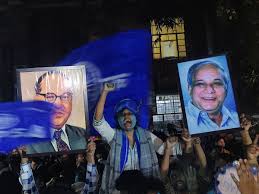
Ambedkarite thinkers are hailing Komal’s victory as a triumph of marginalized women worldwide and a triumph of indomitable courage against Brahminical patriarchy. New Delhi – Komal Devi of the Birsa Ambedkar Phule Students’ Association (BAPSA) has won a landslide victory for the post of councilor from the School of Social Sciences (SSS) in the Jawaharlal Nehru University Students’ Union (JNUSU) elections 2025. This victory marks a milestone for the Bahujan community, marking the return of BAPSA to the SSS after an 11-year struggle. Komal Devi’s election slogan, “My feminism begins in the fields, barns, and settlements…,” ignited a fire in the hearts of Dalit-Bahujan students, and her victory filled the campus with celebrations. Dalit student Komal Devi, a postgraduate student at SSS, embraced Dr. B.R. Ambedkar’s principle of “Educate! Agitate! Organize!” in her campaign. This passionate statement in a video message—”My feminism begins from the fields, barns, and ghettos…”—brought the voice of women from rural India to the corridors of JNU. Her outspoken opposition to “Hindutva fascism” and “upper caste leftist hypocrisy” sparked a wave of enthusiasm among Bahujan students. Following the announcement of the election results, #KomalDevi and #BAPSAVictory began trending on social media, with Bahujan activists hailing her victory with chants of “Jai Bhim” and “Hul Johar.” The Bahujan Community’s Excitement: A Comeback After 11 Years The School of Social Sciences (SSS) is JNU’s largest school, with over 2,000 students, and Komal’s victory signals the restoration of Bahujan representation. The organization’s official statement said, “This victory is a step towards reclaiming our spaces, our voices, and our dignity. We reject absorption, we reject tokenism—this is the politics of self-respect and autonomy.” The Bahujan community is celebrating this victory like a festival, with hundreds of posts on Twitter (formerly Twitter) hailing it as a “Bahujan awakening.” Allied groups like the Neelam Cultural Center have offered their congratulations. Political analyst and assistant professor at Jadavpur University, Subhajit Naskar, celebrated her victory in a social media post, writing: “Komal, a Dalit girl from the extremely marginalized Valmiki community of Haryana, has become a councilor at the School of Social Sciences. Her victory is a victory for marginalized women worldwide and a testament to the indomitable courage of those facing Brahminical patriarchy.” BAPSA won a total of one seat in this election, from the SSS councilor. The Left Unity (SFI, AISA, AISF) made a clean sweep in the central panel, including the posts of president, vice-president, general secretary, and joint secretary. The ABVP did not win any seats, a setback after last year’s single victory. BAPSA contested the elections independently, and Komal’s victory reinforced the organization’s legacy of Ambedkar, Phule, and Birsa Munda. Komal Devi’s campaign emphasized caste-based discrimination, gender equality, and equitable distribution of resources. Outperforming her rival, Rahul Motghare, she conveyed a message of Bahujan unity. As a councilor, she will strengthen the Bahujan perspective in council debates. Media reports have called her victory the “end of an 11-year drought.” Amidst the post-election excitement on the JNU campus, Komal’s win opens the possibility of new alliances for progressive reforms. BAPSA celebrated in its post, saying, “We have our own tunes and rhythms that celebrate our struggles and victories.” Geetha Sunil Pillai Courtesy: Hindi News