
A Dalit PhD scholar at Kerala University makes a heartbreaking post: “I can hear the cries of my brother Rohith Vemula… Life is slipping away again!”
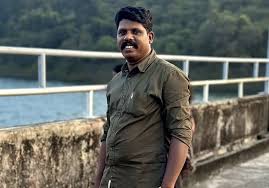
Thiruvananthapuram—A new case of casteism has surfaced in the Sanskrit Department of Kerala University. Dalit PhD scholar Vipin Vijayan has made serious allegations of caste discrimination, abuse of power, and withholding his PhD degree from the department’s Dean, Dr. C.N. Vijayakumari. Vipin claims that Dr. Vijayakumari, who is said to be associated with the RSS-BJP, deliberately disrupted his academic journey. This case has shaken the entire state and brought back memories of the Rohith Vemula case. According to a Facebook post by Vipin, he holds a B.A. and M.A. in Sanskrit from Sri Sankaracharya University, a B.Ed. and M.Ed. from Kerala University. He completed his M.Phil. in Sanskrit from the Kariavattom campus, guided by the head of the Sanskrit department, Dr. Vijayakumari. But now the same Dean is blocking his PhD, calling him “unintelligible to Sanskrit.” Citing the Dean’s alleged casteist statement, Vipin stated, “No matter how much the Pulayanas or Parayans (considered lower castes in Kerala) bow down, Sanskrit will never bow down to them like the Brahmins.” Vipin says that his dissertation, “Epistemological Review of Kenopanishad,” was praised by the examiners and recommended for a PhD. However, the Dean wrote a letter to the university claiming that Vipin doesn’t know Sanskrit, even though university rules permit research in English or Malayalam. Vipin claims that he is left-leaning and the Dean is an active member of the Sangh Parivar teachers’ organization, making her stance casteist. Vipin says, “My political ideology is being questioned, but why the silence on her ideology?” Vipin says he completed his M.Phil. in Sanskrit, guided by Dr. Vijayakumari. From Vipin Vijayan’s Facebook post The researcher alleges in his Facebook post that the university’s dean, Dr. C.N. Vijayakumari, filed a false report against him, alleging that he cannot read or write Sanskrit. According to the researcher, this allegation is completely baseless and false. Read the PhD scholar’s poignant post: “I can still hear the cries of my own brother, Rohith Vemula. I can hear the horrific mockery of casteism. I can’t sleep, and life is slipping away again. The epithet “not knowing Sanskrit” has been forever imprinted on me like a never-fading stain. There’s not a shred of truth in this propaganda, but it has left a never-healing wound in my life.” Will my words, moments from my life, ever be published on any channel or newspaper? I don’t know. I received my M.Phil. in Sanskrit from the Sanskrit Department of the University of Kerala. I am pursuing research on the basis of my M.Phil. qualification. My M.Phil. dissertation is titled “An Epistemological Critique of the Kenopanishad,” and it was guided by Dr. C.N. Vijayakumari Teacher! Yes, the same Dean who stated in her report to the university that I cannot read or write Sanskrit. What qualifications does Dr. C.N. Vijayakumari Teacher, who helped me in awarding an unqualified M.Phil. degree to someone who doesn’t know how to read or write Sanskrit, have to continue as a lecturer? Did my M.Phil. dissertation reviewer, Dr. Vijayakumari Teacher, deceive the university? Is Dr. C.N. Vijayakumari Teacher a fraud for aiding me in this fraud? Or have I forgotten Sanskrit after receiving my M.Phil.? How did I suddenly become someone who cannot read or write Sanskrit? The essence of that transformation is casteism! How did I, who didn’t even submit a nomination in the Research Students’ Association elections, become featured in the news as the General Secretary of the Research Students’ Association, an important position? I have a political bias, and Dr. Vijayakumari Teacher also has a clear political bias. I am left-wing. Teacher follows RSS-BJP politics and is an active worker in the Sangh Parivar Teachers’ Association at Kerala University. How did my political bias become a topic of discussion? Didn’t the Dean of the Sangh Parivar Teachers’ Association’s report against the SFI leader become news? Why is Dr. C.N. Vijayakumari Teacher’s political bias not being exposed? How did I become a criminal, and Dr. C.N. Vijayakumari Teacher a holy angel? I don’t know whether the media will think so. Do facts have no value in news? By ignoring the dissertation examiners and open defense chairman selected by the Vice Chancellor, the Dean, who is trying to establish non-existent power, is distrusting and challenging the Vice Chancellor’s decisions. The examiners and chairman have recommended the award of a PhD for my dissertation. C.N., who thinks and acts inappropriately for the noble academic position of Dean, Vijayakumari Teacher should not remain in that position even for a moment. Otherwise, the relevant authorities should remove the Dean. This university with its great tradition should not be disgraced; the Dean should not continue. The reason is that no other student should suffer from such abuse of power. My PhD dissertation was prepared in English, as university rules permit it. Sanskrit is not mandatory in the open defense; English and Malayalam are acceptable. If you check the Sanskrit Department library, you will find numerous theses and M.Phil theses prepared in English. Some wicked people from Thiruvananthapuram, who roam around with their faces covered in the name of protecting the university, came running to attack me like frightened dogs. Who entrusted them with the responsibility of assessing my abilities? Several media personnel called me when the news broke. Appearing before the media is impossible; I fear even venturing out. My entire life is being cut and bleeding because of a letter from the Dean. My PhD is my life. It’s as if all the academic achievements and abilities I’ve accumulated over the years have been destroyed in a single day. Does truth have no value? Otherwise, I wouldn’t exist either. Darkness is filling my life… FIR filed under SC/ST Act Following a complaint by Vipin Vijayan, the Srikarayam police have registered a case of caste-based insult against Dr. C.N. Vijayakumari, Dean of the Faculty of Oriental Studies and Head of the Sanskrit Department at the Kariavattom campus. According to the FIR filed late Saturday night, Vijayakumari refused to sign Vipin’s thesis after
Mirzapur: Woman arrested for allegedly pressuring Dalit laborer to convert to Christianity with the promise of money.
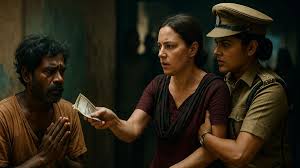
Rajgarh police took action following a complaint from a Dalit laborer. She was pressuring him to convert to Christianity by promising him money and other benefits. Mirzapur: District police arrested a 32-year-old woman on Saturday for allegedly attempting to forcibly convert. The arrest came following a complaint filed by a Dalit laborer alleging that the woman was repeatedly persuading him to convert to Christianity by luring him with money and other benefits. Police said the accused woman has been identified as Pramila. A case has been registered against her at the Rajgarh police station under relevant sections of the Uttar Pradesh Prohibition of Unlawful Conversion of Religion Act. Rajgarh Police Station Station House Officer (SHO) Daya Shankar, providing details of the case, said, “The accused, Pramila, was arrested on Saturday and later produced before a local court in Mirzapur, where she was remanded to judicial custody.” According to police, complainant Dhruv Chandra stated in his complaint that the accused woman had been meeting him repeatedly for the past few months and pressuring him to convert to Islam. Investigation revealed that the complainant lives in the Rampur-38 area, while the accused woman is a resident of Chandanpur village, about 7 kilometers away. Police sources also claim that Pramila’s husband had strongly objected to these activities, leading to frequent conflicts within the family. Rajan Chaudhary Courtesy: Hindi News
UPSC Gender Gap: Women See Gradual Progress, Transgender Inclusion Remains Almost Nonexistent

Despite forming nearly half of India’s population, women and transgender individuals continue to be vastly underrepresented in the country’s most prestigious recruitment process — the UPSC Civil Services Examination. Data from the Union Public Service Commission’s (UPSC) Annual Reports between 2010 and 2021 paints a telling picture: while women’s participation has slowly increased, transgender representation remains almost invisible. Women’s Representation: A Slow but Steady Climb According to the UPSC’s 2021 Annual Report, women constituted 32.98% of candidates appearing for the Preliminary Examination. However, only 14.75% progressed to the Mains, 26.87% reached the Interview stage, and ultimately, a mere 15.66% — or 201 women — made it to the final list of selected candidates. Although modest, the upward trend is clear: women’s participation rose from 23% in 2010 to nearly 33% in 2021, signaling a slow but steady shift toward gender inclusion in India’s civil services. Transgender Participation: Progress Still Out of Sight In contrast, the transgender community remains almost absent from the UPSC landscape. Following a 2016 court directive, the Commission added a “third gender” option in its application forms — a milestone for inclusivity. However, the impact has been minimal. In 2021, only 19 transgender candidates applied, with just four appearing for the exam — none qualified. Similarly, 2020 saw 16 applicants and five appearances, while 2018 and 2019 recorded just one application each. Experts attribute this near-zero participation to systemic barriers — widespread stigma, identity-based exclusion, and a lack of institutional support prevent many transgender students from even reaching higher education, let alone competing in national-level exams. Professor Rajeev from Delhi University explained that while initiatives like his department’s Transgender Resource Center offer training and counseling, broader social awareness and inclusive educational policies are urgently required to bridge the gap. Societal Pressures Continue to Constrain Women Aspirants For countless women, preparing for the UPSC remains a struggle against entrenched cultural expectations. Anshika Moyal from Rajasthan recalled how her decision to move to Delhi for exam preparation invited constant reminders from relatives to get married. “There’s still a belief that girls should be married by their late twenties. That constant pressure makes it hard to stay focused,” she said. Similarly, Aayushi from Uttarakhand, a government employee, shared that she faced ridicule from family elders for continuing her studies instead of marrying. “My grandmother used to say I was wasting time, but my mother stood by me and encouraged me to keep going,” she added. IAS officer Ira Singhal noted that many families see the UPSC as a “risky pursuit” for women, preferring the perceived stability of marriage over the uncertainty of years-long preparation. Economic and Structural Challenges Deepen the Divide Beyond social barriers, financial constraints often determine who can afford to chase their civil services dream. UPSC preparation typically demands hefty expenses — coaching fees, accommodation, and study materials add up quickly. Aayushi shared that while her parents funded her education, they couldn’t afford to send her to Delhi for coaching, forcing her to rely on self-study. Such financial disparities highlight how families often invest more readily in sons’ education, while daughters’ ambitions are seen as secondary. The Balancing Act: Marriage, Family, and Ambition For married women and mothers, the challenge intensifies. Anshika noted that several of her married friends preparing for UPSC can barely dedicate three to four hours a day to study after managing household and childcare responsibilities. These stories underline the dual burden of domestic expectations and academic competition that women face, often making their journey longer and harder. The Road Ahead: Building a Gender-Just Bureaucracy The trends suggest that while women are gradually carving a space in India’s administrative services, transgender representation is still at a nascent — almost invisible — stage. Experts argue that meaningful reform will require inclusive educational policies, gender-sensitive coaching programs, targeted scholarships, and affirmative institutional support. As India strives toward a modern, equitable civil service, the challenge is clear: to build a system where merit prevails over gender, ensuring that every talented individual — regardless of identity — can aspire to serve the nation through its most respected bureaucratic institutions. Parijat Tripathi Courtesy : North Block South Block Note: This news is originally published on https:/northblocksouthblock.com/bha and is used purely for non-profit/non-commercial purposes, especially human rights
Unpacking transgender rights
Scholarship on queer and non-binary identities emerged relatively later, with Judith Butler’s work on gender performativity standing out as especially influential. “Can you provide a definition for the word ‘woman’?” When Republican Senator Marsha Blackburn asked the then–DC Circuit Court Judge Ketanji Brown Jackson this question at her confirmation hearing for a seat on the United States Supreme Court in 2022, Jackson replied (with some hesitation), “I am not a biologist.” This should come as no surprise, for this very question has long preoccupied scholars, lawyers, writers, philosophers, activists, and lawmakers alike. Early thinkers like Aristotle and Plato viewed women as inherently inferior to men, relying on naturalist assumptions about their supposed incapacity for reason or leadership. Simone de Beauvoir challenged these assumptions in her magnum opus, The Second Sex, arguing that distinctions between the sexes were socially—rather than naturally—constructed. Yet like many early feminist theorists, she conceptualised gender within a limited binary framework. Gender not fixed or innate Scholarship on queer and non-binary identities emerged relatively later, with Judith Butler’s work on gender performativity standing out as especially influential. In the book, ‘Gender Trouble’, Butler demonstrated that gender was neither innate nor fixed, but rather something enacted—a series of repeated performances shaped by social norms and expectations. And yet, naturalist conceptions about gender persist in contemporary political thought. In April 2025, the UK Supreme Court issued a landmark ruling that held that the term “woman” in the Equality Act 2010 did not include transgender women. This ruling followed Donald Trump’s second presidential victory, during which attacks on the transgender community became both frequent and central to the Republican Party’s platform. In January 2025, just hours into his first day back in office, President Trump signed an executive order declaring it official US policy to recognise “only two sexes, male and female,” further asserting that these sexes were fixed, immutable, and “grounded in fundamental and incontrovertible reality.” What do these developments tell us? They show that in many parts of the West, transgender people continue to be excluded—either by omission or active resistance—from legal and policy frameworks meant to otherwise include them. Even in Canada and the EU, backlash is growing: public opinion on transgender rights is divided in Canada too, while far-right movements in the EU continue to frame gender diversity as a threat to national identity. What we’re witnessing, therefore, is not hesitation, but a deliberate global rollback of hard-won LGBTQ+ rights. India’s principled stance In this broader context of shrinking protections and rising hostility, India’s jurisprudence on transgender rights stands out as surprisingly principled. In 2014, the Supreme Court of India formally recognised the “third gender” as a distinct legal category and unequivocally affirmed transgender individuals’ right to selfidentify their gender, along with their entitlement to full constitutional rights. More recently, in Viswanathan Krishna Murthy v State of Andhra Pradesh, the Andhra Pradesh High Court held that transgender women in heterosexual marriages could be legally recognised as “women” for the purposes of invoking protections under laws that traditionally apply only to cisgender women; a position that stands in stark contrast to the view taken by the UK Supreme Court months earlier. Interestingly, the Andhra Pradesh High Court arrived at this conclusion by relying on the Supreme Court of India’s 2023 marriage equality ruling, which denied same-sex couples the right to marry yet affirmed transgender individuals’ right to enter heterosexual marriages. Holding that denying a transgender woman legal status as a “woman” under Section 498-A of the IPC based on her reproductive capacity is discriminatory, the Court said: “Such a contention, therefore, deserves to be rejected at the outset.” To be clear, transgender people in India continue to face challenges with the law. For instance, the Transgender Persons (Protection of Rights) Act, 2019, India’s primary legislation governing transgender rights at the national level, still subjects transgender individuals to a burdensome bureaucratic certification process in direct violation of the Supreme Court of India’s 2014 ruling, which affirmed transgender people’s right to self-identify their own gender. Petitions challenging these and other provisions have yet to be heard by the Supreme Court. Despite that, in a global political climate where transgender rights are being rolled back at a disheartening pace, it is encouraging to see judgments like Viswanathan Krishna Murthy affirm transgender people’s dignity and right to equality. As the law tightens its noose around transgender lives, one can only hope that lawmakers and judges listen with greater intent and empathy to the plurality of gendered experiences. As Simone de Beauvoir once wrote, “I am a woman; on this truth must be based all further discussion” — may we take this as an opening to defend our freedom to define ourselves beyond imposed categories. (The author is a communications manager at Nyaaya, the Vidhi Centre for Legal Policy and can be reached at sahgalkanav@gmail.com) Kanav Narayan Sahgal. Courtesy : DH Note: This news is originally published on https:/deccanherald.com/bha and is used purely for non-profit/non-commercial purposes, especially human rights
BJP bets big on Dalits, Mahadalits as Bihar gears up for Phase 2 polls

For the second phase, the BJP has put its focus on consolidating Dalit and Mahadalit votes, which account for 18% of Bihar’s electorate. This bloc wields considerable influence on more than 100 assembly seats As Bihar gears up for the second phase of assembly elections, the BJP has put its focus on consolidating Dalit and Mahadalit votes, which together account for around 18% of the state’s electorate. This bloc wields considerable influence on more than 100 assembly seats, and its voting pattern holds the key as to which side will form the next government. Leading up to November 11, the BJP has centred its campaign on constituencies bordering Uttar Pradesh — particularly in the districts of West Champaran, Gopalganj, Siwan, Saran, Bhojpur, Buxar, and Kaimur. These districts are adjacent to UP’s Deoria, Kushinagar, Maharajganj, Ghazipur, Chandauli, Ballia, and Sonbhadra. UNITING MAHADALIT AND PASWAN VOTERS The BJP estimates that Mahadalits constitute about 13% and Paswan voters around 5% of Bihar’s electorate. In the 2020 assembly election, the votes got split after Chirag Paswan’s Lok Janshakti Party (LJP) contested separately. This time, Chirag Paswan is in the NDA fold, and the BJP is determined to prevent that split. The BJP estimates that former chief minister Jitan Ram Manjhi’s HAM will help secure nearly 2.5% of the Musahar votes, while Chirag Paswan will ensure that about 5% of Paswan votes end in the NDA’s kitty. EYE ON MAYAWATI FACTOR The BJP is also closely monitoring Mayawati’s Bahujan Samaj Party (BSP). While Mayawati initially announced candidates for all 243 seats, only about 190 are in the fray after some nominations were cancelled. At a recent rally in Kaimur’s Bhabua, Mayawati attempted to consolidate the Ravidas community, a significant Dalit sub-group. BJP believes Mayawati’s party may secure up to 5% of Ravidas votes. A split will only indirectly benefit the NDA. In the last Assembly polls, the BSP fielded candidates on 78 seats and secured 2.37% of the total votes. It won one seat, Chainpur, whose MLA later joined the JD(U). The party has a relatively strong base in western Bihar, especially in districts like Kaimur, Rohtas, Ara, and Buxar. NDA’S CANDIDATE MATH To appeal to the Dalit community, the NDA has fielded 39 candidates from the Scheduled Castes. The NDA has also attempted to maintain a careful caste balance within Dalit and Mahadalit sub-groups, ensuring representation for Ravidas, Musahar, Pasi, Bhuiya, Dhobi, Dom, Nat, Bhogta, and Kanjhar communities. For the second phase, the BJP’s mission is clear: prevent the fragmentation of Dalit and Mahadalit votes like the 2020 polls. It remains to be seen if the BJP’s intricate social engineering pays off. Himanshu Mishra Courtesy : India Today Note: This news is originally published on https:/indiatoday.com/bha and is used purely for non-profit/non-commercial purposes, especially human rights
Dalit Mythology: The Durga of Dalit Narrative
Because this retelling comes from a Dalit scholar, any challenge to it is immediately painted as casteist. In recent years, there has been a growing clash between ‘Sanatani mythology’ and ‘Dalit mythology’. During the festival season last month, a well-known Dalit activist argued that the worship of Durga is nothing but the celebration of an Aryan invasion of Dravidian lands. In his retelling, Mahishasur, the buffalo demon, represents dark-skinned Dravidians while Durga represents fair-skinned Aryans. Because this retelling comes from a Dalit scholar, any challenge to it is immediately painted as casteist. But the Dalit retellers are following the toolkit long used by Sanatani activists who brand their critics as anti-national or communist. This is how ideological battles are fought today. Labels need to be weaponised. Myths need to be reimagined. Political groups across the spectrum have always bent old stories to fit new narratives. In his 1873 book Gulamgiri (Slavery), Jyotiba Phule reimagined the Devas-Asuras wars as colonisation of ancient Dravidian lands by Aryan infiltrators. Great Asura kings like Prahalad, Virochana, and Bali were seen as demons. By turning ‘gods’ into colonisers and ‘demons’ into heroes, Phule gave Bahujan communities a counter-history. If Brahmins could use mythology to establish their supremacy, surely Dalits could use the same for social justice. Sanatanis have long tried to debunk the Aryan Invasion Theory (AIT), arguing it was simply colonial propaganda. Some even propose the Out of India Theory (OIT) that claims Brahmins gave civilisation to the world. Ironically, it was Balgangadhar Tilak, the founding father of the Sanatani political ideology, who first decoded astronomy-based Vedic hymns to show that the Aryan homeland may have been north of the Himalayas, near the Arctic, probably. The Vedic ‘Usha’ hymns spoke of a land where there were dawns without any visible sun. In the 20th century, Babasaheb Ambedkar rejected AIT as it was a racial theory aimed at establishing Brahmin-European-Aryan superiority. He argued caste was a social, economic, and political problem, not a racial one. But now, in the 21st century, we have a new source of evidence – genetics! DNA studies clearly show migration of Steppe pastoralists and horses into India took place over 3,000 years ago. Aryans did come to India. But not as invaders who destroyed the Harappan cities. They came to trade Central Asian horses for Indian iron, 500 years after Harappan cities had ceased to exist. Both Sanatani and Dalit activists rarely bother with art or ritual history. The image of Durga with many arms, killing the buffalo, first appeared around 2,000 years ago in Kushan art (100 AD). It was first carved in stone during the Gupta period (400 AD). The Sanskrit story of Durga being created by the gods and restoring paradise to Indra appears much later in the Markandeya Purana (600 AD). Across India, especially in the Deccan, there are folk traditions where worship of the goddess involves a ritual slaughter of a buffalo. These orally transmitted tales are fragmentary and layered. The young, virile priest who performs the ritual is called Pota Raju, the Buffalo King. He, typically, hails from a ‘low’ caste. He calls himself the servant and son of the goddess. He leads the procession to the temple. The goddess is pleased by rituals involving violence (fire-walking, hook-swinging, blood sacrifice). Every year, a young male buffalo (reda, in the local language) is chosen to be slaughtered the following year, a ritual mimicry of the renewal of earth’s fertility. This suggests that the festival originally had little to do with grand cosmic battles between gods and demons. It was an agricultural ritual, deeply tied to cycles of sowing and harvesting. This story has nothing to do with the Vedic world. Brahmins, who rarely participate in such boisterous village rituals, insist the goddess of the village was once a Brahmin girl. She was tricked into marrying a beef-eating man. When she discovered this, she killed him, and that event is remembered each year. They argue this is why many goddess temples are now vegetarian – the Chamunda temple in Mysuru, the Ambabai temple in Kolhapur. In fact, many Sanatanis think Bengalis need to stop offering meat and fish to Durga during their annual Pujo. Dalit myth-makers are using this very same story to make the outraged Brahmin’s daughter the symbol of Aryan oppression and her beef-eating husband the embodiment of the oppressed. Today, young Dalit activists are raising foundational questions: who makes the rules of Hinduism? Do those categorised as ST/SC have any say in the matter? Who classified those who eat cow meat as impure and those who drink cow urine as pure? It could not have been the goddess or the buffalo. The writer works with gods and demons who churn nectar from the ocean of Indian, Chinese, Islamic, Christian, even secular mythologies. Disclaimer: The views expressed above are the author’s own. They do not necessarily reflect the views of DH. Devdutt Pattanaik Courtesy : DH Note: This news is originally published on https:/deccanherald.com/bha and is used purely for non-profit/non-commercial purposes, especially human rights
Madhya Pradesh: Court issues major decision in Dalit forced urine case, accused to remain behind bars

A major decision has been reached in the Bhind Dalit case. The Madhya Pradesh High Court has rejected the bail plea of the accused. A Dalit youth was beaten and forced to drink urine in Surpura, Bhind district. Police arrested three accused and took action under the SC-ST Act. Madhya Pradesh Bhind Peshab Kand News: A major court decision has been reached in the highly publicized case of a Dalit youth being forced to drink urine in Bhind district, Madhya Pradesh. The Madhya Pradesh High Court has rejected the bail plea of the accused. Now, the accused will remain behind bars. A Dalit youth was beaten in the Surpura area of Bhind district. It is alleged that he was then forced to drink urine. The Bhind District Court had already rejected the bail plea in this case. Now, the Gwalior bench of the High Court has also denied bail. Senior advocate Anil Mishra represented the accused, Alok Sharma. It should be noted that on October 20, 2025, Gyan Singh Jatav, a Dalit, was beaten and forced to drink urine in Bhind district. Acting swiftly in response to the harassment, Bhind police registered a case under various sections of the SC/ST Act, including assault, kidnapping, and the SC/ST Act, and arrested the accused, Sonu Barua, Alok Sharma, and Chhotu. The entire story of the Dalit youth being forced to drink urine in Bhind is that Gyan Singh is a driver by profession. He claims that on October 18, Sonu Barua, a villager, asked him to work as a driver on his vehicle. In a media interview, Gyan Singh stated that these individuals were criminal in nature, so he refused to drive their vehicle. They then abducted him from his home at gunpoint, assaulted him, and forced him to drink urine. A major decision has been reached in the Bhind Dalit case. The Madhya Pradesh High Court has rejected the accused’s bail plea. The incident of a Dalit youth being beaten and forced to drink urine occurred in Surpura, Bhind district. Police arrested three accused and took action under the SC-ST Act. Reported by: Dev Shrimali, Edited by: Vishwanath Saini Courtesy: Hindi News
‘Faith Can’t Be Fenced By Caste’: Madras High Court Allows Temple Car Route Through Dalit Colony
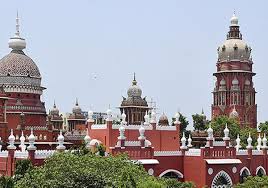
Discrimination can’t be wrapped in sanctity of tradition; no one can dictate who is entitled to stand before the deity, Court added. The Madras High Court recently paved the way for a temple car to pass through a Dalit colony. Justice PB Balaji remarked that God never discriminates and no street was unworthy of the chariot or the god it carried. “Faith cannot be fenced by caste or creed and divinity cannot be confined by human prejudice. God does not reside in certain streets alone. No street is unworthy of the chariot or the god it carries. God never discriminates. So discrimination cannot be wrapped in the sanctity of tradition,” the court said. The court added that through Article 17 of the Constitution, untouchability was abolished not just in physical form but in letter and spirit also. The court added that no one could dictate who could or could not stand before the deity and worship and there was no bar for any person to enter any temple and worship. “The Constitution of India under Article 17, abolished untouchability. Such abolition was not just in physical form but in true letter and spirit. Therefore, none can dictate terms as to who is entitled to stand before the deity and worship and who cannot. In any event, all the respondents, have in unison, stated that there is no bar for any person belonging to any community to enter the Temple and worship the deity. In the light of the above, I do not see any difficulty in recording the stand of the respondents and this would sufficiently address the grievance and apprehension of the petitioner with regard to one part of the prayer in the writ petition,” the court said. The court was hearing a petition filed by a man belonging to the Scheduled Caste community. The man had approached the court seeking directions to the Kancheepuram District Collector, Superintendent of Police, HR & CE Joint Commissioner, Tahsildar and other caste Hindus to permit him and other people belonging to his community to enter the Muthu Kolakki Amman temple and to participate in the ritual activities. He also sought directions to permit the persons from the community to participate in the car festival, by allowing the temple car to come to the Dalit colony. The petitioner had alleged that there had been resistance from the persons belonging to the upper caste community against the participation by members of the downtrodden communities. He further argued that though the temple was being managed by the Hindu religious and Charitable Endowment Department, the discrimination continued even now, and the caste Hindus had taken law into their own hands and were not permitting members from the Scheduled Caste community to worship the deity. The petitioner further submitted that, though representations were given to the authorities, no action had been taken, prompting him to approach the court. The District Collector informed the court that as per a previous order, a field inspection was conducted and there was no prohibition for the petitioner or persons belonging to his community to either enter the temple, worship the deity or from participating in the festivals including the temple car festival. The private respondents, however, objected to the plea and argued that a particular car route had been adopted and was being followed for the past several decades. It was argued that there was no necessity to change or alter the route, which would only lead to more complications. It was argued that if the request was permitted, other persons would also want the temple car to visit their streets, and there would be no end. The private respondents also denied allegations of untouchability and argued that the community was never prevented from participating in the temple functions. The District Collector, after examining the routes, informed the court that the requested extension was feasible without affecting the historic character of the procession. Taking note of the Collector’s report, the court directed the Collector to proceed on the lines of the proposed integrated route, both during the trial run and the main run. The court directed the official respondents to ensure that the temple procession was conducted peacefully and that sufficient protection was provided both during the trial run and main run. Upasana Sajeev Courtesy : Live Law Note: This news is originally published on https:/livelaw.com/bha and is used purely for non-profit/non-commercial purposes, especially human rights
Dalit man dies in RPF custody in Gonda, family alleges torture with iron rods and knives
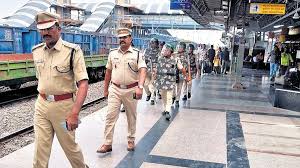
Three Railway Protection Force personnel are suspended and charged with murder as protests erupt in Gonda over alleged custodial killing and demand for justice intensifies A Dalit man has died in Railway Protection Force custody in Gonda district, his family alleging the body had “deep injury marks” indicating an assault with “iron rods and knives”. The doctor who conducted the postmortem said Sanjay Kumar Sonkar, 36, had been “dead when brought” and that the cause of death was unclear, while hinting at possible viscera tests. Three personnel of the RPF, which reports to the central government, have been charged with murder and suspended. This is the third allegation since October of a Dalit being tortured to death in Uttar Pradesh. A farm labourer was allegedly beaten to death by a rich landowner and his associates on Sunday for demanding ₹2,500 in unpaid wages in Amethi. On October 1, a Dalit was branded a “drone thief” and lynched in Rae Bareli. Three RPF men had picked up Sanjay — a farm labourer — from his home in village Kinki on Tuesday “to question him” about the theft of petrol from a goods train, his younger brother Raju told reporters. “They let him off after a few hours. They returned after a while and took him to a shopkeeper in the adjoining village of Barua,” Raju said. “They then took him to an unknown place, and later to the local medical college hospital on Wednesday. Someone told us in the evening that he had been brought dead to the hospital and that we had to collect his body.” He added: “They (RPF) held him for over 20 hours. We saw several deep injury marks on his body as if he had been hit by iron rods and knives.” Vivek Trivedi, the officer in charge of the local police station, said RPF sub-inspector Surendra Kumar, constables Karan Singh Yadav and Amit Kumar Yadav, and “an unidentified person” had been booked for murder. “The RPF was probing oil theft from a goods train near Baruachak railway station on September 28. Sanjay was picked up on suspicion,” he said. Aniruddh Rai, the officer in charge of the local RPF post in Motiganj, said the three accused personnel had been suspended and a departmental probe ordered. “The RPF wanted to know from Sanjay who was involved in the crime. The RPF was also looking for one Rampher Kumar,” Rai said. “Sanjay told them that Rampher had gone to his in-laws’ home in Mankapur, a village some distance away from Kinki. The team took him to Mankapur but Rampher had already fled. Sanjay’s condition deteriorated during interrogation and he was taken to the medical college.” Rai neither confirmed nor denied torture. Mahendra Prasad Dubey, assistant security commissioner of the RPF in Gorakhpur, said: “A custody death is a serious matter. We are probing all aspects.” Dr Kuldeep Pandey, who did the postmortem but asserted the cause of death remained unclear, was quoted as saying: “We have preserved his viscera for future investigation.” Raju said Sanjay’s wife Geeta had been unconscious since learning of his death and had been admitted to the emergency ward of the same hospital. “RPF people come to our village every now and then and threaten to beat or arrest us if we commit any crime,” he said. “The nearest RPF post is 10km from our village. This was the first time they took away someone with them.” Police sources said a large number of local Dalits had gathered in Kinki to protest the “custody murder”. Gonda additional superintendent of police Manoj Kumar Rawat said: “We have stationed forces in the village to maintain law and order.” Piyush Srivastava Courtesy : The Telegraph India Note: This news is originally published on https:/thetelegraphindia.com/bha and is used purely for non-profit/non-commercial purposes, especially human rights
Allahabad HC orders Dalit women to return ₹4.5 lakh compensation after they retract their complaints
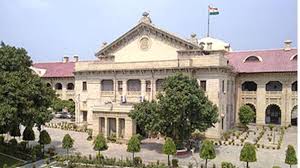
Court also slapped 5 lakh fine on accused for manipulating the victim The Allahabad High Court on Thursday (November 6, 2025) ordered three Dalit women to return the ₹4.5 lakh compensation they had collectively received from the Uttar Pradesh government after they retracted their statements recorded before a magistrate. The Allahabad High Court on Thursday (November 6, 2025) ordered three Dalit women to return the ₹4.5 lakh compensation they had collectively received from the Uttar Pradesh government after they retracted their statements recorded before a magistrate. A Bench of Justice Shekhar Kumar Yadav also slapped a ₹5 lakh fine on the 19 men, accused of assaulting the women, for manipulating the victims. The matter pertains to a complaint filed by a woman and her two daughters-in-law against 19 upper-caste men, for trespassing, assault, criminal intimidation and offences under the SC/ST (Prevention of Atrocities) Act at Yamunapar police station in Prayagraj district in July last year. The matter is currently at the trial stage in a local court, which had summoned the accused persons. The accused later approached the HC seeking quashing of the cognisance and summoning orders from the trial court. During a hearing earlier this month, the complainant told the court she never lodged any complaint with the police and claimed that her thumb impressions were taken on a blank paper. However, the lawyer representing the State submitted that the complainant and her daughters-in-law’s medical reports and statements recorded before the magistrate, in which they unequivocally supported the prosecution. The court was also informed that each woman received ₹1.5 lakh compensation from the government. “The Court finds it deeply disturbing that the complainant now denies having filed the FIR, despite having made statements under Section 164 Cr.P.C. affirming the allegations and having availed of substantial monetary compensation under the statutory scheme meant for genuine victims of atrocities,” the court said, ordering the women to return the compensation. Justice Yadav noted that the women’s conduct prima facie reflects a “serious abuse of the process of law” and “a gross misuse of the benevolent provisions of the SC/ST Act”. Terming the sequence of events as “deliberate attempt to manipulate the criminal justice process after wrongfully obtaining public funds, thereby committing a fraud upon the State”, the court also imposed a ₹5 lakh cost on the appellants to deter recurrence of such manipulative conduct. Ishita Mishra Courtesy : The Hindu Note: This news is originally published on https:/thehindu.com/bha and is used purely for non-profit/non-commercial purposes, especially human rights