
The ‘Proud R’ Debate: Who Gets To Reclaim A Slur?

A social media influencer’s video urging women to “reclaim” the R-word has sparked an online debate. Many Dalit feminists warn that a casteist slur cannot be rebranded through online trends without understanding its history. Influencer Divija Bhasin, or awkwardgoat3 as her Instagram handle says, is known for making videos about mental health and gender. She posted a 14-minute video encouraging women to reclaim the word “randi”. Another day, another viral video, and yet another reminder of how the digital world is claiming a language without understanding its history. This time, the social media debate centres on reclaiming a casteist slur for women, popularly known as the R-word. The word “randi” has long functioned as a casteist and misogynistic slur in North India, used to police upper-caste women’s “honour” and to justify the exploitation of Dalit and Bahujan women. Historically, caste hierarchies pushed Dalit-Bahujan women into stigmatised, caste-assigned labour, including ritualised sexual work such as the Devadasi system. The message appeared bold and empowering. But as the video went viral, many women started to write against it. Dalit feminists, in particular, argued that the slur cannot be reclaimed through an online trend because it carries centuries of misogyny, caste history, and violence. For them, the campaign felt misguided and showed how online feminism often prioritises aesthetics over the lived realities of marginalised women. Aleena, a poet and an artist, wrote on her Instagram profile, “Who uses the word matters and who it harms matters”. She added, “Listening to communities who have suffered the worst facets of Brahmanical Patriarchy is important.” The reclamation of slurs has a long history, and it was across queer, Black, disability-rights, and feminist movements, where marginalised groups reclaimed terms on their own terms: the N-word within Black communities, “queer” in LGBTQ+ spaces, or “slut”. During the 2011 SlutWalk protests, a global movement that began after a Toronto police officer suggested that “women should avoid dressing like sluts” to prevent assault. Reclamation of Slurs In India Similarly, in India, the Dalit reclamation of “Chamar” has been a significant political and cultural intervention. Artists like Ginni Mahi, who popularised “Danger Chamar” in her music, and collectives such as Chamar Studio, founded by designer Sudheer Rajbhar, have reclaimed the term to assert dignity, pride, and historical resistance. Historically associated with leather work, “Chamar” was used as a caste slur. Rajbhar’s studio reclaims it by creating luxury, sustainable design rooted in Dalit artisanal labour. Chandrashekhar Azad, a political leader and an Ambedkarite, has also reframed “Chamar” as a symbol of assertion rather than shame. “The slur was never just an insult, but it was a tool to police and punish women who stepped outside caste-assigned boundaries,” says Ashima, a freelance writer who covers caste, gender, and social issues. She notes that the term has historically been used to shame women pushed into caste-assigned, stigmatised labour. A woman’s “purity” is treated as central to maintaining caste purity, which is why we still hear lines like “women from good families don’t do this.” What counts as “good” is entirely defined by caste. The moment a woman crosses those limits, she is labelled. This exposes the caste ideology that drives the abuse. Ashima adds that the conversation would be far more honest if the focus shifted to the men and boys who use the slur, rather than asking the women targeted by it to reclaim it. “No word is ever neutral because every term is shaped by caste and culture,” says writer and critic Aishwarya AVRaj. “Randi” is considered a ‘bad word’ because of the violence it carries. Any attempt to reclaim it must engage with the lived realities of the women historically tied to it.” She explains that in India, the women most frequently labelled with this slur, whether through direct translation or cultural perception, are Dalit cis and trans women, and some Bahujan cis and trans women, whom entrenched caste structures have pushed into sex work. “We come from a collective history where prostitution was sanctified in the name of God. The Devadasi system is the most glaring example,” she notes. Aishwarya questions whether a social-media-driven “reclaiming movement” can claim legitimacy while erasing these communities. She points to a sex-work survivor who spoke on Instagram: “When you listen to her, you understand how lazy this ‘R-campaign’ really is.” The survivor warns that imitation without political or historical grounding becomes “a dark thing.” Reclamation, Aishwarya insists, must come from the communities harmed and “not from influencers, virality, or algorithms.” “This is how caste erases itself,” she says. “Not always through denial, but through dilution and by making a violent word look harmless for some, while it continues to endanger others”, says Shivani Nag, faculty at Dr.B.R Ambedkar University. According to Nag, Feminist geographer Kim England’s work on reflexivity helps frame the stakes. An influencer from a caste-advantaged background may face trolling if she casually uses the R-word. But a Dalit domestic worker’s daughter may face eviction, violence, job loss, or police hostility. The consequences are not symmetrical because caste locations are not symmetrical. The history of the R-word cannot be detached from caste. Drawing on Sharmila Rege’s Dalit feminist standpoint, she argues that any politics of language that sidelines Dalit women or invites them in only after the terms have already been set simply repeats the exclusionary patterns that at one time made feminism centre around concerns of upper caste women’. “Reclamation only becomes meaningful when it is led by those for whom the term is structurally consequential,” she added. “If we don’t understand where the word comes from, we will end up reproducing the same violence we claim to fight.” According to Nag, Philosopher Sandra Harding reminds us that marginalised women’s accounts are not mere stories but epistemic maps of power. Without them, our understanding of the R-word remains incomplete and biased toward privilege. Drawing on Uma Chakravarti’s writings on Brahmanical patriarchy, she explains how caste purity is maintained by regulating women’s sexuality: upper-caste women are tightly controlled to preserve endogamy,
Congress to protest at Ramlila Maidan today over the issue of vote theft; Rahul Gandhi will also be present
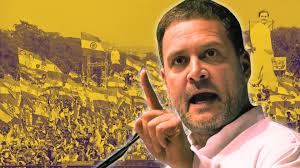
The Congress party is going to hold a massive protest today at Ramlila Maidan in Delhi, which will be attended by Leader of the Opposition in the Lok Sabha, Rahul Gandhi, and Karnataka Chief Minister Siddaramaiah. New Delhi: The Congress party will protest today at Ramlila Maidan in Delhi over the issue of vote theft. All Congress MLAs from Karnataka and more than 1,000 party workers will participate in this protest. This protest by the Congress is important in many ways, as the party has been consistently raising the issue of vote theft. Vote theft and SIR are very big issues – Congress At the Congress rally at Ramlila Maidan against SIR, Odisha Congress President Bhakta Charan Das said that vote theft and SIR are very big issues. This is a democracy. How do we elect the government? How are leaders chosen?… The people choose, but now you are choosing who will vote and who will not? Who gave you this right? This right was given to you by the people for their welfare, not to snatch away their rights. Regarding the letter of former Odisha Congress MLA Mohammad Moquim, he said that those who are associated with the BJP should go to the BJP. Mallikarjun Kharge has traveled such a journey in his life that these people would not have seen even 0.1% of it. No one can guide like such a senior leader. Objective is to focus on electoral reforms The Congress party says that the purpose of this protest is to draw national attention to the alleged irregularities in the electoral process and to hold officials accountable for the removal of voters’ names. The party leadership has said that this movement is part of a broader campaign to protect democracy and ensure free and fair elections across the country. The issue of voter list raised Speaking on the ‘vote theft’ issue, DK Shivakumar alleged that the names of minority voters have been removed from the voter list across the country. He said, “Our leader, Rahul Gandhi, has raised this issue. They have not answered our questions; instead, they are asking us to provide information. Information is not being provided under the Right to Information Act (RTI).” I also requested the information, but it was not provided. Karnataka CM also arrives in Delhi Karnataka Deputy Chief Minister and Karnataka Congress President D.K. Shivakumar arrived in Delhi on December 14 to participate in the ‘vote theft’ protest held at Ramlila Maidan. Chief Minister Siddaramaiah is also scheduled to arrive in Delhi on Sunday to join the movement. Kharge to lead the campaign D.K. Shivakumar said that even after losing the election, party leader Rahul Gandhi had organized a similar program to create awareness among the people. He said that AICC President Mallikarjun Kharge is also leading this movement. We are all joining to support this campaign. One thousand workers from Karnataka More than 1,000 party workers from Karnataka have already arrived in Delhi. Party leaders have arrived in Delhi from all parts of the state by train and flight. More than 100 MLAs and MLCs will participate in this program. Shivakumar clarified that he too will join them in the protest. D.K. Shivakumar will also be present Karnataka Congress President and Deputy Chief Minister D.K. Shivakumar said that this will strengthen the protest led by Leader of the Opposition in the Lok Sabha, Rahul Gandhi. Shivakumar said that the ‘vote theft’ campaign in our state started with a large convention at Freedom Park in Bengaluru. Another big program will be held at Ramlila Maidan in Delhi on Sunday. Written By: NBT NEWS DESK Courtesy: Hindi News
Telangana: Dalit Woman Sets Example by Becoming Unopposed Sarpanch from General Seat in Maratha-Majority Village

A unique example of social harmony in a Maratha-majority village, SHG member Gangubai elected from a general seat. Kamareddy/Hyderabad: A new dawn has broken in the backward Jukkal mandal of Kamareddy district in Telangana. 40-year-old Waghmare Gangubai of Bijjalwadi village has made history. An active member of a Self-Help Group (SHG), Gangubai has set a powerful example for society by becoming the first Dalit woman to be elected unopposed as Sarpanch from a general seat. Geographical and Social Dynamics Located 190 kilometers from the state capital and 112 kilometers from the district headquarters of Kamareddy, Bijjalwadi Gram Panchayat is situated near the Maharashtra border. Looking at the social dynamics of this village, there are a total of 931 voters, of which only 230 are Dalit voters. The remaining population mainly comprises influential Maratha, Hatkar, and Lingayat communities, along with some Muslim, Gowda, and other backward class (OBC) families. Traditionally, the politics and leadership of this village have been decided by the influential Maratha residents, but this time the tide turned. MLA’s Initiative and Social Justice Congress MLA from Jukkal, Thota Laxmikanth Rao, explained that the Maratha community dominates the village and owns most of the agricultural land. He said, “I wanted to instill a new level of confidence in the people. I planned this experiment and held several gram sabhas (village meetings). We educated and explained to both Scheduled Castes (SC) and upper castes that by giving a chance to a deserving SC person, an ideal example could be set for others.” The MLA’s idea worked. Bijjalwadi elected its first Dalit woman Sarpanch unopposed from the general category seat. Villagers say that electing a Dalit as Sarpanch from a general seat reflects their commitment to social justice and harmony. Gangubai’s Emotional Reaction Ms. Gangubai, who has no formal education and was elected Sarpanch, is still overwhelmed by her new responsibility and the honor bestowed upon her. Her interaction with the outside world had so far been limited to her role as a member of the village’s Self-Help Group (SHG). When her name was announced as the Sarpanch, tears of joy welled up in her eyes. Expressing her emotions, she said, “This is something I never expected in my life. I have been helping women with childbirth for so many years, taking them to nurses and hospitals, but I never thought that one day I would become a Sarpanch.” A Wave of Development and Change The Jukkal MLA stated that 25 candidates supported by the ruling party in this constituency have been elected unopposed as Sarpanches. He attributed this to the development and welfare programs of the Revanth Reddy-led Congress government. Mr. Laxmikant Rao said that he ensured that deserving candidates from poor and underprivileged communities got the opportunity to contest even from general seats. He said, “The response was mixed. Not everyone appreciated it immediately, but I managed to bring them together and convince them.” Incentives for Development The MLA announced that the Gram Panchayats elected unanimously would be given a grant of ₹10 lakh as announced by the government. In addition, extra funds would be provided from the MLA’s fund to ensure their comprehensive development. He also appealed to the voters to elect Congress-supported candidates with a huge majority in the elections. Rajan Chaudhary Courtesy: Hindi News
Dalit Community Protests Against Chandrashekhar Azad, Levels Serious Allegations

Members of the Dalit community protested against Nagina MP Chandrashekhar Azad in the capital on Friday. The protest was led by former councilor Chhattar Singh Rachhoya from Nangloi. The protesters carried banners and placards. During the protest, they chanted “Jai Bhim” slogans. The protesters demanded the cancellation of Azad Samaj Party president Chandrashekhar Azad’s party and his membership of Parliament. The protesters accused Chandrashekhar Azad of exploiting Dalits and spreading misinformation. Protest organizer Chhattar Singh Rachhoya said that MP Chandrashekhar Azad is a fraud. He also demanded an investigation into the allegations leveled against Chandrashekhar by Rohini Ghavari. Protester Sonu said that Chandrashekhar Azad is not fit to represent Dalits. He should be expelled from Parliament. He said that Chandrashekhar Azad no longer stands with the Dalit community. Meanwhile, protester Priya claimed that Chandrashekhar Azad is a fake. She said that there is no proof of his marriage or even his name. People from all sections of society participated in this protest. Finally, the protesters demanded action against Chandrashekhar Azad for exploiting Dalits. Rahul Tiwari Courtesy: Hindi News
UP News: Uproar at Minister’s House in Muzaffarnagar, Protest Over Missing Dalit Girl; Hindu Organizations to Hold Mahapanchayat Tomorrow

Uttar Pradesh News: The news of a Dalit teenager’s disappearance in Muzaffarnagar is gaining momentum. Angry over the police’s lax response, Hindu organizations staged a major protest on Friday. The enraged crowd surrounded the house of State Minister Kapil Dev Agarwal. The protesters staged a sit-in on the road and raised slogans against the police administration. The ASP arrived at the scene, calmed the crowd, and assured them that the girl would be found soon. 11th Grade Student Missing Since December 5 A Dalit girl from Mimlana village in the city police station area went missing on December 5. She is an 11th-grade student. Despite several days passing, the police have made no progress. This news has caused deep resentment among the local people. Driven by this anger, activists under the banner of the United Hindu Front reached the minister’s residence in Gandhinagar. Minister Kapil Dev Agarwal was not in the city, so the protesters could not meet him. The people camped there and demanded immediate action. Allegations of Love Jihad and Police Claims Upon receiving information about the commotion, CO City ASP Siddharth Mishra arrived at the scene with a large police force. The police stated that a case has been registered based on the girl’s father’s complaint. The accused is a young man from another community, and a search is underway for him. Meanwhile, Hindu organizations have termed it a case of ‘love jihad’. Leaders alleged that the police are deliberately delaying the matter. This news has become a topic of discussion throughout the district. Mahapanchayat to be Held on December 13 United Hindu Front president Manoj Saini and VHP leader Lalit Maheshwari have warned the police. They said that the organizations themselves will now take to the streets to ensure the safety of Hindu girls. In this regard, Swami Yashveer Maharaj has announced a panchayat in Mimlana village on December 13. Several office-bearers of Shiv Sena, Hindu Jagran Manch, and VHP participated in the protest. All of them demanded the immediate arrest of the accused from the administration. Poonam Sharma Courtesy: Hindi News
UP News: Khaki uniform shamed, constable rapes Dalit woman after mixing drugs in her food; case registered on court order

Uttar Pradesh News: A very shameful incident has come to light from Ambedkarnagar district. Here, the protector became the perpetrator. In Akbarpur, a police constable drugged a Dalit woman and raped her. The landlady also supported the accused in this heinous act. This UP News has created a stir in the police department. When the police did not listen, the victim approached the court. Now, on the orders of the court, a case has been registered against the accused constable and the landlady under serious sections. Lust fulfilled by drugging the woman The victim woman and the accused constable Rajesh Yadav lived in the same rented house in Johardih locality of Akbarpur. The woman is a resident of Jalalpur and studies here. It is alleged that the constable obtained the student’s number with the help of the landlady. He started harassing her by sending lewd messages. One day, the constable mixed drugs in her food and gave it to her. When she became unconscious, he raped her. When she regained consciousness, the victim found herself without clothes. The accused threatened to tell her husband if she revealed anything. Husband abandoned her, police ignored her plea The accused constable continued to physically exploit the woman for several months by blackmailing her. When the victim protested, the accused told everything to her husband. After this, the husband also abandoned the woman. The victim appealed for justice from the police station to the SP office. But the police did not take any action against their own department’s employee. This UP News has raised serious questions about the functioning of the police. The accused continuously hurled casteist abuses at her and pressured her for a compromise. Case registered on court order Disappointed by the police, the victim sought refuge in the court. After the strict orders of the court, the Akbarpur Kotwali police have registered a case. A case has been registered against constable Rajesh Yadav and the landlady under the SC/ST Act and sections related to rape. Station house officer Srinivas Pandey said that an FIR has been registered on the court’s direction and the matter is being investigated. Poonam Sharma Courtesy: Hindi News
Crime News: Dalit Youth Murdered and Dismembered, Body Hidden in House for 80 Days; People Demand Death Penalty for Killers

Jharkhand News: A shocking crime has come to light in Ramgarh. People’s anger has erupted over the brutal murder of Sonu Kumar Ram. On Friday, family members and local residents staged a massive protest at Subhash Chowk. The protesters are demanding the death penalty for the killers. The brutality of this murder has shaken the entire city. The crowd has appealed to the administration for swift justice. Body Hidden in House for 80 Days The truth behind this crime is extremely horrific. Former Congress District President Munna Paswan said that the Dalit youth was brutally murdered. The accused dismembered the body into several pieces. In a shocking act of cruelty, the accused kept the body hidden in his house for about 80 days. Later, he disposed of the body parts in different locations. People have described it as an inhuman and cruel crime. Trial in Fast Track Court Former Cantonment Board Vice President Sardar Anmol Singh also participated in the protest. He said that this is a heinous crime. It seems unlikely that only one person was involved. He demanded that the police immediately arrest all the accused. Anmol Singh said that the case should be tried in a fast-track court. The culprits should be given a harsh punishment as soon as possible. Demand for Compensation and Job The protesters demanded rehabilitation for the victim’s family from the district administration. They appealed to the SDO and Deputy Superintendent of Police to intervene. People have demanded that the deceased’s family be given land for a house. They also demanded compensation and benefits under the family welfare scheme as per government rules. In addition, the demand for a contractual job in the municipal council was also prominently raised. Poonam Sharma Courtesy: Hindi News
UP News: Doctor performs kidney stone surgery on Dalit woman after watching YouTube video, intoxicated doctor causes death; Case registered under SC-ST Act

Uttar Pradesh News: A shocking incident that has brought shame to the medical profession has come to light from Barabanki district. Here, a quack doctor performed surgery on a woman after watching a YouTube video. Due to this negligence, the woman died a painful death. This UP News has become a topic of discussion throughout the region. It is being said that the doctor was heavily intoxicated with alcohol at the time of the operation. The clinic owner and his associate have been absconding since the incident. The police have registered a case of culpable homicide and under the SC/ST Act. The deal was settled for 20,000 rupees The incident took place in the Kothi police station area of Barabanki. Munishra Rawat, wife of Fateh Bahadur, a resident of Dafrapur, complained of stomach pain. Her husband took her to ‘Shri Damodar Aushadhalaya’ in Kothi market. Here, Gyan Prakash Mishra and Vivek Mishra diagnosed her with kidney stones after an examination. The surgery was agreed upon for 20,000 rupees. It is alleged that after receiving the money, Gyan Prakash consumed alcohol. After that, he started the surgery while watching YouTube videos on his mobile phone. Notice pasted on the hospital Upon receiving the information, the police and health department team reached the spot. The body has been sent for post-mortem. Assistant Chief Medical Officer Dr. L.B. Gupta inspected the illegal hospital. A notice has been pasted there, and a reply has been sought within a week. Station House Officer Amit Singh Bhadauria said that teams have been formed to arrest the accused. Since the woman belonged to the Dalit community, sections of the SC/ST Act have also been added to the case. Poonam Sharma Courtesy: Hindi News
Madhya Pradesh: Is eating at a Dalit’s house a greater sin than cow slaughter? A Panchayat decreed bathing in the Ganges and performing the Pind Daan (worship ceremony) for a living father, causing a stir in the administration.

The Panchayat decreed that eating at a Dalit’s house cut off all supplies to the family; pressure was put on them to perform the Pind Daan (worship ceremony) for a living father. Raisen: A shocking incident has emerged from Raisen district, Madhya Pradesh, exposing the harsh reality of caste discrimination still prevalent in society. A man was socially ostracized simply because he ate at a funeral feast hosted by a Dalit family. The victim alleges that the Panchayat not only expelled him from society but also imposed shocking conditions for his reintegration. Given the gravity of the matter, the administration has launched an investigation. What is the whole matter? This incident occurred in Piparia Puaria village, Udaypura tehsil, about 100 kilometers from the Raisen district headquarters. This area is also the constituency of Narendra Shivaji Patel, Minister of State for Health in the Madhya Pradesh government. The case is about a month old, but it came to light during a public hearing on Tuesday. According to media reports, the victim, Bharat Singh Dhakad, told officials that about a month ago, a ‘Shraddha’ ceremony was held at the home of Santosh Mehtar, a Dalit man in the village. Bharat Singh Dhakad, the village panchayat’s assistant secretary, Manoj Patel, and a teacher, Satyendra Singh Raghuvanshi, had eaten at the ceremony. The Panchayat’s Bizarre Decree: “This is a Sin Bigger than Cow Slaughter” Bharat Singh alleges that the Panchayat took offense to his eating at a Dalit man’s home. The Panchayat called a meeting and passed a resolution declaring that eating at a Dalit’s home was “a sin bigger than cow slaughter.” The decree stated that whoever committed this ‘act’ would have to purify themselves by bathing in the Ganges and hosting a feast in the village before they would be accepted back into society. Two accepted the condition, one opposed. Under pressure from the Panchayat, Assistant Secretary Manoj Patel and teacher Satyendra Singh Raghuvanshi agreed to their conditions. They bathed in the Ganga and hosted a feast in the village. However, Bharat Singh Dhakad refused to obey this discriminatory order. Following this, the Panchayat allegedly declared a social boycott against him and his family. Pressure to perform ‘Pind Daan’ for his living father In an application submitted to Udaypura Tehsildar Dinesh Bargale at the public hearing, Bharat Singh made very serious allegations. He stated that he was pressured by the Panchayat that if he wanted to be absolved of sins, he would have to shave his head and perform ‘Pind Daan’ (a post-death ritual) for his living father. Dhakad said, “I and my family are being treated like untouchables. We are barred from entering the temple and are prohibited from participating in any social events in the village.” He named the Sarpanch, Deputy Sarpanch, and Panchs in his complaint. Administration and Police Stance As soon as the matter came to light, the administration swung into action. Tehsildar Dinesh Bargale said, “The matter is being investigated. If the allegations are found to be true, strict legal action will be taken against the culprits.” Meanwhile, SDOP Kunwar Singh Mukati clarified that insulting anyone based on caste or withholding food and water is a crime. He said, “Preventing someone from attending social events, considering them untouchable, or imposing punishments like bathing in the Ganges and serving them a feast is a punishable offense under the Indian Penal Code (IPC). Every citizen has the right to live with dignity. Those who spread social hatred will not be spared.” Sarpanch Denies Allegations On the other hand, when contacted, the village sarpanch, Bhagwan Singh Patel, categorically denied the allegations. He said, “Allegations like untouchability are false. If someone is not inviting them to their events due to personal reasons, it is their personal matter.” The Sarpanch also stated that the regional MLA and State Minister Narendra Shivaji Patel had also visited the village and tried to convince the people. Teacher confesses to ‘purification’ Interestingly, Satyendra Singh Raghuvanshi, the teacher who ate at the Dalit’s house, admitted that after the dispute, he had gone to his guru’s ashram in Allahabad and returned after bathing in the Sangam. He said, “I don’t believe in casteism, so I went to my friend Santosh’s house to eat. Someone made a video and made it viral, which escalated the controversy. I bathed in the Ganga on the orders of the Panchayat and now I have no complaints, nor am I being ostracized.” The teacher has been posted at the village secondary school for the past 16 years. Currently, the police and administration are trying to get to the bottom of this matter to uncover the truth. Rajan Chaudhary Courtesy: Hindi News
Why villagers in this Rajasthan village were agitated over the suspicious death of a Dalit youth, protesting for two days.

The family and the administration reached an agreement on a post-mortem. The administration assured an impartial investigation within two days, and Bhim Army leaders Rajendra Singh Dhandhal and Mangilal Meghvanshi ended the protest on Thursday. Jalore – The suspicious death of Chetan Kumar, a 23-year-old Dalit youth, in Kaleti village of Bagoda tehsil in Jalore district, Rajasthan, has shaken the entire area. Chetan’s body, who had gone to guard his fields, was found hanging from a tree, but the family claims it is a case of murder, not suicide. Signs such as his feet touching the ground, the position of the rope, and nearby wires have made the death mysterious. The family flatly refused to have a post-mortem conducted by a local medical board and insisted on calling a district-level team. The protest, villagers gathering, and administrative activity outside the Bagoda Community Health Center (CSC) mortuary continued until Thursday afternoon, but now there are reports of a compromise. Why did this incident spark a stir? Went out to guard the field at night, body found in the morning Everything seemed normal on Tuesday night. Chetan Kumar (23), son of Sanwalaram, was a resident of Kaleti village. He worked as a laborer on the farm of local farmer Lala Ram Chaudhary, where he was tending to the pomegranate crop. After dinner, Chetan left to guard the field. But around 7 a.m. on Wednesday, the farm owner, Lala Ram, informed the family that Chetan had committed suicide. Upon hearing this news, the family was devastated. Family members Madanram (30), Tikaram, Tekaram, Bijlaram, Tolaram, and mother Manjudevi immediately rushed to the scene. The scene left everyone stunned. Chetan’s body was hanging from a tree. A rope was tied around his neck, but his feet were touching the ground. According to the family, only the neck was visible, suggesting murder rather than suicide. Madanram immediately took photographs and videotaped the scene, which clearly showed three wires lying nearby, touching the body. A heavy weight (bot) had also fallen to the ground, where the body had previously been empty. The family says, “He seemed to be breathing, so we cut the rope and brought him down. But this isn’t suicide; someone has tried to disguise it as a murder.” Social activist Bhanwar Meghvanshi told The Mooknayak that the Bagoda police arrived at the scene and prepared a panchnama. The body was kept in the mortuary, but the postmortem process was halted. The family demanded a district-level medical team because they lacked trust in the local authorities. Madanram said, “Prima facie, it doesn’t appear to be a suicide. A thorough investigation should be conducted.” He belongs to the Meghwal community, and the incident sparked outrage among the Dalit community. Hundreds of villagers gathered outside the CSC mortuary. Women, children, and the elderly were all shouting, and a sit-in began, which lasted two days. Bhim Army leaders Rajendra Singh Dhandal and Mangilal Meghvanshi also arrived at the scene. They said, “This isn’t just a death, it’s a symbol of the community’s suffering. The administration should conduct an impartial investigation, otherwise there will be a protest.” According to the family, Chetan had no financial difficulties or mental problems. “He was the support of the family, why would he commit suicide?” They suspect someone else may have been involved in the murder. The wires and weights seen in the video further strengthened this suspicion. Bagoda Police Station Officer Baldev Ram stated that a postmortem report has been filed under Section 194 BNSS (investigation into the cause of death) based on the family’s complaint. An investigation has begun into all aspects, including the possibility of murder. The police formed a three-member medical board, consisting of district-level doctors. Assistant Sub-Inspector Narsiram and other teams were constantly counseling the family. Tensions were at their peak until Thursday afternoon. After several hours of persuasion, a consensus was reached between the family and the administration. The district medical board approved a postmortem. The administration assured a fair investigation within two days, after which Bhim Army leaders Rajendra Singh Dhandal and Mangilal Meghvanshi ended their protest. The body will be handed over to the family for last rites. Geetha Sunil Pillai Courtesy: Hindi News