
SC certificate for minor based on father’s non-SC, mother’s Dalit caste: Supreme Court’s latest order prioritizes education, learn about the full story

According to Presidential notifications of 1964 and 2002 and Home Ministry directives, caste certificates are primarily based on the father’s caste and residence in the state. Previous Supreme Court decisions also considered the father’s caste to be decisive. New Delhi: The Supreme Court has delivered a significant ruling to facilitate the education of a minor girl. Where the father belongs to a non-SC community, the child can be granted an SC caste certificate based on the mother’s ‘Adi Dravida’ caste. This decision could set a new precedent in the changing social landscape, although the court has left major legal questions open. This case involves a minor girl from Puducherry. The Madras High Court had previously ordered the issuance of a SC certificate, which was challenged in the Supreme Court. A bench of Chief Justice Surya Kant and Justice Jyomlya Bagchi rejected the challenge, stating that the certificate should be issued so that the girl’s education is not affected. The bench clarified that the legal debate is being kept open for further discussion. The Chief Justice made an important observation that could spark debate. He said, “In changing times, why not issue a caste certificate based on the mother’s caste?” This raises the question: if the mother belongs to the SC community and the father belongs to the general caste, should the child receive SC benefits? Especially if the child is growing up in the mother’s family. In this case, the mother of the minor girl stated that her husband has been living with her in her parents’ home since marriage, and that their ancestors belong to the Hindu Adi Dravidian community. The mother had sought certificates for all three children—two daughters and a son. Supreme Court’s stance in previous decisions In previous cases, the Supreme Court had clearly stated that according to Hindu custom, a child’s caste is determined by the father. In the 2003 case of Punit Rai vs. Dinesh Chaudhary, the Supreme Court stated that the primary basis for determining caste is the father’s caste. In the absence of a law, a child inherits caste from the father, not the mother. In the 2012 case of Rameshbhai Dabhai Naika vs. Gujarat, a two-judge bench stated that the presumption of the father’s caste is strong in inter-caste marriages, especially if the father belongs to a higher caste. However, this presumption is not final. The child can provide evidence that they grew up in the mother’s SC/ST community. If they faced difficulties typical of that community, the mother’s caste may be considered. If the child has always been considered a member of the mother’s community, they may receive a certificate. Senior IRS officer Netra Pal wrote in his post regarding this matter, “Last year, I wrote regarding Rohith Vemula’s claim for a Scheduled Caste certificate, stating that even if the mother belongs to a Scheduled Caste and the father belongs to an Other Backward Class, the son can still claim a Scheduled Caste certificate based on the DoPT circular. Now, the Supreme Court has also upheld this. There appears to be no error in the decision, as it follows the DoPT circular.” Geetha Sunil Pillai Courtesy: Hindi News
Caste-based oppression against a Dalit music student in Tamil Nadu: “If you want a government job, forget music and do what your caste requires…”

FIR No. 407/2025 was registered at the Thirupparankundram police station on August 2nd, following the student’s complaint, but was closed just a month and a half later, on September 30th, citing a “factual error.” Madurai – Caste discrimination has become so deeply ingrained in Tamil Nadu that its dark shadow looms even over the temples of learning. A sensational case has emerged from the Tamil Nadu Government Music College in Pasumalai, Madurai, where a Dalit female student not only endured severe caste-based insults, but also had her education and employment threatened through institutional conspiracies. The student filed a complaint with the police alleging caste discrimination, but the police, acting unilaterally, closed the case and, on the other hand, filed a charge sheet against the woman based on the college administration’s complaint. The student has now appealed to the National Commission for Scheduled Castes (NCSC) for justice. Challenging the police’s biased investigation, she has demanded a fresh investigation. The victim, a Bharatanatyam alumnus, was also working as a part-time evening class teacher at the college. Living with her husband and mother, she explained that she was pursuing a Bachelor of Arts (Bharatanatyam) degree while also working as a temporary teacher, but caste prejudices made her life hell. In her petition, the student has leveled serious allegations against Principal Sampoornam and Chitra, a Bharatanatyam teacher. She claims that these two officials orchestrated a long-standing system of caste-based violence, abusive behavior, and institutionalized harassment. The harassment began in small ways and gradually escalated into a deadly one. The principal and teacher prevented her from using common toilets, made her sit in a separate room during exams, and denied her basic freedoms, such as standing with other teachers or wearing an ID card. Chitra allegedly made an openly casteist remark, “If you want a government job, do the traditional work of your caste—cleaning.” This remark was not only derogatory but also demeaning to the entire community. The harassment reached its peak when the victim was awarded the prestigious Kalaichudar Mani Award. Principal Sampoornam allegedly questioned, “How did a Dalit woman achieve such heights?” Following this award, the two accused staff members hatched a conspiracy. They collected the examination fees but prevented her from taking the second-year exams. Furthermore, her part-time teaching job was abruptly terminated without prior notice, further crippling her financial situation and causing her to suffer a mental breakdown. In January 2025, after an investigation by the State Scheduled Castes/Scheduled Tribes Commission, the victim was reinstated for her third-year studies, but the accused, using police pressure, threatened her and forced her to apologize. July 23rd was the most humiliating day of her life, when the principal made her stand outside the classroom for over four hours and incited other students to socially boycott her. This incident not only violated her dignity but also poisoned the college environment. FIR No. 407/2025 was registered at the Thirupparankundram police station on August 2nd, based on the student’s complaint, under the Scheduled Castes/Tribes (Prevention of Atrocities) Act, but was closed just a month and a half later, on September 30th, citing “factual error.” According to the victim, the Deputy Superintendent of Police (DSP) adopted a biased attitude, relying on the accused’s false and one-sided statements. Moreover, she was not informed of the closure of the case, causing her severe mental trauma. Furthermore, immediately after her original complaint was closed, action was taken on Principal Sampoornam’s complaint, in which the victim was immediately arrested, remanded, and later released on bail. She alleged that the police, under the influence of the accused party, did not take any concrete action on her complaint, instead expediting action against her. In her petition to the NCSC, the victim has clearly requested that a new and impartial DSP be appointed to investigate her FIR, who will conduct the investigation with complete honesty and in accordance with the provisions of the Act. She has demanded strict legal action against the accused staff members, Principal Sampoornam and teacher Chitra. Furthermore, she has appealed for a guarantee of her personal safety, the right to continue her studies without any hindrance, and reinstatement in her part-time government job. Geetha Sunil Pillai Courtesy: Hindi News
Social Workers in Bulandshahr Arrange Marriage of Dalit Girl: Setting an Example of Humanity in Sunpeda Village of Kakod, Many People Present

In Sunpeda village of Kakod police station area in Bulandshahr, social workers have set an example of social unity by arranging the marriage of a Dalit girl according to Hindu rituals. According to the information, the girl belongs to a Dalit family. Her father, the late Indrapal Jatav, passed away several years ago. Her mother supports the family by working as a laborer, due to which the family’s financial condition was weak. Bearing the expenses of their daughter’s marriage was a major challenge for the family. When village social worker Sheel Pradhan learned of this situation, he immediately took the initiative. He organized his associates, including Rinku Bhati, Krishna Sharma, Krishna Mistry, Yogesh God, Jitendra, Shekhar Dabar, Kalua Bhati, and Sarjeet, to arrange the marriage. All the social workers together assured the family, saying, “She is not just your daughter, she is our daughter too. Her marriage will be celebrated with great pomp and show.” They then took full responsibility for the wedding and conducted the marriage according to Hindu rituals. This noble act is being widely appreciated in the area. Villagers say that the social workers not only supported a family but also gave a message of unity, humanity, and mutual cooperation to society. There is an atmosphere of joy in the village because of this initiative, and people are praising the social workers. Mohit Bhati Courtesy: Hindi News
Untouchable Goa by Dadu Mandrekar (1997) – A Review by Sampurna Dutta

Dadu Mandrekar’s Untouchable Goa (published in Marathi in 1997), rendered into English through Nikhil Baisane’s (published by Panther’s Paw Publication in 2025) layered and attentive translation, is a powerful sociological archive that exposes caste in a region often reduced to the postcard image of beaches and heritage-rich towns. Across eighteen essays that traverse the maharwadas of Goa’s villages, Mandrekar—writer, journalist, and Ambedkarite activist—constructs a counter-map of the state, highlighting some of its most invisibilised spaces. I approach Untouchable Goa through three interlinked pillars: the maharwadas as infrastructures of caste, death as a mechanism of Brahminical control, and superstition as a material and moral economy. Mandrekar maps the state’s maharwadas—Dalit settlements pushed to the village outskirts, often bordering forests or water bodies that swell dangerously during the monsoon, and typically beyond the reach of the state’s infrastructural gaze. He renders each dwelling an index of economic neglect and a site of endurance. Government housing schemes surface as 1,200–2,000-rupee grants intended to fund entire homes in contexts where installing a functional toilet alone might cost 10,000. In a rare instance, they appear as a failed experiment in socialist “uniformity”. Units are childishly conceived to erase caste boundaries. They are crumbling and ill-maintained, yet statistically “complete.” A passage from this chapter describes a tap installed in a tattered village; a lone functioning emblem of “development”- capturing this paradox with devastating precision. These homes, like their inhabitants, are barely built to survive, let alone live. Subsidies exist largely as bureaucratic data points, disbursed without provisions for repair or maintenance. The Dalits who inhabit maharwadas do not own the land it stands on, nor the land where they will one day be buried—an unbroken circle of dispossession that renders their bodies “owned” by Brahminism in living labour and in death. In the chapter “365 Devchaar”, Mandrekar visits a maharwada in Dhargal, where an old man narrates what begins as ancestral history but gradually reveals itself as myth. He speaks of devchaars, betaals, and a god who, aided by a man, banishes Vetal from his throne. When the protagonist, Pavne, receives water from a Mahar, he loses his caste. Pavne is rewarded with land for banishing Vetal, which, according to local lore, explains why some Mahars in Dhargal still nominally possess land. Mandrekar reads these mythic residues not as distortions of history but as evidence of how ownership itself is shaped by caste memory. He situates the story within a reality where, even when bahujans legally own land, they must still seek permission from the original Brahmin proprietors to build on it—a spiritual and social contract that lays bare the feudal motivations of Brahminism. If home marks the beginning of Mandrekar’s sociological map, death forms its moral and material core. In the second chapter, “Desecrating the Dead,” he examines a grotesque ritual of exhumation in which lower-caste men are bound to dig up graves and participate as drum-beaters in the procession. These bodies are then dismembered and paraded through the night before being discarded. Mandrekar analyses this hideous practice not as a cultural aberration, but as violence enforced through faith. The Brahminical logic of untouchability, Mandrekar observes, seeps even into mahar households. Among Dalits themselves, contact with a menstruating woman demands purification through gomutra, tulsi water, bathing, and changing clothes—rituals that are unmistakably Brahminical in form. The burden of humiliation trails bahujan women intimately. When menstruating or pregnant women die, their corpses are buried without ceremony, often in unmarked places, their faces turned groundwards to prevent them from returning as “vengeful spirits.” Mandrekar intuits an economic ‘fear’ behind this superstition: these rituals are meant to guard family wealth from women who, in death, might return to claim property once denied to them in life. Mandrekar expands the idea of ritual as a sociological archive, tracing the “traditions of death” where the humiliation and economic dispossession of Dalits are most visceral. He refuses to dismiss superstition as quaint or irrational, instead locating its persistence in material and political realities. Mandrekar observes that mahar traditions (whether deities or celebrations) are modest, symbolic, and exposed to the elements, much like Dalits themselves. But over time, these have been displaced by Brahminical practices such as angat yene and devdevski. Dalits must now spend heavily during Hindu festivals, sinking into cycles of never-ending debt. “They barely pay off one before another comes,” Mandrekar notes, showing that belief itself becomes a form of bondage. Superstition, Mandrekar shows, is also a survival strategy shaped by precarity. Dalits participate out of belief but also fear of persecution by upper-caste men and the consequences of stepping outside caste-bound occupations such as bamboo work, cleaning, or leatherwork. Mandrekar notes that their modest homes are sometimes targeted for demolition under the rhetoric of modernisation, mirroring the contemporary demolition of Muslim neighbourhoods across India. Untouchable Goa is a vital ethnographic companion to recent scholarship on caste in Goa by Parag Parabo (2023), Kaustubh Naik (2017), and Jason K. Fernandes (2020). Parabo’s 2023 work, which distinguishes between the Old and New Conquests, analyses the latter as being aligned with Brahminical consolidation following a period of colonial Christian influence—a process that Mandrekar charts through his fieldwork. While Portuguese colonisation itself remains largely absent in Mandrekar’s account, his ethnography provides a rich archive that complements studies of Goan temple politics, landholdings under colonial regimes, and the intersection of Christianity and Brahminism in defining the asprushya or untouchable, as explored by Parabo and Fernandes. Mandrekar specifically documents the everyday realities of home, ritual, and death in post-independence Goa, when Brahminical consolidation became increasingly visible. Untouchable Goa transforms accounts of caste abuse into evidence, offering a necessary corrective to Goa’s sanitised public image and an essential resource for students of the political economy of caste in the region. The Deras: Culture, Diversity and Politics by Santosh K. Singh (2025): A Review by Neha Sharma Courtesy : Doing Sociology Note: This news is originally published on https:/doingsociology.com/bha and is used purely for non-profit/non-commercial purposes, especially human rights
Principal beats Dalit student with a bat in Raebareli, child seriously injured with a head injury, allegations of caste discrimination also made

UP News: In Raebareli, the principal of Raghavpur Primary School attacked a Class 1 student, Hrithik, on the head with a cricket bat, causing a severe head injury. Madhav Singh, Raebareli: A serious incident occurred on Tuesday afternoon at Raghavpur Primary School in the Bachhrawan police station area of Raebareli, Uttar Pradesh, involving 6-7-year-old Hrithik, son of Ram Baran, a student of Class 1. It is alleged that the school principal struck the student on the head with a cricket bat over some issue. The blow was so forceful that the child’s head was split open and he started bleeding profusely. Injured student taken to the hospital Immediately after the incident, the student was taken to the hospital in a serious condition for treatment. Upon learning of the incident, the family and villagers became enraged. Family and villagers express outrage The family informed the police by calling 112. The villagers alleged that not only are children subjected to physical abuse, but also untouchability and caste discrimination. In protest, the villagers surrounded the school and demanded action against the principal. Police registered a case The police arrived at the scene, calmed the situation, and asked the family to file a complaint at the police station. On Wednesday, the family filed a complaint at the police station, seeking justice. Edited by: Devesh Pandey About the author Devesh Pandey is a consultant at Navbharat Times Online. He has 8 years of experience working in TV channels and digital media. He has experience and interest in politics and sports. He covered several IPL matches and the World Cup 2023 in Lucknow. Courtesy: Hindi News
Decision on CIC: Rahul Gandhi raises questions on appointment process in meeting with Modi and Shah

The committee headed by the Prime Minister has decided on the names of the country’s next Chief Information Commissioner and Information Commissioners. Home Minister Amit Shah was also present at the meeting. Leader of the Opposition Rahul Gandhi expressed his disagreement with some of the names and registered his objection in writing. New Delhi: The three-member committee headed by Prime Minister Narendra Modi has decided on the country’s next Chief Information Commissioner (CIC). The committee meeting was held on Wednesday. Sources said that a decision was taken regarding the CIC and eight Information Commissioners. However, Leader of the Opposition Rahul Gandhi, who is a member of the committee, expressed his disagreement with some of the names. The post of Central Information Commissioner has been vacant since September 13, and eight out of ten posts of Information Commissioners in the commission are also vacant. In view of this, the committee meeting chaired by the Prime Minister was held at the Prime Minister’s residence on Wednesday, with Home Minister Amit Shah also present as the third member. Disagreement registered in writing Sources said that Rahul Gandhi raised the issue of providing more information about those being appointed and also questioned the criteria for the appointment of the CIC and eight Information Commissioners. Expressing dissatisfaction with the appointment process, he registered his disagreement in writing. 3083 cases pending According to the CIC website, 3083 cases are pending before it. This is the seventh time since 2014 that the country does not have a Chief Information Commissioner. Hiralal Samariya, who became the Chief Information Commissioner in 2023, left the post on September 13 this year upon reaching the age of 65. In 2014, when Rajiv Mathur left the post, it was the first time that the Central Information Commission did not have a Chief Commissioner. TMC targets NDA government The issue of vacant posts of CIC and Information Commissioners was also raised in the Rajya Sabha on Wednesday. Trinamool Congress MP Mohammed Nadimul Haque said that due to the vacant posts, the disposal of pending appeals is being delayed by two to three years, and by the time the information is received, it will be of no use. He called the NDA government a “no data available” government, alleging that the government is reluctant to provide information to citizens. Edited by: Abhishek Pandey About the Author Abhishek Pandey is a Consultant Writer at Navbharat Times Online. He has over three years of experience working on news related to current affairs, politics, crime, and public interest issues. He also closely covered the Uttar Pradesh Assembly elections in 2022 and the 2024 Lok Sabha elections. Courtesy: Hindi News
Professors arrested for sexually harassing Dalit student in Andhra; protest rages
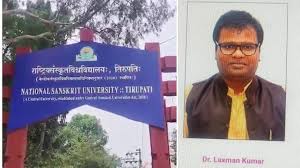
A serious allegation of sexual exploitation at National Sanskrit University in Tirupati has triggered widespread protests and demands for justice. The case involves a Dalit B.Ed student accusing two assistant professors of harassment and coercion. A case of alleged sexual harassment has come to light at the National Sanskrit University in Andhra Pradesh’s Tirupati, after a first-year B.Ed Dalit student accused two assistant professors, Laxman Kumar and Shekhar Reddy, of sexually harassing her. The incident has sparked widespread outrage on campus, with student unions staging demonstrations demanding immediate suspension of the accused, strict legal action, and stronger safeguards for women on university premises. Acting on a formal complaint filed by the university’s in-charge registrar, the Tirupati West Police registered a case and arrested the accused faculty members, Assistant Professors Laxman Kumar and Shekhar Reddy. Investigators have seized two mobile phones from the accused and sent them for forensic analysis to verify claims of harassment, blackmail, and coercion. YSRCP MP Maddila Gurumoorthy has written to the National Commission for Women (NCW), Union Education Minister Dharmendra Pradhan, and the National Human Rights Commission, urging urgent intervention in the case. In his letters dated December 7, 2025, the MP cited the survivor’s multiple written complaints to university authorities, saying that Dr Laxman Kumar coerced the student using personal photographs and videos, threatened to misuse her images, inflicted severe mental trauma, forcing her to discontinue her studies and subjected her to continuous psychological harassment and intimidation. The MP also called for a fair, transparent, and time-bound investigation, focusing that the safety and dignity of the survivor must be the top priority. He also demanded counselling support, protection for the victim, and swift action against those responsible. “The conduct of the accused demonstrates an alarming abuse of authority, exploiting his position as a faculty member to exert undue influence and cause long-lasting emotional harm,” Gurumoorthy wrote. He further stressed that universities must remain safe spaces for learning and not become centers of fear. Apoorva Jayachandran Courtesy : India Today Note: This news is originally published on https:/indiatoday.com/bha and is used purely for non-profit/non-commercial purposes, especially human rights
Big meeting today chaired by PM Modi, Rahul Gandhi to also participate, decision on new CIC to be made
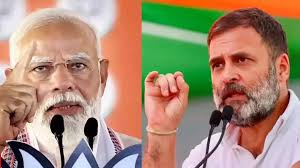
The selection committee chaired by the Prime Minister may meet today to select the next Chief Information Commissioner and Information Commissioners. Leader of the Opposition Rahul Gandhi is also a member of this committee. This meeting is crucial for filling the vacant posts in the Central Information Commission. New Delhi: The three-member selection committee chaired by Prime Minister Narendra Modi may meet on Wednesday to select the next Chief Information Commissioner and Information Commissioners. Leader of the Opposition in the Lok Sabha, Rahul Gandhi, is also a member of this committee. Rahul Gandhi may participate in this meeting to fill the vacant posts in the Central Information Commission (CIC). The government had informed the Supreme Court on December 1 that the committee would meet on December 10 to select and recommend names for these posts. Chief Information Commissioner post vacant Currently, the post of Chief Information Commissioner is vacant as the incumbent Chief Information Commissioner, Hiralal Samariya, stepped down after completing 65 years of age on September 13. Besides the Chief Commissioner, the commission can have up to 10 commissioners. Currently, the commission has only two Information Commissioners, Anandi Ramalingam and Vinod Kumar Tiwari. Eight posts of Information Commissioners have been vacant since November 2023. After Samariya’s departure, the post of Chief Commissioner in the CIC has become vacant for the seventh time since 2014. How is the selection made? According to Section 12(3) of the Right to Information Act, the Prime Minister is the chairman of the search committee. This committee also includes the Leader of the Opposition and a Union Minister nominated by the Prime Minister. Under the process of appointing the Chief Information Commissioner, details of interested candidates are invited through advertisements. These details are compiled into a list by the DoPT and sent to a search committee constituted by the Prime Minister and chaired by the Cabinet Secretary. Subsequently, the shortlisted names are sent to the committee chaired by the Prime Minister. Edited by: Abhishek Pandey About the Author Abhishek Pandey is a Consultant Writer at Navbharat Times Online. He has over three years of experience working on news related to current affairs, politics, crime, and public interest. They have also covered the Uttar Pradesh Assembly elections in 2022 and the 2024 Lok Sabha elections very closely. Courtesy: Hindi News
Karnataka: Sexual harassment by guide, caste-based harassment breaks patience after complaint! Dalit PhD student at RCU…
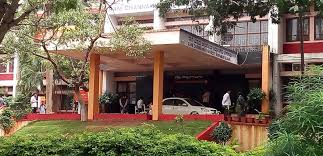
After the victim consumed sleeping pills, a syndicate meeting was held to protect the university’s image from being tarnished, and it decided to issue the student’s certificate. Belagavi – Rani Channamma University (RCU) in Belagavi, Karnataka, subjected a Dalit PhD scholar to sexual harassment and caste discrimination. The university violated the scholar’s privacy by revealing her identity. Furthermore, the university withheld her degree, leading the 34-year-old researcher in the history department to attempt suicide by consuming more than 19 sleeping pills on the night of November 30th. The victim had accused her guide of sexual harassment, but months of mental and caste-based harassment by the Vice Chancellor and Registrar following her complaint broke her down. The scholar, who is hospitalized, is now in stable condition, but following the controversy, the university announced on Thursday that she would be issued her degree. The victim began her PhD in the History Department of RCU in November 2021. She submitted her thesis in March 2025, and the PhD notification was issued after the viva voce in May 2025. Despite completing all academic formalities, she was not awarded her degree at the recent convocation attended by Governor Thaawarchand Gehlot. The family claims this was deliberate because the scholar had accused her guide, Professor KLN Murthy, of sexual harassment. In July 2025, the Internal Complaints Committee submitted its report, finding the allegations prima facie true. The Syndicate ordered an investigation and suspended Murthy in the preliminary report. However, the scholar later withdrew the complaint, citing mental instability. Subsequently, Registrar Santosh Kamgouda issued a show-cause notice, threatening to withhold her degree. The scholar considered this a threat. VC Professor Accusing CM Thyagaraja and the Registrar of caste discrimination, it was said that 26 other scholars (from different castes) were awarded degrees, but the Dalit scholar was targeted. The scholar consumed 19 sleeping pills at her home in Chikkodi on Sunday evening. The family immediately rushed her to the Belagavi Institute of Medical Sciences (BIMS), where her condition stabilized after emergency treatment. A case was registered at the Chikkodi police station. The victim’s husband said, “I have two children. If anything happens to my wife, I will commit suicide on the university campus.” University’s excuse: 3,000 rupees fee not paid The university claimed that the degree was not withheld, but rather that the certificate was lost due to non-payment of the 3,000 rupees convocation fee. However, journalists showed proof of online payment, which baffled the VC and Registrar. On Thursday, an emergency syndicate meeting was held, where it was decided that the degree would be issued on humanitarian grounds to avoid tarnishing the university’s image. VC Thyagaraj told reporters, “The Syndicate has resolved to issue the certificate to protect the university’s reputation.” He also ordered Murthy’s compulsory retirement on charges of mental harassment. However, no clarification was given on the caste-based allegations and denied them. Officials were unable to provide a satisfactory answer to questions about revealing the scholar’s identity in the sexual complaint. The Registrar described the show-cause notice as “mere clarification.” The incident sparked anger among student organizations in Belagavi. Karnataka Chief Minister Siddaramaiah and Deputy Chief Minister DK Shivakumar discussed the issue. Geetha Sunil Pillai Courtesy: Hindi News
In Khandwa, bus agent Salman, posing as “Sanjay,” trapped a Dalit woman, accused of blackmailing and raping her using an edited photo.

Blackmailing by editing photos: Extorted 2.5 lakh rupees and also had her brother-in-law raped, and the accused also had an evil eye on his minor daughter. Madhya Pradesh: A very serious and shocking case has come to light from Khandwa district. A 30-year-old married woman has made sensational allegations of rape and blackmail after holding her captive for several months. The victim alleges that the accused edited her photos to make them obscene and subjected her to constant physical and mental abuse by threatening to make them viral on social media. Furthermore, the accused is also accused of forcing the woman to convert to Islam. Police have taken action and arrested the accused, Salman, and a case has been registered against him under serious sections including rape, the Religious Freedom Act, and the SC-ST Act. He befriended her by changing his name and then began blackmailing her. According to a report in Dainik Bhaskar, the victim told the police in her complaint that she traveled to and from the city daily by bus. During this time, the bus agent became acquainted with her. The accused cleverly concealed his real name, “Salman,” and befriended her by introducing himself as “Sanjay.” It is alleged that Salman later stole photos from the woman’s social media account and edited them to make them objectionable. Using these photos, he began threatening her and pressuring her to meet him. Allegations of blackmailing, rape, and rape by brother-in-law According to the complaint, Salman repeatedly raped the woman by threatening to leak the photos. Fearing for her reputation, the victim tried to silence him by offering him money several times, but the accused’s harassment did not stop. The woman also made the serious allegation that Salman intimidated her and even got her raped by her brother-in-law, Shahrukh. Evil Eye on Daughter and Pressure to Convert The victim told the police that Salman had been constantly pressuring her to change her religion. He would often come to her house without permission and threaten her. The woman’s patience broke when the accused also attempted to molest her minor daughter. Fearing for her daughter’s safety, the woman gathered courage and filed a police complaint. Took a Loan and Paid 2.5 Lakh Rupees The woman’s husband says they remained silent until now due to fear of social stigma. They later realized that the accused was continuously demanding money through blackmail. The family said they took a loan and gave approximately 2.5 lakh rupees to the accused, but despite this, his threats and demands did not subside. Police Action: Accused Arrested Given the seriousness of the case, the police took immediate action. CSP Abhinav Barange confirmed that the accused, Salman, son of Salim and a resident of Singot, has been arrested. Police have registered a case against the accused under sections of the rape charges, the Madhya Pradesh Religious Freedom Act, 2021, and the SC-ST Act. Police officials say that Salman is currently the main accused in the FIR and the case is being thoroughly investigated. Rajan Chaudhary Courtesy: Hindi News