
Kerala: Panchayat ‘Purified’ After Dalit President’s Removal? Controversy Erupts Over Sprinkling of Cow Dung Water, SC/ST Commission Demands Report
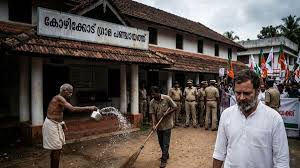
Outrage over the alleged humiliation of a Dalit Panchayat president in Kozhikode! Cow dung water sprinkled in the name of ‘purification’? SC/ST Commission demands report from the police. Learn the full story. Kozhikode: A case of alleged humiliating “purification ritual” against a former Panchayat president in Kozhikode district of Kerala is escalating. The Kerala State Scheduled Castes and Scheduled Tribes Commission has taken a strong stance on the incident that took place in front of the Changaroth Panchayat office in Perambra. The commission has directed the Kozhikode District Police Chief to investigate the matter and submit a detailed report within 10 days. It is alleged that the act was carried out with the intention of humiliating the outgoing Panchayat president, Unni Venjeri, who belongs to the Dalit community. What is the whole matter? According to media reports, cow dung water was sprinkled and a special ritual was performed outside the Changaroth Panchayat office. This is being seen as an insult to the president, who belongs to the Dalit community. The commission chairperson has given clear instructions to the police to register a case immediately based on the complaint, conduct an impartial investigation, and take appropriate legal action against the culprits. Police and Opposition’s Argument Perambra police informed that on Monday, during the election victory celebrations, a group of United Democratic Front (UDF) workers sprinkled water and cleaned the area outside the Panchayat office with brooms. The police said, “No formal complaint has been registered regarding this incident so far, therefore, no case has been registered.” On the other hand, leaders of the Indian Union Muslim League (IUML) have rejected these allegations. They argue that the youth used water and brooms only symbolically. Their intention was to convey the message that they were cleaning the dirt of corruption from the Panchayat, and not to target any particular individual. Allegations of Caste-Based Humiliation Outgoing president Unni Venjeri expressed deep sorrow over the incident and alleged that IUML (Indian Union Muslim League) workers were behind it. He questioned why similar celebrations or rituals were not observed in the three other panchayats that the UDF (United Democratic Front) had also won from the LDF (Left Democratic Front). According to Venjeri, this incident occurred in Changaroth because he was a Dalit president. Becoming emotional, Venjeri said, “If someone perceives this as caste-based humiliation, can they be blamed?” He stated that the panchayat, under the LDF’s rule for the past five years, had worked inclusively, but the IUML had orchestrated this act with a specific agenda. Protests Erupt The incident has fueled political protests in the district. The CPM’s (Communist Party of India (Marxist)) youth wing, DYFI (Democratic Youth Federation of India), marched to the Changaroth panchayat office on Tuesday, strongly condemning the act. According to the police, the protest was peaceful, and the situation in the area is under control. The Left Democratic Front (LDF) has also announced that they will hold another protest march on this issue. Rajan Chaudhary Courtesy: Hindi News
Jharkhand: Tribal woman Nisha Bhagat shaves her head to protest against religious conversions; learn who this tribal leader is
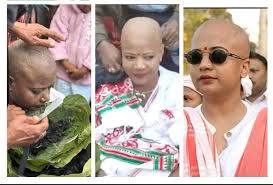
Her main issue is the delisting of converted tribals from reservation benefits. She argues that those who convert to Christianity or other religions avail of reservation benefits but harm tribal identity. Ranchi – Nisha Bhagat, a tribal leader from Gumla district of Jharkhand, recently shaved her head. This step is part of her campaign against religious conversions. Nisha Bhagat says that tribals who have changed their religion should not get reservation benefits. She belongs to the Oraon community and is fighting to protect tribal identity, water, forests, and land. Her main issue is the delisting of converted tribals from reservation benefits. She argues that those who convert to Christianity or other religions avail of reservation benefits but harm tribal identity. Nisha Bhagat is a resident of Gumla. Her father, Handu Bhagat, was a Jharkhand movement activist who spent half his life in jail during the movement. Nisha started working on social issues at the age of 15. She was associated with the Jharkhand Loktantrik Krantikari Morcha (JLKM) and contested the assembly elections from Gumla in 2024. However, she parted ways with the party after differences of opinion. JLKM criticized her, calling her “mentally ill,” to which Nisha responded, “There was a time when they called me ‘Didi’ (elder sister), and today they are making baseless statements.” The demand for delisting is essential for the protection of tribal identity, the Sarna religion, and constitutional rights. This is a fight for existence, identity, and self-respect. — Nisha Kumari Bhagat In an interview with a local media outlet, Nisha said that the idea of shaving her head came from the inspiration of her ancestors. She says, “I was born into a tribal family, so I have a responsibility to save society, our existence, water, forests, and land.” Her main demands are: • Implementation of the PESA Act. • A separate column for the Sarna Code. • Restoration of the tribal column removed after the 1961 census. • Delisting of converted tribals from reservation benefits. She accuses missionaries of spreading superstition in the name of healing and insulting the Sarna flag. She has undertaken a foot march to Ranchi against violations of the CNT-SPTP Act and land grabbing. She also protested at Jantar Mantar in Delhi. The CNT-SPTP Act (Chota Nagpur Tenancy Act 1908 and Santhal Pargana Tenancy Act 1949) are crucial laws enacted to protect the land and identity of tribal communities in Jharkhand, prohibiting the transfer of tribal land to non-tribals and safeguarding their rights. However, there have been controversies surrounding attempts to amend these laws from time to time, as was the case in 2016-17. Nisha has faced allegations of receiving funding from the BJP-RSS. Her response: “Get it investigated, I am fighting alone. They can’t digest how a tribal girl is surviving.” She has received death threats, against which she wrote letters to the DGP, DC, SP, and Home Minister. Her photo was even sent to the Vatican. She says, “Fear is not in our nature. We are inhabitants of the forest, we are fearless.” Nisha’s family gave her the opportunity to dedicate herself to society. Her mother was raised in a Christian family, but Nisha is a Sarna follower. She says, “I was born into the Sarna faith, and I will remain so.” She is also facing opposition from her family. What is the Sarna religious code? The Sarna religion is recognized by its followers as a distinct religious group, primarily composed of nature worshippers. The core tenets of the Sarna faith revolve around “Jal (water), Jungle (forest), Zameen (land),” with followers emphasizing the conservation of forest areas and worshipping trees and hills. Unlike traditional practices, Sarna believers do not engage in idol worship and do not believe in the caste system or the concepts of heaven and hell. Most of Sarna’s followers are concentrated in the tribal belt of states like Odisha, Jharkhand, Bihar, West Bengal, and Assam. In the 2011 census, nearly 5 million followers of the nature-oriented Sarna religion declared their faith, yet the Sarna religious code is still awaiting official recognition. The number of Jains is 4.4 million, who have already been recognized as a separate religious community. The Sengel campaign, along with several tribal organizations, held protests and rail and road blockades between 2022 and 2024 demanding the Sarna religious code. A series of demonstrations were also held in Kolkata and Ranchi advocating for the recognition of the Sarna religious code. Geetha Sunil Pillai Courtesy: Hindi News
The Modi government is directly attacking Dalit rights and the Constitution: Mallikarjun Kharge
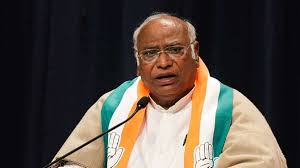
Congress President targets the BJP, saying, “Dalits’ rights in education and employment are being taken away, and there’s a conspiracy to weaken the Constitution.” New Delhi: Congress President Mallikarjun Kharge on Saturday launched his sharpest attack yet on the Modi government at the center. He accused the government of weakening the Constitution and trampling on the fundamental principles of social justice, especially the rights of Scheduled Castes (SCs). Addressing the first meeting of the party’s newly formed “Scheduled Caste Advisory Committee,” Kharge said that the BJP’s policies have eroded all the achievements in the fields of education and employment, achieved through years of hard work by previous Congress governments. He expressed concern that the current regime is diluting the reservation system and attempting to justify discrimination. “We will not allow the Constitution to be weakened.” Kharge declared, “We will not allow Baba Saheb Ambedkar’s Constitution to be weakened at any cost.” He stressed that Congress will continue its fight to protect constitutional values. Turning the pages of history, he recalled that Congress began its fight against discrimination even before independence. This struggle resulted in the 1955 Civil Rights Protection Act, which criminalized untouchability. Subsequently, during Rajiv Gandhi’s tenure, the 1989 SC/ST Atrocities Prevention Act was enacted, which recognized atrocities against Dalits as an attack on social justice. Kharge explained that subsequent Congress governments further strengthened this law. They added stringent provisions such as a ban on anticipatory bail, speedy investigations, increased compensation for victims, and the establishment of special courts. Education: The Greatest Weapon of Empowerment Emphasizing the role of education in Dalit empowerment, Kharge detailed Congress initiatives. He credited the Congress with providing pre- and post-matric scholarships, hostels for Scheduled Caste students, the “Top Class Education Scheme,” and reservations in IITs, IIMs, and medical colleges. He also cited the Sarva Shiksha Abhiyan, the Mid-Day Meal Scheme, and the Right to Education (RTE) Act, saying these initiatives increased school enrollment and provided the country with millions of Dalit doctors, engineers, officers, and entrepreneurs. Serious Allegations Against the Current Government Kharge accused the Modi government of suppressing the voices of Dalits. He cited the suicide of Rohith Vemula, the Bhima Koregaon incidents, and alleged discrimination against Dalit students in universities. He said that the promotion of privatization, reductions in government jobs, weakening of reservations, and the decline in the recruitment of SC/ST faculty in higher educational institutions are a direct attack on social justice. He accused the government of promoting a “Manuvadi mindset,” which justifies inequality rather than ensuring equality. Recalling Ambedkar’s words, Kharge said that a society’s progress is measured by how safe its weakest members are, but the current government has completely reversed this principle. Roared at the “Vote Chor, Gaddi Chhod” rally Later, addressing the “Vote Chor, Gaddi Chhod” rally held at Ramlila Maidan, Kharge further sharpened his tone. He called those involved in alleged vote theft “traitors” and accused them of betraying the country. He called on the public to oust such forces from power to protect voting rights and the Constitution. Kharge warned that the RSS ideology would destroy the country. He appealed to the people to unite under the Congress flag, claiming that only the Congress party is capable of protecting democracy and constitutional values. Rajan Chaudhary Courtesy: Hindi News
Saharanpur: Man slits throat of woman he was living with, throws body in Haryana

Saharanpur Murder News: The accused, Bilal, murdered Dalit woman Uma by slitting her throat. The deceased, a resident of Saharanpur in Uttar Pradesh, was divorced from her husband. After killing the woman, he threw the body in Yamunanagar. In Saharanpur, Uttar Pradesh, a Muslim man named Bilal murdered a Dalit woman he was living with by slitting her throat. The accused then threw the woman’s body in Yamunanagar. The discovery of the headless body of a woman on the roadside in Yamunanagar, Haryana, caused a sensation. The deceased was identified as Uma, a resident of Halalpur village in the Dehat Kotwali area of Saharanpur district, Uttar Pradesh. Uma’s parental and in-laws’ homes are located next to each other in the village. On Saturday (December 6) morning, the torso of a woman was found near the Kalesar area, with the head separated and the body unclothed. Considering the seriousness of the case, the police formed a special investigation team and proceeded with the investigation based on CCTV footage, mobile location, and other technical evidence. Facts revealed during the investigation The investigation also revealed facts related to Uma’s personal life. About 15 years ago, Uma had eloped and married Johnny, who lived in her neighborhood, and with whom she had a 13-year-old son. Johnny says that they got divorced two years ago, while Uma’s family denies the divorce. The family says that they did not have much contact with Uma after she eloped and got married. 15 years ago, Uma was in love with her neighbor Johnny, and on the day of her wedding procession, she eloped with Johnny and they got married. Everything was fine for 13 years, and then suddenly she left Johnny and started living with Bilal. Uma was in a live-in relationship Uma had been living in a live-in relationship with Bilal, a resident of the Nakur area of Saharanpur, for about two years. Meanwhile, Bilal’s marriage was arranged elsewhere. Fearing the marriage would be called off, the accused murdered Uma on Saturday night (December 6) and dumped her body in Yamunanagar to conceal her identity. The police have arrested the accused, and the investigation is ongoing. Uma’s family members left for Jagadhri after receiving the information. The Haryana Police had informed the family. They then left for Jagadhri on Monday morning (December 15). By: ABP UP Desk | Edited By: Fayaz Ul Mustafa Courtesy: Hindi News
Man convicted of raping mentally challenged Dalit woman sentenced to life imprisonment: Court also imposes a fine of one lakh rupees, with additional sentence for non-payment
Firozabad. In a case of rape of a mentally challenged Scheduled Caste woman, the court has sentenced the convict to life imprisonment. He has also been fined one lakh rupees. If the fine is not paid, the convict will have to serve an additional one-year sentence. This case is from the Nagla Singhi area and came to light in 2023. The complainant filed an FIR on October 13, 2023. She stated that her 24-year-old niece had gone to the field to graze goats in the afternoon. Around 4 pm, she received information that her niece was lying injured in the field. She was immediately admitted to the government trauma center. Based on the investigation and statements, an FIR was registered against Vipin Yadav alias Vipan of the village under sections of rape, the SC/ST Act, and other relevant sections. The police later arrested Vipin during an encounter. The investigating officer completed the investigation and filed a charge sheet against him in court. The case was heard in the court of Special Judge (SC/ST Act) Navneet Kumar Giri. ADGC Narendra Singh Solanki represented the prosecution. After considering all the evidence and arguments, the court declared Vipin Yadav guilty. The court also ordered that 50 percent of the fine amount be given to the victim as compensation. It is noteworthy that Vipin Yadav was arrested in an encounter after the incident. During this time, action was also taken against him under sections of attempted murder and the Arms Act. However, the court acquitted him of the charges under the sections of attempted murder and the Arms Act. Arun Kumar Rawat Courtesy: Hindi News
For Punjab Assembly election, BJP turns to Dalit-dera strategy
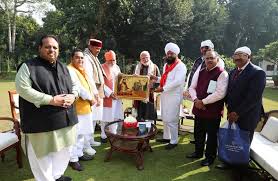
Having already made inroads into the urban Sikh electorate of Punjab, the BJP seems to have begun an exercise to woo the Dalit votebank ahead of the next Assembly elections in the state. In a carefully choreographed move, BJP national general secretary Tarun Chugh, along with Dalit leaders including former Union Minister of State Vijay Sampla and former Chief Parliamentary Secretary Avinash Chander, facilitated a meeting between Dera Sachkhand Ballan chief Sant Niranjan Dass and Prime Minister Narendra Modi in Delhi last week. The timing was deliberate: Ahead of the 649th Guru Ravidas Jayanti. Dera Ballan holds deep religious and emotional significance for the Ravidassia community in Punjab. Recognising the power of digital outreach, BJP leaders promptly released photographs of the meeting across social media platforms, sending a clear political signal to 32 per cent Dalit voters across the state. “We had gone to invite the PM for the start of the year-long celebrations to mark the 650th jayanti of the Guru from his birthplace Banaras (Varanasi) in the coming February. Since the PM is Varanasi MP, the dera chief wanted to seek his approval for the allotment of additional 15-20 acres for setting up a satsang bhawan. The talks went on very smoothly,” said Avinash Chander. The BJP has reportedly identified nearly 250 small and large deras across Punjab that hold varying degrees of influence over local constituencies — a sign of a more structured, long-term approach. “Our party has not been able to garner support from the Jatt community in the state, who are majorly landowners and have agriculture as their major source of income. The party is looking to be cordial with all other communities, including Ravidassias, Valmikis and OBCs, in line with its strategy in Haryana,” said a senior BJP leader from the state. The BJP move has clearly unsettled the Aam Aadmi Party (AAP). In 2023, AAP national convener Arvind Kejriwal and Chief Minister Bhagwant Mann had visited Dera Sachkhand Ballan and handed over a cheque of Rs 25 crore for establishing a Sri Guru Ravidas Research Centre. However, land for the project is yet to be allotted. Last month, Punjab State Commission for Scheduled Castes Chairman Jasvir Garhi summoned the Jalandhar Deputy Commissioner to seek clarity on the status of the project. The administration is now reportedly looking for suitable land in the vicinity. Interestingly, the research centre was originally announced by former Chief Minister Charanjit Singh Channi, Punjab’s first Dalit CM and now Congress MP from Jalandhar. Channi had announced and sanctioned the same amount ahead of the 2022 Assembly poll. He is known for his close association with the dera, including frequent visits, partaking in langar, and even sleeping on the floor of the premises during his tenure. Like the BJP, SAD and the Congress, AAP has also been trying to appease various deras. AAP gave MP’s seat to Balbir Singh Seechewal, running a dera in Sultanpur Lodhi. AAP supremo Arvind Kejriwal held a meeting with functionaries of Divya Jyoti Jagriti Sansthan, Nurmahal, in Delhi this week. Last month, the state government had got handed over the custody of Akal Bunga gurdwara in Sultanpur Lodhi to a Nihang faction led by Baba Balbir Singh. Both AAP and BJP had last month organised parallel events to mark the 350th martyrdom day of Guru Teg Bahadur. Article_Author Deepkamal Kaur Courtesy: The Tribune Note: This news is originally published on https:/thetribune.com/bha and is used purely for non-profit/non-commercial purposes, especially human rights
Adivasis, Dalits will lose Aadhaar, ration cards next
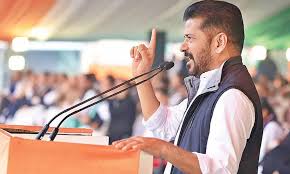
Hyderabad: ChiefMinister A Revanth Reddy, while slamming the Narendra Modi regime for removing the names of certain sections from the voters’ lists in the guise of Special Intensive Revision (SIR) of electoral rolls and indulging in ‘vote chori’, has warned that Adivasis, Dalits and minorities will lose their Aadhaar cards, ration cards, lands and their properties in the next stage. He was addressing a mammoth ‘Vote Chor – Gaddi Chhod’ rally in New Delhi on Sunday. The Chief Minister said the Rashtriya Swayamsevak Sangh, its second chief Golwalkar, and their associates had obstructed granting voting rights to Dalits, Adivasis, minorities, and the poor. It was Mahatma Gandhi and Dr BR Ambedkar who fought for granting voting rights to the poor and thereby provided them an opportunity to form governments in the country. The Chief Minister recalled Prime Minister Narendra Modi and Union Home Minister Amit Shah had strategised to win 400 MP seats in the 2024 Lok Sabha elections with the aim of implementing the RSS’ ideology. As Congress leader Rahul Gandhi had cautioned people that the BJP will change the Constitution and abolish reservations should it win 400 MP seats and exposed the saffron party’s conspiracies, people gave a mandate limiting BJP to 240 seats and therefore the Constitution was protected. “Now, to implement the RSS ideology by deceit, the BJP government has resorted to the removal of voting rights of particular communities,” the Chief Minister charged. Like Mahatma Gandhi and Ambedkar, presently Congress leaders Rahul Gandhi and AICC president Mallikarjun Kharge were fighting against Modi and Amit Shah to safeguard the rights of the deprived communities, Revanth Reddy said. “Today, we are standing in Ramlila Maidan against the ideology of RSS and Golwalkar. It is not a Congress problem, but a grave national problem”, he observed. Appealing to people to support Rahul Gandhi in the fight against the Centre on ‘vote chori’, the Chief Minister said that tribals will lose everything if their voting rights are taken away. The Chief Minister asserted that Rahul Gandhi was continuing the fight “like a soldier” against the Modi government; and hence, everyone should rally behind the Congress for a great cause. By K Venkateshwarlu Courtesy : THI Note: This news is originally published on https:/thehansindia.com/bha and is used purely for non-profit/non-commercial purposes, especially human rights
Telugu Dalit IPS officer’s suicide: Haryana govt relieves DGP
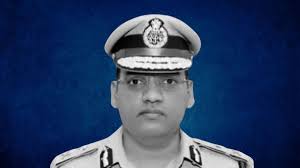
Kumar (52), a 2001-batch IPS officer, allegedly shot himself dead on October 7. Chandigarh: Two months after being sent on leave amid a controversy over IPS officer Y Puran Kumar’s alleged suicide, the Haryana government has relieved IPS Shatrujeet Kapur from the charge of Director General of Police. O P Singh, who was given the additional charge as state police chief during Kapur’s absence, has been appointed as officiating DGP till further orders. The Haryana government is likely to send a panel of senior IPS officers’ names to the Union Public Service Commission to appoint a new state police chief, as Singh, a 1992-batch IPS officer, is due to retire on December 31. Kapur, a 1990-batch IPS officer, will continue to hold the charge of chairman of Haryana Police Housing Corporation, Panchkula, according to an official order. An engineering graduate, Kapur was appointed the state police chief in August 2023. On October 14, Kapur went on leave amid mounting criticism from opposition parties over IPS officer Y Puran Kumar’s alleged suicide. Singh was then given the additional charge of DGP. Kumar (52), a 2001-batch IPS officer, allegedly shot himself dead on October 7. In an eight-page ‘final note’ purportedly left behind, Kumar accused multiple senior officers, including Shatrujeet Kapur, of “blatant caste-based discrimination, targeted mental harassment, public humiliation and atrocities”. Amid pressure from the political parties, the Haryana government first shunted out Rohtak Superintendent of Police Narendra Bijarniya and later sent Shatrujeet Kapur on leave. Kumar’s wife, IAS officer Amneet P Kumar, gave consent for post-mortem a week after the alleged suicide after receiving assurance from Chandigarh Police that a fair probe would be conducted and a commitment from the Haryana government that action would be taken against any “erring” officials. Posted by Mohammed Baleegh Courtesy : TSD Note: This news is originally published on https:/thesiasatdaily.com/bha and is used purely for non-profit/non-commercial purposes, especially human rights
Dalit Teenager Lured Away by Young Man: In Bareilly, the accused fled after the father filed a complaint with the police; investigation begins
In Nawabganj, Bareilly, a young man has been accused of luring a Dalit teenager into a love affair and committing sexual assault. After the girl’s father filed a complaint, the police began an investigation, and the accused abandoned the girl near her home and fled. The incident took place in the Nawabganj police station area. The girl lived with her family. A young man from Jahanabad, Pilibhit, ran a tire repair shop in one of the shops located at her house. During this time, the young man came into contact with the girl and lured her into a relationship. When the family learned about this, they had the young man vacate the shop. However, the accused continued to meet the girl secretly. It is alleged that three days ago, the accused took the girl with him and sexually assaulted her. When the girl went missing, her father filed a complaint at the police station, demanding strict action against the accused. In this regard, Station House Officer Arun Kumar Srivastava said that the complaint has been received and appropriate action will be taken after the investigation. Vivek M Courtesy: Hindi News
Depressed Class United Front: A Lost Chapter in Kerala’s Dalit Politics in Annihilate Caste
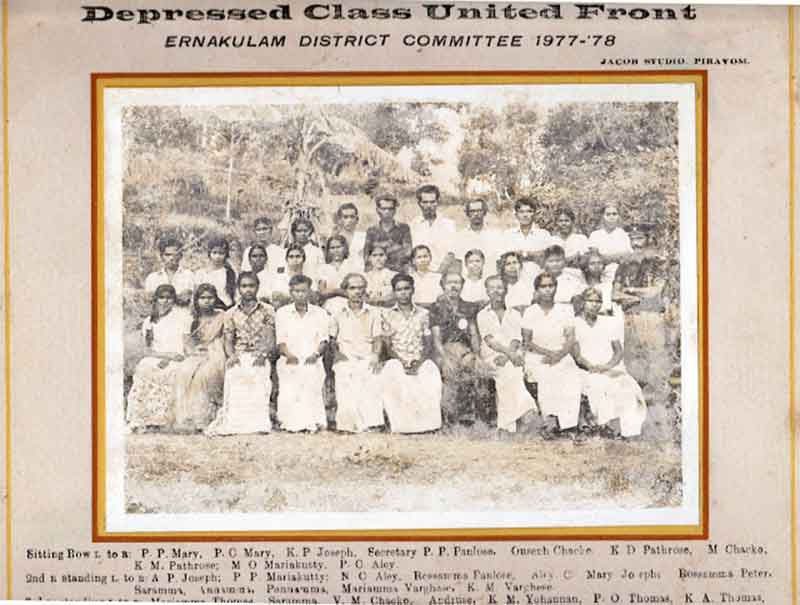
When Thiru P.J. Sabharaj convened his first public meetings in the late 1950s, he articulated a vision that was rare in Kerala’s political landscape. Caste, he insisted, could not be defeated through identity claims alone. Any meaningful anti-caste politics had to confront land ownership, labour relations, and control over the state. Advancing this vision of a casteless society, Sabharaj and his followers formed the Depressed Class United Front in 1958, later renamed the Dravida Class United Front (DCUF). DCUF was not a Dalit organisation seeking symbolic recognition or moral redress. It was an explicitly materialist anti-caste project that read caste as a system structured through unequal control over land, labour, and state power, and organised around the redistribution of these resources. In doing so, it posed a fundamental challenge to both mainstream anti-caste politics and the dominant Left in Kerala. The movement emerged from deep disillusionment. Many Dalit activists in mid-twentieth-century Kerala had joined communist organisations, drawn by their language of class emancipation and egalitarian promise. Yet in practice, the Left refrained from confronting caste relations directly, treating caste as a feudal residue that would dissolve automatically through class struggle. Sabharaj’s mobilisation meetings, held largely in Dalit-inhabited regions of Kottayam, Idukki, and Pathanamthitta, directly challenged this assumption. DCUF activists openly accused communists of preserving feudal caste relations beneath socialist rhetoric. Their slogan captured this critique with biting clarity: “Socialism on their lips. Feudalism in their hearts. Worshippers of feudalism, Enemies of the New Era- Your days are ending.” Land reform in Kerala, DCUF argued, revealed this contradiction. Despite progressive claims, it largely benefited rent-paying tenants and newly emerging landed castes, while leaving landless agricultural labourers, overwhelmingly Dalit, outside its scope. By using monetary criteria such as the ability to pay tenancy as the measure of deservingness, the state reproduced caste inequality. DCUF viewed this as a betrayal: a reform that promised redistribution but left the material foundations of caste intact. Breaking with Left parties that combined class rhetoric with paternalistic practice, DCUF nonetheless adopted Marxist tools — trade unions, study circles, collective discussions, while placing caste’s materiality at the centre of its politics. For DCUF, caste was not a cultural remnant awaiting historical extinction; it was an active system of dispossession that structured everyday life. Sabharaj framed the movement’s ambitions as nothing less than a reorganisation of material relations. Caste, he argued, was rooted in unequal productive and reproductive relations, and any serious anti-caste struggle had to begin by transforming these conditions. DCUF leaders repeatedly stressed that such a project required cultivating class consciousness among the depressed classes themselves, recognising that caste’s internal divisions obstructed genuine solidarity. This intervention complicates Kerala’s celebrated reformist narrative. Temple entry, legislative representation, and communist-led land reforms remain vital chapters in the state’s history. Yet DCUF’s archive insists that these achievements did not automatically dismantle caste. Caste endured because it continued to determine who owned land, who controlled labour, and whose material access the state protected. DCUF’s response was to unite the resourceless as a class — the “depressed class” — and confront caste at its foundation through land redistribution, labour mobilisation, and political reorganisation. Central to this vision was Sabharaj’s udama sidhantham, or theory of ownership, which became the intellectual core of the Dravida Varga Aikya Munnani. Addressing the depressed classes directly, Sabharaj declared: “The universal owner class, organise. You ought not to receive wages, but sovereignty and rule.” The claim was radical: to reconstitute Dalits not merely as victims of caste oppression, but as the rightful owners of land and resources dispossessed through centuries of Brahmanical and colonial extraction.Within this framework, the identity of the Adi-Dravida was reinterpreted as a material claim rather than a symbolic one. The “native” was not a mythic ancestor but a community which was stripped of land and livelihood through successive regimes of domination. DCUF linked this reinterpretation to concrete demands: land to the tiller, title deeds for puthuval occupiers, community control over commons, and, most strikingly, ten acres of land for every depressed-class family. They also pioneered practices in this direction. Under DCUF’s leadership, labour unions emerged across Idukki’s plantation belts, where Dalit workers faced extreme exploitation. The organisation formed the Bharata Samrakshana Dravida Sena, a militant wing intended to protect workers from workplace violence. Alongside unionisation, DCUF mobilised communities to reclaim their labour collectively, occupying uncultivated land, transforming wastelands into productive spaces, and asserting collective control over livelihood. DCUF also challenged the state’s arbitrary evictions and enclosures, arguing that government interventions routinely expropriated the labour Dalit communities had invested in making forest and wasteland cultivable. Its demands therefore extended to land ceilings, seizure of unlawfully held wealth, and protection against predatory transfers and forced displacement. Why DCUF Matters Today DCUF’s relevance extends far beyond its regional context. It offers a corrective to symbolic readings of caste by insisting that ownership, access to resources, and control over labour are constitutive of caste itself. Anti-caste politics, from this perspective, cannot be limited to identity claims, moral appeals, or quotas; it must confront land relations, labour regimes, and the state’s role in redistribution. Moreover, DCUF advanced a non-assimilationist alliance politics grounded in the agency of the depressed classes. It emphasised collectivisation, alternative livelihoods, and solidarities with other resourceless communities, particularly Adivasis. Through electoral participation, it sought not merely representation but a transformation of who controls the instruments of redistribution.Taken together, DCUF offers a crucial lesson for contemporary struggles: caste inequality cannot be dismantled without confronting material expropriation. Far from an antiquarian curiosity, DCUF remains a practical, though contested, guide for centring land, labour, and state power in the fight against caste injustice. By Sephora Jose Sephora Jose is a Postdoctoral Research Fellow in the Department of Humanities and Social Sciences at IIT Kanpur, where she also earned her doctoral degree. Her research critically examines caste and anti-caste resistance, with particular emphasis on their material foundations. Focusing on Kerala, her work traces caste relations from the colonial period to the present. She was awarded the Bluestone Rising Scholar Prize