
History-Sheeter Beats Dalit Family in Chhibramau: Case Registered on Court Order After Police Negligence
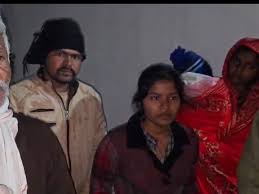
A case of assault on a Dalit family has come to light in the Uncha Viratiya locality of the Chhibramau Kotwali area. History-sheeter Anwar and his associates are accused of assault due to an old rivalry. After alleged negligence by the police, a case was registered on December 24 on the orders of the court. According to the victim family, the incident took place on September 27, 2025. It is alleged that history-sheeter Anwar, son of Nisar, along with his associates, ambushed and beat 65-year-old Ramdas Jatav and his son Ram Sachche Jatav on the road. When Ramdas’s other son, Durgesh Jatav, arrived at the scene, he was also beaten and subjected to casteist abuses. Following this, the accused entered the house and assaulted and looted the family members, including women and children. Other accused named in the case include Tariq son of Ali Daraz, Istkar Mallu, Sallu son of Sagar, and Suraj. The victim Dalit family had complained to the Chhibramau police, but their complaint was ignored. After more than two months of no action, a complaint was filed with the District Magistrate on December 19. Following this, the victim approached the court, which ordered Chhibramau Kotwali Station House Officer Inspector Vinay Tiwari to register a case. The complainant has also alleged that Additional Inspector Brajmohan Pal of Chhibramau Kotwali threatened him and said that he would file a final report (FR) in the case registered on the court’s order. Meanwhile, social worker Shreyansh alias Gudda Dubey, Advocate, has assured the victim family of all possible help to get justice. Ashwini Kumar Courtesy: Hindi News
Dalit Pride Raja Bijli Pasi’s Birth Anniversary: Celebrated with reverence in Unnao, sweets distributed
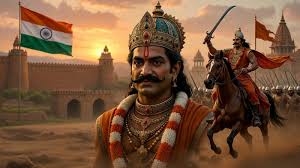
The birth anniversary of Bahujan hero and great 12th-century ruler Veer Raja Bijli Pasi was celebrated with reverence and enthusiasm in Unnao district. The event took place in Ahesa village of Hilauli block. While the entire country was celebrating the birth anniversary of former Prime Minister Atal Bihari Vajpayee, dozens of people gathered in Unnao under the leadership of District Panchayat candidate Rambabu Lodhi to remember Raja Bijli Pasi. They offered flowers to the portrait of Raja Bijli Pasi, paid their respects, and distributed sweets. The program began with the chief guest, former village head Chhote Lal, offering flowers to the portrait of Raja Bijli Pasi. Following this, other attendees also paid their tributes. Addressing the gathering, Chief Guest Chhote Lal shed light on the life of Raja Bijli Pasi and praised the program organizer Rambabu Lodhi. In his address, Rambabu Lodhi said that Raja Bijli Pasi was a great king and an inspiration for Dalits. Village head representative Ravi Rawat welcomed the guests. Prominent among those present were Mahesh Pasi, Ramchandra Madlali Pasi, Kabirbhan Pasi, Ramadhar Pasi, Udal Pasi, Puttan Pasi, Ganesh Pasi, Rinku Pasi, Ramesh Pasi, Lala Pasi, Ganesh Pasi, Lalu Pasi, Radhai Pasi, Umesh Pasi, Ramnaresh Dhobi, Vikas Pasi, Ashok Pasi, Sunil Pasi, Rammilan Pasi, Ramkumar Pasi, Guddu Pasi, Gyan Prasad Pasi, and hundreds of others. Rajesh Kumar Courtesy: Hindi News
Yogi Adityanath Accuses Opposition of ‘Selective Activism’, Questions Silence on Killing of Dalit Hindu in Bangladesh

Yogi Adityanath has sparked a fierce debate by accusing Opposition leaders and activists of ignoring attacks on Hindus in Bangladesh while vocally protesting violence in Gaza. Uttar Pradesh Chief Minister Yogi Adityanath has accused Opposition parties and sections of civil society of “selective activism”, alleging they hold candle marches for Gaza but remain silent when Hindus, including a Dalit youth, are killed in Bangladesh. Speaking during the winter session of the Uttar Pradesh Assembly in Lucknow, Adityanath launched a sharp attack on his political opponents, accusing them of double standards on human rights and minority safety. He said many leaders and activists “shed tears for everything that happens in the Gaza Strip” but fail to raise their voices with equal force when Hindus are targeted in neighbouring countries such as Bangladesh and Pakistan. The Chief Minister’s remarks came in the backdrop of reports about a young Dalit Hindu man allegedly killed in Bangladesh amid continuing concerns over the safety of minorities there. Without naming specific parties, Adityanath alleged that Opposition leaders see Dalits “only as a vote bank”, claiming their outrage is calibrated according to political convenience and religious identity. “Is humanity so selective that you will take out candle marches for Gaza, but not utter a single word when a Hindu, a Dalit, is murdered in Bangladesh?” he reportedly asked, urging lawmakers to adopt a more consistent moral stance. According to him, genuine commitment to human rights cannot be confined to one geography, faith or ideology. Call For Assembly Resolution, Pushback From Opposition Adityanath urged the House to pass a formal resolution condemning the alleged killing of Hindus in Bangladesh and to “warn” the Sheikh Hasina government over recurring attacks on religious minorities. Though foreign policy is primarily the Union government’s domain, the Chief Minister argued that state legislatures also have a duty to speak up on issues of basic human rights. Reports from the Assembly said his comments triggered sharp responses from Opposition benches, with leaders accusing the government of selectively spotlighting cross‑border crimes while ignoring hate speech, communal tensions and caste violence within India. Some legislators argued that the ruling party often internationalises atrocities on Hindus, but downplays attacks on Muslims, Christians, Adivasis and other vulnerable groups at home. Opposition voices also questioned whether such statements could strain India’s diplomatic engagement with Bangladesh, a key partner in trade, security cooperation and border management. They maintained that while any attack on minorities is condemnable, these concerns must be addressed through established diplomatic channels and without inflaming communal passions domestically. Civil society reactions have been more varied. Some commentators backed the Chief Minister’s demand for consistent outrage, pointing to repeated reports of temple vandalism, land grabs and targeted assaults on Hindus and other minorities in Bangladesh. Others cautioned that genuine solidarity must not be reduced to competitive victimhood, where one suffering is invoked primarily to dismiss or relativise another. Background: Minority Safety, Global Conflicts And Protest Culture The debate comes at a time when conflicts in West Asia, especially the ongoing war in Gaza, have drawn large‑scale protests, online campaigns and solidarity events across Indian cities and campuses. Candle marches, teach‑ins and social media campaigns demanding a ceasefire and protection of civilians have been widely reported. Critics of Adityanath’s remarks say such protests are part of a broader global peace movement and not evidence of indifference towards other victims. At the same time, minority rights groups have repeatedly flagged attacks on Hindus, Buddhists and other communities in Bangladesh, especially during times of political instability or communal tension. International watchdogs have documented instances of mob violence, forced displacement and destruction of places of worship. Activists argue that these patterns warrant more sustained international pressure, including from India, to safeguard basic rights. Within India, the conversation around “selective outrage” has become a recurring political talking point. Different sides routinely accuse each other of speaking up only when victims belong to their perceived support base. Whether it is lynchings, custodial deaths, caste‑based atrocities or cross‑border violence, public responses are often filtered through partisan and identity lenses, deepening polarisation rather than fostering a shared human‑rights framework. Adityanath’s intervention in the Assembly taps into this larger narrative. By juxtaposing Gaza protests with attacks on Hindus in Bangladesh, he sought to highlight what he views as an imbalance in empathy and advocacy. However, critics warn that framing suffering in competitive terms risks trivialising all victims, instead of building a broader coalition that opposes violence in every context. Syed Muskan Shafiq Courtesy : TLI Note: This news is originally published on https:/thelogicalindian.com/bha and is used purely for non-profit/non-commercial purposes, especially human rights
30,000 Staff Recruited in Just 8-9 Months: Why Did Modi’s Minister Say Thanks to Rahul Gandhi’s Post?
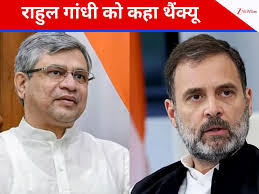
Ashwini Vaishnav Thanks Rahul Gandhi: 30,000 staff recruited in just 8-9 months, Rahul Gandhi posted this on social media. Why did Union Minister Ashwini Vaishnav thank him for this? Know the full story. Why did Ashwini Vaishnav thank Rahul Gandhi? New Delhi: Congress MP and Leader of the Opposition in the Lok Sabha, Rahul Gandhi, recently praised the Karnataka government. He said that Karnataka has helped iPhone manufacturer Foxconn recruit approximately 30,000 new employees in just nine months. This is the fastest factory expansion in India to date. Significantly, almost 80 percent of these employees are women. Union Minister Ashwini Vaishnav reacted to Rahul Gandhi’s comment. He commented on the Congress leader’s post in a humorous way, saying that the credit for this achievement goes to the central government’s policies and Prime Minister Narendra Modi’s ‘Make in India’ initiative. What did Rahul Gandhi say? Earlier this week, Rahul Gandhi shared a news report on Facebook and wrote that recruiting 30,000 employees in just eight to nine months is the fastest factory expansion in India to date. He further said that this is not just about numbers, but about providing employment opportunities that bring about a significant change in people’s lives. This achievement is even more special because about 80 percent of the employees in this unit are women, most of whom are between 19 and 24 years old. Rahul Gandhi further said that for many women, this is their first job. Karnataka is creating an environment where manufacturing can grow on such a large scale and at such a rapid pace. He continued, “This is the kind of India we need to build: dignified jobs and opportunities for all.” Ashwini Vaishnav reacts to the Congress leader’s post On this, Union Electronics and IT Minister Ashwini Vaishnav responded on X (formerly Twitter) by sharing Rahul Gandhi’s post. He thanked Rahul Gandhi, saying it was an acknowledgment of the success of Prime Minister Narendra Modi’s ‘Make in India’ program. He wrote in the post, “Thank you, Rahul Gandhi, for acknowledging the success of PM Modi’s ‘Make in India’ program. As you have noted, we are becoming a producer economy by implementing our Prime Minister’s vision.” The issue of jobs at Foxconn company Taiwan-based Foxconn is a major contract manufacturer for Apple devices, including the new iPhone 17. This company is expected to play a key role in shifting the production of Apple products from China to India. When the factory near Devanahalli in Bengaluru is fully operational, it is estimated that 20 million iPhones will be manufactured there annually. In the last year, iPhones worth $22 billion have been assembled in India, and the country now contributes approximately 20 percent to Apple’s total global iPhone production. Curated by: Ruchir Shukla About the Author Ruchir Shukla has been associated with Navbharat Times Online since February 2020. He started his career in 2011 with a news agency. During this time, he broke major news stories through his reporting. He specializes in political, social, crime, and positive news. He has been working in digital media for about 12 years. He is a graduate of Delhi University. Courtesy: Hindi News
Congress’s Mega Plan: Rahul Gandhi May Lead the Charge on MGNREGA and Aravalli Issues
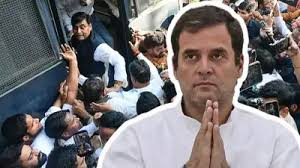
Congress News: Congress is preparing for a major movement on the MGNREGA and Aravalli issues. A march from Gujarat to Delhi under the leadership of Rahul Gandhi is possible. The final decision on the strategy will be taken at the CWC meeting on December 27. Congress is preparing for a major movement on the MGNREGA and Aravalli issues. Jaipur: The Congress party is once again preparing to adopt an aggressive stance on the MGNREGA scheme and issues related to the Aravalli range. The Congress leadership is now formulating a plan for a large-scale public movement on these two issues. According to a media report, a march or a widespread public movement could be launched across four states, from Gujarat to Delhi, under the leadership of Rahul Gandhi. The final decision on this strategy may be taken at the Congress Working Committee (CWC) meeting on December 27. Movement likely under Rahul Gandhi’s leadership After cornering the central government on issues like vote rigging and the SIR (Special Investigation Report), the Congress is now preparing to push the MGNREGA and Aravalli issues in the changed political environment. The party believes that these issues are directly related to the common people, employment, and the environment, making it relatively easier to garner public support. This is why the Congress high command may give Rahul Gandhi the role of leading the movement and taking to the streets on these issues. Plan for a march across four states, including Rajasthan According to discussions within the party, the proposed march could start from Gujarat and pass through Rajasthan, Haryana, and Delhi. Several public meetings and interaction programs will also be organized during the march. The objective is not only to question the policies of the central government but also to reactivate the organization at the grassroots level. Brainstorming among leaders in Jaipur, launch possible in the new year A detailed discussion on the strategy for this entire campaign took place in Jaipur between former Chief Minister Ashok Gehlot and Congress leader Pawan Khera. The two leaders deliberated on the nature of the movement, the presentation of the issues, and the direction of public relations. The party leadership wants the movement to be effective and connect directly with the common people. According to Congress sources, the movement or march is likely to begin in the new year. Since everyone is currently busy with year-end and New Year’s programs, the campaign may start in the first week of January. All eyes are now on the CWC meeting on December 27, where the Congress’s future political direction is expected to be decided. Authored by: Sambrat Chaturvedi About the Author Sambrat Chaturvedi is an Assistant News Editor at Navbharat Times Digital. He has over 20 years of experience in journalism. He covers news related to politics, crime, education, art, and culture in Rajasthan. He has been associated with NBT (Digital) for the past 5 years. His journalism career began at Rajasthan Patrika, Jaipur. Courtesy: Hindi News
Karnataka Dalit Sangharsh Samiti condemns ‘honour killing’, questions pro-Hindutva leaders
Condemning the honour killing of a pregnant young woman in Hubballi, Karnataka Dalit Sangharsh Samiti (DSS), founded by Prof. B. Krishnappa, has questioned the silence of various mutt heads and leaders of pro-Hindutva groups. Gurumurthy, State convener of DSS, at a press conference here on December 24 said that the brutal murder of the young woman by her father exhibited the deep-rooted caste-based hatred in society. The father killed his daughter because she married a boy from another community. The boy and his family members also suffered injuries in the incident. “Recently, RSS leader Mohan Bhagawat stated that there was no caste-based discrimination in society, but caste-related confusion has been created by politicians for their benefits. Then, how does RSS view the honour killing? Does the killing not show how caste-based atrocities have been continuing in society?” he asked. Mr. Gurumurthy alleged that Hindutva forces had been attempting to bring in Manusmriti in place of the Constitution. Recent statements by pro-Hindutva leaders exhibit their agenda, he added. Another RSS leader, Dattatreya Hosabale, advocated the removal of “secular” and “socialist” from the Indian Constitution. A group of saints who participated in the Maha Kumbh at Prayagraj announced that a draft Constitution for a Hindu nation had been prepared. “These statements show that these forces have no respect for the Indian Constitution, which promotes equality, irrespective of the caste. Such statements indirectly encourage the people who practise caste and perpetrate caste-based atrocities,” he remarked. He also demanded fair compensation for the boy’s family. Advocate K.P. Sripal opined that the honour killing had left the entire population with a sense of guilt. “We claim to be a civilised society. But the murder has shown how badly we behave. We all should bow our heads in shame. I don’t know why the religious heads of various mutts and so-called Hindutva leaders are silent over the death,” he commented. The Hindu Bureau Courtesy : The Hindu Note: This news is originally published on https:/thehindu.com/bha and is used purely for non-profit/non-commercial purposes, especially human rights
Why did Dr. Ambedkar burn Manusmriti and What was its impact on Dalits and Hindu Society?
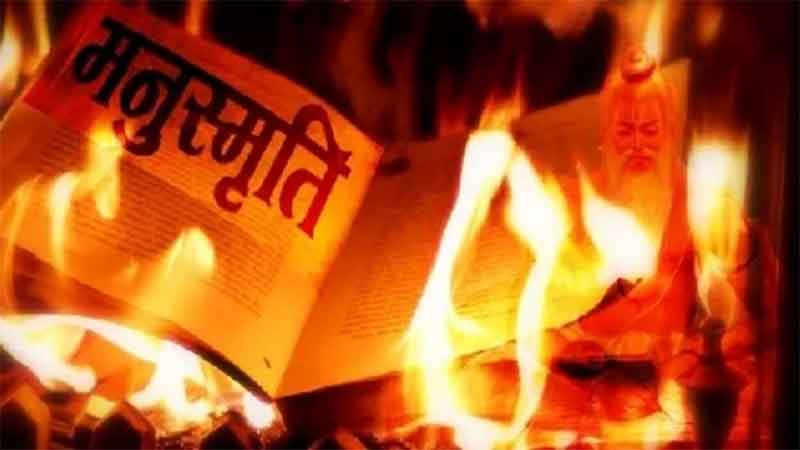
Dr. B.R. Ambedkar, a pioneering leader in India’s Dalit (formerly known as Untouchable) rights movement and the architect of the Indian Constitution, publicly burned copies of the “Manusmriti” (also known as the “Laws of Manu”) on December 25, 1927, during a massive gathering in Mahad, Maharashtra. This event, now commemorated annually as “Manusmriti Dahan Diwas” (Manusmriti Burning Day) or Equality Day, was a pivotal act of symbolic protest rooted in the Mahad Satyagraha—a non-violent campaign demanding Dalits’ equal access to public resources, particularly the Chavdar Tank (a water reservoir historically barred to them by upper-caste Hindus). in Annihilate Caste The “Manusmriti”, an ancient Hindu legal text attributed to the sage Manu (circa 200 BCE–200 CE), outlines the “Chaturvarna” system—a hierarchical social order dividing society into four castes (Brahmins, Kshatriyas, Vaishyas, and Shudras), with Dalits positioned outside as “untouchables.” Ambedkar viewed it as the scriptural foundation of caste-based discrimination, untouchability, and gender inequality, justifying practices like barring lower castes from temples, water sources, and inter-caste marriages. He argued that as long as Hindus revered such texts, genuine reform was impossible, stating in his speech at the event: “It would be futile to expect that any person who revered the Manusmriti could be genuinely interested in the welfare of the Untouchables.” His broader aim was not merely to end untouchability but to uproot the entire “Chaturvarna” system at its ideological core, ridiculing orthodox defenders by saying, “They have not read Manusmriti… we will never accept it.” Ambedkar likened the burning to revolutionary acts like Gandhi’s bonfires of foreign cloth during the independence struggle, emphasizing it as a necessary rejection of oppressive traditions: “If this has become ancient, then why do you have any objection to someone burning it?” He even issued a stark warning: “If unfortunately, Brahminism does not end by burning Manu Smriti, then we will have to either burn the people suffering from Brahmanism or leave Hinduism.” The ceremony itself was defiant: After upper-caste authorities blocked access to venues and supplies, Dalit organizers secured alternative land from a Muslim supporter. Ambedkar arrived by boat to evade transport boycotts, and participants—over 3,000 strong—took oaths affirming equality before the text was ritually torn and burned page by page on an open altar inscribed with slogans like “Bury Brahminism” and “Untouchability should be destroyed.” This act was not an attack on all Hindu scriptures (Ambedkar spared texts like the Vedas or Upanishads, which he saw as less prescriptive of caste) but a targeted strike against what he called the “casteist rulebook” enabling systemic oppression. Impact on Dalits The burning was a transformative moment for Dalits, serving as a clarion call for self-assertion and resistance against centuries of dehumanization. It empowered marginalized communities by rejecting the religious legitimacy of their subjugation, framing equality as a non-negotiable right rather than a charitable concession. For the first time, Dalits actively destroyed a sacred symbol of their oppression, fostering a sense of agency and unity—evident in the event’s scale and the subsequent resolutions passed, which declared Dalits’ equal claim to public spaces and inter-caste solidarity. This act catalysed broader Dalit mobilization, influencing movements like the temple entry campaigns and Ambedkar’s eventual mass conversion to Buddhism in 1956, where nearly 500,000 Dalits renounced Hinduism to escape caste dogma. It laid ideological groundwork for affirmative action policies (reservations) in the Indian Constitution and inspired ongoing Dalit literature, activism, and cultural assertions—such as annual “Dahan Diwas” celebrations that keep the fight against untouchability alive. Today, it remains a beacon for Dalit rights, highlighting persistent issues like caste violence and discrimination, and reinforcing the community’s resolve: as one observer noted, “People still face caste-based discrimination in every aspect of their life.” Impact on Hindu Society For Hindu society, the burning was profoundly disruptive, exposing fractures in the orthodox framework and igniting fierce backlash while sowing seeds of reform. Upper-caste Hindus, particularly Brahminical elites, decried it as an assault on tradition, with media outlets branding Ambedkar “Bhim Asur” (demon Bhim) and intensifying efforts to suppress Dalit gatherings. This polarization deepened communal tensions in Mahad and beyond, underscoring the chasm between reformist and conservative factions. Yet, it compelled introspection and debate on caste’s scriptural roots, challenging the notion that Hinduism was inherently egalitarian and pressuring leaders like Gandhi to engage more directly with untouchability (though Ambedkar critiqued Gandhi’s approach as paternalistic). The event contributed to a wave of social reform, influencing Hindu thinkers to question “Manusmriti’s” authority and paving the way for legal changes like the abolition of untouchability in 1950. Its legacy endures in contemporary Hindu society, where it fuels discussions on caste privilege, gender roles (as “Manusmriti” also subordinates women), and secularism—warning against “cultural fascism” from groups like the RSS that revive hierarchical ideals. Ultimately, Ambedkar’s act reshaped Hindu discourse, making caste critique a mainstream (if contentious) issue and advancing India’s trajectory toward constitutional equality. S.R. Darapuri I.P.S.(Retd), National President, All India Peoples Front Courtesy : Counter Currents Note: This news is originally published on https:/countercurrents.org/bha and is used purely for non-profit/non-commercial purposes, especially human rights
Amma’s Pride: Trans Filmmaker Shiva Krish’s Doc on Tamil Nadu’s First Trans Marriage Eyes Oscars
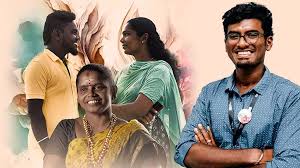
A Tamil documentary chronicling a mother’s support for her trans daughter’s pioneering marriage in Tamil Nadu has qualified as India’s sole trans-led Oscar contender. “Amma’s Pride”, a poignant 28-minute Tamil documentary short directed by transgender filmmaker Shiva Krish, has qualified as India’s only trans-led entry in the Documentary Short Subject category for the 98th Academy Awards. The film chronicles mother Valli’s unwavering support for her transgender daughter Srija, who pursued love and became part of Tamil Nadu’s first legally registered transgender marriage to Arun Kumar, facing societal stigma, school expulsions, and legal hurdles along the way. It secured eligibility after screening at the Academy-qualifying Woodland Hills event on 10 December 2025 in Los Angeles, following festival triumphs like Best Short Documentary at IDSFFK Kerala; Shiva Krish stresses that true allyship begins at home, Valli calls for parental acceptance of trans children, and the film has garnered over 60 global screenings plus 275,000 online views through campaigns like “Path to Pride”, marking a milestone for queer Indian cinema amid no official Academy statements yet. Valli’s Transformative Journey of Love and Advocacy At the heart of “Amma’s Pride” lies Valli’s profound evolution from initial shock upon learning of Srija’s transgender identity to becoming her fiercest protector and advocate. The documentary intimately documents their shared struggles over five years, including Srija’s expulsion from school due to discrimination, relentless community backlash, and the couple’s fight for legal marriage recognition in conservative Tamil Nadu society. Valli’s powerful on-camera reflection captures this shift: “Parents should support their trans children from the start. I will have the greatest satisfaction when loving and accepting them becomes the norm across families.” This raw testimony, woven with home videos and candid interviews, humanises the narrative, revealing not just pain but resilience and joy in Srija’s relationship with Arun. Shiva Krish, drawing from her own experiences as a trans woman and filmmaker, incorporates vital statistics to underscore the stakes: India’s 2011 census recorded over 4.8 lakh transgender individuals, yet trans-led stories from the country remain exceedingly rare, often overshadowed by mainstream narratives. The film’s unfiltered portrayal blending tears, laughter, and triumphs transforms statistics into lived realities, spotlighting how one family’s bond challenges deep-rooted prejudices and inspires viewers to reconsider acceptance. Trailblazing Path from Festivals to Oscar Spotlight “Amma’s Pride” embarked on its remarkable journey with a premiere in late 2024, quickly amassing international acclaim through over 60 screenings worldwide, from LGBTQIA+ film festivals and law schools to even remote locations like Antarctica via specialised groups. Key accolades include the Best Short Documentary at the International Documentary and Short Film Festival of Kerala (IDSFFK), the Jen Lynn Award at Hobnobben Festival, and the Sher Vancouver Award, propelling it toward Oscar contention. Qualification came through rigorous Academy standards, achieved via a theatrical run at the Woodland Hills venue a feat for any independent short, let alone a trans-led Indian production funded partly through crowdfunding despite early financial barriers. Post-qualification buzz has surged on social media, with Instagram campaigns like “For Your Consideration” and panels in New Delhi alongside organisations such as the Naz Foundation amplifying discussions on trans rights, marriage equality, and family dynamics. This entry builds on Shiva Krish’s prior work in social-issue storytelling, including features on marginalised communities, and positions India alongside global south voices gaining traction at the Oscars. It also follows in the footsteps of other Indian hopefuls in recent years, yet stands uniquely as a beacon for trans narratives, reshaping perceptions without diluting its intimate, community-rooted focus and reaching 275,000 online viewers through the “Path to Pride” initiative. Chhavi Chandani Courtesy : TLI Note: This news is originally published on https:/thelogicalindian.com/bha and is used purely for non-profit/non-commercial purposes, especially human rights
India’s First Transgender Football League Kicks Off in Kolkata, Empowering 200+ Players
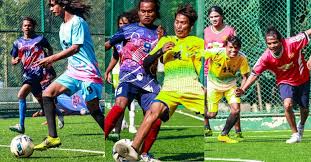
Kolkata’s groundbreaking eight-day tournament unites 16 teams of over 200 transgender athletes, fostering inclusion through football amid historic rights advocacy. India’s first Transgender Football League launched in Kolkata on December 20, drawing 200+ players from 16 teams in an eight-day tournament celebrating inclusion, skill, and visibility amid growing calls for transgender rights in sports. India’s inaugural Transgender Football League launched on December 20, 2025, in Kolkata, featuring 16 teams and over 200 transgender players competing for the Transgender Cup. Organised by the West Bengal Transgender Persons Welfare Board in partnership with the All India Football Federation (AIFF), the eight-day tournament at Vivekananda Yuba Bharati Krirangan celebrates inclusion and visibility. Players expressed unprecedented empowerment, with officials hailing it as a milestone for transgender rights; no major incidents reported as matches progress smoothly into semifinals. A Vibrant Launch with Record Participation The tournament erupted into life with colourful opening ceremonies at Kolkata’s iconic Vivekananda Yuba Bharati Krirangan, a 120,000-capacity stadium usually reserved for international matches. Over 200 transgender athletes from across India-spanning ages 18 to 45-fielded 16 teams, including powerhouses like the Kolkata Trans Warriors, Chennai Rainbow Strikers, Mumbai Pride FC, and Delhi United Queens. Matches unfold daily from 9am to 5pm, blending high-energy football with cultural performances featuring folk dances and rainbow flags. Vital statistics underscore the event’s scale: more than 5,000 spectators attended the opener, with live streams on AIFF’s YouTube channel reaching 50,000 views in the first 24 hours. Player Divya Maligi, a 28-year-old striker from Bengaluru who once faced rejection from local clubs, beamed, “We’ve never felt more seen-football gives us a platform to dream beyond discrimination. For the first time, we’re not sidelined; we’re stars.” Tournament director Rajat Mitra, a former AIFF official, elaborated, “This is about skill, not stereotypes. These athletes train rigorously, often juggling day jobs as tailors or performers. They’re role models proving transgender talent thrives when given a chance.” West Bengal Sports Minister Aroop Biswas officiated the kick-off, stating, “This league aligns with our vision of sports for all, fostering unity in diversity.” Empowerment Through Grassroots Training Beyond the pitches, the league humanises its participants through dedicated support systems. Since 2023, the West Bengal Transgender Persons Welfare Board has run free training camps in Kolkata, partnering with local coaches to build skills in dribbling, tactics, and fitness. Many players, like Chennai’s captain Priya Singh, credit these sessions for transforming lives: “I was homeless two years ago; now I lead my team. This isn’t just a game-it’s survival and hope.” The event offers cash prizes totalling ₹5 lakh, plus scholarships for top scorers to pursue coaching certifications, ensuring long-term impact. Health and welfare tents provide free medical check-ups, counselling, and hormone therapy consultations, addressing common challenges like access to gender-affirming care. No injuries or disruptions marred the first four days, with semifinals slated for December 26, building anticipation for the December 28 final. From Legal Milestones to Historic First This league emerges from decades of advocacy amid systemic barriers. The landmark 2014 NALSA judgment by the Supreme Court recognised transgender persons as a “third gender” with equal rights, yet sports bodies often lagged, citing eligibility concerns. Kerala pioneered with a transgender cricket league in 2023, but football-a national obsession-lacked a national platform until now. The 2019 Transgender Persons (Protection of Rights) Act further mandated equal opportunities, spurring state initiatives. Grassroots efforts intensified post-pandemic, with transgender welfare boards in states like Maharashtra and Tamil Nadu hosting trials that fed into this tournament. Organisers scouted talent via social media drives on Instagram and WhatsApp groups, drawing participants from remote areas like Manipur and Odisha. Globally, it echoes events like the U.S. Trans Football League, but India’s version stands out for government backing, signalling policy shifts under the National Sports Policy 2024 emphasising inclusivity. Syed Muskan Shafiq Courtesy : TLI Note: This news is originally published on https:/thelogicalindian.com/bha and is used purely for non-profit/non-commercial purposes, especially human rights
Congress leader Rahul Gandhi, along with Sonia and Priyanka, among 6 leaders issued notice by court, accused of sedition!
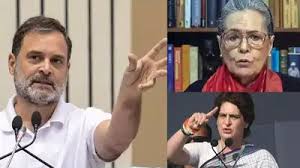
Rahul Gandhi MP MLA Court Notice: The Lucknow MP-MLA court has issued notices to 6 Congress leaders. Rahul Gandhi, Priyanka Gandhi, Sonia Gandhi, and others will have to respond by January 5th. They have been accused of making anti-national statements. Rahul Gandhi, Sonia and Priyanka issued notice by court Abhay Singh Rathore, Lucknow: Congress MP Rahul Gandhi from Raebareli constituency in Uttar Pradesh, Congress leaders Sonia Gandhi, Priyanka Gandhi Vadra, and six other senior Congress leaders have been issued notices by the court. The Lucknow MP-MLA court issued the notices to the Congress leaders. The court has set January 5th as the date for all the accused to respond to the notice. Advocate Napendra Pandey had filed a complaint in the Lucknow MP-MLA court on September 9th. The plaintiff’s lawyer, Kunwar Pratap Srivastava, told the court that Rahul Gandhi, in his statement at the inauguration of the Congress headquarters, had said that he was fighting against the BJP, RSS, and the Indian nation. It should be noted that this entire matter is related to the alleged speech given during the inauguration of the newly constructed Congress headquarters in Delhi. The hearing in this case took place on Wednesday in the court of Special ACJM (MP-MLA) Judge Alok Verma. Anti-national and seditious statements After the hearing, the court issued notices against Congress MP Rahul Gandhi, Congress President Mallikarjun Kharge, Rajya Sabha MP Sonia Gandhi, KC Venugopal, MP Priyanka Gandhi Vadra, and Jairam Ramesh. The plaintiff alleges that this statement falls under the category of anti-national and seditious statements. It was also stated that other senior Congress leaders supported Rahul Gandhi’s statement, which further increases its seriousness. The complaint also alleges that Rahul Gandhi is misleading the public by making false statements against responsible individuals holding constitutional positions and is trying to spread animosity in society. According to the plaintiff, such statements can lead the country towards a situation like a civil war, which is an anti-national act. After hearing all sides, the court has initially deemed the case admissible and issued notices to the accused Congress leaders, asking them to present their arguments on January 5. Edited by: Dhirendra Singh About the Author Dhirendra Singh is a Senior Journalist at Navbharat Times Online. Dhirendra Singh writes news on politics, crime, governance, and other issues. He also has experience in ground reporting in Uttar Pradesh, Delhi, and Jammu and Kashmir. He has about 11 years of experience in the field of journalism. He started his career in Delhi, where he covered several beats, including crime reporting. He has gained reporting experience at Hindustan Samachar News Agency Delhi, Navodaya Times Delhi, Rajasthan Patrika Uttar Pradesh, Amar Ujala Jammu and Kashmir, and Dainik Jagran Lucknow Uttar Pradesh. During his reporting in Jammu and Kashmir, he also covered the Pulwama terrorist attack and the curfew. He also has experience reporting during assembly elections. Currently, for about 4 years, he has been responsible for writing news on various beats such as politics, crime, soft stories, and other issues for Navbharat Times Digital in Uttar Pradesh and Uttarakhand. He studied journalism at the prestigious Delhi University South Campus (2013-14 batch). Courtesy: Hindi News