
Priyanka Gandhi to take over Congress leadership? Why did Kushwaha say – there is no longer any trust in Rahul?
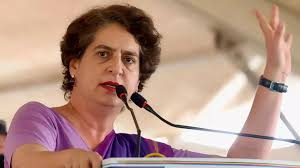
Priyanka Gandhi Congress Leadership: Speculation about giving a new responsibility to Congress General Secretary Priyanka Gandhi has stirred up politics in Bihar. There are indications that Priyanka Gandhi may be given an important role in the organization in 2026. Patna: The buzz about Congress General Secretary Priyanka Gandhi getting a big and important responsibility within the party in 2026 has intensified the political activity in Bihar. While statements from Congress leaders are raising demands for a bigger role for Priyanka, the opposition is portraying it as a ‘failure’ of Rahul Gandhi. Let’s find out. Priyanka Gandhi may get a new responsibility Priyanka Gandhi is currently serving as General Secretary without any specific portfolio. After the defeat in the 2022 UP assembly elections, she was removed from the post of UP in-charge. According to sources, instead of limiting her to one state, she may be given a new and influential position such as ‘Campaign Committee Head’ or ‘Election Management Committee’. Meanwhile, statements from Priyanka’s husband Robert Vadra and Congress MP from UP, Imran Masood, have fueled discussions about a leadership change. While Masood called her a contender for the PM’s post, Vadra said that the public’s demand to see Priyanka in a bigger role is constantly increasing. Political analysts are interpreting Robert Vadra’s statement as a hint towards the Congress president’s post. Congress doesn’t trust Rahul’s leadership: Upendra Kushwaha Reacting sharply to Vadra’s statement, Rajya Sabha MP Upendra Kushwaha raised strong questions about Rahul Gandhi’s leadership abilities. Kushwaha said, “The way Robert Vadra is talking about bringing Priyanka Gandhi forward, it is clear that even the Congress itself no longer trusts Rahul Gandhi’s leadership.” Kushwaha further taunted that whether it is Priyanka or Rahul, no Congress leader will be able to reach the Prime Minister’s chair for many years to come. He emphasized that the country is currently safe under the leadership of Prime Minister Narendra Modi and will continue to remain so. What did Kushwaha say about Rahul’s statement abroad? Upendra Kushwaha also strongly objected to Rahul Gandhi’s criticism of Indian institutions in Berlin. He said, “When will Rahul Gandhi understand that matters concerning the country should be discussed within the country itself? Criticizing one’s own system abroad is objectionable.” Kushwaha said that the public has already responded to his statements like these in the past, and he will have to face the consequences in the future as well. Edited by: Sudhendra Pratap Singh About the Author Sudhendra Pratap Singh, Principal Content Producer at Navbharat Times Online. Started his journalism career in Agra. Began his journey with the local newspaper Agrabharat. From there, his career progressed through Kalpataru Express, Hindustan newspaper, and News18 before joining NBT.com. Courtesy: Hindi News
India’s shameful failure to grieve Dalits killed for love
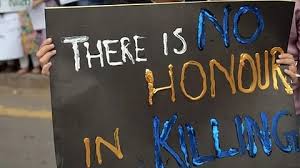
A casteist society is built on boundaries: who can touch whom, who can eat with whom, and who can marry whom. These boundaries are not just social; they are moral and symbolic. In a casteiest society, love is never just love. It is regulated, guarded, and violently enforced. For Dalits, love—especially across caste lines—often becomes a crime punishable by death. The repeated killings of Dalits who have fallen in love are not isolated incidents driven by emotion or family anger. They are structured acts of caste violence, deeply rooted in the belief that Dalit bodies are impure, polluting, and undeserving of intimacy in a society where caste plays a dominant role. The recent killing of a Dalit youth in Nanded, Maharashtra for being in a relationship with a dominant-caste woman once again exposes how caste continues to operate through the control of bodies, emotions, and desire. Killings across states—Tamil Nadu, Telangana, Karnataka, Uttar Pradesh, Punjab and others—follow the same script. A Dalit crosses a forbidden boundary, and a casteist society responds with violence. These killings are not merely “honor killings” or “family matters”. They are caste killings, grounded in a long-standing social belief that Dalit bodies are inherently impure and must be disciplined when they challenge caste boundaries through love. Why such killings are brutal and public A casteist society is built on boundaries: who can touch whom, who can eat with whom, and who can marry whom. These boundaries are not just social; they are moral and symbolic. Dalits have historically been placed outside the zone of purity. Their bodies are imagined as polluting, excessive, and out of place. When a Dalit person enters a romantic relationship with someone from a dominant caste, a casteist society sees this as a violation of its moral order. Violence then becomes a means of re-establishing order. This explains why such killings are often brutal and public. They are not only meant to punish the individual but also to send a warning to the entire community: certain boundaries are not meant to be crossed. The killing in Nanded reflects this logic. It was not spontaneous rage. It was a calculated act to erase what caste society perceived as contamination. A silent approval that is disturbing Dominant-caste families treat their lineage, homes as sacred spaces. Dalits are placed on the opposite end, as profane, defiling, and dangerous. When a Dalit man loves a dominant-caste person, a casteist society does not see two consenting adults. It sees sacrilege. This is why caste killings often receive silent approval from families, neighbors, and sometimes even local institutions. The act of violence is normalised as “necessary”, “unfortunate”, or “provoked”. The Dalit body, already marked as profane, is considered expendable. The idea that Dalit bodies are impure is not natural; it is socially produced through repetition. Every act of exclusion, surveillance, humiliation, and punishment reinforces this fiction. From childhood, Dalits learn that they are watched more closely, judged more harshly, and disciplined more violently. Love becomes dangerous not because of emotion, but because a casteist society has trained itself to view Dalit desire as out of place. When violence follows, society asks not whether the killing was wrong, but why the Dalit crossed the line. The lack of grief One of the most disturbing aspects of caste killings is how quickly they disappear from public memory. Media coverage is brief. Public outrage is limited. Legal processes move slowly. The deaths of Dalits rarely become national moral crises. This is because a casteist society does not treat Dalit lives as valuable. Their deaths are not seen as losses that demand collective mourning. They are reduced to statistics, local news, or unfortunate incidents. When a Dalit is killed for loving, the focus often shifts to “family honor”, “social pressure”, or “cultural conflict”. The victim’s humanity disappears. This lack of grief is itself a form of violence. It confirms that Dalit lives are considered less worthy of protection, remembrance, and justice. Caste survives through strict control over marriage and sexuality. The regulation of women’s choices is central to maintaining caste boundaries. A casteist society treats women as carriers of caste purity, and any deviation is seen as a threat to lineage and status. Dalits, in this framework, are imagined as the ultimate danger, not because of who they are, but because of what their presence represents. A relationship between a Dalit and a dominant caste threatens the hereditary transmission of caste privilege. This is why the violence is often directed more harshly at the Dalit partner. Killing the Dalit becomes a way to restore caste order while controlling women through fear and surveillance. Dalit bodies are not only seen as impure; they are also seen as criminal. Dalit desire is portrayed as aggressive, illegitimate, and predatory. This stereotype allows caste society to justify violence as self-defense or moral protection. Police responses often reflect this bias. Complaints are delayed. Cases are diluted. Atrocity laws are underused. The system implicitly agrees with the idea that the Dalit body provoked its death. This criminalisation is not accidental. It is a structural feature of caste society, designed to keep Dalits within prescribed limits. Cases that reveal the pattern Across India, the killings of Dalits for loving across caste follow a disturbingly familiar pattern, revealing how caste power operates through surveillance, discipline, and exemplary punishment. In Nanded, the Dalit youth was murdered for being in a relationship with a dominant-caste woman, not because the relationship harmed anyone, but because it escaped the watchful control of caste society. His death functioned as a warning, a public lesson in what happens when Dalits refuse to remain within prescribed limits. Similar violence has unfolded in Tamil Nadu, where Dalit men have been hacked to death in public spaces after inter-caste marriages, their bodies displayed as proof that caste boundaries are enforced not just socially but physically. In Telangana, the killing of a Dalit groom through a planned contract murder showed how caste power does not act impulsively; it calculates,
Telangana: Human Rights Commission takes strict action in Dalit youth’s custodial death case, seeks report from Home Department
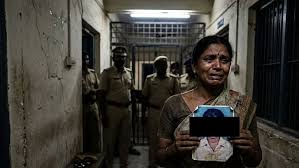
Allegations of ‘third-degree’ torture against Suryapet police: Human Rights Commission seeks detailed report from Home Department, next hearing on January 12. Hyderabad: The Telangana State Human Rights Commission (TGHRC) has taken serious note of the alleged death of a Dalit youth in police custody in Suryapet district. Taking a strong stance on the incident, the commission has ordered the state Home Department to submit a detailed report. What is the whole case? The deceased youth’s mother had filed a complaint with the Human Rights Commission alleging that her son was illegally detained and subjected to police torture. The commission took cognizance of these allegations and issued its order on Monday. According to the information presented before the commission, the youth was allegedly illegally detained by the Chilkur and Kodad rural police. The family alleges that the police subjected him to ‘third-degree’ torture, framed him in a false case, and did not even allow the family to meet him. Serious allegations by the family In her complaint, the victim’s mother stated that her son was kept in illegal police custody from November 4 to November 9. During this time, he was physically tortured and then sent to judicial custody (jail) on November 10 in a false criminal case. On the same day, the staff of Huzurnagar sub-jail called and informed her that her son was unwell. When she reached there, her son’s condition was extremely critical. Died in the hospital According to the complaint, due to his deteriorating condition, the youth was taken to the Suryapet District Government Hospital on November 14. From there, he was referred to a government hospital in Hyderabad for better treatment, where he succumbed to his injuries on November 16. Commission’s action and administration’s stance Considering the seriousness of the case and the violation of human rights, the Human Rights Commission has linked this case with previous complaints. The commission has directed the Principal Secretary (Home) to submit a detailed report on the entire incident. The next hearing in the case has been scheduled for January 12, 2026. On the other hand, Telangana Director General of Police (DGP) B. Shivadhar Reddy recently stated that the investigation into the matter is ongoing and appropriate action will be taken against the culprits. Rajan Chaudhary Courtesy: Hindi News
Dalit Daughters’ Achievements: Tina Dabi wins Rs 2 crore water award for Barmer, Deepna Netrapal makes history at CAG!
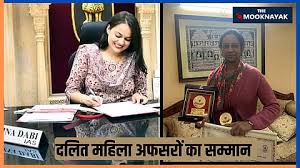
These achievements are not only personal victories but also send a strong message against caste and gender-based discrimination, where one officer is making the environment greener while the other is strengthening accounting and financial transparency. New Delhi – The outstanding performance of Dalit women officers in India’s administrative system is once again in the spotlight. Tina Dabi, an IAS officer from Rajasthan, has made history by securing the Water Conservation Public Participation Award (JSJB) for her district Barmer in the field of environmental protection, while Deepna Netrapal, a Senior IA&AS officer from Bengaluru, has won the National CAG Award for innovation in GST audit and training reforms. Deepna is the first Dalit woman officer to receive this award. These achievements are not only personal victories but also send a strong message against caste and gender-based discrimination, where one officer is making the environment greener while the other is strengthening accounting and financial transparency. The arid Barmer district of Rajasthan has won the first Water Conservation Public Participation Award for its outstanding performance in rainwater harvesting. The district will receive a prize of Rs 2 crore for this achievement. District Collector Tina Dabi said that President Draupadi Murmu will present this award at the 6th National Water Awards ceremony to be held at Vigyan Bhavan in New Delhi on November 18. Earlier, Tina Dabi has also been awarded for many of her commendable works. IAS Tina Dabi had created history by securing the first rank in the UPSC Civil Services Examination in 2015. At the age of 22, she became the first Dalit woman to achieve this feat on her first attempt. Tina has extensively promoted the construction of traditional ‘tankas’ (underground water tanks) in Barmer. Under the Central Ministry of Jal Shakti’s ‘Catch the Rain’ initiative, states were divided into five zones and given the target of establishing at least 10,000 artificial recharge and water storage structures. Barmer has surpassed this target and secured the top position in the northern region, where local water sources have been revived through thousands of tanks. This initiative by Dabi is not only addressing the water crisis but also empowering rural communities, proving to be a milestone in quenching the thirst of the desert region. On the other hand, Deepna Netrapal, Principal Director of the Regional Training Centre (RTC) and Regional Capacity Building and Knowledge Centre (RCB&KC) in Bengaluru, has been awarded the National CAG Award. This award was given to her for two major initiatives: innovation and excellence in public accounting and auditing in GST audits, and the transformation of the training setup in Bengaluru. The Comptroller and Auditor General of India launched the ‘CAG’s Award for Innovation and Excellence in Public Audit and Accounting’ scheme in 2021 to recognize and reward the exceptional and innovative work done by officers and staff of the Indian Audit and Accounts Department in the areas of public audit, accounting, entitlements, and ancillary functions. The CAG Award Scheme 2021 recognized distinctive team excellence, which fosters a meritocratic environment, and more importantly, nurtures overall qualitative improvement from an organizational perspective. With this objective, in addition to the existing scheme that rewards team efforts towards excellence and exceptional work, a new award category has been instituted in 2022 to reward the ‘Most Improved Office’. This award category seeks to recognize those offices working in the fields of accounting, auditing, and training that have demonstrated the maximum improvement in performance during the stipulated evaluation period. Geetha Sunil Pillai Courtesy: Hindi News
Why is Barmer Collector Tina Dabi being targeted? Bahujan society says: ‘Upper caste resentment against a Dalit topper, she’s not a reel star – she’s a role model!’

Society rallies in support of Tina Dabi on social media, sparking a new debate. Barmer – IAS Tina Dabi, the Collector of Barmer district in Rajasthan, is once again at the center of controversy. Last month, Tina Dabi proved that she is not only a UPSC topper but also a revolutionary warrior for water conservation, when Barmer received the national first prize under the ‘Jal Shakti Abhiyan: Catch the Rain’ from President Draupadi Murmu. But this time, police action during a protest against fee hikes by college students, where she was called a ‘reel star’, has landed her in controversy. The Bahujan society is calling it a clear casteist conspiracy – why are upper-caste forces targeting a Dalit woman topper? Tina, who became a national icon after securing AIR-1 in UPSC in 2015, is being described as a victim of ‘upper-caste resentment’. Bahujan thinkers believe that Dabi is targeted the most. The first reason is that she is a UPSC topper from a Scheduled Caste. The second is that she has many achievements to her name. The root of the controversy: ‘Reel star’ comment and police action The incident took place at Maharana Bhupal Government PG College. On Saturday, students protested outside the college against the increase in examination fees. They demanded to meet IAS Tina Dabi, who cleared the UPSC Civil Services Examination in her first attempt at the age of 22. The situation worsened when an officer described Dabi as a ‘role model’ for the students, which was opposed by students associated with the BJP-backed Akhil Bharatiya Vidyarthi Parishad (ABVP). They said, “The Collector is not a role model. If she were, she would have come to listen to the students’ demands. She is a reel star and is busy making reels, but she doesn’t pay attention to our problems.” Following this, the students were allegedly detained by the police. ABVP condemned the alleged arrest of the students in a tweet on X: “The arrest of the students is an attack on democratic values. When the police asked them to talk to IAS Tina Dabi after calling her a ‘reel star’, the ABVP students gave a clear answer.” The students claim they were detained after the protest ended. Following this, several students gathered outside the police station, demanding the release of the arrested students and an apology from the administration. Senior police officer Manoj Kumar told NDTV, “No one was detained or arrested. Four boys were brought to the police station to calm the situation and were later asked to leave. But the students gathered near the police station and insisted on an apology. A discussion took place when senior officers arrived.” Rajya Sabha MP Priyanka Chaturvedi criticized the incident, writing on social media, “Another day of intolerance from a bureaucrat in India. Despite corruption, power intoxication, and now intolerance, they get away without any serious scrutiny.” The controversy is rapidly spreading on social media. Tina Dabi completely denied the allegations: “There were no arrests or detentions. The fee hike issue had been resolved, yet the students were blocking the road and creating a disturbance. My subordinates took them to the police station, spoke to them, and released them after two hours. The ground issue is over, but it’s being kept alive on social media for defamation and cheap publicity.” Support from the Bahujan community: ‘This is a casteist conspiracy, we stand with Tina’ Bahujan thinkers are calling this an attack on Dalit excellence. Political scientist and Assistant Professor at Jadavpur University, Subhajit Naskar, tweeted: “Some UC liberals started targeting Dalit woman IAS Tina Dabi. A little investigation revealed – RSS student wing ABVP leaders were organized there! Hopefully, things are clear now.” In another tweet, Subhajit wrote: “Tina Dabi has faced the most vile casteist online abuse – despite being a topper. Even when Dalits are not appointed as Chief Secretaries or DGPs, she is proving her merit.” Anti-caste activist Prof. Rehana Ravindran called it an attack motivated by political self-interest. IRS officer Netrapal, supporting Tina in his post, wrote, “Targeting Tina Dabi in this manner… If you want, study and get Rank-1. If the roads are not good, file a complaint against the responsible engineers… The MLA should be held accountable. The local councilor, panchayat members should be held accountable. Suddenly, they target a collector just because she is a role model.” Swayam Sainik Dal tweeted: “The attempt to belittle Tina Dabi is a casteist conspiracy. Insecurity due to her brilliant success. We stand with Tina.” In another post, they said: “This controversy is a conspiracy to divert attention from illegal mining and the destruction of the Aravalli range. We will not let Tina become a victim of media trial.” Mayur Pawar wrote: “The casteist system is hell-bent on destroying Tina Dabi despite her good work. ABVP broke the campus, she took action, so a fake narrative. Stay strong Tina, we are with you.” A user, Happy Singh, targeted Anuradha Tiwari’s tweet: “This Brahmin woman is not only insulting top Dalit IAS Tina Dabi but also mocking reservation and Ambedkar’s ideology. A case should be filed under the SC/ST Act.” Author Lokesh Bag wrote, “IAS Tina Dabi is being targeted once again, and this is clearly a well-planned conspiracy. The fact that a woman from our community topped the UPSC exam with AIR-1 is still something many casteists cannot digest. As the Collector of Barmer district in Rajasthan, Tina Dabi led a major water conservation initiative, which earned the district the first ‘Jal Sanchay Jan Bhagidari Award’ from the President.” Rahul wrote: “‘Merit’ is only believed in until a Dalit tops the exam. Then it’s injustice? If you can’t defeat a ‘reserved’ student in the open merit category, then your superiority is itself reserved. Tina Dabi bothers them for this reason.” Bahujan thinker Gurudayal said: “Tina Dabi bothers you because a Dalit daughter has reached great heights. Your Brahminical superiority complex is being shattered. Reservation is an account of centuries of slavery.” Just a month
Worrying: Transgender and Disabled Individuals Still Labeled Abnormal in MBBS Textbooks, Ignored in Curriculum

A new research study has revealed that MBBS textbooks either ignore gender, transgender, and disability identities or present them as abnormal and exceptional. According to experts, such education influences doctors’ thinking, leading to a disregard for respect, autonomy, and the social needs of patients during treatment. The very textbooks that serve as the first step to becoming a doctor in India are themselves teaching discrimination. A new research study has revealed that medical textbooks taught in the country and around the world either completely ignore gender, transgender, and disability identities or present them as abnormalities, disorders, and exceptions. Experts say that this directly affects the thinking of doctors and, subsequently, the treatment of patients. The central argument of this research is that medical textbooks do not just provide information; they shape the doctor’s perspective. If a medical student is taught that gender is only male and female, and that intersex or trans bodies are exceptions and disabilities are deficiencies or disorders, then that same perspective will be applied to patients in the OPD and wards. Experts say that doctors consider only what the textbook teaches as normal, and anything not included in the book makes the patient invisible. Disregard for Respect, Autonomy, and Social Needs in Treatment In this research published in the Journal of Family Medicine and Primary Care by Delhi Health University, Senior Professor Dr. Satendra Singh said that disability is still being taught under the medical model in medical education, i.e., as a deficiency, defect, or something that needs correction. He said that this perspective promotes a mindset of viewing disabled patients as diseased bodies rather than empowered individuals. As a result, respect, autonomy, and social needs are disregarded in treatment. He believes that until the foundation of medical education changes, achieving the goal of inclusive and equitable healthcare will remain difficult. Wrong Education, Wrong Treatment… Prof. Singh says that this situation contradicts the claims made in the National Education Policy (NEP) 2020 and the National Medical Commission (NMC), which advocate for making medical education more sensitive, ethical, and inclusive. The question arises: why are the social and ethical aspects of MBBS textbooks not being reviewed when changes are being made to the curriculum and evaluation methods? The health gap will widen further… According to the research, this bias present in medical education leads to problems such as incorrect or delayed diagnoses, neglect of mental health, and discriminatory language for transgender and disabled patients. In a country like India, where there is already inequality in access to healthcare services, this discrimination further widens the health gap. Equity audit tool proposed for the first time: The study also suggests an equity audit framework for medical textbooks as a solution, through which the language, illustrations, examples, and case studies in the books can be examined from an inclusion perspective. Experts believe that if medical councils, universities, and publishers take steps in this direction, the training of doctors can become more equitable and patient-centric. Parikshit Nirbhay, New Delhi, Published by: Nirmal Kant Courtesy: Hindi News
Dalit youth attacked with shoes and kicks in Chhatarpur, brutally beaten in broad daylight, CCTV footage reveals the incident

The victim, a Dalit youth, sustained serious injuries in the attack. With the help of his family and local residents, he was immediately admitted to the district hospital, where he is currently undergoing treatment. The Azad Samaj Party and Congress have criticized the government. Bhopal: Outrage has spread in Chhatarpur, Madhya Pradesh, after a case of brutal assault on a Dalit youth came to light. The incident reportedly took place in front of Punjab National Bank in the City Kotwali police station area, where the youth was thrown to the ground and beaten with shoes and kicks. CCTV footage of the entire incident surfaced on Monday, raising several questions about police action and law and order. The CCTV video clearly shows the youth being pushed to the ground, after which the attackers repeatedly strike his face with shoes and kicks. The attackers are also seen stomping on the youth’s face in the video, which gives an idea of the brutality of the assault. Onlookers stood by and watched, and no one dared to intervene. Admitted to district hospital in serious condition The victim, a Dalit youth, sustained serious injuries in the attack. With the help of his family and local residents, he was immediately admitted to the district hospital, where he is currently undergoing treatment. According to doctors, the youth has suffered deep injuries to his face and other parts of his body and will be kept under observation for some time. Two-day-old case, accused sent to jail Speaking to The Mooknayak, City Kotwali police station in-charge Arvind Singh Dangi said that the incident took place on December 20, two days ago. Upon receiving information about the incident, the police immediately took action and arrested the main accused and produced him in court, from where he was sent to jail. He said that the CCTV footage related to the incident has now surfaced two days later, and the entire case is being investigated again in detail based on this footage. If the involvement of other people comes to light during the investigation, strict action will be taken against them as per the rules. Pressure mounts after footage surfaces After the CCTV video was made public, pressure has increased on the police to take impartial and strict action. Social organizations and members of the Dalit community have alleged that if the video had not surfaced, the seriousness of the case might have been downplayed. People are demanding that other people involved in the incident be identified and strict action be taken against them under relevant sections of the law. Demand for action under SC/ST Act Since the incident involved a Dalit youth, social activists have demanded strict action under the Scheduled Castes and Scheduled Tribes (Prevention of Atrocities) Act. They say that this is not just a case of assault, but a case of caste-based violence, which should not be taken lightly. In a conversation with The Mooknayak, Azad Samaj Party leader Sunil Asteya said that under BJP rule, Dalits are being continuously targeted and brutally beaten. He said that incidents of violence against Dalits have increased in the state, but the government seems completely unable to stop them. He demanded that the culprits in this case be given the harshest possible punishment so that such incidents do not recur in the future. He further added that if the government fails to stop the atrocities against Dalits, the Bhim Army and the Azad Samaj Party will be forced to take to the streets. Sunil Asteya warned that the organization will fight at every level for the respect and safety of the Dalit community and will not remain silent against injustice. Police claim investigation is ongoing The police say that the entire incident is being re-investigated based on the CCTV footage. If other people are also found to be involved in this attack, legal action will be taken against them as well. The police are also looking into whether there was any old dispute behind the incident or whether it is a case of caste-based hatred. Such an incident occurring in a busy area of the city, in front of a bank, raises serious questions about law and order. This daylight assault has increased the feeling of insecurity among the general public. Local citizens say that swift and strict action on such incidents can deter criminals in the future. Currently, the victim is admitted to the hospital and the police investigation is ongoing. After the CCTV footage surfaced, this case has now become more than just an incident of assault; it has become a serious question concerning the safety and justice of Dalits. In a conversation with The Mooknayak, Pradeep Ahirwar, former member of the State Scheduled Castes Commission and State President of the SC Congress, said that incidents of atrocities against Dalits are continuously increasing in Madhya Pradesh. Every day, reports of assault, humiliation, and violence against Dalit youth are emerging from somewhere or the other, but the government is failing to stop them. He said that despite the existence of laws, they are not being properly implemented at the ground level. He further added that such incidents are creating an atmosphere of fear and insecurity in the Dalit community. The government is only limited to making statements, while what is needed is strict action and swift justice. Pradeep Ahirwar demanded that strict action be taken against the culprits and that the victims be provided with security and justice, so that faith in the law is maintained in society. Ankit Pachauri Courtesy: Hindi News
Pregnant Woman Killed in Karnataka for Marrying Dalit Man; Father Among Three Arrested: Police
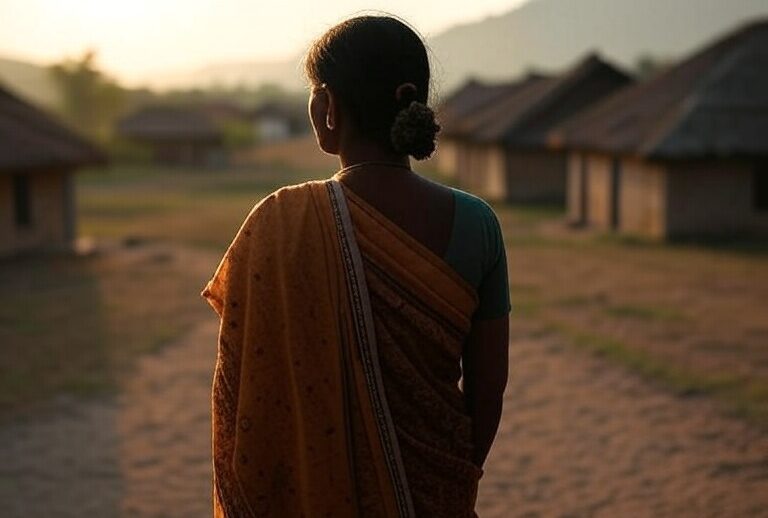
A 20 year old pregnant woman was allegedly killed by her own family members in Inam Veerapur village of Dharwad district in Karnataka on Sunday for marrying a Dalit youth, police said. The woman, Manya Patil, was seven months pregnant and had married Vivekanand Doddamani earlier this year despite strong opposition from her family. The killing has triggered protests in the area. According to the police, Manya’s father Prakashgouda, along with other relatives, allegedly attacked her with pipes, causing serious head injuries that led to her death. Police have arrested her father and two other family members in connection with the case. Manya belonged to the Lingayat community, while Vivekanand is from a Dalit community. Dharwad Superintendent of Police Gunjan Arya said the couple had married in May 2025 at the Hubballi rural police station after fearing violence from Manya’s family. She said the police had tried to counsel Manya’s parents, but they continued to oppose the marriage. Police also said that members of Manya’s family allegedly assaulted Vivekanand’s father, mother and other relatives. Following the killing, Dalit activists staged a sit in protest with Manya’s body, condemning the incident and demanding strict action against those responsible. Courtesy : TOP Note: This news is originally published on https:/theobserverpost.com/bha and is used purely for non-profit/non-commercial purposes, especially human rights
Dalit man sets himself on fire after pouring petrol in Etawah; officials had come to evict him from his ancestral home
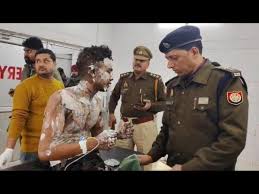
22-year-old Shivam Valmiki lived with his family in his ancestral house. A court case was ongoing regarding the ownership of the house. The decision came against Shivam. Shivam Valmiki seriously burnt Etawah: A major commotion erupted in Etawah, Uttar Pradesh, when an administrative team went to evict a Dalit man from his house on a court order. The Dalit man, angered by the removal of his belongings from the house, poured petrol on himself and set himself on fire. The police present at the spot, with the help of the public, extinguished the fire and took the young man to the district hospital. Due to his critical condition, he was referred to Saifai Medical College. Shivam Valmiki (22) lives with his family in a house located at Pakka Talab Chauraha in the Etawah Sadar Kotwali area. This was his ancestral house, the dispute over which was ongoing in the Civil Judge Junior Division court in Etawah. The court’s decision came against Shivam. A team from the revenue department, including the Amin, Naib Tehsildar, and other officials, along with police force, reached the spot to evict him. As soon as the police, in front of the revenue team, started removing Shivam’s belongings from the house, a commotion ensued. Referred to Saifai Medical College During the eviction process, Devi Prasad Patel from the other party was present at the spot with his people. That’s when Shivam poured petrol inside the house and set himself on fire. Seeing the Dalit man burning in flames, the officials and police panicked. The fire was quickly extinguished, and Shivam, in a critical condition, was taken to the district hospital. Due to his critical condition, the doctors referred him to Saifai Medical College. Thumb impression taken on a blank paper from the drug-addicted brother-in-law: Sister-in-law The family members are outraged by this incident. Shivam’s sister-in-law, Jyoti, alleged that her brother-in-law was a drug addict. His thumb impression was taken on a blank paper while he was intoxicated. After the brother-in-law’s death, Devi Prasad filed a case in court to get the ancestral house vacated. It was reported that Devi Prasad Patel runs a hotel and is harassing them because of his money and influence. Today, these same people came with a revenue department team to evict them from their house. It was alleged that they threw the household belongings out in front of the police and officials. When Shivam protested, he was beaten, and then petrol was poured on him and he was set on fire. What did CO Abhay Narayan Singh say? Etawah CO Abhay Narayan Singh said that the Civil Judge Junior Division had ordered the eviction after hearing the dispute. The revenue department and police had come to evict them based on the court order when Shivam set himself on fire after dousing himself with petrol. Shivam is being treated at Saifai Medical College. Edited by: Vaibhav Pandey About the Author Vaibhav Pandey is a Senior Journalist at Navbharat Times Online. He covers news related to current affairs, human nature, crime, social issues, and politics. He has 18 years of experience in the media. During this time, he has covered the UP Assembly elections, Lok Sabha elections, and the West Bengal Assembly elections 2021. Courtesy: Hindi News
Democracy Under Attack in India, ED-CBI Turned into Weapons, Says Rahul Gandhi in Germany
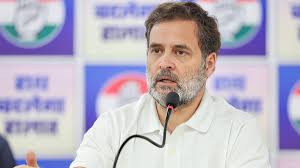
Rahul Gandhi questioned the fairness of elections in India, saying that the BJP has captured the institutional framework. He alleged that intelligence agencies, the CBI and ED have been weaponized, and there are fundamental problems with the electoral machinery. Gandhi said the opposition will have to find a way to counter this situation. New Delhi: Former Congress president Rahul Gandhi has once again raised questions about the fairness of elections in India and claimed that the BJP has completely captured the country’s institutional framework, but the opposition will have to find a way to counter this. Speaking at a dialogue program at the Hertie School in Berlin, the German capital, he alleged that intelligence agencies, the Central Bureau of Investigation (CBI), and the Enforcement Directorate have been turned into weapons. Rahul Gandhi uploaded a video of the program ‘Politics is the Art of Listening’ held in Berlin on his YouTube channel on Monday. He said, ‘We are raising questions about the fairness of elections in India… Our country’s democratic framework is under attack from all sides.’ He mentioned that the name of a Brazilian model appeared 22 times in the Haryana voter list. Fundamental problems in the electoral machinery: Rahul The Leader of the Opposition in the Lok Sabha said, ‘We are not getting answers from the Election Commission to the questions we are raising.’ He said that there are some fundamental problems in the electoral machinery in India. ‘The institutional framework has been completely captured, when you look at our intelligence agencies, the CBI and the ED, you find that they have been completely weaponized.’ The Congress MP further said, ‘Look, how many cases are there against BJP people by the ED and CBI? The answer will be none.’ He claimed that most of the cases have been registered against people from the opposition. He alleged that if you are a big industrialist and intend to support the Congress, you will be threatened. The ED and CBI will come after you.’ BJP has a lot of money… In Berlin, Rahul Gandhi, while referring to election funding, said that the BJP has much more money than the Congress. Therefore, as the opposition, we have to find a way to counter the situation… but you have to understand that we are not just fighting the BJP, we are also fighting against its takeover of the Indian institutional framework.’ Responding to a question related to the air pollution situation in Delhi and some other major cities of India, Rahul said that there is no contradiction between production and pollution; what matters is the type of fuel you are using, the type of energy you use for production. The pollution in our big cities can be addressed through appropriate government intervention.’ He said that Germany has a lot of production, but the air here is clean. Response on the Israel issue The Congress leader, responding to a question related to Israel, said, ‘We buy weapons from many countries, we buy from Israel, we also buy from Russia and we also buy from America. In difficult situations, we will have to defend ourselves… What Hamas did was completely wrong, and what Israel did afterward was also wrong. Women and children should not have been bombed.’ Edited by: Abhishek Pandey About the author Abhishek Pandey is a Consultant Writer at Navbharat Times Online. He has more than three years of experience working on news related to current affairs, politics, crime, and public interest. He has also closely covered the Uttar Pradesh Assembly elections in 2022 and the Lok Sabha elections in 2024. Courtesy: Hindi News