
BMC Elections 2026: Congress Expands Base With VBA Tie-Up, Aims To Consolidate Dalit & Minority Votes
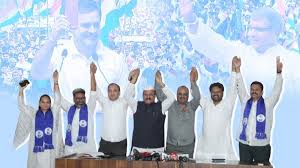
Congress and the Prakash Ambedkar-led Vanchit Bahujan Aghadi (VBA) have formed a surprising alliance for the Mumbai BMC elections, ending 25 years of rivalry. Congress will contest 150 seats, VBA 62, and Rashtriya Samaj Paksha 9-12. The alliance aims to consolidate Dalit, minority, and north Indian votes, posing a challenge to Sena-MNS and BJP ahead of 2029 polls. Mumbai: Burying political animosity of the past 25 years, Congress on Sunday sprung a surprise by joining hands with the Prakash Ambedkar-led Vanchit Bahujan Aghadi (VBA) for BMC elections. Under the arrangement, Congress will contest 150 seats, while VBA will field candidates in 62 wards, leaving 9-12 seats for Rashtriya Samaj Paksha led by Mahadeo Jankar. The alliance was announced by Maharashtra Pradesh Congress Committee (MPCC) president Harshwardhan Sapkal, along with VBA state vice-president Dhairyavardhan Pundkar. Mumbai Congress chief Varsha Gaikwad was absent, reportedly due to her engagement in a screening committee meeting to finalise candidates. The coming together of the Congress and the Vanchit Bahujan Aghadi (VBA) has once again proved that anything and everything is possible when it comes to politics. If we look back into recent electoral history, we will remember that not once but twice the VBA gnawed into the Congress vote base. During the 2014 Lok Sabha and state Assembly elections, the VBA in alliance with the All India Majlis-e-Ittehadul Muslimeen (AIMIM), contributed to the defeat of Congress’ several candidates. In the 2019 elections again, it significantly dented the Congress-NCP alliance’s chances of returning to power on its own. According to Congress leaders, the VBA ensured the defeat of at least 25 candidates from the Congress and the NCP. The party attracted a substantial share of Dalit votes, which traditionally belonged to the grand old party. The VBA is said to have polled 41 lakh votes in the 2024 Lok Sabha elections and 24 lakh votes in the Assembly elections held the same year. Its candidates finished second in 10 constituencies and third in several others. In the 2024 Assembly elections, the VBA impacted nearly 20 seats where the Maha Vikas Aghadi (MVA) lost to the Mahayuti by margins of less than 10,000 votes. Similarly, in the Lok Sabha elections held last year, the MVA lost a few seats due to the presence of VBA candidates in constituencies such as Akola, Buldhana, Hatkanangle and Mumbai North West. The emerging understanding between the Congress and the VBA is being seen as a precursor to a possible alliance ahead of the 2029 elections, according to a party leader. “The Congress cannot remain dependent on the Shiv Sena (UBT), especially as it may continue its alliance with the Raj Thackeray-led MNS, which is against our ideology,” the leader said. The Congress is also keen on expanding its base in Vidarbha, a region that has traditionally been a party bastion. Even in the recent municipal council elections, the party secured its maximum number of seats from Vidarbha. With upcoming elections to municipal corporations and Zilla Parishads, the alliance with the VBA could prove advantageous, the leader added. On the other hand, a Congress-VBA alliance is likely to pose challenges for the Sena (UBT)-MNS combine as it could attract a large share of Dalit votes along with support from north Indian voters and minorities. “North Indians and minorities do not vote for the MNS and this could significantly affect the Thackeray brothers,” the leader said. For the BJP and the Shinde Sena, the alliance may create problems in a few constituencies. However, by denting the Thackeray vote bank, it could also indirectly benefit the Mahayuti. The BJP primarily relies on Gujarati and north Indian voters and requires substantial support from Marathi voters across communities. For the Shinde Sena, the Congress-VBA candidates could come to its aid – provided they draw votes away from the Thackeray faction. Ravikiran Deshmukh Courtesy : TFPJ Note: This news is originally published on https:/thefreepressjournal.com/bha and is used purely for non-profit/non-commercial purposes, especially human rights
Barabanki: In the presence of a revenue officer and a land record officer, goons ran a tractor over a Dalit farmer; the victim is battling for his life at the district hospital.
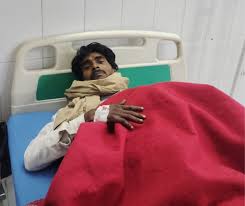
Barabanki, Uttar Pradesh: A serious case of hooliganism and caste-based oppression has come to light in Rampur Khargi village under Ramnagar tehsil of the district. It is alleged that in the presence of a revenue officer, goons plowed over the standing crop of a Scheduled Caste woman farmer with a tractor. When she protested, the goons allegedly tried to kill her husband by running him over with the tractor, leaving him seriously injured and fighting for his life at the district hospital. The victim, Kusum, wife of Mannu Lal, a resident of Rampur Khargi village (Ramnagar police station and tehsil), belongs to the Scheduled Caste. According to the victim, several families have been cultivating land and making a living on approximately 40 bighas of land in the village for many years. On a part of this land, Chandrapal Yadav of the same village has dug a pond, while the remaining land has been under ancestral cultivation by the victim and other villagers. The victim stated that she had wheat and mustard crops standing on about 5 bighas of land. On December 25, 2025, at around 2 PM, Chandrapal Yadav, his son Narendra Yadav, Suresh Verma, Master Jagat Narayan Verma, and Sandeep Verma arrived at the spot with two tractors. It is alleged that the local revenue officer Rajendra Yadav and a land record officer were also present with them. The victim says that after the measurement, the revenue officer and the land record officer told the goons to immediately plow and destroy the standing crop. The victim’s husband, Mannu Lal, and other villagers requested that the measurement be done after the harvest, but the revenue officer allegedly said that Chandrapal Yadav was a close relative of his and that they would only leave after plowing the crop. It is alleged that when they protested, the goons used casteist slurs, hurled abusive language, and threatened to kill them. During this time, the tractor driver ran the tractor over Mannu Lal, seriously injuring him. In an injured condition, his family members first took him to the Ramnagar Community Health Center, from where, seeing his critical condition, the doctor referred him to the district hospital. The victims allege that the incident was reported to Dial 112, but the police who arrived at the scene took no action. Shortly after, the perpetrators returned with a tractor and completely ploughed and destroyed the crops of the victim and other villagers, causing a loss of approximately 3 lakh rupees. The victims say that a video of the entire incident exists, yet no case has been registered so far. The victims have demanded that the district administration immediately conduct a medical examination of the injured farmer, register a case against the culprits under strict sections of the law, and provide security to the family. On the other hand, this incident has raised serious questions about administrative inaction and the oppression of Dalits. KAMRAN ALVI Courtesy: Hindi News
What Has Mayawati’s Sarvjan Politics Done to the Ambedkarite Political, Social, and Buddhist Movements of Dalits?
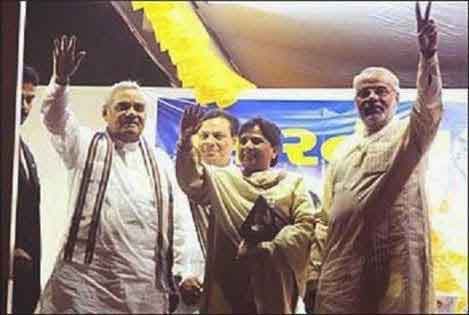
Mayawati is one of the most powerful and symbolically significant Dalit leaders in post-Ambedkar India. Rising from Kanshi Ram’s Bahujan movement, she became Chief Minister of Uttar Pradesh multiple times and led the Bahujan Samaj Party (BSP) to unprecedented electoral success. For many Dalits, her ascent represented dignity, visibility, and the possibility of rule by the historically oppressed. in Annihilate Caste Yet, alongside these achievements, Mayawati’s version of Bahujan politics has had deeply contradictory consequences for Ambedkarite political, social, and Buddhist movements. While it consolidated electoral power and symbolic representation, it simultaneously weakened ideological depth, dismantled autonomous social movements, and marginalized Ambedkar’s religious–ethical project. This essay examines these consequences across three domains: political, social, and Buddhist movements. Impact on Ambedkarite Political Movement 1.1 From Ideological Politics to Power-Centric Governance Ambedkar viewed politics as a means for social and moral reconstruction, not an end in itself. Mayawati, inheriting Kanshi Ram’s framework, further shifted Dalit politics toward power-centric pragmatism. Electoral success, administrative control, and survival of the party apparatus became overriding priorities. As a result: Ideological debates within Dalit politics declined, Ambedkarite principles such as constitutional morality, fraternity, and social justice were rarely articulated as governing philosophies and politics became managerial rather than transformative. Dalit political power became visible but ideologically shallow. 1.2 Centralization and Decline of Democratic Culture Under Mayawati, the BSP evolved into an extremely centralized organization: decision-making rested almost entirely with the leader, internal dissent was punished and Cadre-based leadership and second-line Ambedkarite thinkers were systematically eliminated. This destroyed the institutional culture necessary for a long-term political movement. Unlike Ambedkar’s organizations—which encouraged debate, education, and intellectual autonomy—the BSP under Mayawati functioned as a command structure, producing obedience rather than consciousness. 1.3 Electoral Dependency and Post-BSP Vacuum Because Ambedkarite politics became tightly bound to BSP’s electoral fortunes, its decline after 2012 produced: organizational collapse, leadership vacuum and fragmentation of Dalit political energies. The absence of parallel ideological institutions meant that once electoral power weakened, Ambedkarite political mobilization lacked sustainability. Impact on Ambedkarite Social Movement 2.1 Symbolic Assertion Replacing Social Reform Mayawati’s most visible contribution was symbolic politics—statues, memorials, parks, and iconography of Ambedkar, Kanshi Ram, and Dalit icons. These symbols restored dignity and countered centuries of erasure. However, symbolism was not matched by: mass educational movements, land redistribution initiatives, sustained campaigns against caste violence and Grassroots legal empowerment. Thus, Dalit assertion became representational rather than structural. 2.2 Depoliticization of Everyday Caste Oppression Ambedkarite social movements historically addressed everyday caste practices—segregation, humiliation, violence, religious exclusion. Under Mayawati: social activism was subordinated to electoral discipline. Independent Dalit movements were discouraged or absorbed and criticism was treated as political betrayal. This led to a weakening of grassroots resistance to caste oppression, particularly in rural areas where social domination remained intact despite Dalit political representation. 2.3 Emergence of Social Passivity The message implicitly conveyed was: “The state will take care of Dalit interests.” This discouraged autonomous social mobilization. Dalits increasingly became spectators of politics rather than participants in social transformation, eroding the culture of protest, self-organization, and community reform central to Ambedkar’s vision. Impact on Ambedkarite Buddhist Movement 3.1 Marginalization of Navayana Buddhism Ambedkar considered conversion to Buddhism the culmination of Dalit liberation, providing a new moral universe based on equality, rationality, and compassion. Mayawati, however, treated Buddhism as politically inconvenient: It risked alienating Hindu OBC allies. It did not translate directly into electoral arithmetic. Consequently: no state-supported Buddhist education or cultural institutions were developed. Mass conversion movements were absent. Buddhist intellectual traditions stagnated. The Ambedkarite Buddhist movement remained peripheral and under-resourced. 3.2 Reduction of Ambedkar to a Political Symbol Under Mayawati, Ambedkar was increasingly presented as: A constitutional icon, a Dalit leader and a symbol of pride, but not as a radical critic of Hinduism and caste religion. His Buddhist philosophy—ethical, rational, anti-Brahmanical—was softened or ignored. This de-radicalization made Ambedkar more acceptable to dominant caste sensibilities but weakened the spiritual foundation of Dalit emancipation. 3.3 Loss of Ethical–Moral Framework Buddhism provided Ambedkarite politics with: ethical discipline, rational morality and Universalist humanism. Its neglect created a moral vacuum in Dalit politics, which was increasingly filled by: electoral pragmatism, welfare populism and personality worship. Politics without ethics became vulnerable to corruption, opportunism, and stagnation. Broader Consequences for Dalit Emancipation 4.1 Fragmentation of Ambedkarite Tradition Ambedkarite thought—once a synthesis of politics, social reform, and religion—became fragmented: politics without ideology, social assertion without reform and Buddhism without institutional support. This fragmentation weakened the coherence of Dalit emancipation as a civilizational project. 4.2 Rise of Post-BSP Ambedkarite Movements The limitations of Mayawati’s Bahujan politics partly explain the emergence of: Dalit student movements, Bhim Army / Azad Samaj Party and Independent Ambedkarite intellectual circles. These groups emphasize education, ideology, street mobilization, and constitutional rights—often explicitly distancing themselves from BSP-style politics. Mayawati’s Bahujan politics produced historic political representation and symbolic empowerment for Dalits, achievements that cannot be dismissed. However, this success came at a significant cost to the Ambedkarite political, social, and Buddhist movements. By prioritizing electoral power over ideological depth, symbolism over social reform, and pragmatism over ethical–religious transformation, her leadership: weakened autonomous Dalit social movements, marginalized Ambedkarite Buddhism and reduced Ambedkarism to electoral symbolism. In Ambedkar’s vision, political power was only one pillar of emancipation, alongside social revolution and moral–religious reconstruction. Mayawati’s politics strengthened the first while neglecting—and sometimes undermining—the other two. The challenge for contemporary Dalit movements is not merely to regain political power, but to reintegrate Ambedkar’s triadic vision of politics, society, and ethics, without which Dalit emancipation remains incomplete and reversible. By SR Darapuri SR Darapuri, National President, All India Peoples Front Courtesy : Counter Currents Note: This news is originally published on https:/countercurrents.org/bha and is used purely for non-profit/non-commercial purposes, especially human rights
BSP’s New Strategy: Shifting from Dalit to OBC Leader, Will the Elephant Run in Purvanchal in 2027?
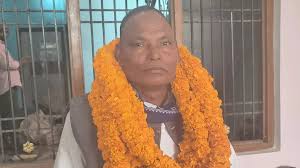
The Bahujan Samaj Party has surprised everyone by handing over the reins of Ghazipur district to an OBC leader. This could have an impact in Purvanchal in the 2027 UP Assembly elections. This time, the BSP is working with full force. Amitesh Kumar Singh, Ghazipur: The Bahujan Samaj Party (BSP) has appointed a new district president in Ghazipur keeping in mind the 2027 UP Assembly elections. Ramesh Singh Kushwaha reached the party office for the first time on Saturday after being appointed as the BSP president of Ghazipur. He was given a grand welcome there. After about 20 years, the BSP has played a new political gambit by appointing a full-time OBC district president. The BSP seems to be working on a strategy to make significant inroads into the OBC vote bank along with its traditional Dalit voters. Harinaath Rajbhar was made District President in 2007 BSP Varanasi Divisional In-charge Pramod Kumar Prabhakar told NBT Online that earlier in 2007, the party had appointed Harinaath Rajbhar as the district president. At that time, the BSP was in power in UP and party supremo Mayawati was the Chief Minister. After that, in 2023, Bujharat Rajbhar was made the district president, but his tenure was limited to just 2 months. Thus, it can be seen that after about 20 years, the party has once again made a fundamental change in its political strategies by betting on an OBC face. Prabhakar said that the BSP is a political party. Like all parties, the BSP also has every right to take decisions keeping political equations in mind. The UP Assembly elections are to be held in 2027. Keeping that in mind, the party high command has decided to appoint the district president. Ramesh Singh Kushwaha has been associated with the party for a long time. He is an articulate speaker. His appointment as district president by the BSP will directly connect the backward votes with the BSP. The party will perform brilliantly under Ramesh’s leadership – Umesh Former Lok Sabha candidate and BSP leader Dr. Umesh Kumar Singh said that the Bahujan Samaj Party works keeping all sections of society in mind. Ramesh Singh Kushwaha is an old and strong cadre of the BSP. Under his leadership, the party will perform brilliantly in the upcoming elections. Edited by: Vivek Mishra About the Author Vivek Kumar Mishra is a Senior Digital Content Producer at Navbharat Times. His focus is on news from Uttar Pradesh and Uttarakhand. He also writes opinion pieces and political analyses. He was born in Barabanki and has worked in several cities across three states. He started his career in print media in 2013. Courtesy: Hindi News
Tamil Nadu SIR: 1,857 Dalit voters removed from electoral rolls in Manjolai
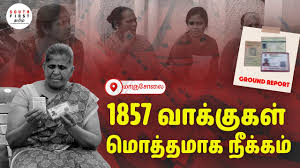
In Manjolai, a hill hamlet under the Ambasamudram Assembly constituency in Tirunelveli district, the Election Commission of India has removed 1,857 voters In Manjolai, a hill hamlet under the Ambasamudram Assembly constituency in Tirunelveli district, the Election Commission of India has removed 1,857 voters from the electoral rolls during the recent Special Intensive Revision (SIR). According to official records, Manjolai earlier had 1,906 registered voters. After the revision, only 49 names remain, with election officials categorising the rest as residents who have permanently migrated out of the area. A ground-level investigation by South First, however, contradicts this claim. Residents assert that Manjolai continues to be their permanent place of residence, even though many have temporarily relocated to the plains for work after the shutdown of the tea estate, which was the community’s primary source of livelihood. Villagers told South First that they have not changed their permanent address and that their Aadhaar cards, ration cards, and earlier voter IDs all continue to reflect Manjolai as their place of residence. Temporary migration for survival, they argue, cannot legally or morally be treated as permanent relocation. Residents have questioned the basis on which their voting rights were withdrawn, pointing out that no individual applications were submitted seeking deletion or transfer of votes. They warn that the mass removal of voters has effectively disenfranchised an entire Dalit community that has lived and voted in Manjolai for generations. The deletions, they say, raise serious concerns about electoral fairness, procedural transparency, and the right to vote, especially for marginalised communities dependent on seasonal or migratory labour. Subash Chandra Bose Courtesy : TSF Note: This news is originally published on https:/thesouthfirst.com/bha and is used purely for non-profit/non-commercial purposes, especially human rights
Protest over the killing of a Dalit youth in Bangladesh: Bajrang Dal, VHP burn effigy of Bangladesh, demand action
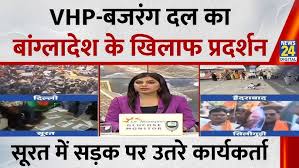
Bajrang Dal and Vishwa Hindu Parishad (VHP) activists staged a protest at Sarju Pandey Park in Ghazipur on Thursday. The protest was against the alleged killing of a Dalit Hindu youth, Deepu Das, in Bangladesh. The activists also burned a symbolic effigy of Bangladesh during the protest. Activists of the organizations alleged that Deepu Das was murdered by radical organizations active in Bangladesh. They also questioned the role of the interim government there. The protesters said that the incident has created an atmosphere of fear among the Hindu community living in Bangladesh. The protest was organized to express the concerns of the Hindu community and to demonstrate social solidarity. The organizers said that the program was completely peaceful and its purpose was to express their feelings in a democratic manner. A large number of activists and common people from the city, block, and district levels participated in the protest. Several prominent activists were present at the protest, including Bajrang Dal District President Vipin Srivastava, District Convenor Ravi Raj, and Convenor Ratan Ji. Among them were Bechu, Dharmendra Kashyap, Omkar Rai, Amit Rai, Kripa Shankar Rai, Sudhakar Rai, Anand Tiwari, Omprakash Pandey, Pradeep Verma, Chandan Pandey, Deendayal Ji, City President Anurag Chauhan, Vinod Bajrangi, Brijesh, Harsh Singh, Hemant Tiwari, and Akhilesh Singh. Hundreds of other activists were also present. The organizers appealed to the Hindu community to maintain unity and continue to raise their voices for the victims. Shashi Kant Tiwari Courtesy: Hindi News
Clash between two Dalit groups in Kaili village: Dispute over harassing a mentally challenged youth, several injured
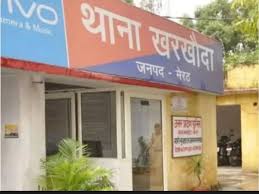
Kharkhoda. A violent clash broke out between two Dalit communities in Kaili village of the Kharkhoda police station area on Friday night at around 8 pm. The dispute started with a minor argument over harassing a mentally challenged young man, but quickly escalated into a major conflict. According to the information, Rakesh, a young man from the Jatav community, was going somewhere for some work. At that time, some youths from the Valmiki community started arguing with him and harassed him. Rakesh’s family and community members came to his defense, and a fight broke out between both sides with sticks and clubs. The fight quickly escalated, creating a tense situation. Several people from both sides were involved in this fight. According to local sources, two people were seriously injured in the clash and were immediately admitted to the medical center in Kharkhoda. The injured are undergoing treatment, and their condition is reported to be stable. According to local residents, the increasing tension in the village caused people in the surrounding areas to remain confined to their homes out of fear. Villagers demanded that the police increase security and restore peace quickly. The Kharkhoda police station in-charge confirmed the incident and said that there was no firing in the area. Only a physical altercation took place, and the police have registered a complaint from the concerned parties and initiated legal action based on the medical reports. The station in-charge appealed to both sides to maintain peace. Local administration and police officials are now continuously monitoring the village. The police aim to ensure that no further violent activity takes place and that mutual peace is restored between the two communities. The villagers also appreciated the promptness of the police and said that agreements and awareness at the community level are also necessary to prevent such incidents in the future. The administration has warned that strict action will be taken against anyone who engages in violence or disturbs public peace. Thus, this incident in Kaili village of Kharkhoda highlights the tension between communities in the region and makes the need for maintaining security and peace even more crucial. Rafiq Ahmed Courtesy: Hindi News
Haryana: 12-year-old Dalit boy held captive and given electric shocks on suspicion of theft, case registered against 10 people
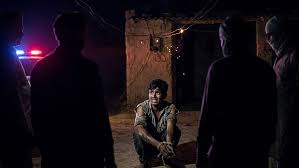
Palwal: Humanity shamed in Palwal: Minor returning home on the night of December 10th was held captive and tortured, also accused of sexual assault, case registered under SC/ST Act. Palwal: A shocking incident that shames humanity has come to light from Palwal, Haryana. Ten members of a single family have been accused of holding a 12-year-old Dalit boy captive for hours and brutally torturing him. The family committed this inhumane act after accusing the child of theft. The police have taken action in the matter and registered a case. What is the whole matter? This heartbreaking incident took place on the night of December 10th. The victim child, who works carrying lights at weddings to help his family financially, was returning to his village Banchari from Hodal town that night. According to the police, at around 11:30 pm, he was coming home with two other children when a car started following them. The people in the car were allegedly intoxicated. Frightened, the children started running. In an attempt to save himself, the victim boy jumped into the premises of a house, while his companions ran towards the village. The family living in the house where he jumped caught him, mistaking him for a thief. After that, what they did to the child before informing the police was horrific. The brutality inflicted on the child The police said that the accused allegedly tied the child’s hands and feet and repeatedly gave him electric shocks. Not only that, the victim minor told investigators that he was also sexually assaulted. The child has suffered serious burn injuries and is currently undergoing treatment in the hospital. The family held him captive for several hours and later called the police. Police action In this case, the police have registered a case against 10 members of the family. The accused have been booked under the following sections: Voluntarily causing hurt, Wrongful confinement, Scheduled Castes and Scheduled Tribes (Prevention of Atrocities) Act, and Juvenile Justice (Care and Protection of Children) Act. According to the latest information, one accused has been arrested so far in this case, while the three main accused are still absconding. What happened in court? The three main suspects, who are currently absconding, had filed an anticipatory bail application on Monday. The case was heard in the Sessions Court on Wednesday. During the hearing, the medical report related to the minor’s injuries was presented, after which the court adjourned the hearing. The next hearing in this case will be held on January 8. Rajan Chaudhary Courtesy: Hindi News
The Truth Behind the Death of the Dalit Girl: Tortured Over Fees, Then the College Itself Wrote the Exam Papers to Cover Up; FSL Report Exposes the Deception
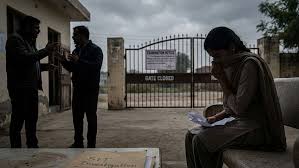
A new twist in the suicide case stemming from a fee dispute; forensic investigation exposes the college administration’s claims, handwriting in the answer sheet found to be someone else’s, SIT adds new charges. Bhiwani/Chandigarh: A shocking revelation has emerged in the suicide case of a 22-year-old Dalit college student in Loharu, Bhiwani district of Haryana, last year. The investigation by the police’s Special Investigation Team (SIT) has revealed that the handwriting on the answer sheet of the exam in question does not belong to the deceased student. This revelation has exposed the claims of the college administration. New Sections Added After FSL Report The Forensic Science Laboratory (FSL) report has confirmed that the handwriting on the answer sheet does not match the student’s handwriting. Based on this scientific evidence, the SIT has added new charges against college director Hanuman and his son Rahul under sections 338 (Forgery of valuable security or will, etc.), 336 (Forgery – making false documents with intent to cause harm or defraud) and other relevant sections of the Bharatiya Nyaya Sanhita (BNS). What is the whole case? The deceased student’s family had alleged that the college administration did not allow her to sit for the BA (5th semester) examination due to non-payment of fees. The family also claimed that the accused Rahul used to harass the student over the phone, which led her to commit suicide. The college authorities, however, had rejected these allegations, claiming that the student had appeared for the examination. But now the forensic investigation has changed the narrative. SIT Submits Report to Court The SIT, led by DSP Vikas Kumar of the State Crime Branch, filed its status report in the Bhiwani court on December 5. The DSP stated in the report, “On August 13, the student’s 5th-semester answer sheets and her diary were sent to the forensic lab in Delhi for handwriting matching and authenticity verification. On September 8, we received the FSL (Forensic Science Laboratory) report, which clearly stated that the handwriting on the answer sheets did not match that of the deceased.” Following the receipt of the report, new sections such as 338, 336, and 340 (using forged documents) were added against Hanuman and his son Rahul in the FIR registered on December 27, 2024 (which was earlier under sections 108, 3(5), and 238-B of the BNS). The investigation in the case is still ongoing. SC Commission’s intervention changed the direction of the investigation Earlier, the former investigating officer (IO), DSP Vivek Chaudhary, had claimed in his report that the student had committed suicide fearing that her parents would find out about her alleged ‘relationship’ with the accused Rahul. He had tried to give a clean chit to college director Hanuman, his son Rahul, daughter Sanju, and Principal Sarita. However, an application was filed on March 23 to acquit the accused, which the National Commission for Scheduled Castes took suo motu cognizance of. On May 14, the commission found the previous investigation unsatisfactory and procedurally flawed. The commission had clearly ordered that the student’s answer sheets, hall ticket, and call details be examined by the Central Forensic Science Laboratory (CFSL). The commission had directed that no closure report would be filed in court until the forensic results were received. Only after this was the investigating officer changed and a fresh investigation began. Demand to cancel the bail of the accused The student’s lawyer, Rajat Kalsan, said that he has today argued in court for the cancellation of the bail application of the accused father and son and demanded that the police also investigate the role of the college owner. The deceased girl’s father said that the FSL report has exposed the college management’s false claim that his daughter was allowed to sit for the exam. He demanded, “The police should investigate who sat for the exam in my daughter’s place, and strict action should be taken against all those involved in this conspiracy.” Rajan Chaudhary Courtesy: Hindi News
Samiti observes 98th anniversary of Manusmriti Dahan Divas by burning copies
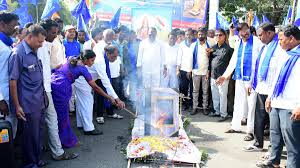
Members of the Karnataka State Dalit Sangharsha Samiti (DSS) on Thursday observed the 98th anniversary of Dr. B.R. Ambedkar’s historic burning of the Manusmriti by staging a protest and symbolically setting fire to copies of the text at Jagat Circle in Kalaburagi city. The protest was organised to commemorate Dr. Ambedkar’s act of defiance during the Mahad Satyagraha in 1927, when he publicly burnt the Manusmriti to challenge caste-based oppression and gender discrimination. As part of the demonstration, activists took out a protest march from Sardar Vallabhbhai Patel Chowk to Jagat Circle carrying a copy of the Manusmriti before burning it, symbolising the rejection of an exploitative and discriminatory social order. Arjun Bhadre, State convener of the Dalit Sangharsha Samiti, said the act of burning the text represented the rejection of centuries of exploitation and injustice imposed on marginalised communities. Mr. Bhadre recalled that Dr. Ambedkar firmly believed that as long as right-wing ideology dominated society, India could not achieve true progress. “Dr. Ambedkar burnt the Manusmriti on December 25, 1927, during the Mahad Satyagraha to send a powerful message against caste oppression. His struggle continues to inspire us even today,” he said. The agitators added that caste-based discrimination continued in various forms and that sustained ideological and political resistance was necessary to safeguard constitutional values. “We have been fighting caste oppression for centuries. Dr. Ambedkar was the first to raise his voice openly against such practices, and today it is our responsibility to carry forward that struggle collectively,” Mr. Bhadre said. Out of the country’s population of about 137 crores, nearly 85 crores of people live in rural areas, where the practice of untouchability continues in many forms. Despite constitutional safeguards and decades of social reform, caste-based discrimination remains deeply rooted in rural society, Mr Bhadre expressed. The Hindu Bureau Courtesy : The Hindu Note: This news is originally published on https:/thehindu.com/bha and is used purely for non-profit/non-commercial purposes, especially human rights