
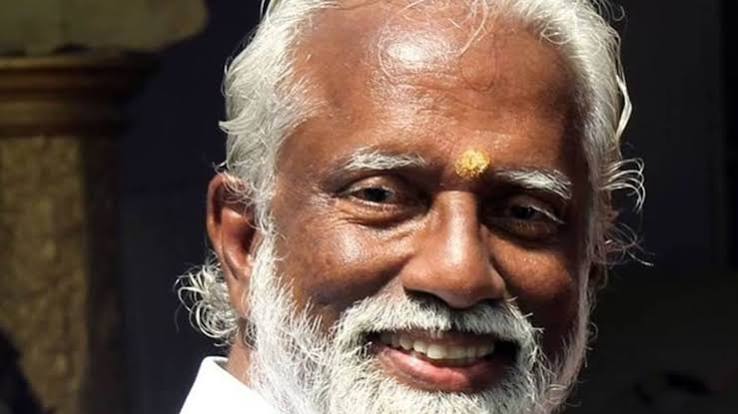
The BJP is making a determined bid to claim Kerala’s Dalit legacy, invoking the names of reformers Ayyankali, P K Chathan Master and others as it works to expand its support among the state’s Dalit voters. The outreach, signalled in a speech by senior party leader Kummanam Rajasekharan last week, marks the party’s latest attempt to borrow the legacy of leaders who belonged to its rivals, the Congress and the Left.
The clearest signal came at an event at Irinjalakuda in Kerala’s Thrissur district on November 19, a memorial meeting for P K Chathan Master, the Communist Party of India leader, social reformer and the state’s first Dalit minister. Former Mizoram governor and BJP national executive committee member Kummanam Rajasekharan used the occasion to accuse the CPI of neglecting Dalit heroes like Chathan.Buy Maps
“It’s really painful that the memorial monument of Chathan master, who had dedicated his life for the upliftment of the SC community, is remaining neglected,” Rajasekharan said. “He had fought for the oppressed and had devoted his entire life to a political party (CPI). When that party constructed an office in his hometown, Irinjalakuda, the office was named after C Achutha Menon (a former CPI leader and chief minister). But Chathan master was left abandoned at his own hometown.”
Chathan Master was a CPI leader and a member of the first Kerala government led by E M S Namboodiripad in 1957. He was also one of the founders of the Dalit organisation Kerala Pulaya Maha Sabha. The November 19 event was held in his hometown of Irinjalakuda.
Rajasekharan’s speech pointed to a wider strategy: to reach out to Kerala’s 9.1 per cent Dalit population by appropriating its heroes, even if they belonged to rival parties. At the heart of the plan are three pioneering Dalit reformers, Ayyankali, Kavarikulam Kandan Kumaran and Dakshayani Velayudhan, who challenged caste oppression and fought for social equality, access to education and the rights of marginalised communities.
Born into the oppressed Pulayar community in the princely state of Travancore, Ayyankali was a revolutionary leader who challenged rigid caste restrictions through direct action. Kandan Kumaran founded the Brahma Pratyaksha Sadhu Jana Paripalana Sangham in 1912 to organise the Paraya community and fight caste discrimination and social exclusion. Dakshayani Velayudhan was India’s first Dalit woman graduate and the only Dalit woman member of the Constituent Assembly.Buy Maps
Rajasekharan said on Thursday that all three were yet to get their due. Ayyankali was yet to get a memorial in his native village of Venganoor in Thiruvananthapuram, he alleged, while Velayudhan’s contributions to women’s empowerment were yet to get due recognition in Kerala. He said the BJP wanted to position itself as the inheritor of their struggle for social justice, dignity and the empowerment of oppressed communities.
“The oppressed section should be imparted with self-respect and self-confidence,” Rajasekharan said in his November 19 speech. “Have the land reforms in Keralam helped the Dalits? The plantation workers are living in abject poverty and abysmal conditions. We have decided to fight for the rights of the Dalits. The next social reformation in Keralam should be their social progress.”
The three former Left leaders backing the outreach
For its strategy, the BJP is banking on three Dalit leaders who formerly belonged to the Left. Former CPI(M) leader S Rajendran, two-term CPI legislator K Ajith, and CPI’s former Nattika MLA C C Mukundan are now with the party, and sources say it is seeking to claim the legacies of Kerala’s Dalit reformers through them.
Rajendran was a three-time CPI(M) MLA from the Devikulam constituency in Idukki district and the party’s most prominent face among plantation workers in the high ranges of the district. He was suspended from the CPI(M) in 2022 for internal party sabotage in the 2021 Assembly polls and joined the BJP in January this year, ahead of the Assembly elections.Check Voting Info
K Ajith, a two-term Vaikom legislator, walked out of the CPI in March after four decades, alleging that the Left had failed to address the issues of the Dalit community. In Thrissur, Mukundan, a former CPI MLA from Nattika, left the party on the eve of the recent Assembly polls after he was denied a ticket.India news updates
A strategy the BJP has used before
This is not the first time the BJP appears to have borrowed the legacy of leaders from rival parties. In 2025, the party used the same strategy with two veteran Congress leaders, V R Krishnan Ezhuthachan in Thrissur and Chettur Sankaran Nair in Palakkad. Ezhuthachan was a leader of the freedom movement, a Gandhian, journalist and trade unionist, while Nair was an Indian lawyer, judge and former president of the Indian National Congress.
Last year, the BJP commemorated Ezhuthachan on his 21st death anniversary after his memorial was renovated using the local development fund of Union Minister of State Suresh Gopi, when he was still a Rajya Sabha member. The party has also been observing Nair’s death anniversary since 2024 by offering tributes, with party sources saying that a request for his memorial in Palakkad is pending with the Union Government.
The strategy of borrowed legacy has drawn criticism from the rival Left. Reacting to the BJP’s Dalit outreach, senior CPI leader and former minister V S Sunil Kumar said the BJP had “no right to stake a claim on the political legacy of Chathan master more than three decades after his death”.Follow Politics
“He had been a CPI leader who had fought against the Brahminical politics of Sangh Parivar. Chathan master had floated KPMS following a directive from the CPI. He had fought against Hindutva politics. CPI will fight against BJP bid to stake claim for the legacy of the late CPI leader,” Sunil Kumar said.
What happens next
Rajasekharan said the party had convened a meeting that week to chalk out details on how to reclaim the reformers’ legacies, as part of a year-long programme to take forward their legacy. The BJP’s Kerala unit will now have to show whether the outreach can convert symbolism into votes, with the state heading into Assembly elections and Dalit voters forming 9.1 per cent of the population. For the CPI and the Congress, the challenge is to defend the legacy of leaders who were once their own.Check Voting Info
– The BJP is seeking to claim the legacy of Kerala’s Dalit reformers, including Ayyankali, P K Chathan Master, Kandan Kumaran and Dakshayani Velayudhan, as part of its outreach to the state’s 9.1 per cent Dalit voters. – Senior BJP leader Kummanam Rajasekharan accused the CPI of neglecting Chathan Master at a memorial event in Irinjalakuda, Thrissur, on November 19. – The party is banking on three former Left Dalit leaders, S Rajendran, K Ajith and C C Mukundan, who have joined the BJP. – Rajasekharan said Ayyankali was yet to get a memorial in his native village of Venganoor, and that Dakshayani Velayudhan’s contributions were yet to get due recognition. – The BJP used the same strategy in 2025 with Congress leaders V R Krishnan Ezhuthachan and Chettur Sankaran Nair, and the CPI has criticised the move.
Who was P K Chathan Master?
Chathan Master was a CPI leader, social reformer and Kerala’s first Dalit minister. He was a member of the first Kerala government led by E M S Namboodiripad in 1957 and a founder of the Dalit organisation Kerala Pulaya Maha Sabha.
Why is the BJP claiming the legacy of Kerala’s Dalit reformers?
The party is reaching out to Kerala’s 9.1 per cent Dalit population by claiming the legacies of reformers such as Ayyankali, Chathan Master, Kandan Kumaran and Dakshayani Velayudhan, saying they have not received their due from the Congress and the Left.
How has the Left reacted to the BJP’s outreach?
Senior CPI leader V S Sunil Kumar said the BJP had no right to stake a claim on Chathan Master’s legacy, noting that he had fought against Hindutva politics and that the CPI would oppose the BJP’s bid.
Courtesy : TOP
Note: This news is originally published on https:/theopenpress.com/bha and is used purely for non-profit/non-commercial purposes, especially human rights