
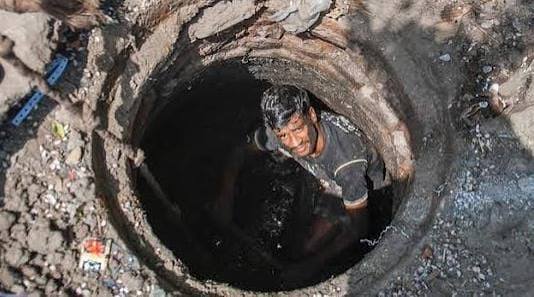
At least 125 people have died in India so far in 2026 while performing hazardous cleaning and maintenance work in sewers, septic tanks, and other enclosed spaces. According to data released by the Dalit Adivasi Shakti Adhikar Manch (DASAM), these deaths were recorded in 20 states and union territories between January 1 and October 2, 2026. The organization describes these incidents as not merely accidents, but a serious crisis linked to caste discrimination, exploitation by contractors, lack of safety measures, and the failure of government systems.
In a statement issued in New Delhi on October 5, DASAM said that workers are losing their lives while cleaning and maintaining sewers, septic tanks, manholes, drains, sewage treatment plants, underground water tanks, and other enclosed structures. The deaths include sanitation workers, contract laborers, construction workers, and migrant laborers. According to the organization, in several incidents, workers fainted or died from lack of oxygen due to toxic gases. In some cases, others who went inside to rescue a worker also died from exposure to the toxic gases.
According to the organization’s data, July 2026 was the deadliest month, with 28 deaths recorded. March saw 25 deaths, June 20, May 19, February one, April 10, August 10, September nine, and October 2nd saw three deaths. State-wise figures show 14 deaths in Bihar, 12 in Tamil Nadu, 11 in Haryana, and 10 in Uttar Pradesh. Meghalaya and Odisha each reported nine deaths, Madhya Pradesh eight, Assam and Maharashtra seven each, and Chhattisgarh six. However, there are discrepancies in some figures in the organization’s document. The state-wise total is 126, while the total number of deaths is reported as 125.
DASAM stated that caste-based labor systems and economic inequality play a significant role in these deaths. According to the organization, Dalit communities, particularly Valmiki and other marginalized castes, have historically been employed in the most dangerous and degrading jobs, such as sanitation. Meanwhile, migrant and economically disadvantaged workers employed through contractors are also forced to work in unsafe conditions. Many workers receive no written contracts, nor adequate training, safety equipment, insurance, or social security.
The report cites several incidents in Mumbai, Delhi, Uttar Pradesh, Bihar, Haryana, Tamil Nadu, Rajasthan, and other states. In June, three workers died after inhaling toxic gas from a factory septic tank in Delhi’s Mundka industrial area. According to the organization, the workers’ families alleged that they were not provided with adequate safety equipment, gas testing, and rescue systems. Similarly, in March, four members of a family died in an incident related to cleaning a household septic tank in Vaishali district, Bihar. Such incidents demonstrate that the danger is not limited to municipal sewers, but also exists in private homes, hospitals, factories, and residential complexes.
DASAM also questioned the poor implementation of laws prohibiting manual scavenging and providing for rehabilitation. The organization demanded an impartial and timely investigation into every death occurring while working in sewers and septic tanks, and that responsible contractors, employers, property owners, and relevant officials be held accountable. The organization demanded a compensation of at least ₹30 lakh to the families of each deceased, government employment for eligible dependents, and education, health, housing, and livelihood support for the families.
The organization demanded the promotion of the use of machines for cleaning sewers and septic tanks, the prohibition of entry of workers into enclosed spaces without gas testing and adequate safety measures, and the mandatory provision of trained rescue teams. According to DASAM, the primary employer or government agencies cannot escape responsibility by outsourcing work to contractors. The organization has appealed to the central and state governments to maintain a transparent record of such deaths across the country and implement an effective national strategy to prevent hazardous cleaning operations.
Courtesy: Hindi News